Pumpkins are easy to overstate on a manicure. The first orange accent can feel warm and funny, but repeating the same bright shape until every nail competes for attention leaves no quiet place for the eye to rest. The better question is not whether the pumpkin is cute; it is what the surrounding color and empty space allow that one small mark to do. A seasonal detail gains character when it is given a little restraint.
Start with the base you would still wear if the seasonal detail disappeared tomorrow. A soft pink or milky ground makes a small orange mark feel delicate, a deep brown turns it into a richer autumn note, and a short rounded edge asks for simpler drawing than a long almond surface. That decision keeps the manicure anchored in your actual routine, so the pumpkin reads as an accent rather than a costume requirement.
Short Orange Nails With Tiny Ghost Contrast
Short rounded nails make the orange pumpkins and small white ghost especially readable because the design does not depend on a long canvas. Several fingers use a dark glossy ground, while orange pumpkin faces, a white ghost, and small black seasonal marks are separated across the hand instead of being packed into one repeated pattern. That spacing creates a lively Halloween note, but the compact shape keeps it from becoming costume-like when the hand is moving or resting on a dark background.
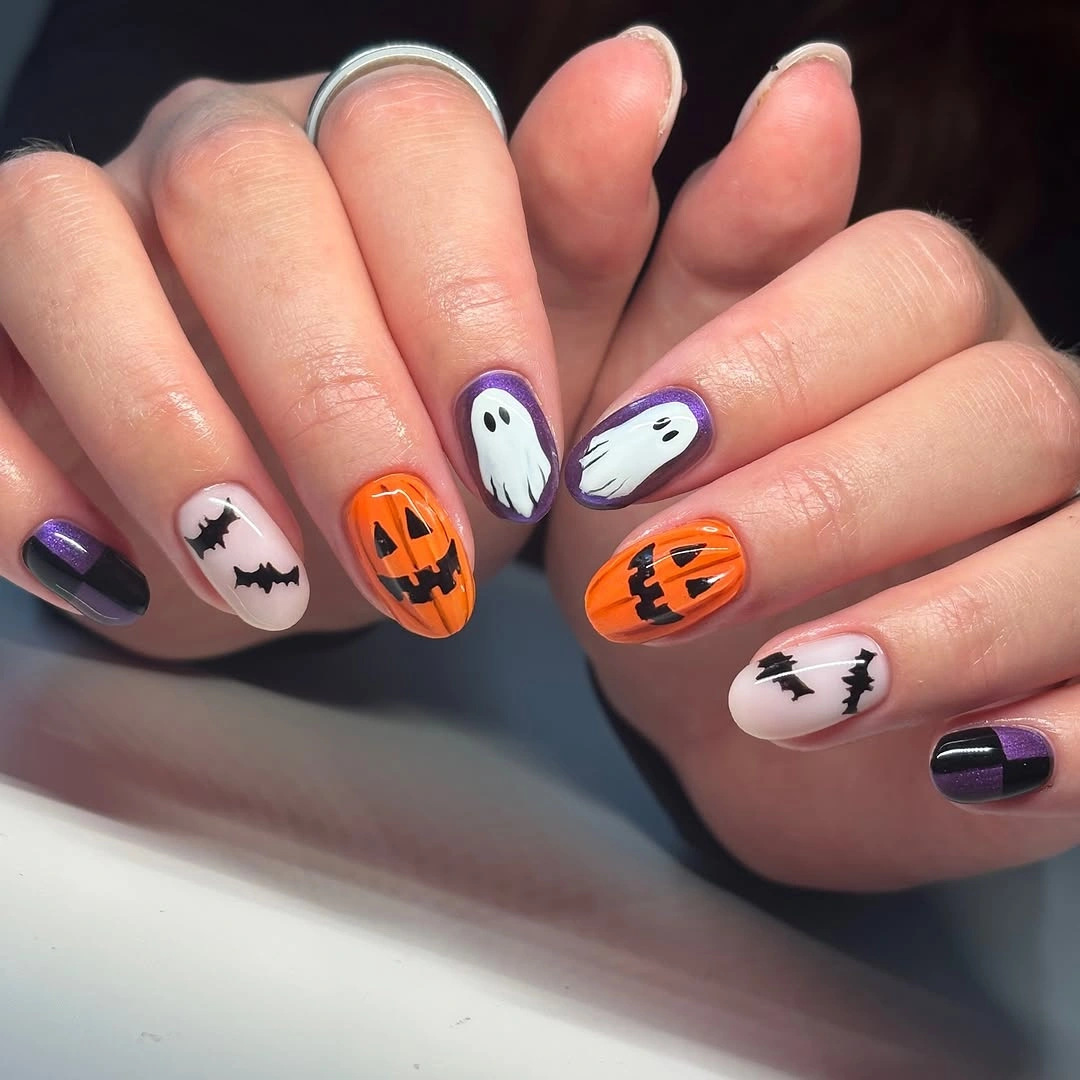
The strongest decision here is contrast rather than color quantity. Orange supplies the warm focal point, black gives the set depth, and the white ghost works as a visual pause that prevents the darker nails from blending together; on a short nail, that pause is useful because tiny internal details have less room to stay distinct. If you want to adapt the idea, keep the pumpkin face on one accent nail, use a simple orange tip on another, and leave the rest in glossy black or a sheer nude.
This look is practical for someone who likes seasonal art but does not want every finger covered with characters. Dark polish will show chips more readily than a pale neutral, and the small line details may need refreshing sooner if the tips are used heavily, yet the short rounded shape makes the overall silhouette forgiving. It also pairs well with a simple gold ring or a plain autumn sweater because the manicure already supplies enough visual punctuation.
Soft Pink Tips With Mini Green Pumpkins
A pale pink or nude base changes the pumpkin idea into something quieter, especially when the small motifs are green rather than bright orange. The medium almond shape leaves most of each nail open, with tiny dark green pumpkin forms and narrow stems placed near the tips so the eye follows the length without meeting a solid block of color. That tip placement makes the design feel like a small autumn stamp and keeps the manicure wearable beside delicate rings or soft neutral clothing.
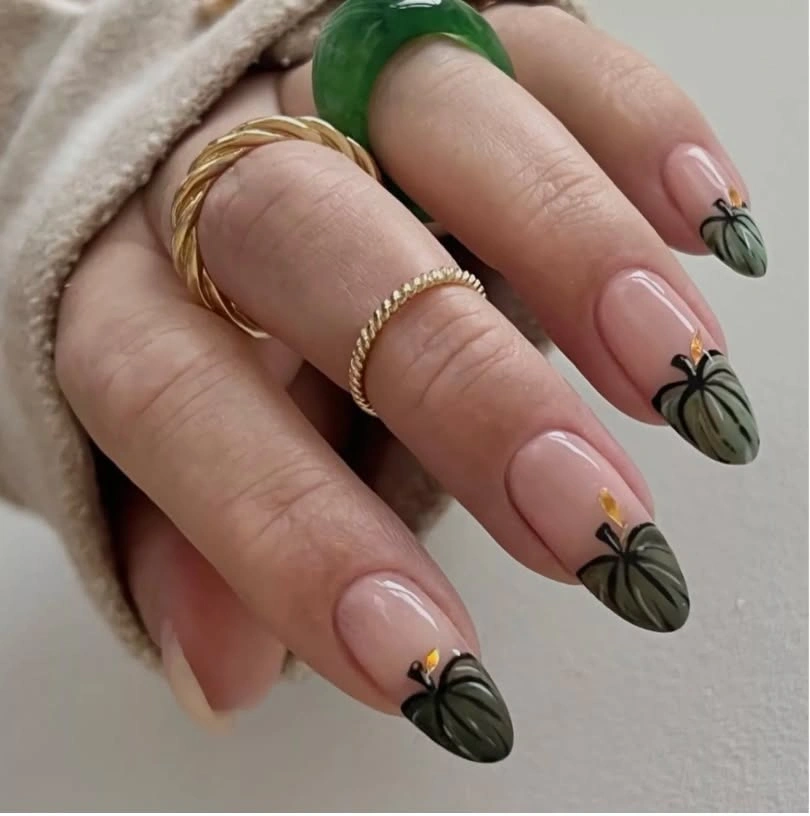
Green works here because it gives the pale base a cooler counterpoint without competing with the skin-toned background. The dark stems provide just enough definition for the miniature shapes, while the glossy surface lets the pink and green remain clean rather than rustic; if you want a warmer version, swap the green for muted orange but keep the same limited placement. On shorter nails, move the pumpkins slightly closer to the center so the stems do not crowd the free edge.
The low-density pattern is the main reason this manicure feels calm. You can repeat the small pumpkin on two or three fingers, keep one nail completely plain, and still preserve the theme because the color relationship carries the story. Grow-out will be less visually disruptive on the pale base than on a full dark manicure, although miniature linework benefits from a little extra space and may need to be simplified if the nails are filed very short; for a broader seasonal direction, compare that restraint with fall nails with autumn designs.
Chocolate Brown And Orange With One Pumpkin
Deep chocolate brown and glossy orange create a clear fall palette before the illustrated accent appears. The rounded almond nails alternate between solid brown, orange, and a nude nail carrying one small orange pumpkin with a dark stem, so the hand has a strong rhythm without repeating the same picture across every finger. That single motif feels intentional because the surrounding colors already announce the season, and the rounded length keeps the saturated shades approachable rather than overly dramatic.
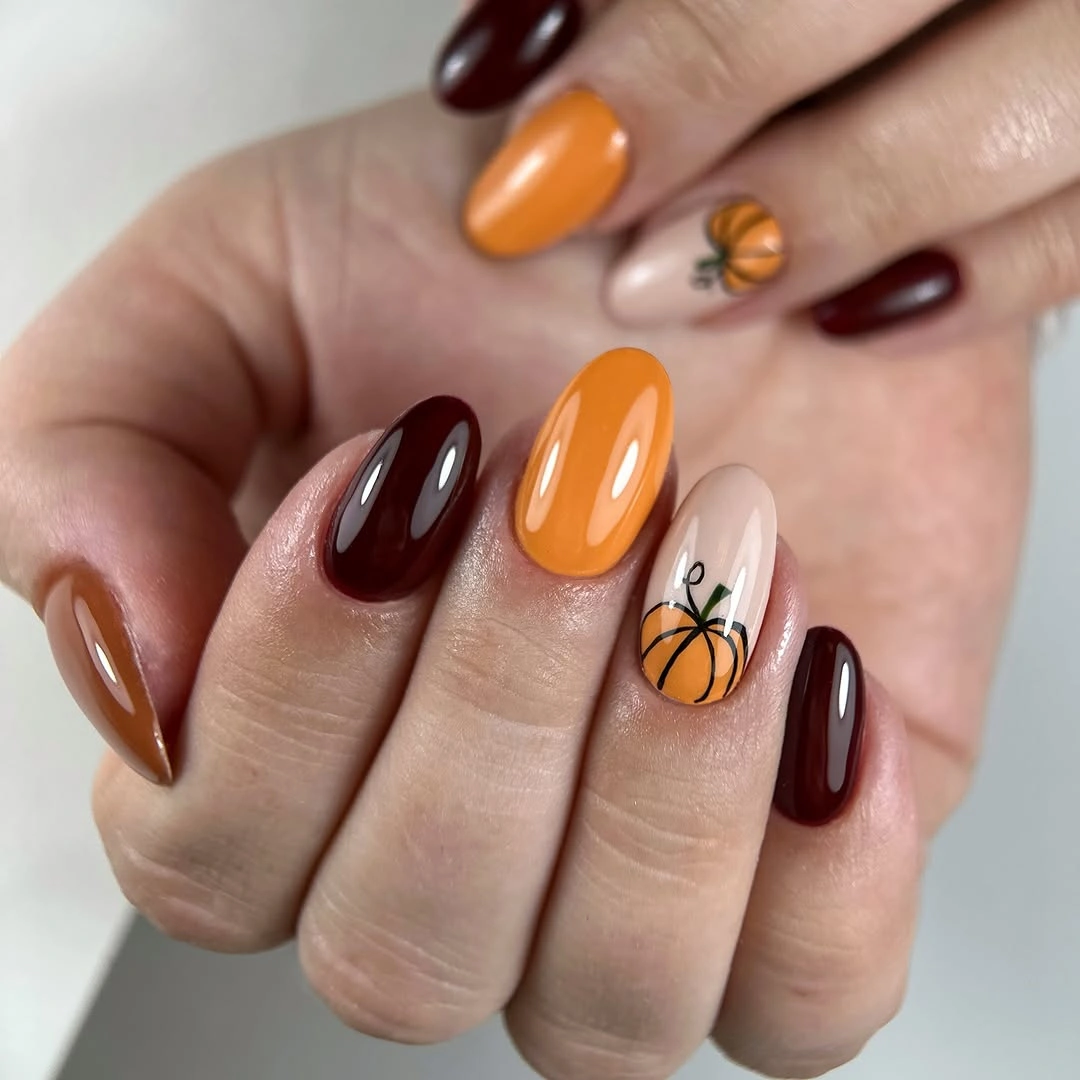
The balance depends on giving the pumpkin a quieter neighbor. A nude accent lets the orange drawing breathe, while the brown and orange solids act like color blocks that frame it from a distance; this is useful when you want the design to remain recognizable in a quick glance instead of relying on close inspection. A shorter version can keep brown on the thumb and pinky, orange on one middle finger, and place the pumpkin on a nude ring finger for an easy four-color rhythm.
Glossy surfaces make this palette feel richer, but they also show uneven edges and small chips against the dark brown more readily. If you prefer a softer finish, use a warm cream in place of the nude accent and keep the pumpkin line simple rather than adding more artwork. This approach is a good choice for someone who wants an autumn manicure with one playful detail, not a gallery of symbols competing for attention.
Dotted Orange Pumpkins On Long Almond Tips
Long almond tips give the dotted pumpkin design enough room to look deliberate. The pale nails carry orange seasonal figures outlined in black, with small orange dots spreading across the white or light base so the hand has both a focal shape and a repeating texture. Because the dots echo the pumpkin color, the larger motifs feel connected instead of scattered, while the light ground keeps the set cheerful and lets the pointed silhouette remain visible from the side.
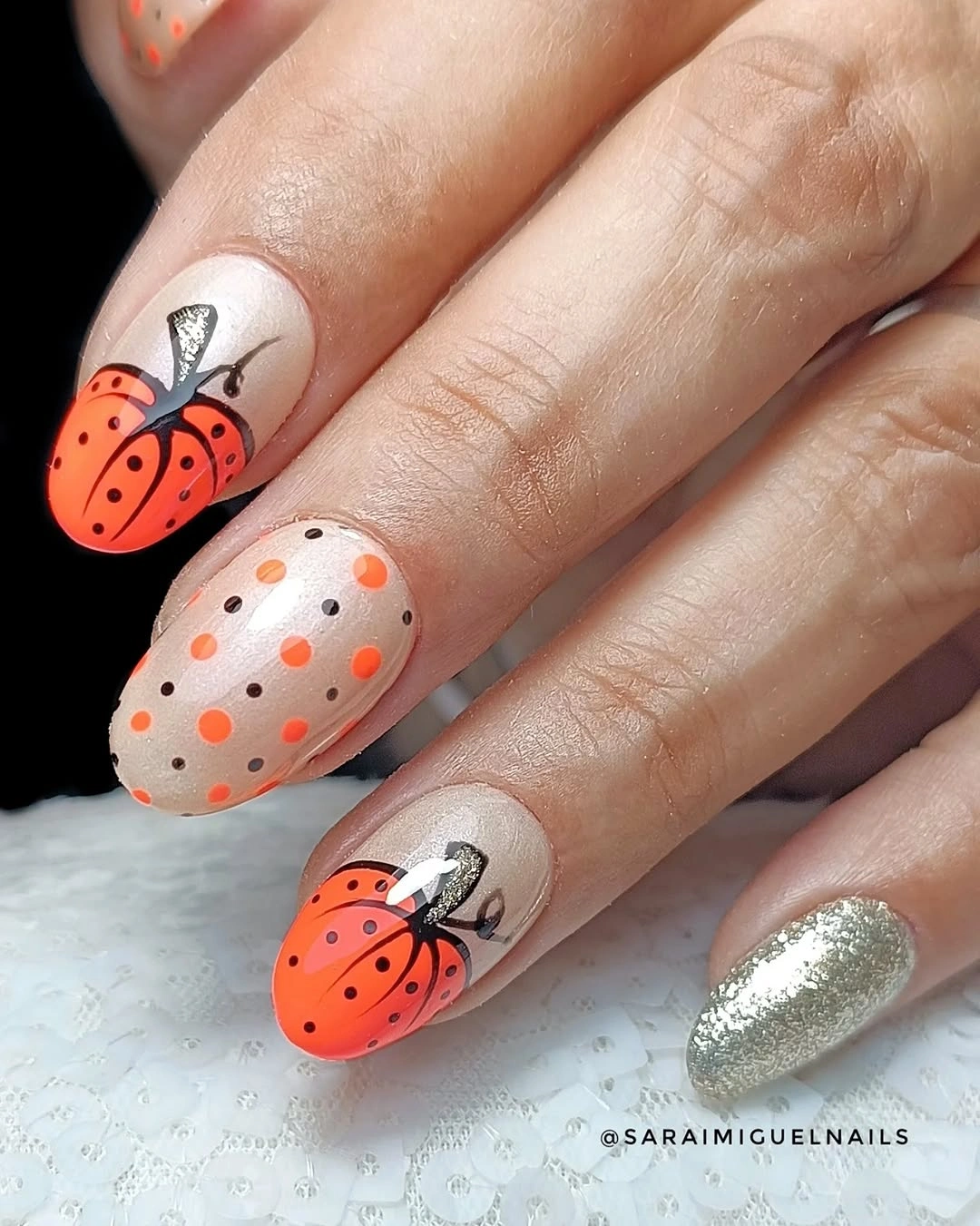
What makes this version work is the relationship between soft background and crisp outline. The black edges prevent the orange figures from disappearing into the dots, and the dots soften the strong color so the manicure still feels playful rather than severe; that balance is especially helpful when a longer shape already makes the hand look more dramatic. For a shorter adaptation, keep the dots on one accent nail and reduce the pumpkin drawing to an outline with one stem.
There is an honest upkeep tradeoff in a dense dotted surface. The pattern can remain attractive as long as the base stays clean, but chips or uneven growth are easier to notice when the eye expects a regular field of small marks, and the long almond length is less convenient for daily tasks. If that sounds demanding, preserve the white base and orange-black palette while limiting the dots to the tips, where they reinforce the shape without covering the full nail.
Blush Almond Nails With Sparse Orange Accents
Blush pink and nude almond nails can suggest pumpkins without turning the manicure into a literal illustration set. The hand uses a pale glossy ground with small orange rounded motifs and a few delicate line details, leaving generous negative space around each accent; the result feels more like a quiet autumn note than a themed costume. That openness is valuable when you want the shape, skin tone, or jewelry to remain part of the overall styling rather than being hidden by dense nail art.
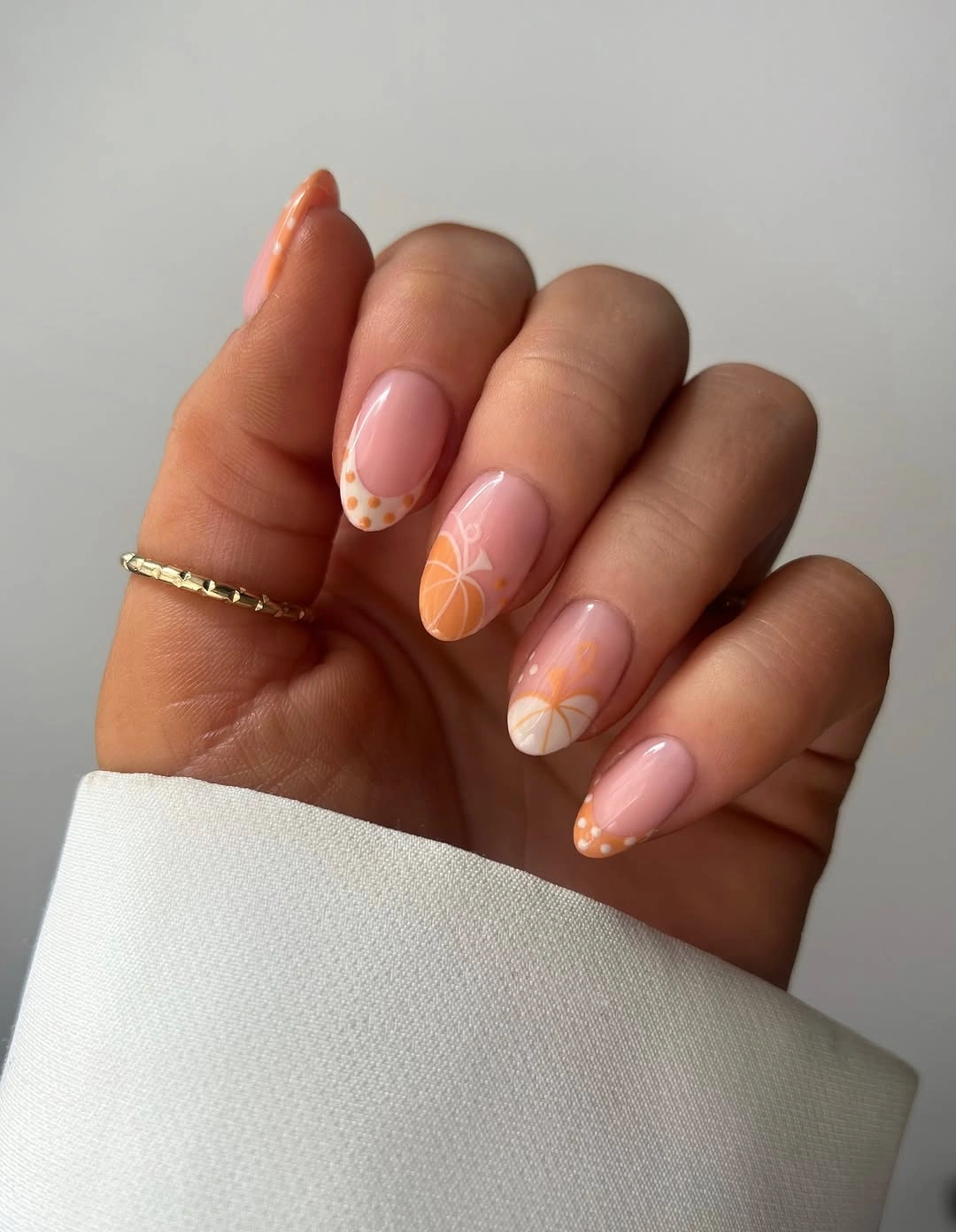
The best adaptation is to treat the orange as punctuation. Place one small pumpkin or warm seasonal mark on the ring finger, repeat a tiny detail on the opposite hand, and let the remaining nails stay pale so the color relationship does the work. A soft orange is easier to blend into everyday outfits than a saturated neon shade, while the glossy finish keeps the restrained design looking intentional instead of unfinished.
This sparse composition also gives you room to adjust the length without losing its identity. On short nails, use a dot-and-stem symbol rather than a full face; on longer almond tips, a small outline can sit near the sidewall without crowding the cuticle. The pale base will usually make grow-out less obvious than a full orange ground, but the minimal design means every small mark should be placed cleanly because there are no extra motifs to disguise an uneven line.
Milky White Pumpkin Outlines With Gold Texture
A milky base makes orange pumpkin outlines look light and graphic, especially on a short rounded or squoval shape. The visible set uses pale nails with orange outline motifs and one fine gold glitter accent, so the seasonal color stays focused while the metallic nail adds a warmer surface change. Instead of filling the whole hand with orange, the design relies on clean open space and a small glint that catches attention when the fingers move.
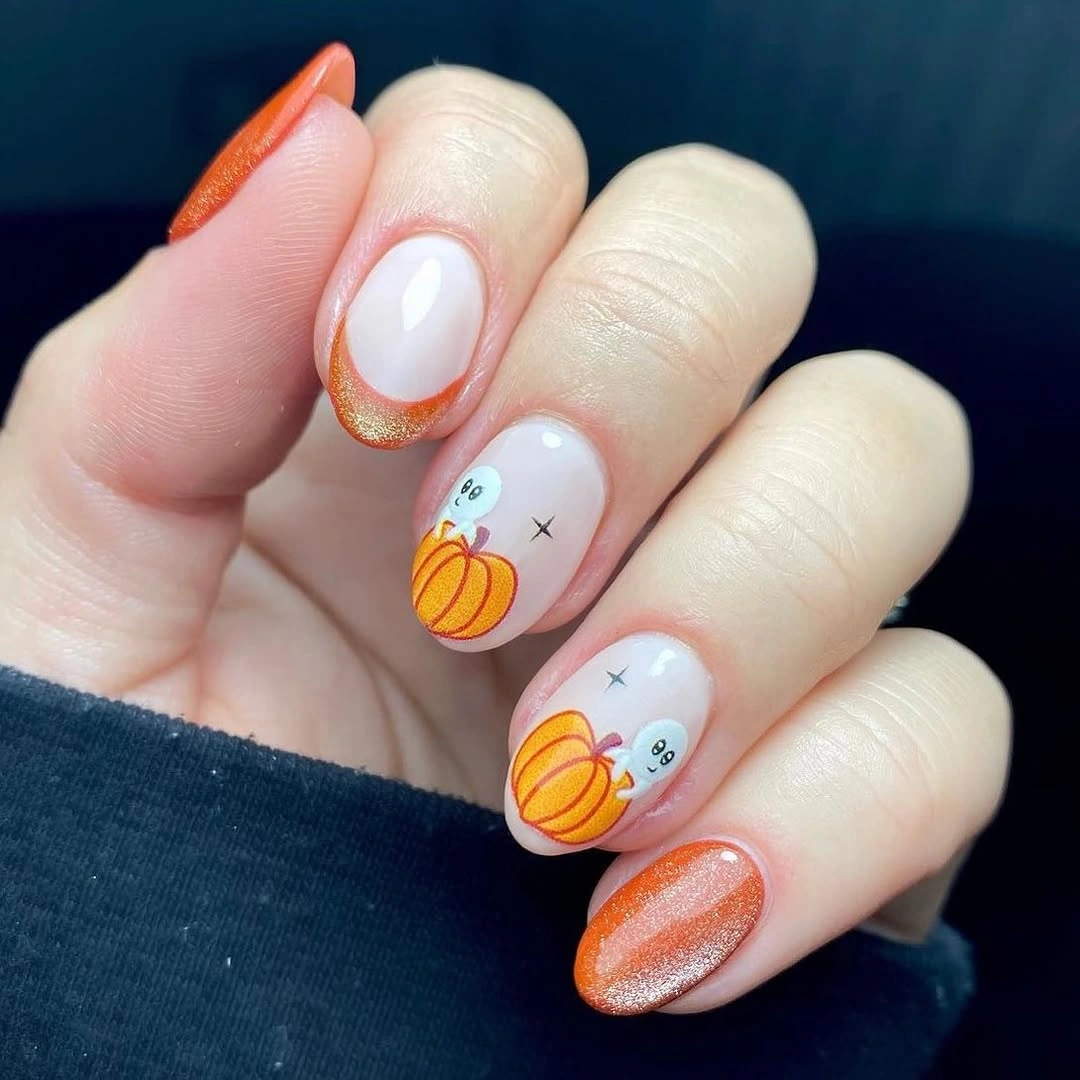
The gold accent is useful because it replaces the need for another illustrated nail. It warms the white and orange combination, gives the eye a place to rest, and adds texture without interrupting the pumpkin outlines; a very dense glitter would change the mood, so a fine shimmer is better suited to this restrained layout. If you want the set to feel less seasonal, keep the gold but reduce the pumpkin to a single ring-finger accent.
Short rounded nails make this one of the easier ideas to adapt for regular wear. The milky base can soften small imperfections, while the orange outline remains legible as long as the motif is not crowded with interior details; a shorter free edge may call for a simple oval pumpkin instead of a face. The glitter nail can emphasize surface texture as it grows out, so placing it on a central accent finger keeps that maintenance issue from dominating the hand.
Green Pumpkin Stems On Milky Square Nails
Milky square nails turn the green pumpkin-and-stem motif into a tidy repeating pattern. Several short fingers carry small green drawings on a pale base, with enough space between them for each stem and rounded body to remain separate rather than merging into a leafy blur. The square edge gives the tiny illustrations a stable frame, and the cool green makes the manicure feel autumnal without relying on orange, brown, or black.
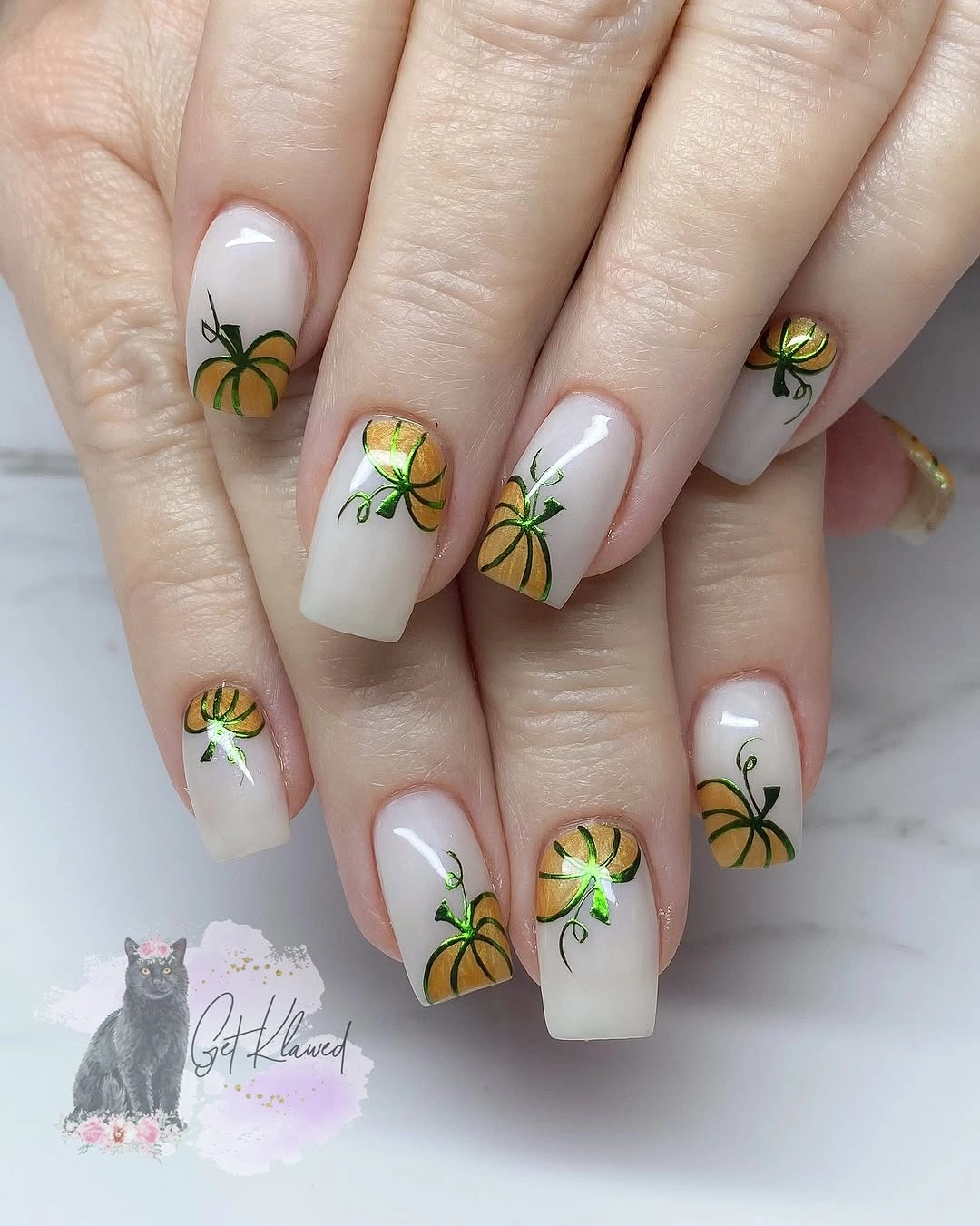
Repetition is the main visual decision, so consistency matters more than adding extra decoration. Keep the pumpkins similar in scale, place them around the same height, and let one or two nails stay plain if the hand begins to feel crowded; that preserves the pattern while giving the eye a pause. A warmer version can use muted olive or terracotta, but keeping the stems dark will help the small shapes remain readable against the milky background.
This design is especially friendly to short square nails, although the stems need enough room to avoid touching the side edges. If the nails are filed very short, remove the stem and use a simple green pumpkin oval with one dark dot, which keeps the theme visible without forcing fine detail into a tiny space. The pale base should make everyday wear less visually demanding than a full dark set, but small repeated drawings still reward careful placement at the start.
Pink Square Nails With Orange Pumpkin Faces
Long square tips give orange pumpkin faces a playful graphic frame over a translucent pink base. The design combines bright orange edges with pumpkin faces and dark dot details on selected nails, so the warm color appears both in the silhouette and inside the illustrations. That repetition creates a strong visual rhythm, while the pink ground keeps the orange from feeling as heavy as it would over black or deep brown.
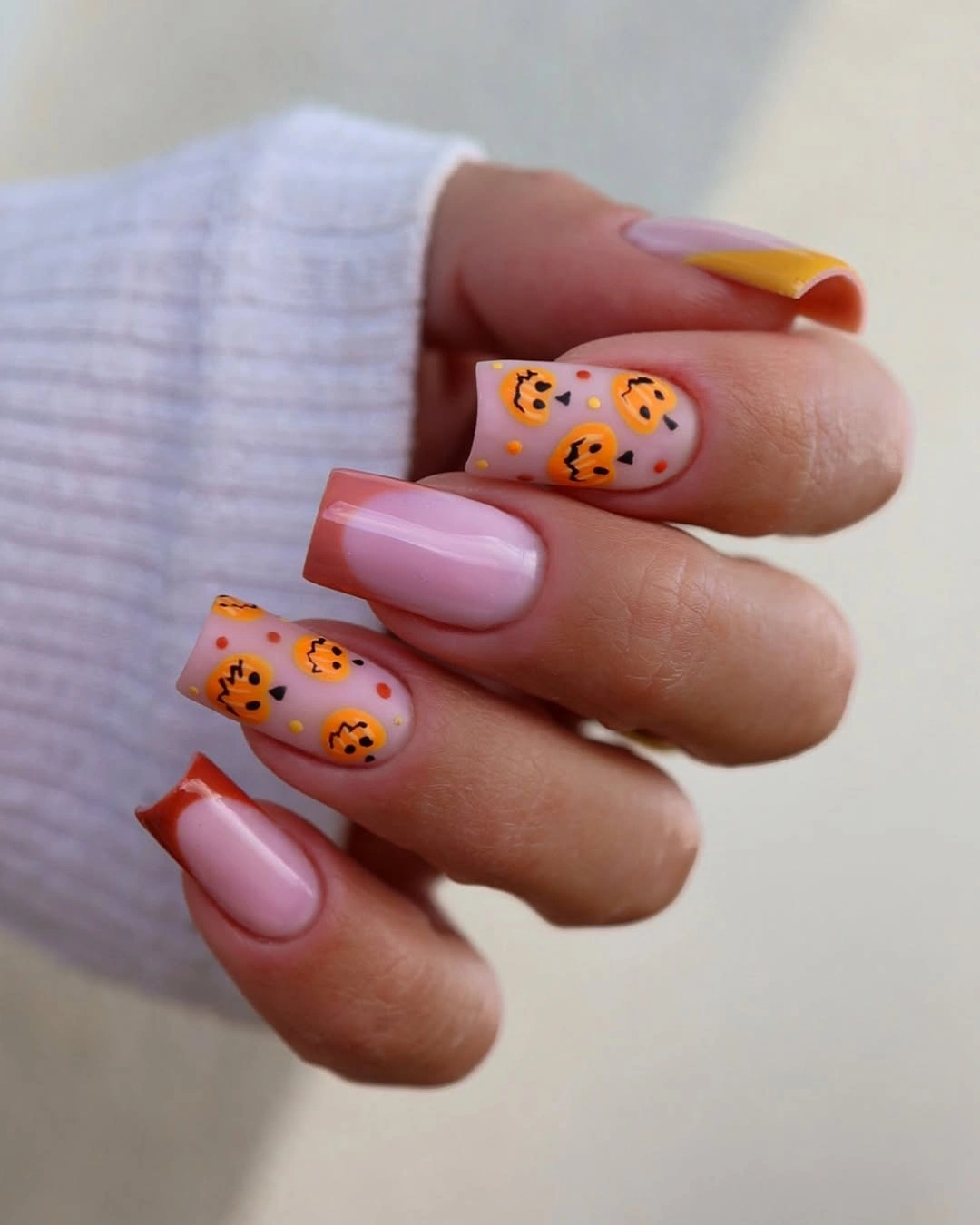
The face details are most effective when they are treated as simple symbols rather than tiny portraits. Two dark eyes, a curved mouth, and a clear stem can communicate the pumpkin idea quickly, while the orange edge links the illustrated nail to the plain ones; if every finger receives a different face, the long square shape can start to look busier than intended. A shorter adaptation can retain the orange tip on two nails and place one simplified face on a nude or pink accent.
Long square length offers the room needed for the graphic shapes, but it also makes wear and grow-out easier to notice. If a practical manicure is the goal, soften the square edge slightly, reduce the face scale, and let one or two fingers carry the theme instead of repeating it across the hand. The pink base remains a useful compromise because it supports orange color while making the design less severe than a black Halloween manicure.
Pale Pink Pumpkin Accents With Gold Shimmer
Soft pink nails look warmer when a small orange pumpkin drawing is paired with a gold shimmer accent. The medium almond set keeps the base pale, places tiny seasonal illustrations on selected fingers, and uses one reflective nail as a pause between the artwork; that division prevents the hand from reading as a single busy pattern. The almond shape lengthens the fingers visually, yet the restrained palette keeps the result gentle enough for everyday styling.
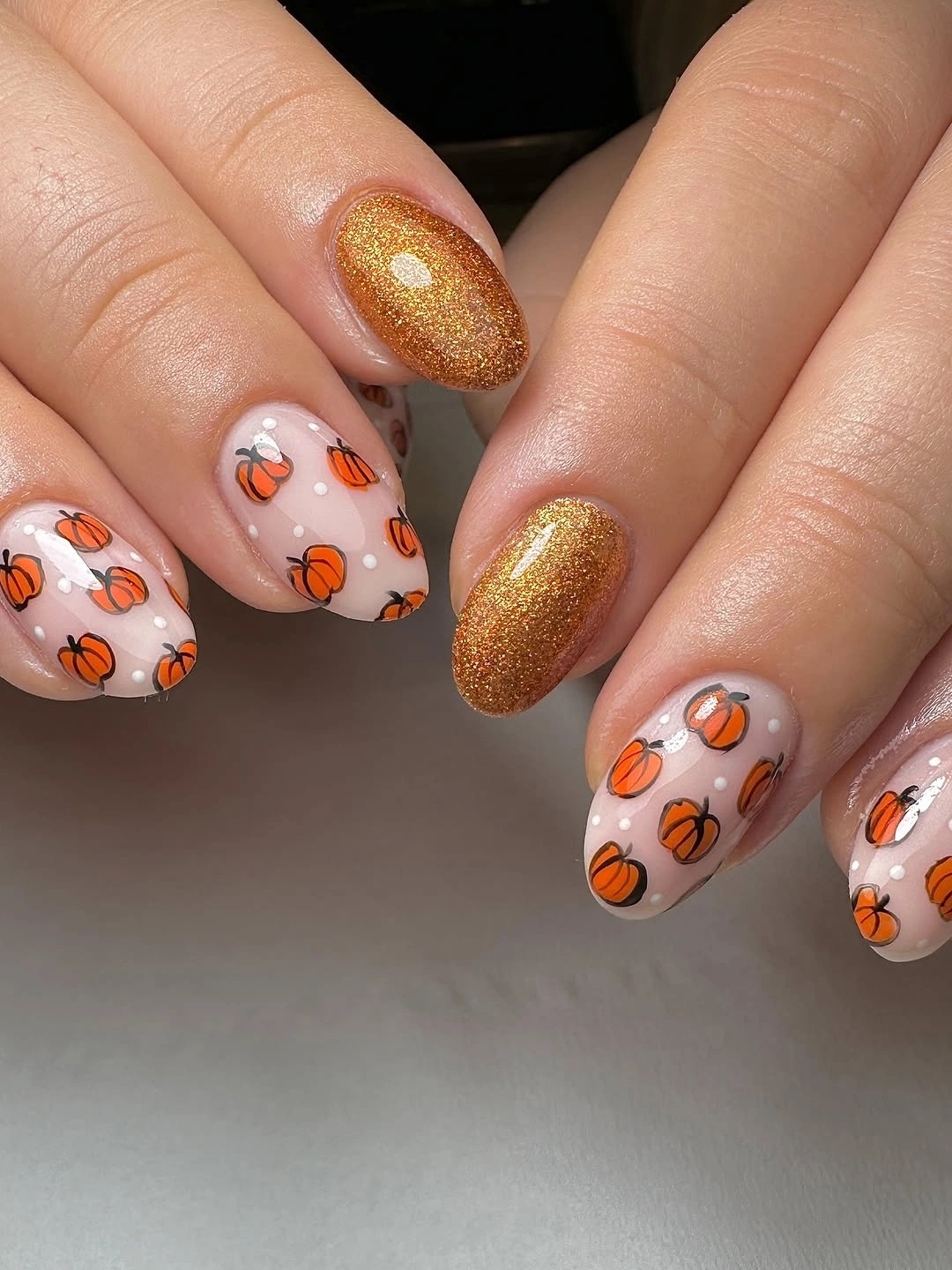
Gold is doing more than adding sparkle here. It bridges the cool softness of the pink base and the warmer orange motif, so the colors feel related even when the illustrated nails are separated; a fine glitter or shimmer also adds interest without competing with a pumpkin face. When adapting the design, place the metallic finish on one nail and keep the other accents simple, because too many reflective surfaces can make the small drawings harder to notice.
The pale ground gives this idea useful flexibility across lengths. A short almond shape can carry one orange pumpkin and one gold nail without losing balance, while a longer tip can hold a slightly more detailed outline near the free edge. The glitter may show texture as it grows out, and orange can stain the visual balance if it spreads too far, so keeping the accent area controlled will preserve the soft mood.
Short Orange Polish With Black Pumpkin Sketches
Bright orange becomes the main statement on these short square nails, while small black pumpkin sketches create the seasonal detail. Most fingers appear as solid glossy orange, with only selected nails carrying fine dark marks and a warm gold glitter accent, so the set reads clearly from a distance before the miniature drawings reward a closer look. The compact shape keeps the saturated color energetic without the drama of a very long tip.
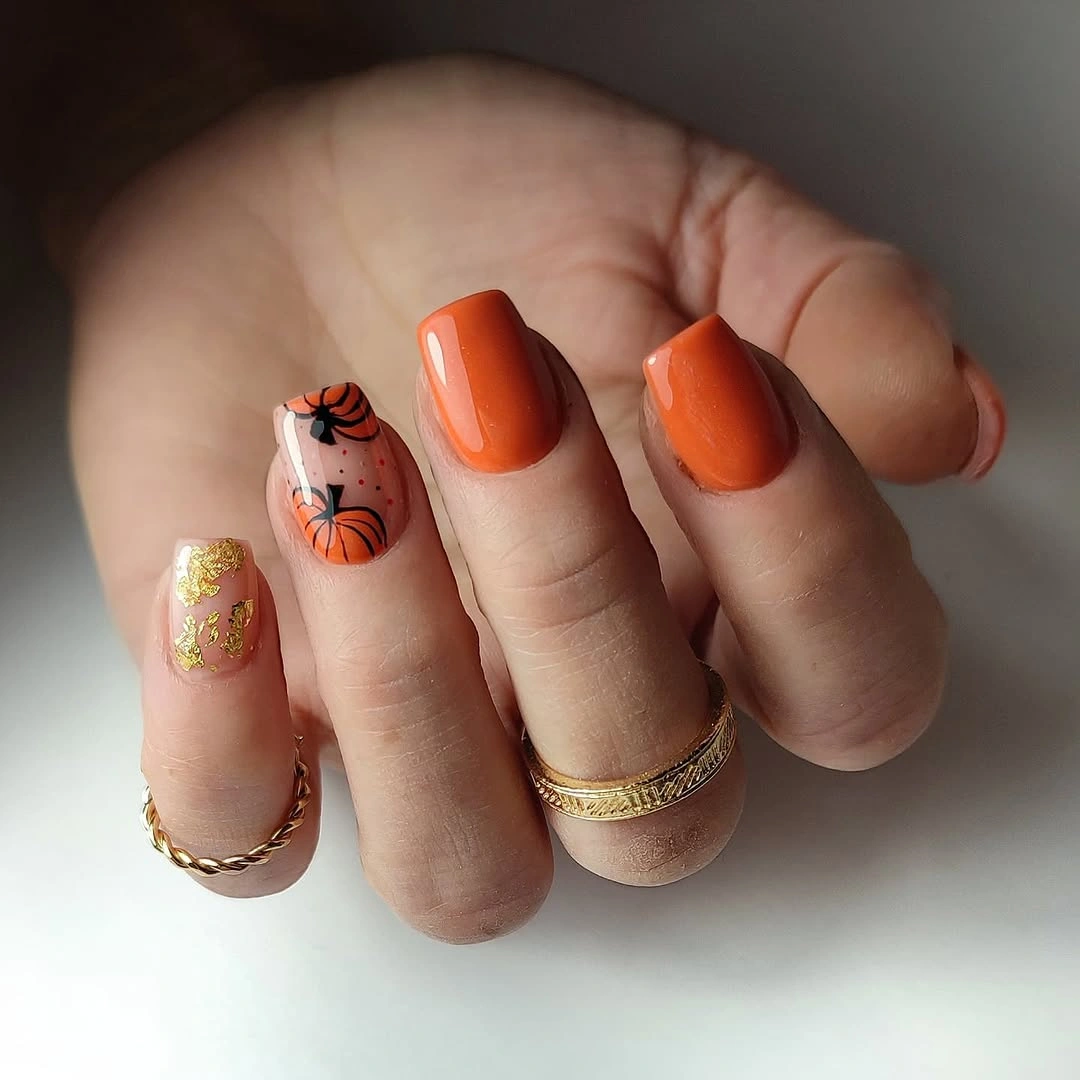
The contrast is simple but effective: orange fills the visual field, black gives the tiny drawings definition, and gold adds a change in texture. This arrangement is a good reminder that the motif does not need to occupy every nail when the base color already carries the theme; if the orange feels too intense, use it on two fingers, repeat the black sketch on one accent, and replace the rest with nude or transparent pink.
Short square nails make the idea easier to live with than a long orange set, but vivid polish can reveal chips quickly at the corners. A clean outline matters because the black sketch is small and there is little visual space to hide a smudged edge, while the glitter accent can be kept away from the most active finger if maintenance is a concern. The finished effect suits casual fall clothing, dark denim, and simple metal jewelry without asking the manicure to be delicate, much like the practical approach behind simple fall short nails.
Orange Tips With Tiny Pumpkins On Square Nails
Long square nails can make a pumpkin theme look organized when the orange is placed along the tips. The pale base remains open, while orange French-like edges and small seasonal illustrations repeat the same color across the hand, creating a frame that is visible even before the tiny drawings are read. This approach feels more structured than a full orange nail because the color follows the edge of the shape and leaves the center comparatively calm.
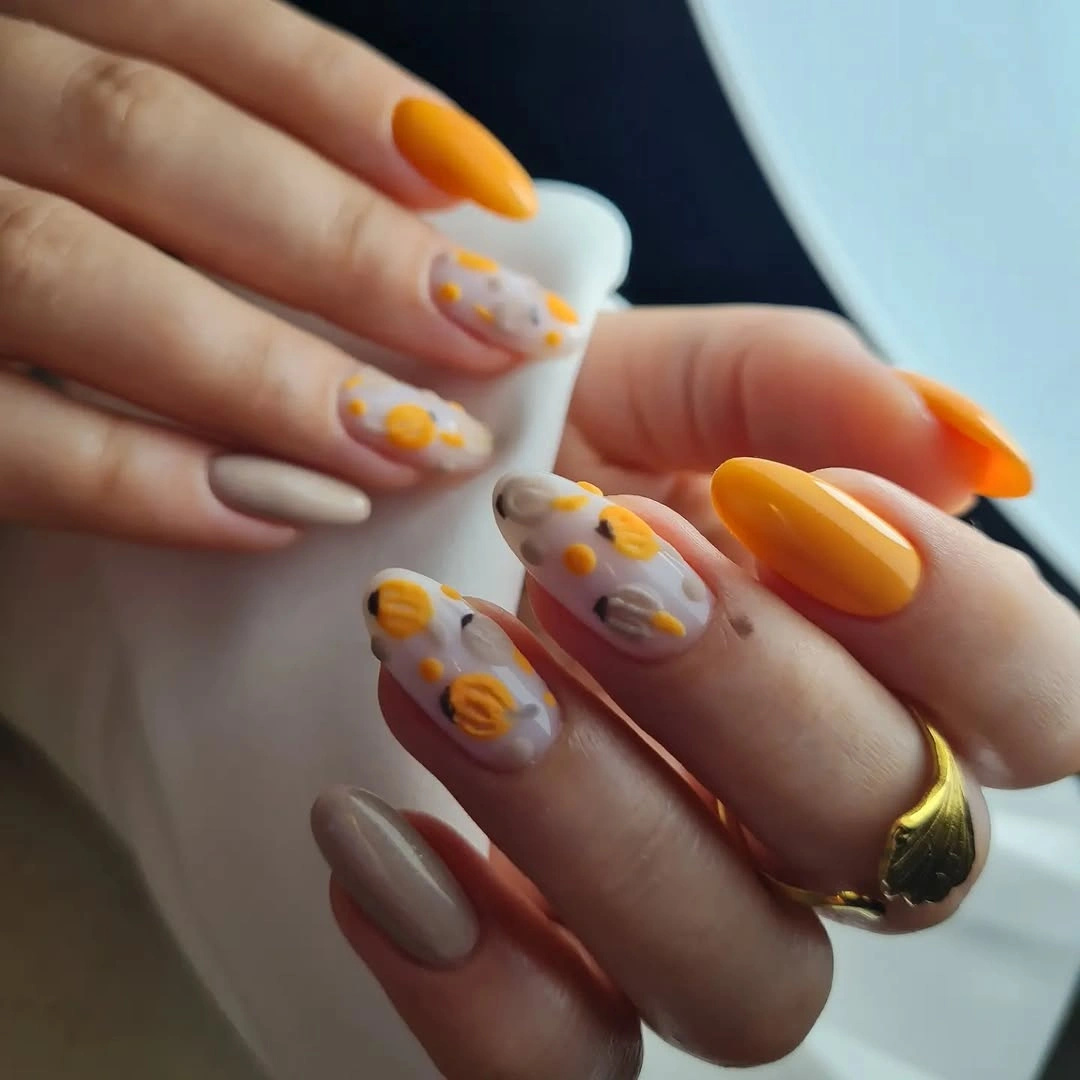
The tip line and the small motif should support each other rather than compete. Keep the orange edge similar in width, use one or two pumpkins on the accent nails, and let the pale center show so the long square silhouette does not become visually heavy; this also makes the design easier to adapt to a shorter free edge. A cream or translucent pink base can replace the white impression without changing the underlying balance.
Because the orange is concentrated at the edge, grow-out may be less distracting than with a solid orange manicure, but corner wear on a square shape is still easy to see. The long tips create a dramatic canvas for fine details, so someone who works with their hands may prefer a softened square or a shorter version with only one pumpkin accent. The visual payoff is a tidy seasonal border that feels more polished than a dense pattern.
Pink Square Tips With Fine Black Pumpkin Lines
Pink square tips bring a softer base to orange edges and fine black pumpkin linework. The design uses long squared nails with a pale pink ground, bright orange near the free edge, small dark drawings, and a warm metallic note, so the set feels seasonal without filling the entire surface with color. Fine black lines keep the motifs graphic and light, while the square shape gives them a clear boundary.
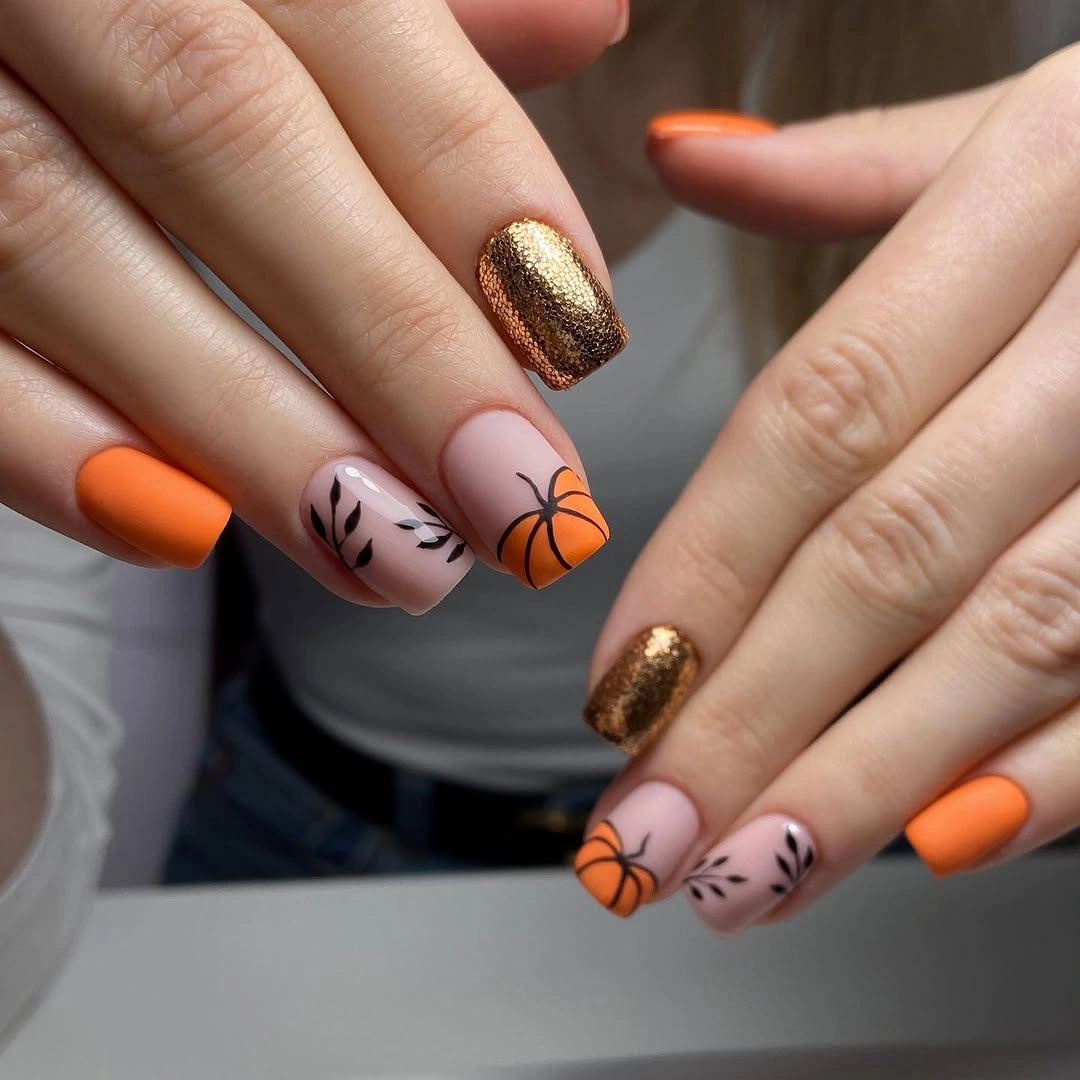
The detail works because the orange is bold and the black is selective. A single outlined pumpkin can hold the reader’s attention while the orange tips repeat the color elsewhere, and the pale pink prevents the combination from becoming as hard-edged as black and orange alone; for a shorter adaptation, move the line drawing closer to the center and narrow the tip. Avoid adding extra symbols unless the open pink areas still feel deliberate.
Long square length makes the fine lines visible, but it also means that the design has a stronger fashion statement than the small rounded looks. If you prefer a lower-maintenance version, keep the pink base, use orange on two tips, and change the black drawing to a single stem or curved pumpkin outline. The metallic accent can be kept subtle so it warms the look without pulling attention away from the linework.
Chocolate Almond Nails With Bronze Pumpkin Accent
Deep chocolate almond nails create a richer fall mood when bronze shimmer takes the place of a brighter orange. The set alternates glossy brown, bronze texture, and a nude accent with a small pumpkin, so the theme arrives through warmth and contrast rather than a collection of obvious characters. The medium almond length keeps the dark palette elegant, while the one illustrated nail gives the hand a point of curiosity.
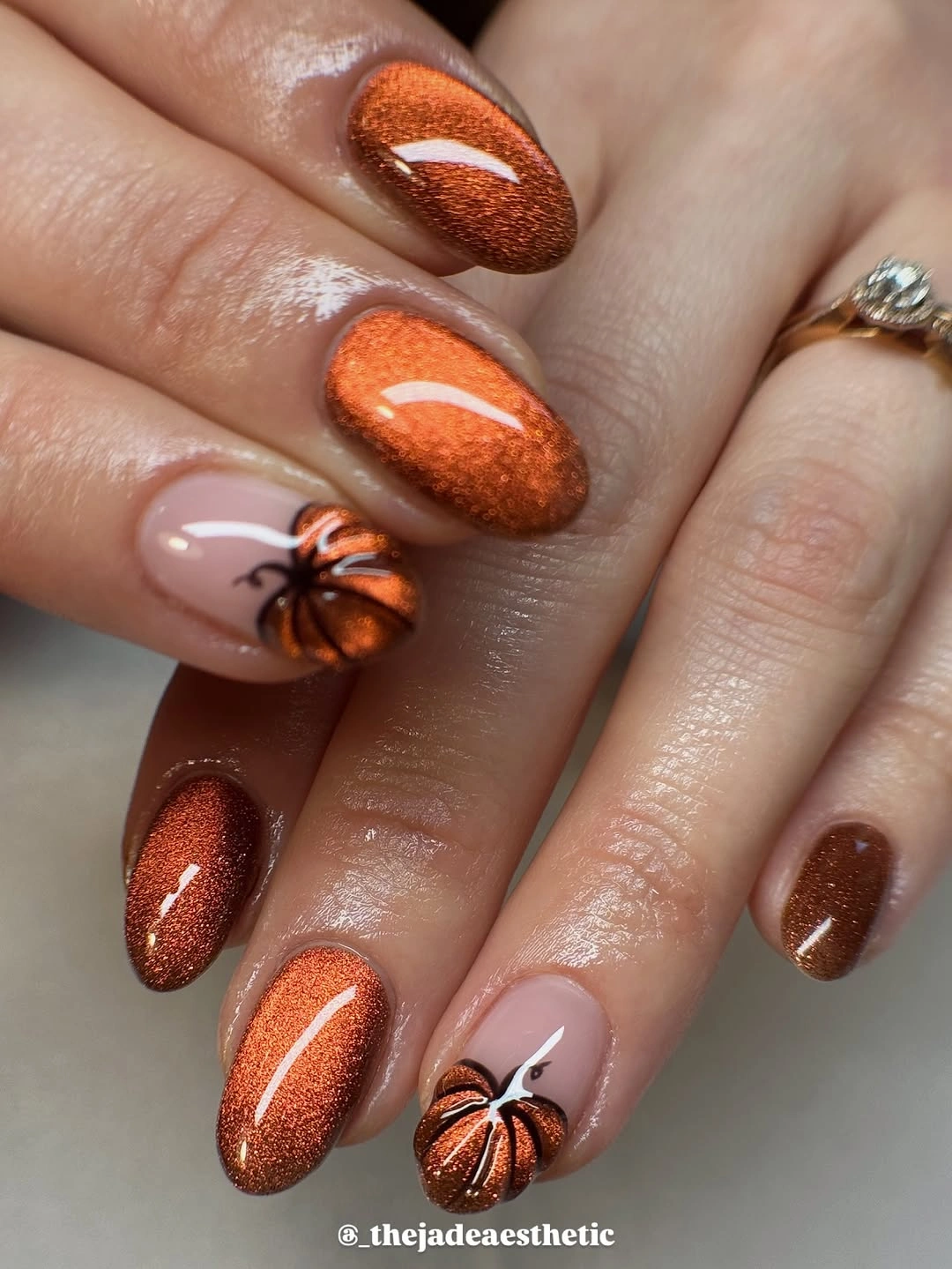
Bronze is the bridge between the solid brown and the small orange drawing. It reflects light differently from the glossy nails, making the hand feel dimensional, and it softens the transition from deep neutral to seasonal accent; if the shimmer becomes too prominent, a thin metallic stripe can provide the same connection with less surface texture. Keeping the nude nail beside the bronze also prevents the set from turning into one uninterrupted dark block, a balance that echoes the richer neutrals in brown fall nails.
This idea suits someone who likes autumn color but wants the manicure to stay close to a neutral wardrobe. Brown can hide small marks better than bright orange from a distance, although glitter or shimmer may show uneven texture as the nail grows out, and the almond tip benefits from a consistent length. A shorter set can use brown on three nails, bronze on one, and a simple pumpkin on a nude ring finger without losing the original logic.
White Square Nails With Orange Pumpkin Confetti
Short square nails turn repeated orange shapes into a confetti-like pattern over a clean white base. The hand carries several orange pumpkin or seasonal figures, with small dark and green details keeping each accent distinct, so the manicure feels cheerful and graphic rather than muted. The pale ground is important because it separates the motifs and lets the short shape remain crisp instead of disappearing into a deep background.
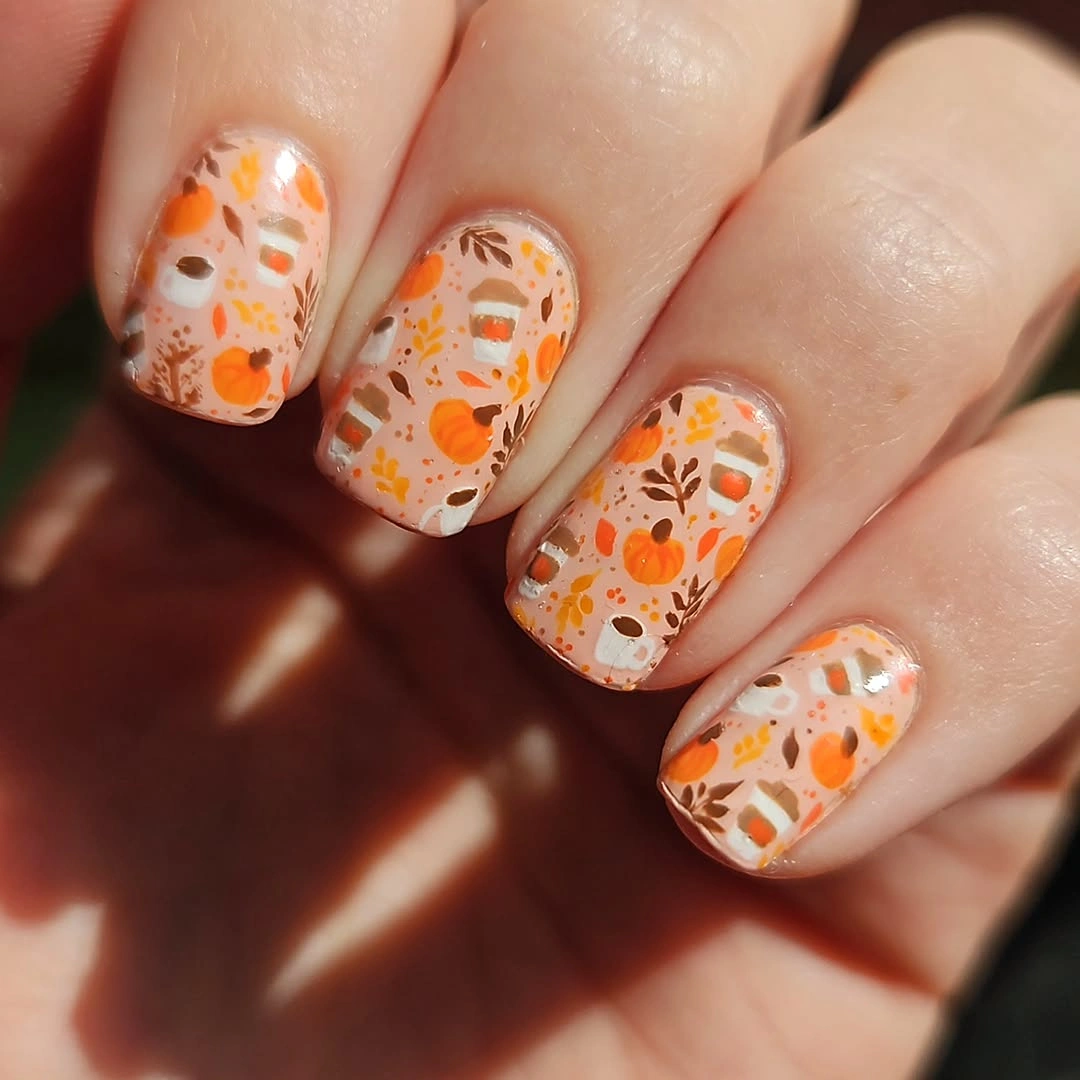
The pattern is strongest when the shapes vary slightly but share one scale. Orange supplies the repeated color, dark details give the figures a readable outline, and the white field provides enough negative space for the eye to count the accents; on very short nails, simplifying the internal marks will protect that clarity. You can keep the motif on two accent nails and use an orange tip elsewhere if a full confetti effect feels too busy.
A dense repeated design asks for more attention to spacing than a single pumpkin accent. If the figures sit too close to the sidewalls, the short square shape can look crowded, while a little air around each motif makes the hand feel deliberate; the upside is that a light base usually makes growth less visually abrupt. This style has a bright, friendly mood that works well with casual fall colors, especially when the rest of the outfit stays simple.
Pink Nails With Fine Black Pumpkin Marks
Pale pink rounded nails keep the pumpkin idea small, using orange and brown seasonal accents with thin black marks and tiny star-like details. The dark background behind the hand increases contrast, but the manicure itself stays light because the colored elements are limited and the pink base remains visible on most fingers. This gives the design a delicate character that sits between a literal pumpkin set and a general autumn manicure.
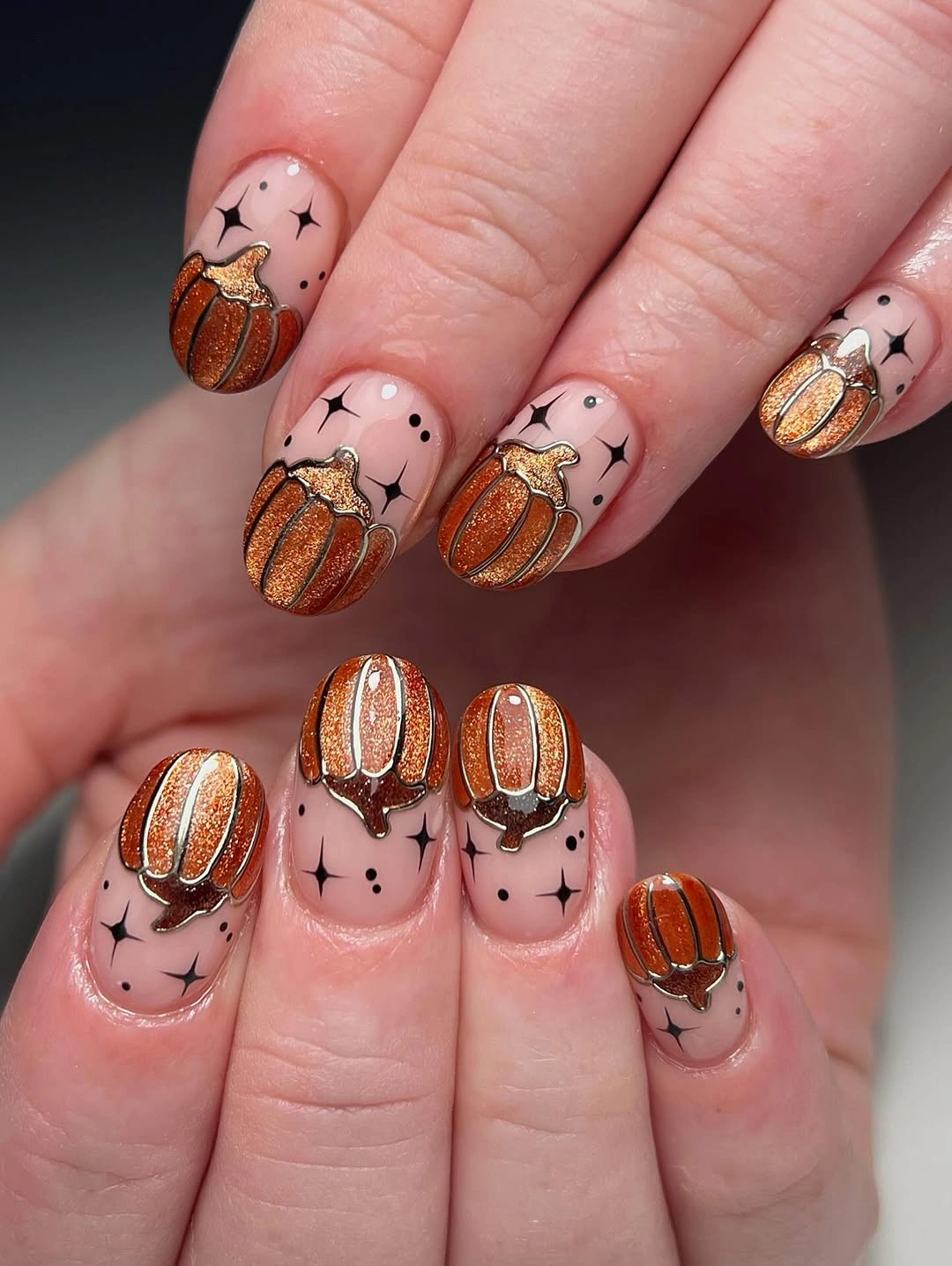
Fine black lines are doing the organizing here. They give the orange and brown shapes a clear boundary, while the small marks add rhythm without asking for a different character on every nail; if the hand is short, one pumpkin and one dark dot can communicate the same idea more cleanly than a crowded illustration. The pink base also makes it easier to pair the manicure with blush, cream, or warm brown clothing.
The restrained density makes this look adaptable, but minimal art leaves little room for messy placement. Keep the motifs away from the cuticle, let one finger stay plain, and use the black marks sparingly so they do not overpower the soft base; orange and brown can then act as seasonal punctuation rather than a full palette takeover. A rounded shape is practical, although the delicate linework may need refreshing if the tips are exposed to frequent friction.
Brown Oval Nails With Nude Fall Accents
Short oval nails can hold a surprisingly rich autumn palette when deep brown solids are paired with nude accents and tiny orange drawings. The visible set alternates brown, brown shimmer, and light nails carrying small seasonal illustrations, so the eye moves between depth and open space instead of meeting one continuous dark surface. The oval shape softens the stronger color and makes the manicure feel cozy rather than severe.
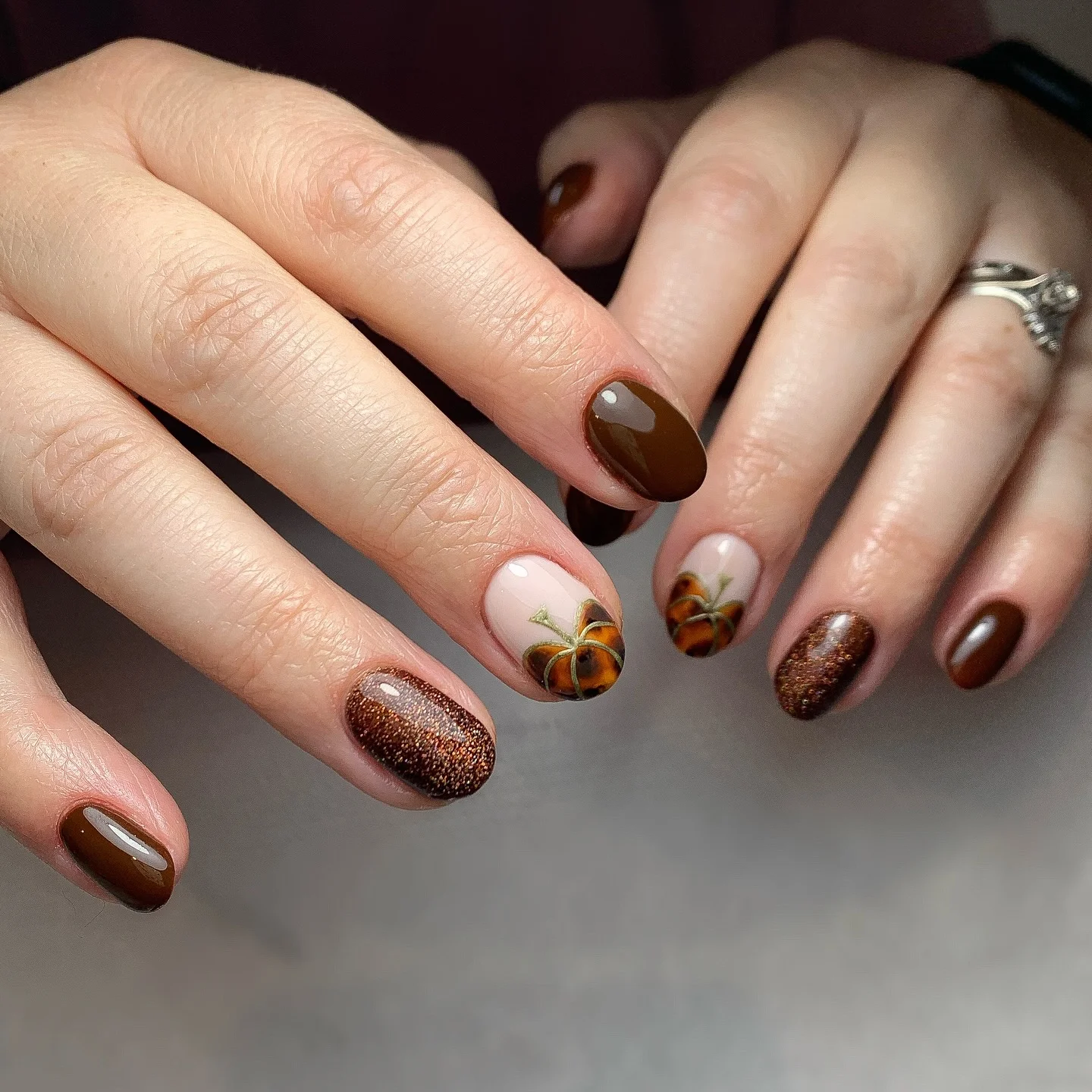
The contrast between matte-looking depth and reflective brown texture gives the design more interest than color alone. Nude accent nails create a clear place for the tiny orange and black details, while the darker fingers anchor the hand; if you want a simpler finish, keep only one shimmer nail and use flat brown on the rest. This also offers an easy way to coordinate the manicure with brown boots, denim, or a warm neutral coat.
Short oval tips are forgiving in daily use, though dark color will still show chips more than a pale base. The small accent drawings should stay away from the side edges so they do not look compressed, and the shimmer can be placed on a less active finger if surface texture is a concern. Someone who wants a pumpkin reference without a bright orange hand could use this balance as a practical middle ground.
Bright Orange Nails With Framed Mini Scenes
Bright orange nails become tiny display frames in this playful composition. The short rounded shape is surrounded by a solid orange field, while selected nails contain small inset ovals or framed scenes with contrasting dark, cream, and muted colored details; the repeated frame gives unrelated miniatures a shared structure. Instead of drawing one pumpkin in the same position, the design treats each accent as a small seasonal tile.
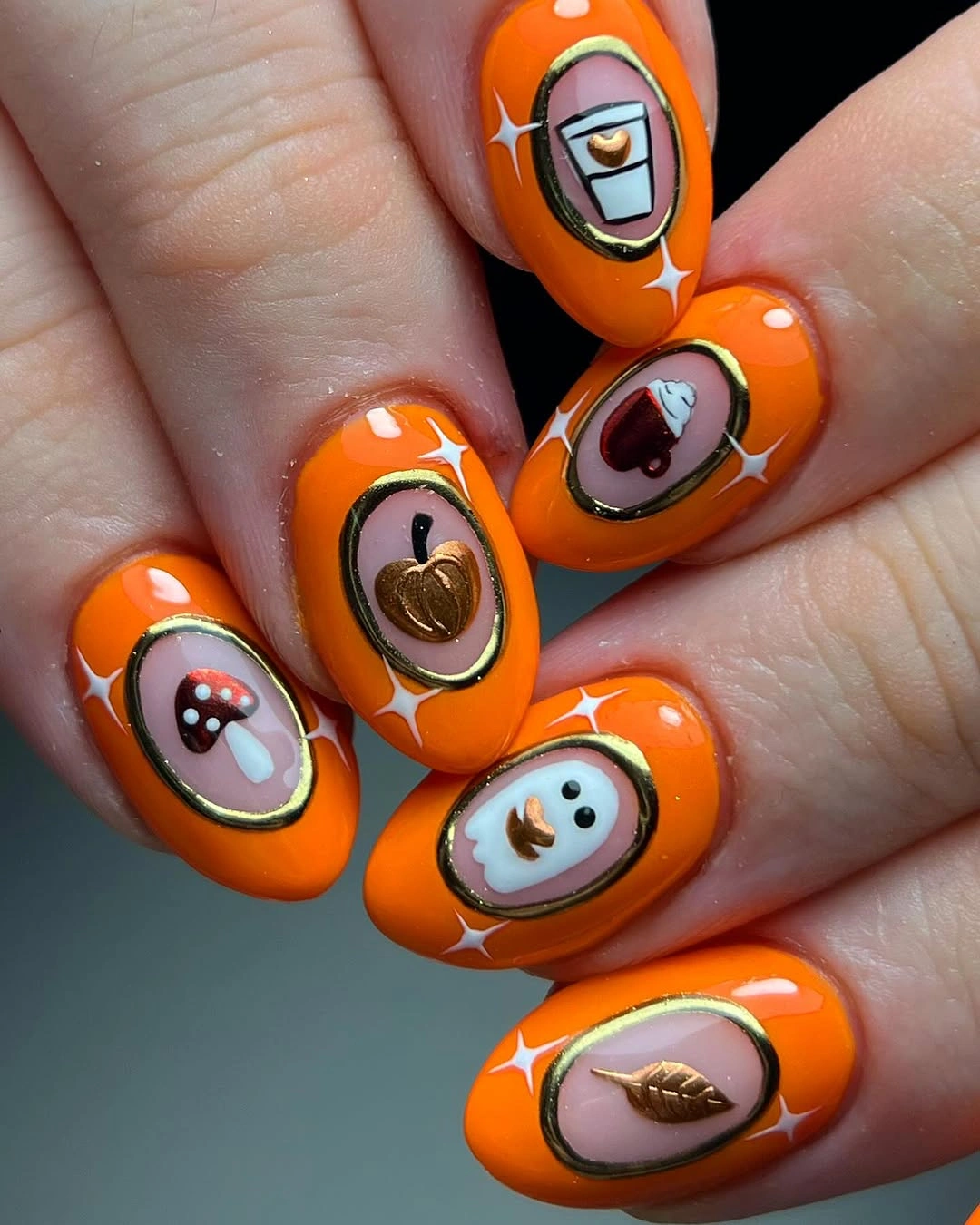
The framing is what makes the idea recognizable and cohesive. Orange acts as the border around every inset, so the eye reads the hand as one set even when the tiny pictures differ, while the darker outlines stop the frames from blending into the base; a single framed accent can therefore carry the concept on a shorter or quieter manicure. Keep the interior shapes simple, because too many small colors will compete inside a very small space.
This is a statement choice for someone who enjoys novelty more than minimal polish. The bright base will attract attention and may reveal wear quickly, while the small framed details ask for careful maintenance if the edges are expected to stay crisp; the payoff is a miniature-art effect that no simple pumpkin outline can provide. For everyday use, place one frame on the ring finger and keep the remaining nails orange or warm nude.
Milky Almond Nails With Orange Floral Details
Milky almond nails shift the seasonal idea toward delicate floral decoration. The pale glossy base carries small orange clusters with a few green details, and the medium almond shape gives those accents room without making the hand feel theatrical; the motifs read as pumpkins, petals, or warm fall ornaments depending on how closely they are viewed. That ambiguity makes the set useful beyond one holiday because the color story stays autumnal even when the exact symbol is not obvious.
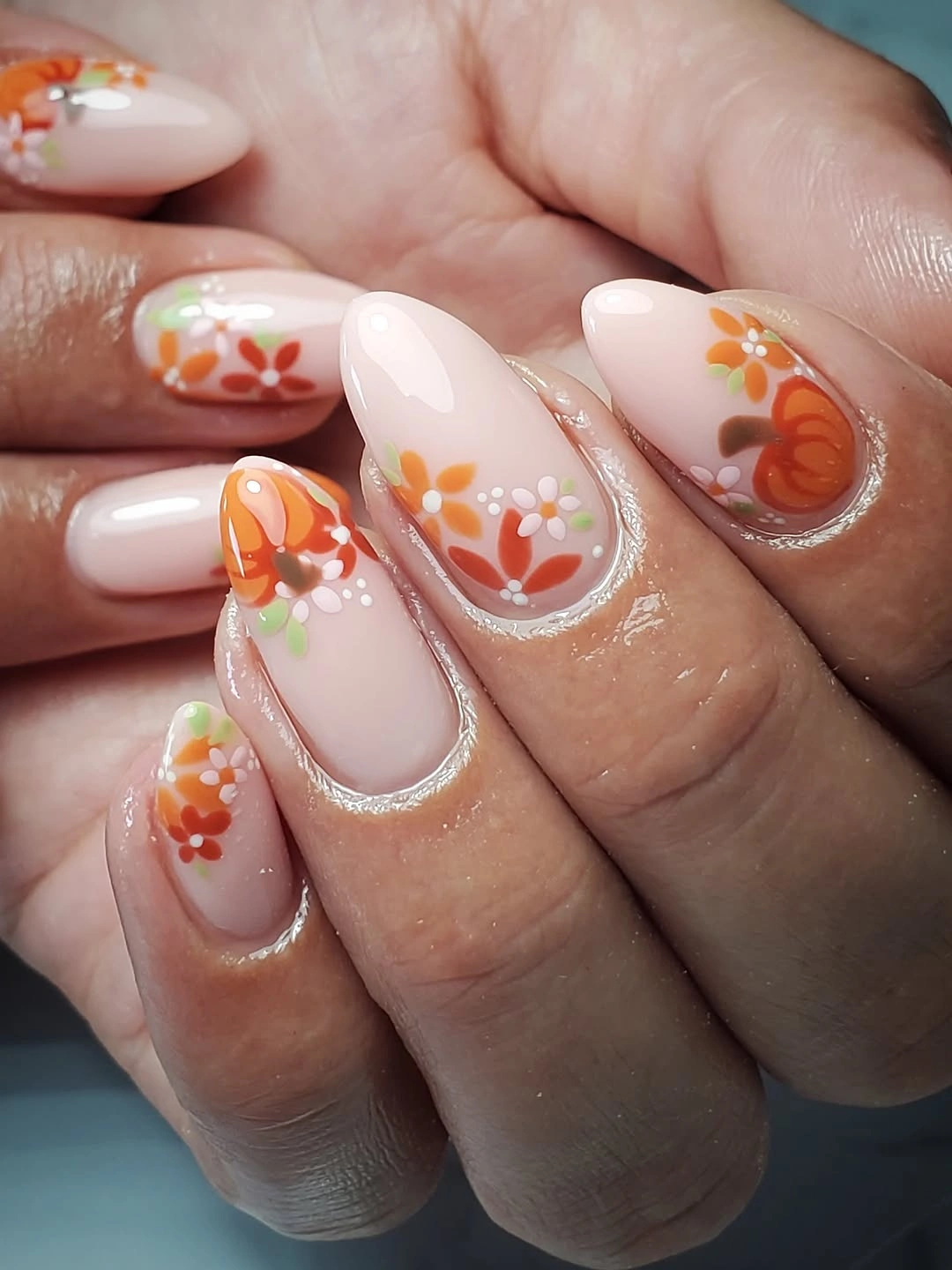
The pale base and small clusters work together by keeping the visual weight near the tips. Orange supplies warmth, green adds a natural note, and the open milky area stops the design from becoming a full pattern; if the nails are shorter, reduce each cluster to two or three dots and one curved detail rather than trying to preserve every petal. A single plain milky nail will make the accent fingers feel more intentional.
This is one of the easier designs to wear with soft sweaters, cream clothing, and understated jewelry because it does not depend on strong black outlines. The limitation is precision: small floral marks can blur when they are placed too close to the cuticle or layered too densely, and a glossy pale surface shows smudges during application. Keeping the orange concentrated on a few fingers preserves the airy mood while still giving the manicure a clear fall identity.
Long Nude Nails With Webs And Orange Florals
Long tapered nails can combine autumn warmth with a slightly spookier linework accent. The nude-pink base carries orange floral or pumpkin-like details, black spiderweb or insect-like marks, and one ornate gold element, so the hand moves between soft color and sharper geometry. The length gives the fine lines room to travel, while the pale ground prevents the mixed motifs from collapsing into one dark mass.
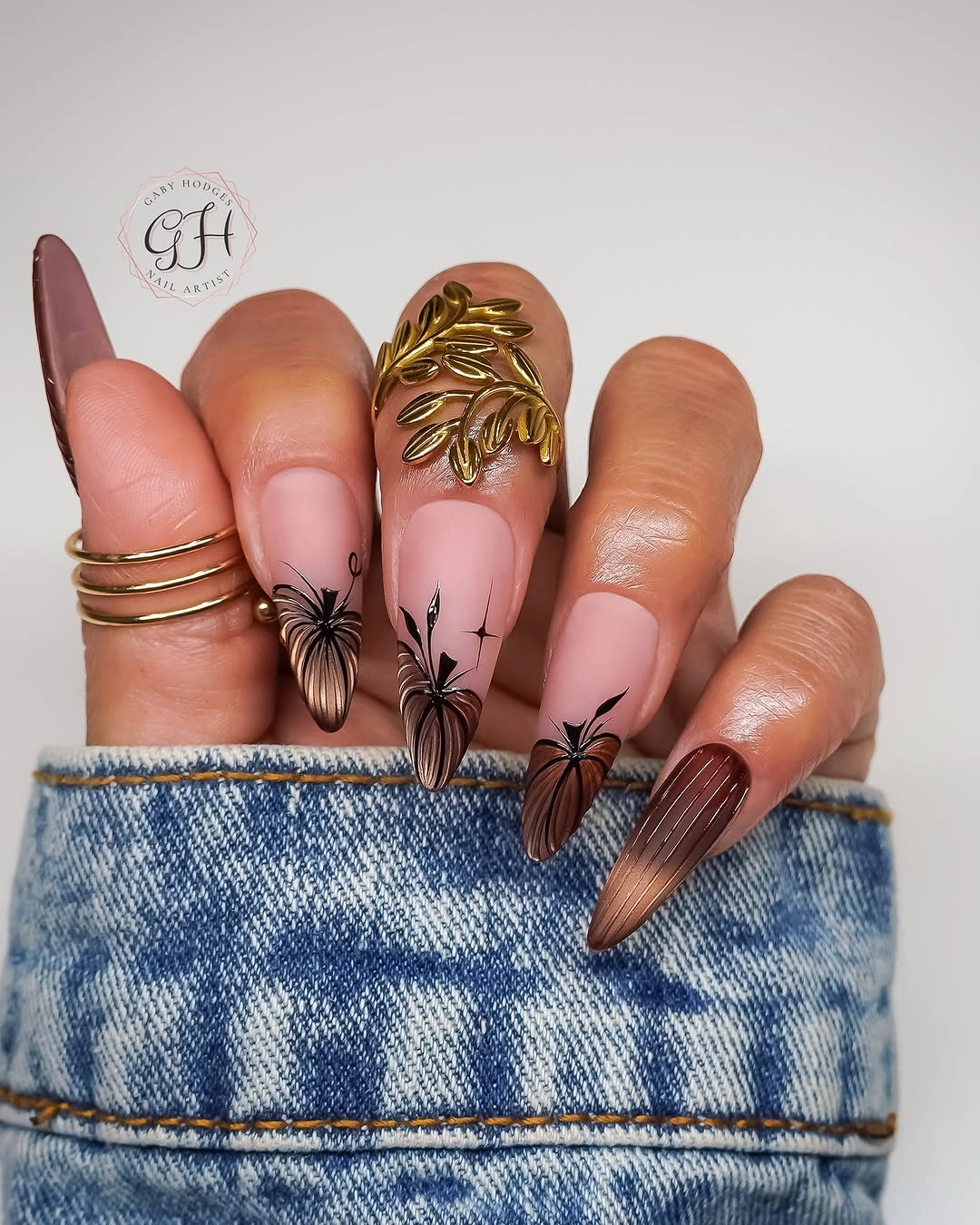
Placement is the reason the composition holds together. The orange accents sit apart from the black web-like linework, and the gold detail provides a warm bridge rather than another competing character; if every nail received the same density, the long silhouette would look overloaded. To adapt the design, keep the web on one finger, use an orange floral on another, and let the remaining nails stay nude or lightly outlined.
The long tapered shape is visually striking but brings practical limitations. Fine web lines can show growth and chips, ornate details may catch on clothing, and a shorter nail needs wider, simpler marks to maintain the same readability; none of that weakens the idea, it simply changes how much artwork the surface can support. This is a good choice for a statement appointment or an event where the manicure is meant to be noticed close up.
Neutral Almond Nails With Small Orange Accents
Neutral almond nails offer the calmest pumpkin interpretation in the final group. The set alternates pale nude, deep brown, and small orange line motifs, with a dark curved accent adding just enough contrast to keep the hand from looking plain; the design does not need a pumpkin on every finger because the warm color relationship already suggests fall. Medium almond length keeps the fingers elongated while leaving the overall impression relaxed.
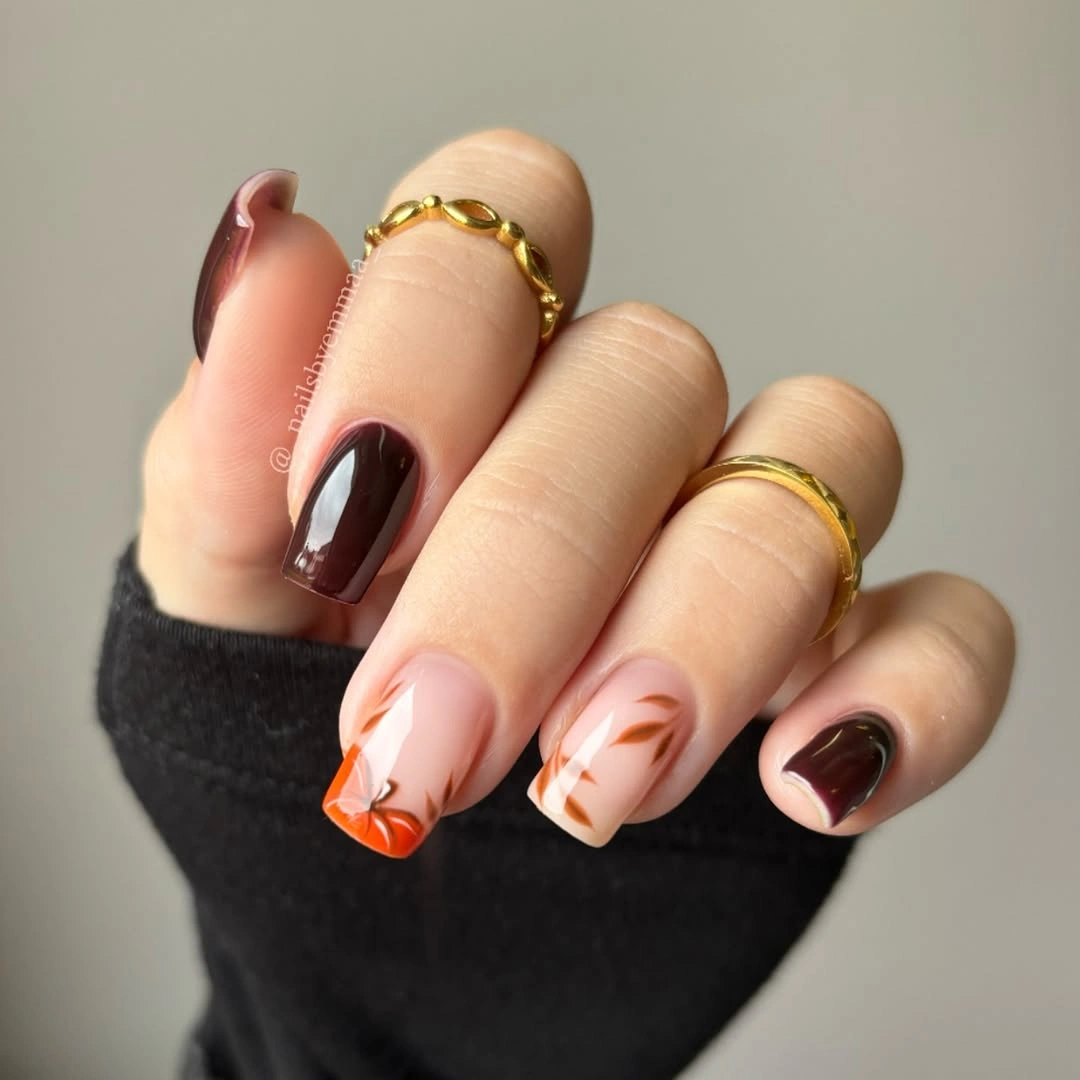
The useful lesson is how little decoration can be enough. One brown solid anchors the palette, an orange mark creates the seasonal cue, and the nude nails provide breathing room so the dark color does not dominate; this makes the idea easy to adjust for work or a quieter wardrobe. If you prefer more definition, add a single black stem or thin curved line rather than introducing another full illustration.
Because the design is mostly neutral, it should transition well as the nails grow and can be paired with almost any autumn clothing color. The small orange details still need careful placement because there are so few of them, and a dark accent can make a short nail look heavier if it sits too close to the edge. A rounded almond or short oval version would preserve the same calm balance with less length-related upkeep.
Tortoise Orange Panels On Long Almond Nails
Long almond nails bring a richer pattern into the pumpkin palette through orange-brown panels that resemble tortoise color. Translucent nude, deep brown or black glossy sections, and warm patterned accents share the hand, while one small seasonal detail keeps the set connected to the topic without repeating a pumpkin face. The contrast between clear-looking nude space and darker panels gives the manicure depth and makes the long silhouette feel deliberate.
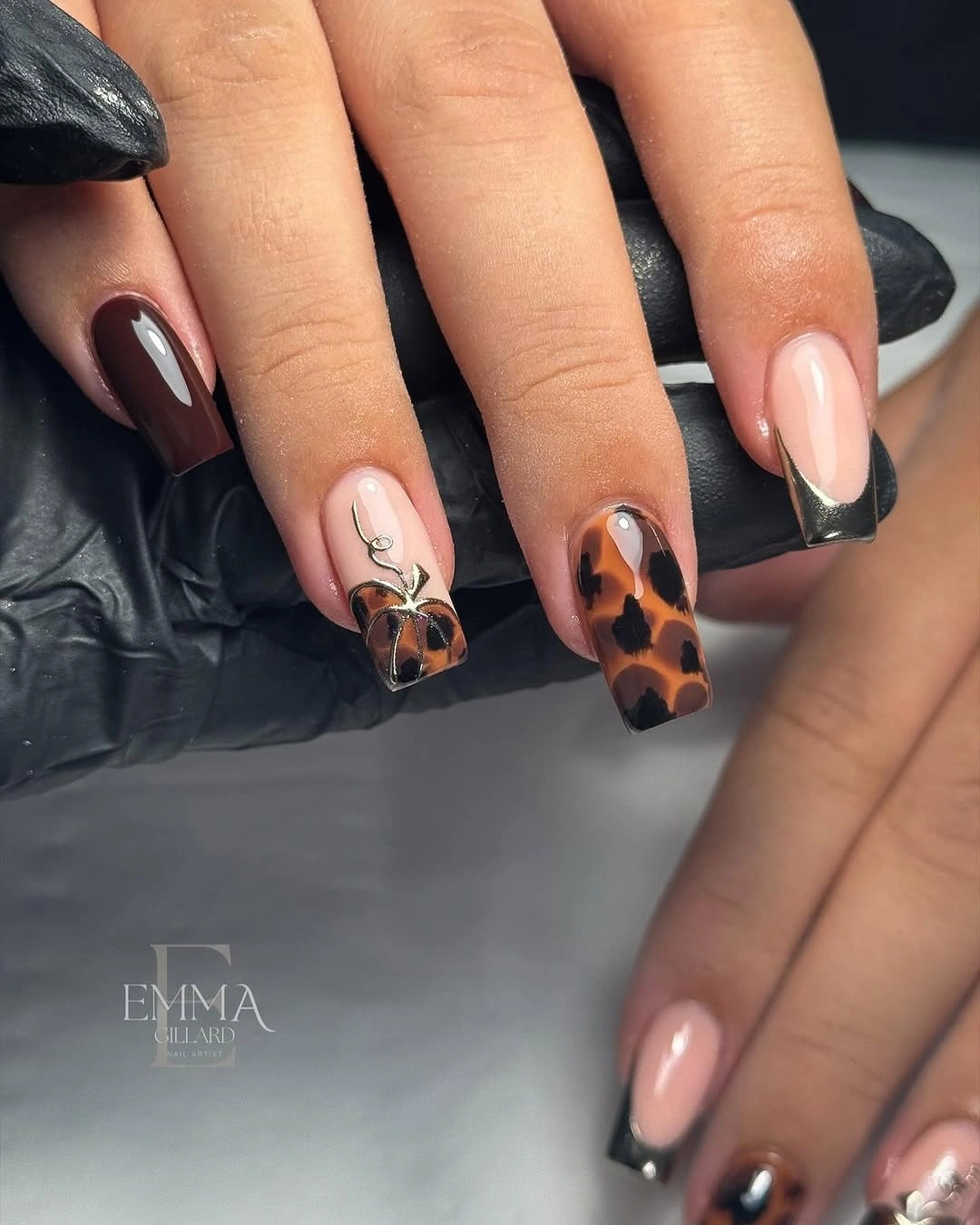
The patterned panel works as a substitute for obvious illustration. Its layered orange and brown tones echo autumn leaves and pumpkin skin, while the dark glossy nails sharpen the overall outline; a nude finger between the two prevents the hand from becoming visually dense. For a shorter version, keep the tortoise effect on one accent nail and use a plain brown or nude on the others so the pattern remains the feature.
This composition has a stronger fashion quality than the tiny pumpkin designs, which may appeal to someone who wants seasonal color without cartoon motifs. Long almond length makes the panels dramatic but less practical for typing, cooking, or frequent hand use, and patterned surfaces require a clean edge to look intentional as they grow. A medium almond or squoval shape can keep the warm tortoise contrast while reducing the maintenance pressure.
Multicolor Autumn Leaves On Almond Tips
Multicolor almond tips close the set with a lighter arrangement of autumn accents. The nude-pink base carries small brown, orange, purple, and yellow leaf-like or pumpkin-like shapes across the hand, with enough open space for each color to remain separate instead of turning into one muddy pattern. The result feels seasonal through a varied palette, not through a single dominant orange or a repeated character face.
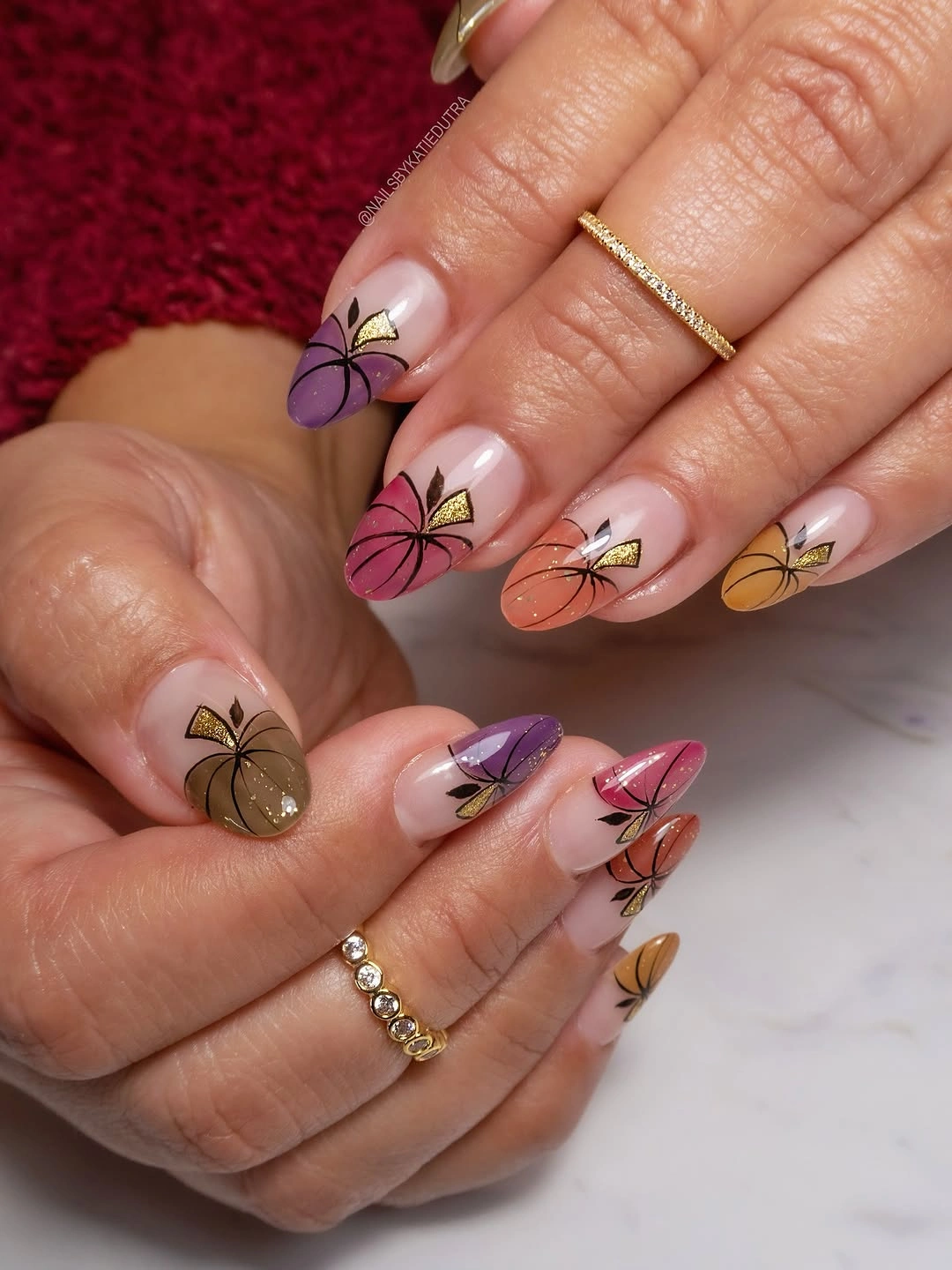
The palette needs a little editing to stay balanced. Three colors can create the same autumn impression with more clarity, especially on shorter nails, while the nude base keeps the hand soft and lets a purple or yellow accent feel intentional rather than random; placing the warmest color near the tips will also echo the natural direction of the almond shape. A single plain nail gives the small accents room to breathe.
This idea works for someone who wants a cheerful seasonal manicure that can move from early fall into later autumn. The varied colors create more styling options, but they also make spacing and scale important because mismatched details can look accidental when viewed together; simplifying the shapes to leaves, dots, or tiny pumpkin ovals will help. The open base and medium length keep the multicolor finish approachable even when the palette is expressive.