When color decides the mood, fall nails with autumn designs become easier to judge. A warm shade can look quiet beside a pale surface, while a muted tone can feel surprisingly assertive when its value is deep or its finish catches light. The interesting decision is not whether a color belongs to fall; it is whether the relationship between the color and the hand creates the mood you actually want to wear.
At the moment of choosing, set one dominant relationship and let it guide the rest of the decision. Ask what you want the eye to notice first, then judge every added detail by whether it strengthens that priority or pulls attention away from it. Change one variable at a time when you adjust the look, and stop when the manicure still feels coherent without explanation. A wearable result usually arrives through a clear limit, not through adding one more idea at the end.
Glossy Red Anchored by Pale Details
Long almond nails combine a glossy red solid with nude-pink surfaces, small white botanical details, and one black-and-gold accent. The color relationship is high warmth against pale relief: red supplies the strongest value and saturation, while the lighter nails stop the set from becoming visually dense. The black accent adds depth, but the red remains the anchor that makes the mixed composition coherent.
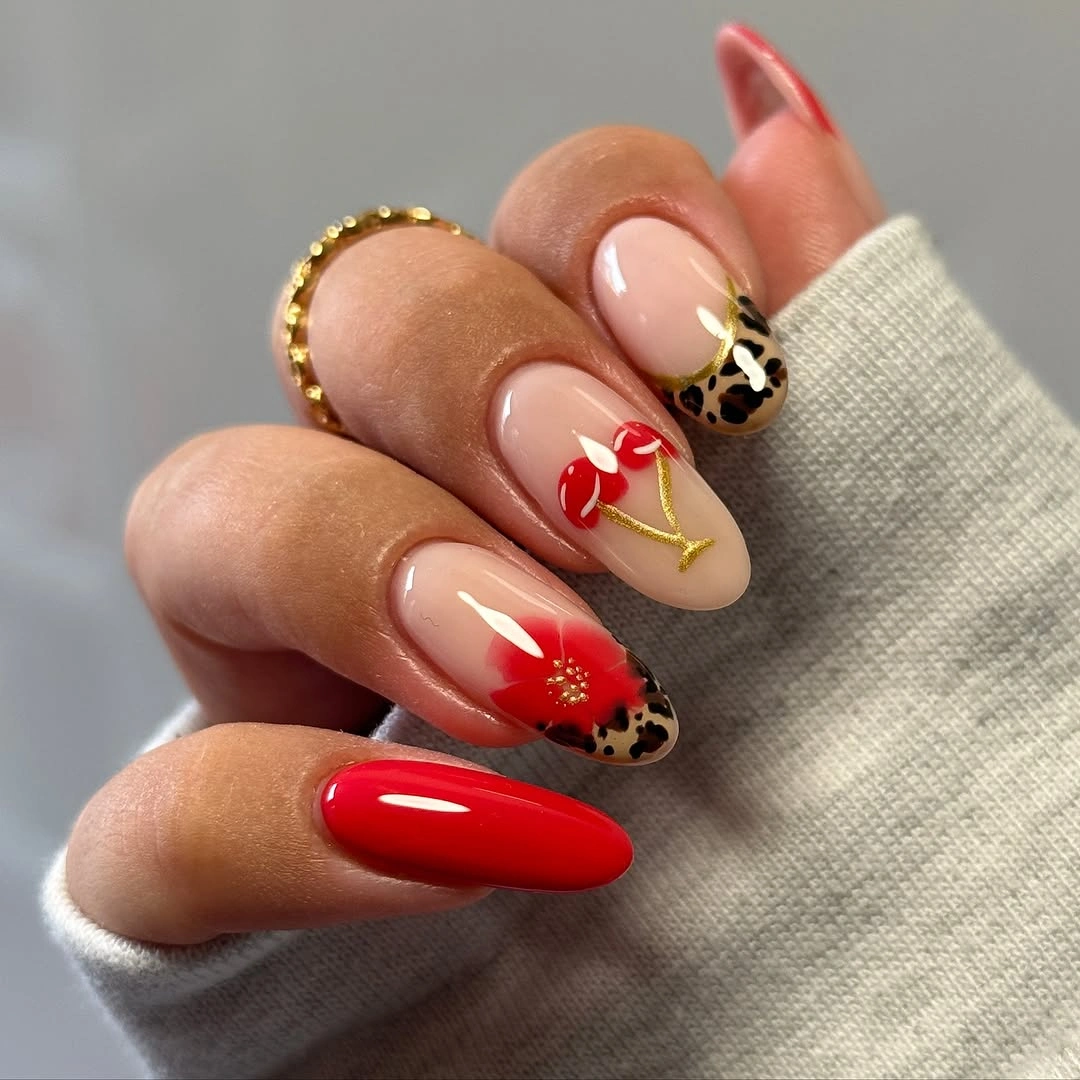
Keep the red on three or four nails if you want the same hierarchy, then place the detailed pale accents where the eye can pause. A medium almond will make the design more approachable without changing the warm-cool balance, and deep brown can replace black for a softer transition. The key is not to add another strong color; the existing red, pale base, and dark accent already create enough contrast.
This palette suits warm knits, cream, denim, and gold jewelry because those surroundings repeat the red’s temperature without competing with it. The long almond shape gives the botanical details room but introduces more practical limits around the tips. If the goal is easier wear, shorten the silhouette first and keep the color order intact, since the red-to-pale rhythm is more important than the extreme length.
Pink Tips with Black Botanical Curves
Long almond nails use pale nude space, bright pink tips, and thin black botanical lines. The color relationship is lively rather than traditionally earthy: saturated pink brings energy to the edge, while black outlines add value contrast and make the design feel intentional. Because the base remains visible, the manicure does not rely on full coverage to feel finished, and the soft knit around the hand lowers the intensity of the bright tips.
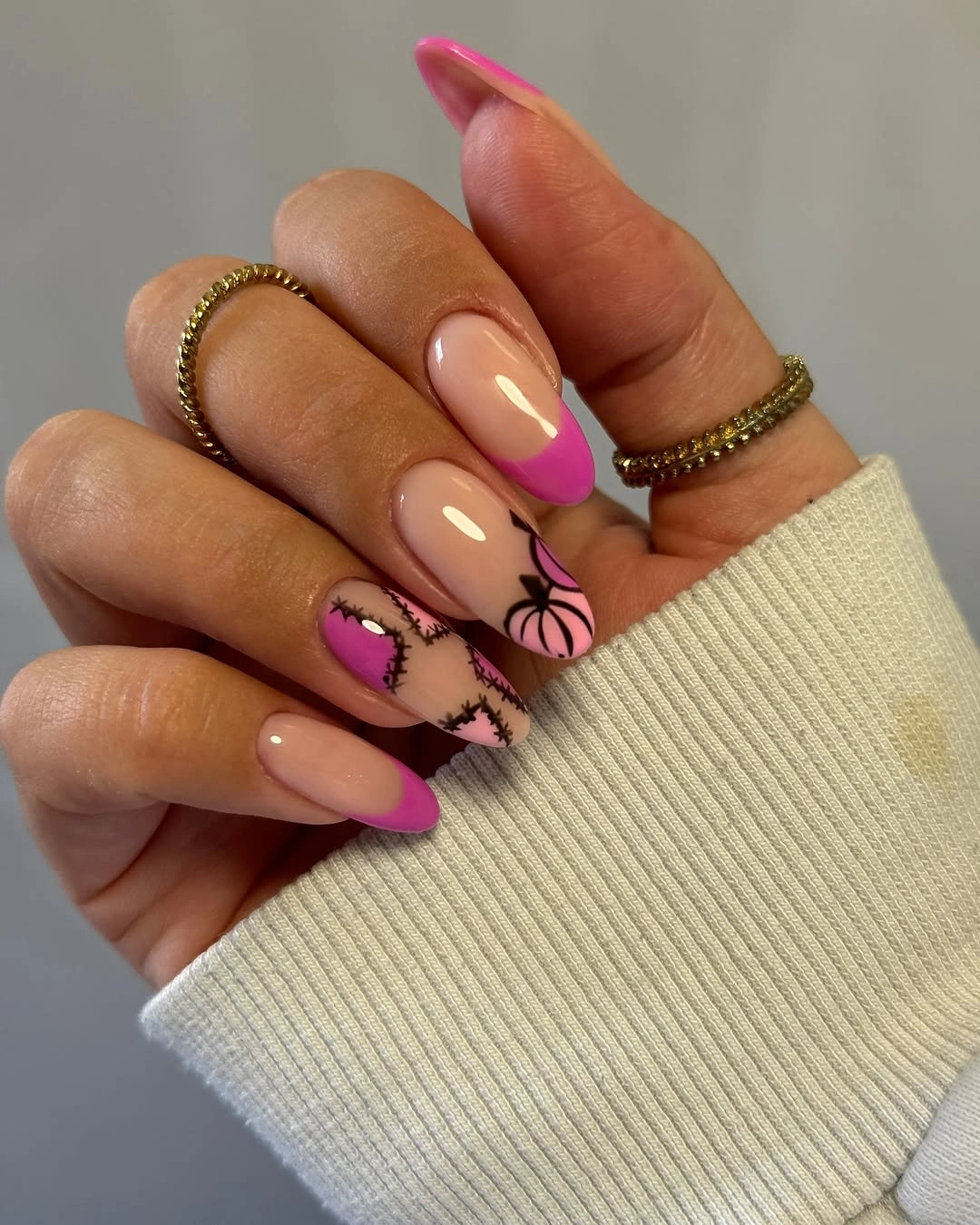
To move this look toward autumn without losing its character, change pink to berry, cranberry, or muted rose while keeping the pale base and black lines. Limit the botanical marks to two accents if the shape is shortened, because a small canvas makes fine curves appear more concentrated. The bright edge should remain the largest color decision, while the black drawing stays secondary and guides the eye rather than taking over.
This is useful for someone who wants a cheerful seasonal manicure instead of a muted one. Long almond tips make the color look elongated, but a medium almond will make the pink edge feel fuller and easier to live with. Pair it with cream or gray clothing, and avoid adding several warm metals nearby; the small black lines already provide the contrast needed to keep the design sharp.
Black and Olive with One Clear Accent
Short rounded-square nails alternate glossy black, muted olive-beige, and one transparent accent with thin curved details. The color theory is based on value and temperature: black supplies depth, olive softens the transition, and the clear panel prevents the set from becoming a row of solid dark blocks. A magazine background reinforces the editorial mood, but the compact shape keeps the palette practical.
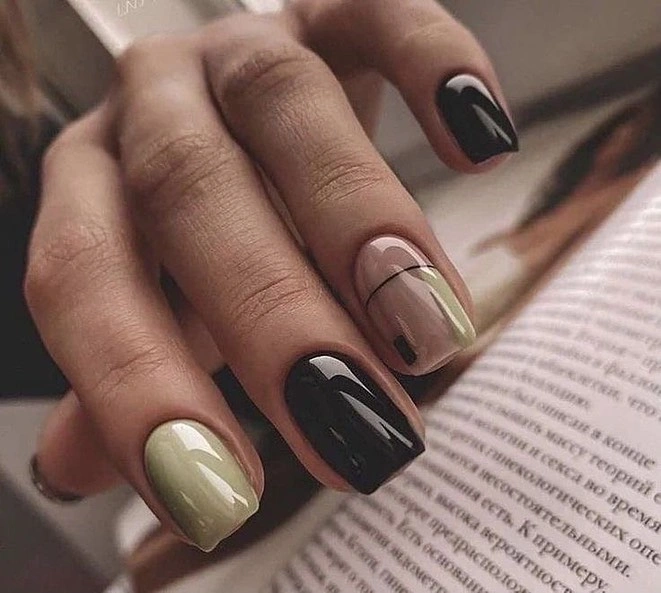
Keep black as the darkest value and let olive occupy at least one visible finger so the contrast does not become too severe. A warm taupe can replace the olive, while the transparent accent should remain light and open. If you choose a shorter or more rounded shape, reduce the number of lines rather than making them smaller; a clear accent works through breathing room.
This is a strong direction for someone who wants autumn depth without decorative density. The short length handles daily movement well, and the solid colors are easy to coordinate with denim, cream, gray, or black. The limitation is visual weight: too many black nails would erase the olive’s softening role, so keep at least one lighter surface visible across the hand.
Deep Green with Subtle Curved Streaks
Short rounded nails use a glossy deep green base with barely visible darker curved streaks. The dominant relationship is tonal rather than multi-colored: the manicure stays within one green family, but changes in value appear as the hand catches light. The white sleeve makes the green look saturated, while the rounded shape keeps the dark color from feeling too sharp or formal.
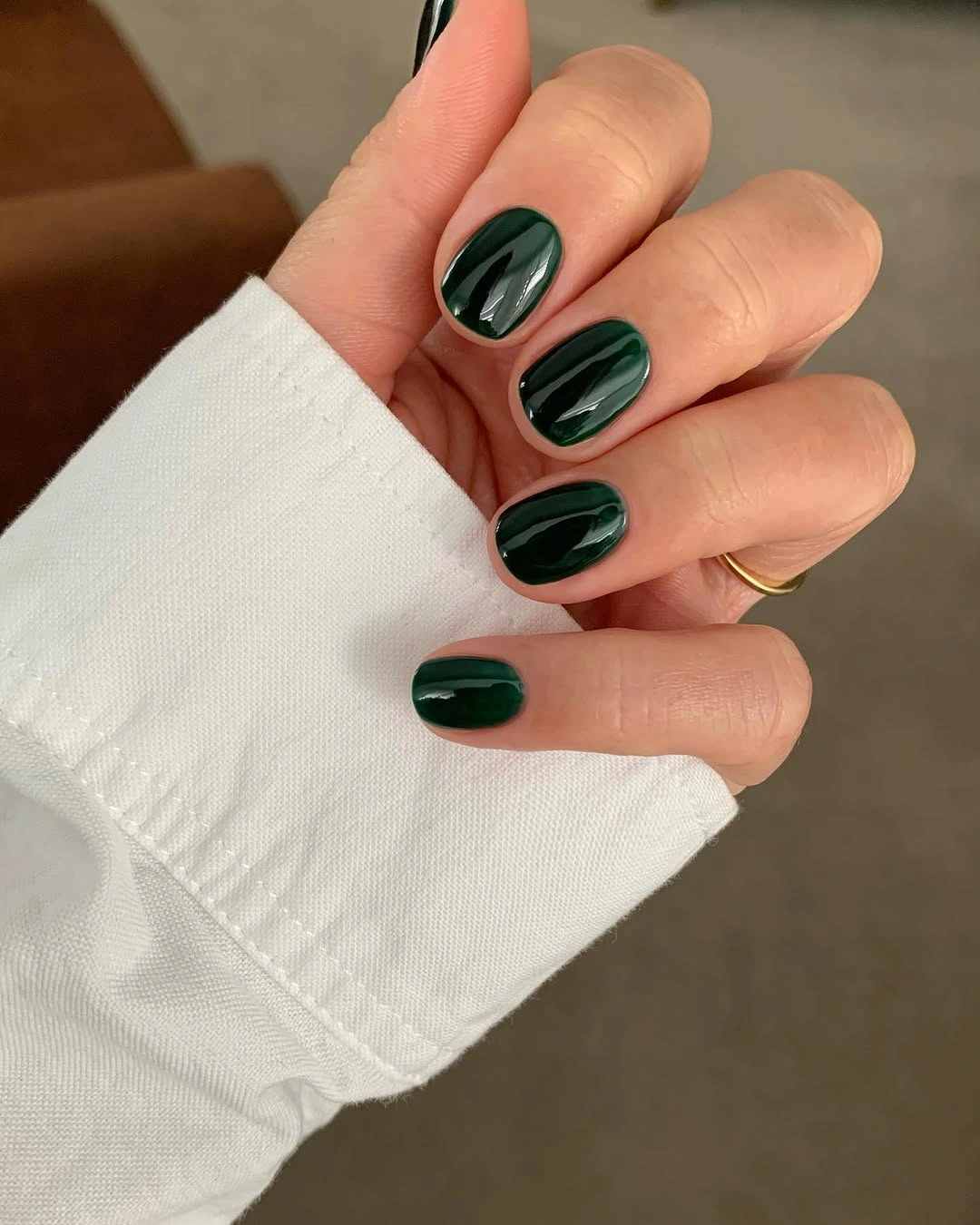
For a warmer autumn version, move the base toward olive or forest green without adding a new motif. Keeping the streaks close in value will preserve the quiet depth, while making them much lighter would turn the design into obvious stripes. The short rounded silhouette is already practical, so the most useful adjustment is color temperature: choose a cooler emerald for clarity or a muted olive for softness.
This manicure works when the reader wants a solid color with a little visible movement. It pairs naturally with white, cream, gray, brown, and denim, and the glossy surface gives the simple palette enough reflection to stay interesting. The limitation is subtlety under flat lighting, so the streaks should remain a supporting detail rather than the main reason for choosing the design.
Red Solids with Black and Gold Botanicals
Long square nails place glossy red on several fingers and reserve dark botanical details for pale accent nails with gold traces. Red is the highest-saturation field, black gives the accents their structure, and gold warms the transition between them. The palette feels rich because the warm colors are repeated in different values, while the white sleeve keeps the red from blending into the background.
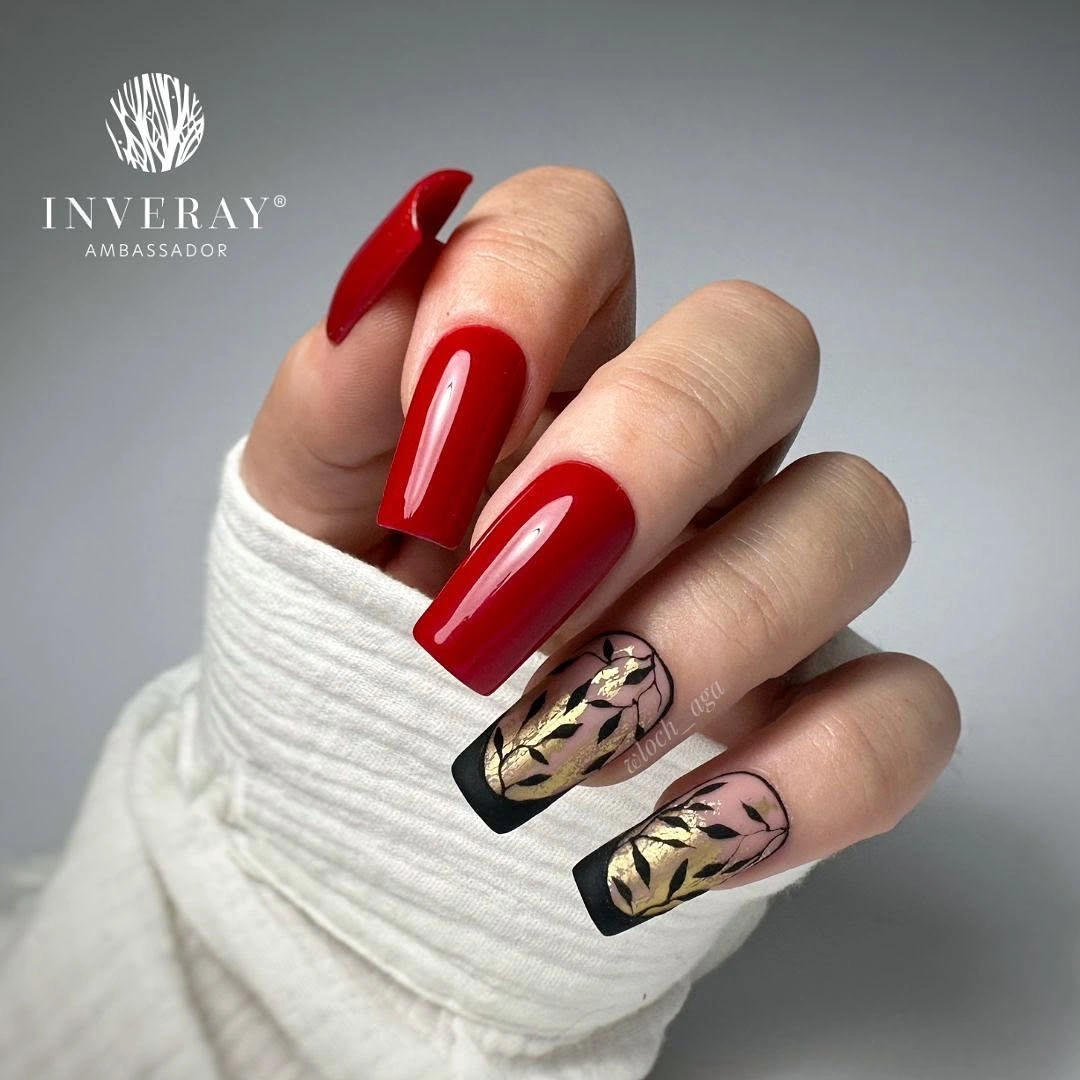
Use red as the anchor and let the accents carry only a few outlined leaves or branches. If the shape becomes shorter, keep the gold close to the black lines so the details remain legible, and remove extra pieces before reducing the contrast. Burgundy can replace bright red for a deeper version, but the pale accent base should stay light enough to preserve the value separation.
This design is suitable for someone who wants a classic red manicure with more visual planning than a plain solid. The long square canvas shows the accent art clearly, yet it also makes the tips more exposed and the gold details more vulnerable to wear. A medium square will soften the silhouette, while simple cream clothing will keep the red, black, and gold relationship easy to read.
Brown Solids with Tiny Warm Motifs
Short rounded nails combine deep brown solids with nude and cream accents, including small dots and a compact flower shape. The palette stays warm, but value changes keep it from becoming monotonous: dark brown gives weight, cream opens the hand, and the tiny motifs introduce a small shift in scale. Because the tips are short, the details remain close and tidy rather than decorative from a distance.
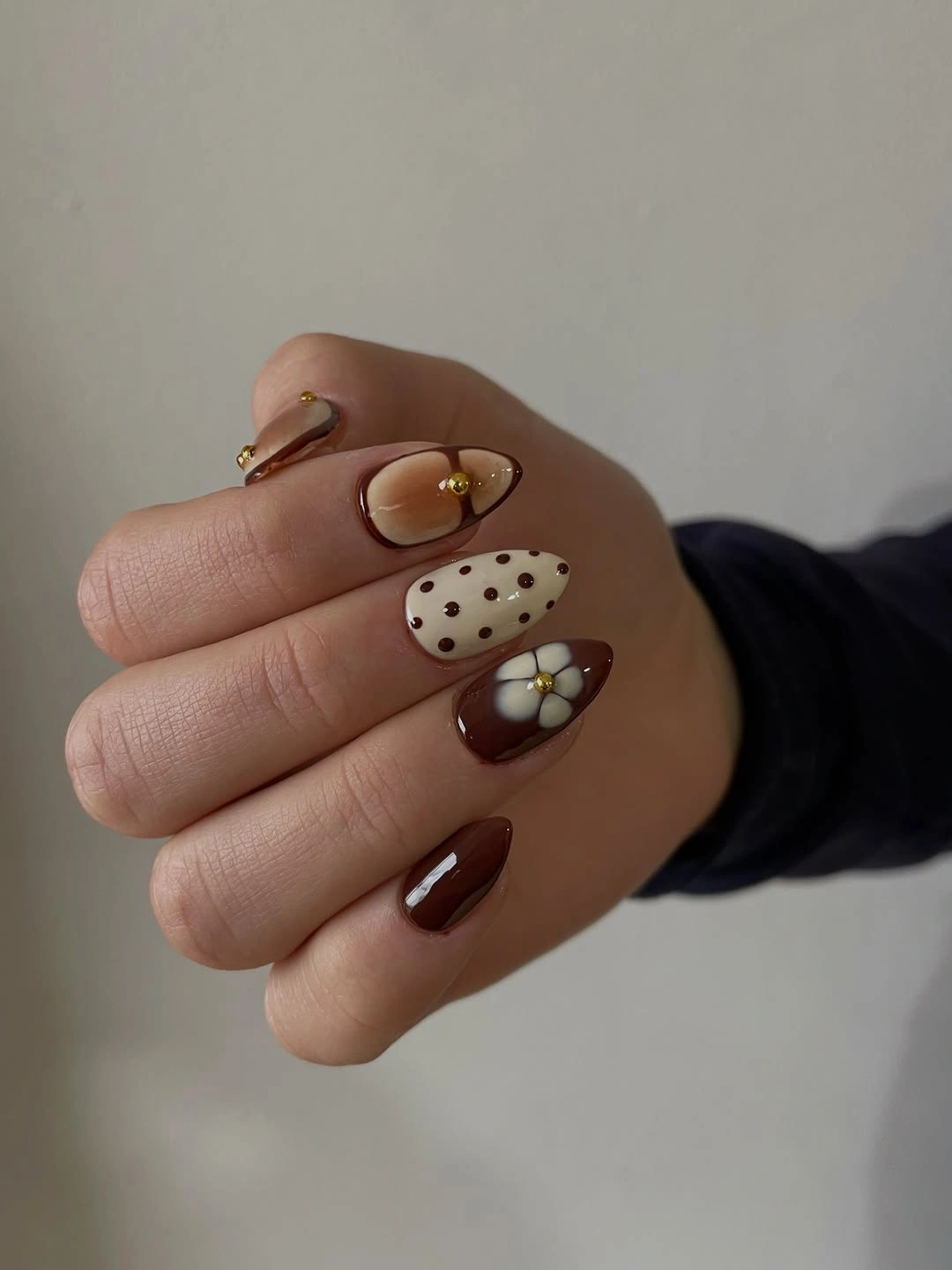
Keep the dark brown on at least two nails so the warmth remains the foundation, then use dots or one flower as the only pattern. Burgundy will deepen the look, while a pale beige base will make the small marks softer. The rounded shape is already suited to the motif scale; shortening it further means reducing the dots, not increasing their density.
This is a gentle autumn option for readers who want color and art without long tips. It works with cream knits, tan, denim, and gold, and the compact shape is forgiving for everyday routines. The main limitation is that tiny motifs can disappear if the base is too close in value, so preserve enough contrast between the cream accent and the brown marks to keep the design readable.
Taupe Solids with One Iridescent Flower
Medium almond nails use glossy taupe-brown solids and place one raised iridescent flower-like accent near the center of the hand. The color relationship is restrained: the warm neutral base reduces visual noise, while the reflective accent introduces a cooler shift and a different surface. Because only one nail carries the embellishment, the eye can recognize its importance immediately rather than sorting through several competing details.
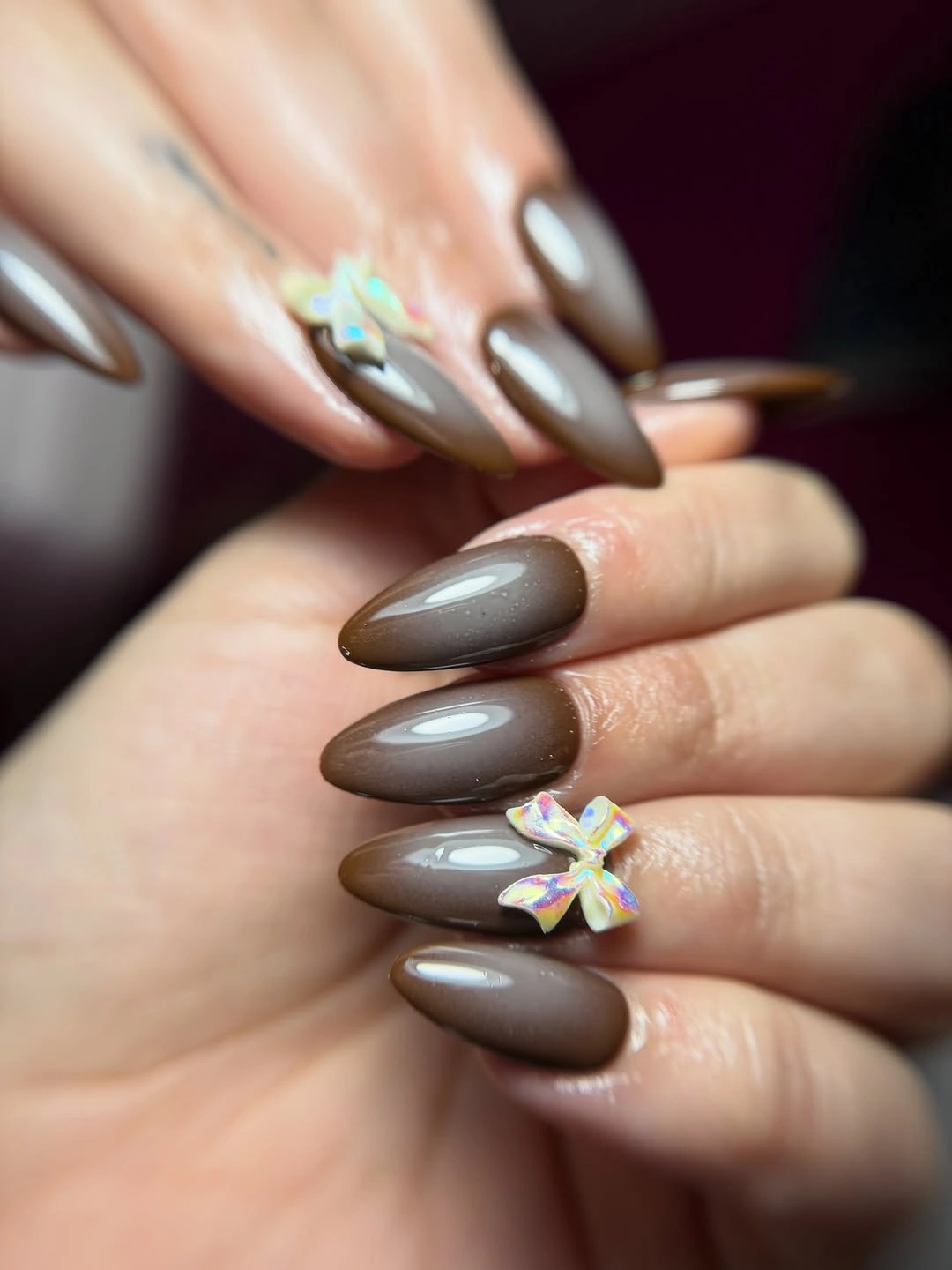
Preserve the single focal point when adapting this idea. A flat floral outline can replace the raised element for easier upkeep, and muted olive can replace taupe if you want a more botanical temperature without adding another color family. The medium almond shape gives the accent enough room, but a shorter version should keep the flower small and centered so the design does not dominate the whole nail.
This look suits a reader who prefers quiet solids with one precise interruption. It coordinates with burgundy, cream, gray, and simple metal jewelry, while the glossy taupe prevents the palette from feeling flat. The practical limitation is physical rather than visual: a raised flower can catch on fabric, so one accent remains the sensible choice if the manicure needs to move easily through knitwear.
Pale Pink and Cloudy Blue with Silver Curves
Medium square nails mix soft pink, milky white, and translucent blue-gray, then add thin silver or gray arcs. The palette balances a warm skin-adjacent base against cooler pale panels, while the metallic line supplies a small reflective edge. Because the blue remains cloudy rather than saturated, the colors sit close enough in intensity to feel calm, and the squared tips add a clear boundary.
If you want a warmer autumn interpretation, replace the blue-gray with muted sage or dusty taupe and leave the silver lines in place. Keep the pale base visible, especially on a shorter shape, because the open space is what makes the cool panels look airy rather than heavy. A softer square will reduce the geometric edge without changing the balance between pink warmth and gray-blue calm.
This is a useful direction for someone who wants artistic color but not a literal seasonal motif. It pairs with white, gray, denim, and soft pink, and the moderate length makes the design workable for daily life. The limitation is contrast: if the blue becomes too saturated, it will overpower the silver arcs, so change one variable at a time and keep the line work fine.
Pale Print with Yellow Botanical Sparks
Long square nails carry a pale pink or cream base under dense black botanical print, with small yellow and tan accents placed between the dark lines. The important color relationship is high value contrast softened by a warm middle: black supplies definition, the pale ground supplies space, and yellow prevents the print from looking strictly monochrome. The pattern feels autumnal because the warm accents are concentrated, not because every nail is orange.
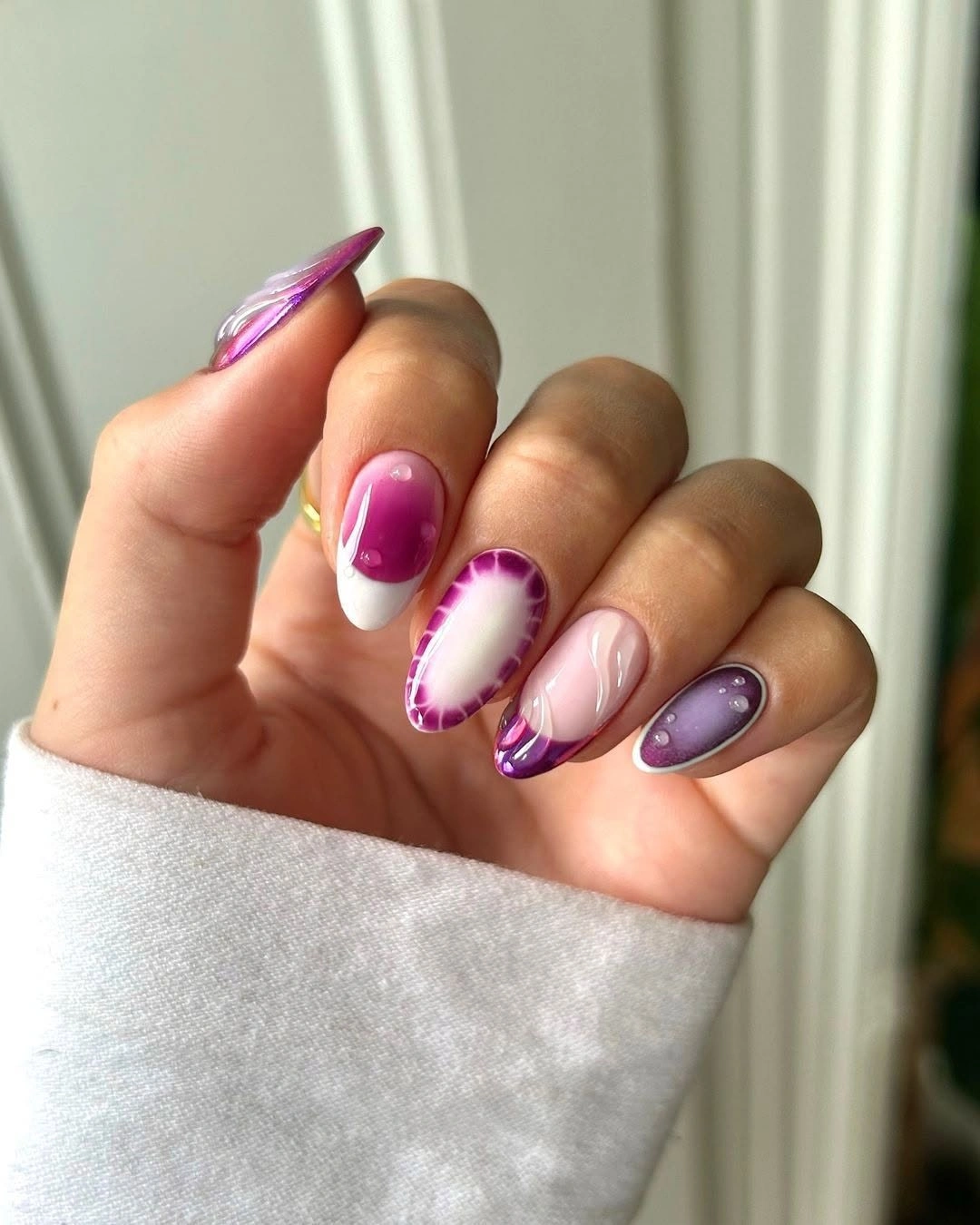
On a medium square, keep the print on two accent nails and let the pale base show on the others. Rust can replace yellow for a deeper result, while a softer cream base will reduce the contrast if the black feels too stark. The long shape gives the branches room to spread, but reducing the number of marks is more effective than shrinking them until the print becomes indistinct.
This option suits readers who like a full pattern but still want the hand to feel light. It works with cream, black, tan, denim, and gold, and the pale base makes the warm accents easy to repeat in clothing. The limitation is density: when black covers too much of the surface, the yellow loses its role as a spark, so protect visible pale spaces around the print.
Jewel Tones with One Pale Botanical Panel
Long almond nails mix deep navy, glossy red, nude, and one pale accent with flowing red and dark botanical lines. The palette balances cool and warm jewel tones, but the nude panel prevents the two saturated colors from competing across every finger. The accent drawing repeats the red family in a lighter setting, which gives the hand a clear transition from solid color to line work.
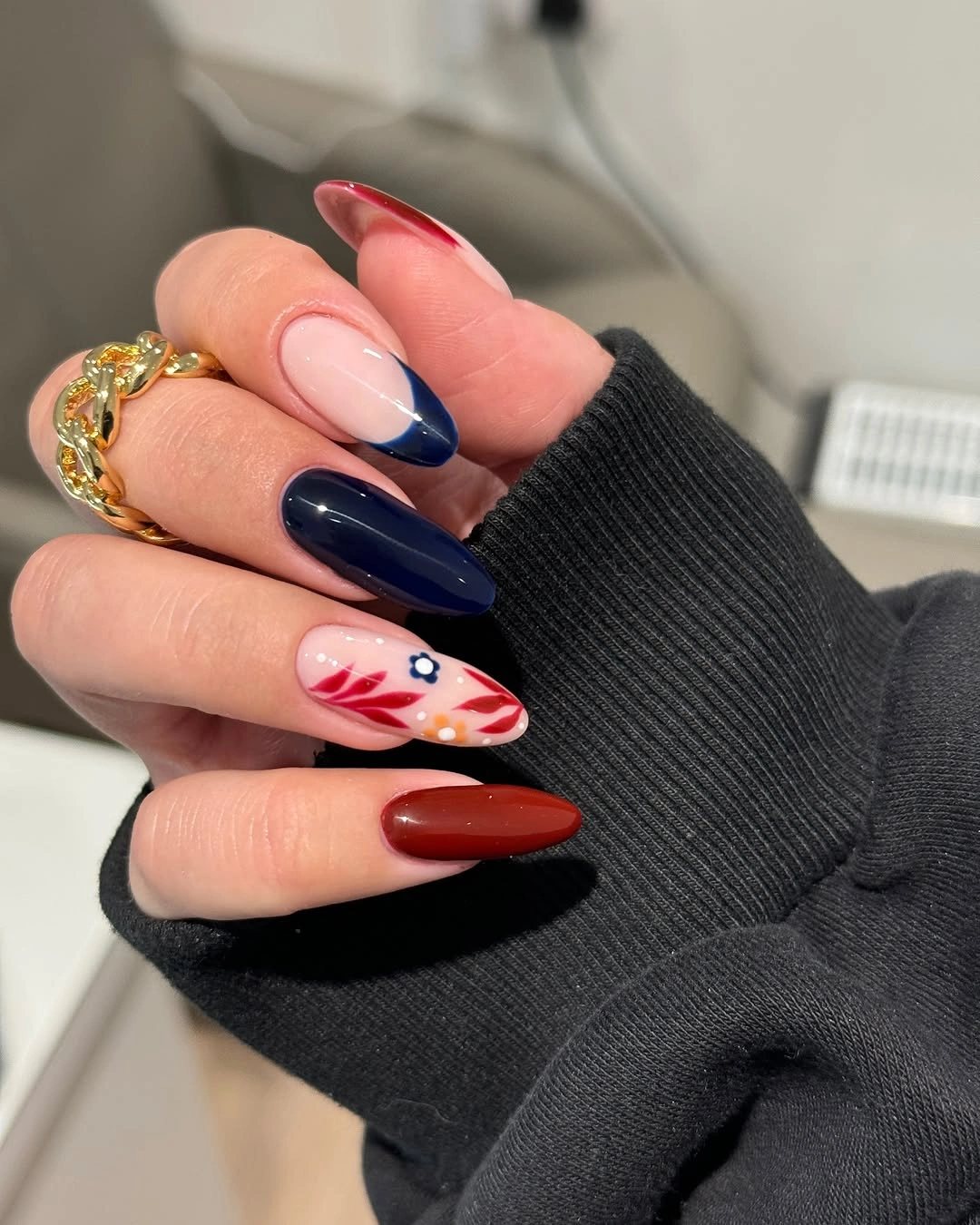
Change one solid at a time if you want to personalize the palette. Forest green can replace navy, or burgundy can replace bright red, but keeping the pale accent and dark outlines preserves the hierarchy. Medium almond tips will make the design easier to handle, while the detailed nail should remain isolated; adding more illustrated fingers would reduce the relief created by the saturated solids.
This is a strong choice for someone who prefers jewel tones to traditional browns. It coordinates with black, white, charcoal, and denim, and the long almond shape gives the flowing lines a graceful direction. The practical limitation is the number of saturated colors, so keep jewelry restrained and let the nude panel do its job as the quiet bridge between navy, red, and black.
Five Autumn Colors on Medium Almonds
Each medium almond nail carries a different glossy color: orange, red, mustard yellow, soft blue, and muted green. The manicure uses color variety as the design, so the key relationship is repetition of finish rather than repetition of motif. A lavender knit in the setting provides a muted counterpoint, allowing the warm shades and the cool blue to remain distinct without looking disconnected.
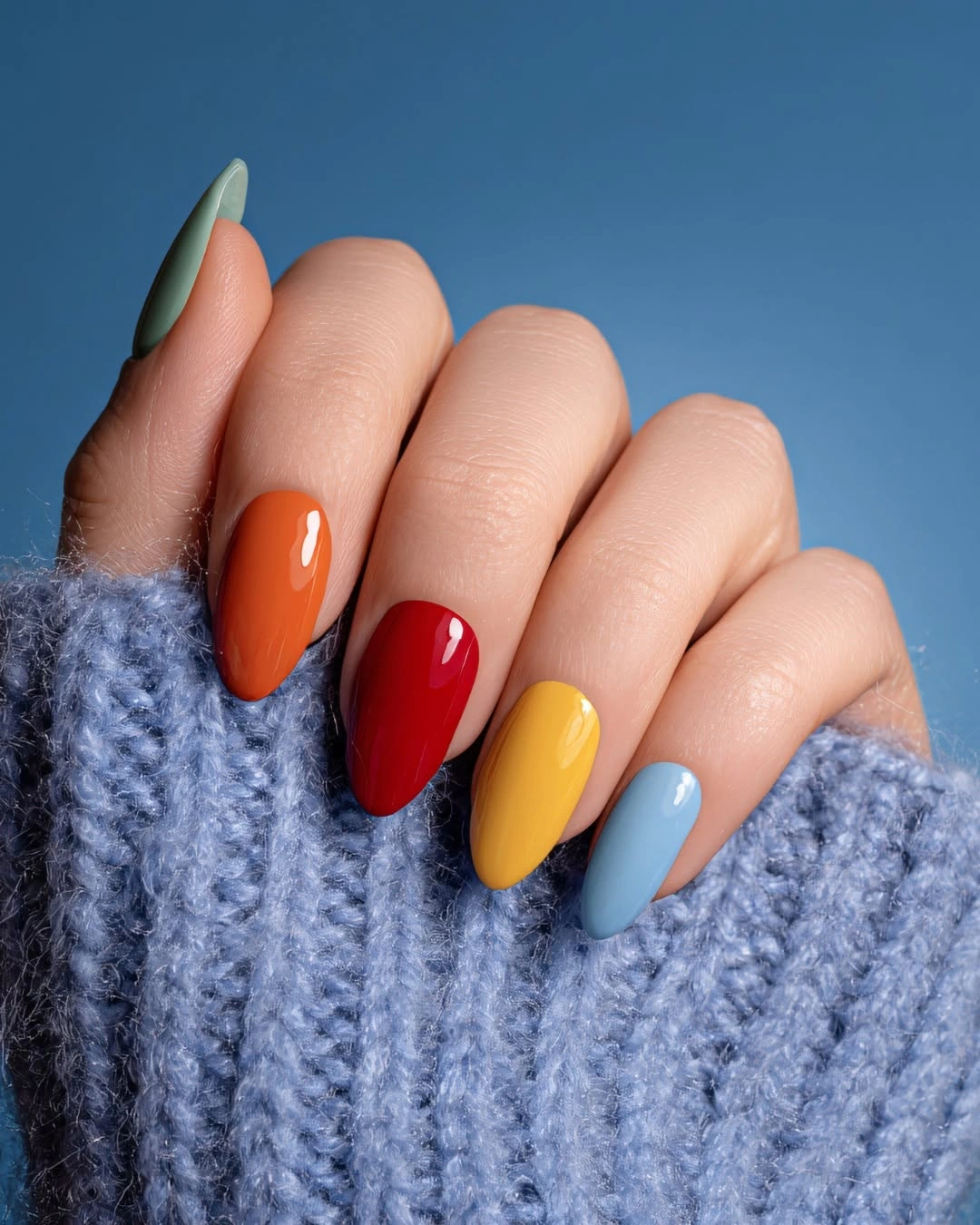
For a quieter version, choose three colors and keep the same shape and glossy finish. Rust, mustard, and olive will create a more traditionally autumnal temperature, while retaining the soft blue can make the palette feel fresher. The medium almond canvas is already balanced; the main adjustment is reducing saturation or count, not adding line work that would compete with the color-blocking idea.
This option suits someone who wants cheerful seasonal nails without a drawing on every finger. It pairs best with neutral clothing, denim, or a single repeated accessory because the hand already contains several focal points. The limitation is coordination: five colors can feel busy if the surrounding outfit repeats them all, so let the manicure act as the one expressive element and keep everything else quiet.
Bright Red on Short Rounded Tips
Short-to-medium rounded nails use one vivid glossy red from cuticle to tip. There is no separate motif, so the color’s temperature, saturation, and shine carry the entire decision. The gray sweater around the hand makes the red appear brighter and warmer, while the rounded silhouette keeps the solid shade approachable rather than sharp or overly formal.
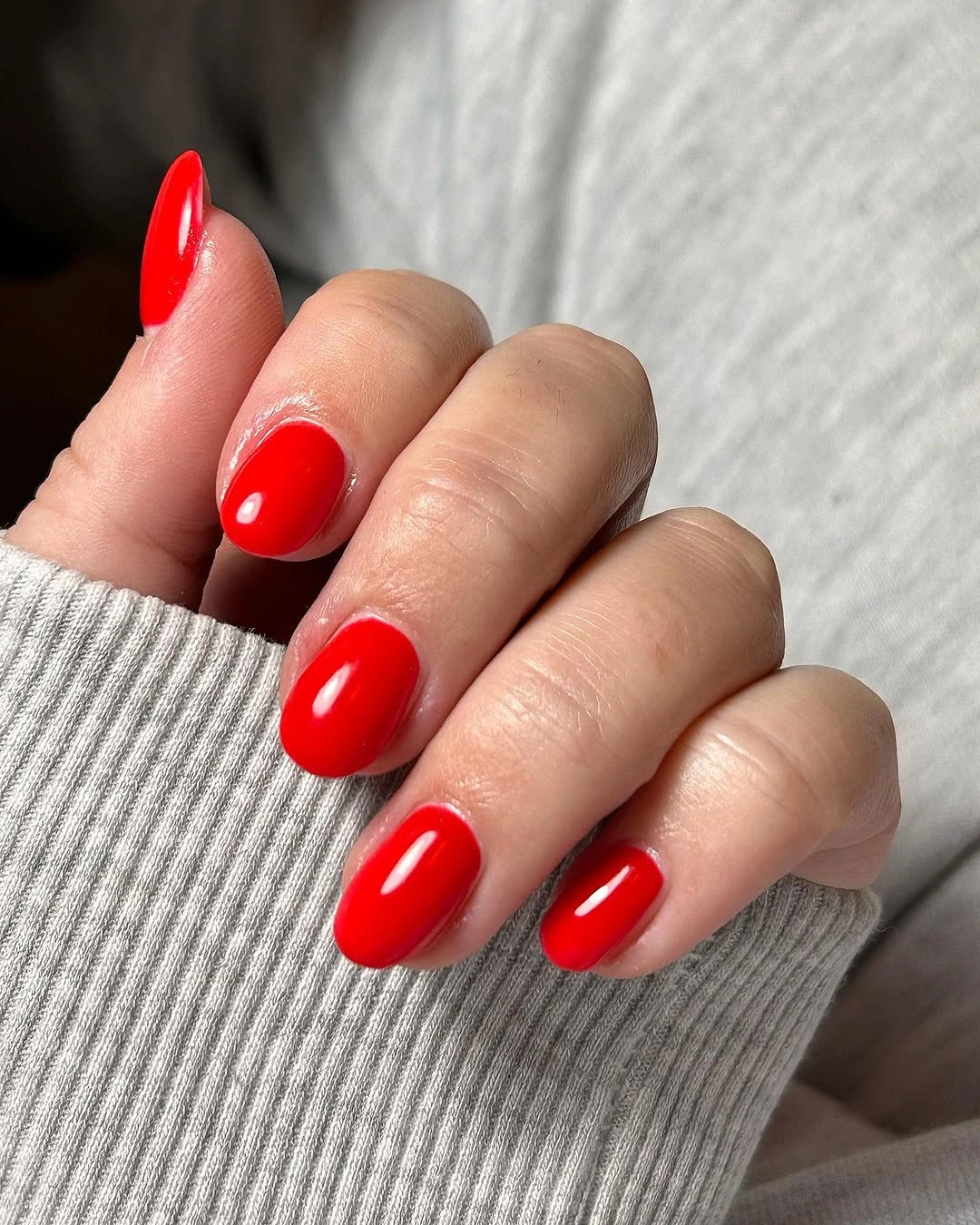
To move the color toward autumn, choose cranberry, brick red, or a deeper berry without changing the shape. A soft square would make the same red feel more graphic, while the rounded tip keeps it gentle. If the solid surface feels too plain, add only one small accent or a different finish on one finger; several motifs would solve a problem that the clean color does not actually have.
This is the most direct choice for someone who wants seasonal impact with almost no design maintenance. It works with gray, cream, black, denim, and warm metal, and the short length is practical for everyday tasks. The tradeoff is visibility of wear: a bright solid shows chips clearly, so the neatness of the edge matters more than adding any decorative detail.
Sheer Panels with Gold Botanical Foil
Long almond nails combine sheer nude-pink and transparent sections with small gold foil fragments and warm botanical marks. The color relationship is built on value rather than saturation: pale space dominates, gold supplies light, and a dark red or brown accent provides depth. Because the panels remain open, the set feels delicate even though the length and layered details give it a dressed-up presence.
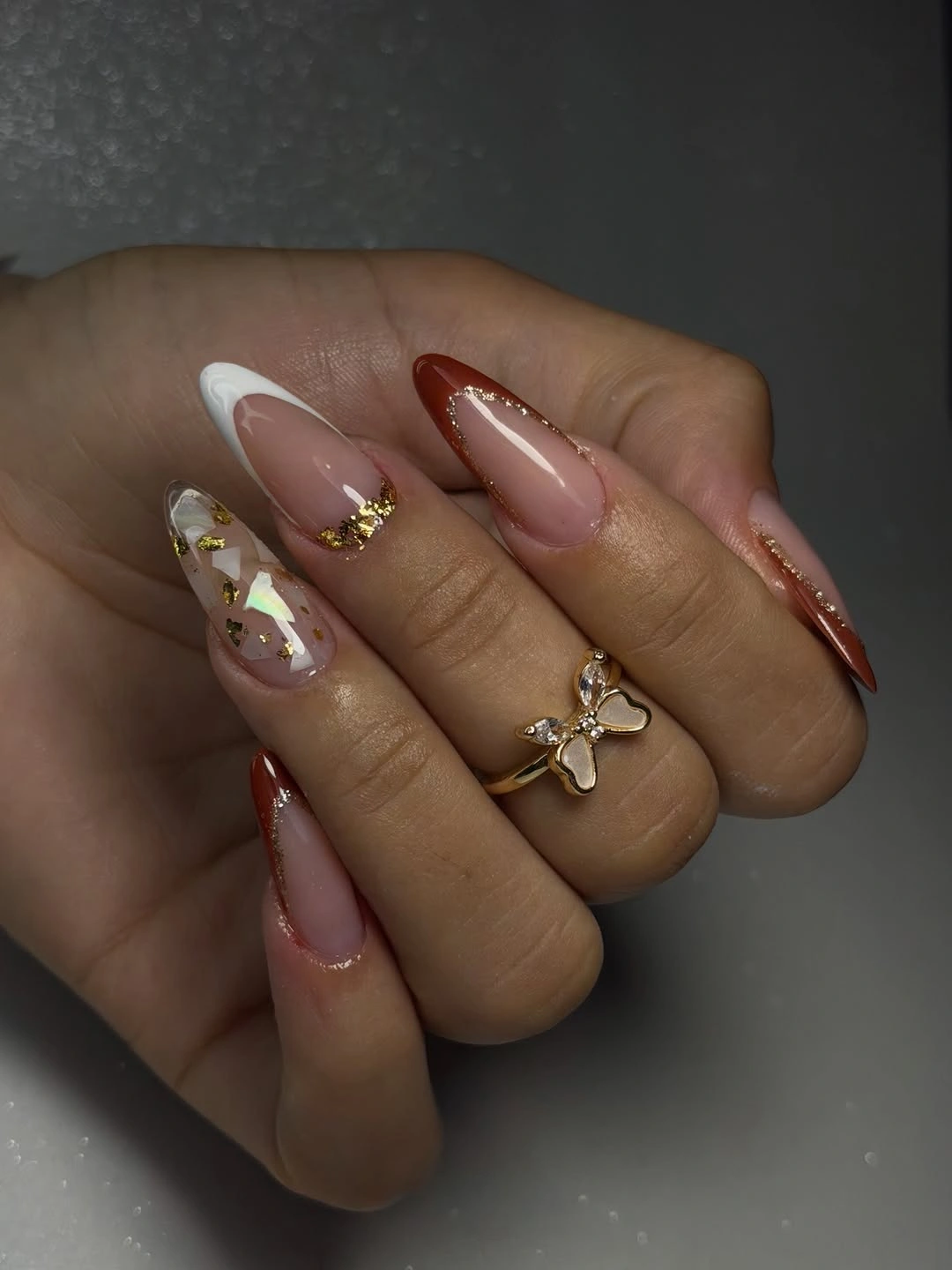
Keep the transparent sections visible when adapting the design, especially if you move to a medium almond. Use foil on two nails and let the remaining fingers carry only a small warm mark, so gold remains an accent rather than a metallic field. Copper can replace gold for a warmer fall direction, but the base should stay pale enough to preserve the airy contrast.
This manicure suits cream, black, dark red, and soft gold styling because its color story is light but not colorless. The long almond silhouette gives the foil a vertical flow, while layered pieces may require more care than a plain nude surface. If practicality is the priority, flatten the accents before shortening the nail; the balance comes from transparency and selective shine, not from physical height.
Reflective Olive Across Long Almonds
Long almond nails stay within an olive-green family but shift from moss and muted green toward brighter yellow-green reflections. The color relationship is monochromatic, with variation created by light and value rather than separate art. That makes the manicure feel modern and controlled, while the gray sleeve and gold ring support the natural warmth without introducing a competing hue.
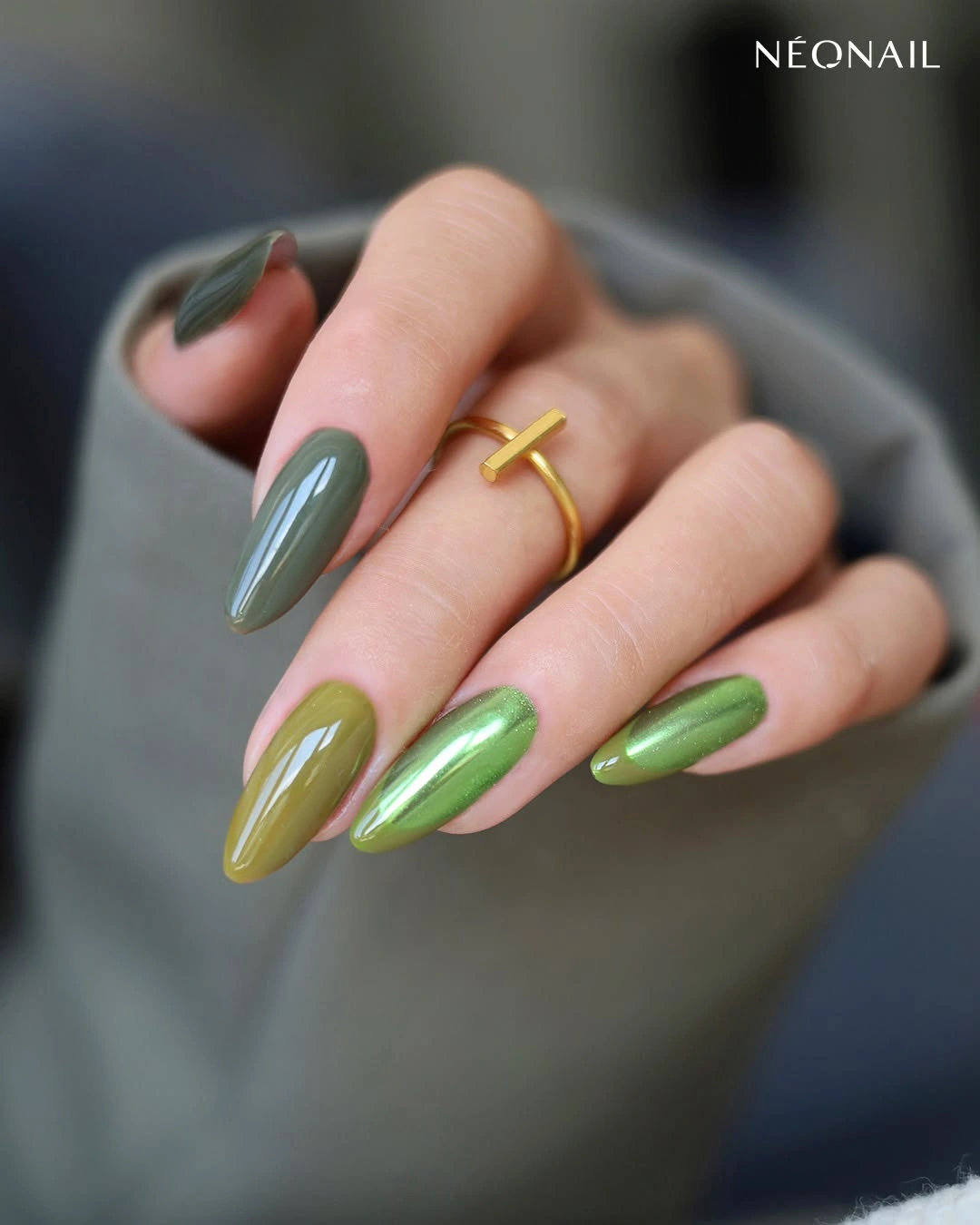
Keep two or three green values if you want the set to remain cohesive. A matte olive accent can interrupt the shine, while a brighter chartreuse nail can serve as a focal point, but adding unrelated colors would weaken the tonal logic. A shorter almond will make the green appear fuller and less elongated, which is useful if the long points feel too dramatic for daily wear.
This is a strong nature-linked option for readers who want color without literal leaves or flowers. It pairs with beige, brown, denim, cream, and gold, and the uniform finish makes styling straightforward. The limitation is that reflective green changes under different lighting, so choose the base for the way it looks in ordinary indoor light, not only for the brightest highlight.
Dark Chrome with Raised Green Texture
Short rounded nails alternate dark reflective brown-black surfaces with raised green accents that look ribbed or sculpted. The palette is warm and deep, but the main contrast is actually between smooth and textured finishes. Copper-bronze reflections appear on the dark nails, while the muted green provides a cooler surface break, making the manicure feel dimensional even at a compact length.
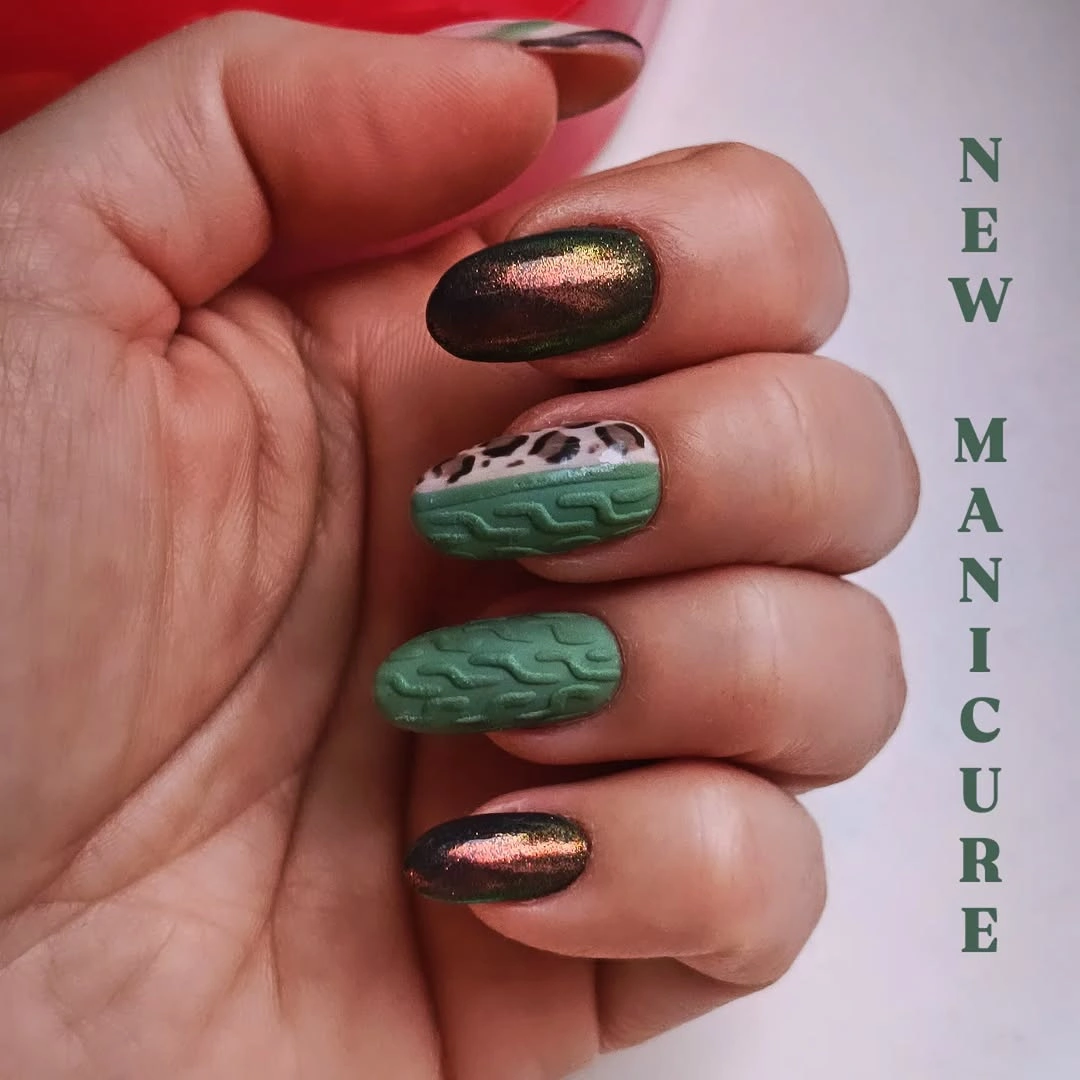
Preserve the smooth-versus-raised relationship when adapting the look. One textured green nail per hand is enough, and the dark chrome can remain the dominant field. If the raised detail feels too strong, use a matte green paint with a simple line or ridge suggestion, keeping the value contrast while reducing the physical height. The short shape already supports the compact scale.
This design works for someone who wants tactile interest without long nails. It pairs with taupe, black, cream, and muted green, although raised texture can catch on fabric and should be limited if the hands move through knitwear often. A short squoval nail design can help when comparing how a slightly straighter edge changes the same compact palette.
Orange Blocks with Graphic Black Marks
Long square nails mix bright orange solids with pale panels and black graphic marks that resemble compact lettering or framed shapes. The dominant relationship is warm saturation against white space: orange supplies energy, black supplies definition, and the pale panels slow the eye down. The squared tips reinforce the poster-like layout, making each panel feel intentionally placed rather than randomly decorated.
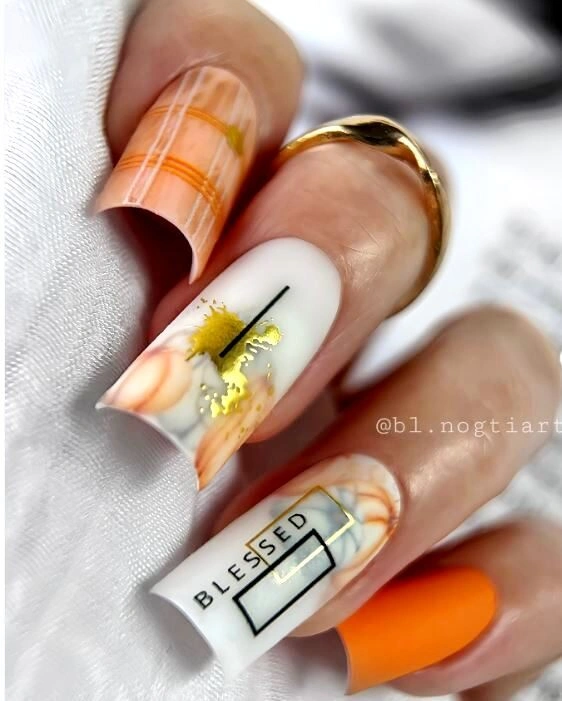
For a more wearable version, keep the orange on two nails and use black marks on one pale accent. Rust or burnt sienna can reduce the saturation, while a medium square will make the graphic panels feel less oversized. Preserve the white space around the marks; if every pale section becomes filled, the palette will lose the clear separation between warm block, dark line, and open support.
This look suits readers who want fall color with an editorial rather than botanical message. It pairs with white, charcoal, denim, and black, and the strong orange can stand alone as the accessory. The long square shape gives the design clarity but adds practical limits, so shorten the tips before adding more details and keep the lettering-like marks abstract instead of forcing readable text.
Plum and Pale Purple Negative Space
Long almond nails move between glossy plum solids and pale nails with purple sections near the tips or sides. The color relationship is monochromatic but varied in value: deep plum gives weight, soft purple adds light, and the nude-pale base supplies negative space. Because the same family appears in several intensities, the set feels connected even though the placement changes from nail to nail.
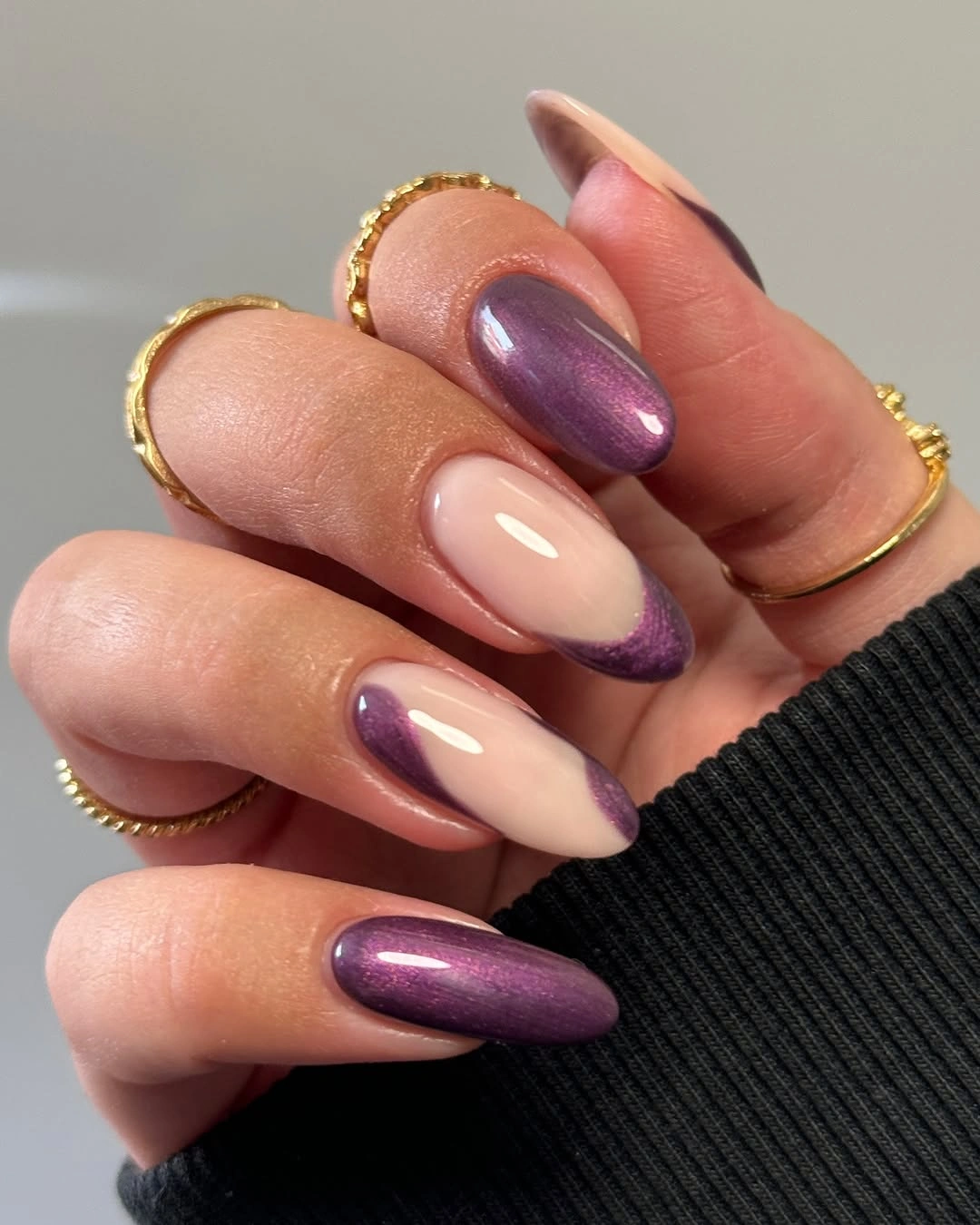
Keep the color family tight when adapting this idea. One plum accent with pale purple French sections will create a quieter version, while burgundy can warm the palette without changing its structure. A shorter almond will make the pale sections appear broader, so keep the dark blocks narrow enough that they do not swallow the light base and turn the design into full coverage.
This is useful for readers who want rich fall color with no literal motif. It works with black, cream, gray, and dark denim, and the long almond shape makes the placement look sleek. The limitation is the silhouette: long tips intensify the contrast between plum and pale space, so a medium almond is a better choice when the color story should feel softer and easier to coordinate.
Orange and Black Contours on Pale Almonds
Medium almond nails use a pale nude or white base for orange, black, and brown contour lines, plus one orange solid accent. The color relationship is warm accent against open light space, with black providing the strongest outline and brown softening the transition. The curved lines feel hand-drawn because they change direction and thickness, while the orange nail anchors the otherwise pale set.
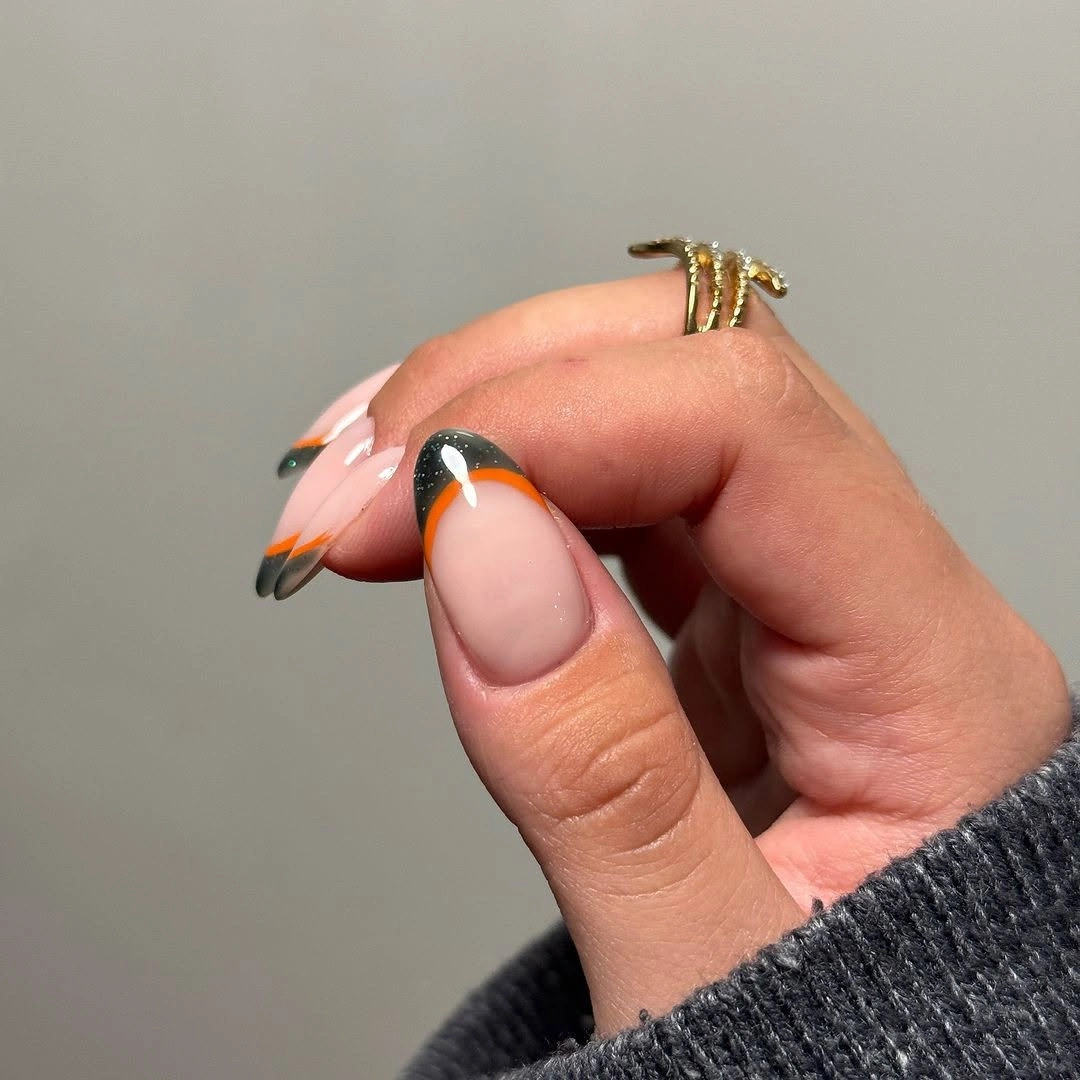
Keep the orange accent isolated if you want the lines to remain the most interesting detail. Rust can replace bright orange, or deep brown can replace black for a softer fall palette, but changing both at once may reduce the contrast that makes the contours readable. A shorter almond will make the curves feel more compact, so use fewer lines and leave wider gaps between them.
This direction suits readers who prefer artistic movement over full color coverage. It pairs with brown sleeves, cream, white, denim, and simple gold, while the moderate shape keeps the line work practical enough for daily wear. The honest limitation is precision: crowded contours become noise, so let the pale base carry at least half of each nail and treat the orange solid as the single strong counterpoint.
Neutral Pink with a Champagne Floral Panel
Long almond nails combine nude pink and soft beige solids with one metallic champagne nail and a pale panel carrying black and gold floral details. The palette works through low saturation and controlled shine: neutrals create calm, champagne supplies a reflective highlight, and black defines the botanical accent. A warm leaf in the setting echoes the color temperature, but the manicure remains balanced because only one nail carries the densest drawing.
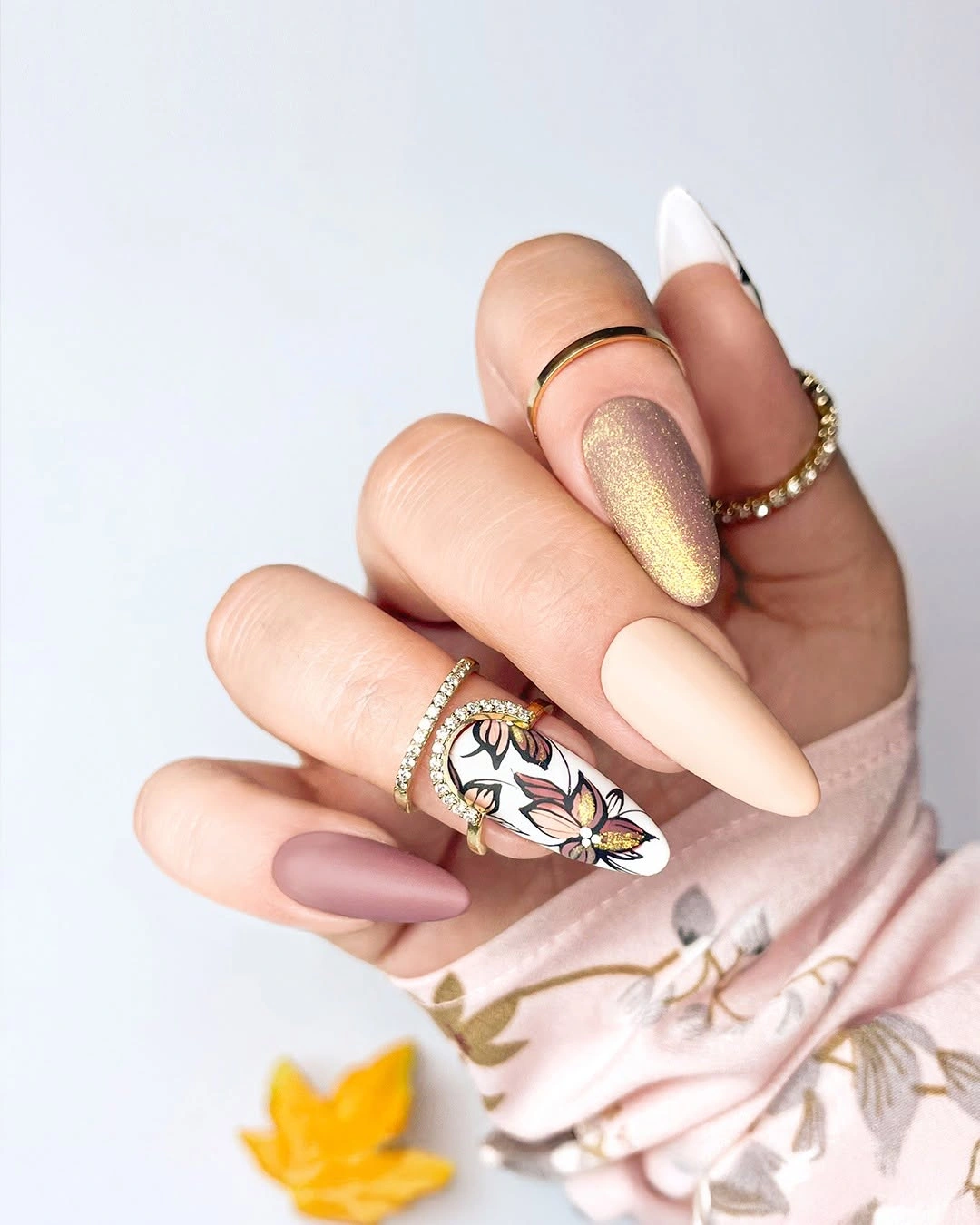
Preserve the focal hierarchy by keeping champagne on one nail and the floral panel on another or the same accent, not across the entire hand. Muted bronze can replace champagne for a deeper autumn result, while medium almond tips will make the look less formal. The nude base should remain the largest field, because it is what lets the warm metallic and dark line work feel refined instead of busy.
This manicure suits readers who want a dressed-up seasonal direction with a soft neutral foundation. It pairs with blush, cream, beige, pale gold, and brown, and the long almond silhouette gives the floral panel an elegant vertical frame. The practical limitation is the length and the layered detail, so shorten the shape or flatten the accents before adding another color; the calm palette already provides enough interest.
Pale Pink with Muted Green French Tips
Long almond nails use a glossy pale pink base and muted green tips, with faint green stripes running through a few nails. The color relationship pairs a warm, skin-adjacent light with a soft botanical cool, so the design feels seasonal without relying on a dark shade. The green is not neon; its muted value lets the pink remain visible and keeps the overall manicure calm against the taupe knit sleeve.
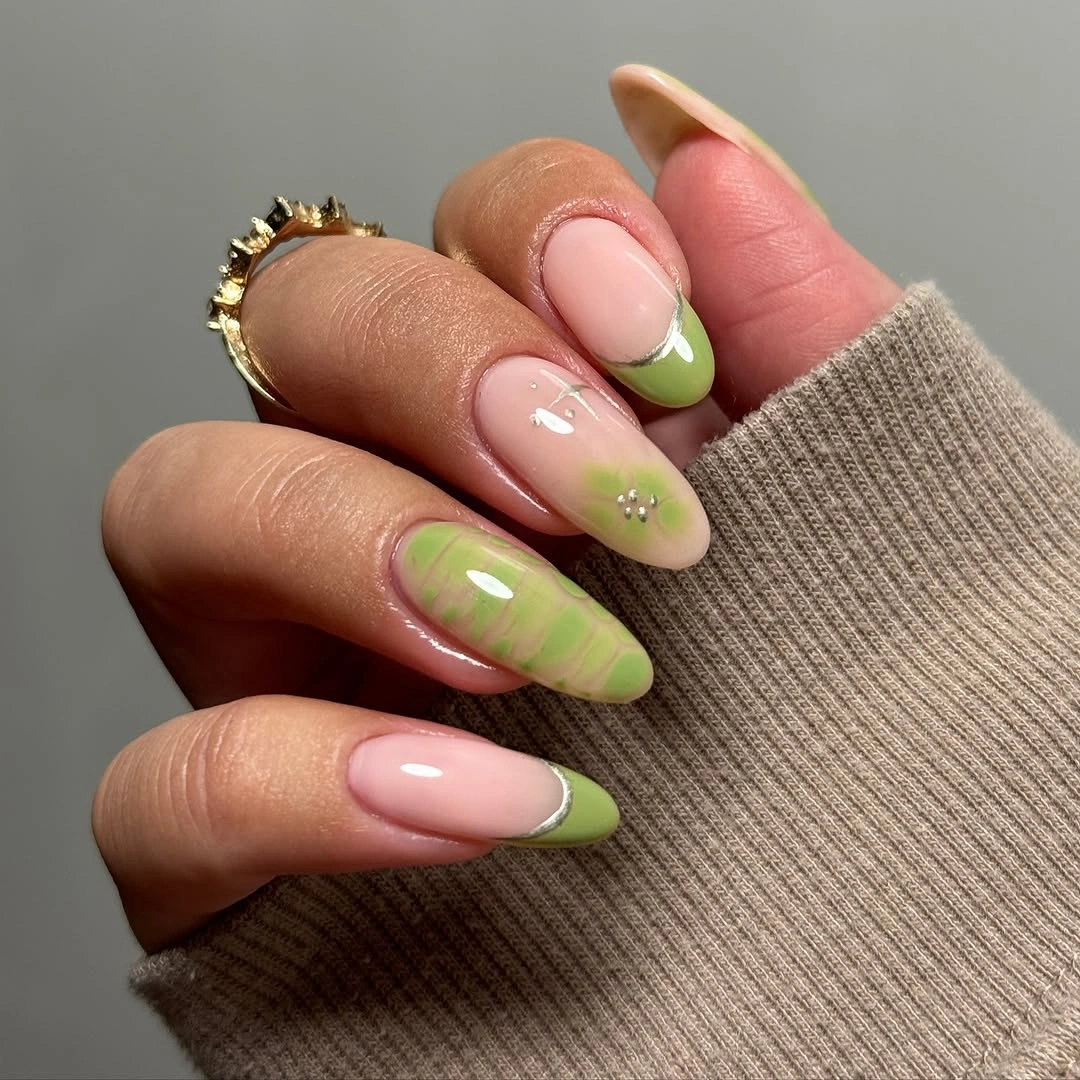
For a deeper autumn version, shift the green toward olive while keeping the pink base unchanged. Two green tips and one striped accent can create a quieter set, and a shorter almond will make the tip color look broader and more practical. Preserve the pale space between the tip and any stripe; the French edge should remain the main placement decision, not become hidden under extra lines.
This direction works with taupe, cream, beige, denim, and soft brown, making it easy to style without repeating the exact nail colors in clothing. The long almond gives the green edge a graceful length, but medium almond is more forgiving around daily tasks. If you want to compare how changing the tip alone affects proportion, these colorful French tip ideas provide a useful edge-placement reference.
Raised Autumn Dots on Matte Olive
A short rounded nail uses matte olive as a quiet base, while a nearby accent carries raised dots in orange, mustard, dusty pink, and brown. The color relationship is warm variety against a muted green support, and the surface difference is just as important as the palette. The matte olive calms the bright dots, while the changing dot sizes create a tactile rhythm rather than a flat polka-dot repeat.
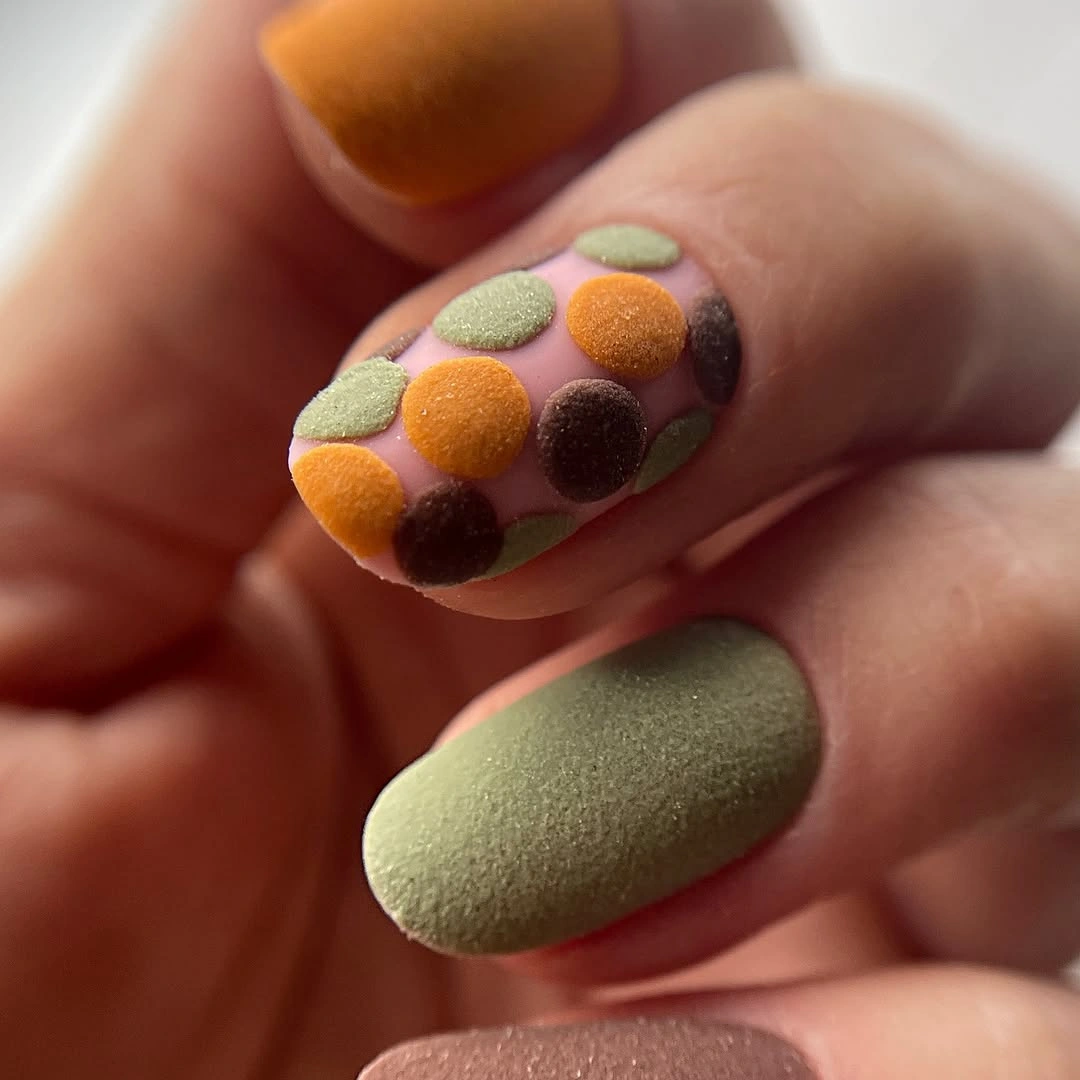
Keep the dot accent limited to one nail if you want the color variety to remain clear. Flat dots can preserve the same palette with less physical upkeep, and replacing pink with rust will make the result feel more traditionally autumnal. The short rounded shape is right for the compact scale; adding more dots would reduce the visible gaps that let each color register separately.
This is a playful option for readers who enjoy texture but do not want long nails. It pairs with warm neutrals, brown, cream, and olive, while the matte finish gives the accent a grounded frame. The limitation is tactile: raised pieces may catch on fabric, so use them as a single focal detail and let the rest of the manicure remain smooth and easy to handle.
Glossy Olive with Yellow-Green Shifts
Long almond nails stay within olive and moss but become brighter and more yellow-green where the glossy surface catches light. The manicure uses tonal variation rather than separate art, so value and reflection create the progression from one finger to the next. The warm hand setting supports the natural palette, while the pointed shape makes the green look sleek and elongated instead of earthy and rounded.
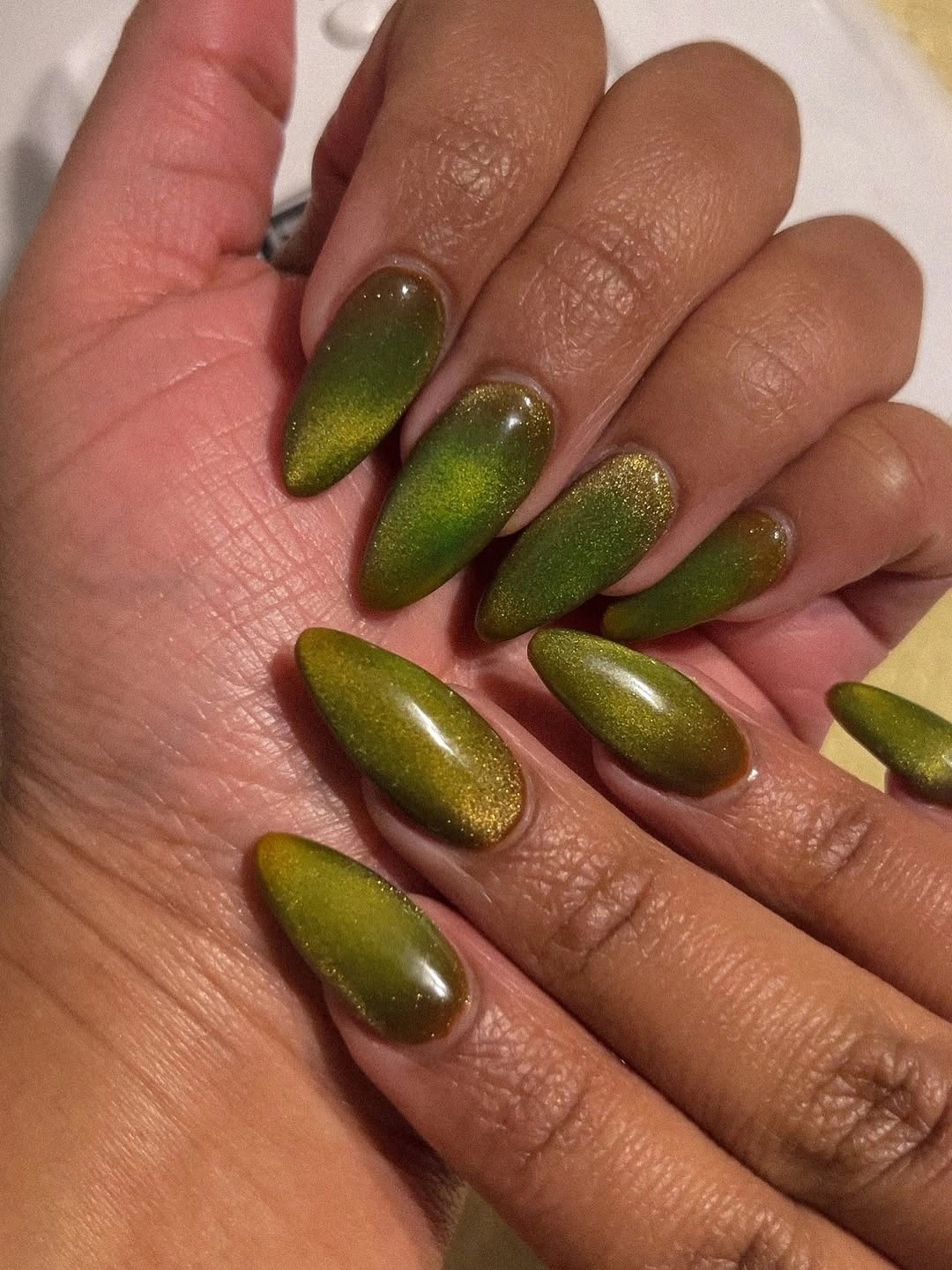
Choose two or three related greens if you want to control the intensity. A muted olive base with one brighter accent will feel calmer, while a matte nail can break the shine without introducing a new color family. If the almond is shortened, the green will appear fuller, so keep the most reflective shade on one or two fingers and let the deeper moss tones support it.
This is an effective nature-linked autumn direction for readers who want a solid color with visible depth. It works with beige, brown, denim, cream, and gold, and the absence of motifs keeps the styling flexible. The limitation is lighting: the yellow shift may be subtle indoors, so select a base that still looks balanced when the strongest reflection is not present.
Hand-Drawn Orange Lines on Pale Bases
Medium almond nails close with pale bases crossed by orange, black, and brown flowing contour lines, plus one orange solid accent. The palette is warm and graphic, but the open base keeps the manicure light; orange gives the lines seasonal energy, black adds definition, and brown creates a softer bridge between them. The curves vary across the hand, making the set feel drawn rather than mechanically repeated.
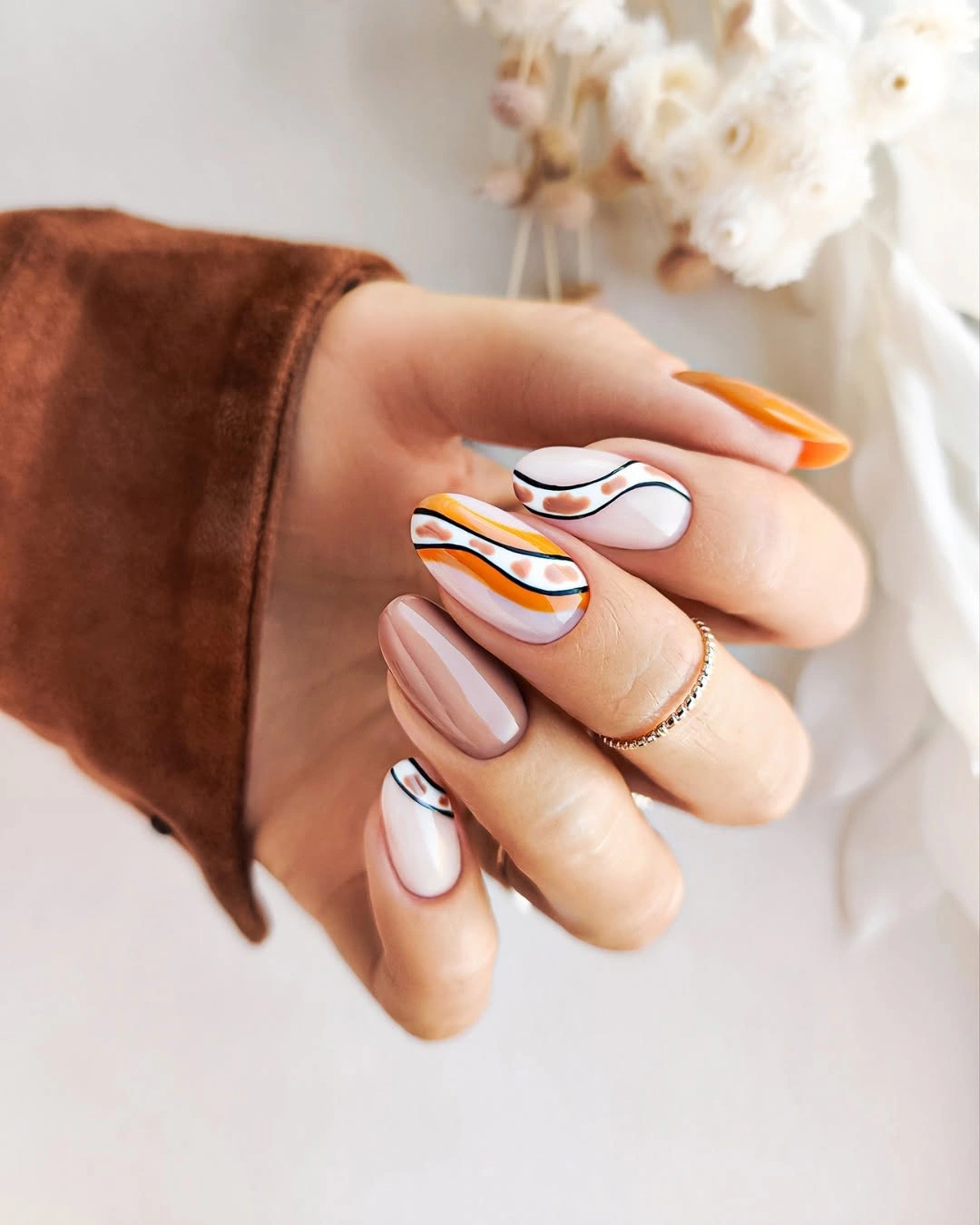
Preserve the pale base and change only the intensity of the warm lines if you want a personalized version. Burnt orange will feel deeper, while dark brown can replace black for lower contrast. A shorter almond can carry the same idea if the number of curves is reduced and the gaps remain generous. The orange solid should stay isolated so it continues to function as the visual anchor.
This look suits readers who want autumn color expressed through movement instead of leaves, dots, or full prints. It pairs with brown, cream, white, denim, and warm metal, while the medium almond keeps the curves practical enough for everyday styling. The final balance depends on restraint: let the lines remain legible against the pale base, and preserve the warm relationship between orange, brown, and the one confident accent.