Brown fall nails 2026 look most interesting when the color changes position, finish, or scale from one finger to the next. A narrow tip, a pale accent, a thin outline, or a small reflective detail can shift the balance of the whole hand without requiring every nail to carry a complicated pattern. This collection follows those small decisions, from short glossy solids to long collage-like designs.
Shape also changes how brown reads. Almond and stiletto lengths make edge work and line art feel elongated, while short rounded and square nails let chocolate tones look practical and direct. Use the individual ideas as visual studies rather than fixed formulas: keep the detail that gives the design its identity, then remove or move an accent when your preferred length or maintenance routine calls for less.
Loose Brown Marks on a Nude Almond Base
Long almond nails begin with a pale nude base and irregular dark brown marks gathered near the tips. The shapes are spaced rather than packed together, so they feel hand-drawn and slightly spontaneous. That open placement lets the almond silhouette remain visible, while the brown supplies enough contrast to make the manicure read as a fall idea without covering the entire nail.
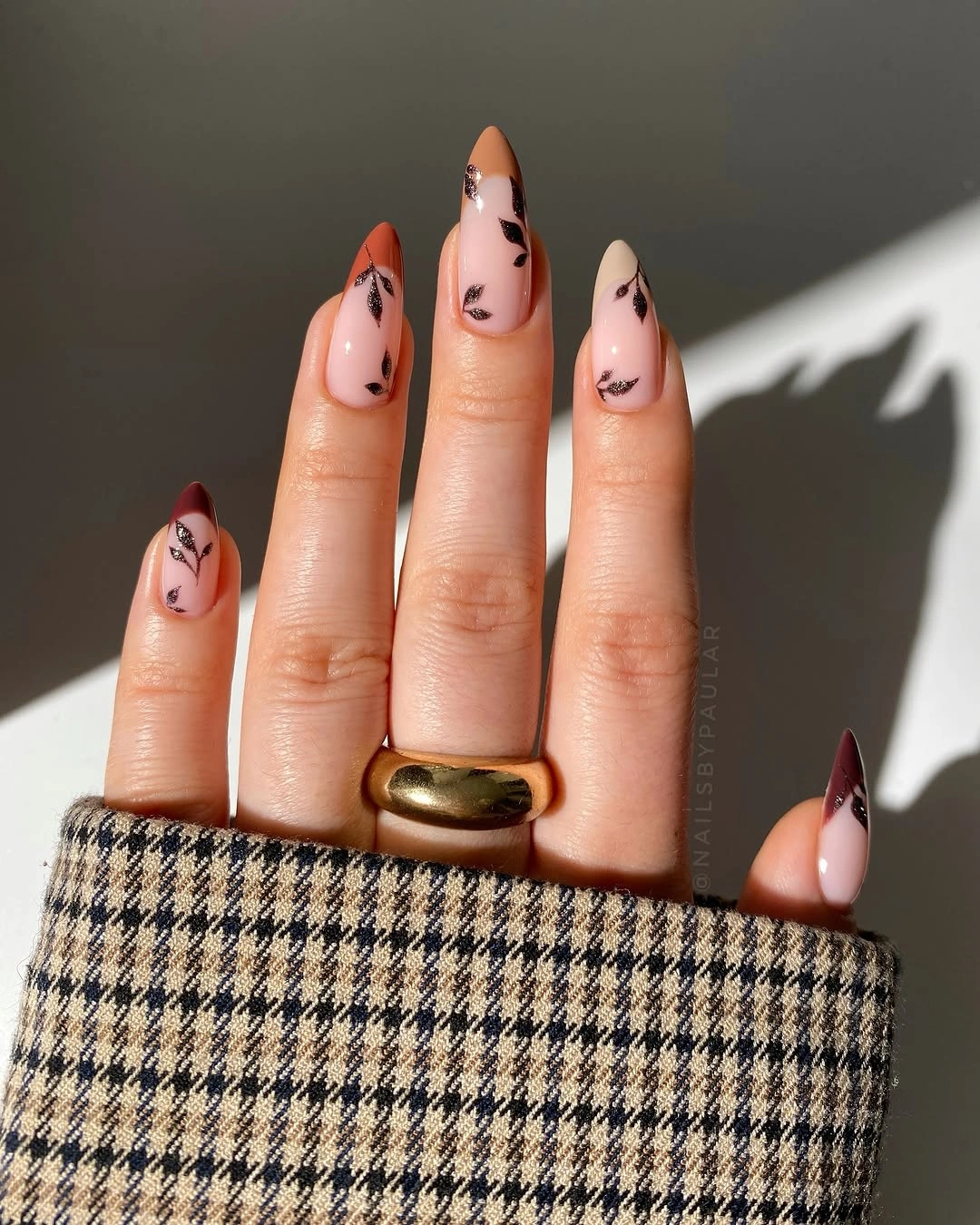
The small edge details carry more visual weight than their size suggests. They create a break at the free edge, then leave a long pale center for the eye to follow toward the point. That relationship is why the design feels lighter than a full brown manicure, and it also explains why the marks need enough spacing to stay distinct instead of merging into one dark band.
Keep the marks on two accent nails or shorten the almond shape if you want a more practical version. A medium oval will preserve the soft direction, while a short square nail may need fewer, wider shapes for clarity. The pointed length is the obvious tradeoff: it gives every mark room, but it also makes daily handling and edge upkeep more demanding than the quiet color story first suggests.
Chocolate Solids with a Small Gold Spark
Glossy chocolate brown covers most of this long almond set, while pale nude nails and a restrained gold detail interrupt the dark rhythm. The solid fingers create a rich visual field, then the lighter accent opens it so the hand does not become one uninterrupted block. Gold is used as a brief glint, not a second dominant color, which keeps the palette focused.
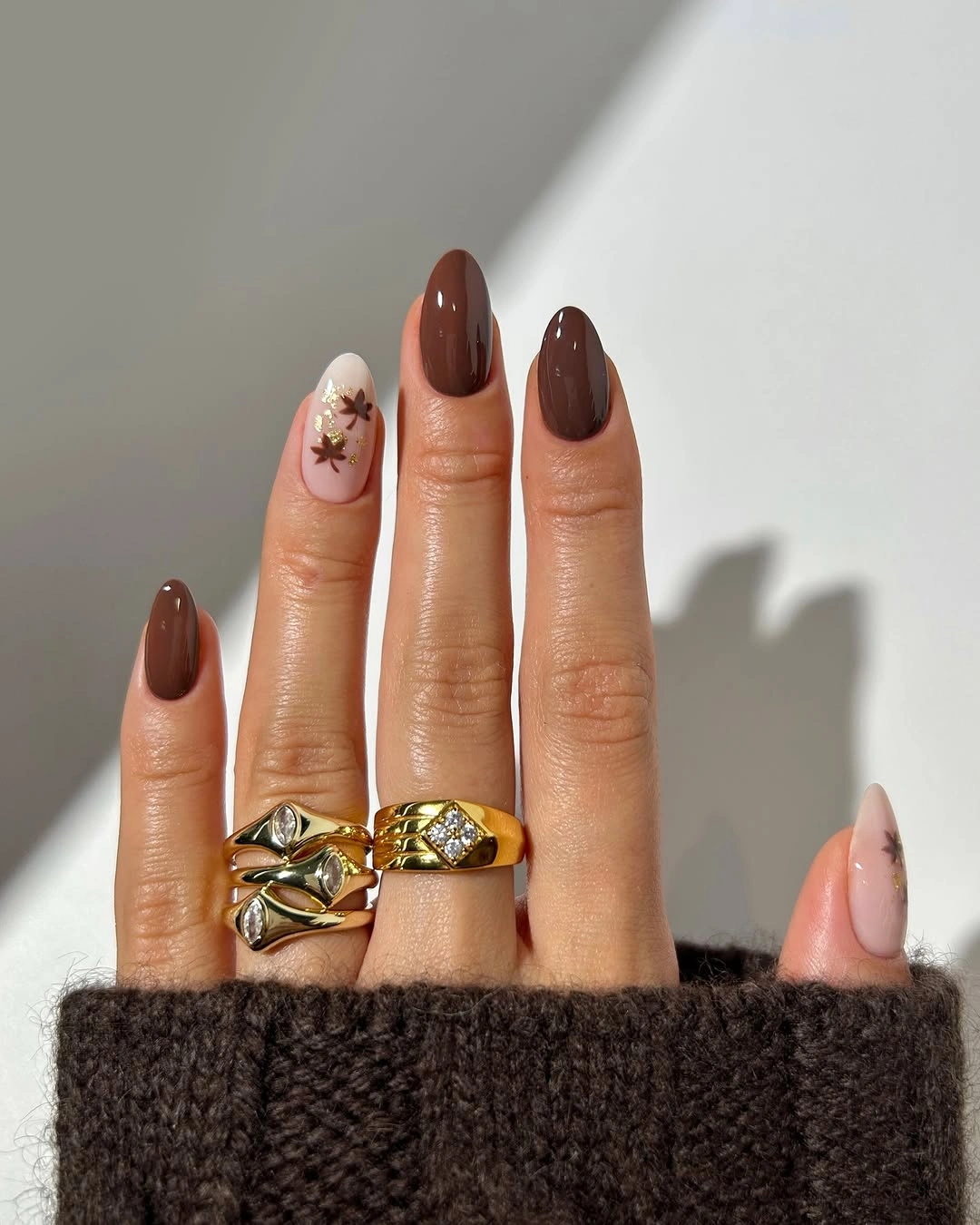
The contrast comes from placement more than pattern. A single light nail changes how the neighboring brown appears, making the chocolate look deeper and warmer, while the small gold mark adds a point to notice without competing with the shape. Because the almond length is already expressive, the manicure benefits from leaving several nails completely plain.
Use brown on four nails and keep the gold detail on one accent if you want the simplest edit. A medium almond or short oval will still carry the contrast, but the gold should stay small so it does not dominate the shorter canvas. The long pointed shape remains the main maintenance consideration, while the solid color itself is straightforward to coordinate with fall fabrics and jewelry.
Glossy Chocolate with a Pink Patterned Accent
Medium square nails are mostly covered in reflective chocolate brown, with one pale pink nail carrying thin brown lines and small dots. The compact shape keeps the design grounded, while the lighter accent works like a window cut into the dark set. Nothing else needs to compete for attention, so the eye moves directly from the even brown surface to the small pattern.
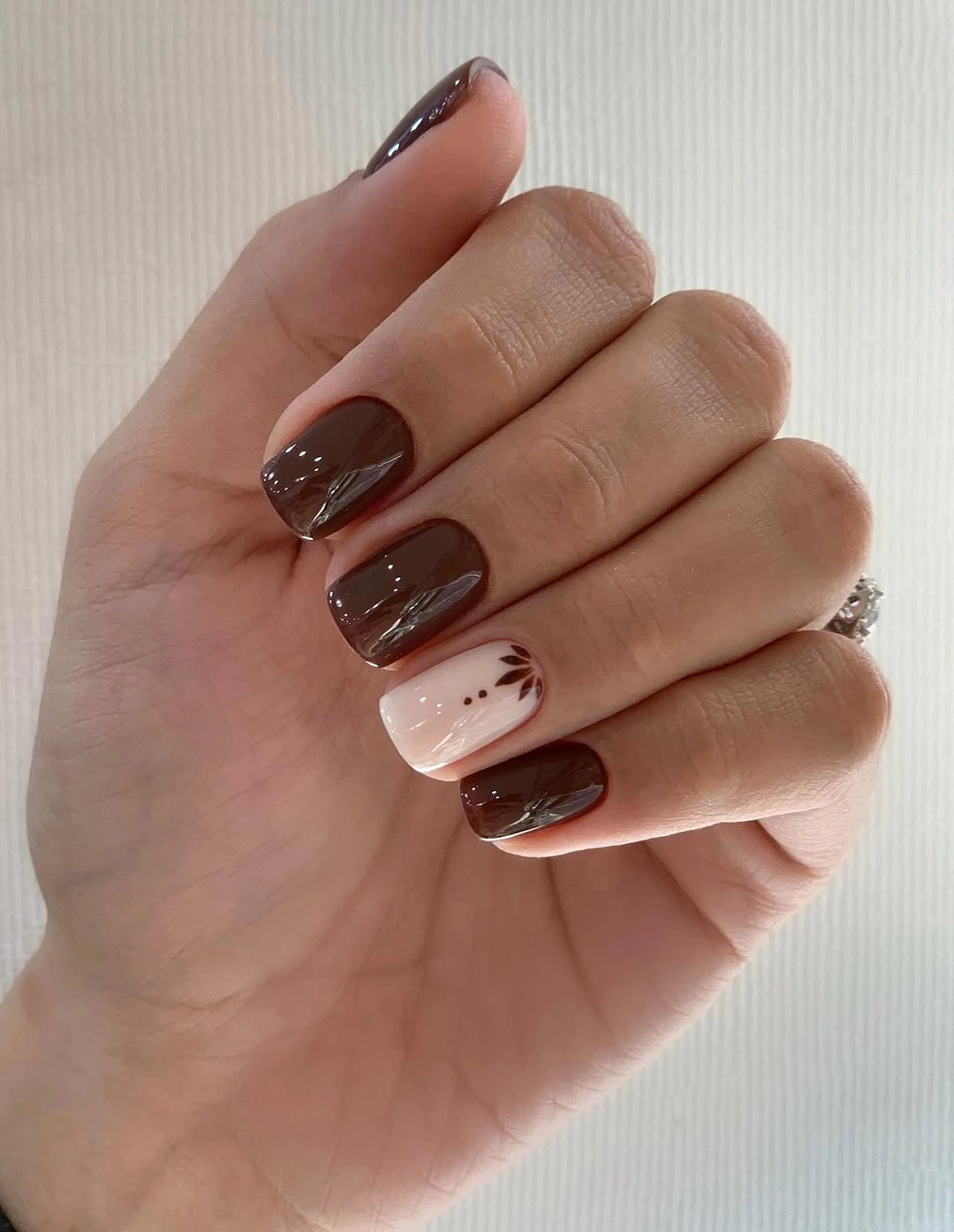
The accent is effective because it changes both value and texture at once. The brown nails offer smooth, uninterrupted color, while the pink nail introduces lines, dots, and a lighter field that breaks the repetition. A medium square edge makes that contrast feel graphic without the drama of a very long silhouette, which gives the manicure a practical direction.
Try the same arrangement on short square nails and keep the pattern to one finger. If the canvas is smaller, enlarge one line or dot rather than adding more tiny marks, since crowding would remove the open quality of the accent. Dark brown will still show tip wear clearly, but the compact length makes this design easier to manage than the long almond versions surrounding it.
Reflective Brown Edges over Pale Nude
Long almond nails use a pale neutral center and a narrow brown edge that catches light as the hand moves. The darker color follows the almond contour instead of filling the whole nail, so the open center remains the first structural feature. A subtle reflective quality gives the brown tip extra depth, but the overall effect stays cleaner than a full metallic or patterned set.
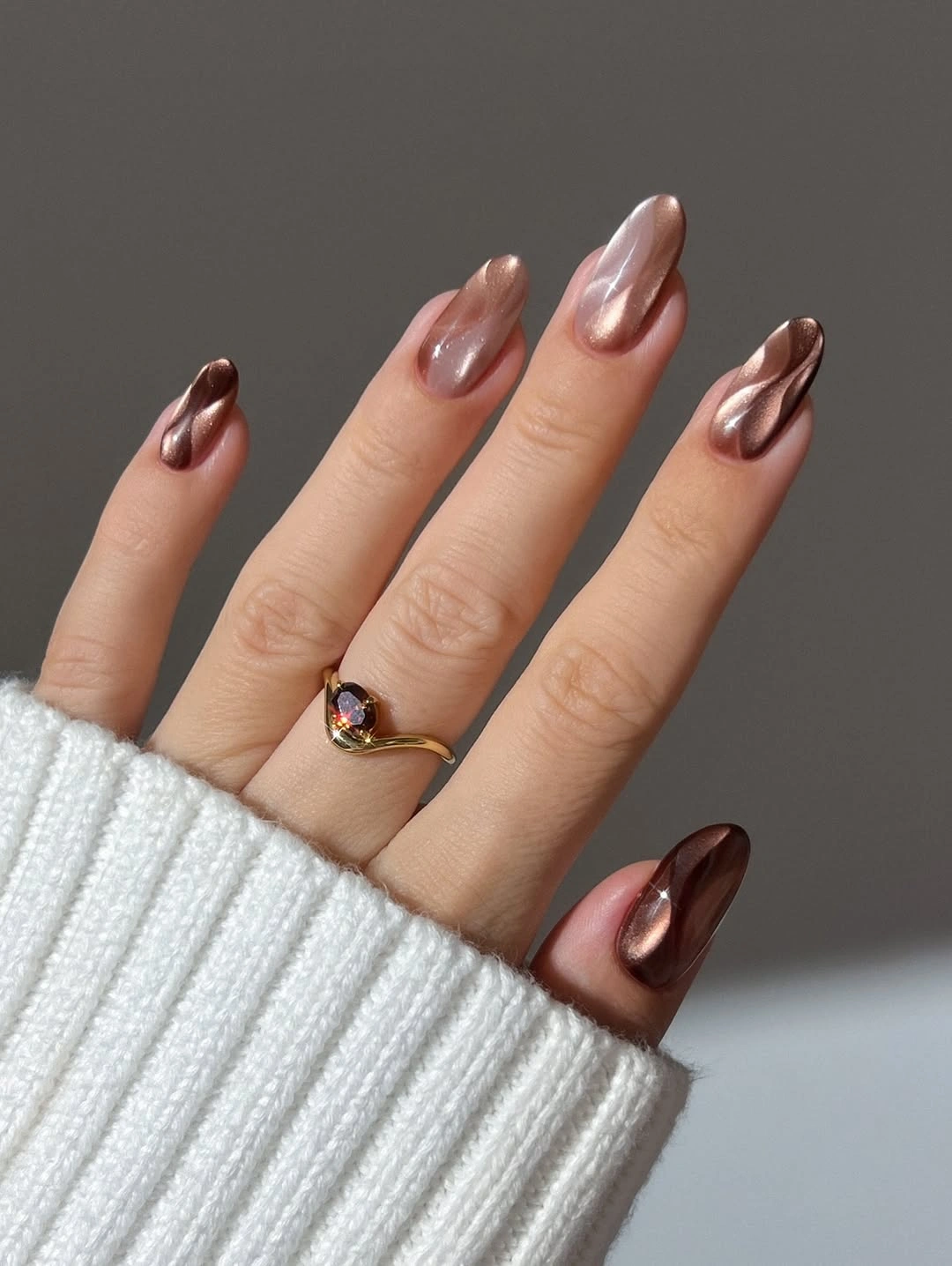
The edge acts like a frame for the pale base. It emphasizes the taper, draws attention toward the pointed tips, and creates a sharp transition without making the nail look visually short. Since the center remains quiet, the manicure can sit beside a knit sleeve or a ring without competing with those details, and the brown still reads as the clear seasonal choice.
Use a regular glossy brown line on a medium oval or almond shape if you want the same idea with less intensity. A slightly wider edge will read more clearly on shorter nails, while a very fine line will keep the open center dominant. The visible limitation is grow-out: the distance between the line and the base changes quickly, so the clean frame needs periodic attention.
Warm Nude with Delicate Brown and Gold Lines
These medium almond nails stay pale and warm, using fine brown and gold lines to add structure without turning the manicure into a dense pattern. The base remains the largest color field, while the accents frame selected nails or create small linear interruptions. That restraint makes the palette feel autumnal through warmth and contrast rather than through a literal seasonal motif.
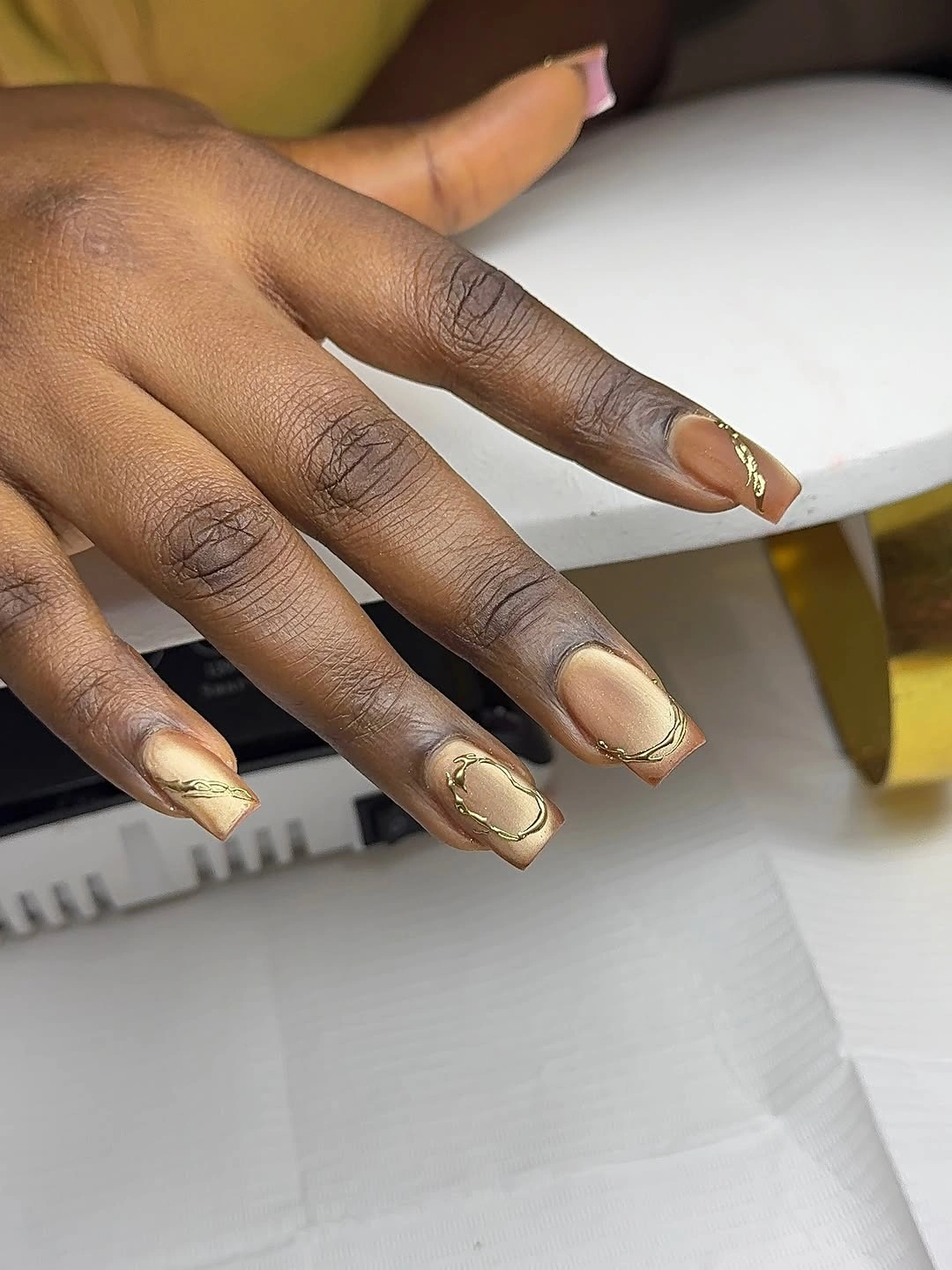
The line work changes the balance of an otherwise quiet color. Brown gives the pale base definition, while the gold catches only a small amount of light, so the effect is tailored instead of sparkly. The almond shape supports the delicate placement, but it also makes spacing important because a line that drifts can alter the apparent length or angle of the nail.
Skip the gold and keep one brown outline on an accent nail if you want the lower-complexity route. Short oval or soft square nails can carry the palette, but the lines should be slightly more open so they do not crowd the smaller surface. This is a design where the practical value comes from editing: preserving one clear border often looks more intentional than adding several tiny marks.
Muted Pink and Brown with Fine Borders
Blush, mauve, and brown share this long almond manicure, with thin borders and a plaid-like linear accent adding structure to the quiet palette. The colors remain soft, so the lines do not create a harsh contrast; instead, they give selected nails a tailored edge. The result feels detailed from close up while still reading as a restrained neutral set at a distance.
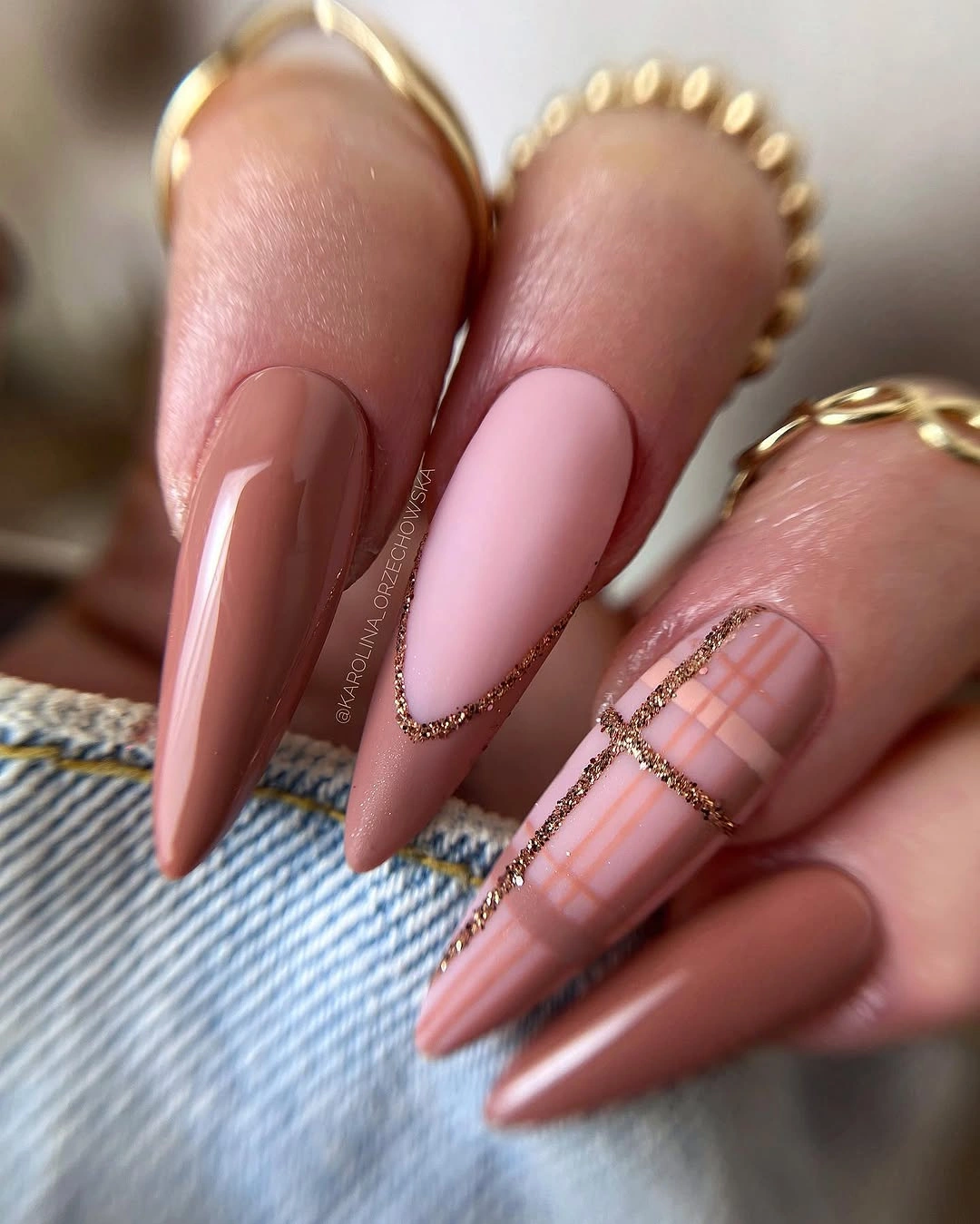
The smallest feature here is the repeated line, and it controls the rhythm of the hand. Pale nails provide pauses, brown supplies depth, and the thin accent lines guide the eye along the almond length. Because the colors are close in temperature, the design depends on placement and value changes rather than on a loud color break, which makes the details worth studying.
Use the line work on one accent nail and keep the rest in blush and brown if you need a simpler appointment or at-home plan. A shorter almond will preserve the softness, but a very short nail may need one border instead of a plaid-like cluster. The long length gives the design elegance, yet uneven growth can quickly change the spacing between the delicate lines.
Striped Brown and Pink Stiletto Details
Long stiletto nails alternate dark brown, pale pink, and cream, with narrow striped accents following the pointed direction. The lines do not sit randomly; they echo the taper, so the eye travels toward the tip and reads the shape as part of the design. Solid nails provide pauses between the more detailed fingers, keeping the set dramatic without making every surface equally busy.
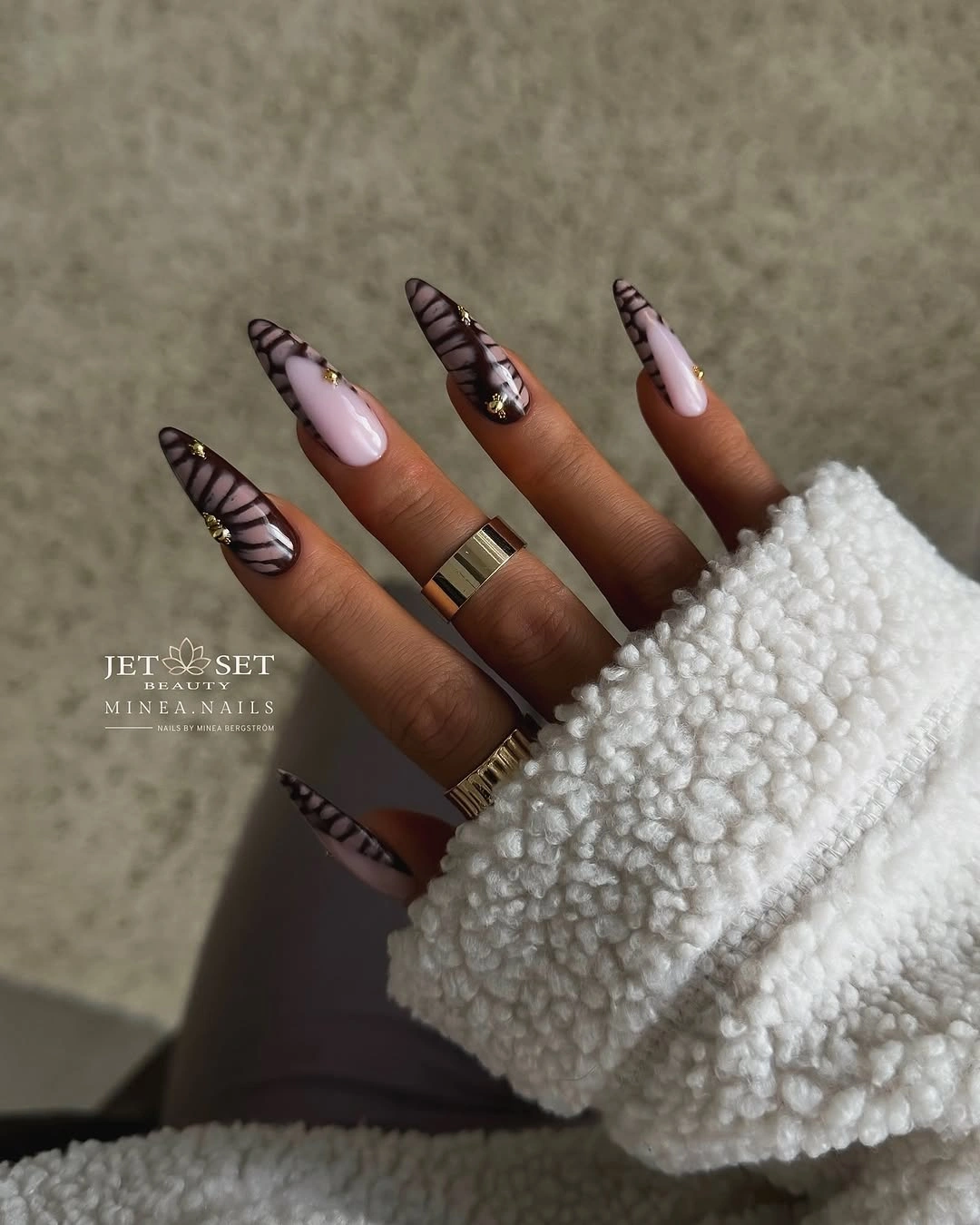
The relationship between stripe and silhouette is the key detail. A horizontal or diagonal line becomes more dynamic when it sits on a pointed nail, while the pale sections prevent the dark brown from becoming too heavy. The set uses color blocks to create a rhythm, then lets the fine stripes change the pace on selected fingers rather than repeating one formula everywhere.
Move the stripes to one accent nail or translate the color story to a medium almond shape for easier wear. A shorter canvas needs fewer lines, since several narrow bands can merge and look crowded. The stiletto length is visually strong but comes with real handling limitations, so preserving the brown, pink, and cream contrast matters more than preserving every stripe.
Short Nails with a Cool Teal Brown Accent
Short rounded square nails combine pale pink, chocolate brown, and cool teal details that look like small cloudy or circular accents. The compact shape makes the manicure approachable, while the teal introduces an unexpected note inside an otherwise warm palette. Brown still anchors the set, and the cool accent works because it is limited to selected nails rather than spread across every surface.
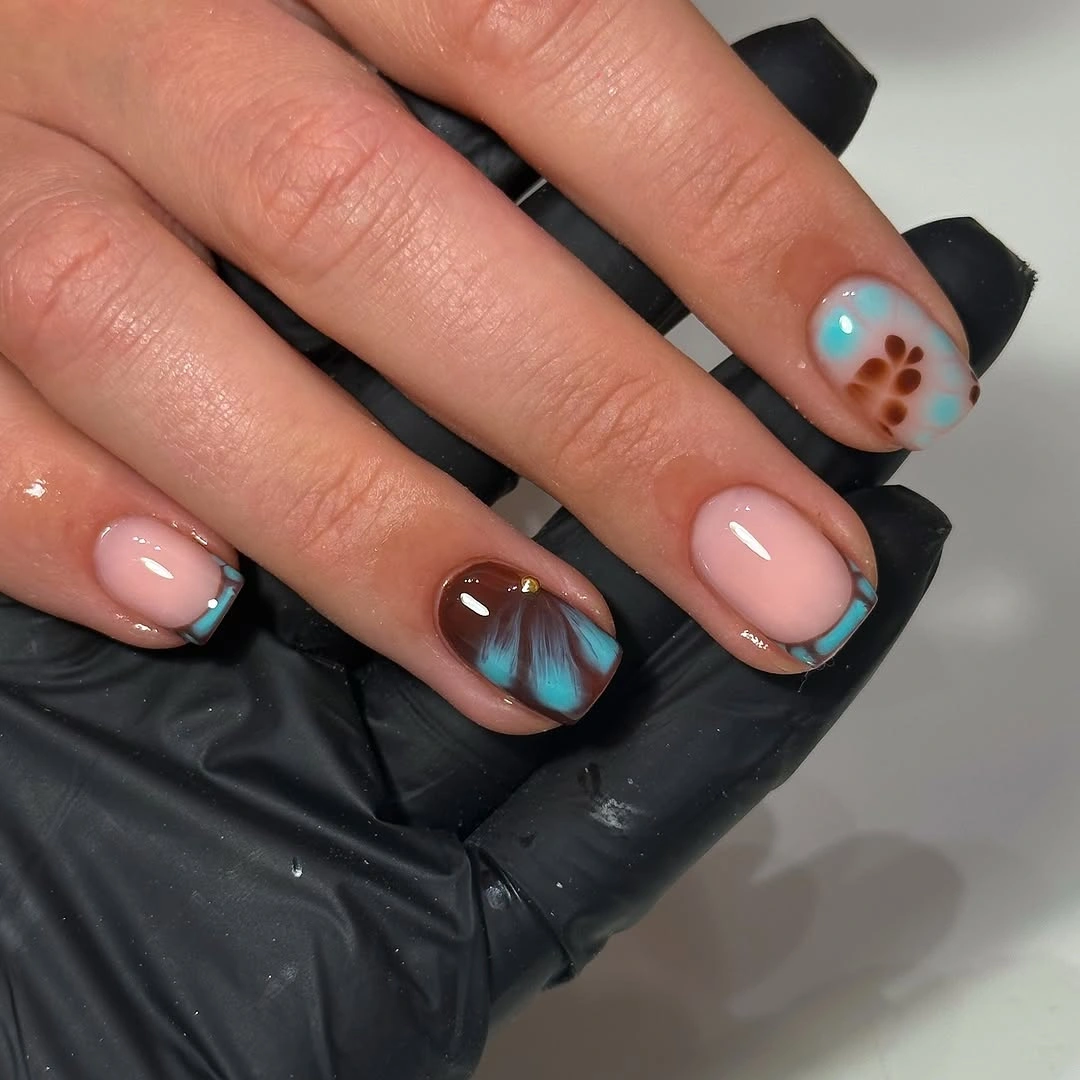
The contrast is small but deliberate. Pink softens the brown, teal interrupts the warm sequence, and the short shape keeps the color changes from becoming an exaggerated statement. Because the accents are rounded rather than long stripes, they echo the compact proportions and give the hand a playful detail without requiring a dramatic length or a large amount of negative space.
Use teal on one nail and keep the remaining fingers in brown and blush when adapting the idea. A short square shape can handle a dot or cloud-like mark, but the design should stay simple enough that the small accents remain separate as they grow. The compact length is the advantage here, while the honest limitation is that tiny marks may blur sooner than a single solid color.
Layered Warm Browns with an Amber Accent
Warm brown, caramel, and deep chocolate tones alternate across these medium almond nails, creating variation without any visible line art. One translucent amber-like accent changes the value of the set, while the glossy surface makes each brown shift apparent in the light. The manicure feels layered because the colors belong to one earthy family but do not repeat the same depth on every finger.
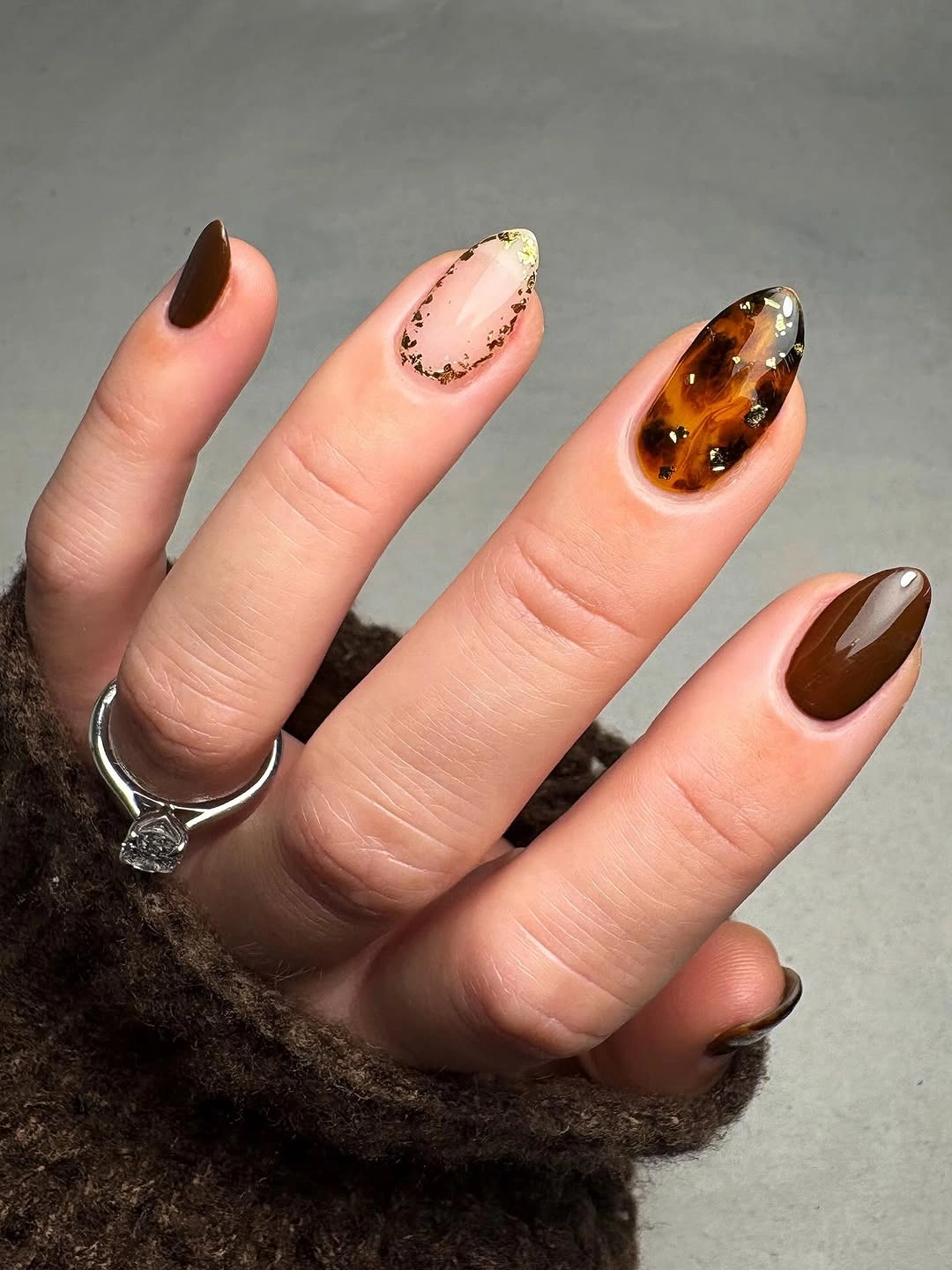
Color value is doing the work that pattern would normally do. A deep nail makes the caramel look lighter, the amber-like section introduces a warmer glow, and the almond shape keeps the transitions elegant. The set is especially useful for anyone who likes brown fall nails ideas but wants more dimension than a single chocolate shade can provide.
Choose two browns and one warm accent if a three-tone manicure feels too varied. A short almond or rounded shape will make the palette easier to maintain, while a sheer accent should stay visually quiet enough that it does not become a separate theme. The dark colors can show chips clearly, but the absence of fine art makes repairs more straightforward than on the patterned sets.
Dark Brown Outlines on Pale Long Nails
Long tapered nails keep their centers pale and use deep brown lines to frame the tips or side edges. The open areas emphasize the length, while the dark border gives the silhouette a crisp finish without covering the entire nail. It is a simple composition, but the repeated outline creates a clear rhythm that can look more editorial than a full solid brown manicure.
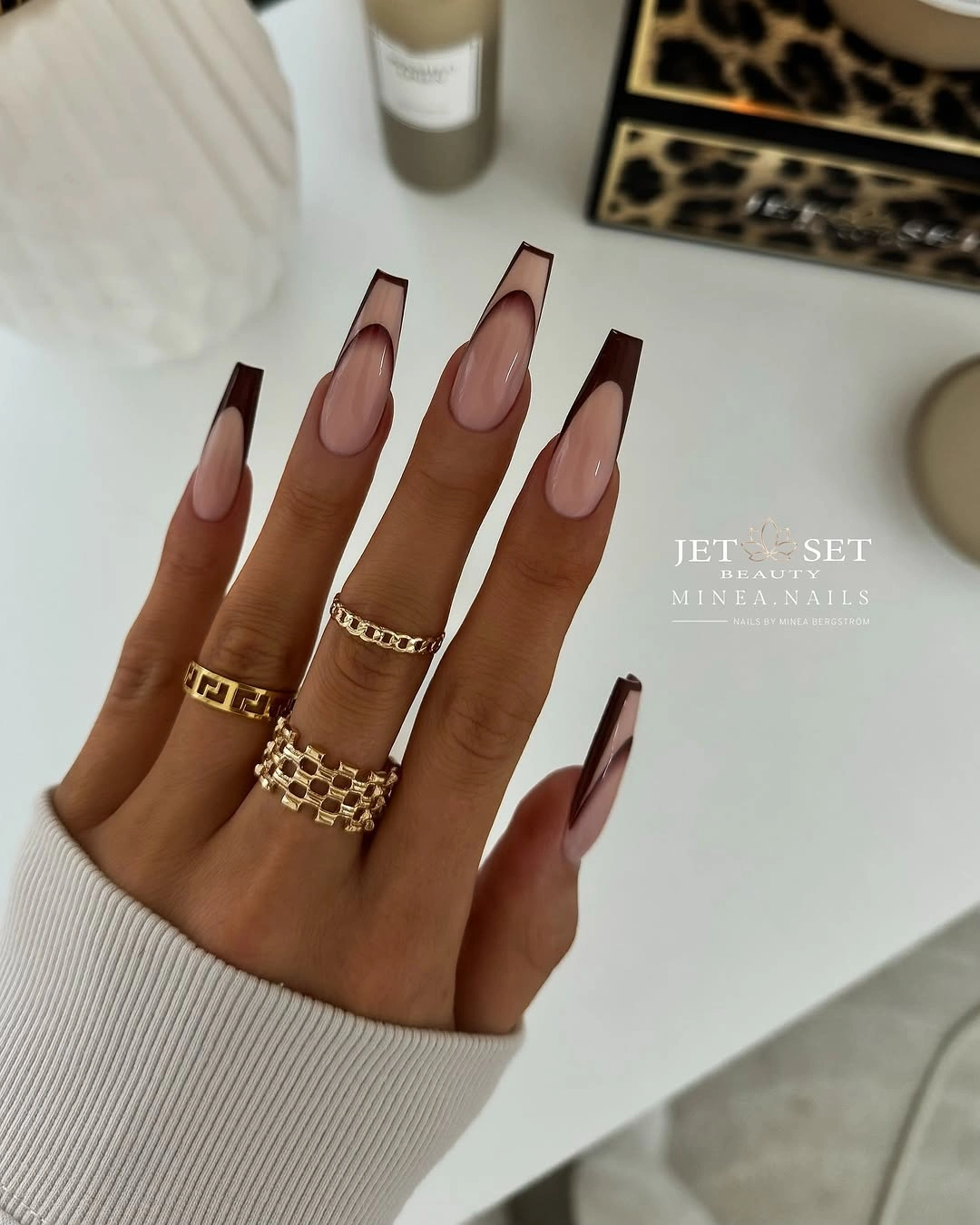
Negative space is the detail to watch. The pale center acts as a continuous field across the hand, and the brown outlines divide that field into separate almond or tapered shapes. Because the dark line stays narrow, the manicure remains light enough for soft clothing and gold jewelry, yet it has enough contrast to feel grounded for fall.
Use the border on shorter oval nails and make it slightly wider if you need the line to remain visible. A single accent outline can also carry the idea when a full repeated edge feels too exacting. The clean appearance depends on consistency, so growth and small asymmetries will be noticeable even though the design uses very little material or visual information.
Brown Solids with High-Contrast Patterned Tips
Deep brown nails sit beside pale almond nails that carry black curved stripes and small dark tip details. The solid fingers make the patterned accents easier to read, while the light base gives the dark lines a strong contrast. The set feels more graphic than the soft brown borders before it, but the color palette still stays controlled enough to keep the manicure coherent.
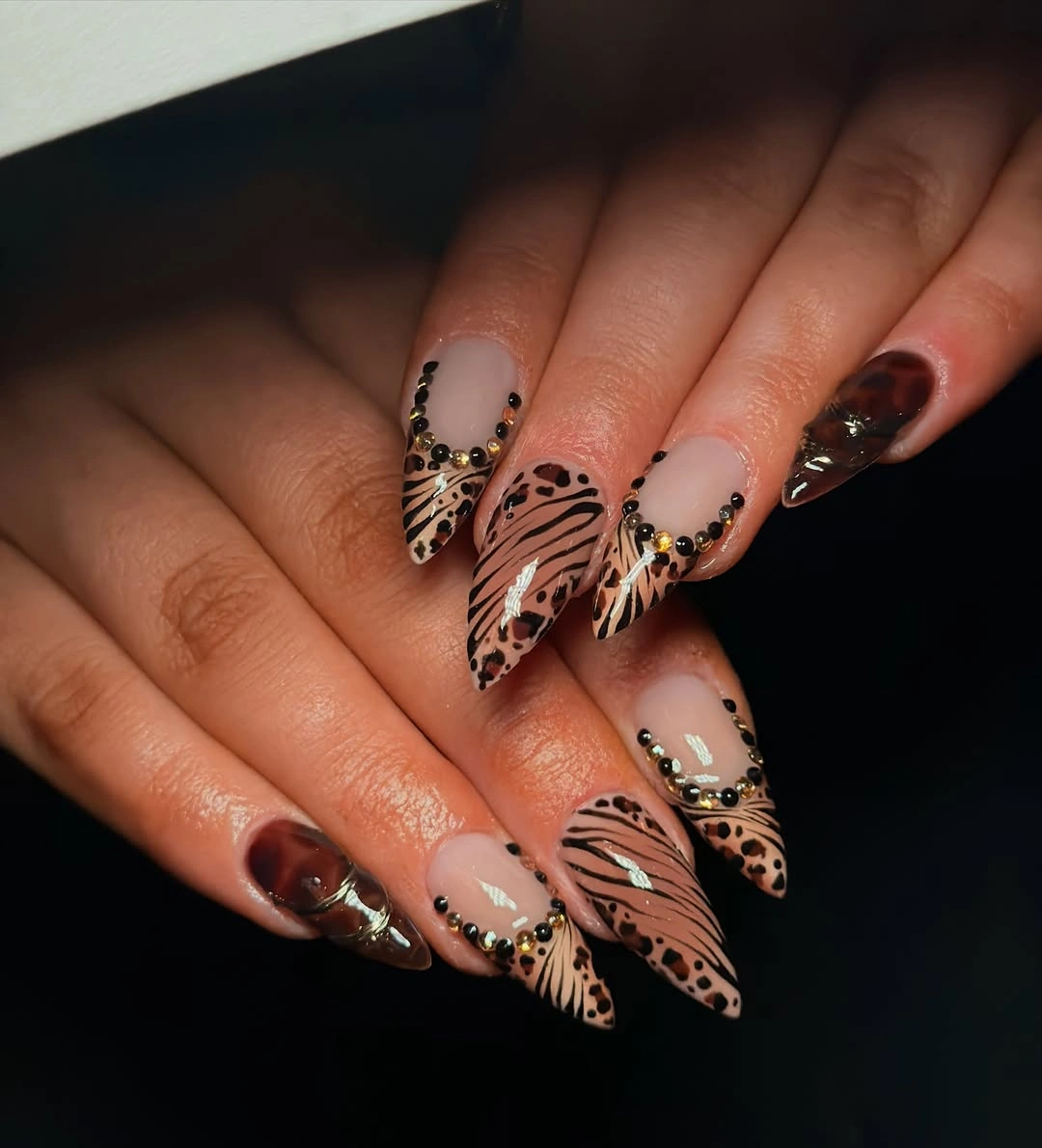
The edge placement creates the sharpest visual change. Instead of letting the pattern fill the entire nail, the design concentrates the black marks near the pale tips, then returns to a solid chocolate nail on the next finger. That alternation gives the hand a deliberate pace and prevents the high-contrast detail from overpowering the deep brown foundation.
Keep the pattern on one or two nails and repeat the solid brown elsewhere if you want a more wearable version. A medium almond shape can support the same contrast, but the stripes should be fewer and broader so they do not merge. The dark and pale pairing is striking, yet the patterned tips may require more careful edge maintenance than the plain brown nails beside them.
Ornate Brown Line Art on Long Coffins
Long coffin nails combine blush nude and brown fields with curved outlined motifs and fine pale lines. Some fingers remain relatively quiet, while others carry dense decorative panels, so the eye moves between an ornate focal point and a calmer supporting nail. The coffin length gives the line art room to unfold, making the manicure feel intentionally elaborate rather than accidentally crowded.
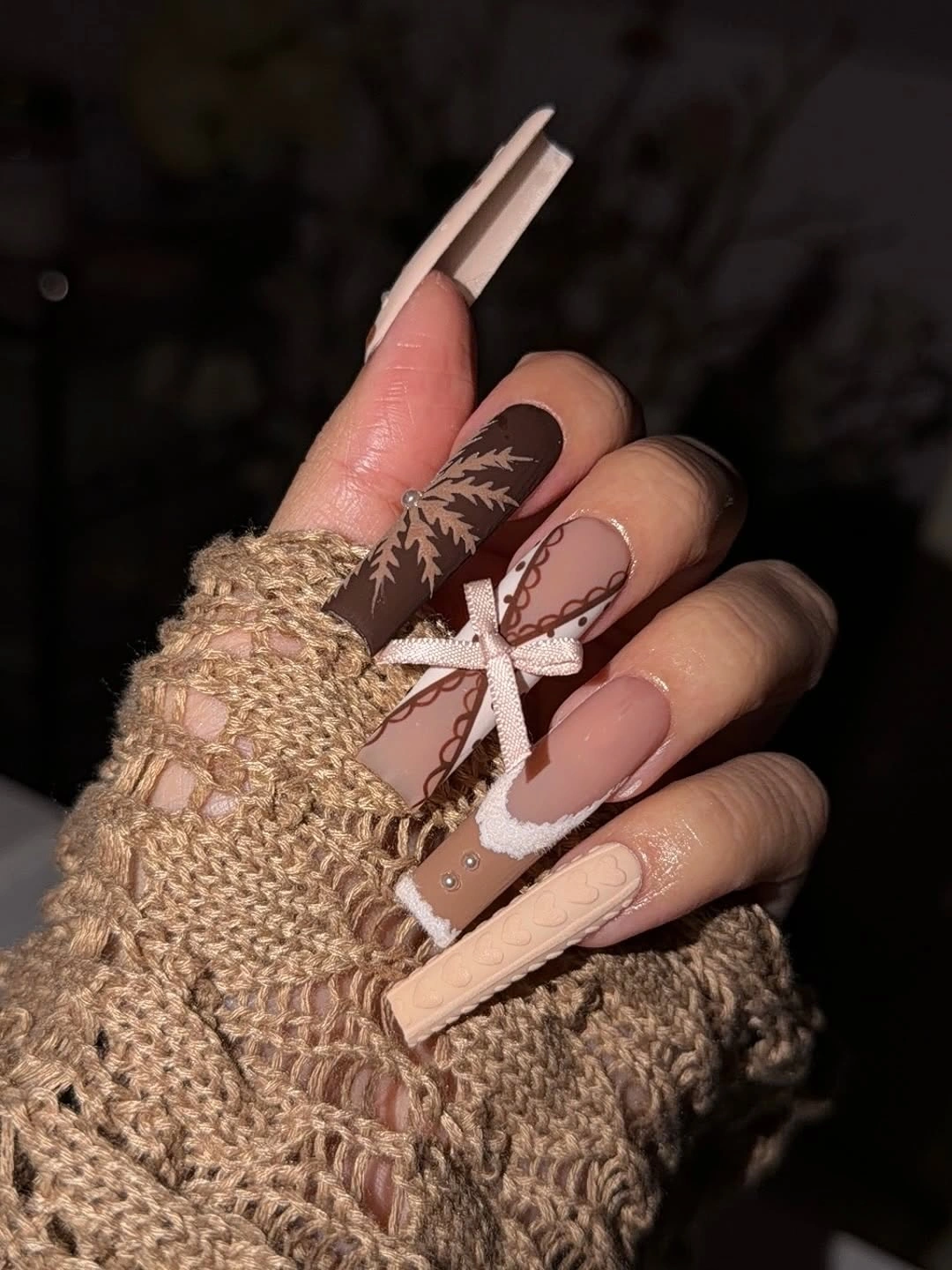
The most useful detail is the distribution of density. When every nail is decorated, line art can become a flat wall of information, but the quiet nude nails here create visual pauses that let the brown panels matter. Pale outlines inside darker areas also keep the design from becoming too heavy, even though the overall length and detail level are clearly dramatic.
Keep one ornate accent and shorten the rest to a medium square or almond shape when adapting the idea. The decorative panels need enough surface to remain legible, so reducing the number of motifs is more effective than shrinking every line. Long coffins make the composition impressive, but they also make the detailed outlines more demanding to maintain around edges and daily handling.
Brown and Pale Pink with Small Gold Details
Long square nails alternate pale pink and brown, then add tiny gold floral-like shapes and fine brown edge work to selected fingers. The palette stays warm and quiet, while the small gold marks give the hand brief points of light. Because the accents are distributed rather than repeated on every nail, the manicure feels decorative without losing the visual clarity of its two main colors.
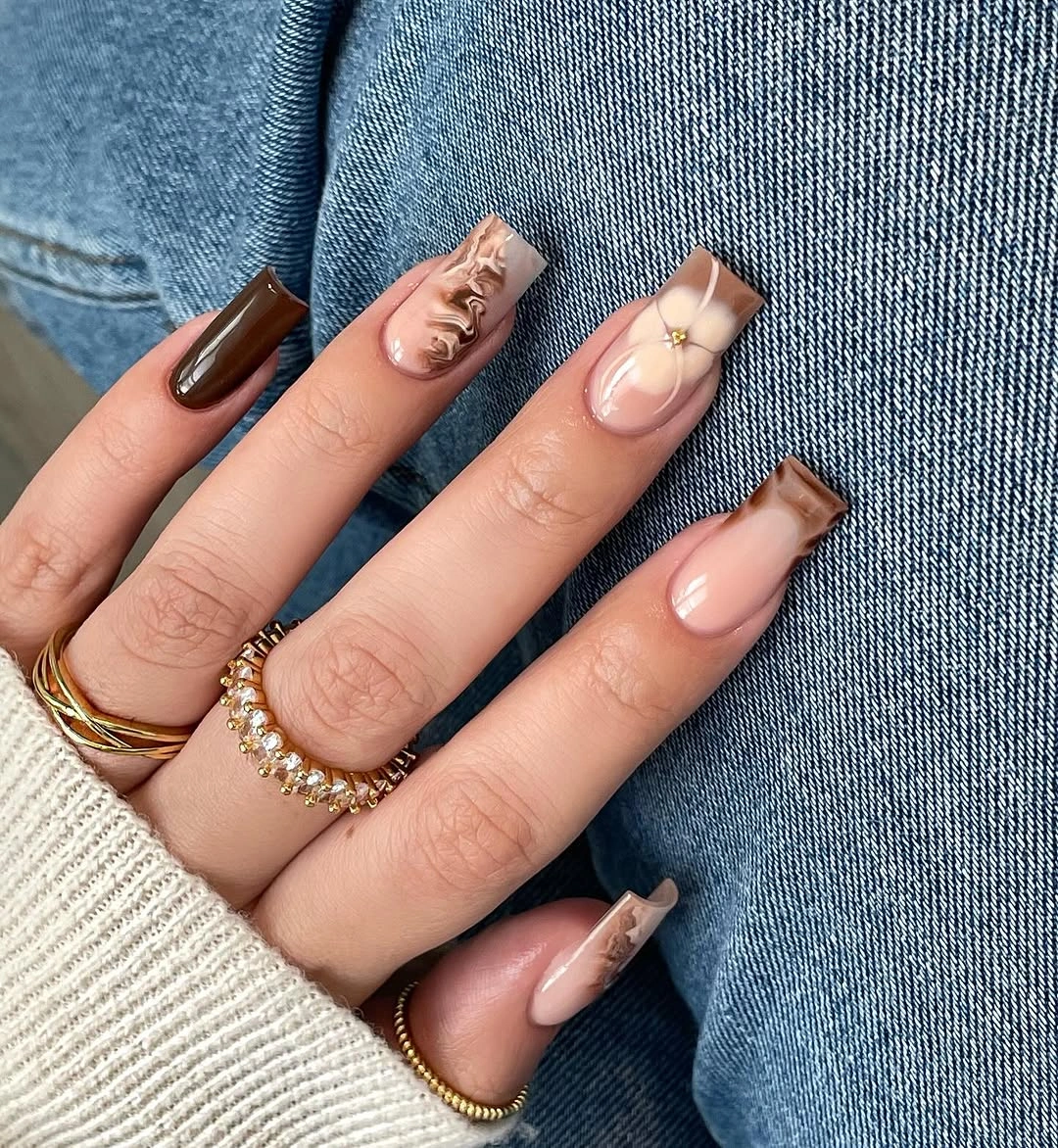
The gold matters because it connects the pale and dark fields without adding another large block of color. A small mark can draw the eye across a brown nail, then the lighter pink nail gives it room to reset. The square shape makes the small details look structured, while the long surface prevents them from feeling cramped beside the brown areas.
Use one gold accent and keep the other fingers solid if you want a simpler brown fall nails design. A medium square will still show the contrast, but tiny shapes should be enlarged slightly or reduced in number. Pale nails may reveal edge wear first, so the lower-density version has a practical advantage while preserving the warm brown, pink, and gold relationship.
Milky Panels with One Brown Star Accent
Milky neutral nails are paired with deep brown curved side panels, leaving a lighter center visible on most fingers. One nail carries a small gold star-like accent, which gives the otherwise restrained set a quiet point of interest. The brown is rich but contained, and the medium-to-long almond shape lets the side framing lengthen the nail without turning it fully dark.
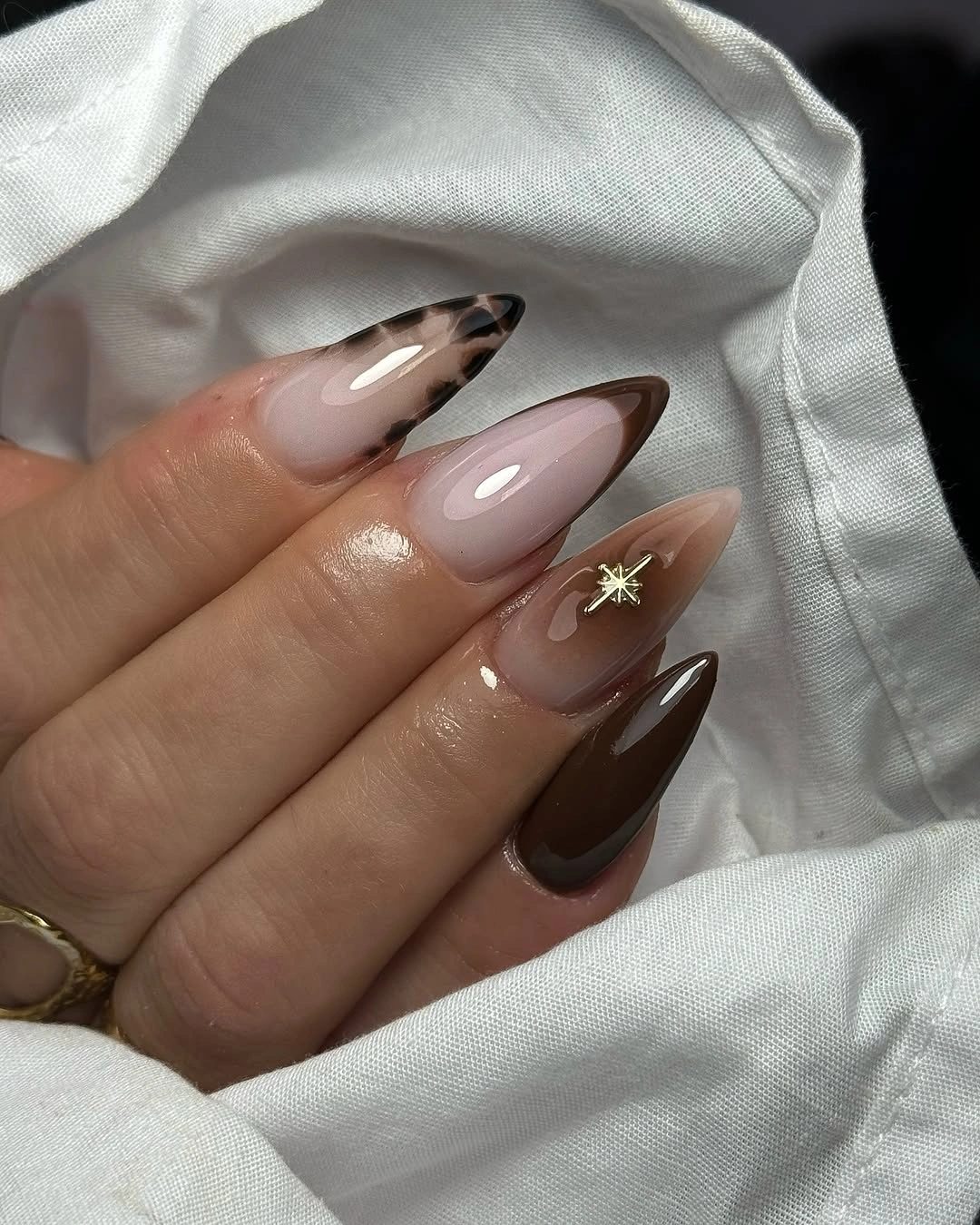
The side placement is the detail that changes the balance. A dark curve near the edge emphasizes the almond contour, while the pale center preserves openness and makes the gold accent visible. The design feels more dimensional than a solid brown manicure because the eye travels around the light center before settling on the small star-like mark.
Keep the side panel on two nails and use a plain milky base on the rest when adapting it to a shorter oval. A single gold mark will be enough to echo the original mood, and removing extra detail will make the clean side curve easier to maintain. Growth near the base can expose more of the light center, so even a quiet design benefits from consistent edge care.
Dusty Rose Dots with Tiny Gold Stars
Long almond nails use a muted rose-brown base, repeated white dots, and small gold star-like accents. The color feels soft rather than dark, so the dots supply most of the pattern and the gold adds a small warm glint. The result is playful but still connected to a fall palette, especially when the hand is styled beside a leather bag or knit sleeve.
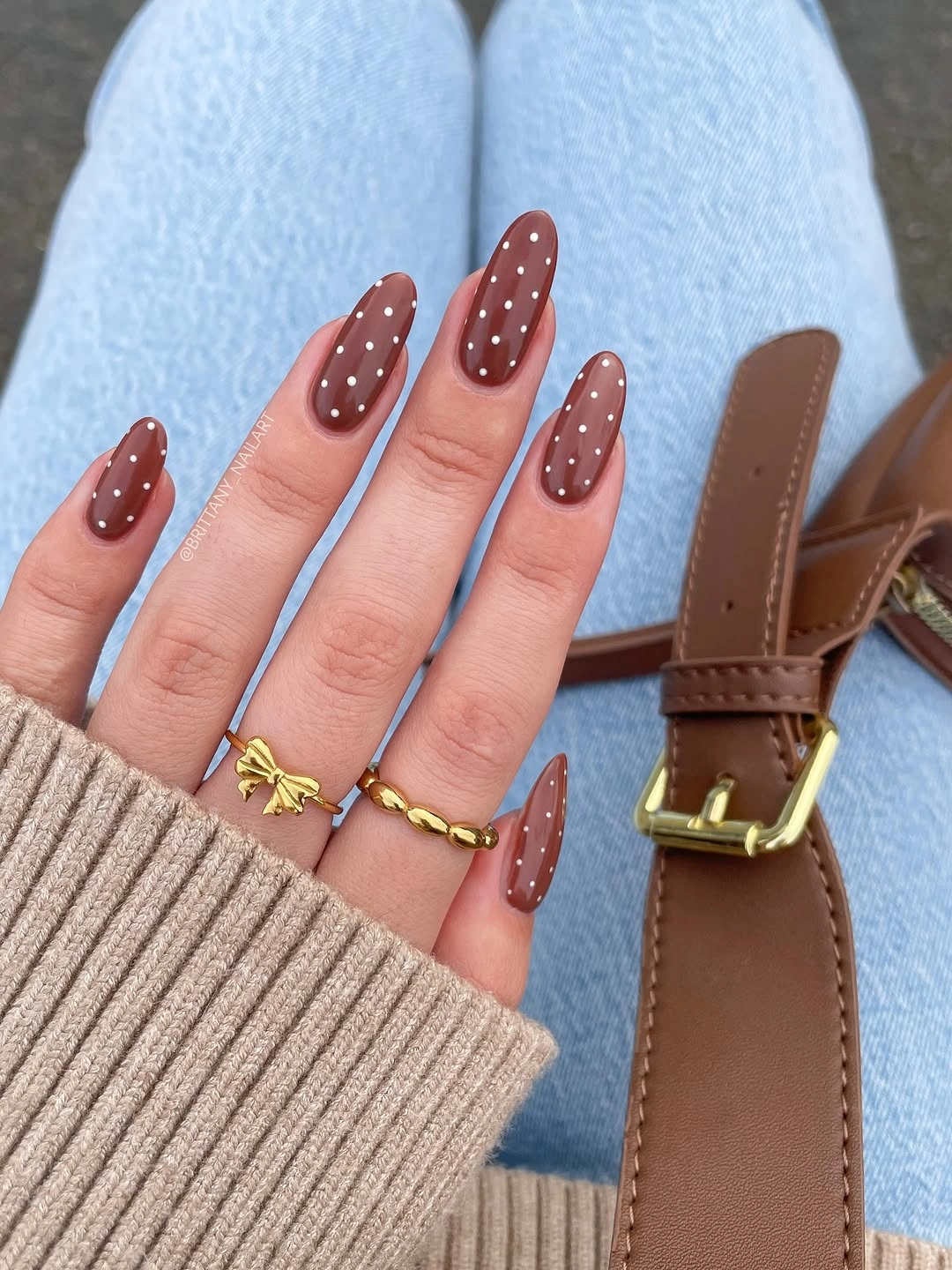
The dot rhythm is more important than the number of dots. Small pale marks repeat across the rose field, giving the hand a delicate beat, while the gold detail appears less frequently and therefore feels special. The almond length keeps the spacing comfortable, but the muted base prevents the manicure from looking overly bright despite the repeated accents.
Reduce the dots to one accent nail and keep a single gold star on a medium oval if you want a lower-density version. The rose-brown base can stay soft and glossy, while fewer marks will be easier to refresh if they wear at the edge. Long almond nails make the tiny details readable, yet they also raise the maintenance demand compared with a short dotted design.
Espresso Solids with Patterned Pale Tips
Long square nails combine glossy espresso fingers with pale nails carrying dark outlined sections and spotted black-and-white tips. The solid brown nails provide a quiet block of color, while the patterned pale tips create the strongest contrast in the set. The square silhouette makes the division feel graphic, and the darker base keeps the lighter accents from drifting into a delicate or overly sweet mood.
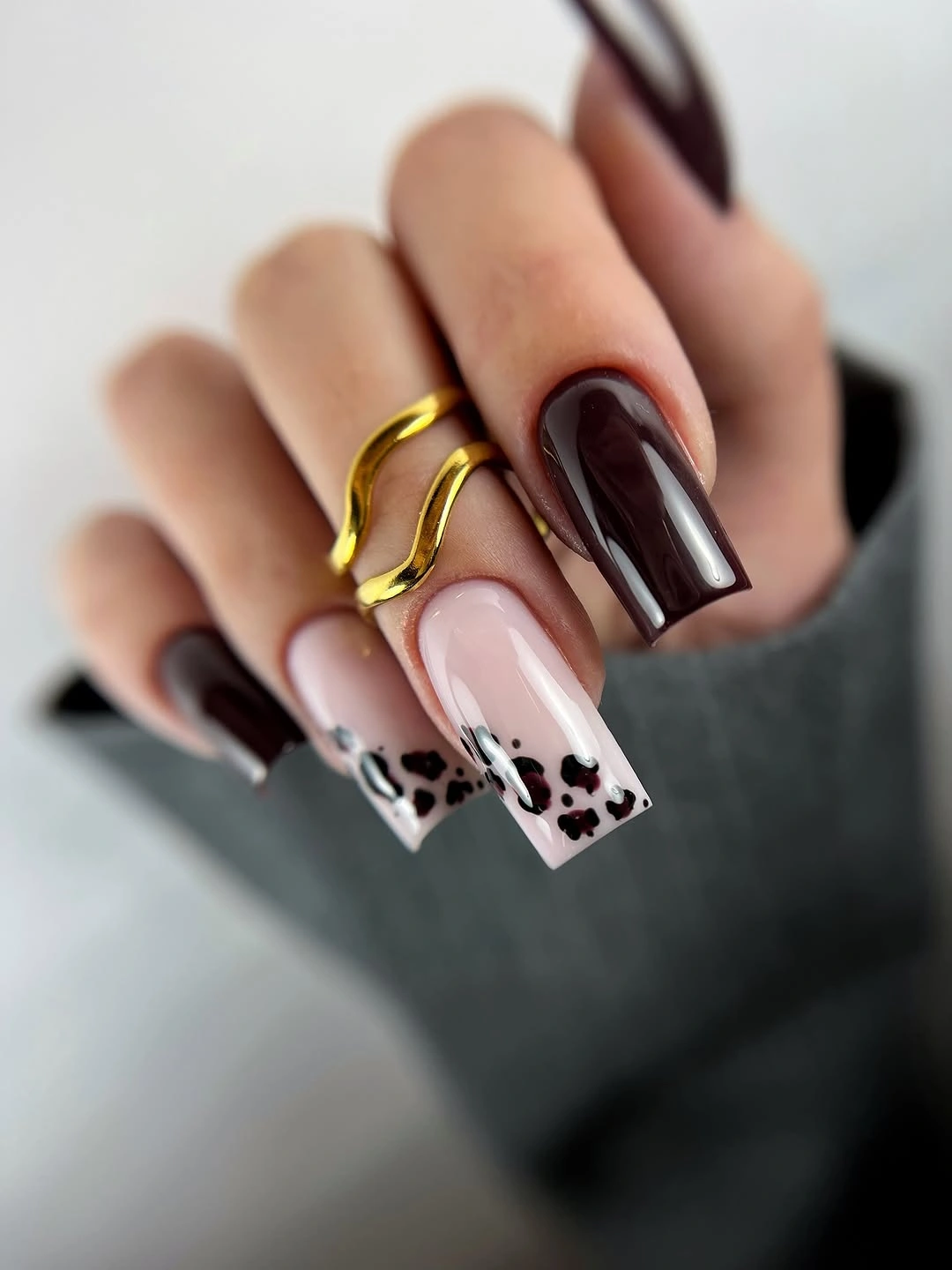
The contrast depends on keeping the roles separate. A dark solid nail is easy to read at a glance, then a pale tip with spots rewards closer attention without needing decoration on every finger. The patterned edge also makes the square shape more visible, because the line and spots trace the flatter tip instead of disappearing into a pointed contour.
Use one patterned tip and keep the rest in glossy brown for an everyday version. A medium square shape will preserve the graphic split, while a shorter nail should use fewer spots and a wider pale area. The light pattern can show wear more readily than the dark solids, so editing the detail count will improve both clarity and practical upkeep.
Chocolate Borders around Nude Almonds
Medium almond nails finish the quieter middle stretch with pale centers surrounded by dark chocolate curved borders. The brown line follows the silhouette and leaves a generous nude area in the middle, creating a clean outline rather than a full tip block. The shape is long enough for the border to read as a deliberate frame, but still balanced enough to feel like a practical brown fall nails short alternative.
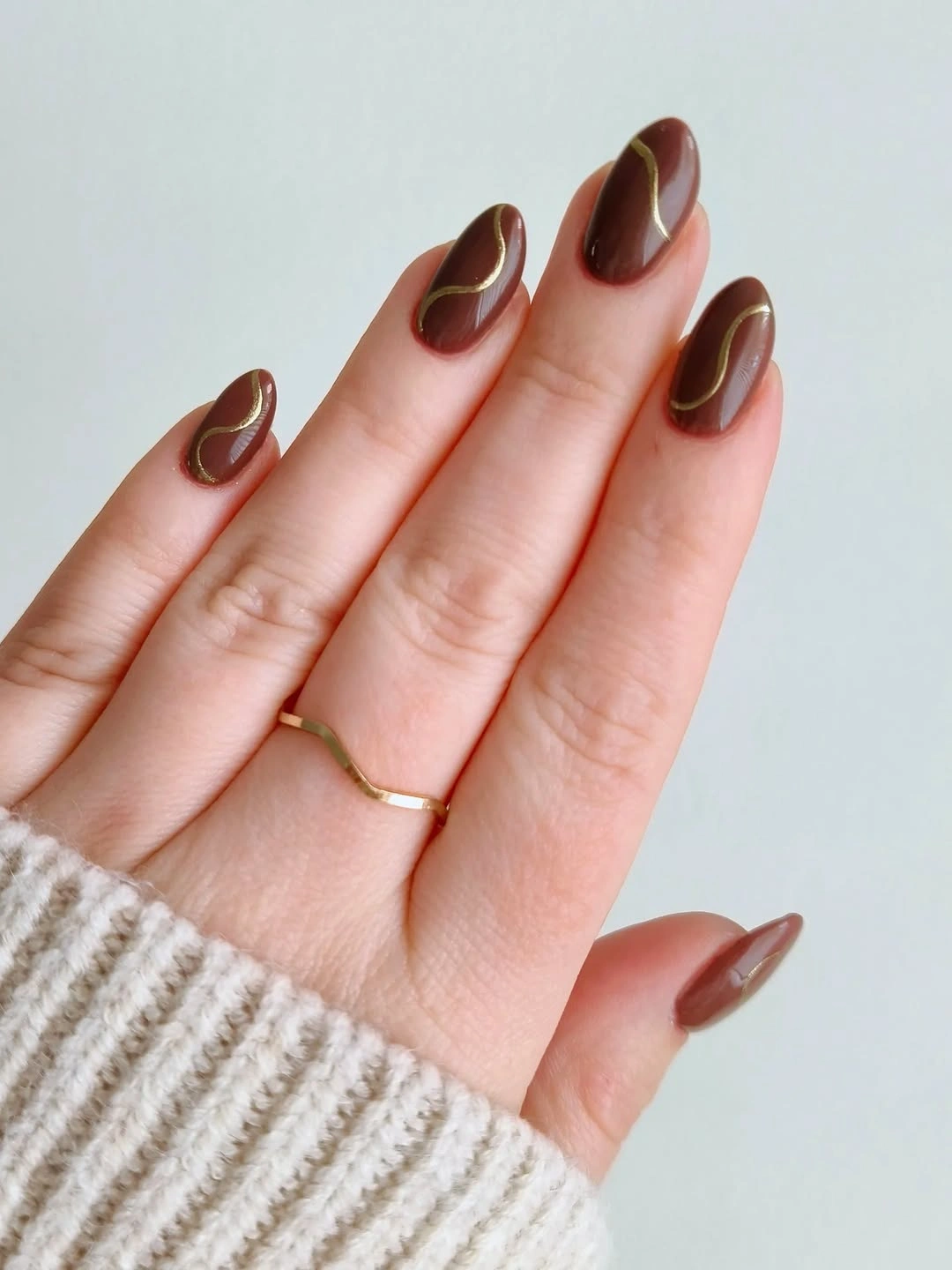
The repeated border is the entire visual argument. Pale centers make the fingers look open, and the dark edge gives each nail definition without introducing another motif or finish. Because the line stays close to the contour, the manicure feels coordinated with the shape itself, and the soft brown is easier to pair with clothing than a black outline would be.
Use a short oval shape and a slightly wider brown edge if you want the same idea on less length. One accent nail can carry the outline when a full repeated border feels too exacting, but consistency across the hand is what gives the original its calm rhythm. The visible limitation is grow-out, since the line will no longer sit at the same distance from the base over time.
Uniform Glossy Brown on Rounded Squares
Every visible nail in this short rounded-square set carries the same deep brown color and smooth reflective surface. There are no accents to distract from the contour, so the manicure relies on even shaping and a rich block of color. The compact proportions make it one of the more practical designs in the collection, while the dark shade still gives it a clear seasonal identity.
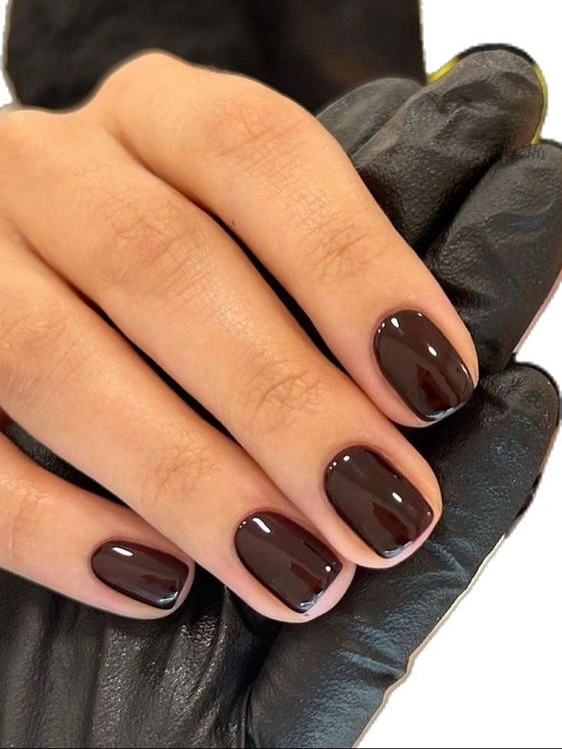
The absence of pattern is the defining detail. A rounded square edge keeps the hand softer than a sharp long coffin, and the even brown surface lets the shape speak without needing a contrasting finger. This is a useful reference for brown fall nails short because it shows how a restrained length can still look intentional when the color and finish are consistent.
Keep the set monochrome or change only the brown undertone if you want to preserve the clean logic. A shorter rounded shape will remain easy to coordinate, while a square edge will sharpen the same color story. Dark polish makes chips visible, so the simple design is not maintenance-free, but it is easier to repair than a pattern that depends on exact placement.
Medium Squares in Deep Chocolate
These medium square nails use one even deep chocolate shade, but the flatter edge gives the solid color a different character from the rounded set before it. The surface is glossy and uninterrupted, so the hand looks direct and graphic rather than decorative. The shape adds enough structure to make a single brown color feel like a deliberate style choice.
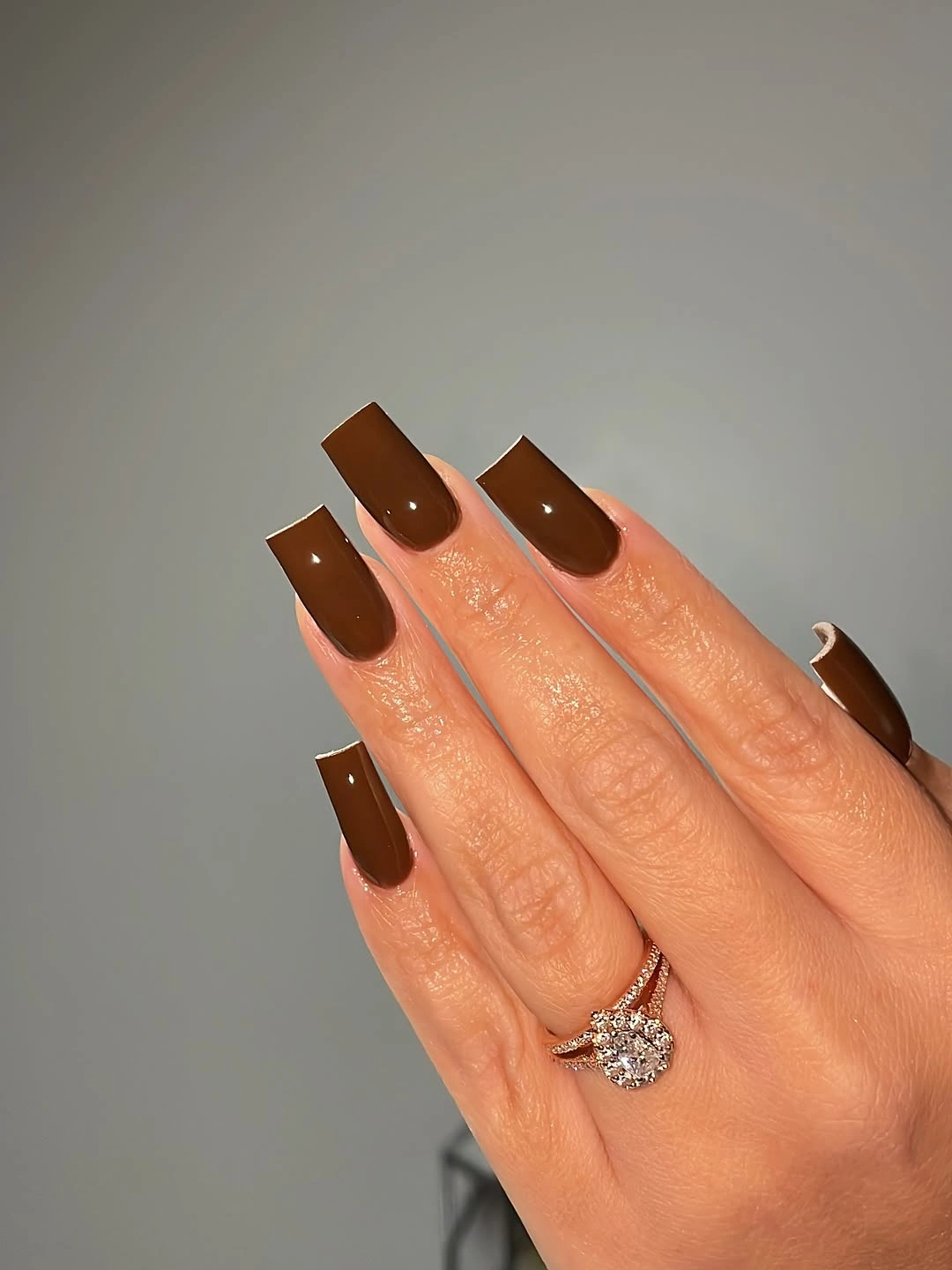
The comparison with a rounded silhouette is useful here. Square corners make the dark block look more architectural, while the medium length keeps it from becoming as dramatic as a long coffin or stiletto. The finish catches light across the flat surface, so even without art the manicure has a small change in value that keeps it from looking dull.
Choose a shorter square nail if you want a sharper version, or soften the edge to make the same brown feel more relaxed. One pale accent could break the block, but leaving the set uniform keeps the shape as the focal point. As with any dark solid, worn tips are easy to notice, so neat edges matter more than adding decoration.
Brown Collage with Spots and Checks
Long coffin nails bring together chocolate and blush fields, leopard-like spots, and black-and-pale checker accents. The palette keeps returning to brown, which helps the many motifs share one visual home even when their patterns differ. The length gives the collage room to breathe, but the overall effect is intentionally bold and belongs closer to an inspiration-board statement than to a minimal daily set.
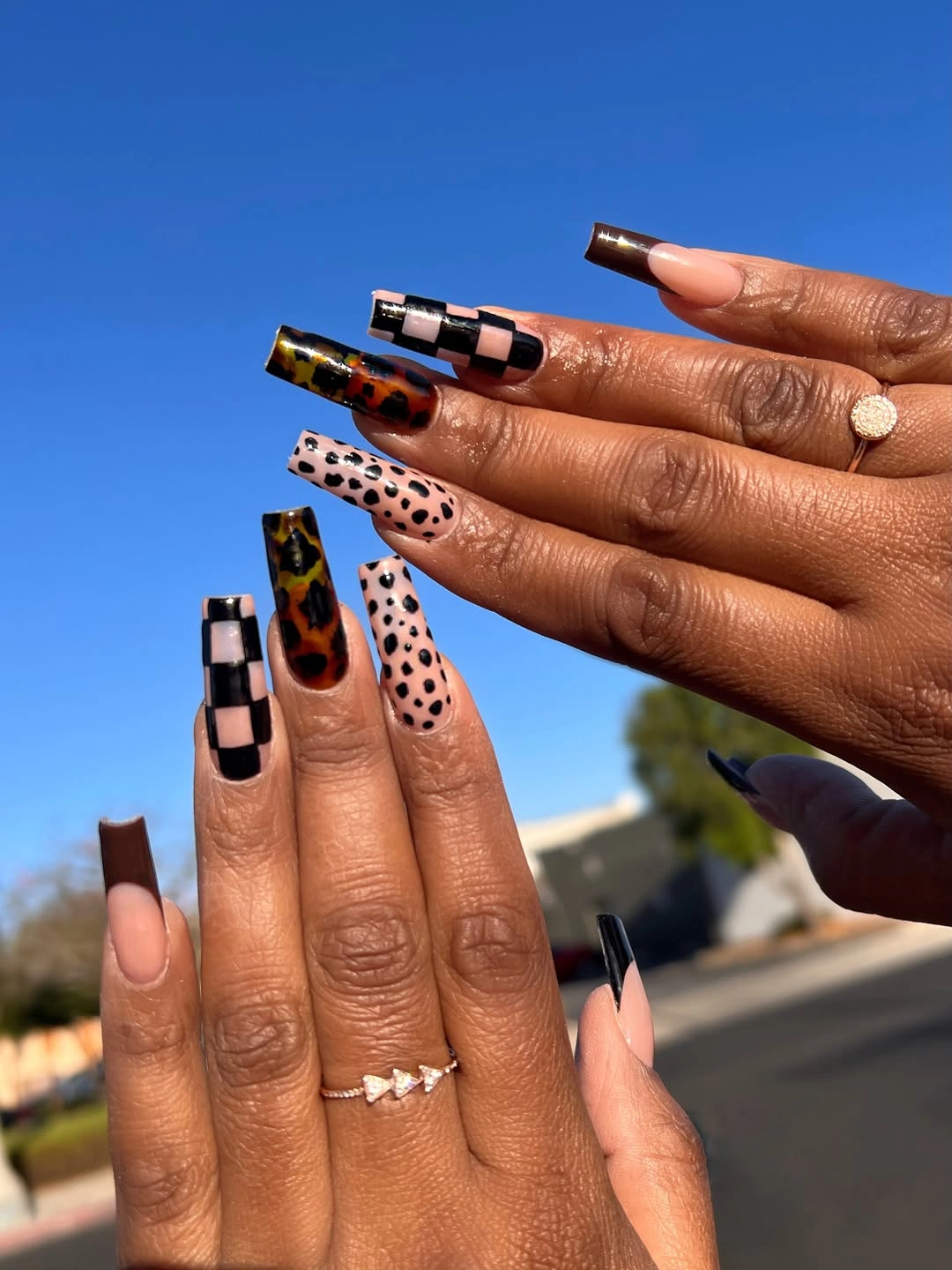
The design succeeds through color repetition rather than motif repetition. Brown appears as a solid, a spot, and a block, while pale pink and light sections create pauses between the stronger patterns. That connection lets the eye move through the hand without demanding that every nail match, and the coffin shape gives the checker details a stable, flat surface.
Keep one pattern and two solid colors when adapting the collage to a medium square or almond shape. A shorter canvas cannot carry the same number of spots and checks without becoming crowded, so removing a motif will make the remaining one clearer. The long coffin silhouette is part of the statement, yet it also raises the practical cost of maintaining several high-contrast details at once.
Soft Luminous Mauve Brown
Muted mauve-brown fills these medium almond nails with a subtle reflective glow that changes as the hand turns. There is no separate pattern or contrasting accent, so the finish and the soft color carry the entire look. The medium length keeps the mood balanced, while the gentle light on the surface gives the final design more dimension than a completely flat neutral shade.
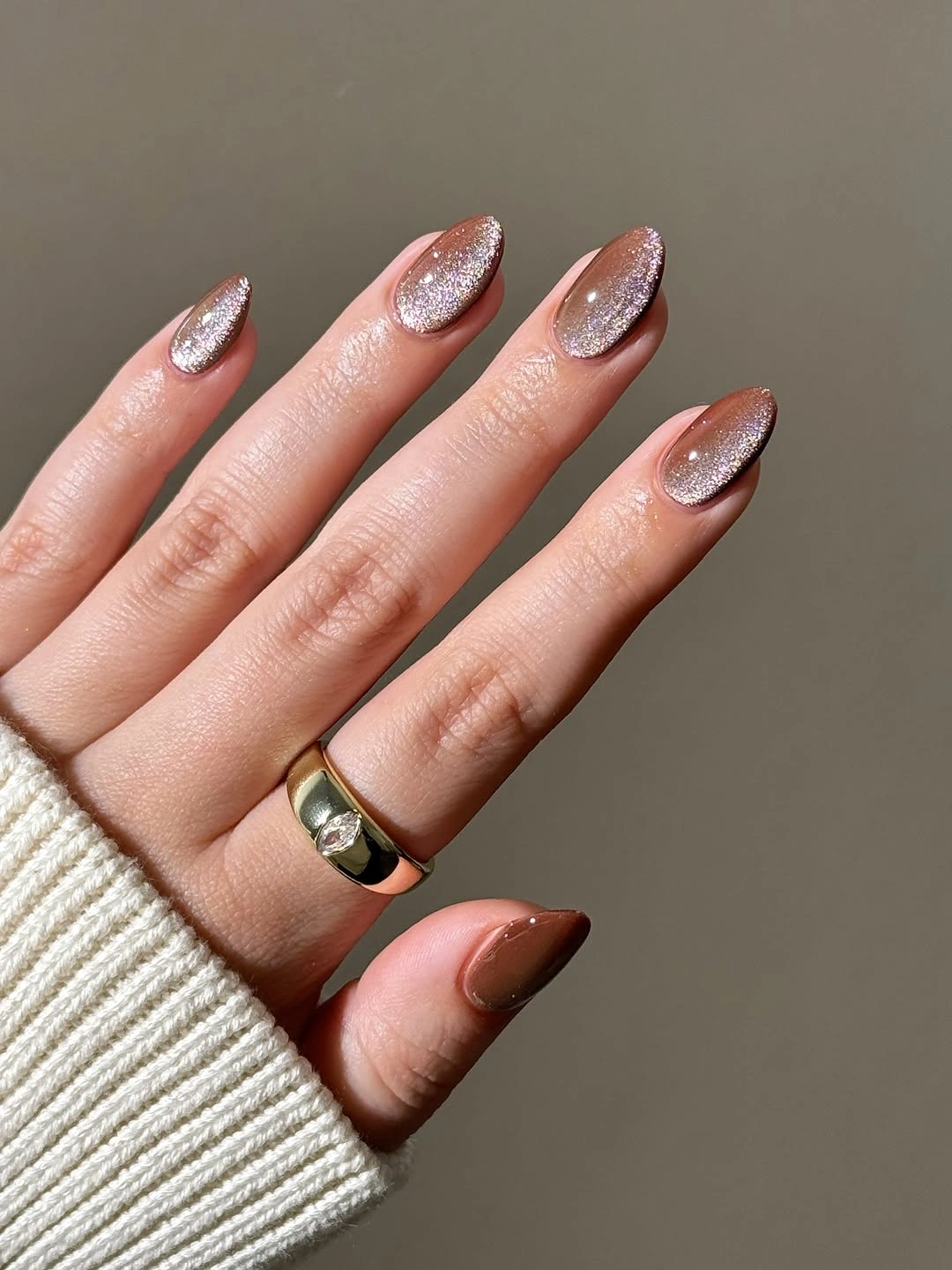
The finish is quiet rather than glittery. It creates a continuous shift across the nail, allowing the almond contour to remain visible while the color changes slightly under different light. That makes the manicure a useful middle ground between glossy chocolate solids and elaborate brown fall nails designs: it offers visual interest without relying on line work or multiple motifs.
Use a neutral brown with a soft sheen if a deep espresso feels too strong, or keep the same mauve-brown on a short oval shape. Avoid adding extra art unless the base truly needs a focal point, because the surface glow is already doing that job. The understated finish may disguise small edge changes better than a very dark solid, but it still depends on an even shape to look polished.