Winter dressing gets more convincing when the layers have separate jobs instead of simply adding bulk. A warm neutral can hold the eye, a dark base can sharpen the outline, and one considered accessory can keep the whole outfit from dissolving into a cloud of fabric. That is the difference between feeling bundled up and feeling intentionally dressed.
For winter outfits for women, start by deciding where the visual weight should sit: near the face, through the center of the body, or at the shoe. Then change only one element at a time – the value of the knit, the scale of the scarf, or the finish of the boot – so the outfit stays readable while still doing the practical work of cold-weather layers.
Camel Vest With Cream Wide-Leg Trousers
The camel quilted vest is the anchor here because it brings warmth to the upper body without covering the long cream trouser line. A dark knit underneath gives the pale ribbed-looking pants a firmer boundary, while the brown bag and low shoes repeat the vest’s warm value in smaller amounts. The result is relaxed, but it does not lose shape.
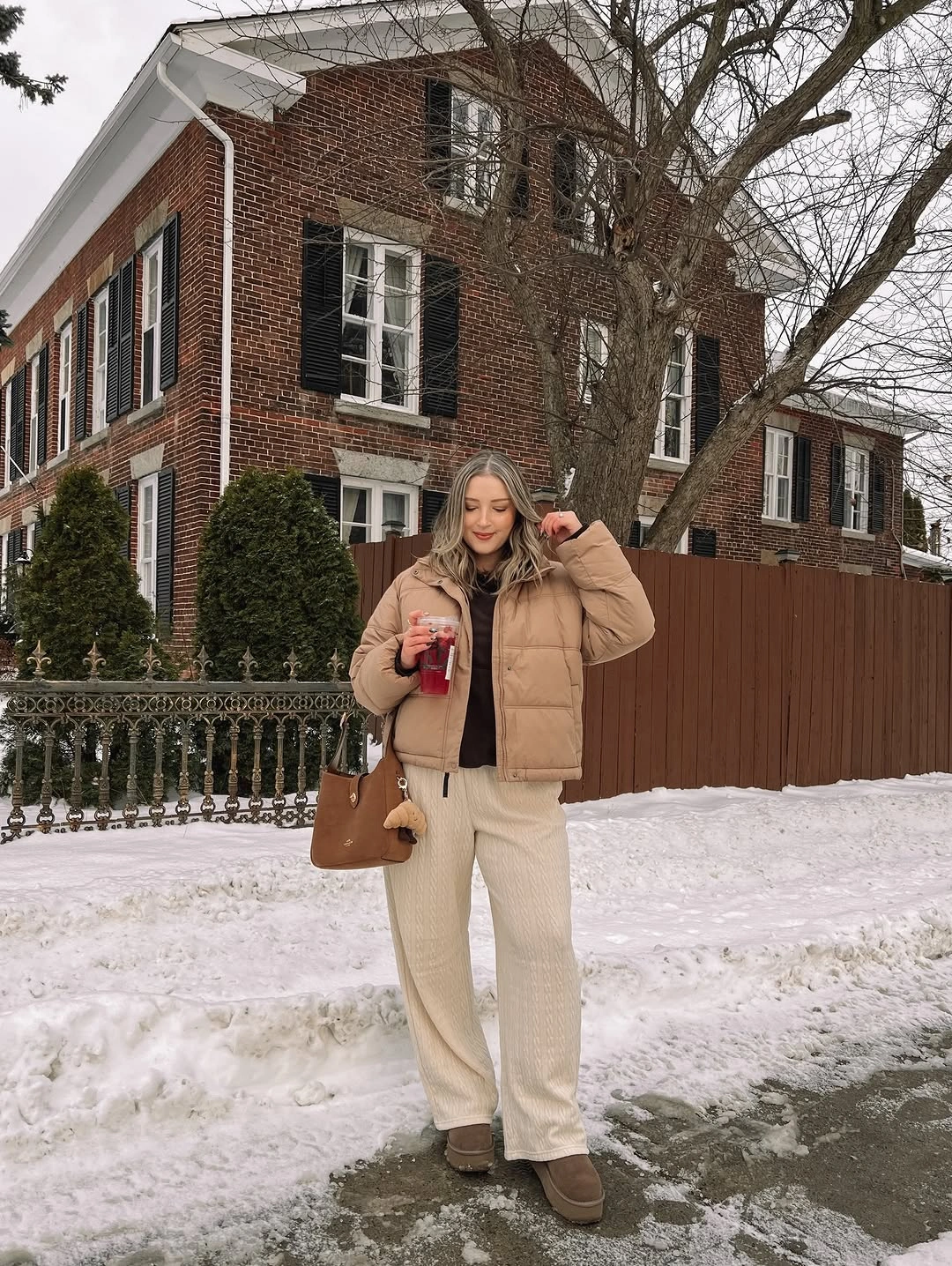
Keeping the vest short is what makes the proportions work. It ends before the trousers begin to widen, so the eye can still travel down one uninterrupted light column instead of stopping at a bulky hem. If the cream feels too delicate for daily wear, switch the knit to charcoal or deep brown and let the trousers remain the lightest piece.
This is a useful version of winter outfits for women casual when a full puffer feels too enclosing. A straighter trouser would make the look slightly more compact, but the wide leg has a softer effect against the padded vest. Just watch the trouser hem on wet pavement; a slightly cropped length or sturdier shoe is a sensible adjustment when slush is part of the day.
Buttoned Burgundy Jacket And Tall Boots
The deep burgundy-brown jacket provides structure above the short black skirt, and its visible buttons make the upper half feel precise rather than heavy. Tall brown boots extend that vertical idea below the hem, while the small black bag stays quiet beside the stronger jacket-and-boot relationship. Warm brown against black creates contrast without introducing a bright accent.
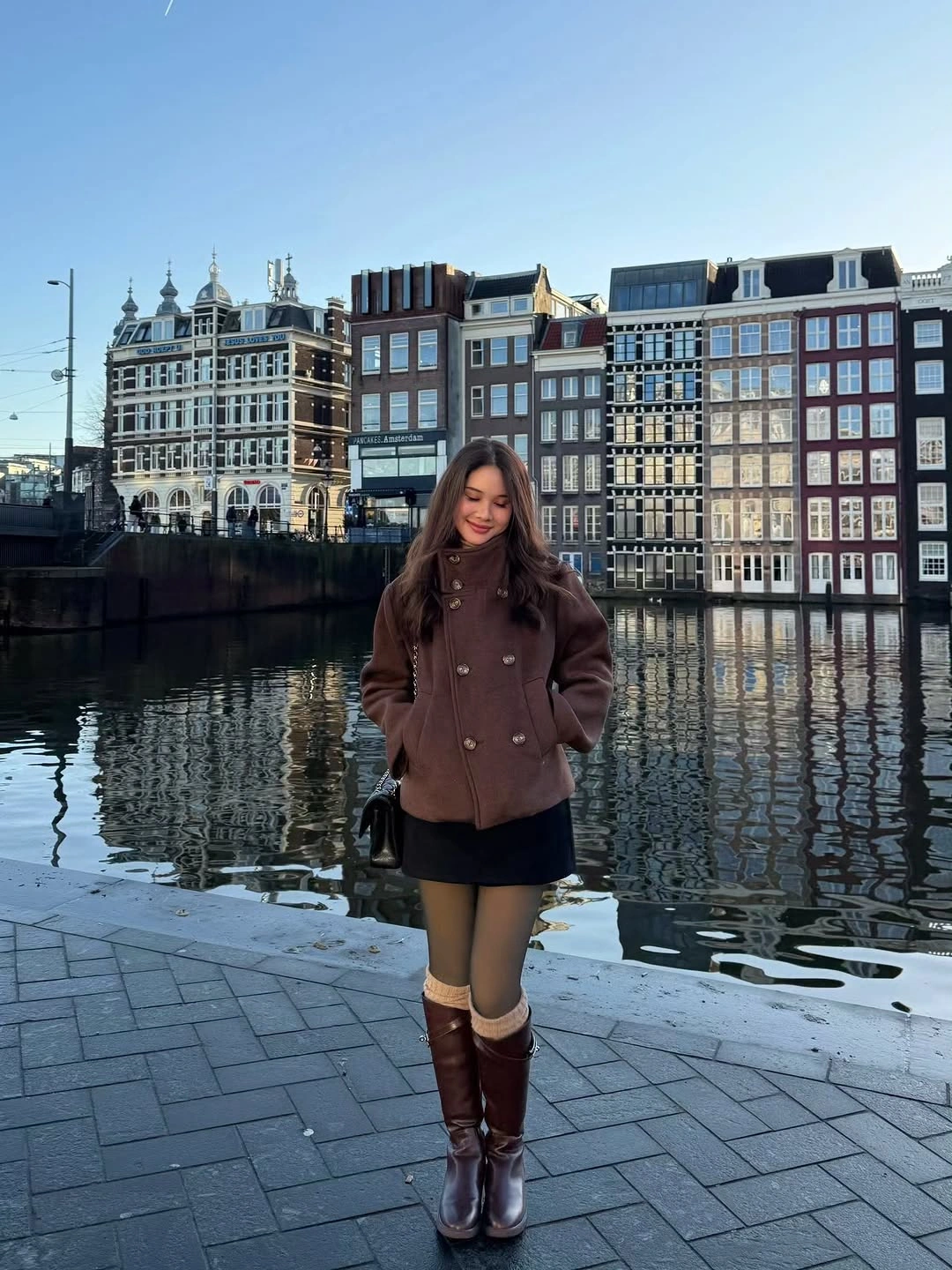
What makes this silhouette convincing is the distance between the jacket hem and the boot top: there is enough dark space for the skirt and tights to read as an intentional middle layer. Opaque tights would make the transition even calmer for a more covered version, while a lighter knee boot would reduce the visual weight. The jacket should stay fitted enough to preserve that clean top-to-bottom line.
The dressier direction suits an evening plan or any moment when jeans would feel too ordinary, but it is not automatically a warm setup. Bare or sheer sections around a short hem need a practical response, whether that means thicker tights, a longer coat for transit, or choosing an indoor-friendly version of the same palette. The boots earn their place here because they give the outfit real lower-leg coverage.
Textured Tan Jacket Over A Black Base
A generously textured tan jacket can easily dominate an outfit, so the black leggings and tall matte boots do important balancing work. They create one slim, low-contrast lower half beneath the pale beanie and fuzzy-looking outer layer. The cream accessory held at the waist repeats the light tones near the face, which stops the jacket from looking visually isolated.
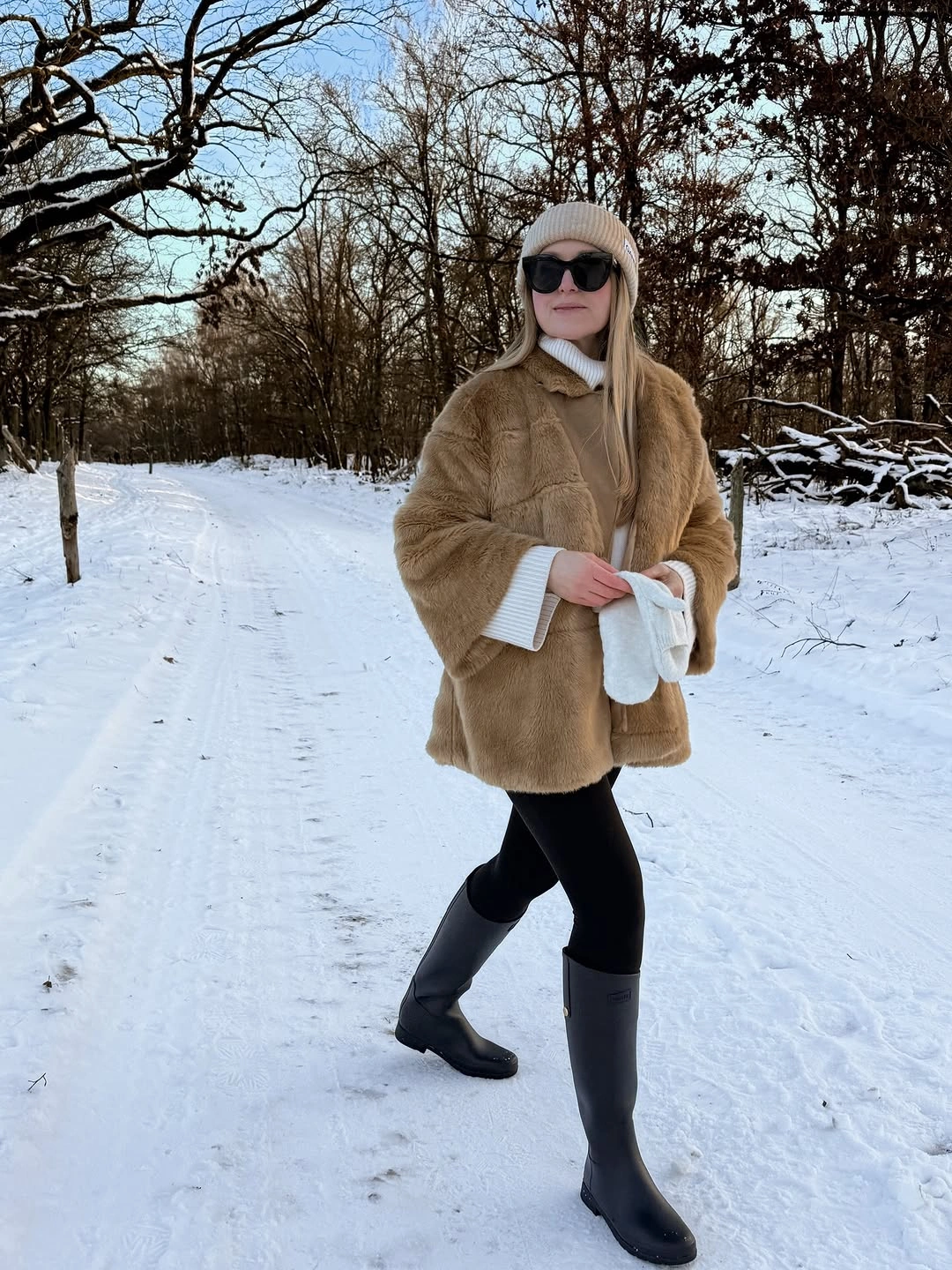
Rather than adding another patterned item, keep the next layer smooth and dark. A fine black turtleneck or fitted knit would preserve the long narrow center and allow the jacket’s surface to remain the only soft texture demanding attention. For a comparable outerwear idea with more styling directions, see these textured jacket outfit ideas.
The tall boot is especially useful because it visually continues the black leg line almost to the knee. A straight dark jean could replace the leggings if more structure is wanted, but a wide trouser would compete with the jacket’s volume unless the coat were left open. This is a simple equation: when the outer layer is broad and tactile, keep at least one half of the outfit visually quiet.
Belted Black Puffer With Chunky Boots
The long black padded coat has plenty of surface and length, yet the belt gives it a waist instead of leaving it as one uninterrupted dark tube. A pale bucket hat creates a small high-value point near the face, while the lace-up ankle boots supply a solid finish at ground level. The crossbody bag stays within the same dark family and does not interrupt the coat’s vertical rhythm.
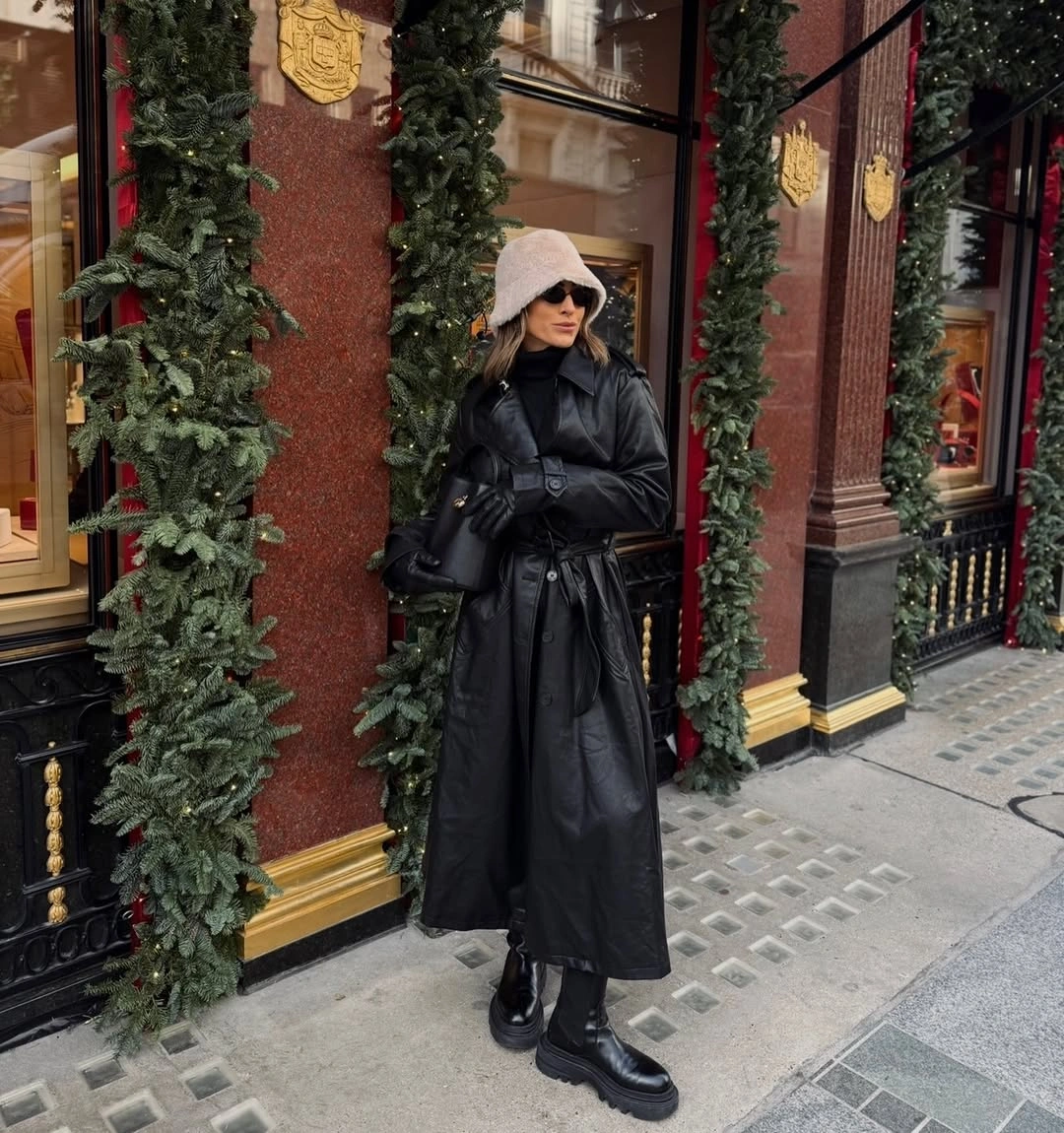
That belt placement matters more than an extra accessory would. It separates the padded panels into an upper and lower proportion, making the long coat look more deliberate when worn closed. For a less defined version, leave the belt loose and add a lighter scarf; for a sharper one, keep the hat and footwear dark so the pale accent is limited to a single layer.
A belted puffer is practical for readers who like a longer coat but miss the shape of a regular outfit underneath. The tradeoff is that a belt can add thickness where several layers already meet, especially with a chunky sweater. In that case, choose a thinner inner knit or loosen the tie slightly rather than forcing a tight waistline through padded fabric.
Brown Zip Jacket With A Dark Leg Line
The roomy brown zip-front jacket gets its definition from the uninterrupted black leggings and tall boots beneath it. A darker high-neck layer visible at the collar creates a narrow center, so the nubby-looking outer surface has an edge to work against. That combination feels more controlled than pairing this width with another loose, light-colored bottom.
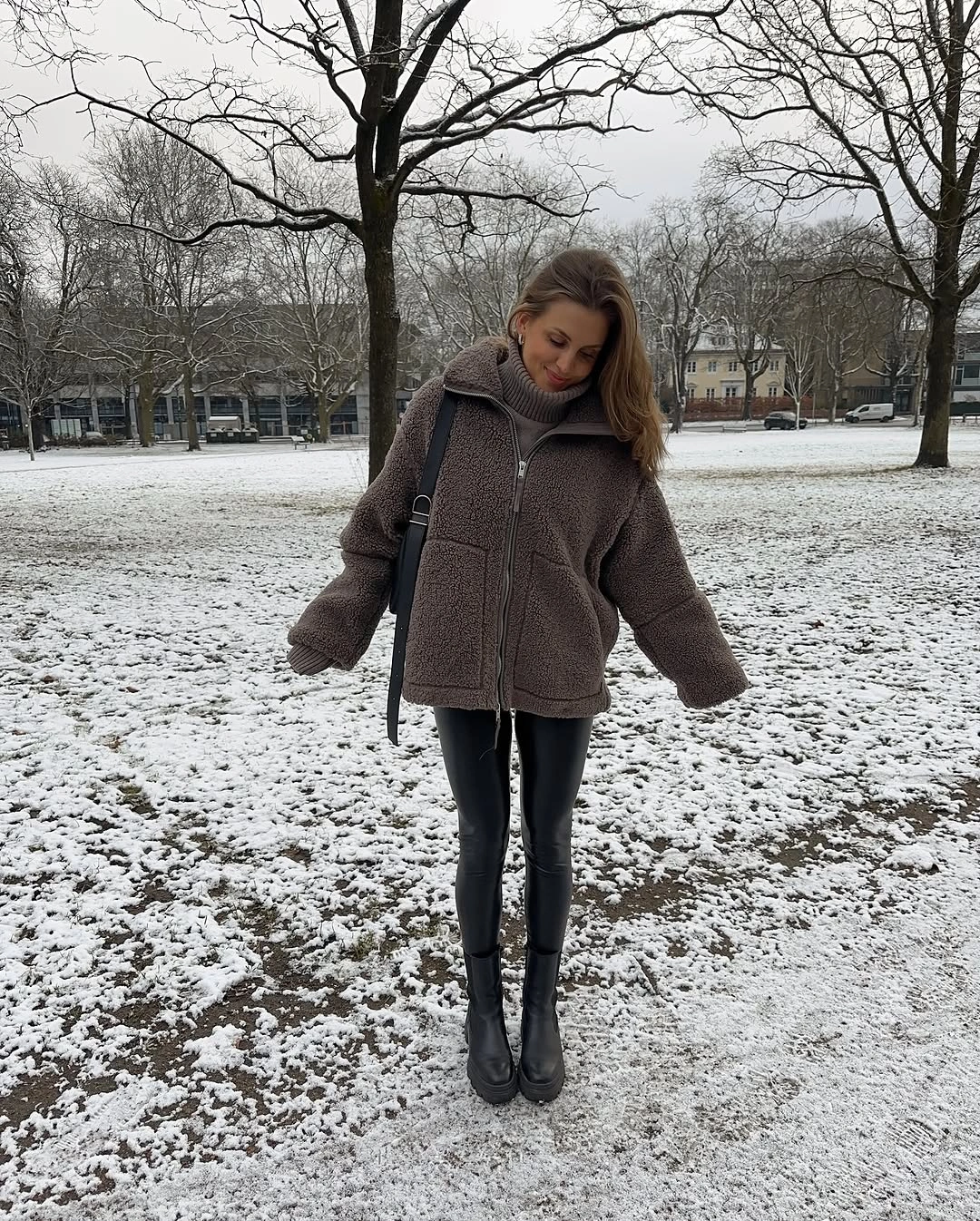
One practical way to borrow the proportion is to choose a boot shaft that overlaps or nearly meets the hem of the leggings. That prevents the lower half from breaking into too many small color blocks. If you prefer more ease through the leg, use a slim straight pant in black or deep brown, then keep the jacket partly open so the central layer still adds a vertical line.
The casual mood comes from the soft jacket shape rather than from a lot of accessories. Anyone drawn to more dramatic pile textures can compare it with a shaggy jacket outfit, but the quieter zipper and plain black base here make this version easier to repeat. A broad hem can catch wind or brush against bags, so a smaller shoulder style helps keep the outline clear.
Yellow Sweatshirt With A Long Blue Scarf
The pale yellow sweatshirt supplies a warm, soft starting point, while the long blue-and-cream striped scarf introduces a cooler color that echoes the loose blue denim below. Because the scarf hangs almost to the hip, it turns a simple sweater-and-jeans formula into a deliberate vertical composition. The dark crossbody strap adds a small line of definition without stealing the color story.
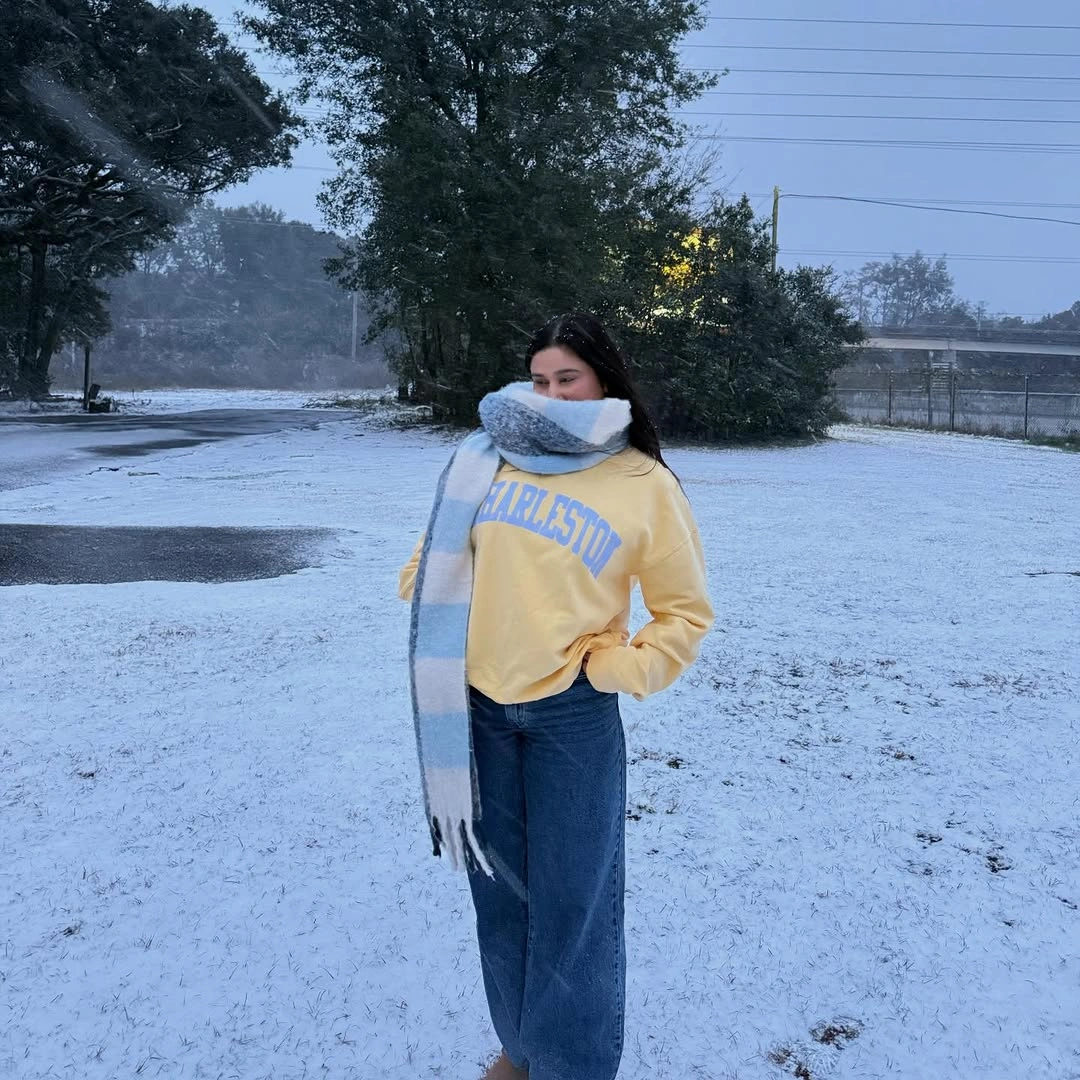
Here the scarf is not just extra insulation; it acts as a bridge between the top and the jeans. A solid navy scarf would make the relationship more restrained, while the visible stripes keep the outfit light and casual. If the scarf is very long, tuck one end under the outer layer or choose a cleaner knot so it does not compete with the relaxed width of the trouser.
This is a friendly way to approach winter outfits for women aesthetic without relying on an all-neutral wardrobe. Keep the coat simple – cream, navy, or muted gray would all allow the yellow and blue to remain the point. The sweatshirt’s graphic should stay secondary; once a scarf is carrying color and length, additional loud prints can make the center feel crowded.
Plum Layers Under A Brown Textured Coat
The oversized brown textured coat creates the largest visual mass, but the deep plum center gives it somewhere to settle. A burgundy beret repeats that wine note near the face, and dark gloves and bag keep the surrounding details from becoming too busy. Instead of treating every rich tone as a separate statement, the look lets related dark reds work as a small tonal family.
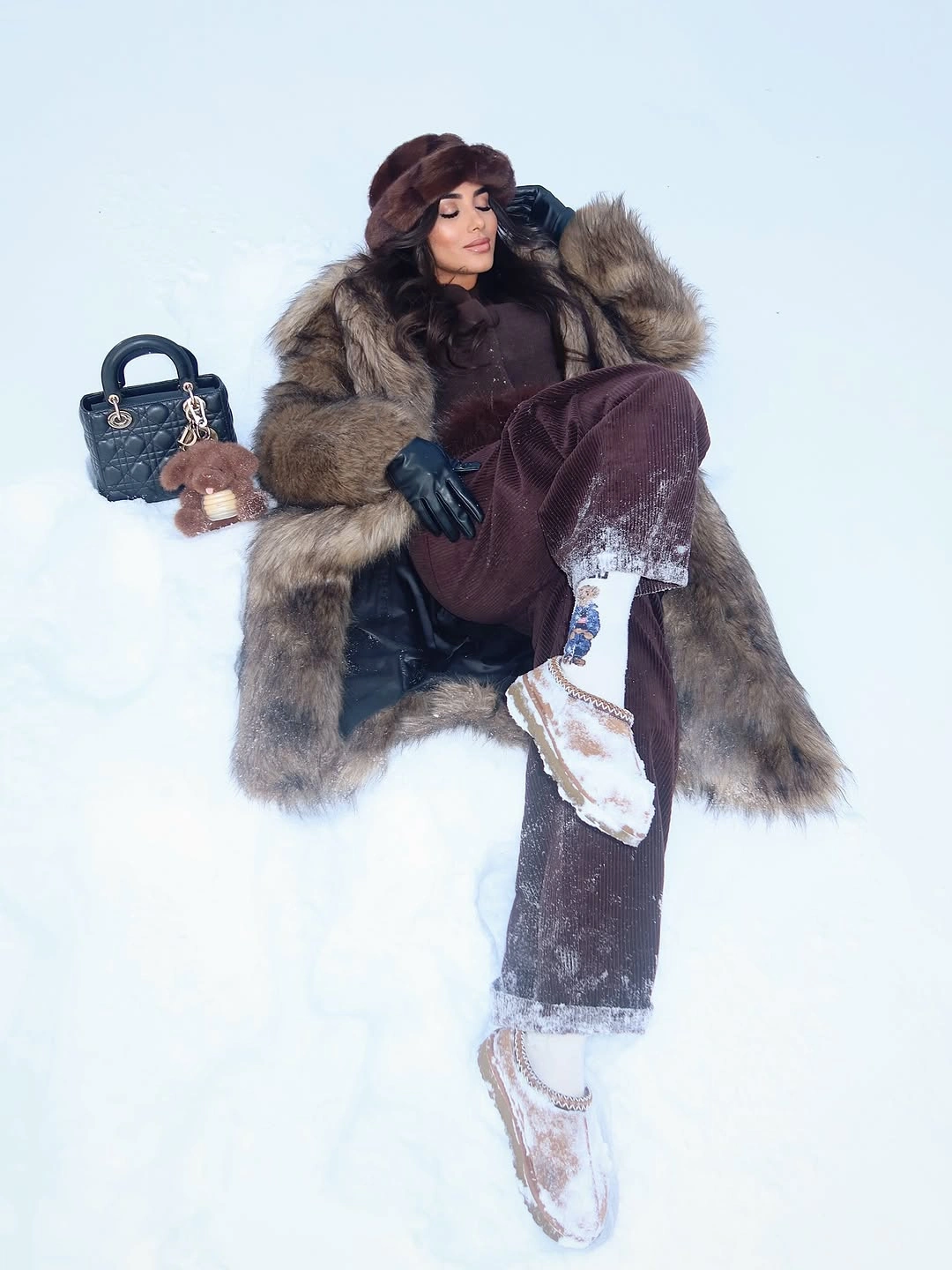
When a coat has this much texture, the easiest controlled variation is to change the middle layer, not the outer layer. A smooth black dress or close-fitting knit would create stronger contrast, while a muted aubergine layer keeps the outfit more tonal. Either choice works because the center remains narrower than the coat, allowing the eye to recognize the outfit’s shape beneath the surface.
There is no need to add a patterned scarf or prominent shoe here; the coat, hat, and plum core already establish enough information. The tradeoff with a large tactile outer layer is visual weight, particularly around the shoulders. A compact handbag and fitted lower half keep the look grounded, whereas a large slouchy tote could make the whole silhouette feel less intentional.
Mottled Short Jacket With Everyday Denim
The gray-brown mottled jacket is the focal point, so the medium-blue jeans are wisely simple. Their familiar color provides a cool, steady base beneath the active outer texture, while the brown shoulder bag picks up the jacket’s warmer notes without requiring an exact match. The short jacket length also lets the denim remain visible as a real part of the composition.
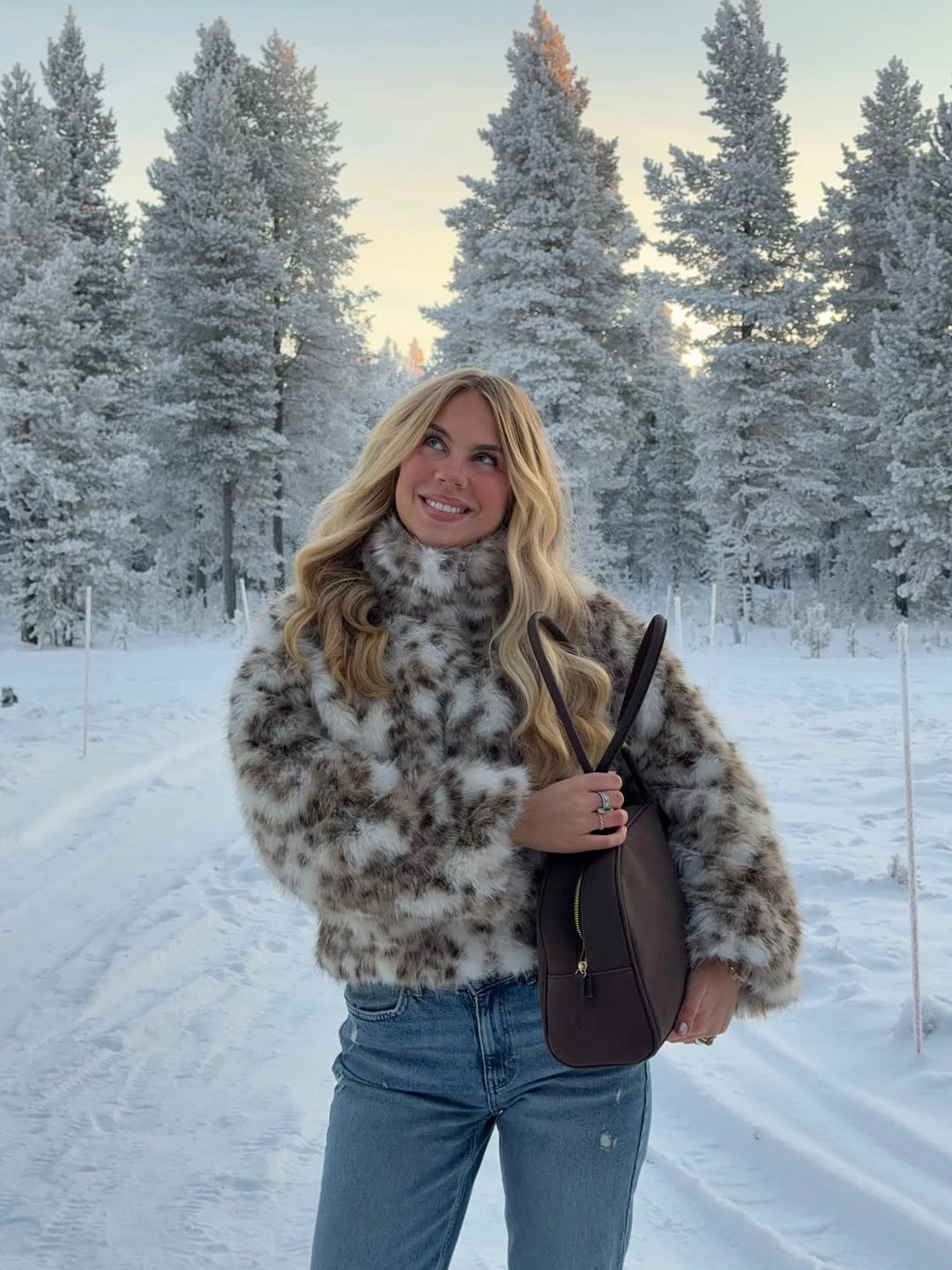
A plain shoe in black, brown, or off-white would keep the eye moving between jacket and jeans rather than stopping at the ankle. If the jacket feels too noticeable with full denim, replace the jeans with dark straight trousers and use the bag as the only warm accessory. The key is not to add another print, because the outer layer already has enough variation in value and surface.
Short textured jackets work particularly well when the rest of the outfit behaves like a background. That does not mean boring – it means the color changes are spaced out. Blue denim gives separation from the gray-brown coat, and the bag quietly restores warmth lower down. The approach is practical for a casual day because each supporting piece can remain an ordinary wardrobe basic.
Brown Texture Interrupted By Gray Trousers
Several warm brown elements appear at once – the coat, rounded hat, bag, and darker accessories – but the gray trousers stop them from merging into one dense block. Gray is cool enough to create breathing room without making the palette feel sharply divided. The sunglasses add a small dark point near the face, which helps the soft textures look more considered than costume-like.
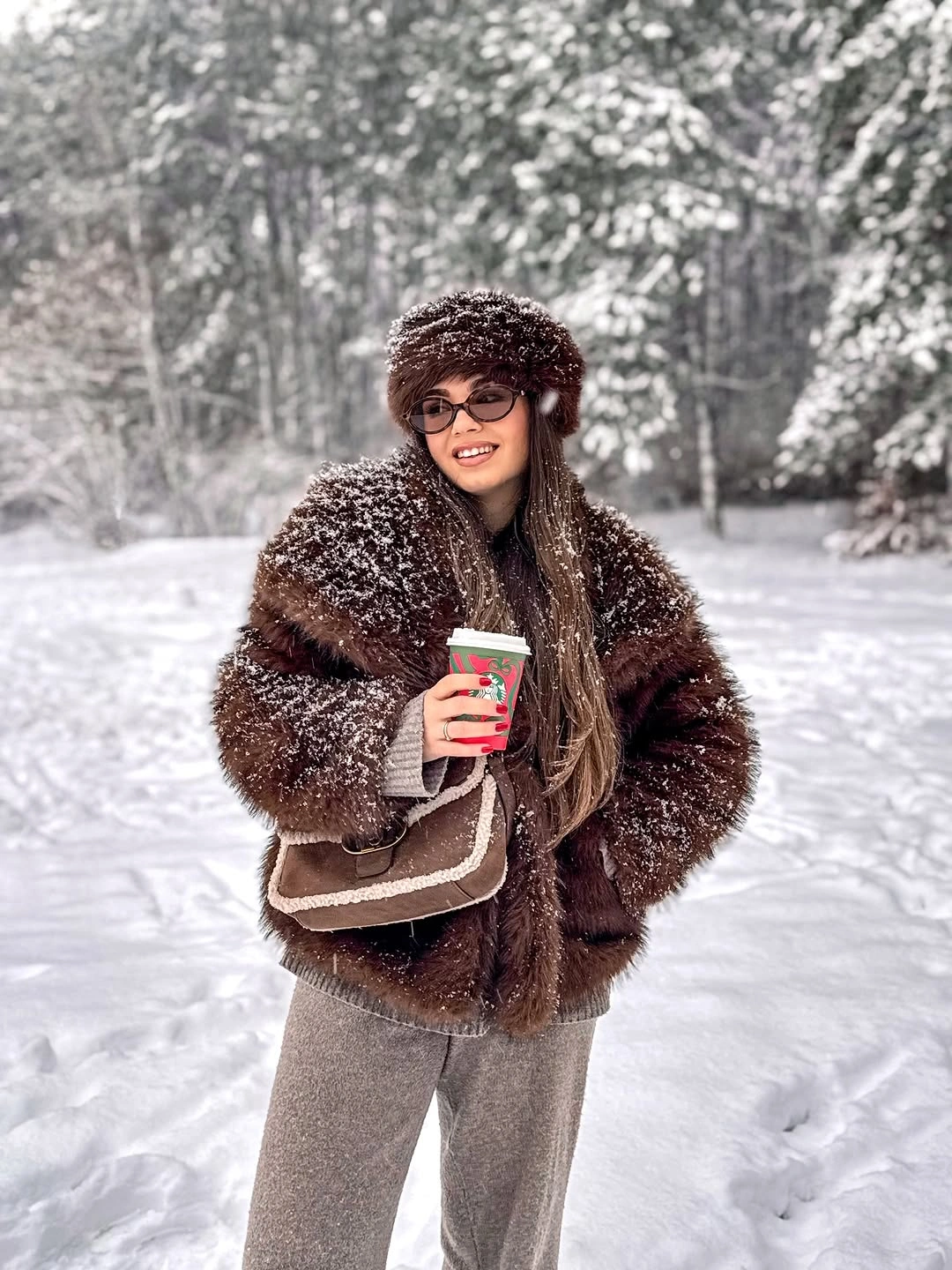
The most useful lesson is value placement: rich brown has the strongest presence at the top, then gray carries the eye downward with less intensity. A smooth charcoal knit under the coat would continue that measured contrast, while a brown scarf in the same value as the jacket would make the upper half more compact. Avoid another fuzzy accessory if the coat and hat are already carrying the tactile interest.
Large bags can be helpful in a neutral outfit, but they do add another broad shape at the hip. If you want the trousers to appear longer, choose a smaller bag or carry this one closer to the body. The gray trouser also makes this warmer palette feel less expected than head-to-toe brown, especially when the outer layers are visibly textured rather than smooth.
Soft Pink Skirt And Cream Cable Knit
The cream chunky knit and long pale pink skirt share a light value, yet the scarf gives the colors a clear relationship instead of letting them blur together. Pink appears in the scarf, skirt, and umbrella, so the eye reads it as a repeated accent rather than a random soft layer. White gloves and light boots keep the lower half in the same airy range.
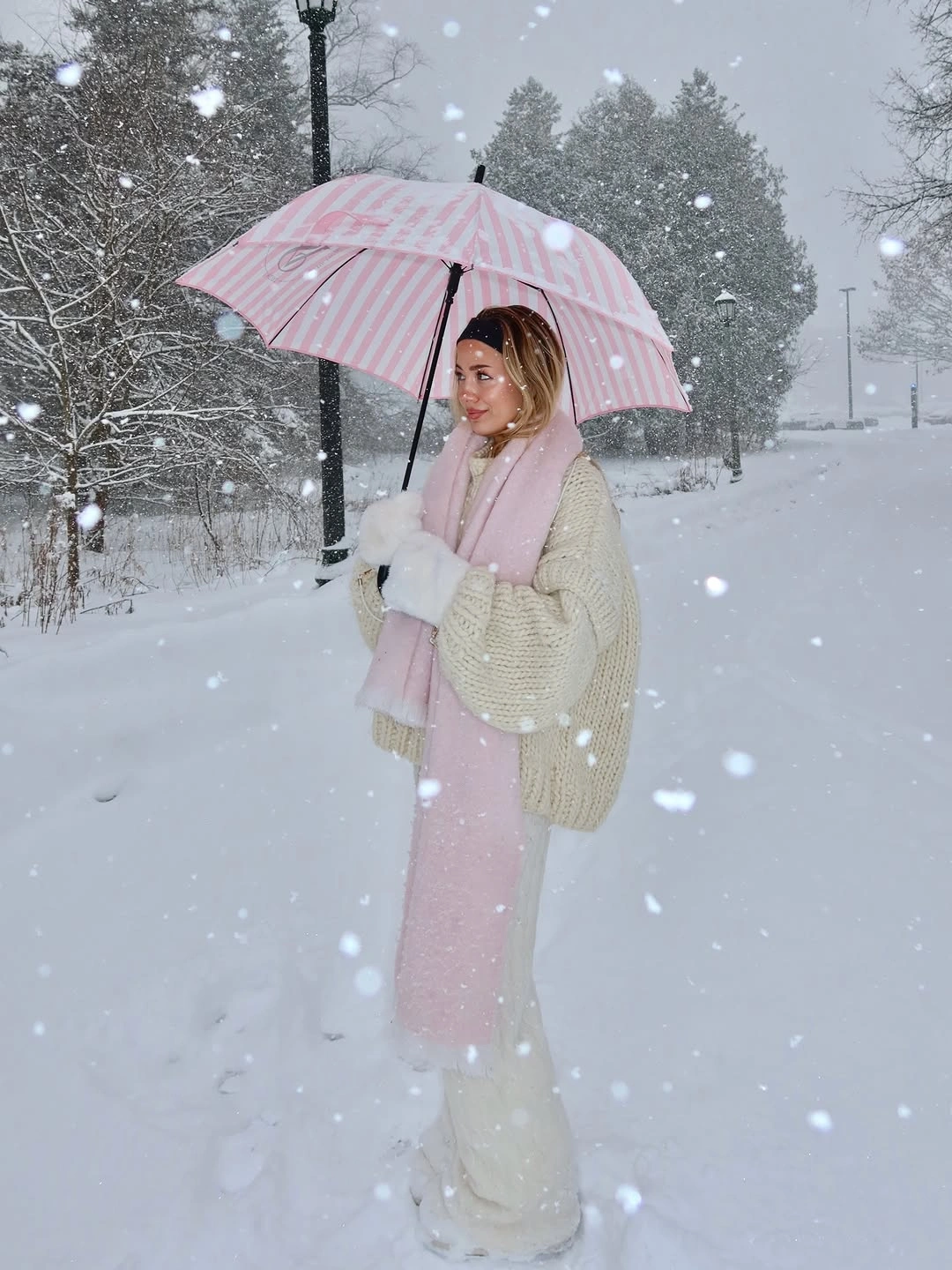
A long scarf is useful here because it creates a vertical edge over the broad knit, but it does not need to be as voluminous as the sweater. A narrower blush scarf would make the silhouette cleaner, while a muted gray coat would cool the palette without disrupting the pink repetition. For a more grounded knit formula, these sweater outfit ideas offer another starting point.
Pale layers look especially intentional when the textures are distinct: chunky-looking knit above, a smoother long skirt through the center, and a practical boot at the base. The maintenance consideration is honest, though. Light hems and pale footwear will show moisture or road marks quickly, so a slightly shorter skirt or a darker boot may be the better choice for less protected sidewalks.
Fitted Black Top With Loose Blue Jeans
The waist-length black buttoned top does not try to compete with the volume of the blue jeans; it contains it. Its compact shape and bright buttons create a clear upper boundary before the denim widens, while the white sneakers give the jeans a light, casual endpoint. A small dark bag stays close to the top’s value and leaves the blue leg line uninterrupted.
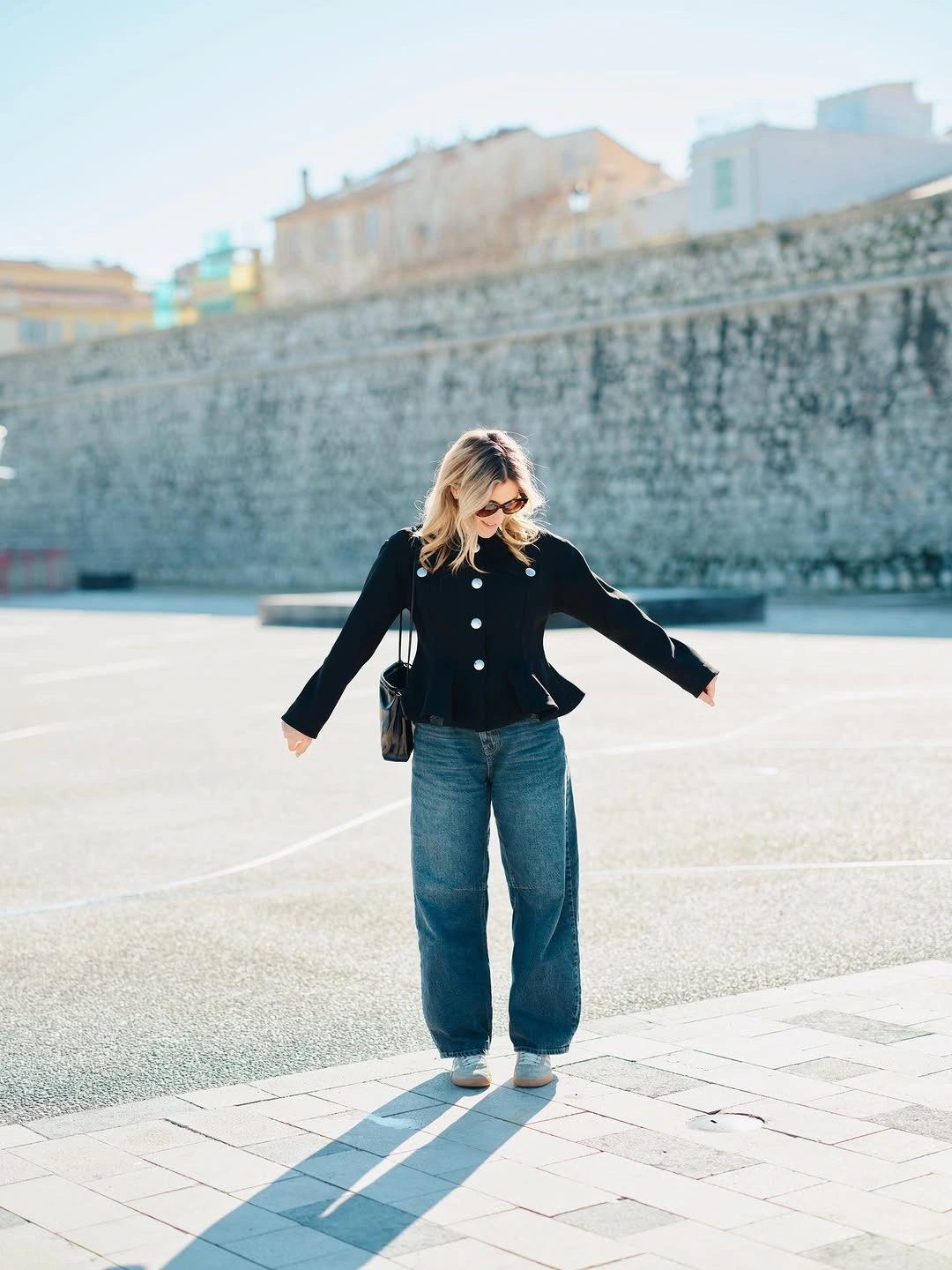
Changing the top’s length would alter the whole equation. A longer coat layered over it could add warmth while keeping the dark vertical line, but a bulky cropped jacket might make the upper half too dense. For a softer contrast, trade black for charcoal or deep navy; the jeans will still appear relaxed, yet the division between top and bottom will feel less graphic.
This pairing shows why wide denim benefits from one controlled area above the waist. The fitted top does not need to be tight everywhere, only defined enough to give the trouser volume a counterweight. On colder days, use a thin thermal layer beneath the top rather than adding a thick sweater over it, which would weaken the clean proportion that makes the jeans look intentional.
Forest Green Puffer Over A Black Base
The deep green puffer takes on all the color responsibility here, leaving the black pants and chunky shoes to form one quiet base. That isolation makes the green look deliberate rather than like an extra layer chosen at random. Because the jacket is short and visibly quilted, it adds a rounded upper shape while the straight lower half keeps the outfit from becoming too soft everywhere.
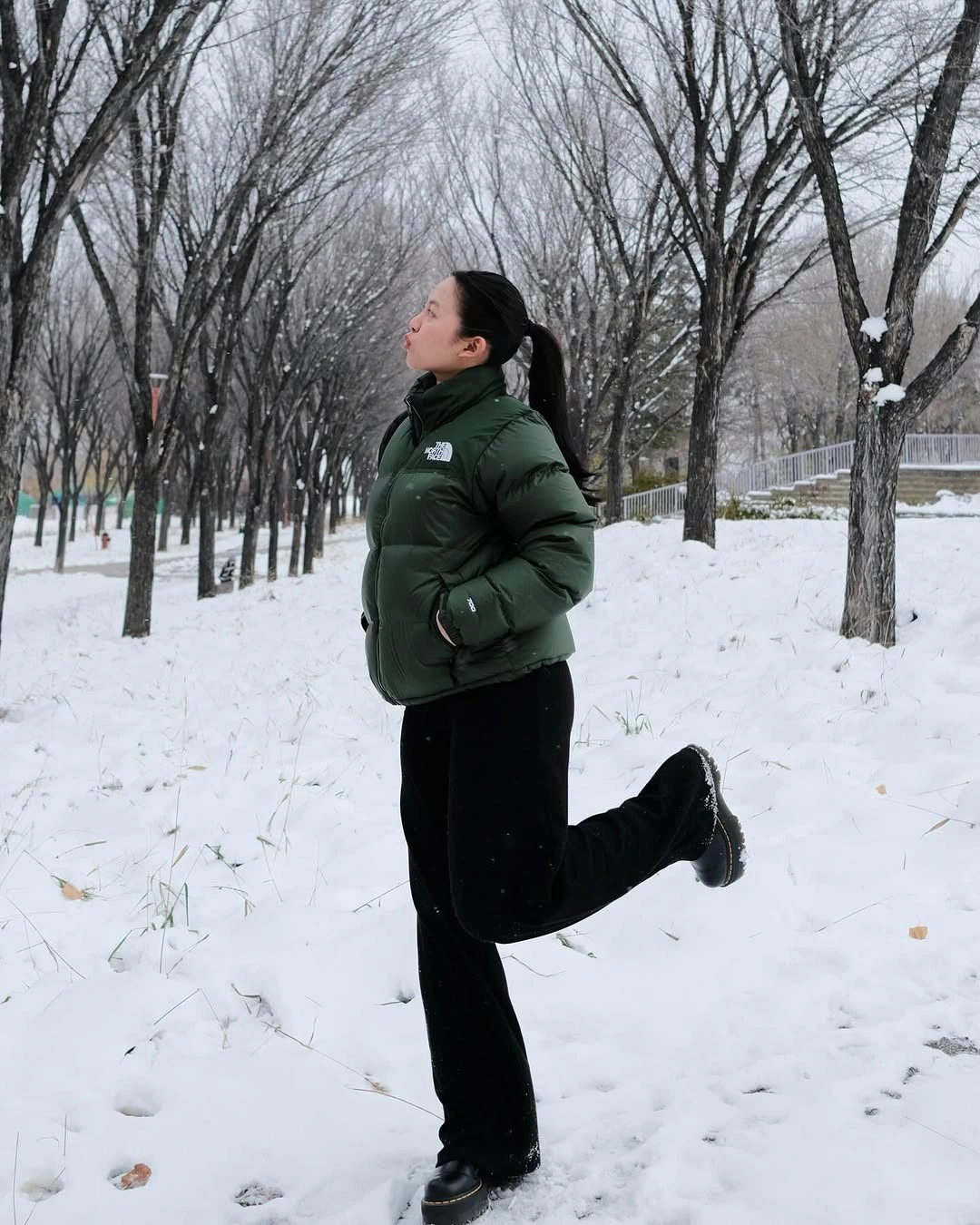
A charcoal base would make the color contrast gentler, whereas true black keeps the green sharper and slightly more graphic. If you want to repeat the jacket color, use a very small detail such as a muted green beanie rather than another large piece. One saturated outer layer is enough; adding several related greens can flatten the useful difference between jacket and base.
The shorter hem keeps movement easy and gives the shoes a visible role, making this a practical casual formula. It also offers less lower-body coverage than a long coat, so the layers beneath need to do more work when conditions are uncomfortable. A longer black knit, worn just below the jacket hem, would extend the dark column without disrupting the green focal point.
Ivory Coat With A Textured Pale Stole
Nearly all-ivory layers can disappear into one another, but the double rows of buttons and the broad textured-looking stole create enough distinction to prevent that. The coat’s tailored front gives the pale trousers a structured upper edge, while the light boots continue the same value at the ground. Dark sunglasses add a tiny, precise contrast near the face rather than breaking the tonal mood.
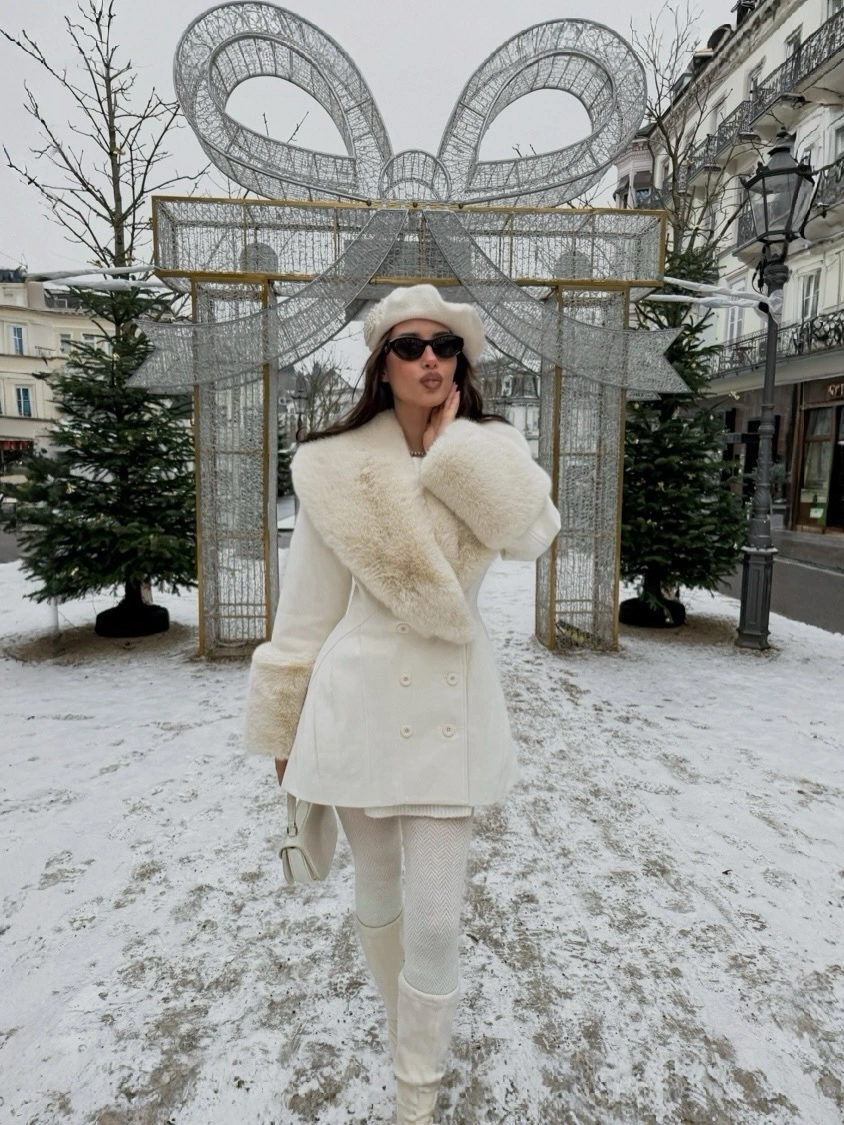
To recreate this without feeling overly matched, keep the whites slightly different: cream for the scarf, soft ivory for the coat, and a cooler white for the trouser or boot. Those small shifts are more effective than adding a bright color. A dark handbag would give the outfit another anchor, but carrying it close to the body would keep it from dominating the pale vertical shape.
The clean effect depends on visible details, not on the idea of wearing one color from head to toe. Buttons, a neckline shadow, and the contrasting surface of the stole all give the eye places to land. Pale boots and trouser hems do ask for a little more care outdoors, so this palette is easiest to maintain with a shorter hem or a washable darker shoe on wet days.
Long Charcoal Coat And Pleated Mini
The long charcoal coat frames the short pleated skirt instead of hiding it, creating a deliberate long-over-short proportion. A white sweater brightens the central area, then the sheer black tights, white socks, and chunky loafers turn the lower half into a sequence of clear value changes. The look succeeds because every dark layer is separated by something lighter or more textured.
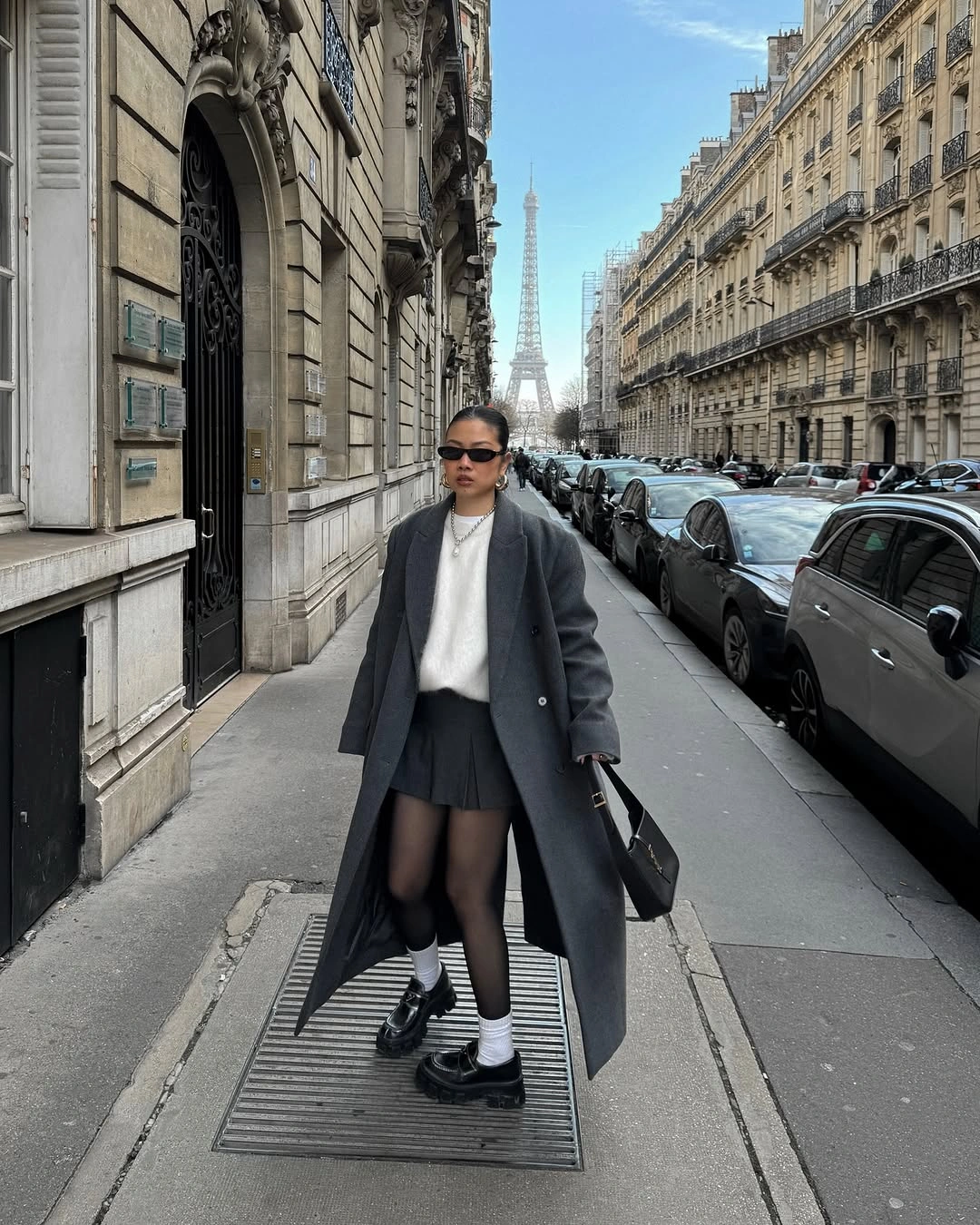
White socks are the strongest styling choice here because they interrupt the black tights before the heavy loafers. For a quieter version, choose charcoal socks that nearly match the coat, or trade the skirt for tailored shorts in the same value. Keep the coat long enough to provide a sense of coverage, otherwise the contrast between a short hem and chunky footwear can feel less balanced.
This outfit has a clear dressier energy, but the visible leg area deserves a realistic layer plan. Opaque tights, a longer boot, or a warm base layer can make the idea more practical without changing its central contrast. The pleats already provide movement and pattern, so a plain scarf and compact bag would keep the attention on the coat, skirt, and shoe relationship.
Black Puffer With Wine And Tan Accents
The black mid-length puffer and leggings create a practical dark field, then a wine-colored beanie and tan ankle boots warm it up at opposite ends. White socks make the boots read as an intentional light break rather than an afterthought. The color spacing is simple but effective: dark through the middle, a deep red note at the top, and softer brown at the base.
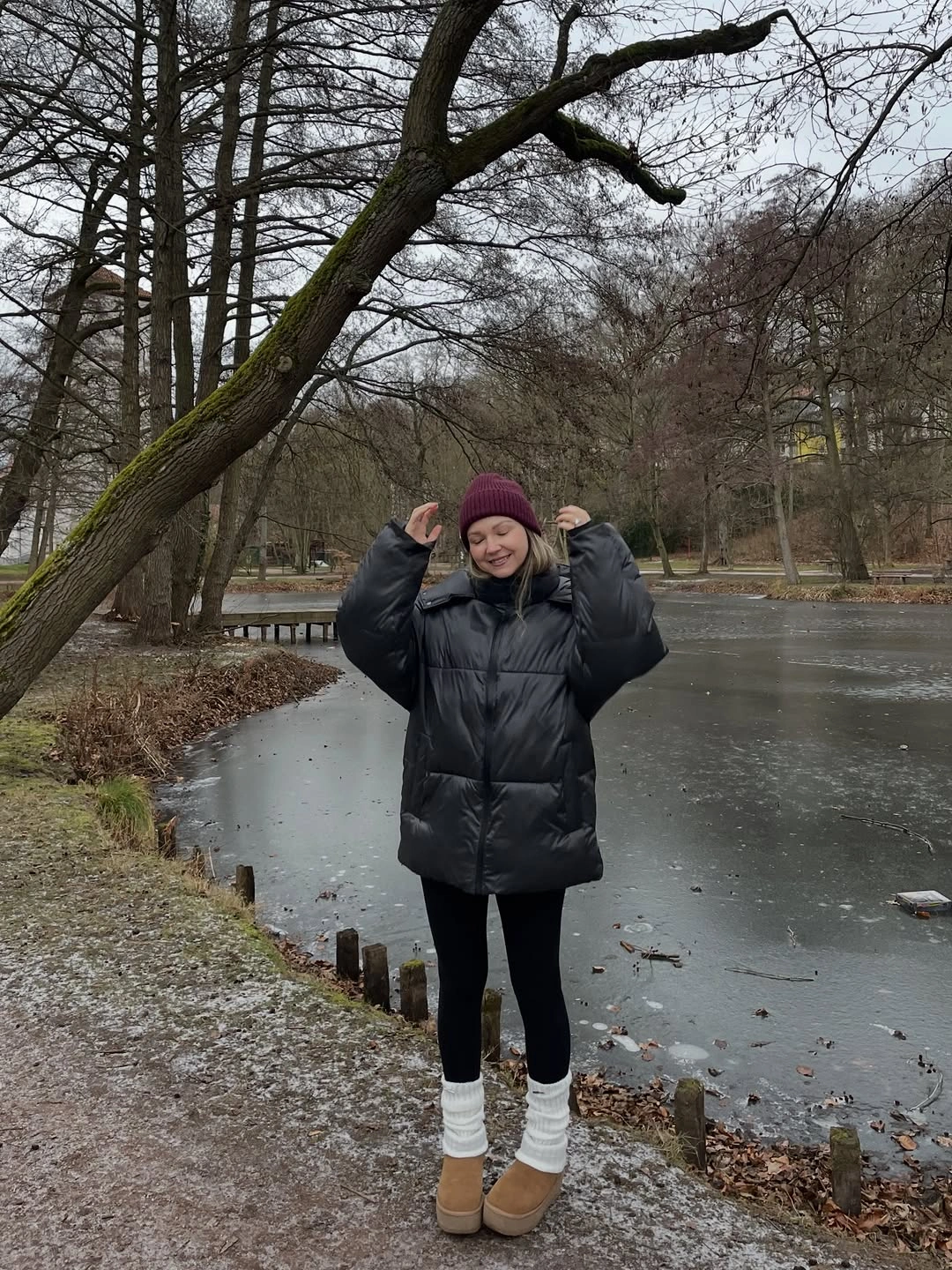
Because the beanie is small, it can introduce color without requiring a matching scarf or bag. A taupe scarf would support the tan boots more gently than another burgundy piece, while a black scarf would keep the beanie as the only top accent. If the socks feel too high contrast, choose cream or charcoal instead; the outfit will still have warmth at the shoe.
There is a practical caution in the light sock-and-boot combination: pale fabric near damp ground takes more upkeep than the coat does. Still, the boot gives the narrow leg line a softer finish than a black shoe would, which is why the palette feels less severe. For a colder version, use a thicker sock tucked more neatly into the boot so the layered transition remains visible but controlled.
Red Sleeves Beneath A Cream Puffer Vest
The light sleeveless puffer vest becomes more interesting because the red sleeves are fully visible around it. That placement creates a clean warm-cool contrast with the pale blue jeans, while the brown low shoes repeat the warmth at the bottom without requiring another red accessory. The outfit reads as casual because each piece has room around it rather than being tightly layered together.
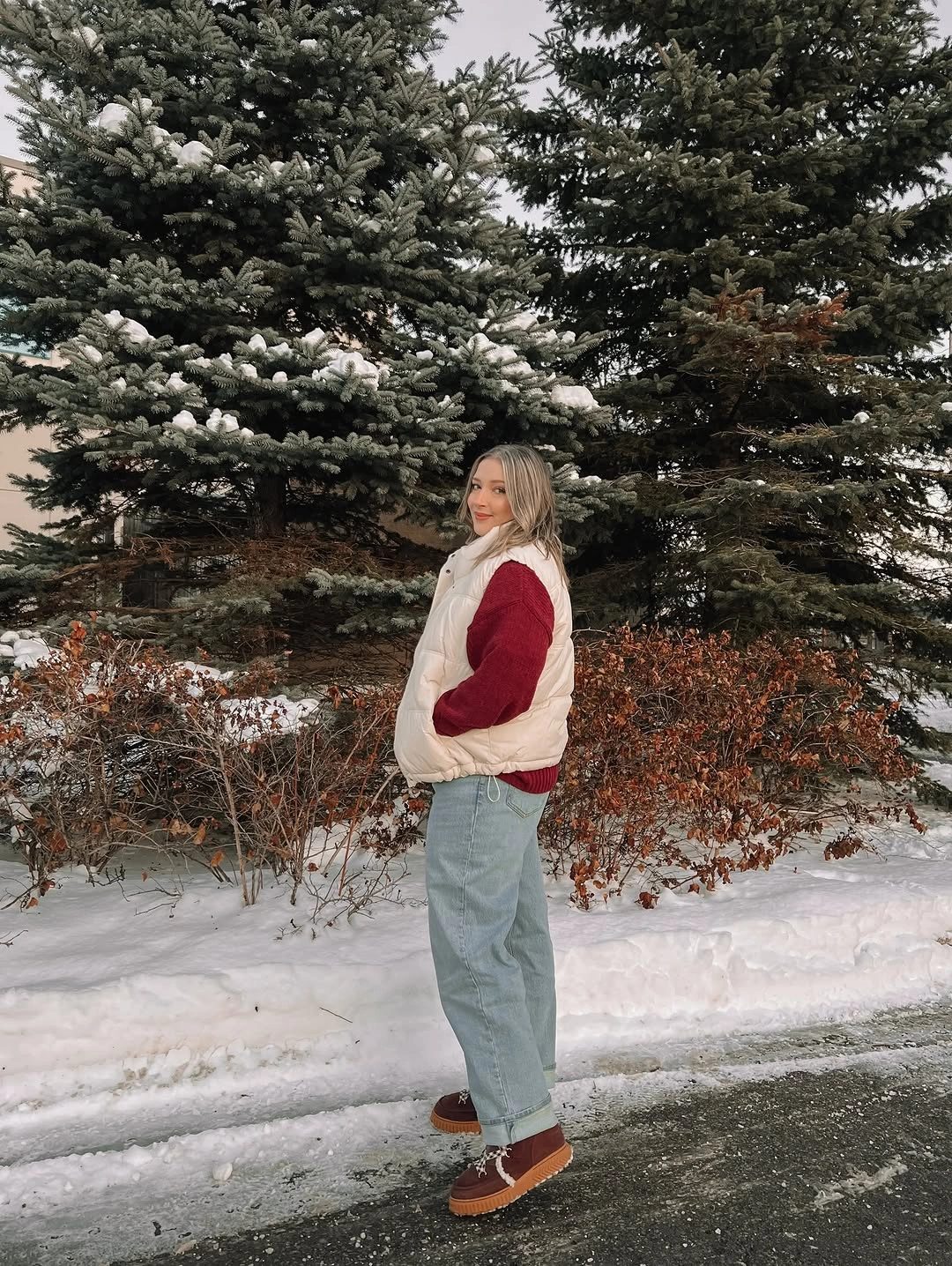
A black or chocolate knit would make the vest look more neutral and restrained, but the red layer shows how a simple color can change the vest’s entire role. Keep the scarf light and quiet if you use this combination; a bold patterned scarf would compete with the sleeve contrast. Loose denim is helpful here because it balances the vest’s short, boxy outline with a longer relaxed line.
Sleeveless outerwear is useful when you want mobility and visible color, though it naturally offers less arm coverage than a full jacket. A thin insulated layer under the knit can solve that without making the vest look oversized. If the shoes become the only dark warm note, a brown belt or small bag can tie them back to the outfit, but neither is essential to the proportion.
Subtle Mint Pattern On A Puffer Jacket
The pale mint puffer has a small repeating motif that softens its boxy padded shape, while the beige knit and dark blue jeans keep the pattern from becoming too busy. Since the design is light and low-contrast, it reads more like surface texture than a loud print. The raised collar and zipper add enough structure for the jacket to hold its own against the quiet layers beneath it.
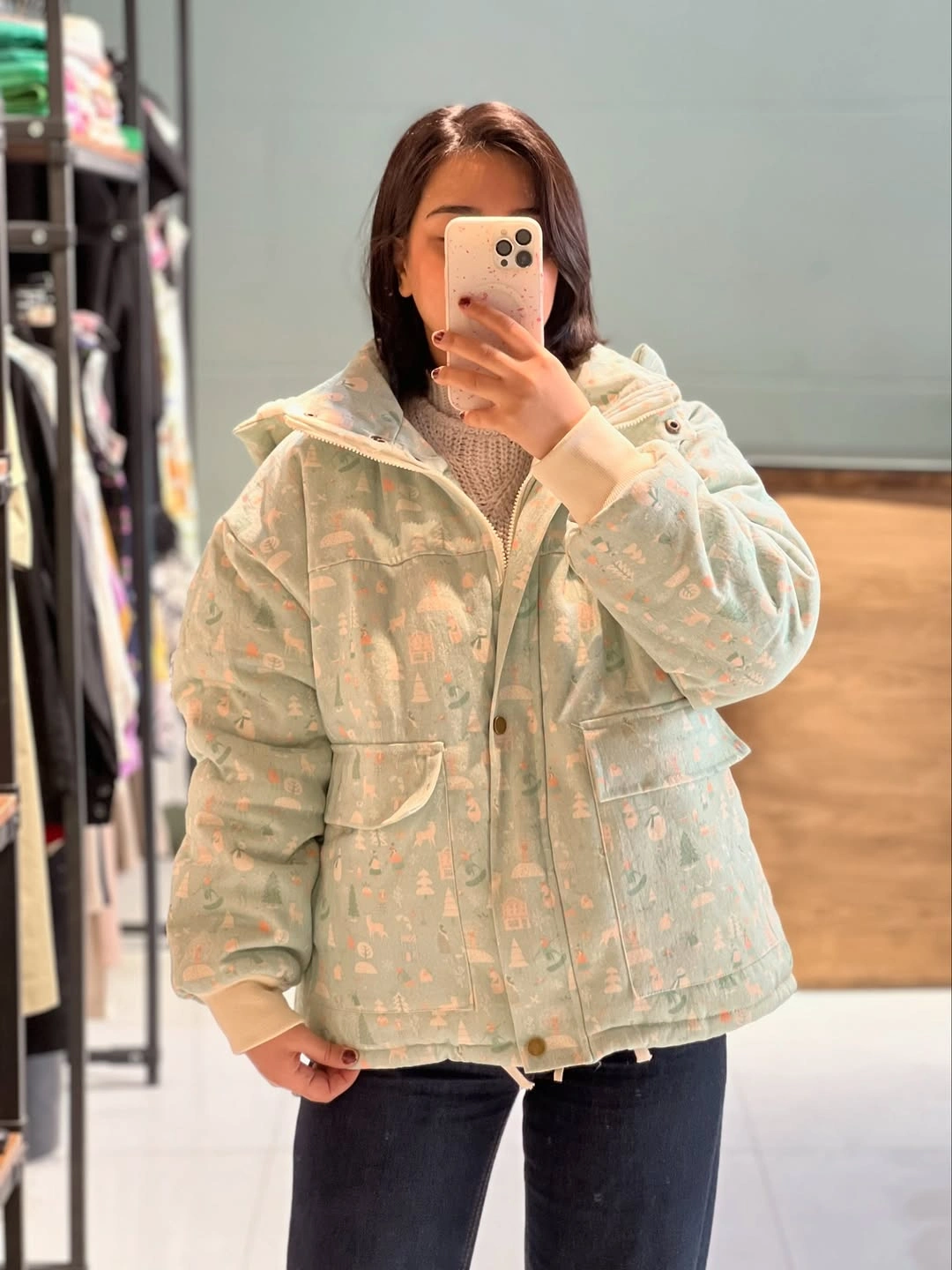
When the outer layer has a subtle print, let everything touching it remain plain. A solid cream beanie, navy bag, and smooth dark jean would make the small motif easier to notice without asking it to compete. If you need more contrast, replace the beige knit with charcoal; changing that one value is more controlled than adding another patterned accessory.
The pattern gives a practical puffer some personality, but it may be less flexible alongside striped scarves, busy totes, or graphic hats. That is not a flaw – it simply makes the jacket the visual detail to preserve. Keep the rest of the outfit in broad, calm color fields, and the mint tone can feel fresh without losing the everyday usefulness of a padded layer.
Black Cape Balanced By Tall Boots
The cape-like black outer layer spreads wide across the shoulders and arms, so the tall black boots and fitted inner layers are essential counterweights. They establish a narrow vertical finish beneath the broad drape, while the quilted bag stays compact enough not to add another wide shape. In an all-black outfit, silhouette has to provide the contrast that color usually would.
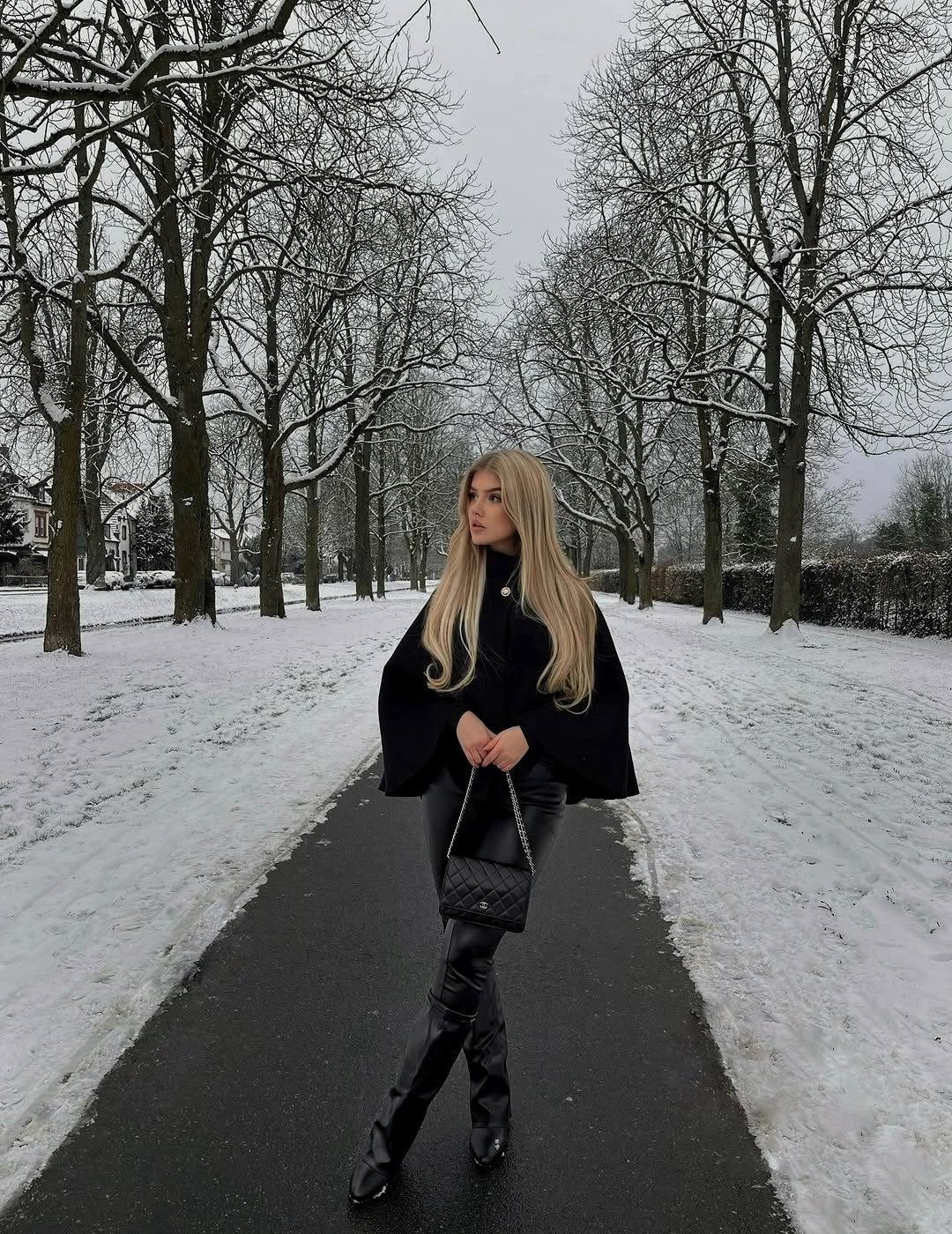
A slim trouser or close-fitting knit dress would preserve the same relationship if you were adapting this idea. The point is to let the cape move freely while the lower half remains legible. A boot with a cleaner shaft would make the look more minimal, whereas the existing tall boot gives it a firmer, more practical edge without introducing a second color.
Wide sleeves can be dramatic, but they have a real tradeoff when carrying bags, reaching for things, or adding bulky layers underneath. Keep the bag small and crossbody or hold it close so it does not tangle with the outer shape. The outfit remains effective because the cape is the only expansive element; adding a full skirt or oversized tote would make the dark silhouette less precise.
Pale Pink Accessories With A Brown Tote
The white puffer and ivory trousers form a light base, while the pale pink scarf and knit hat soften the area around the face. The large brown tote is the crucial contrast: it gives the pale layers a grounded point at the side and prevents the outfit from floating into one undifferentiated wash of cream. Gray athletic shoes quietly echo the tote’s muted practicality.
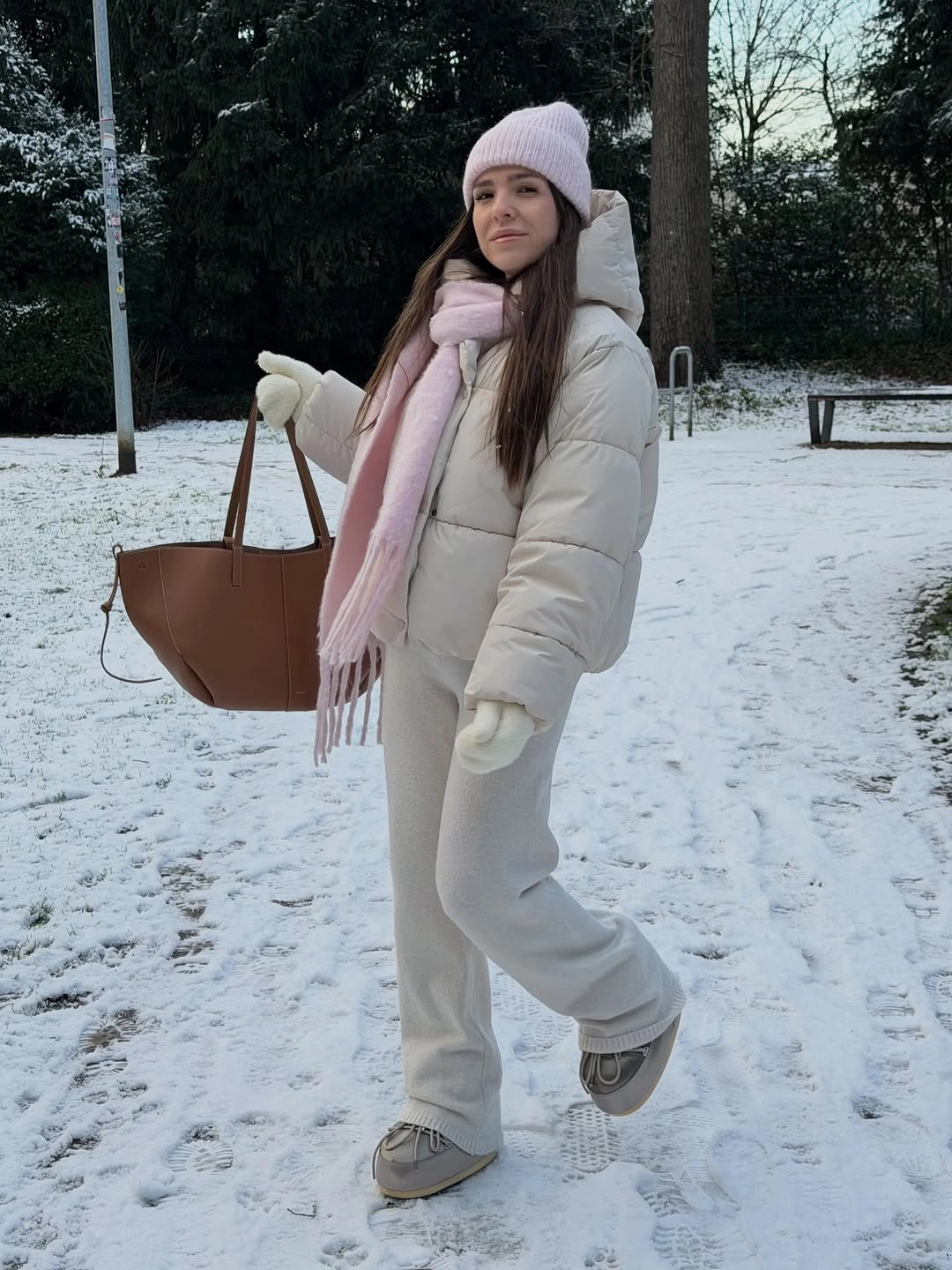
For a more polished version, a smaller brown bag would reduce the side volume and make the wide trousers appear longer. For a more casual one, keep the tote but introduce a brown trim or belt only if the outfit needs another anchor. The pink should remain limited to soft accessories; turning it into a large coat or shoe would shift the balance away from the calm white-and-ivory center.
Light trousers near snow or wet ground come with an obvious maintenance consideration, and the relaxed hem is the part most likely to show it. A cropped straight trouser would keep the palette while asking less of the wearer. Even with that adjustment, the color structure is worth keeping: pale base, gentle pink near the face, and one earthy bag to give the whole look weight.
Long Camel Coat With Light Sneakers
The long camel textured coat creates a strong vertical column, yet the light sneakers at the base make it feel more relaxed than formal. Neutral trousers continue the quiet line below the coat, and the taupe headscarf keeps the upper palette close without matching every brown note exactly. A small woven-looking handbag adds detail without taking over the broad surface of the outer layer.
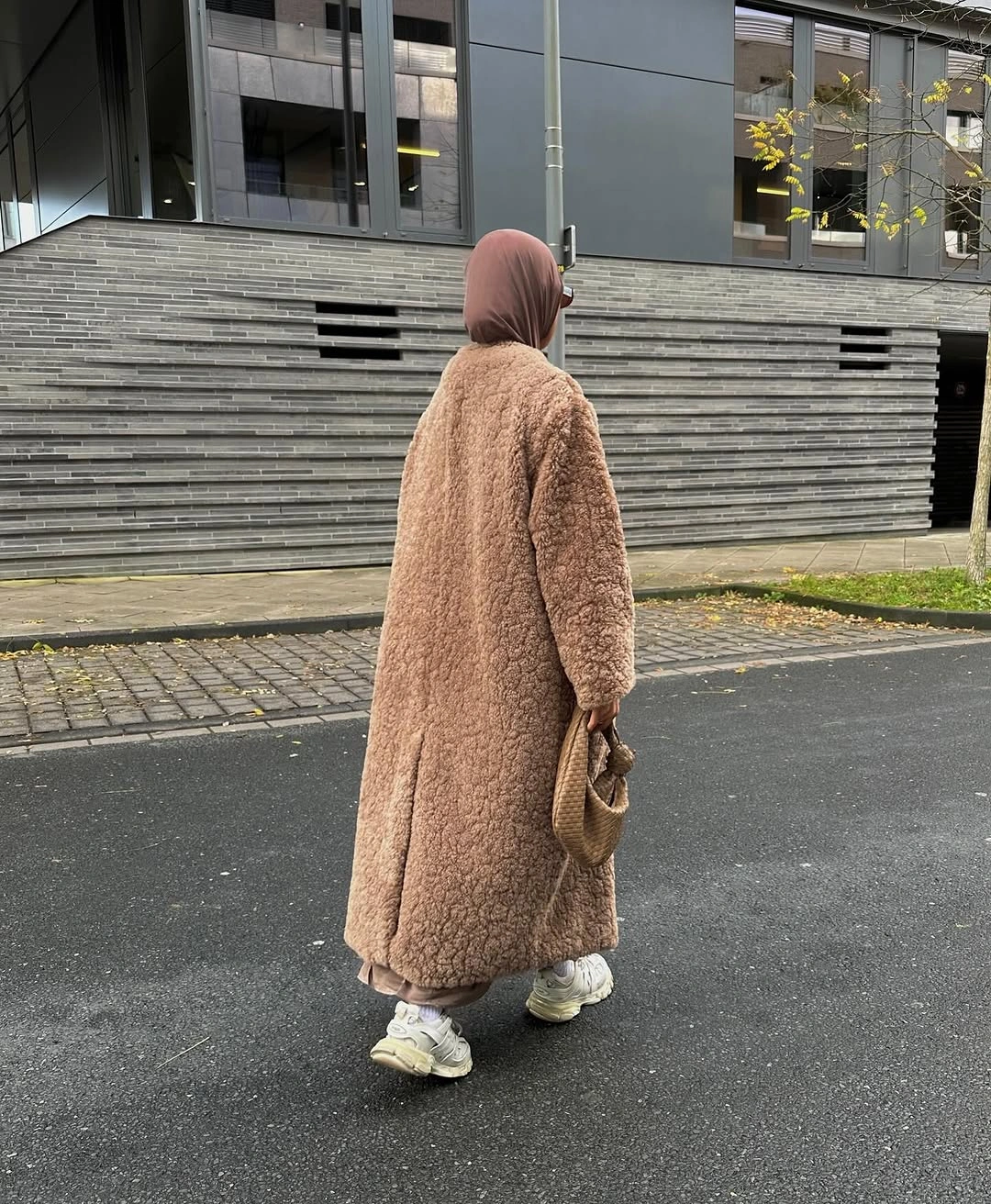
Footwear changes the message of a long coat quickly. A dark pointed boot would make the same length feel sharper, while the light athletic shoe keeps it easier and more everyday. If you try this proportion with a shorter coat, choose a straighter trouser so the layers still make one long readable line. The low-contrast palette works because the shoe is light, not because every piece is identical.
A long hem is visually satisfying with sneakers, but it can be the first part to meet damp pavement. Choosing a coat that sits slightly above the ankle or reserving this formula for drier routes makes it easier to maintain. The benefit is a calm silhouette with modest color changes: camel holds the center, taupe softens the top, and the sneaker keeps the base from becoming too heavy.
White Fringe Scarf Against A Patterned Coat
The wide white fringed scarf creates a bright vertical panel over the brown-and-cream patterned textured jacket. That clear light area gives the busy outer layer breathing room near the face, while the structured black handbag and dark lower half provide a clean frame around it. The scarf is not merely decorative here; it regulates how much of the coat’s surface reaches the eye at once.
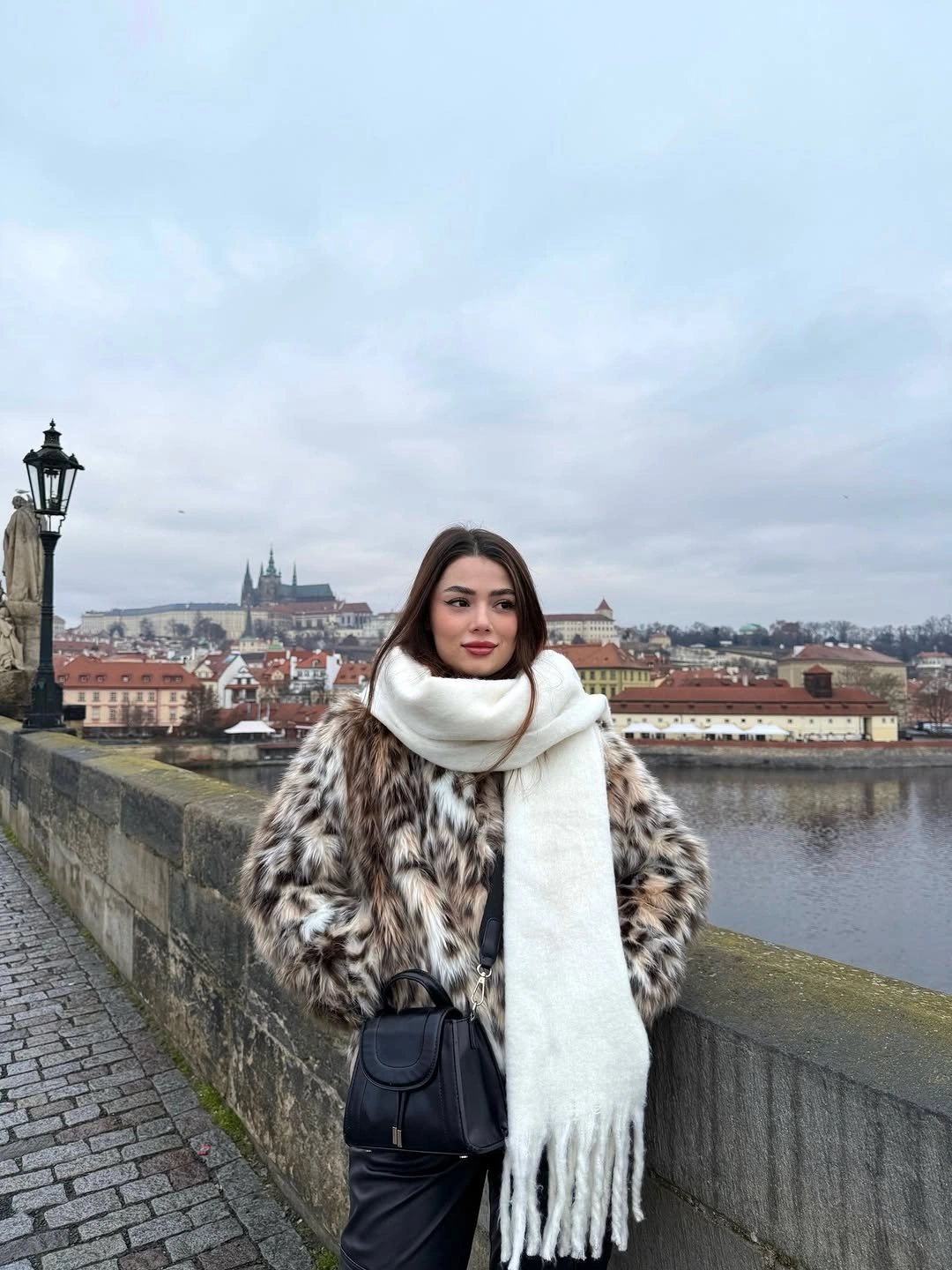
To keep the contrast useful, choose a plain black or dark brown base and avoid repeating the jacket’s pattern elsewhere. A narrower cream scarf would make the coat appear stronger, while this broader white version makes the entire outfit lighter. The fringe adds movement, so the remaining accessories should be compact and smooth rather than equally tactile or oversized.
Long fringe has a small practical limitation: it can catch around hardware, swing into a drink, or become uneven if it is constantly tucked into a bag strap. Letting it hang freely for a short jacket preserves the vertical line, but securing one end under the coat can be more convenient. The combination works because a pale scarf changes the scale of a busy brown outer layer without trying to hide it.
Burgundy Tights Under Gray Winter Texture
The pale gray textured jacket and checked gray mini skirt form a cool, soft upper half, while the burgundy tights establish a much deeper vertical line below. Brown gloves echo that warmth near the hands, and the large cream woven tote stays neutral enough to avoid creating a third competing color story. The contrast is precise: pale texture above, saturated color through the leg, quiet cream to the side.
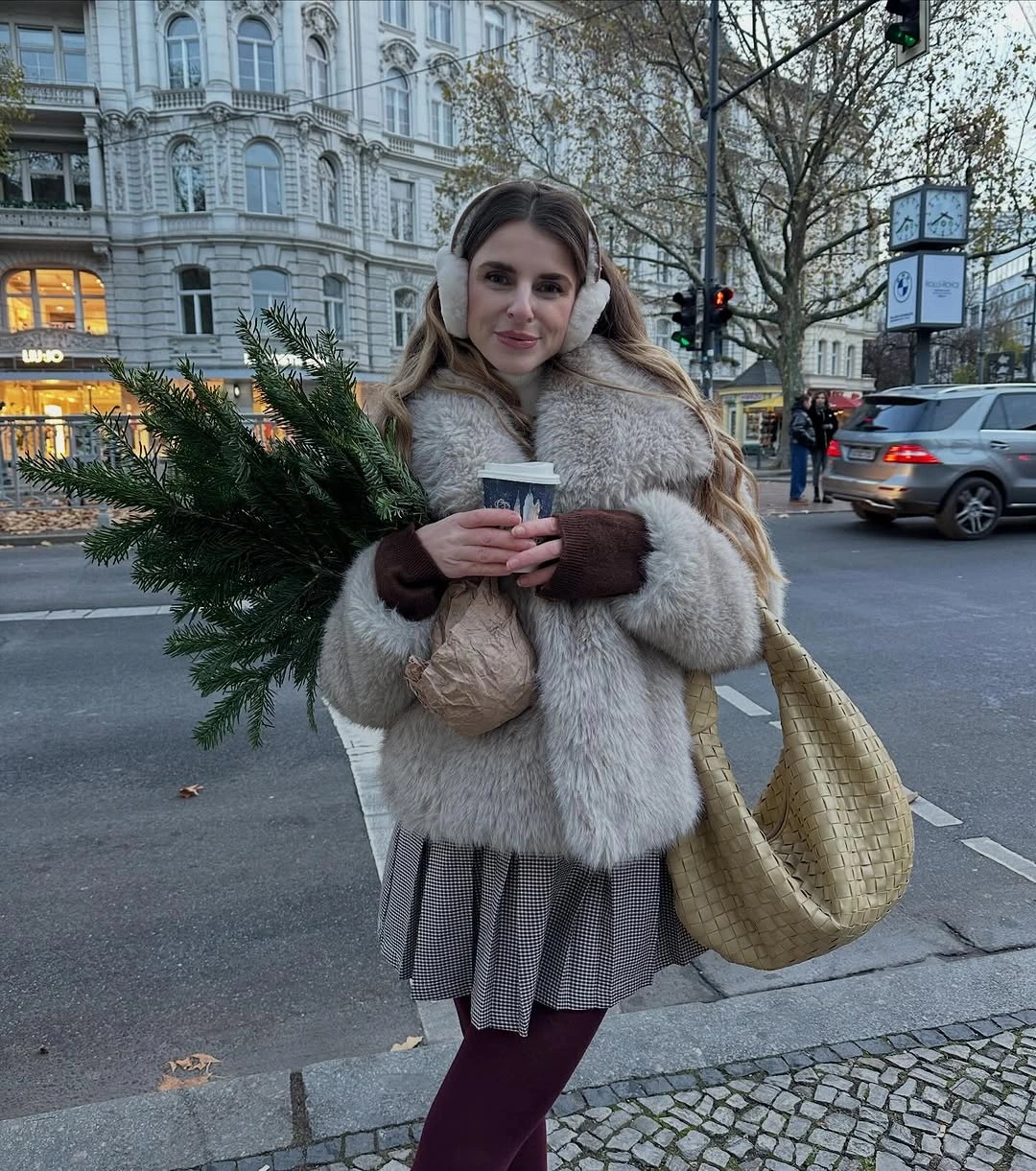
Burgundy tights are doing more than adding color; they make the short checked hem feel anchored. A flat dark boot would make the lower line even firmer, while a lighter shoe could soften the contrast for daytime wear. Keep any scarf close to gray, cream, or brown so the red remains a deliberate lower-half accent rather than one color among several unrelated accents.
The short skirt brings pattern and movement, so it is sensible that the tote is woven but pale rather than brightly colored. A more substantial base layer or a longer coat would be the practical adaptation when extra coverage is needed, yet the color placement should stay intact. Preserve the burgundy leg line and the cool gray upper texture, because their difference is what gives this last outfit its clear winter character.