Winter haircuts can look surprisingly different even when the overall length seems similar. This set moves from compact bobs and short cuts into shags, layered shapes, pixies, and longer silhouettes, so the useful details are the visible ones: perimeter, fringe, curl or wave pattern, and where the layers begin to change the outline.
Instead of treating every style as a trend label, compare how each haircut is built on the page. A blunt edge reads differently from a rounded curl shape, a curtain fringe changes long layers in another way, and a choppy nape creates a different balance again. The goal is to notice structure first, then decide which visual direction stands out most.
Rounded Blonde Curls in a Short Bob
This blonde bob is defined first by its curl pattern and compact rounded shape. The curls sit around the head in short, springy sections, creating a soft perimeter rather than a straight lower line. Because the length stays above the shoulders, the silhouette reads as clearly short while still showing plenty of movement through the sides.
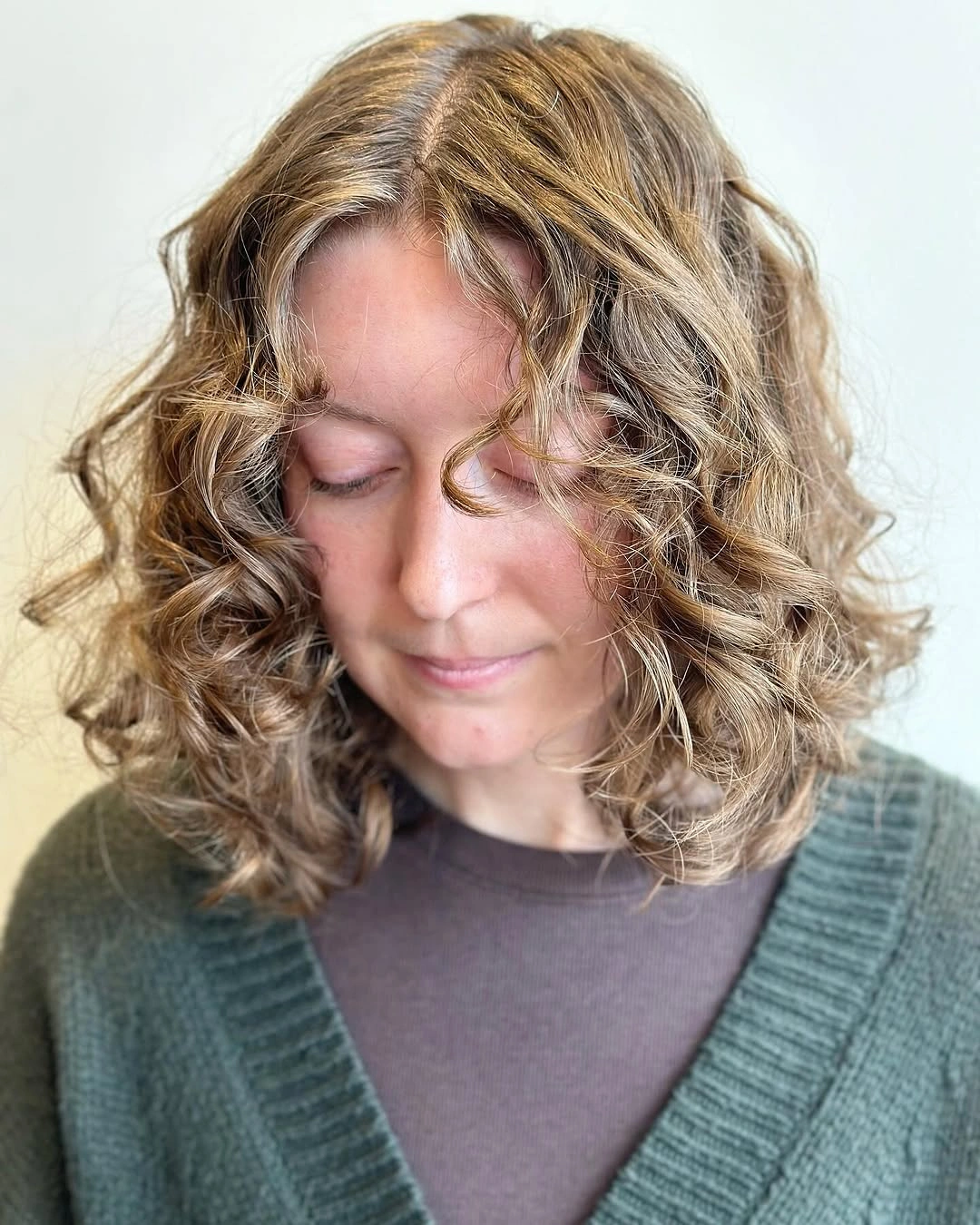
Photo via Instagram: Instagram
The most useful detail here is how the curls build the outline for the haircut. There is no sharply exposed blunt edge to dominate the shape, so the rounded volume comes from repeated curved sections from crown to ends. For readers comparing winter haircuts, this shows how texture can become the main visual structure of a short bob.
The rounded silhouette is created by the curl pattern rather than by a visibly straight cutting line. That makes this bob a clear starting point for comparing texture-led short shapes with smoother, more geometric cuts.
Long Black Layers with Curtain Bang Framing
Long black hair gives this cut its strongest first impression, but the front framing changes the silhouette significantly. Curtain-style bangs open at the center and sweep into shorter layers around the face, while the remaining lengths continue well below the shoulders. The result is a long shape with a clearly constructed front rather than one uninterrupted fall.
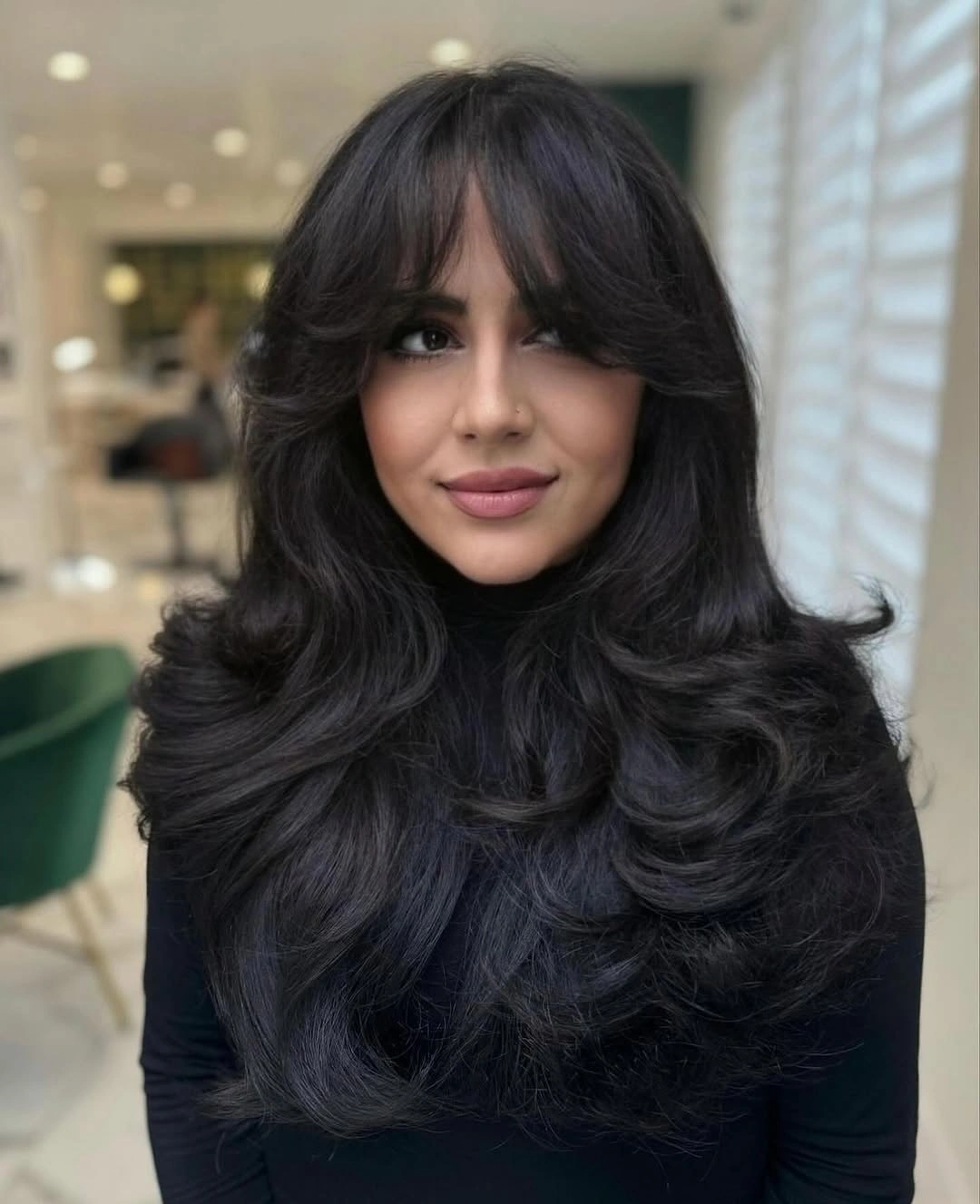
Photo via Instagram: Instagram
The visible layering works in stages, with shorter front pieces curving into longer sections instead of ending abruptly. That creates separation around the face while preserving the overall length through the body of the haircut. The reader takeaway is that long hair can look highly shaped without relying on short bangs or a heavily broken perimeter.
The contrast between the curtain fringe and the much longer lengths gives the front view its structure. This is a useful example of keeping a long silhouette while introducing several clearly visible framing levels.
Dark Shag Layers with Broken-Up Texture
This dark medium-length cut has a shag or wolf-like character because the layers are visibly separated from top to bottom. Fringe covers the forehead, shorter pieces break up the upper shape, and the lower lengths taper into a more uneven outline. The haircut looks deliberately textured rather than smooth or uniformly rounded.
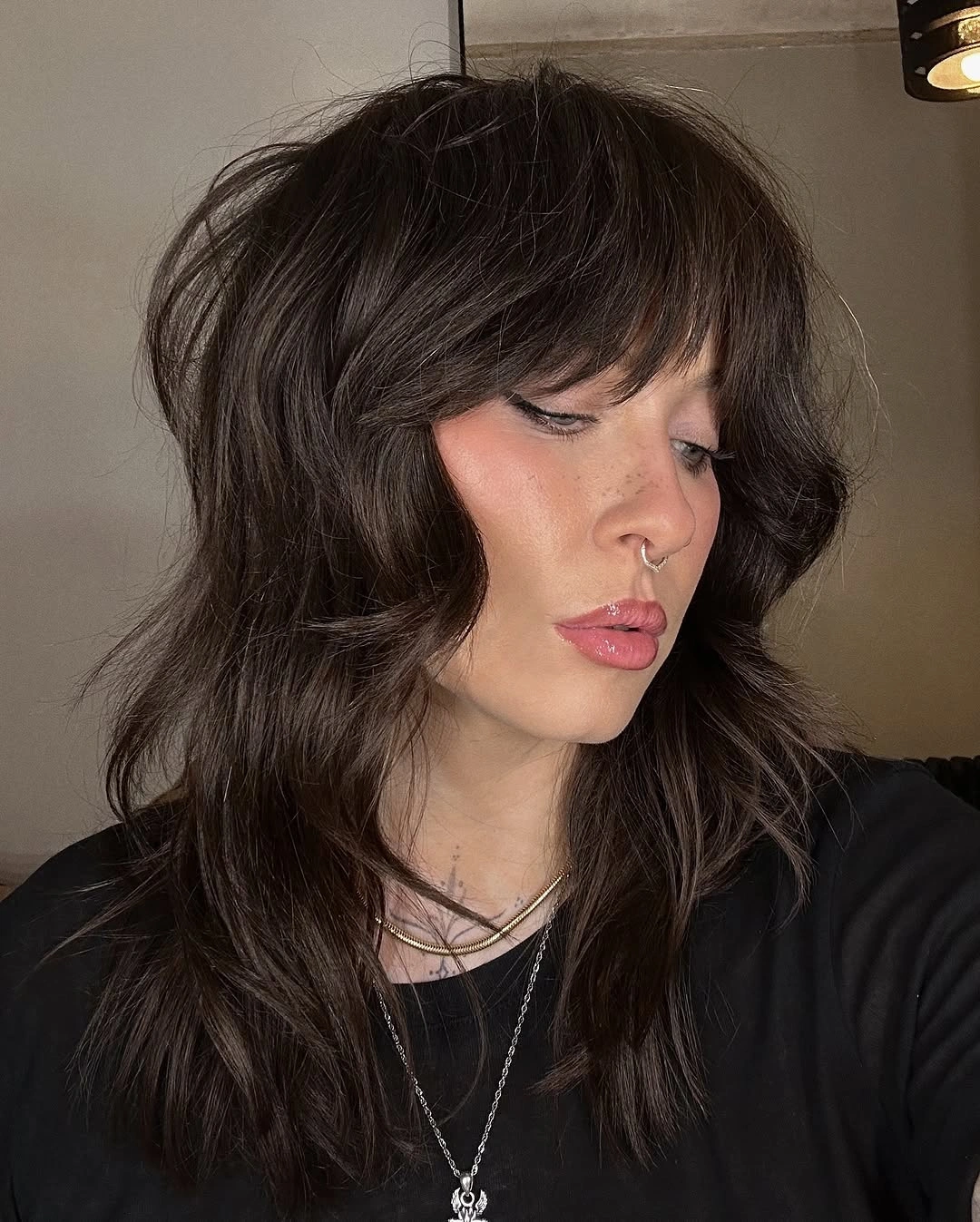
Photo via Instagram: Instagram
What makes this section useful is the contrast between the fuller upper area and the narrower, more piecey lower lengths. The fringe connects with shorter layers near the face, while longer sections continue toward the shoulders. That staggered construction is the clearest reason the haircut reads as a shag instead of a simple medium bob.
The haircut gains its identity from multiple length changes rather than from one clean perimeter. Fringe, shorter upper pieces, and tapered lower sections work together to create the visibly fragmented shag shape.
Silver Blunt Bob with a Clean Perimeter
The silver bob is almost the opposite of the previous textured shapes. Its surface appears smooth and straight, and the lower edge forms a clean, nearly level line around the jaw area. With little visible disruption through the ends, the haircut is defined by precision of silhouette rather than by curls, flips, or strongly separated layers.
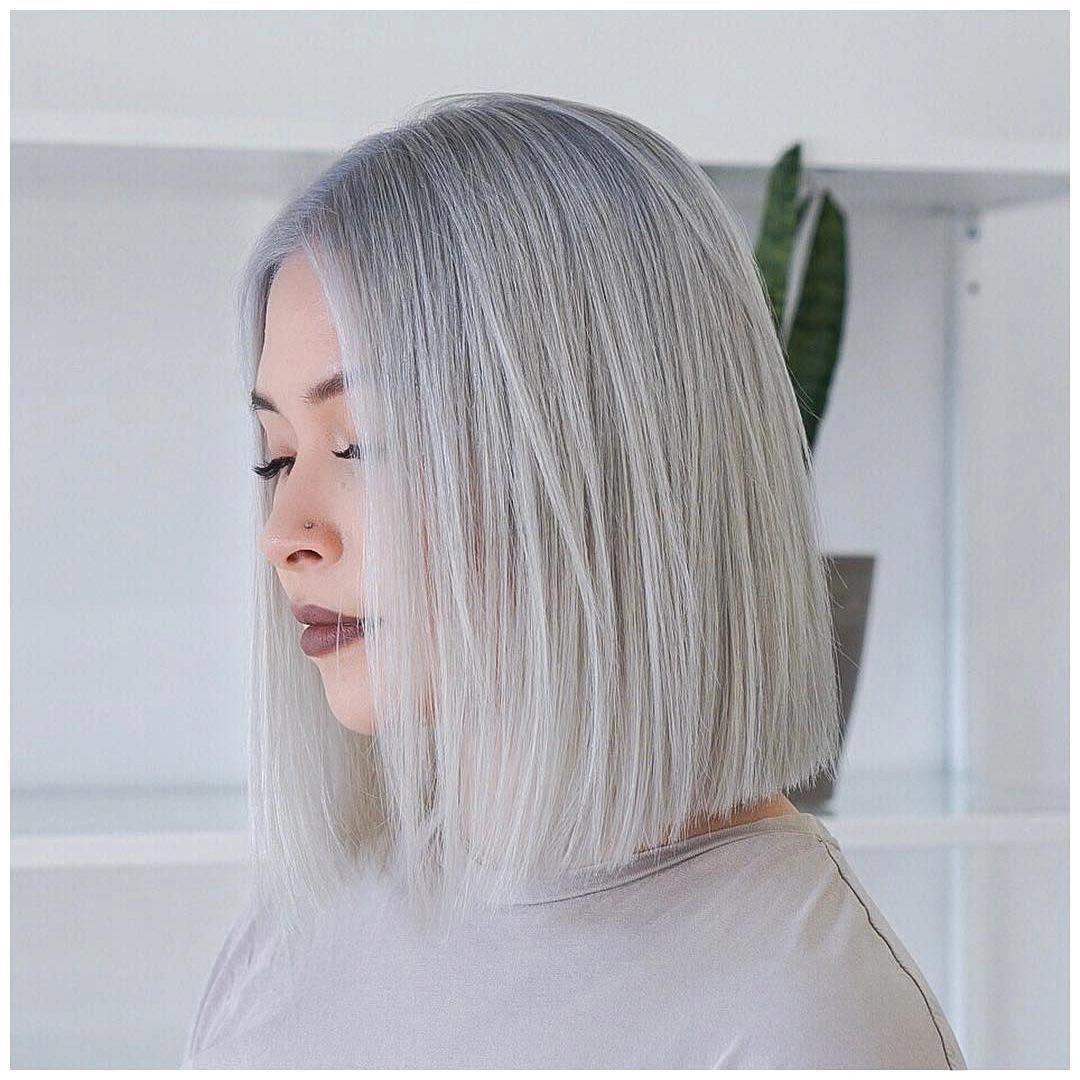
Photo via Instagram: Instagram
A blunt perimeter gives this bob its clearest visual identity. The ends gather into one compact horizontal edge, while the front falls in a simple parted shape without a heavy fringe. For readers comparing winter haircuts, this is a strong reference point for how a smooth surface and even lower line can create a much stricter outline.
The even edge makes length itself one of the most noticeable design elements. Compared with layered or curly bobs, this version shows how a smooth finish can keep attention on a single clean perimeter.
Short Choppy Layers with a Mullet-Like Outline
This short light-brown cut uses contrast in length instead of a rounded bob shape. The top and sides are cropped into choppy pieces, the fringe stays short, and the hair extends farther at the back and nape. Those changes create a mullet-like outline in which the rear length remains visible even though the overall haircut is compact.
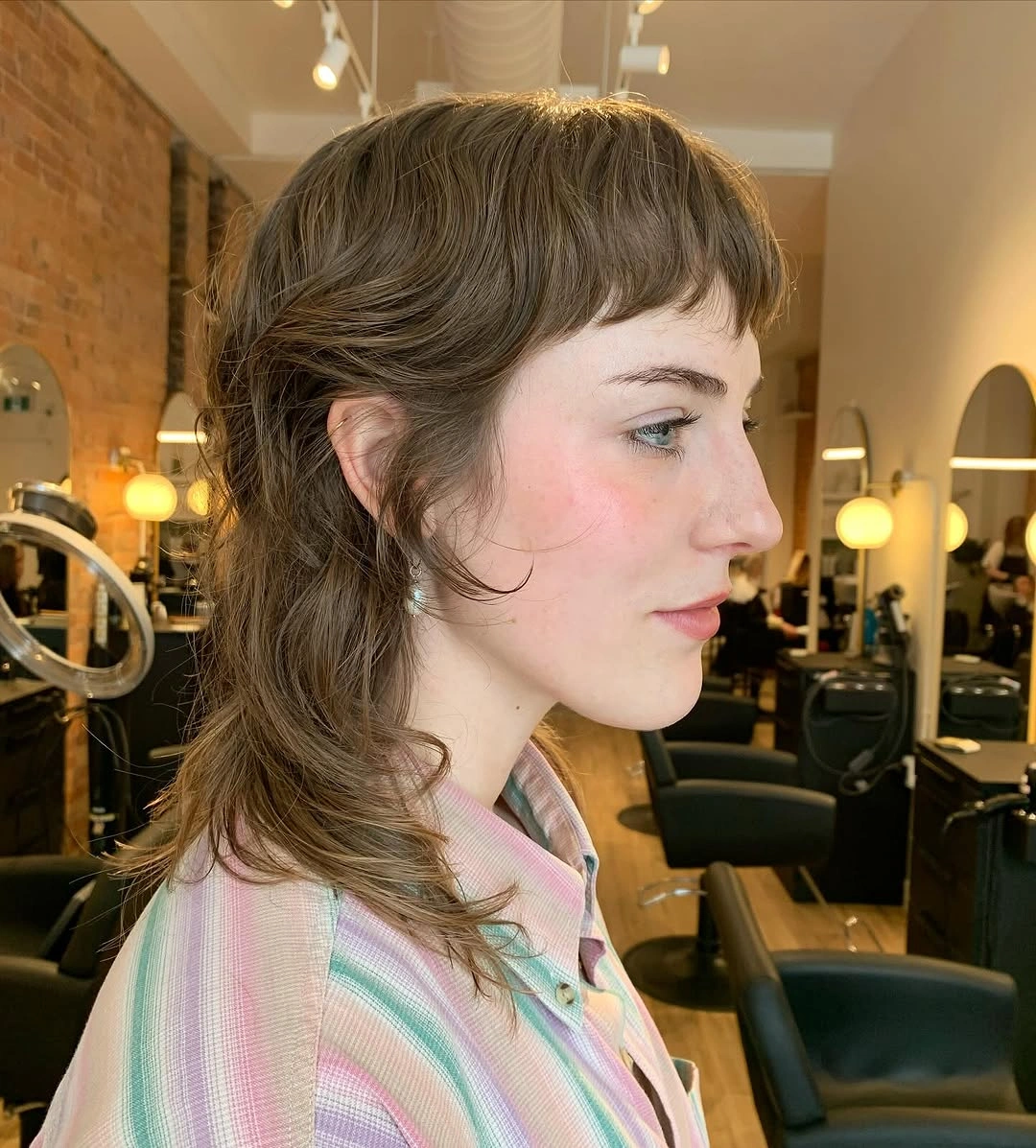
Photo via Instagram: Instagram
The key detail is the difference between the shorter upper sections and the longer back. Piecey ends around the sides and nape keep the perimeter irregular, so the shape feels more broken up than the clean silver bob before it. This makes the cut a useful example of how front-to-back length contrast can define a short silhouette.
The extended nape prevents this cut from reading like a uniformly cropped pixie or compact bob. Its strongest visual feature is the deliberate shift from short upper sections to longer pieces at the back.
Long Dark Layers Seen from the Back
Seen from the back, this long dark haircut makes its layer pattern easy to read. The overall length extends well below the shoulders, while several shorter sections sit over the longer base through the middle and lower portions. Some ends turn outward, adding visible separation and preventing the lower outline from looking like one solid line.
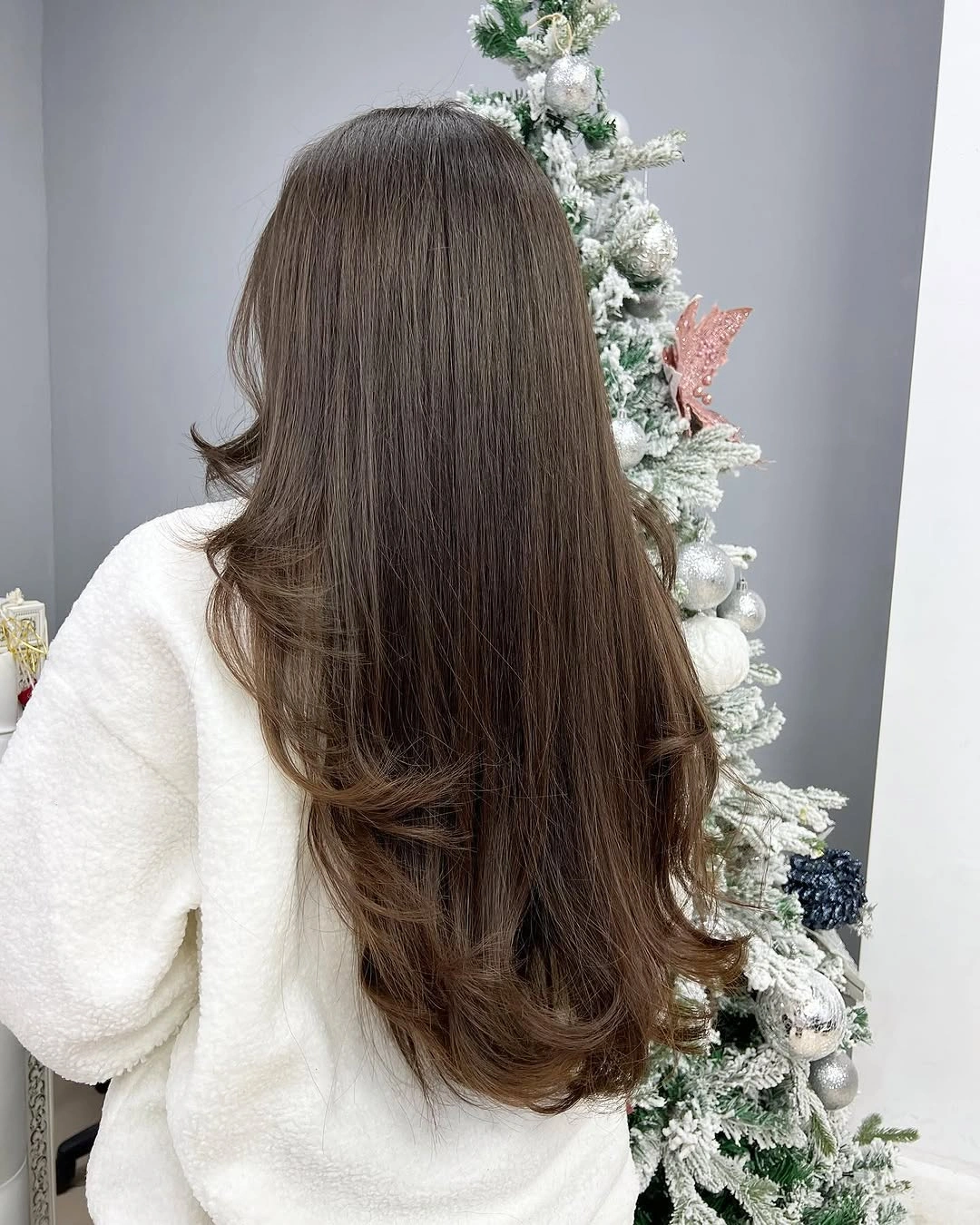
Photo via Instagram: Instagram
The back view is useful because it shows how the layers are distributed without face-framing pieces taking attention away from the main shape. Longer sections form the base, while shorter lengths overlap them in clear steps. The outward-turning ends make those changes easier to see and give the lower silhouette a more divided, layered finish.
The strongest visual point is the contrast between the longest base and the shorter sections layered over it. The outward-turning ends make those different lengths especially clear from the rear view.
Smooth Black Lengths with Curved Front Layers
At first glance, this long black haircut reads as smooth and continuous, but the front pieces introduce a clear change in length. Shorter sections curve around the face and neck before blending into the much longer hair behind them. The layered ends add further separation lower down while the overall silhouette remains distinctly long.
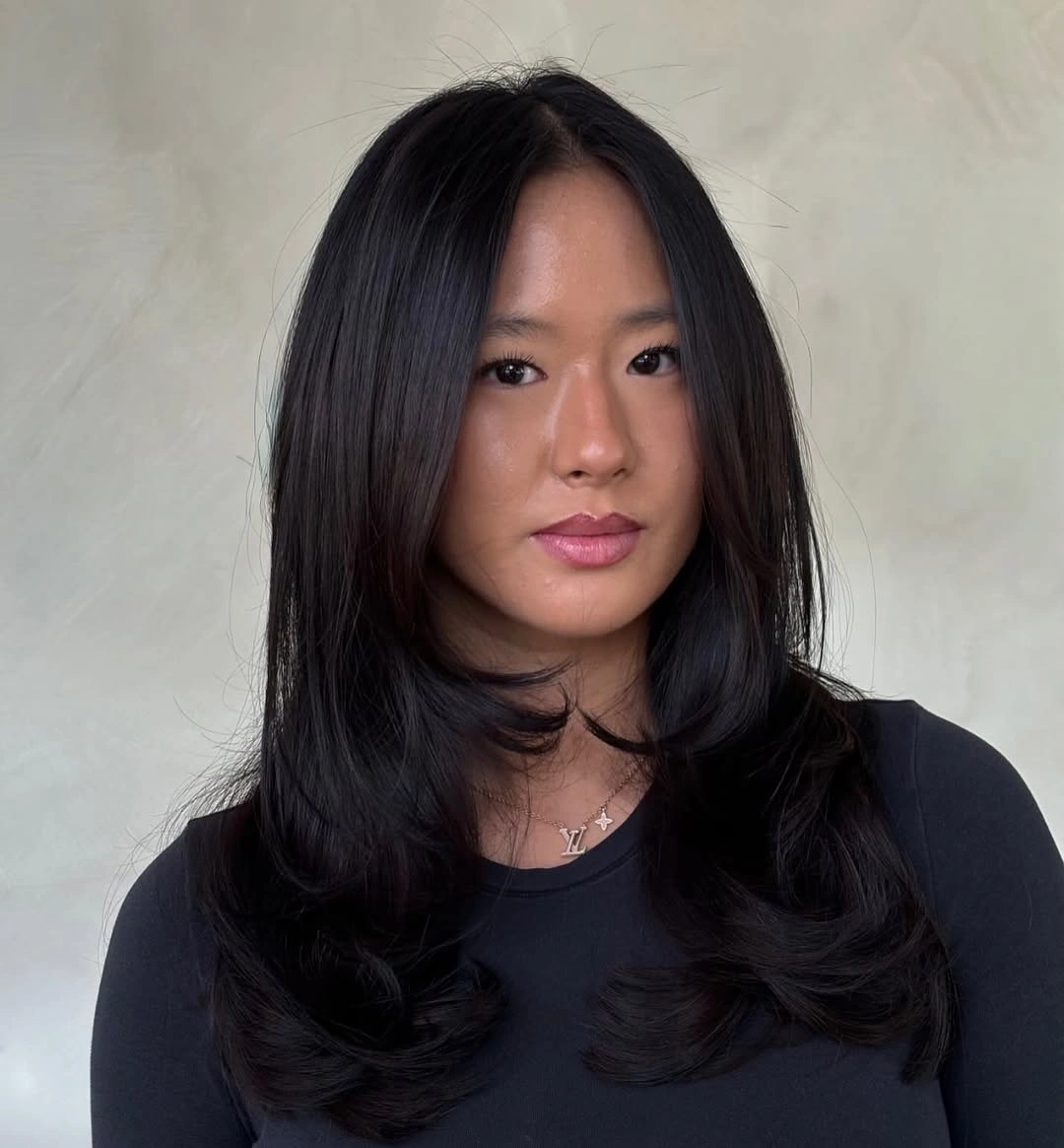
Photo via Instagram: Instagram
Rather than using a short fringe, the cut creates its framing with longer front sections that sit apart from the main lengths. Their curved shape draws attention to the transition from shorter pieces into the smoother hair behind them. This is a useful comparison for readers who want to notice how front layering can reshape long hair without dominating the entire cut.
Most of the visible shaping is concentrated near the front while the remaining length stays sleek and substantial. That balance separates this cut from long styles where shorter layers are distributed more heavily throughout the entire silhouette.
Full Bangs Lead into a Layered Shag
Full bangs give this medium dark shag a strong front edge, then the surrounding layers continue the shape through the sides. Shorter pieces sit around the face before stepping into shoulder-area lengths, and several ends turn outward. Those changes keep the perimeter broken up and make the haircut look more layered than a smooth medium bob.
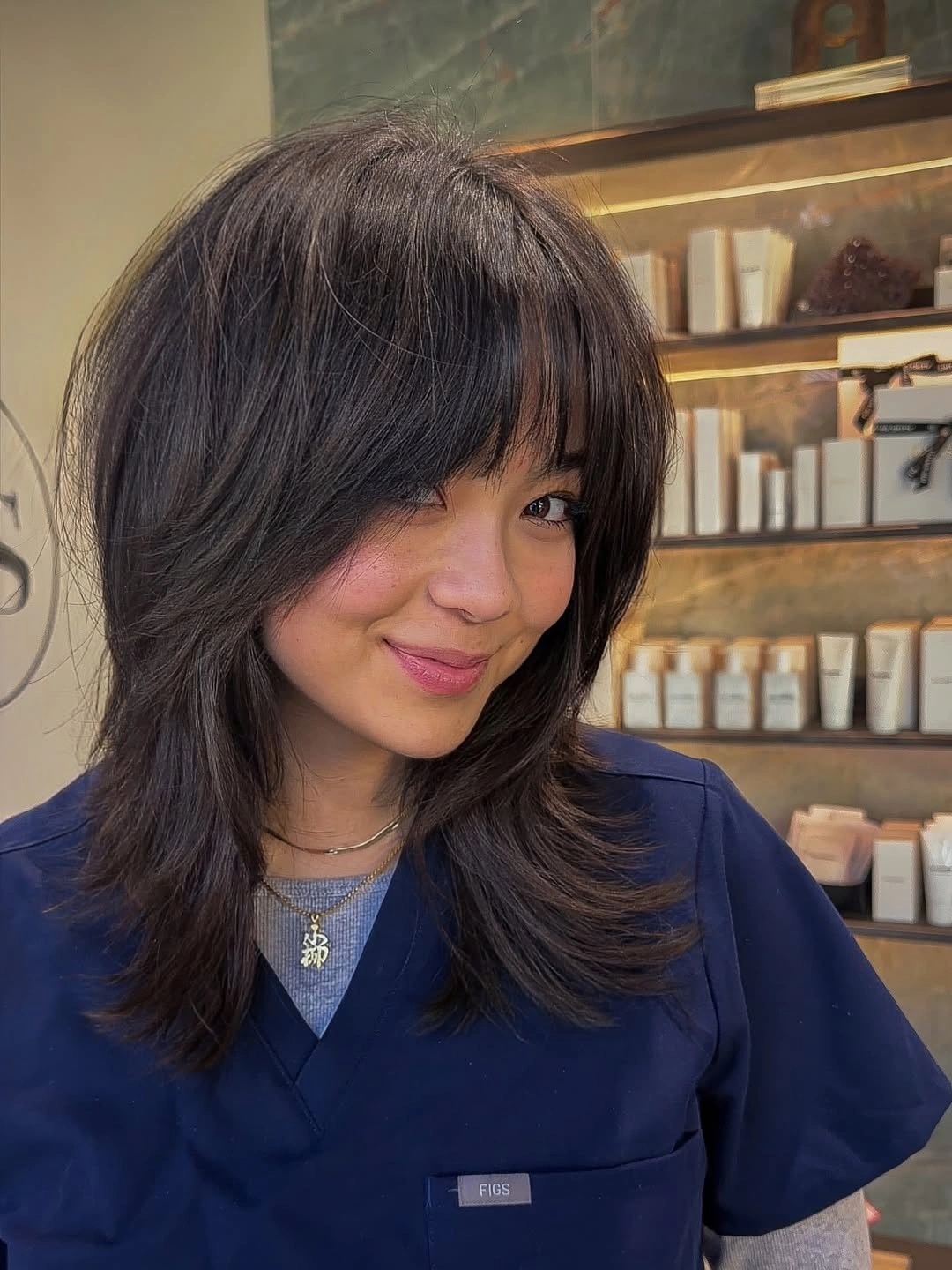
Photo via Instagram: Instagram
The visual structure is easiest to follow from the fringe outward: dense bangs lead into shorter side sections, which then extend toward the shoulders in uneven levels. Outward-turning ends emphasize those changes and give the lower edge a feathered look. The blue scrubs are part of the presentation, but the haircut itself is defined by bangs, layers, and directional ends.
The fringe and side layers read as connected parts of one medium-length shape rather than separate features. The outward-turning ends further emphasize the stepped transition from shorter sections to the shoulder-area lengths.
A Side Sweep Shapes This Blonde Bob
A pronounced side sweep sets the direction of this short blonde bob before the lower edge comes into focus. The front moves diagonally across the forehead and blends into a rounded silhouette through the sides, while the back appears shorter and more compact. Smooth curves, rather than visibly choppy pieces, define the shape.
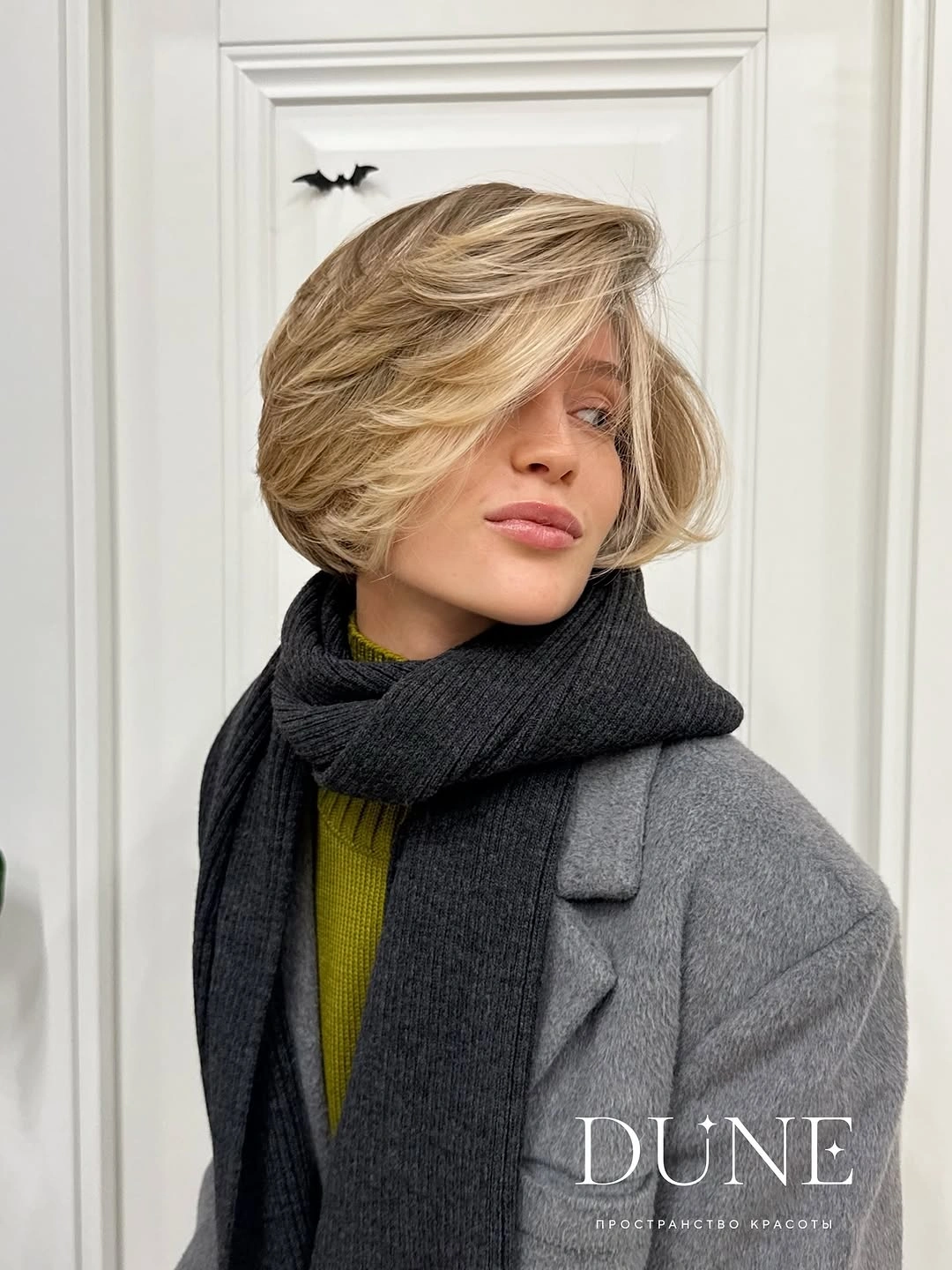
Photo via Instagram: Instagram
The rounded volume gives this bob a very different outline from a blunt, level cut. Fullness gathers through the side, the front is guided by the sweep, and the shorter back keeps the overall length compact. This makes the haircut a useful reference for seeing how direction and curved shape can change the appearance of a short bob without relying on obvious shaggy layers.
The side sweep is the feature that gives the front its strongest sense of direction. Combined with the rounded sides and shorter back, it creates a compact bob whose shape is defined by broad curves rather than separated texture.
Copper Layers Open Up This Medium Shag
This medium copper shag opens at the front instead of using a heavy straight fringe. Parted pieces fall to either side of the face, where shorter layers create visible steps before joining the longer shoulder-area sections. The lower edge is broken into varied ends rather than one even line, reinforcing the haircut's layered, irregular character.
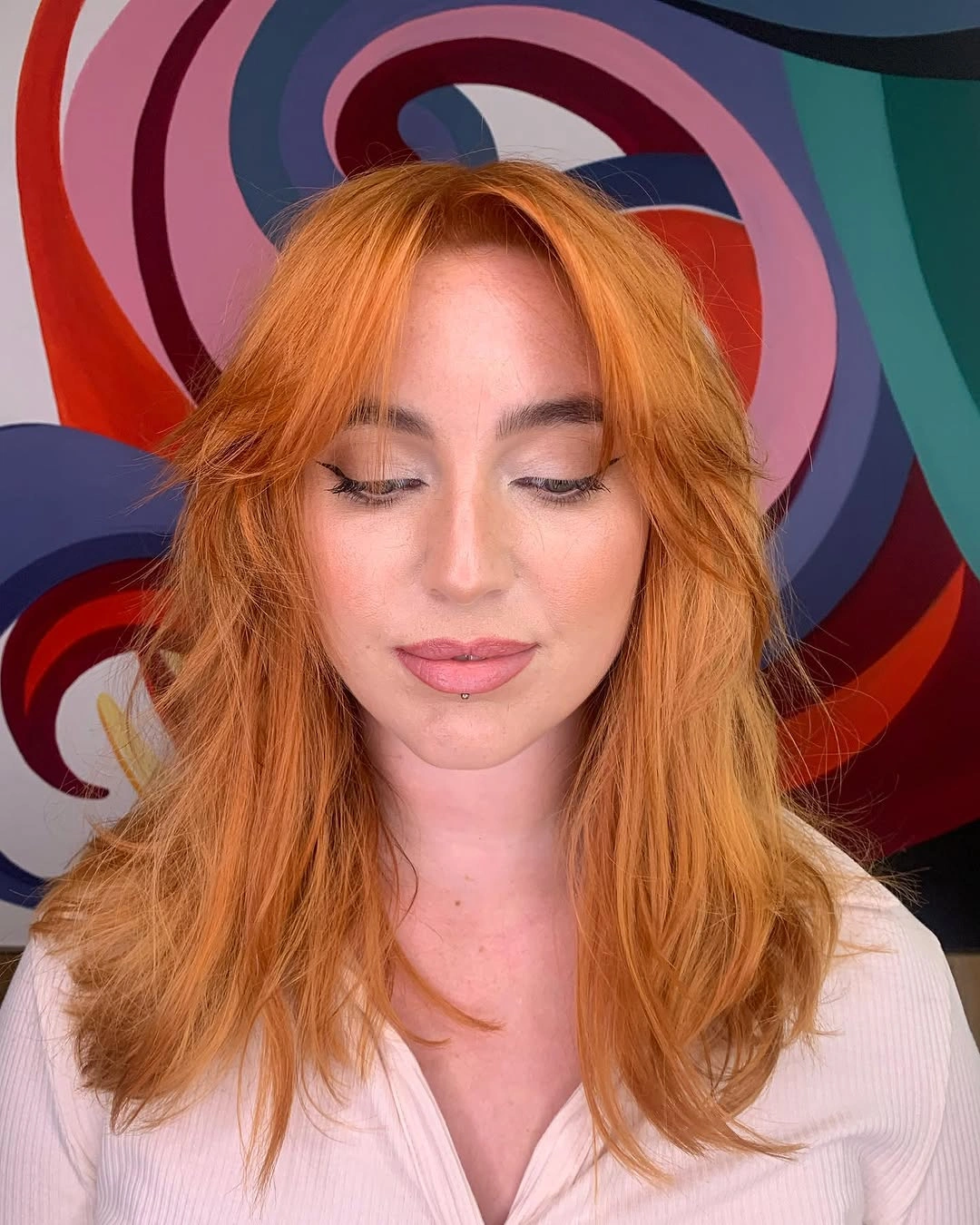
Photo via Instagram: Instagram
The front framing is the key distinction here because it keeps the face area more open while still showing several shorter lengths. Through the sides and lower sections, overlapping pieces separate from one another and interrupt the perimeter. That combination gives the medium cut a shag-like structure without making full bangs the central feature.
The parted front makes this shag visually distinct from versions built around a dense fringe. Shorter framing pieces and the uneven lower edge provide the structure, while the medium length remains clearly visible beneath them.
Loose Waves Soften This Medium Blonde Bob
Seen from the side, this medium blonde bob is defined by loose waves and a lower edge that breaks into separate pieces rather than one blunt line. The length sits around the shoulders, while the bends through the midsection and ends keep the silhouette soft and uneven. The profile view makes those changes in direction especially easy to compare.
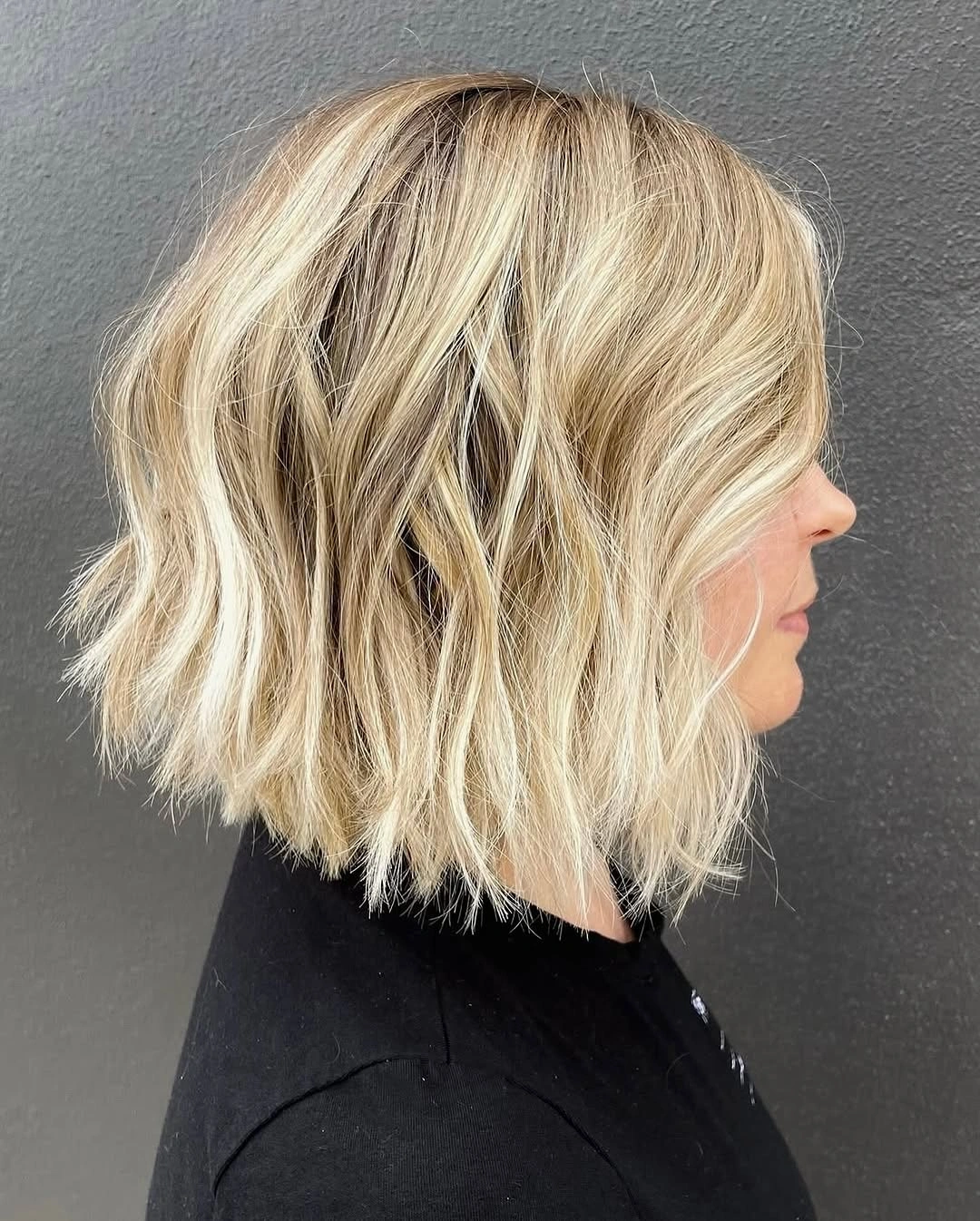
Photo via Instagram: Instagram
The piecey perimeter matters as much as the wave pattern here. Some ends curve outward while others fall closer to the neck and shoulders, so the bottom edge never reads as a single straight band. That visible variation gives the bob a more relaxed outline than the smooth silver version, while the medium length keeps the overall shape clearly compact.
The waves interrupt the lower edge without obscuring the overall bob shape. This makes the haircut a useful example of how visible bends and separated ends can change the character of a medium-length perimeter.
Full Curly Bangs Shape a Copper Bob
Full curly bangs establish the front of this copper bob, then merge into the same rounded curl pattern that continues through the sides. The lower curls reach the shoulder area, giving the haircut a compact but substantial outline. Because the fringe and body share similar texture, the front does not look separate from the rest of the shape.
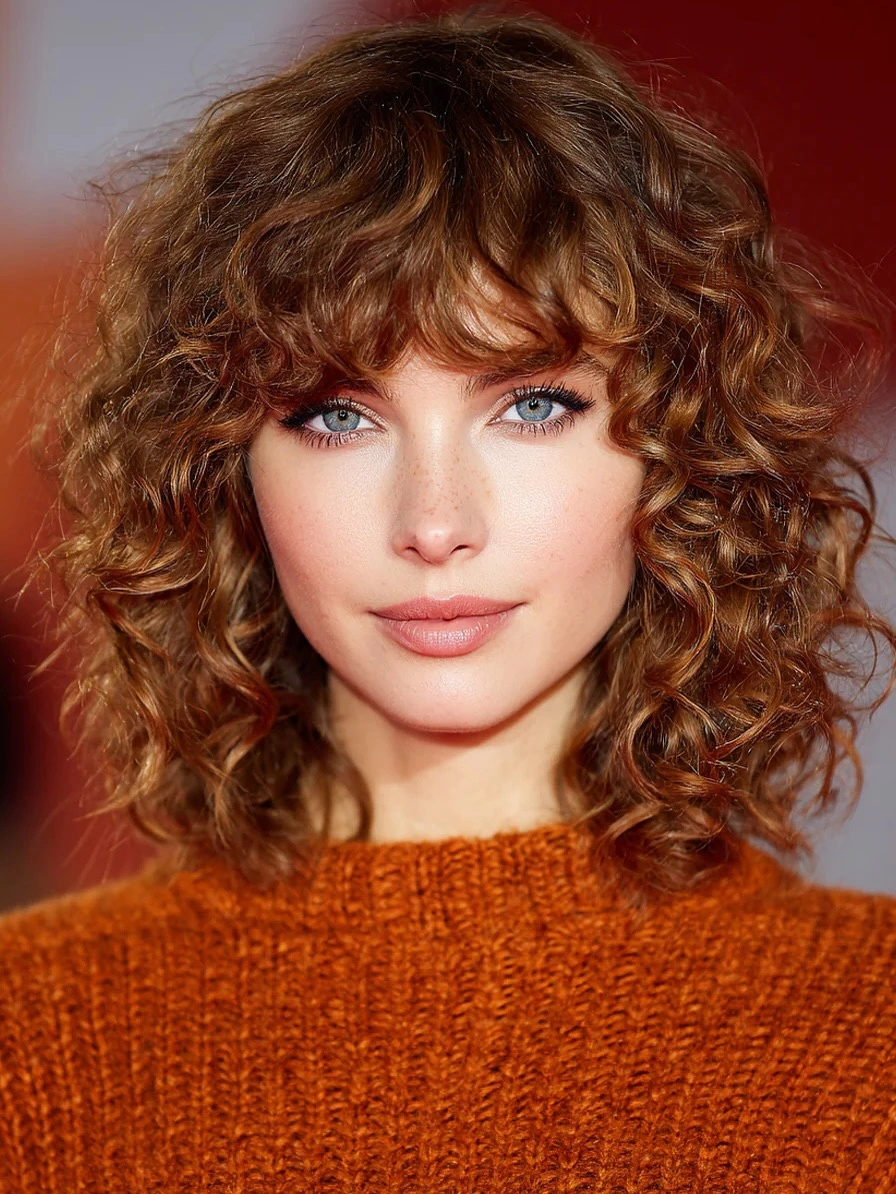
Photo via Instagram: Instagram
The strongest comparison point is how the curls organize the entire silhouette. Rather than exposing a clean blunt edge, the ends form a rounded, irregular perimeter with individual curls extending to slightly different lengths. The bangs repeat that same structure above the brows, so the haircut reads as one connected curly shape from front to sides.
Here, the fringe is visually integrated with the curls surrounding it instead of forming an isolated straight band. The repeated rounded shapes connect the bangs, sides, and shoulder-skimming ends into one cohesive outline.
A Longer Nape Extends This Textured Pixie-Shag
This short dark cut sits between a pixie and a shag, with irregular fringe, textured pieces through the top, and a nape that extends visibly farther than the sides. The compact upper shape keeps the haircut short overall, but the longer back prevents it from looking uniformly cropped. That contrast gives the silhouette its clearest identity.
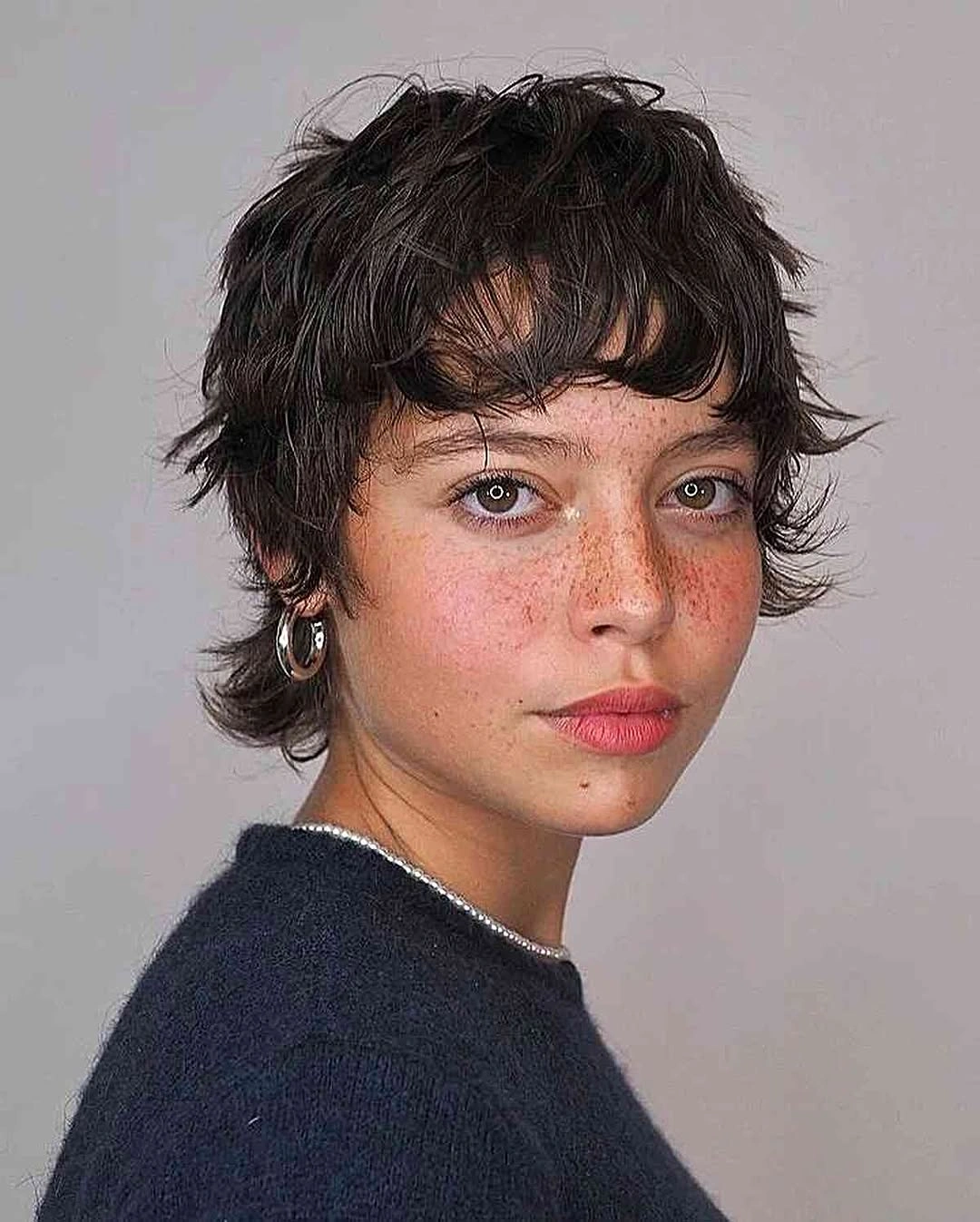
Photo via Instagram: Instagram
Small changes in length do most of the work here. The fringe breaks into uneven pieces across the forehead, the sides stay comparatively short, and wispy sections continue lower at the nape. Instead of one rounded outline, the cut uses several separate edges, making it a useful reference for a short shape with deliberately uneven proportions.
The longer nape is what most clearly separates this shape from a uniformly short pixie. Combined with the irregular fringe and textured top, it creates a compact haircut with noticeable front-to-back variation.
Feathered Ends Define This Medium Dark Shag
Substantial bangs anchor this medium dark shag, while layered side sections step down toward the shoulders. The lower lengths are feathered and several ends point outward, which keeps the perimeter open rather than dense or level. From the front, the cut reads through repeated shifts in length and direction instead of one dominant outline.
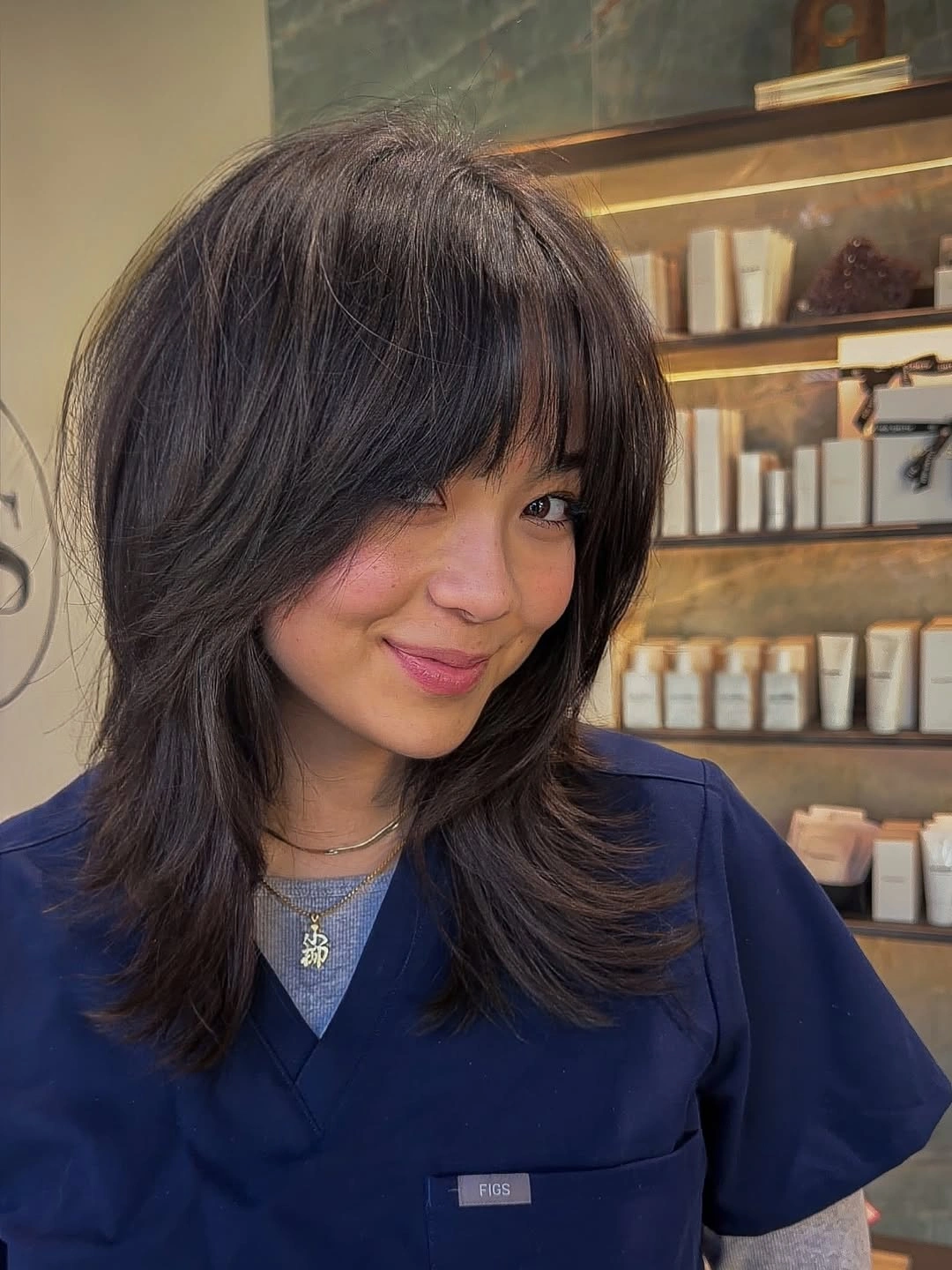
Photo via Instagram: Instagram
The outward-pointing ends are especially important because they make the layering visible at the lower edge. Shorter pieces around the face connect into longer shoulder-area sections, while the bangs create a fuller top boundary. Together, those elements produce a shag shape that looks more feathered and spread out than a smooth medium bob.
The direction of the ends gives this shag much of its visual character. Instead of falling into a single downward line, the lower pieces fan outward and emphasize the changes between shorter and longer layers.
Long Straight Blonde Hair Keeps a Clean Outline
Long, straight blonde hair creates the simplest silhouette in this group. A center part divides the front evenly, while the lengths fall smoothly with little visible interruption from shorter layers. The lower edge appears relatively even, so the eye follows the continuous vertical lines of the hair rather than a fringe, stacked back, or broken perimeter.
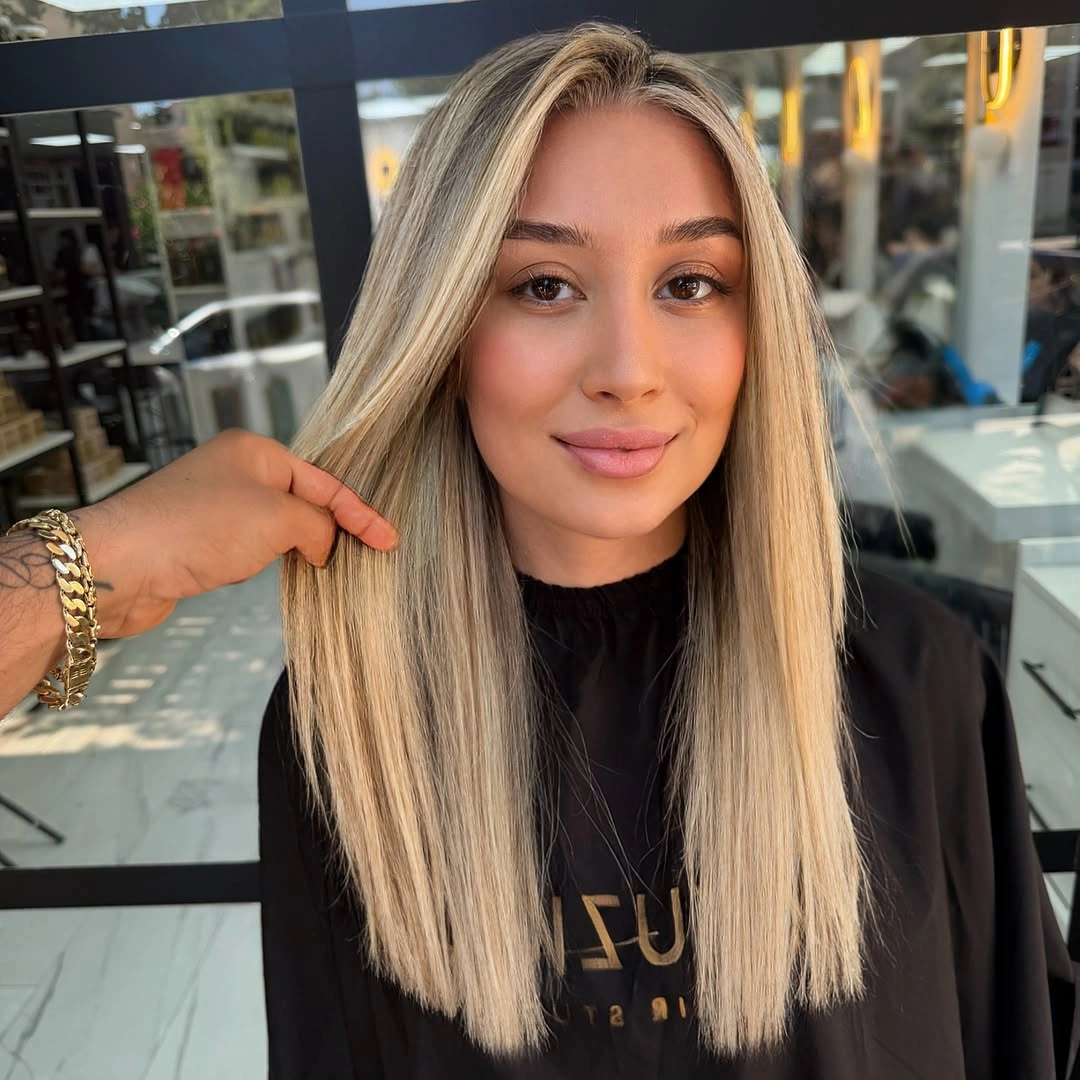
Photo via Instagram: Instagram
Because the cut is presented with such uninterrupted length, the perimeter becomes the main structural detail. There are no obvious short bangs or heavily separated layers competing with the long outline, and the smooth surface keeps the shape visually continuous from part to ends. This makes it a clear counterpoint to the shags and textured bobs around it.
The defining idea here is continuity rather than visible fragmentation. The center part, straight lengths, and relatively even lower edge make the long silhouette itself the strongest feature.
Sculpted Dark Pixie with a Long Front Sweep
This short dark pixie is built around a strong front-to-back contrast. The nape is closely cropped, the upper section keeps more fullness, and one very long front piece sweeps diagonally toward the face. That difference in length gives the compact haircut a clear direction instead of a uniform outline.
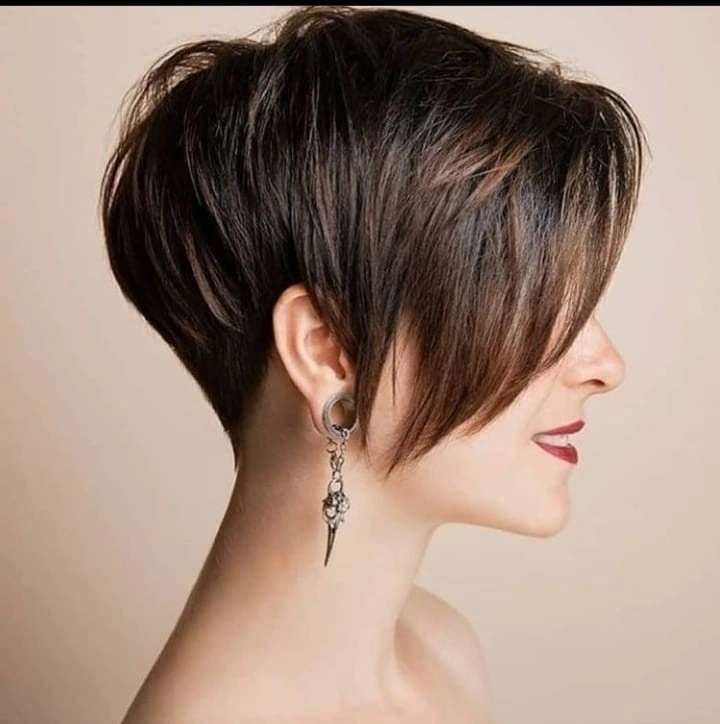
Photo via Instagram: Instagram
The front sweep carries most of the visual drama because it extends far beyond the shorter back and sides. From the rear and side areas, the haircut stays close and controlled, while the long front section changes how the shape is seen from the front. For readers comparing short winter haircuts, this is a useful example of using one extended area to reshape a pixie.
The main feature is the dramatic shift between the cropped nape and the long front. A very short cut can still have a directional silhouette when one section is allowed to remain visibly longer.
Sleek Dark Lob with a Curved Lower Edge
This medium dark lob sits around the shoulders and keeps its construction notably clean. The surface looks sleek, the layering is restrained, and the ends curve gently inward instead of breaking into separate pieces. It occupies a visual middle ground between a compact bob and much longer hair, with the lower edge doing most of the shaping.
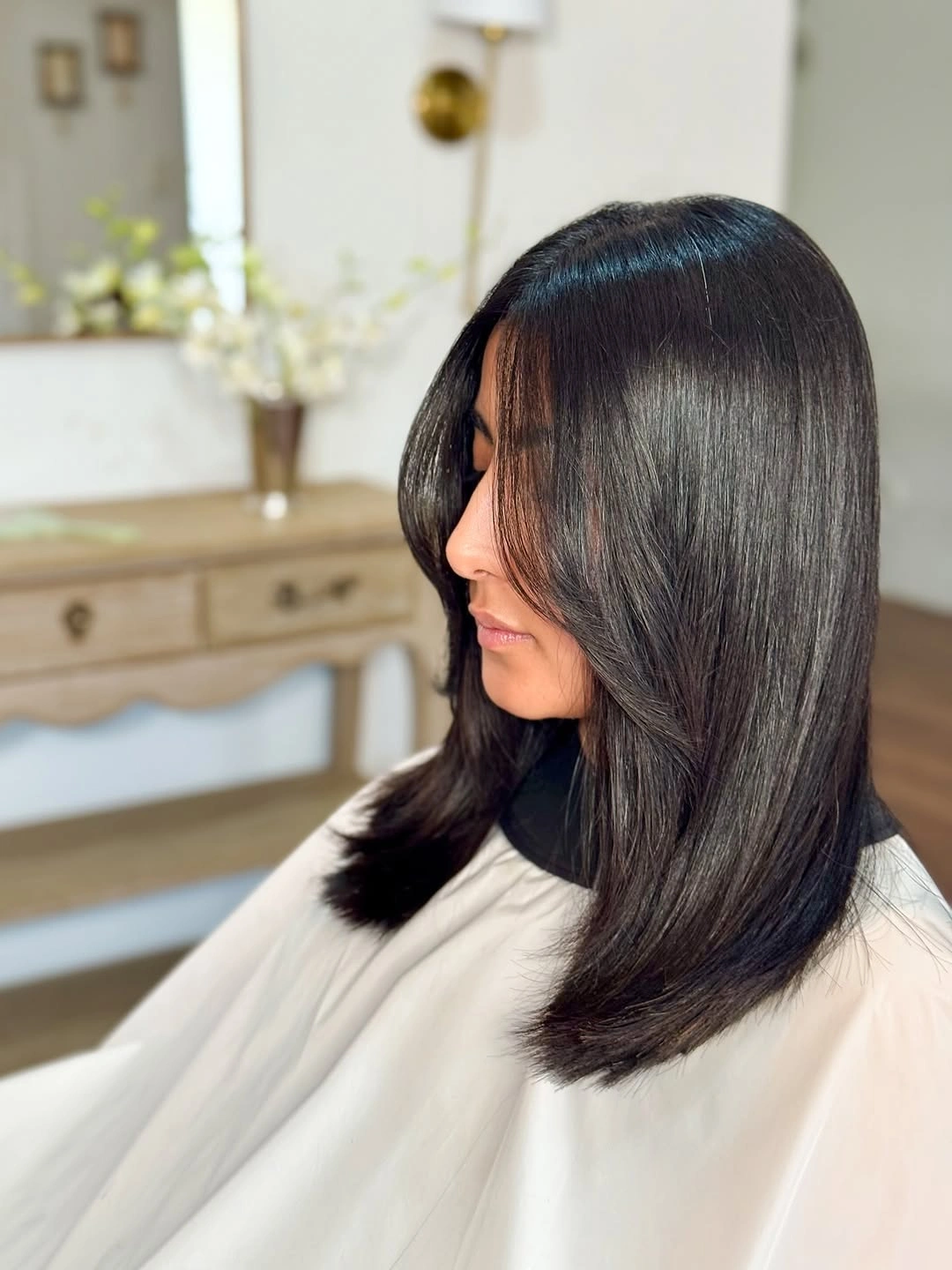
Photo via Instagram: Instagram
The smooth finish makes the length and perimeter easy to read. There is no heavy fringe or strongly staggered layer pattern competing with the outline, so attention stays on the shoulder-area shape and the soft inward curve at the ends. Among winter haircuts, this reference shows how a medium cut can look structured through restraint rather than visible texture.
The lob's identity comes from its clean surface and controlled lower curve. It is a clear midpoint between a blunt bob and a long layered cut, with neither extreme dominating the silhouette.
Side-Swept Layers Shape This Medium-Long Cut
A broad side-swept front section sets the direction of this medium-long brown haircut. The hair remains substantial through the sides and ends, where long layers add movement without breaking the shape into a short shag. Because the front travels diagonally across the face, the cut feels shaped even though the overall length stays well below the shoulders.
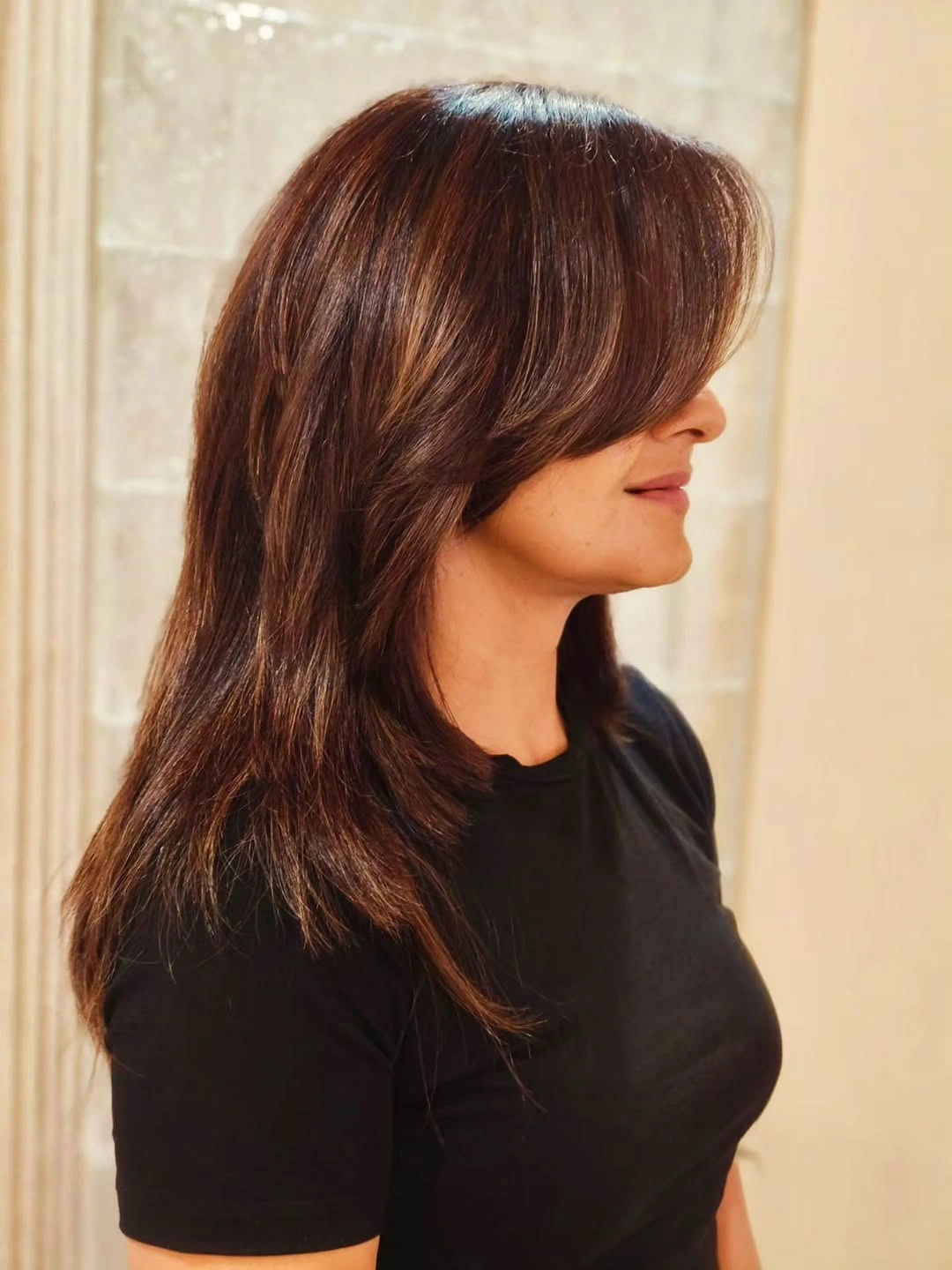
Photo via Instagram: Instagram
The useful detail is how the longer front section works with the rest of the layers. It creates a strong directional frame, then blends into the longer side and lower sections rather than stopping as a short bang. This makes the style a practical comparison point for readers looking at winter haircuts that keep length while adding movement and a clear side emphasis.
The side sweep changes the front view while the long layers preserve the medium-long silhouette. This is a shaped cut without the short fringe or broken-up perimeter of a shag.
Textured Crown and Side-Swept Pixie Fringe
This short dark pixie keeps its sides and back cropped while allowing the crown and front to carry more texture. The fringe angles across the forehead in a side-swept direction, and the upper pieces look separated rather than smoothly fused into one cap. That compact outline is balanced by visible texture concentrated near the top.
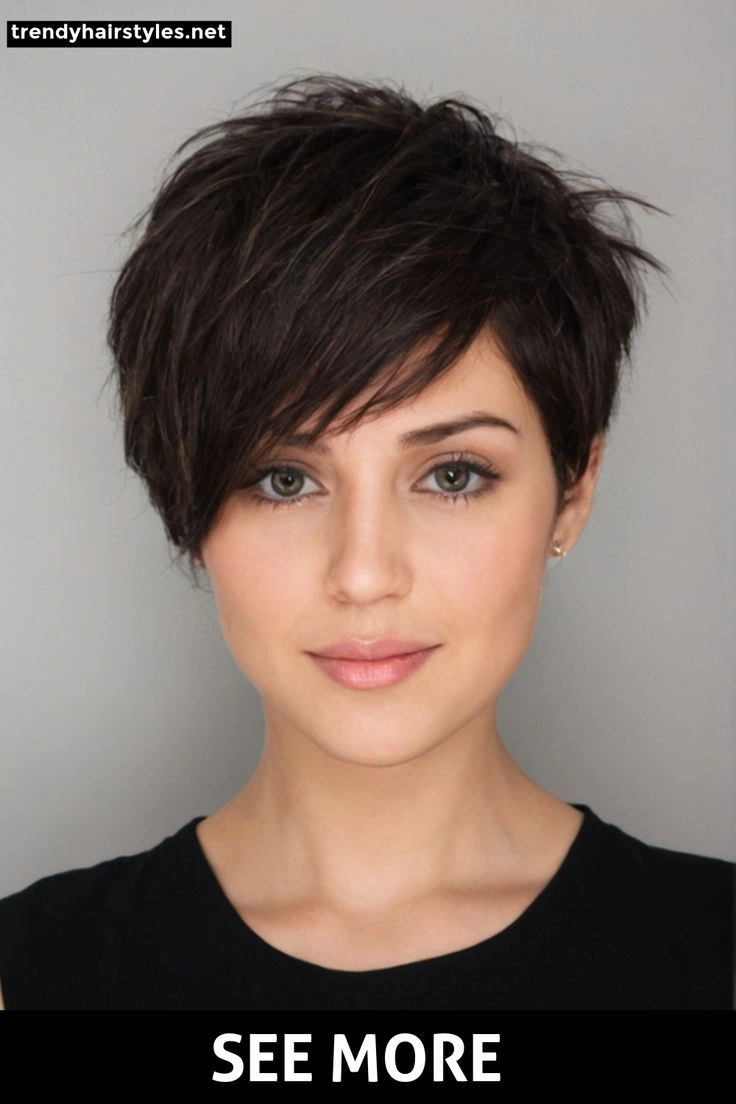
Photo via Instagram: Instagram
Compared with the longer-front pixie earlier in the collection, this cut distributes its interest more evenly through the crown. The sides and nape remain short, but the upper section has piecey definition and the fringe creates a diagonal line across the front. For winter haircuts, that difference shows how two compact pixies can feel distinct when texture and front direction are placed differently.
The textured crown is the feature that separates this pixie from a smoother cropped shape. Its side-swept fringe adds direction, while the short back and sides keep the overall silhouette compact.
Rounded Silver Stacked Bob with Fuller Back
This short silver bob is shaped by fullness at the back rather than by a level line all around. The nape area appears shorter and stacked, while the rear silhouette rounds outward before the front edge extends longer in profile. That placement makes the haircut feel lifted at the back and more compact underneath than a simple blunt bob.
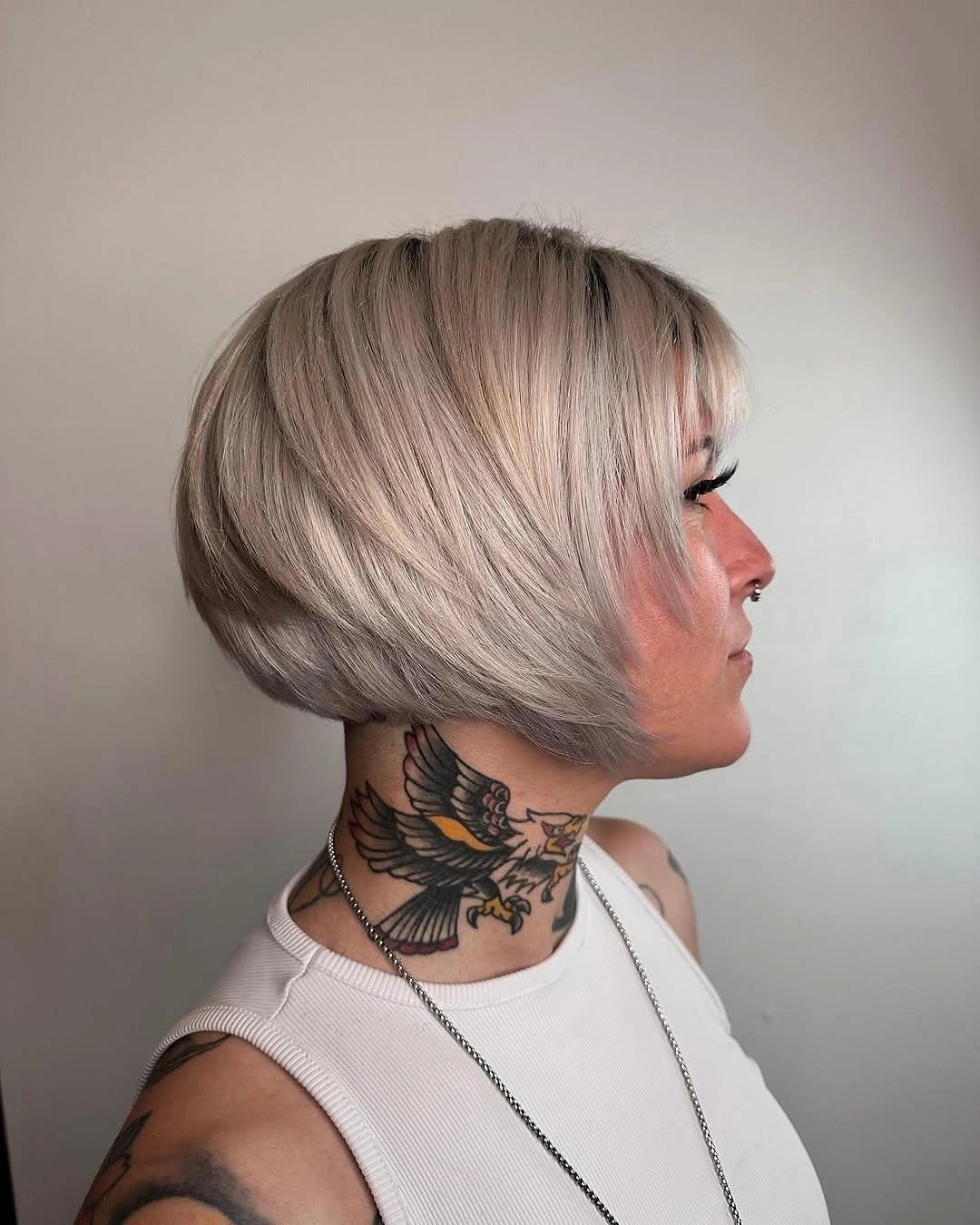
Photo via Instagram: Instagram
The profile view helps show the change from the shorter nape to the longer front edge. The rounded rear section carries visible volume, while the silver surface keeps the outline clean enough to follow. Compared with the level silver bob earlier in the article, this reference demonstrates how stacking changes the balance of a short haircut even when both shapes use a smooth finish.
Volume is concentrated at the back, which is the key difference from a blunt bob. The shorter nape and longer front edge create a compact stacked silhouette with a rounded rear profile.
Sweeping Layers Shape This Medium Blonde Cut
This medium blonde cut is built around layered movement rather than a single clean perimeter. A broad front section sweeps across the face, while shorter pieces step down along the sides before meeting the shoulder-area lengths. Some ends turn outward and others curve under, giving the lower shape a varied, directional finish.
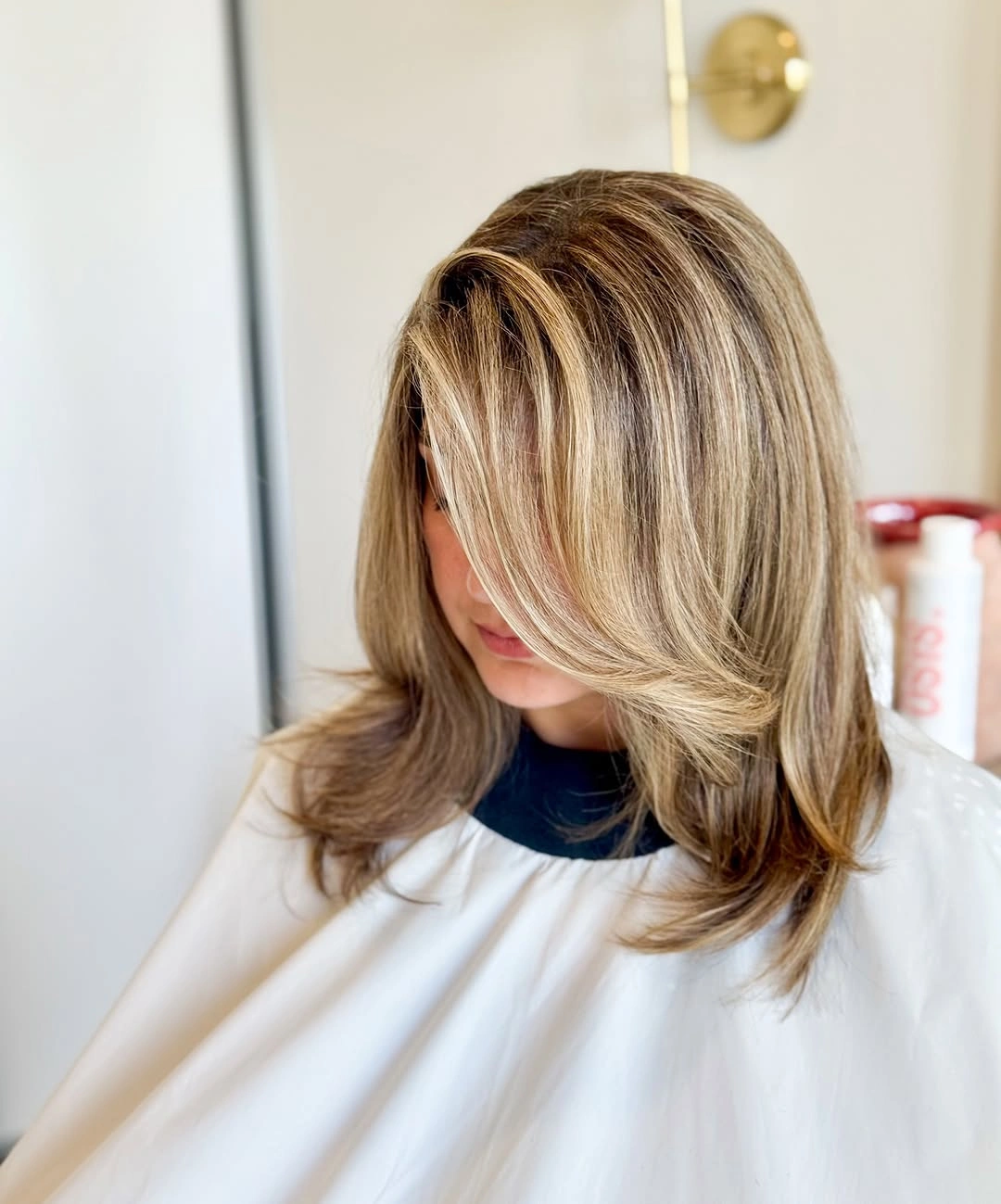
Photo via Instagram: Instagram
What stands out most is the way the front sweep and shorter face-framing layers guide the eye into the rest of the cut. The lower lengths stay substantial, but the changing end direction keeps them from reading as one solid block. That contrast makes the haircut a useful middle ground between a smooth lob and a more fragmented shag.
The mixed end direction gives this haircut movement without breaking the silhouette into sharply separated pieces. Its broad front sweep and shorter surrounding layers create a clear sense of structure while preserving the medium overall length.