Choosing a new cut becomes much easier once length stops being the whole decision. October haircut ideas 2026 are worth filtering through the outline you want to recognize on an ordinary day: how the hair sits after movement, where it feels light or substantial, and whether the front still feels like you. A strong shape should support that everyday impression, not depend on a single carefully arranged moment to make sense.
Start by deciding what you most want the cut to change – the way the hair frames you, the amount of visual weight it carries, or the time it asks from your morning. Those are different goals, and treating them as separate prevents an appealing detail from becoming a poor fit for your routine. The most satisfying choice usually has a clear line when left simple, then offers extra character when you decide to give it more attention.
Rounded Chestnut Lengths With Soft Lower Waves
Medium-long chestnut hair takes on a gentle rounded shape here, with loose waves beginning through the lower half and curved ends that keep the back from falling as one solid curtain. The upper area stays relatively calm, so the softened movement near the bottom is easy to notice. That contrast makes the cut a thoughtful option when you want a little more shape without giving up the continuity of a longer length.
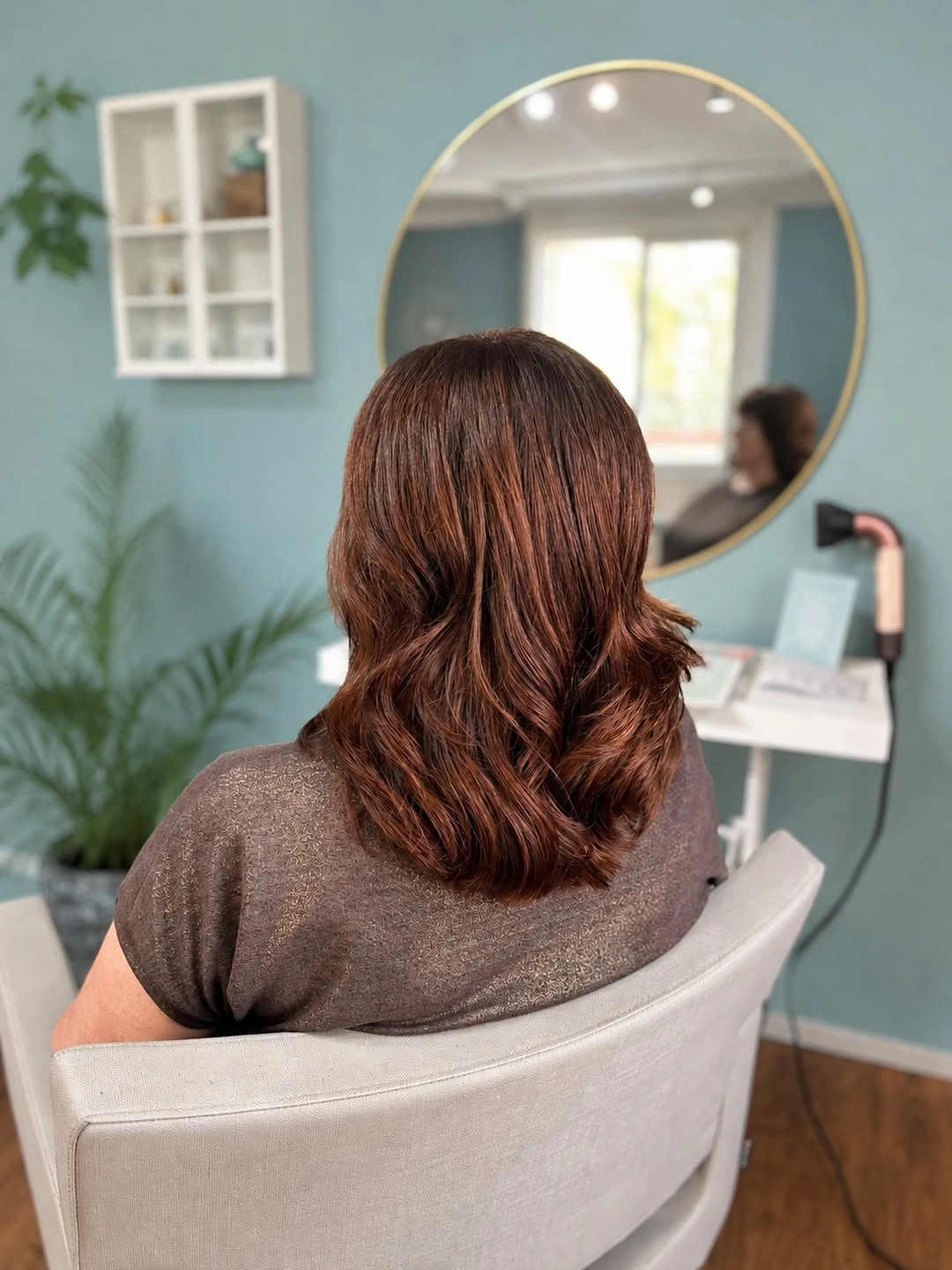
The key idea is not the wave alone, but its placement. Keeping the root and crown less busy lets the lower bends look intentional instead of fluffy, and a rounded end line stops the texture from becoming ragged. If your hair is usually styled straight, even a modest curve through the last few inches can make a similar cut feel more considered while preserving its relaxed scale.
There is a practical tradeoff to that softness: the outline depends on the ends looking cared for, because they do much of the visual work. A straighter finish would emphasize the rounded perimeter more strongly, while broader waves would make it appear softer and less exact. That flexibility makes this a useful reference for someone who likes one cut to move between polished and more casual styling.
Long Chestnut Curls With Quiet Layer Definition
Large polished curls gather through the lower lengths of this long chestnut style, separating the hair into broad sections without breaking its overall fullness. The upper lengths remain smooth and the layers are subtle, which keeps the finish from looking overly stepped. It is a good reminder that long hair can gain dimension from restrained shaping, especially when the curl pattern is allowed to define where one section ends and the next begins.
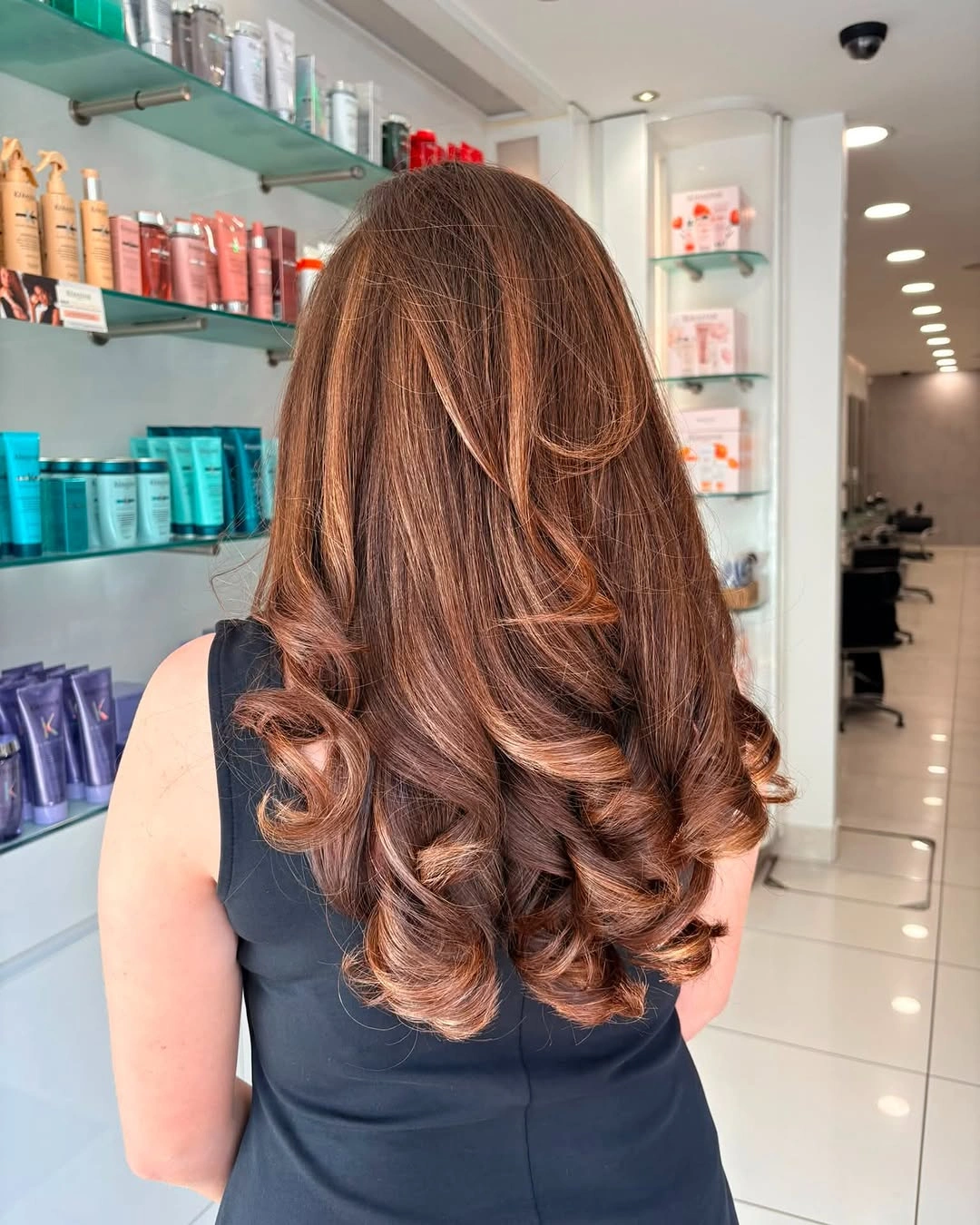
For October haircuts that retain a familiar long silhouette, this approach gives the ends a clearer job than simply hanging straight. Ask for layers that stay long enough to support broad bends rather than short pieces that interrupt the line. The resulting shape can look calm when brushed out, yet it still has enough separation to avoid the flat, single-length effect that sometimes makes long brown hair feel visually dense.
A deep side part would send more of those curls to one shoulder and create a more dramatic front view, while a central part would keep the effect symmetrical. The limitation is that very tight curls would change the scale of the outline, so this reference works best for someone drawn to open, substantial movement. The rich chestnut tone also helps the bends stay visible without needing strong contrast or bright accent pieces.
Vivid Streaks Through a Wavy Half-Up Length
Very long dark hair becomes far more graphic once orange, coral, pink, and purple streaks appear through the loose wavy lengths. A small twisted half-up detail at the crown exposes different layers of color while leaving most of the length free. The combination works because the dark base remains dominant, giving the bright pieces a defined place to appear instead of turning the entire silhouette into one undifferentiated field of color.
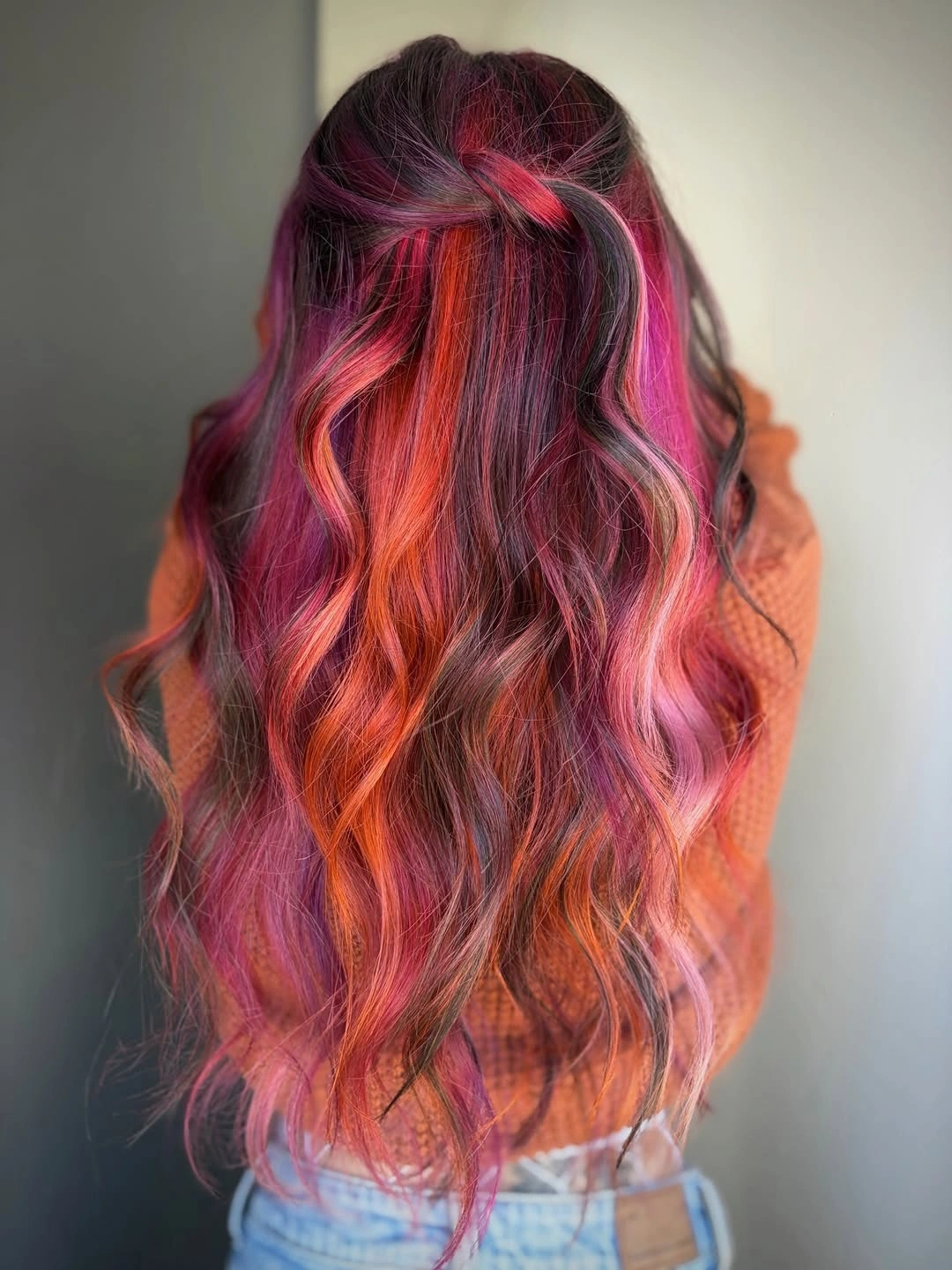
The cut itself stays long and flowing, but the waves make each bright section easier to read as it turns through the length. If you are considering color alongside a haircut October refresh, keep the face area and lower layers in mind rather than relying only on a central part. A few visible accents can feel more integrated when the cut has enough movement to reveal and conceal them naturally.
Because several shades are present, the shape benefits from a simple outline and an uncluttered crown. Adding a heavy fringe or many short layers could make the color story feel crowded, whereas long loose layers give it room to breathe. The half-up twist is also a useful styling detail for days when you want the varied tones to show, while a fully down style would make the same cut read darker and quieter.
Broad Waves Across an Inky Long Perimeter
Long near-black hair can look especially substantial when broad waves run from the mid-lengths into rounded ends, as they do here. The waves are wide rather than tightly patterned, so they add separation without making the length look shortened. That matters with a darker shade, where a completely straight surface can sometimes hide the cut’s outer line and make the whole silhouette read as heavier than it really is.
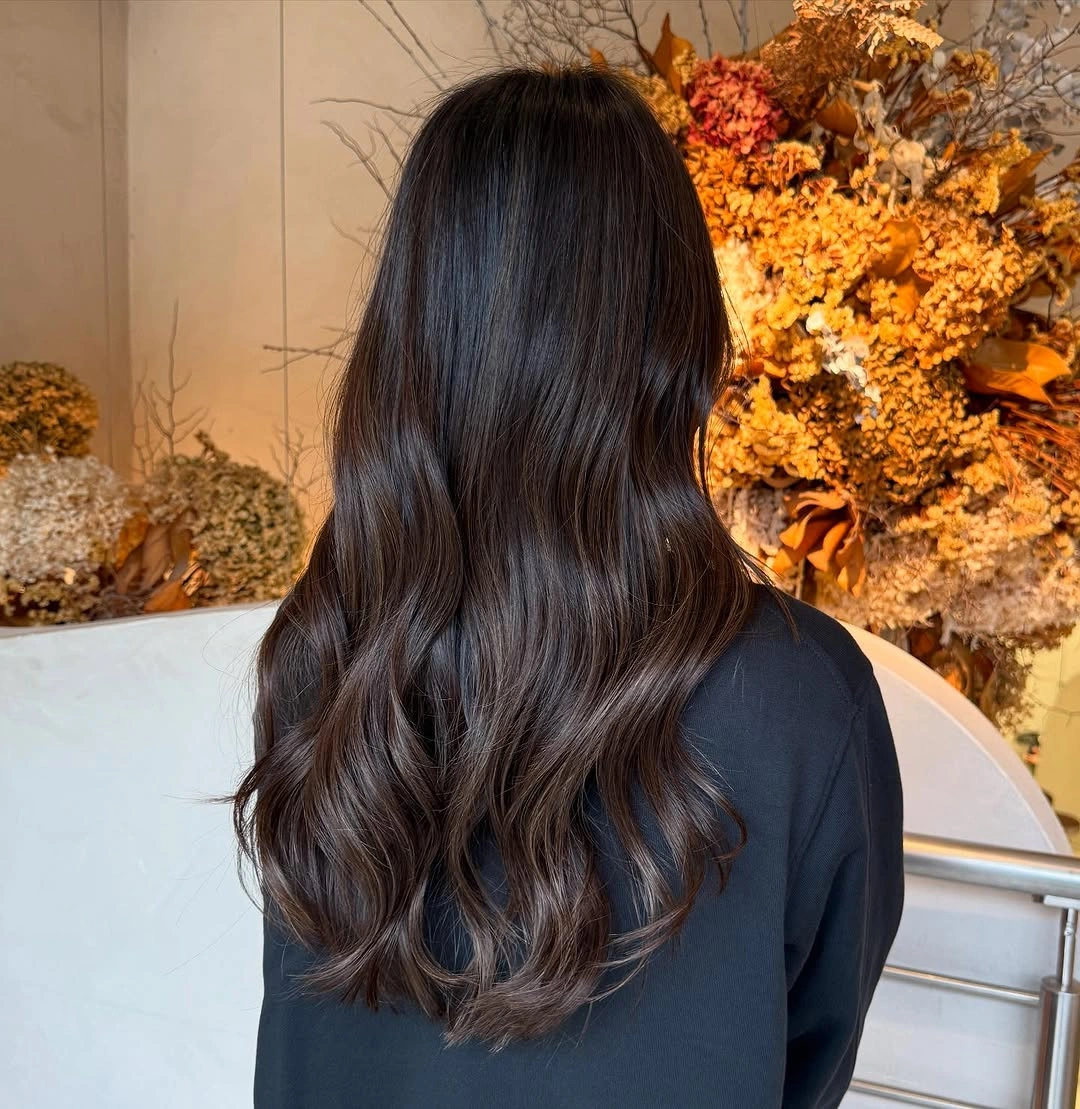
There is a quiet strength in keeping the top smooth and allowing the movement to develop lower down. It leaves the crown clean, then gives the ends enough change of direction to catch the eye. For anyone who likes long dark hair but wants more visual depth, a similar approach can be easier to live with than highly layered styling because the basic shape remains understandable even after the waves relax.
Consider the proportion before copying it exactly. More volume at the sides would create a softer, fuller outline, while a flatter top and gentler bends would keep it sleek. The main upkeep point is preserving the rounded lower edge; if the ends become too thinned out, the waves will lose the dense finish that makes this particular version feel controlled rather than merely long.
Copper Side Fringe With Lifted Curled Ends
A generous side-swept fringe gives this medium-long copper style its immediate direction, then the curled ends repeat that lift through the rest of the length. Volume at the crown keeps the fringe from sitting separately from the body of the hair, creating one continuous sweeping outline. The warm color makes each curve visible, but it is the relationship between the asymmetrical front and the flipped lower edges that gives the haircut its personality.
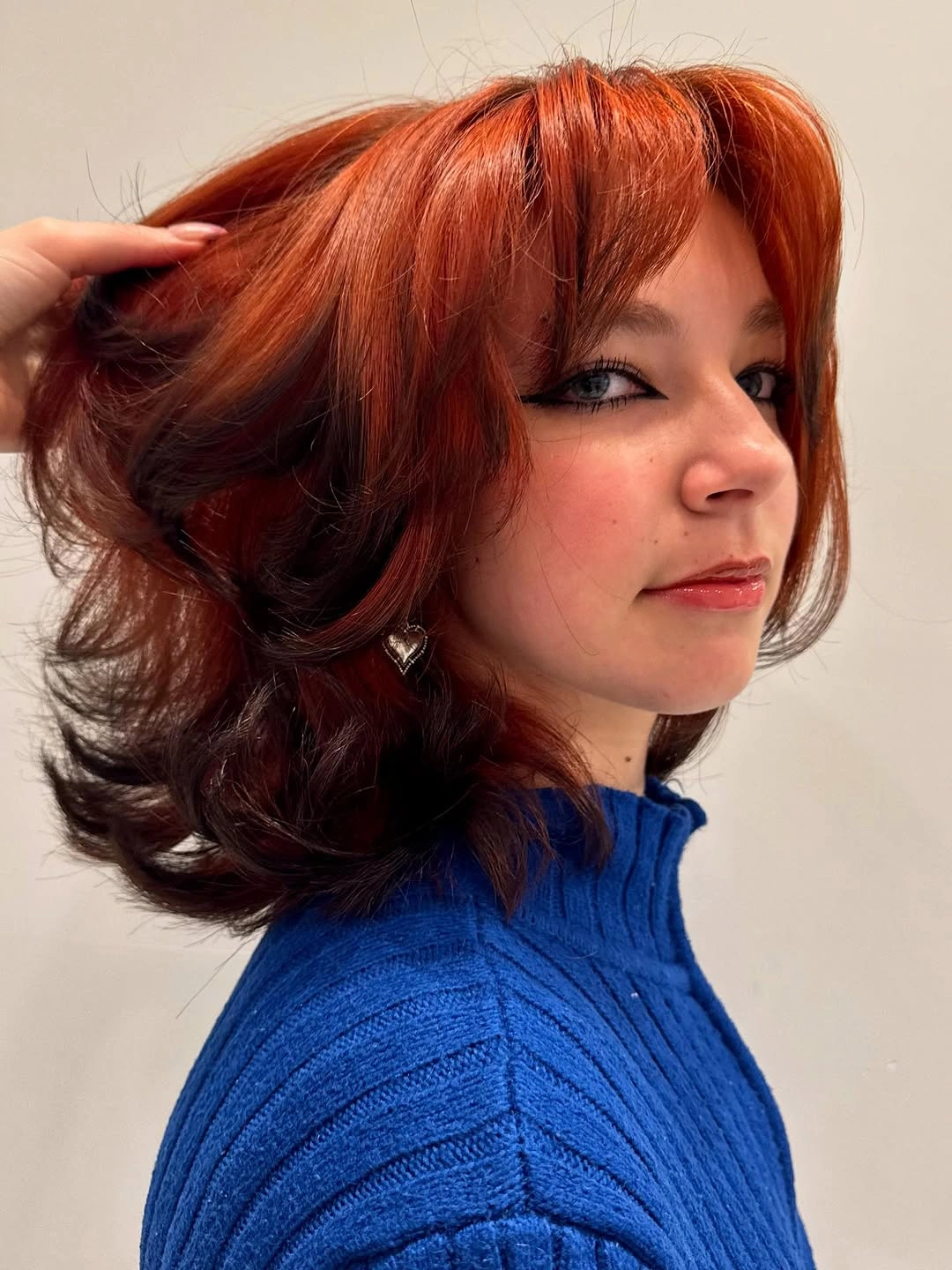
Haircuts to try in October often benefit from one focal point, and the side fringe provides it without requiring a blunt straight-across line. You could keep the rest of the hair smoother for a more polished interpretation, or brush the ends into a wider curve for a softer, more relaxed finish. Either way, the fringe needs enough length to connect with the surrounding layers rather than appearing like a separate short panel.
This shape asks for some attention at the front, since the whole composition changes if the fringe falls in the opposite direction or loses its lift. That is not a drawback for someone who enjoys styling, but it is worth considering before choosing it. A center part would produce a completely different mood, whereas the deep sweep keeps the copper length lively and gives the face area a clear sense of movement.
Pale Front Section on Warm Layered Lengths
Long warm light-brown hair is given a fresh focal point by a noticeably paler section near the front, while the rest of the length moves through blended layers and softly curled ends. The lighter area frames the face without appearing disconnected from the brown base, because the surrounding lengths keep a warm, related tone. This is a useful example of how a haircut and color placement can support one another without competing for attention.
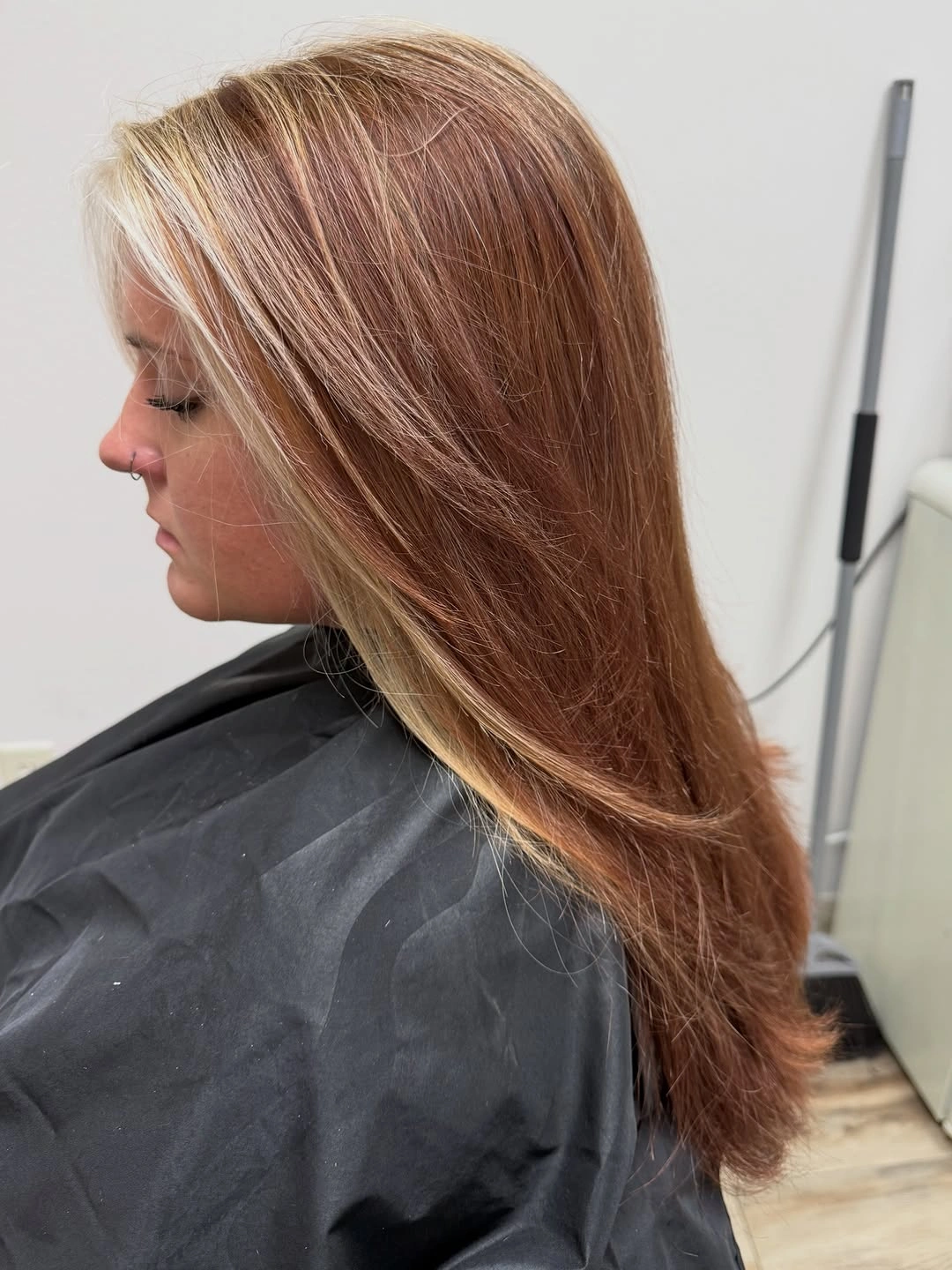
The long layers matter here because they carry the bright front area into the rest of the silhouette. When the hair shifts, the pale section has a path through the length instead of stopping abruptly around the cheeks. If you prefer a subtler version, make the contrast closer to beige or caramel; if you want a stronger front frame, retain the same long layering so the transition still feels connected.
Softly curled ends keep the finish approachable and prevent the front brightness from becoming the only visible feature. Straightening everything would make the contrast sharper, while more pronounced waves would diffuse it across the length. The idea is best for someone comfortable with a visible front detail, because that lighter panel will continue to set the mood even when the rest of the cut is worn simply.
Deep Side Part and Swooping Face Layers
Long chestnut hair gains an almost sculpted flow from a deep side part, broad swooping face layers, and rounded ends that resemble a soft blowout. The part creates an asymmetrical start, then the front sections travel outward and back into the length instead of cutting sharply across it. That sequence makes the hair look full without depending on very short layers or a dense fringe at the forehead.
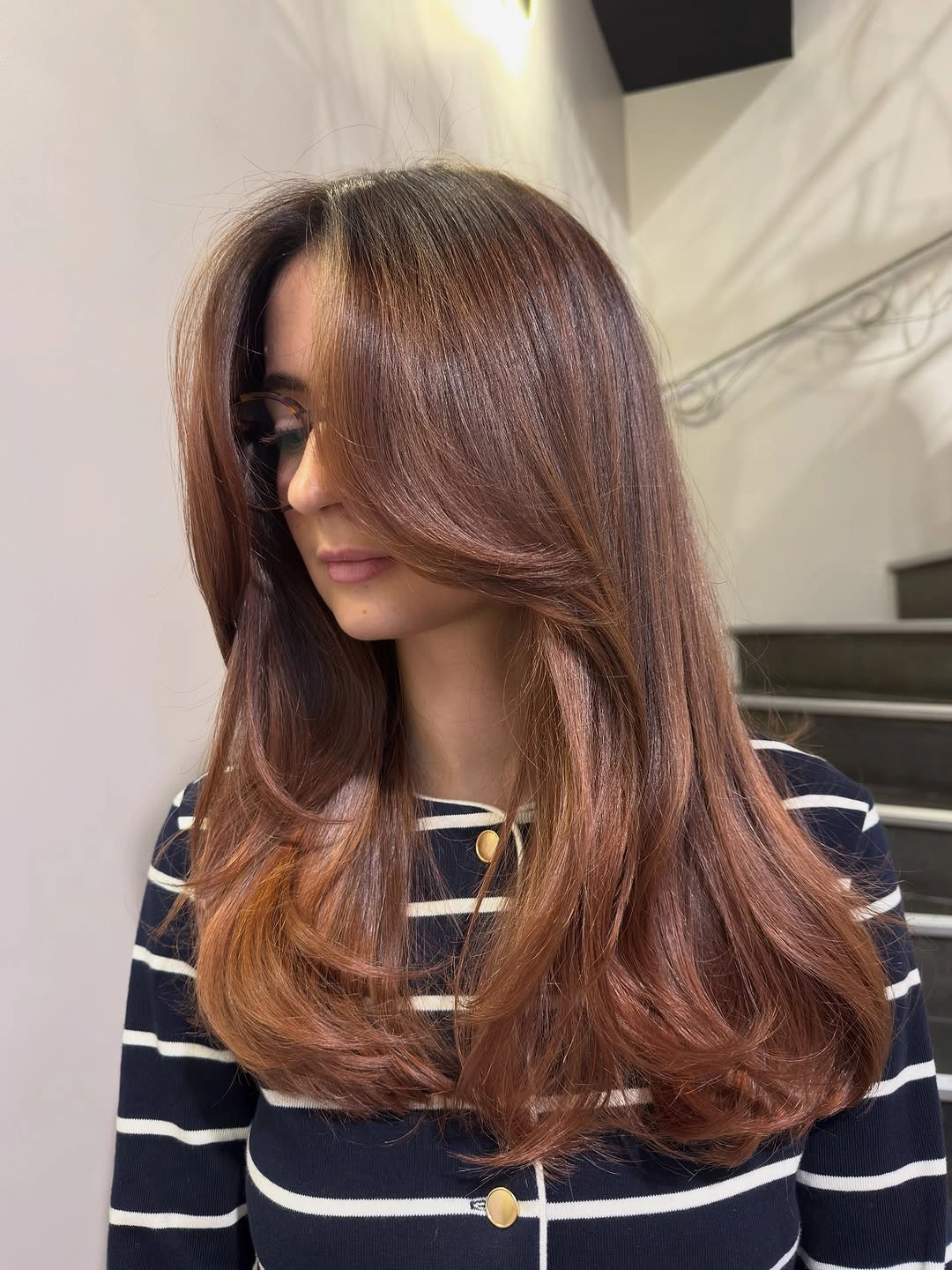
A side part is doing more than changing where the hair is divided; it directs the eye through the layers and makes the front feel more expansive. For a haircut October option with a familiar long length, this is a good middle ground between a blunt cut and a heavily feathered one. The movement can be styled softly for everyday wear, then exaggerated with a rounder finish when you want the face-framing pieces to stand out.
The broader the front sweep, the more the style depends on a smooth finish through the top and sides. Very textured waves could still work, but they would shift the emphasis from the layers to the overall volume. Someone who frequently switches partings may find a more centered version easier, while a committed deep side part will preserve the elegant, directional outline that makes this cut feel distinct.
Defined Waves That Open Up Extra-Long Dark Hair
Very long near-black hair is broken into clear, defined waves here, with faint warmer reflections appearing only where the bends turn toward the light. The part is not the story; the length is, and the wave pattern gives it a readable rhythm from top to bottom. Instead of letting the darker color flatten the silhouette, the alternating curves create enough surface change to show how much hair is actually present.
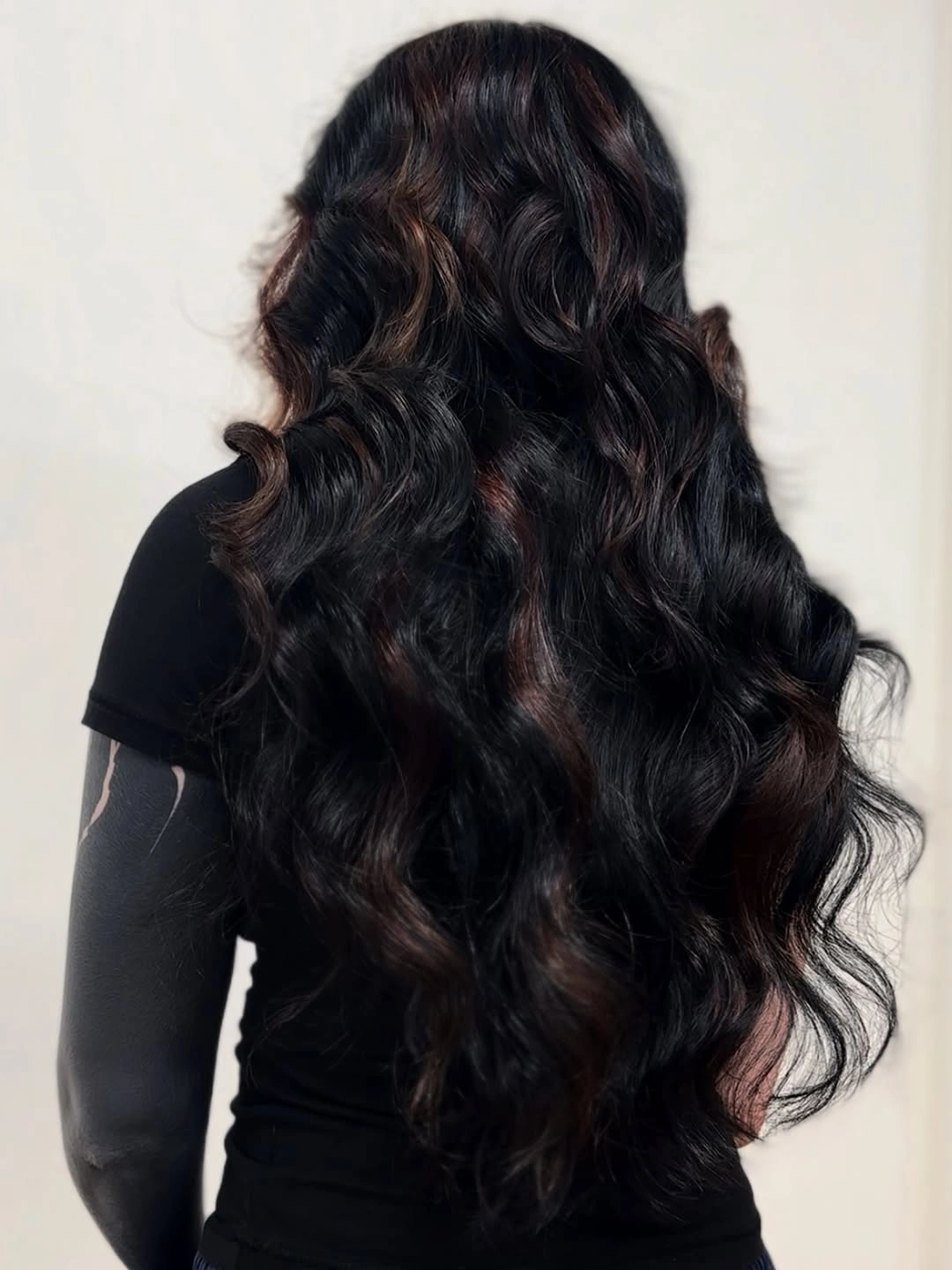
For hair that already has substantial length, this kind of movement can be more effective than adding many visible layers. The outer edge stays generous, while the wave pattern introduces separation inside it. You might choose looser bends for a softer outline or a more polished wave for stronger definition, but both versions benefit from keeping the crown comparatively smooth so the length does not expand in every direction at once.
Dark hair rewards this approach because the curves bring dimension without needing an obvious color shift. It also asks for patience when styling, since uneven wave size would be easier to notice across such a large canvas. If daily styling is not appealing, a gentler natural-looking bend can still preserve the idea. What matters is avoiding completely flat ends, which would remove the layered sense of depth created by the visible curves.
Dense Copper Curls Lifted by a Crown Bow
Long warm copper curls gather into a full, rounded mass, then a large patterned bow lifts part of the hair at the crown. The accessory does not hide the texture below it; instead, it gives the dense curls a clear starting point and lets the lower lengths remain visible. That balance keeps the style playful while preserving the generous volume that makes the copper color feel especially rich and dimensional.
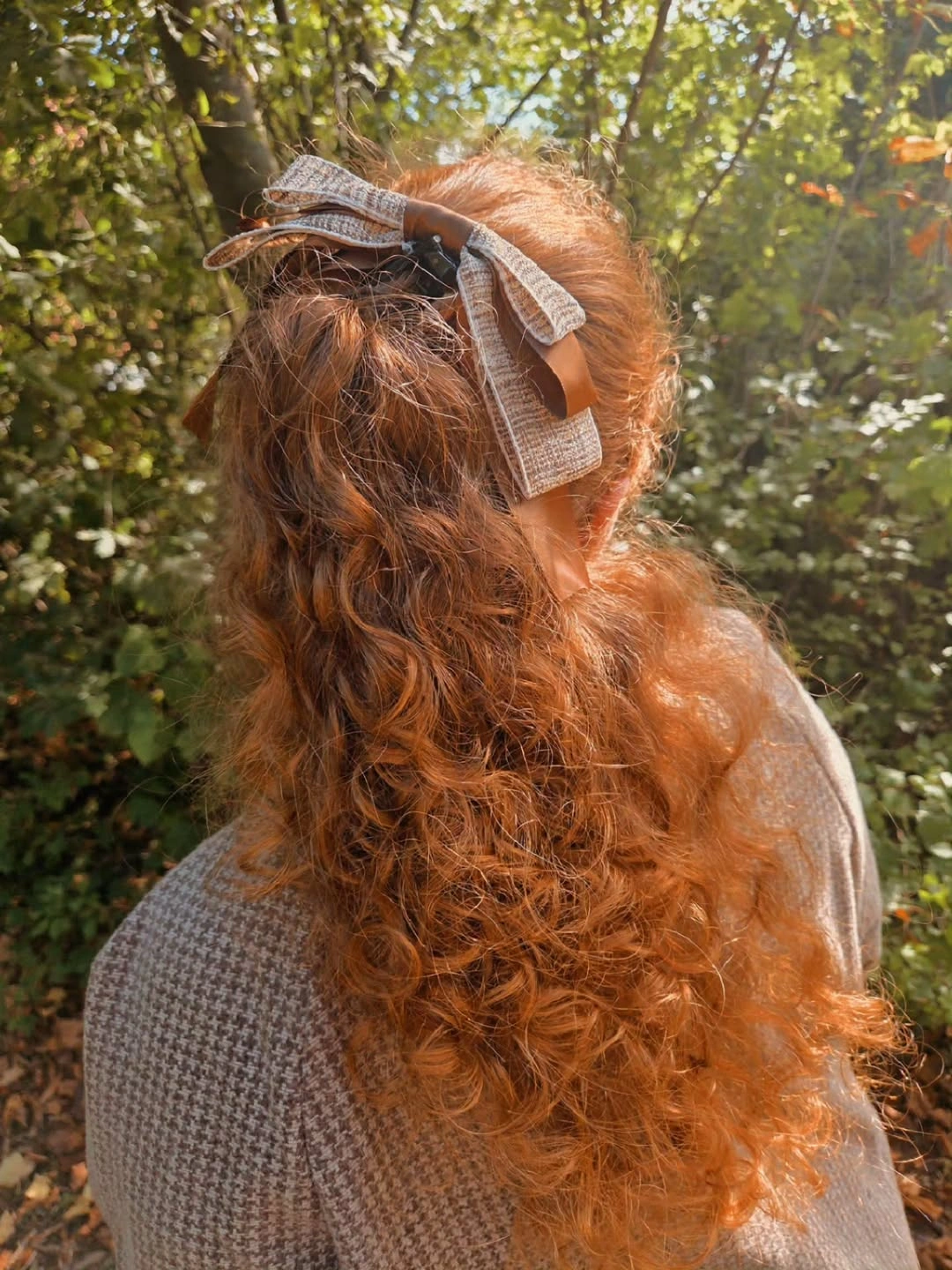
The cut works with the bow because the curls have enough length and fullness to continue below the lifted section. A smaller clip would make the effect more discreet, while a larger accessory creates a deliberate focal point at the crown. If you enjoy changing your look without altering the cut itself, a half-up detail like this offers a simple way to shift the vertical proportion and expose more of the neckline.
There is no need to force the curls into a perfectly even outline for this to feel put together. Their varied turns give the hair its character, and the bow simply provides an organizing point. A flatter top would make the accessory look more formal, whereas the current fullness keeps it relaxed. For long textured hair, that is a useful lesson: one well-placed detail can add direction without asking the entire length to become smoother or more controlled.
Shoulder Waves With Beige Face-Framing Ribbons
Shoulder-length waves make the beige-blonde ribbons at the front easy to read against a darker root, especially because the ends have a slightly textured, broken-up finish. The light pieces do not sit as a narrow stripe; they travel into the waves and connect with the rest of the brown-beige blend. That placement gives a medium cut a little brightness while the darker root keeps the overall result grounded and less uniformly light.
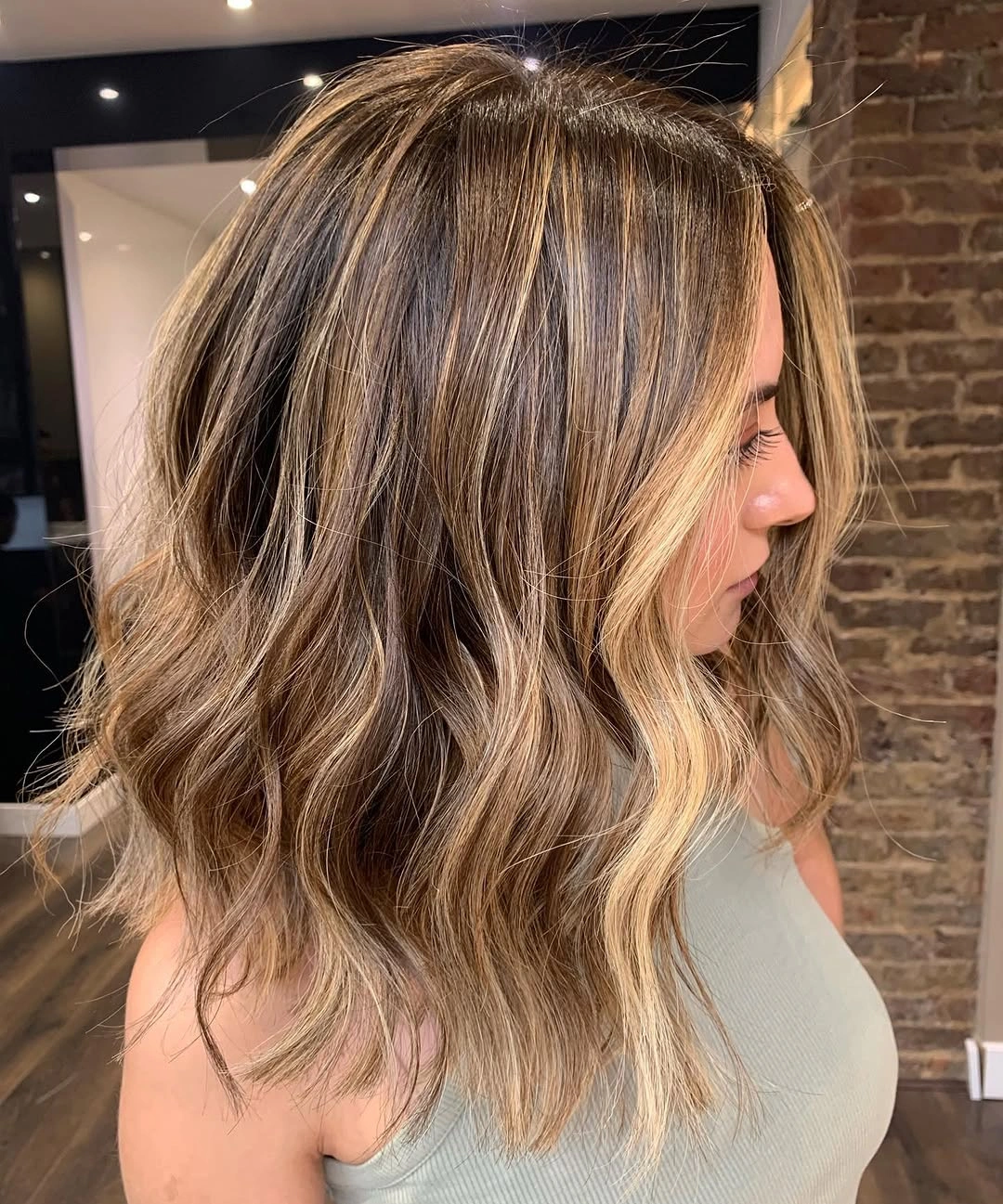
The strength of this length is that it puts the face-framing detail close to the focal area without requiring very long hair for contrast. A straighter version would make the ribbons look more graphic, while a looser wave would spread the pale tones more softly through the sides. If you are considering a change from one-length medium hair, textured ends can be enough to make the cut feel lighter without sacrificing its practical shoulder-skimming shape.
Because the root remains visibly darker, the lighter areas benefit from a little movement to avoid reading as isolated bands. That means the look may feel different when air-dried versus smoothed, which is worth discussing before committing to the contrast. The same cut could also be done in closer tones for a quieter result. Its appeal lies in the balanced combination of an easy length, visible front detail, and an intentionally less rigid perimeter.
Airy Fringe Around a Short Blonde Bob
A short light-blonde bob curves under near the jaw and holds rounded volume at the sides, while a full but airy fringe softens the front. Those details work together to make the shape feel cushioned rather than severe. The ends are tucked inward enough to define the bob, yet the fringe prevents the curved perimeter from becoming too formal by introducing a lighter, more open texture across the forehead.
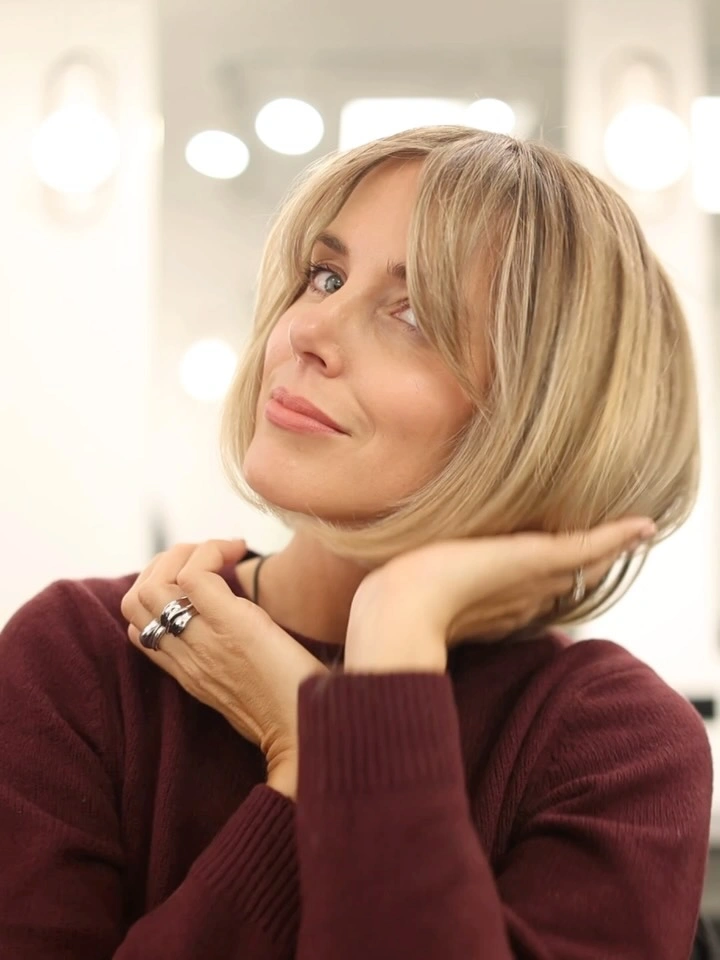
If a compact shape appeals to you, compare the softness here with the straighter lines in these fall bob haircut ideas. The rounded sides give this version a gentler profile, and the fringe becomes part of the shape rather than an added afterthought. You could make the bang section more separated for a pieceier finish or keep it lightly brushed through for the same cloudlike fullness.
A bob this short asks you to decide how much daily control you want around the front. A strong fringe will show its direction quickly if it dries unevenly, while a lighter fringe is more forgiving but may not produce the same frame. The payoff is immediate structure: the tucked ends, side volume, and front softness all work at a scale where the entire haircut can be appreciated in one glance.
Blunt Shoulder-Length Cut With a Dense End Line
Straight medium-brown hair falls into a blunt shoulder-length line with remarkably even ends and almost no visible layering. That clean perimeter creates a quiet density that is very different from the wavy and feathered cuts around it. Because the back is simple, the length itself becomes the statement: the hair appears fuller through the bottom, and the absence of broken-up layers gives the cut a deliberate, composed presence.
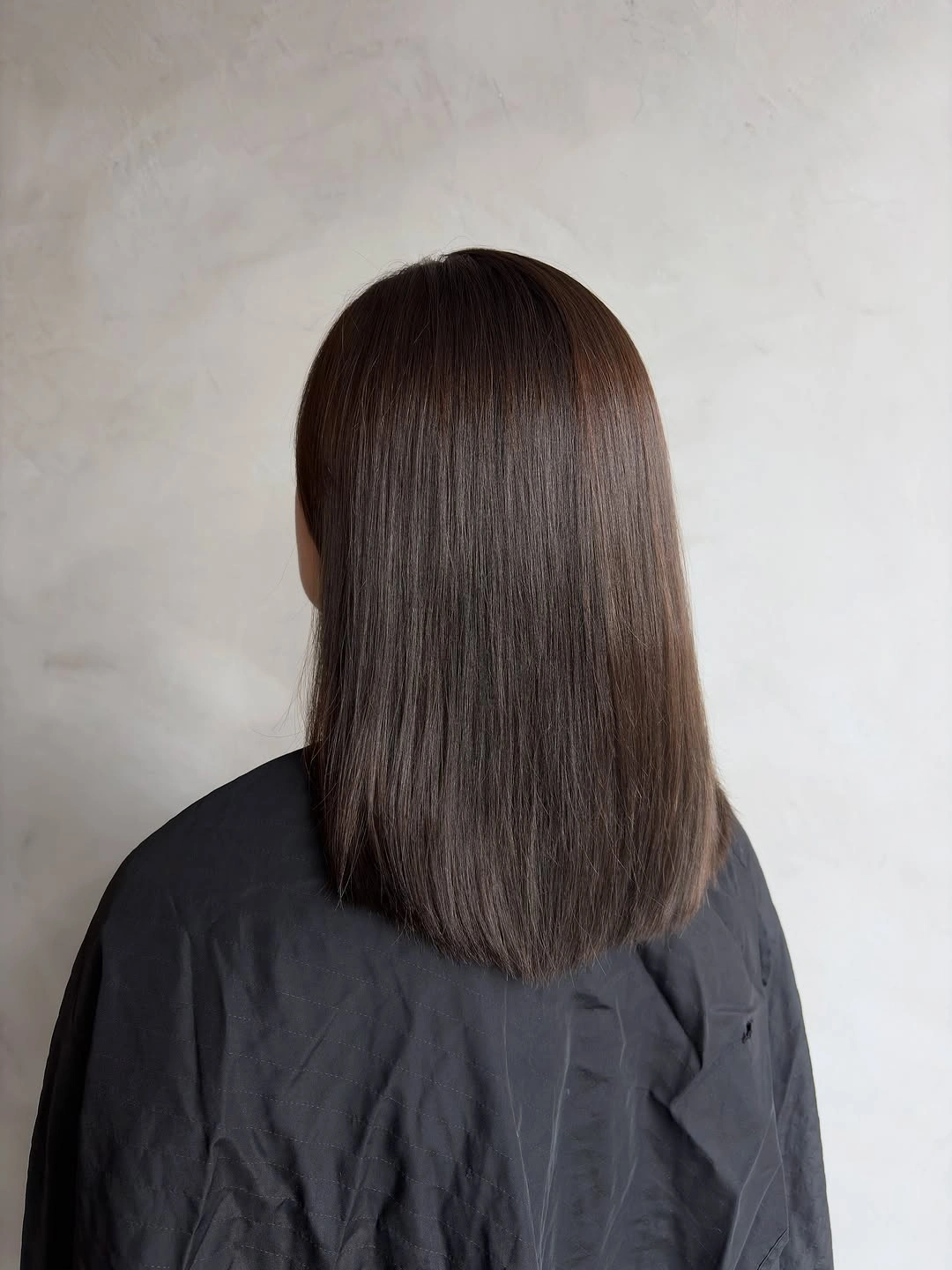
A blunt line is often most satisfying when you want the perimeter to do all the work. It can make medium lengths feel fuller visually, particularly when the ends are kept healthy-looking and close together. Adding a slight inward bend would retain the density while softening the outline, but strong waves or aggressive thinning would change the point of the cut and remove the calm precision that makes this version compelling.
The tradeoff is honesty: a blunt finish exposes irregular ends more readily than a layered shape does. Regular attention to the outline matters if you want to preserve the same clean effect. Still, its simplicity is useful for someone who prefers hair that looks intentional without a lot of visible styling steps. A central part would reinforce the symmetry, while a side part could add a small touch of movement without disrupting the strong bottom edge.
Middle-Part Waves With Bright Front Pieces
Loose large waves, a middle part, and beige face-framing pieces give this long brown haircut a bright open center without losing the depth of its darker lengths. The front layers travel outward from the part and melt into the waves, creating a soft border around the face. Rather than relying on a dramatic perimeter change, the cut uses long internal movement to make the length feel lighter and more spacious at the front.
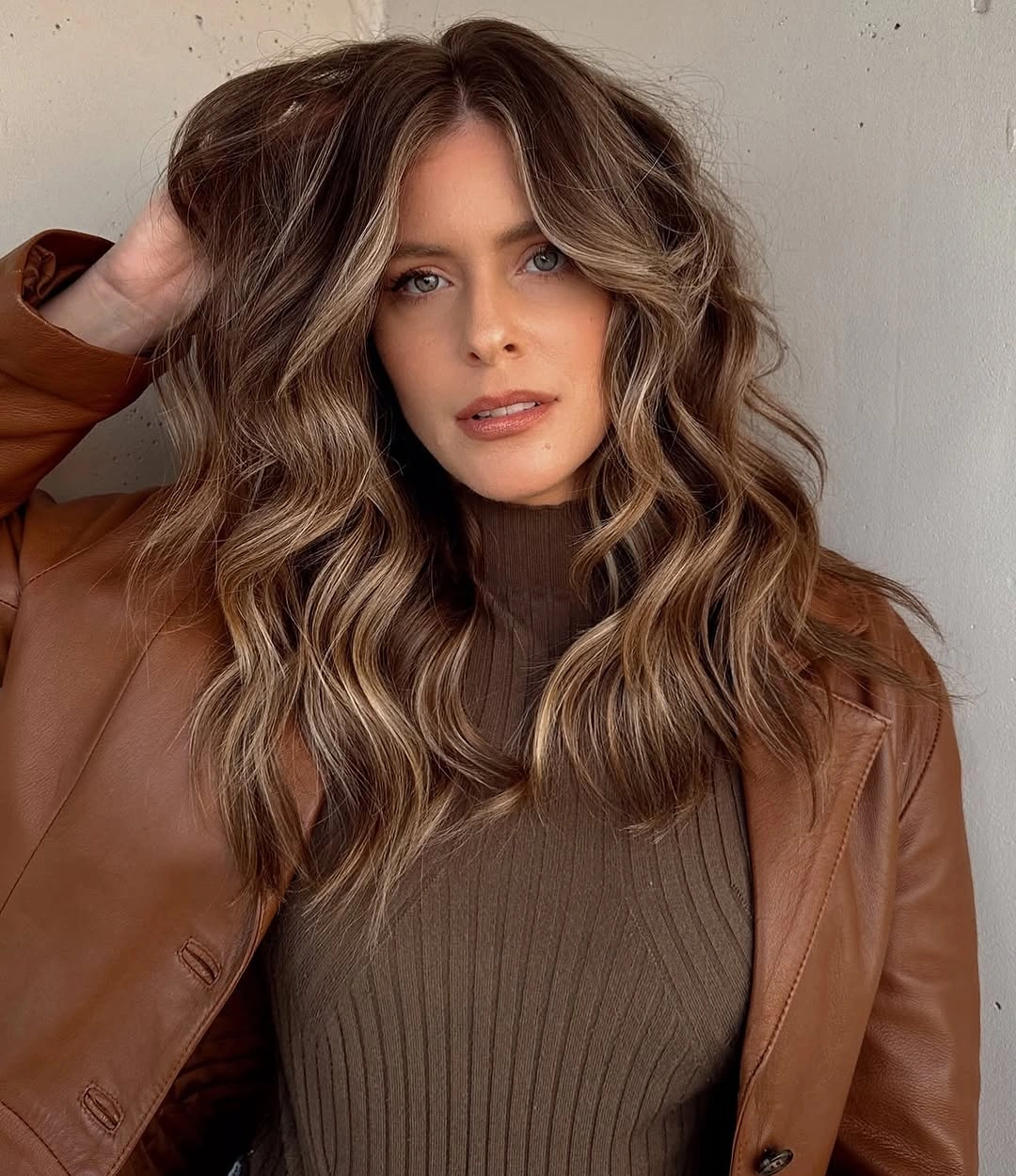
The middle part keeps the lighter pieces balanced, which is helpful if you like symmetry but still want contrast. Long front layers are a smart companion to that choice because they keep the hair from sitting as a fixed wall on either side. You can style the bends away from the face for more openness, or keep them softer and closer together when you want the bright sections to blend more gradually into the brown base.
One limitation of this kind of face frame is that the front becomes the clearest part of the look, so it needs to relate well to the rest of the length. Too much contrast could make the ends feel comparatively flat, while very little contrast would reduce the open effect. The current balance works because the waves carry the lighter tones past the cheeks, making the detail feel like part of the haircut rather than a single isolated color decision.
Precise Dark Brown Bob With Tucked Ends
This dark brown bob follows a smooth angled line from chin toward neck length, then turns inward slightly at the ends to create a compact curved perimeter. The surface is sleek and the outline is precise, so the shape reads before texture or color does. It is a strong choice for someone drawn to a haircut that looks intentional from the side as well as from the front, with very little visual noise around the edges.
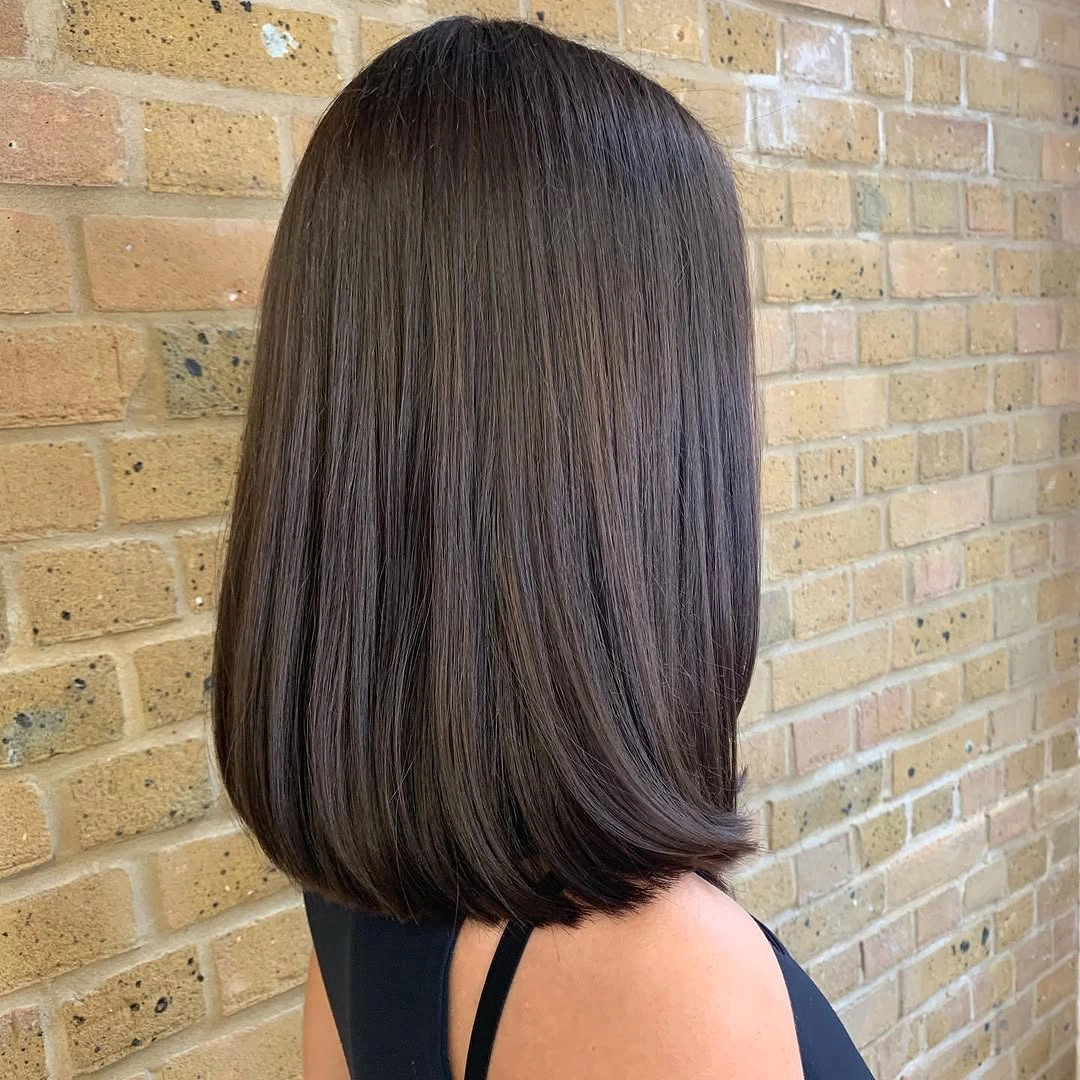
The inward turn is crucial because it keeps the angle from looking too sharp or disconnected. A flatter end would feel more graphic, while a little bend gives the short length a softer landing point near the jaw and neck. For a similar silhouette with more lift at the crown, look through these fall pixie haircut ideas; their shorter proportions offer a distinctly different route to a defined shape.
With such a clean bob, the line will be most visible on days when the hair is smoothed and the ends are directed consistently. That may be a benefit if you enjoy a tidy finish, but it is worth weighing if you prefer a more undone texture. A side part could make the angle feel softer, whereas a centered division would make the geometry more obvious. Either way, the appeal is in the carefully contained outline.
Glossy Copper Lengths in Broad S-Waves
Saturated copper-red lengths move through broad glossy S-waves, creating fullness from the crown all the way to the ends without concealing how long the hair is. The waves are open enough to show large bands of color, and that reflective movement gives the warm shade more visual range than a completely straight finish would. The result feels abundant, yet the silhouette remains continuous because the layers are not cut into sharp, separate pieces.
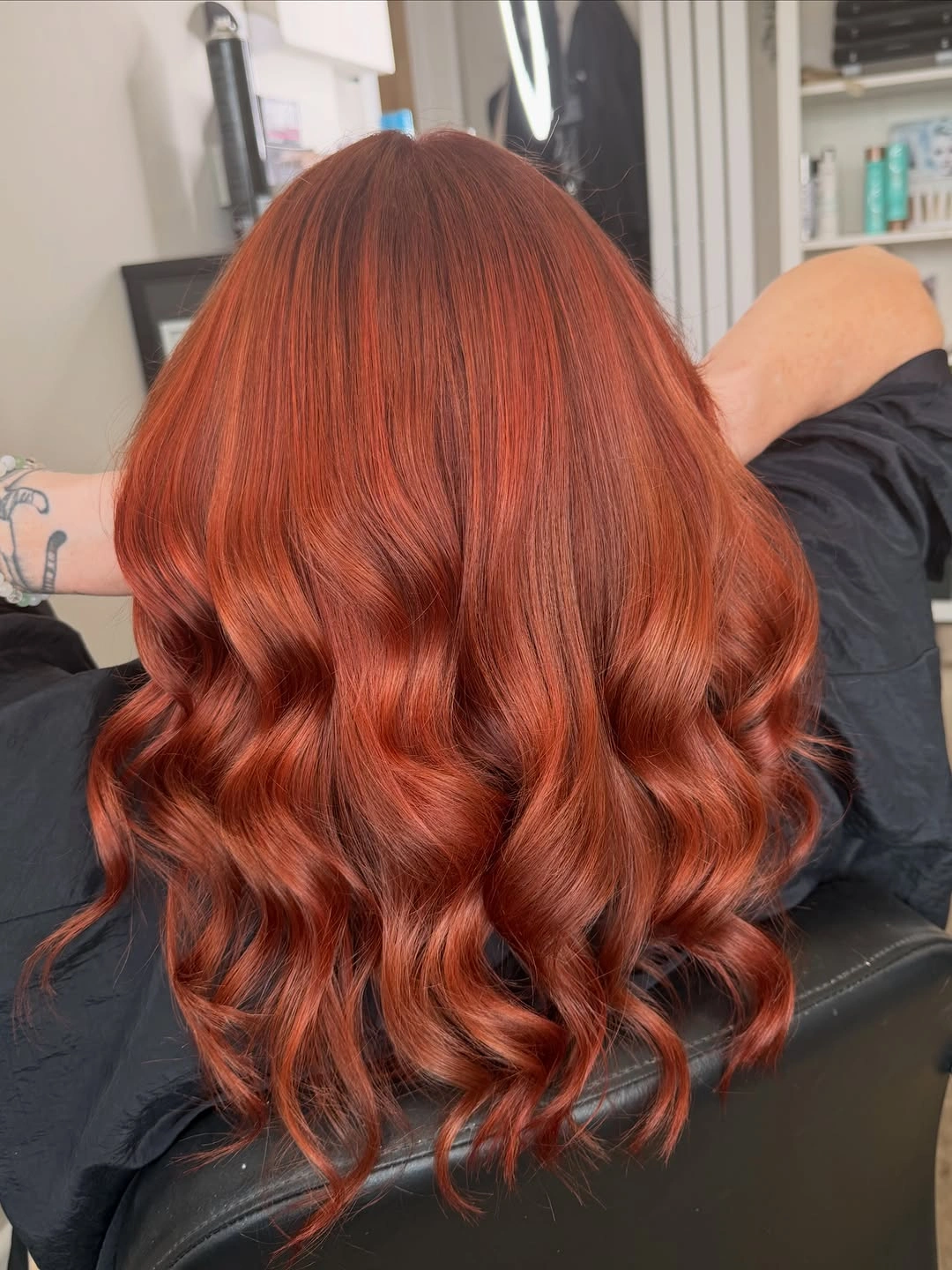
For a long cut, broad S-waves are useful when you want volume that still reads as length rather than width alone. The bends can be brushed larger for a softer look, or kept more defined if you want the copper to show stronger light-and-shadow variation. What should remain constant is the smooth transition between layers, because abrupt short sections would interrupt the expansive wave pattern that makes this version feel so cohesive.
Copper naturally makes the surface movement noticeable, so a simpler cut can carry a lot of presence when styled this way. That also means uneven texture will show more than it might on a matte, very dark shade. A calm crown and generous ends provide the necessary counterweight, allowing the waves to be the main event. It is a fine direction for someone who wants long hair to feel fuller without sacrificing its flowing outline.
Wispy Fringe Softening Long Muted Brown Hair
A straight wispy fringe gives these long muted brown lengths a softer front edge, while lightly layered face pieces and curled ends stop the style from becoming too severe. The fringe is full enough to be visible, but its airy texture allows some space across the forehead. That makes it a gentler alternative to a dense blunt bang, especially when the rest of the hair remains long, smooth, and quietly shaped.
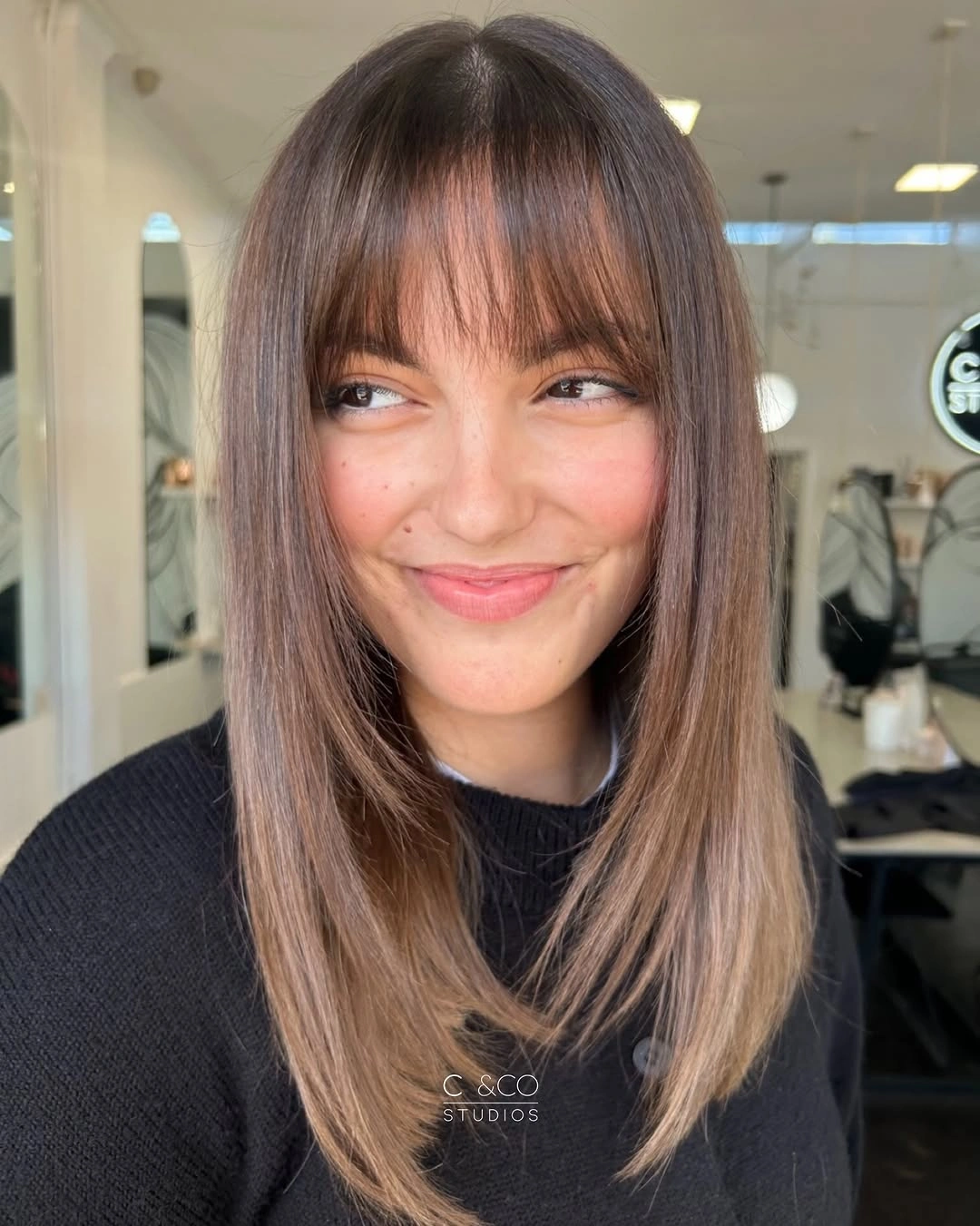
The curved ends are an important counterpoint to the straightness at the crown and fringe. They introduce a small amount of movement at the bottom, which prevents the whole cut from looking rigid. If you want a lower-commitment interpretation, lengthen the fringe slightly and keep the front pieces soft; for a stronger statement, a denser bang would make the contrast with the long lengths more pronounced.
Fringes change the daily rhythm of a cut because the front is always visible, even when the rest is pinned back or worn simply. That can be appealing if you like a recognizable frame, but it is less ideal for someone who often wants a completely open forehead. Here the light, separated texture keeps the commitment feeling more flexible, while the long brown lengths retain enough simplicity to balance the detail at the front.
Textured Short Shag With Orange Front Accents
This short brown shag is all about irregular texture: the crown is uneven and lifted, the sides are cropped close, and a broken fringe is interrupted by bold orange pieces at the front. Nothing about the outline is overly smooth, which is precisely why the small hits of color feel so effective. The haircut creates many short surfaces for the brighter accents to appear against, giving the whole style a lively, compact energy.
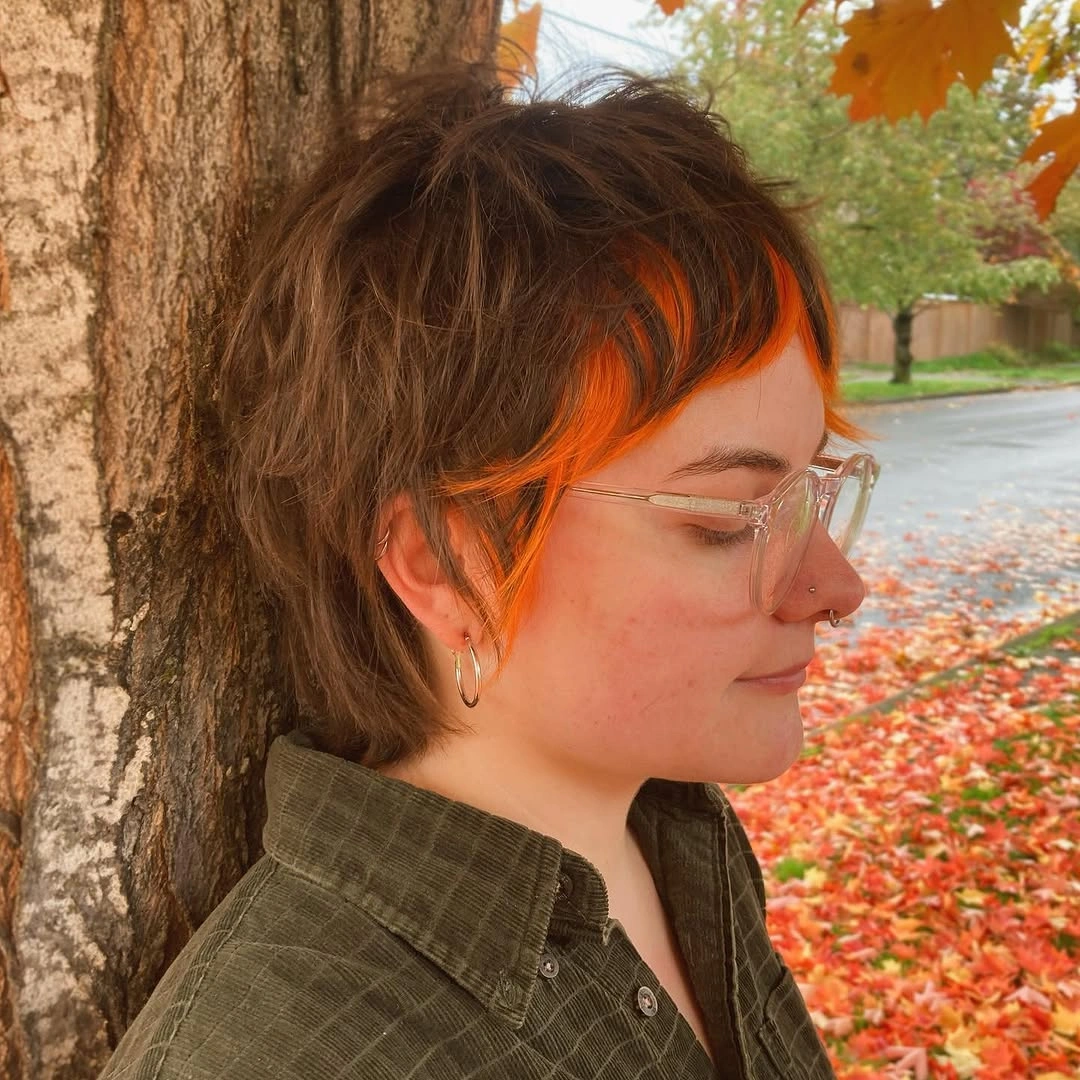
When you want a shorter change but not a rigid bob, this kind of cut offers a more playful direction. The cropped sides and textured crown can be adapted to feel tidier or more undone depending on how much separation you prefer. For a shoulder-skimming alternative with a calmer outline, these fall medium haircut ideas show how movement can be kept at a larger, less cropped scale.
The orange front pieces are small, but they need the surrounding texture to remain visible or they may feel disconnected. A smoother finish would shift the style toward graphic contrast, while the current piecey shape keeps it expressive and less formal. It is worth remembering that short textured cuts reveal their growing edges sooner than long layers do. The reward is a silhouette that looks intentionally individual even without a large amount of length.
Rounded Curls Balanced Around a Center Part
Tightly defined medium-long curls form a rounded shape around a center part, with small golden-brown reflective pieces catching through the surface. The volume is distributed to both sides rather than concentrated only at the ends, so the cut feels balanced from the crown outward. That symmetry gives the curls a contained, considered silhouette while the varied ringlets prevent it from becoming too uniform or overly polished.
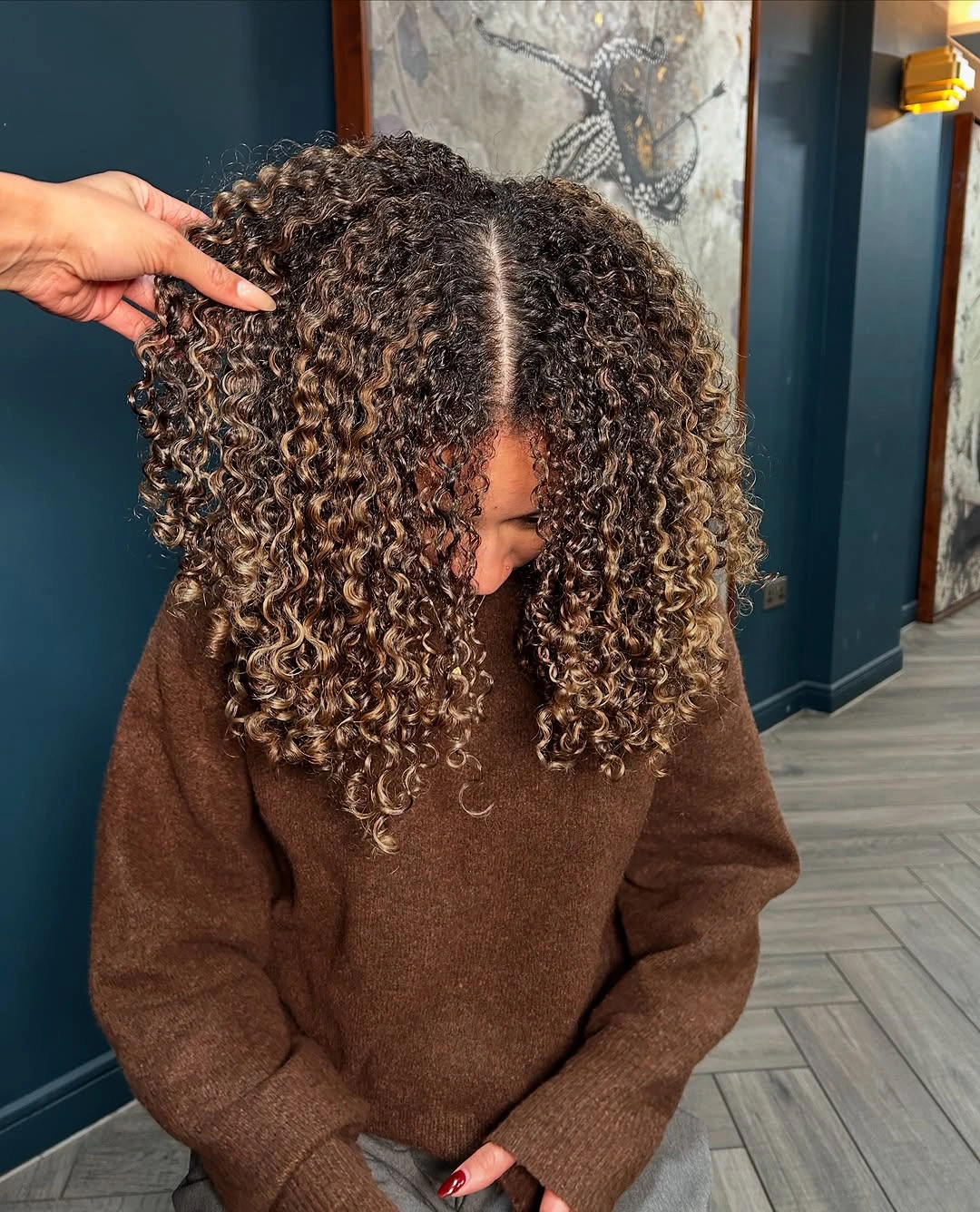
The most useful detail here is how the rounded form creates room around the middle part without flattening the top. Layers can help curls occupy that shape, but the visual goal is balance rather than maximum height. If you prefer a narrower profile, keep more length through the lower sides; if you want a fuller halo-like impression, allow the upper curls to remain more open. Both directions start from the same centered, layered idea.
Color variation is subtle but helpful, because the warmer reflections make individual curls easier to distinguish against the deeper base. A completely single-tone finish would place more attention on texture, which can be equally appealing but slightly calmer. The practical consideration is preserving the cut’s overall shape as the curls move through different days. A rounded silhouette usually benefits from thoughtful trimming, since uneven growth can shift the balance from one side to the other.
Burgundy Bob With a Blunt Fringe and Waves
A deep burgundy bob pairs a blunt full fringe with tousled layered waves and uneven curled ends, creating a deliberate contrast between the sharp front line and the softer body. The color adds depth, but the haircut has enough character even without it because each area serves a different purpose. The fringe brings focus forward, the sides create movement, and the broken ends keep the short length from appearing too dense or boxed in.
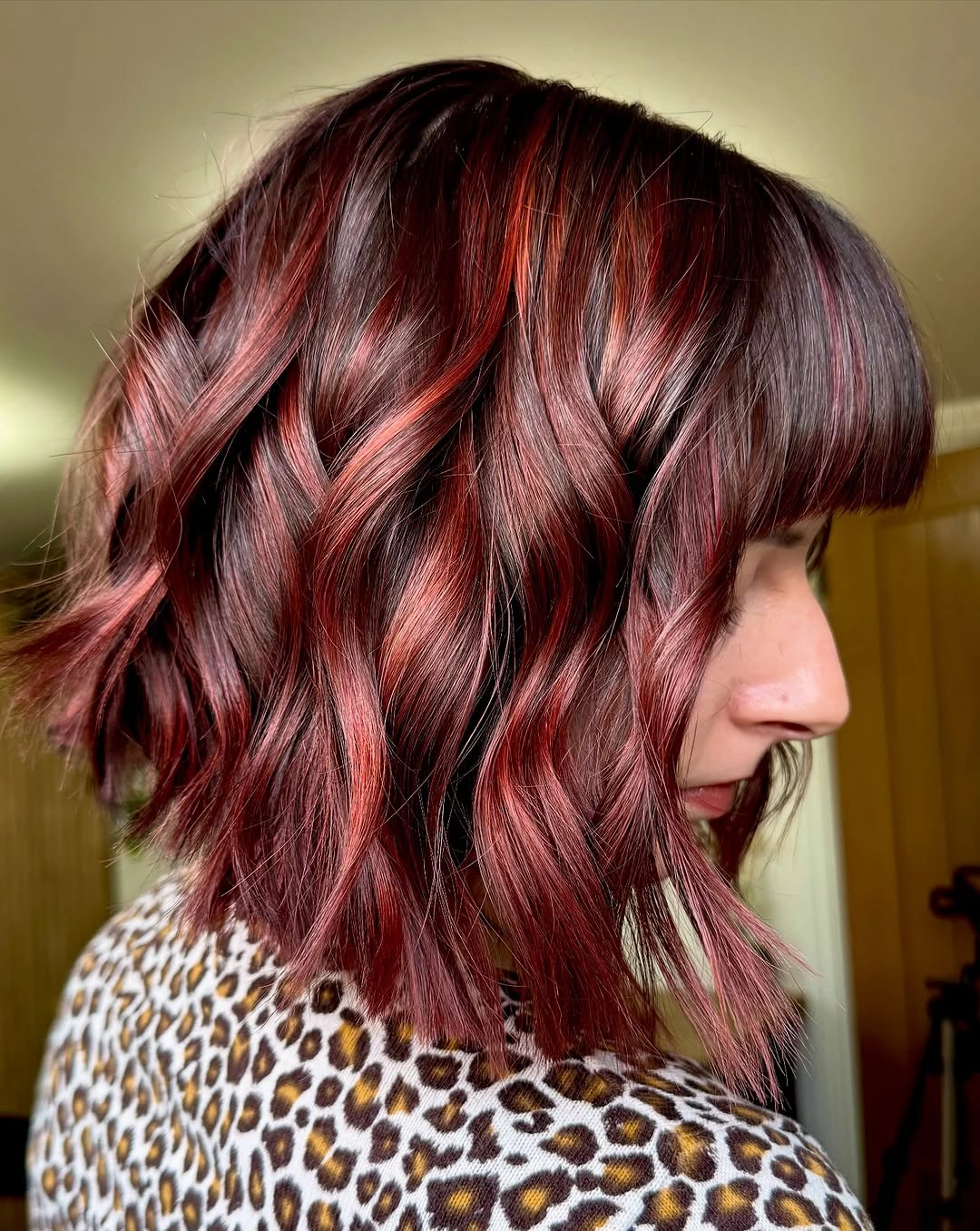
That contrast is what makes the bob feel current rather than overly neat. You could smooth the sides for a more dramatic graphic effect, or increase the separation in the waves for a looser result, while keeping the fringe as the anchor. A straighter fringe with a wavy body is not for everyone, but it can work beautifully when you want the face area to feel clear and the rest of the style to retain some irregular movement.
The decision point is whether you like visible contrast in a short cut. A softer, more broken-up fringe would make the whole look gentler, whereas the blunt line keeps it bolder and more direct. Burgundy also makes the silhouette feel deeper and more concentrated, so the tousled ends are useful for preventing heaviness. This is the sort of cut that can look very different with one styling adjustment while still keeping its recognizable structure.
Long Dark Layers With Outward-Curled Ends
Long dark brown hair is shaped with a middle part, smooth crown, and long front layers that turn gently outward at the ends. The effect is controlled but not stiff, because the direction changes only where the hair needs a little release near the shoulders and lower length. Instead of relying on strong waves, the cut uses those outward curves to make the silhouette feel open and to keep the front from folding inward around the face.
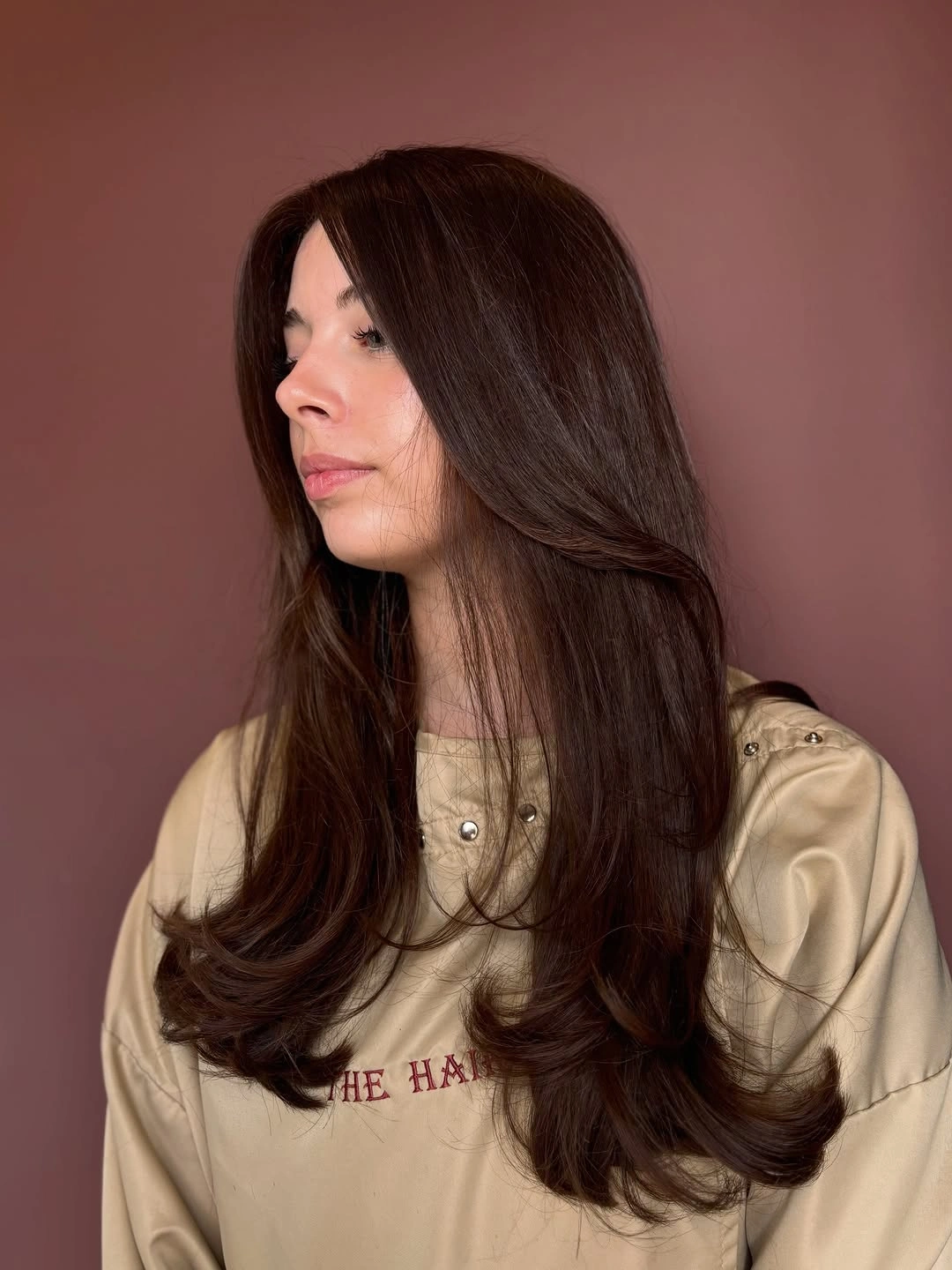
Outward-curled ends are a useful styling cue for long layers because they make each front section readable without shortening it visually. If the bends were directed inward, the result would feel more enclosed and rounded; turned out, they create a little air between the hair and the neckline. The same layers could be worn almost straight on quieter days, then given this extra movement when you want a more finished shape.
This style depends on proportion rather than volume. Too many short pieces near the face would change the calm sweep, while very little layering could make the outward ends look disconnected. The current middle part keeps everything measured and symmetrical, making it especially suitable for someone who prefers a polished long silhouette that still has a specific visual idea. It is understated, but that restraint is exactly what gives it staying power.
Extra-Long Dark Lengths With Curved Face Layers
Very long near-black hair falls from a smooth middle part into large curved face layers and substantial curled ends. The crown is kept clean, which lets the scale of the length remain obvious before the lower movement begins. Those large curves create a flowing frame near the face without requiring a fringe, and they help the darkest parts of the hair show more depth as the surfaces turn through the long silhouette.
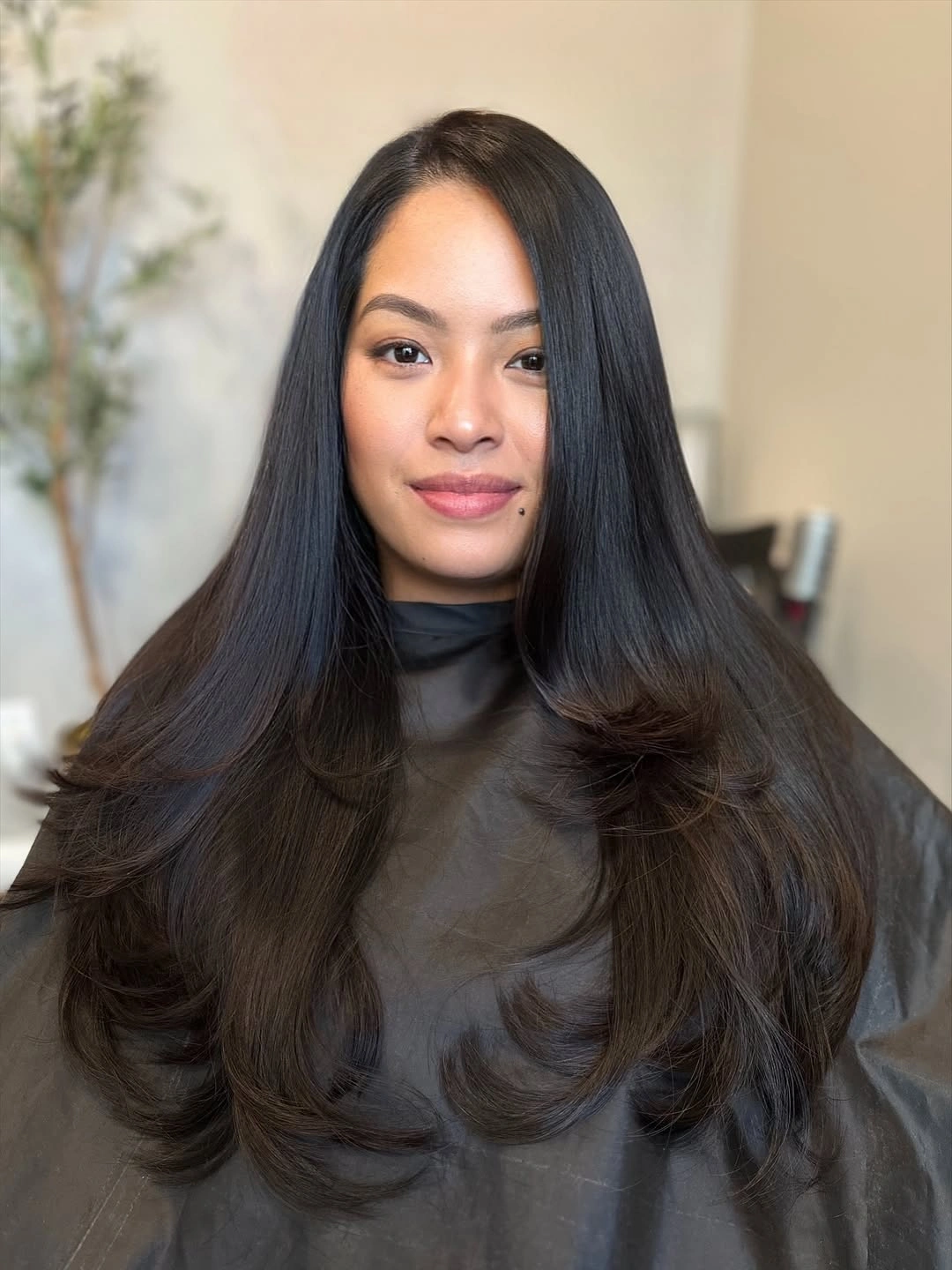
For extra-long hair, face layers need enough length to feel connected to the rest rather than hovering at the cheeks. Here, the curved sections continue downward and meet the generous ends, so the entire cut reads as one progression. A looser finish would make it feel softer and more romantic, while a smoother blowout-like version would draw more attention to the clean middle part and the deliberate curve of the front pieces.
There is a lovely restraint in leaving the color nearly black and using shape for interest instead. The downside is that the cut relies on the ends retaining their curve; if they become completely straight, much of the visible movement disappears. Still, it offers a clear direction for anyone who wants to keep dramatic length while adding a face-opening detail that is quieter than bangs and less busy than heavy all-over layering.
Warm Brown Length With Fringe and Flicked Ends
Long warm light-brown hair is softened by a wispy full fringe, long face layers, and lower ends that round outward with a slight flick. The front is gentle rather than blunt, and the warmth of the color keeps the layered progression easy to see. Each element leads into the next: fringe into face frame, face frame into length, then length into a light outward turn that stops the bottom from looking heavy.
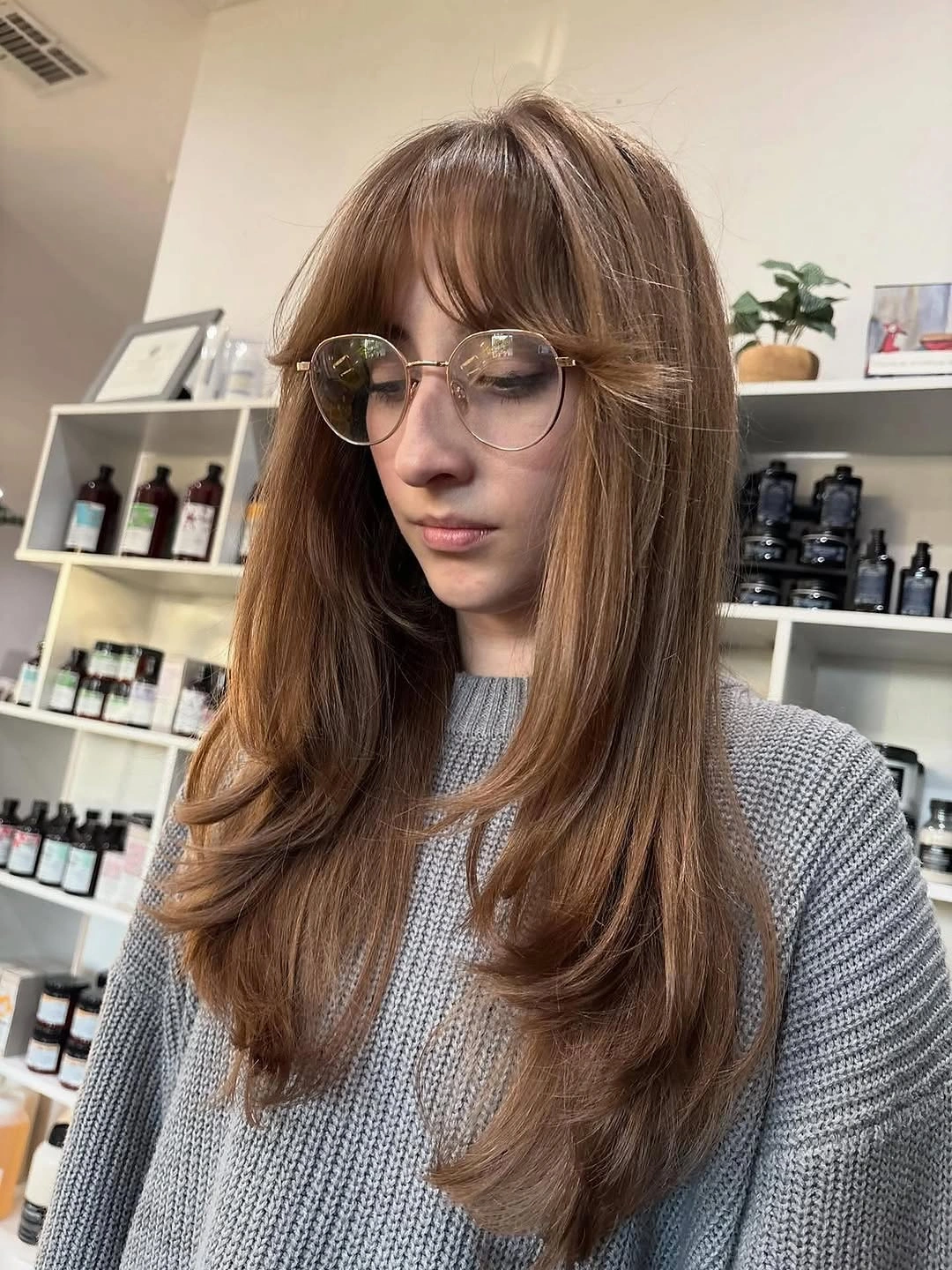
This is a useful finish for someone who wants a noticeable change at the front without making the rest of the hair feel dramatically shorter. The wispy fringe brings softness, while the long layers leave plenty of room to tuck, clip back, or wear down. You can make the flicked ends more subtle for a calmer everyday effect, or give them a clearer turn when you want the layered outline to feel more pronounced.
Because the fringe and lower ends both introduce movement, the middle of the length should remain relatively uncomplicated. Too many additional short layers could make the shape feel busy, whereas the current approach leaves the warm brown length as a steady base. It closes the collection on a flexible idea: keep the length, add a softer front, and let a small change at the ends make the whole outline feel newly considered.