A color change feels more convincing when it has a purpose beyond being lighter, darker, or more noticeable. October hair colour ideas 2026 are easiest to judge by the impression they leave at a normal distance, then by the smaller shifts that appear as the hair moves. That order protects you from choosing a shade for one dramatic moment and finding that it feels disconnected from your usual parting, texture, or everyday styling. Notice it in ordinary conditions – morning mirrors, indoor light, and a quick tie-back – before deciding whether the idea has enough staying power.
Begin with the amount of contrast you genuinely want to live with, not the most striking version of it. A restrained adjustment can still change the perceived depth of the whole length, while a bolder one needs enough surrounding calm to stay readable. Give yourself permission to prefer a direction that looks considered in simple hair as well as in a deliberately styled finish; that is usually the better guide for a lasting choice. A simple version should be the starting test, not the afterthought.
Fine Ash Ribbons Through a Long Neutral Base
Long straight hair in a muted ash-beige range can look especially refined when the lighter pieces are narrow and scattered rather than blocky. Here, fine pale ribbons travel through a deeper neutral base from the upper lengths down, creating movement without a hard stripe at the roots. The overall finish stays smooth and quiet, so the color reads as depth first and brightness second.
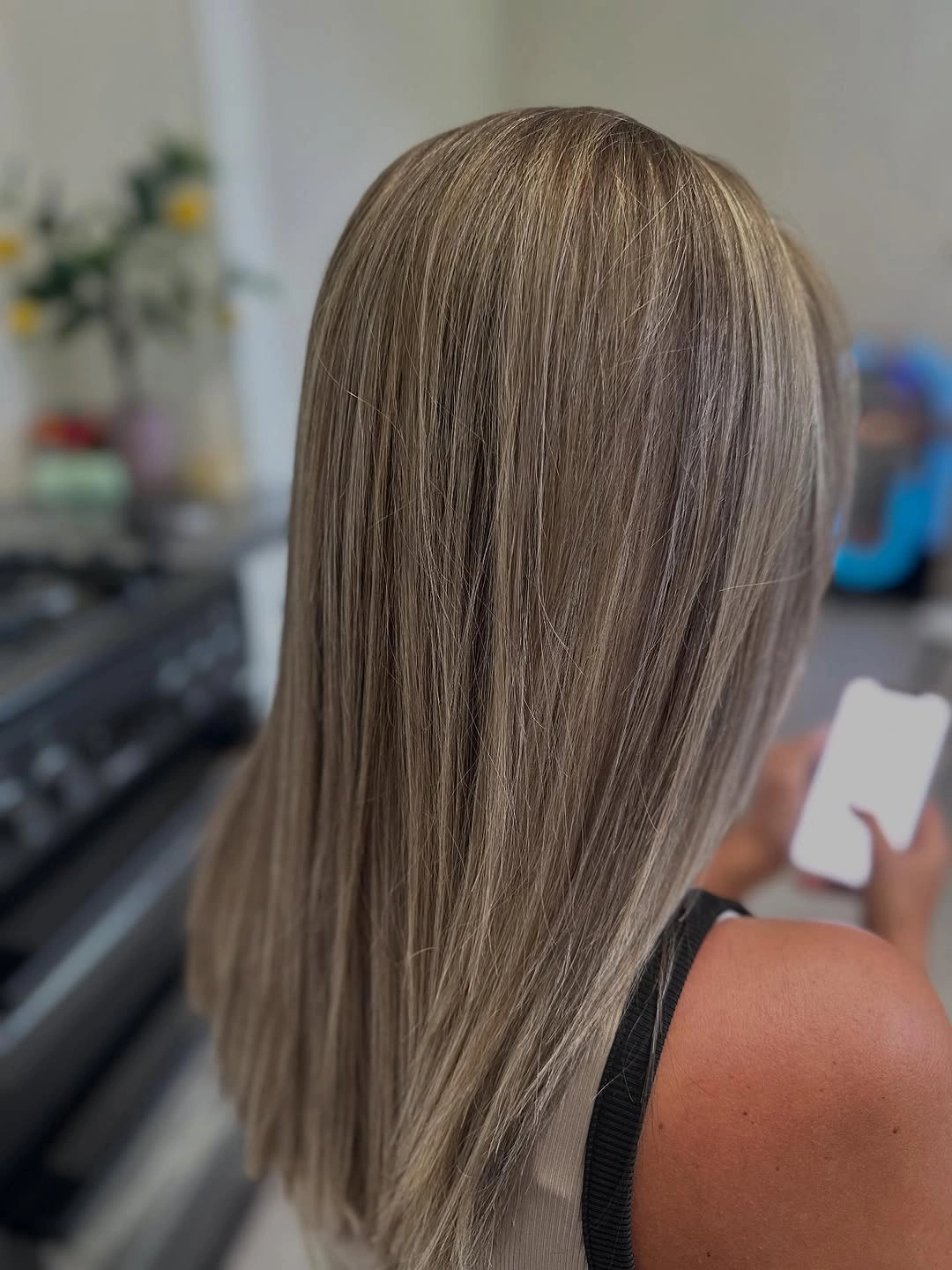
For hair colour for October that does not depend on high contrast, this kind of close-toned placement is a useful reference. Keep the lightest pieces slim enough that the base remains visible between them, particularly around the crown. A more dramatic version could use brighter front sections, but that would change the whole mood. The subtle approach relies on the hair being moved or seen in natural light to reveal its variation.
Because the lengths are worn very straight, every tonal shift is easy to see, including any unevenness in the blend. If you prefer a lower-maintenance look, soft waves can blur the transitions and make the same shade feel less precise. A center or near-center part will showcase the crown area, while a deep side part would place more focus on one surface section. The important decision is keeping the light detail fine, not simply adding more of it.
Vivid Accent Strands on a Dark Plum Bob
The chin-length bob has a dark plum base, but red, pink, orange, and deep green accents cut through the front and lower layers in slim, visible sections. That mix works because the dark base still occupies most of the silhouette, giving the brighter tones a controlled place to appear. The smooth rounded bob shape also keeps the colors from becoming visually scattered, even when several are present.
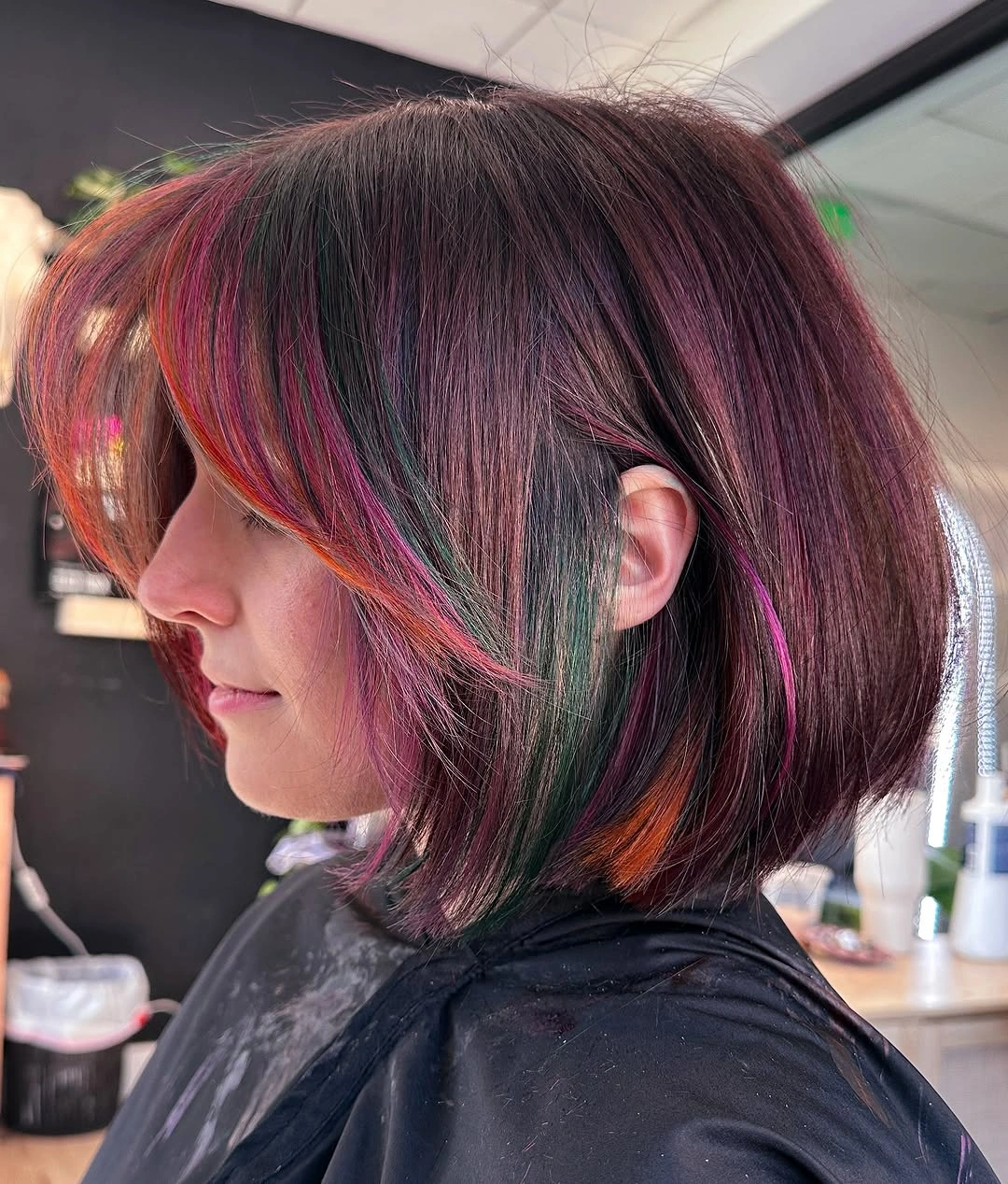
Multiple bright shades are easiest to wear when they have a clear boundary, such as a face-framing area or a low underlayer. Here, the vivid pieces are concentrated enough to read as an intentional palette instead of all-over color. You could simplify the idea by choosing only red and deep green against a similar dark base. Keeping the bob’s outline blunt or softly rounded gives those accent strands a clean frame.
Shorter hair makes strong color placement feel immediate, so the tradeoff is that there is less length available to diffuse it. A few streaks near the fringe will be much more noticeable than they would be on waist-length waves. If you want the accents to appear only in motion, place them closer to the underside rather than directly at the part. That choice preserves the dark surface while still giving the style an unexpected flash at the edges.
Caramel Ribbons Across Glossy Brunette Waves
Broad caramel ribbons move through the long dark brown waves in a way that makes the color look lifted rather than striped. The brighter sections appear from the upper lengths through the curl pattern, then soften into the darker base toward the ends. Because the hair is styled in loose, large waves, the warm tones appear and disappear with the bends instead of sitting in flat vertical lines.
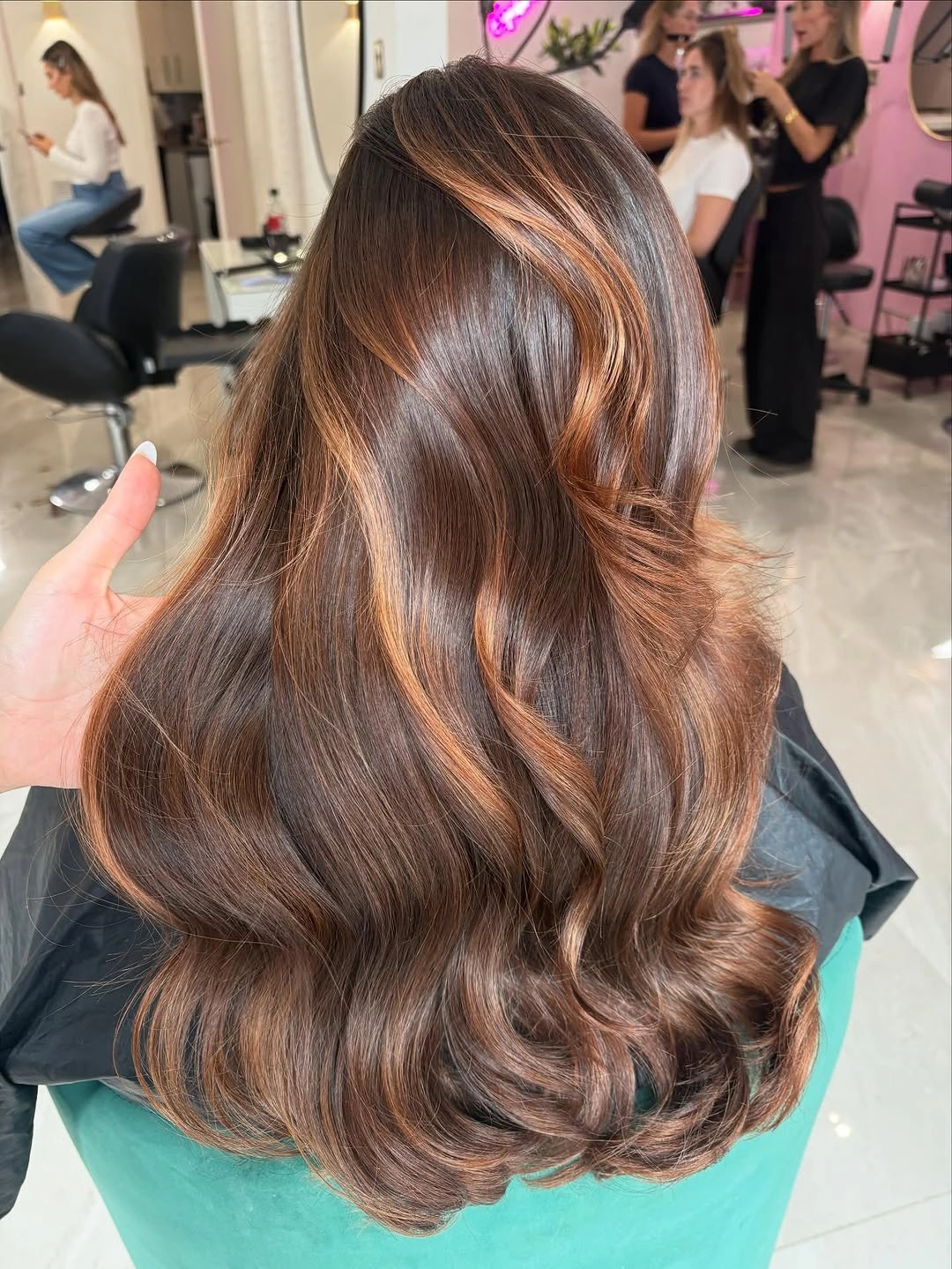
For October hair color ideas brunettes can save as a soft update, this balance between a dark base and warm ribbons is particularly practical. The color is noticeable without relying on a pale blonde contrast, and the wavy finish creates extra dimension around the mid-lengths. Ask for warmth that remains visible through movement rather than a single bold block near the face, as in these fall brunette hair colour ideas. That distinction helps the result stay connected to the brunette base.
Loose waves are doing a lot of visual work here, so a straight finish would make the same ribbons look more graphic and possibly more pronounced. If you prefer a quieter version, keep the warm pieces concentrated below the cheek area and through the ends. A more luminous interpretation could add one slightly lighter front strand, but too many pale panels would pull attention away from the glossy brown depth. The base is what gives these warmer notes their contrast.
Creamy Face Frame Around a Soft Brown Root
Pale creamy pieces sit around the face and through the front waves, while a muted medium-brown root area remains clearly visible above them. That difference gives the color a deliberate frame: the lightest shade is closest to the face, yet the deeper root keeps the overall look from becoming uniformly blonde. Shoulder-length waves spread the light sections apart, making them appear soft rather than sharply segmented.
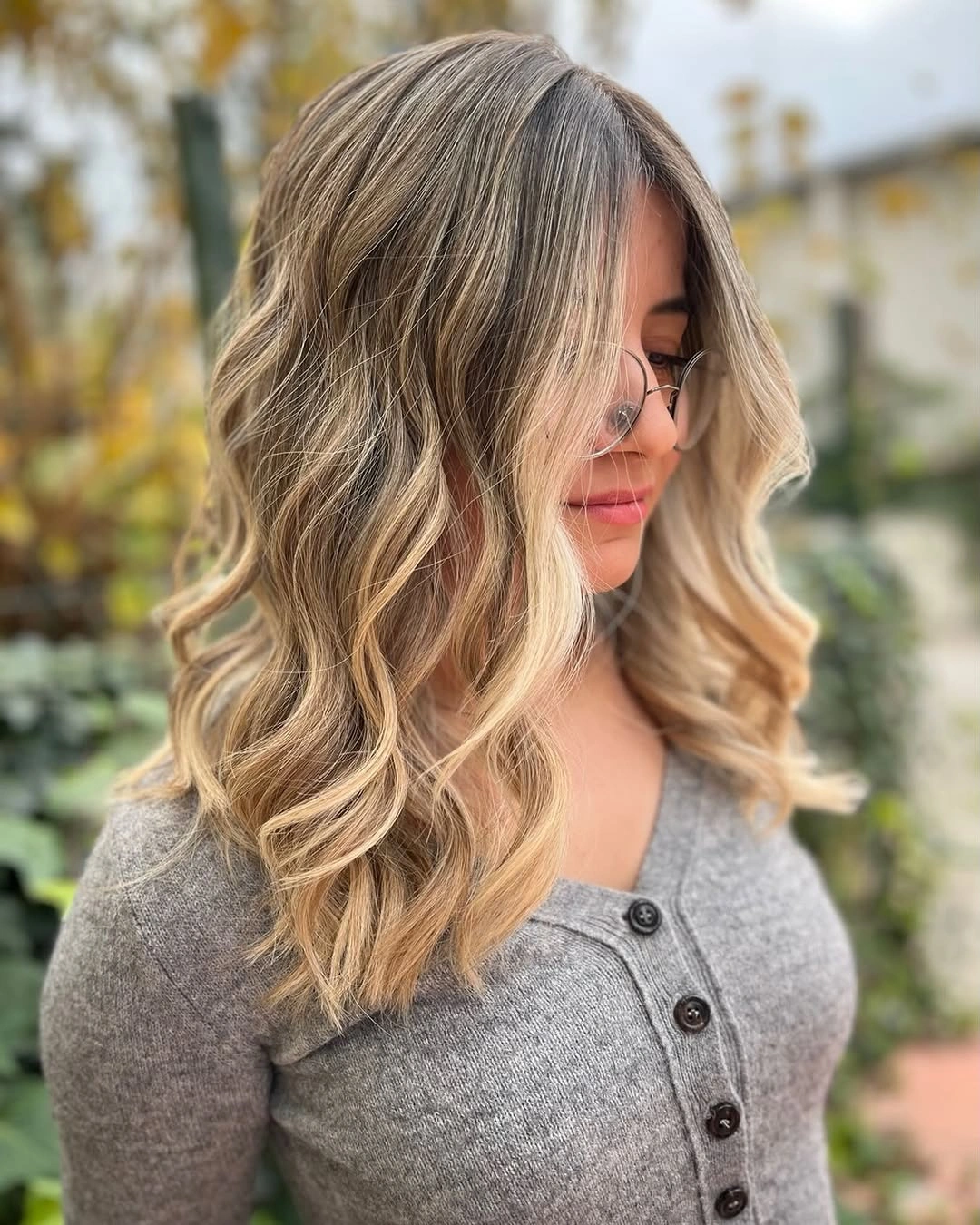
A face frame is often the quickest way to shift the impression of a color without changing every strand. The key is leaving enough of the original-looking root tone visible so the pale pieces have contrast to work against. For a more blended version, let the brightness start a little farther from the part. For a bolder version, bring the cream closer to the root and carry it through one or two wider front panels.
The waves keep the light areas from reading as two identical stripes, which is useful if you want a softer result in everyday styling. Straightening the lengths would emphasize every line of placement and make the look more graphic. Consider how you usually part your hair before choosing this arrangement, because the front pieces are designed to be seen. A dramatic side part could hide one of them and leave the whole color story feeling less balanced.
Fiery Copper Lengths With Darkened Ends
Vivid copper-red dominates the upper and middle lengths, while the lower ends shift to a much deeper, nearly black tone. The contrast is strongest where the hair turns inward, making the darker section feel like a visible border rather than a shadow. A simple half-up arrangement with a wide dark barrette leaves the color placement exposed and prevents the long straight lengths from looking too uniform.
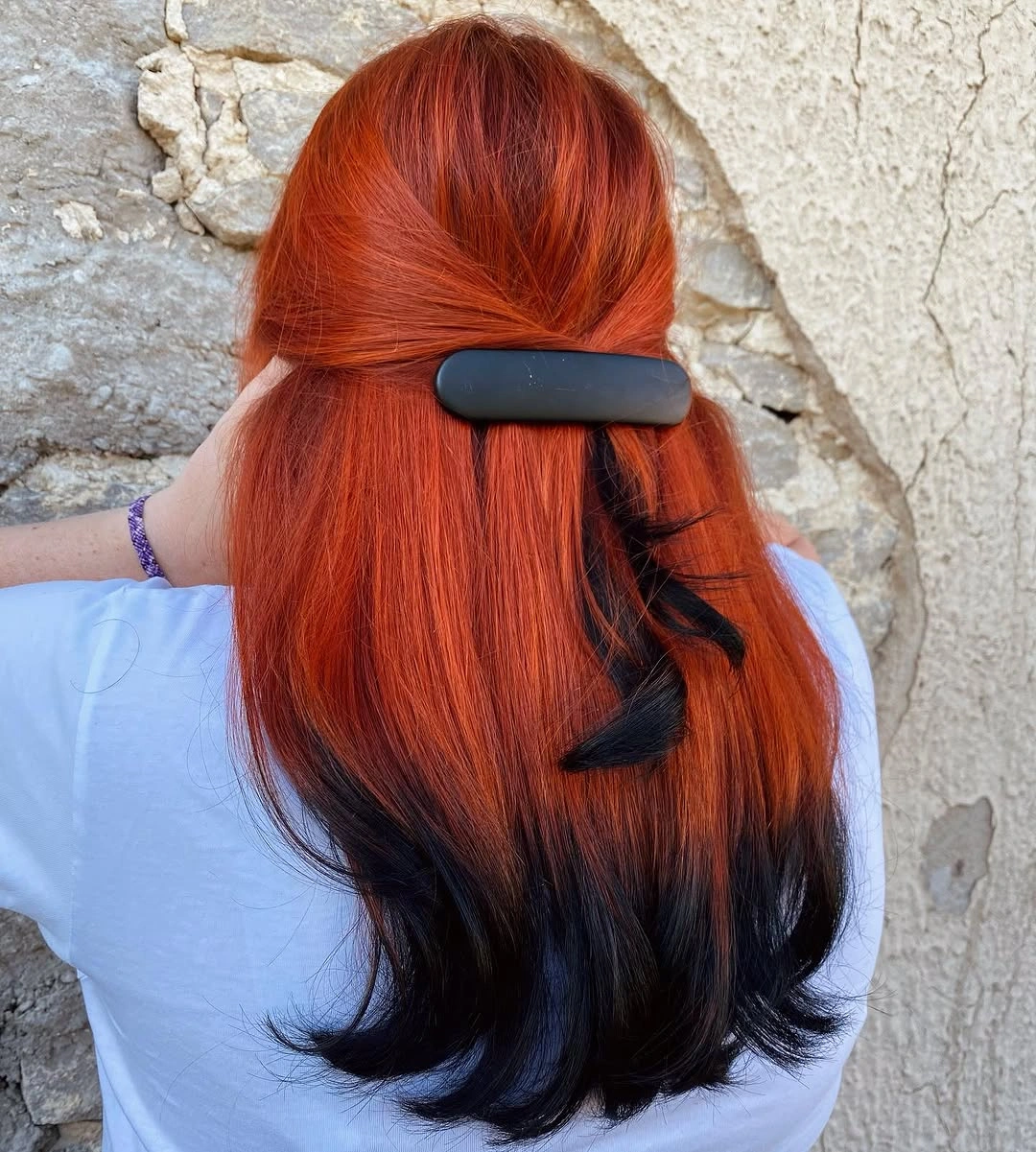
This kind of two-tone result works best when the line between shades feels intentional, not accidental. The bright upper field and dark lower edge create a strong vertical story, so styling can stay uncomplicated. If you want less contrast, use a deep chestnut end instead of an inky one. If you want more, keep the upper color very saturated and make the lower section begin higher, but expect the dividing line to become the main feature.
The dark barrette is a clever supporting detail because it echoes the ends without adding another new color. A lighter accessory would draw attention upward and could interrupt the copper field before it has room to read. One practical consideration is that a half-up style reveals the color break more clearly than loose hair does. Wearing the hair fully down would soften the transition, while a braid or ponytail would make the contrast appear in a more concentrated way.
Red Panels Woven Into a Brunette Base
Long brown layers carry bold red sections near the part and along the face, with narrow warm blonde ribbons adding a third point of light. The dark base remains visible between each panel, which keeps the result from looking like one solid red shade. Loose layers around the face make the brighter colors feel integrated with the haircut instead of sitting on top of an otherwise separate style.
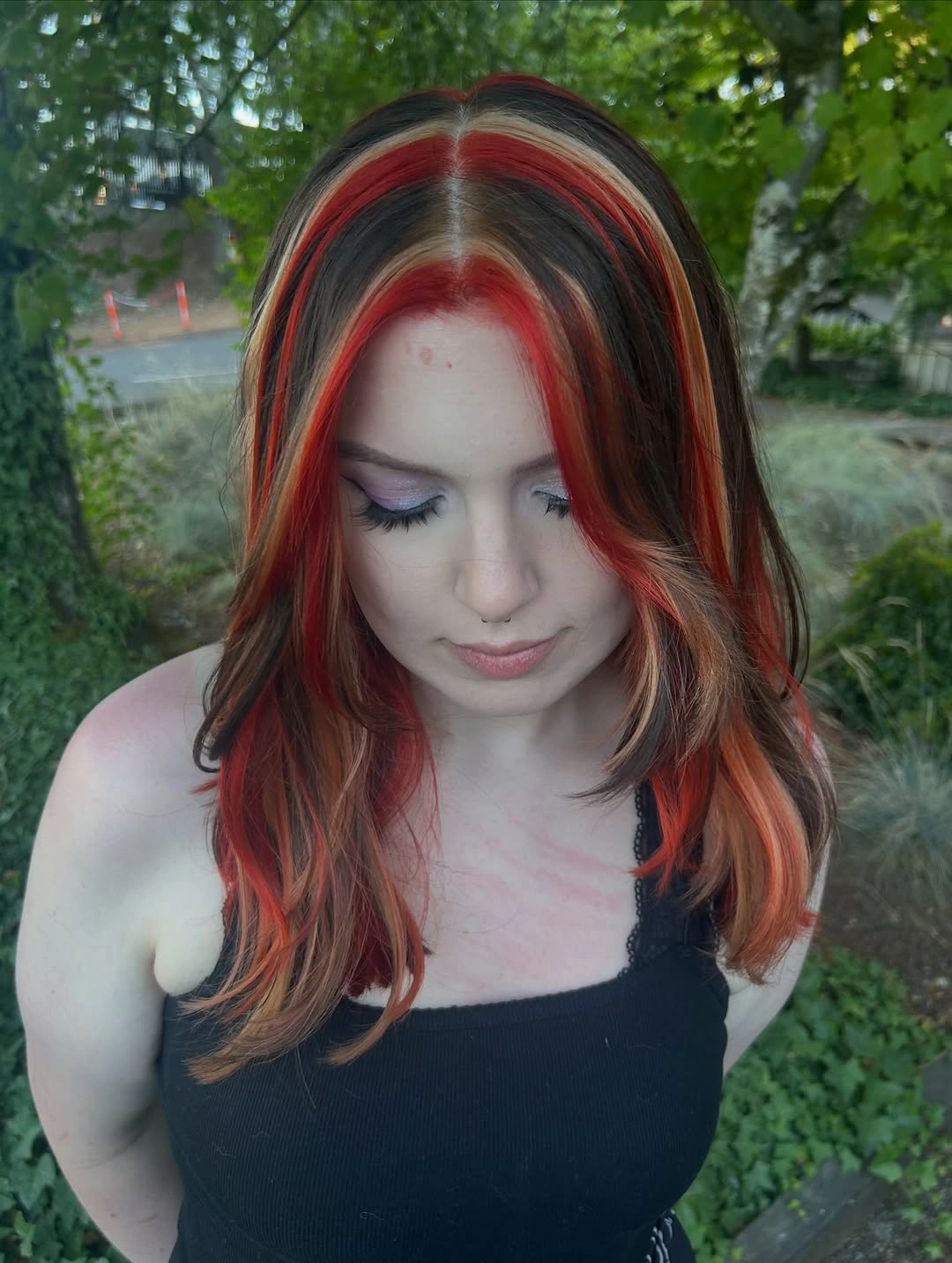
When two accent shades appear against brown hair, placement matters more than quantity. Here, the red establishes the strongest contrast, while the blonde works as a smaller highlight rather than competing with it. You can reduce the intensity by using only one red panel on each side and leaving the lower lengths mostly brown. That keeps the face frame visible but gives the look more negative space and a calmer overall reading.
The side layers make the colors easy to see from the front, so they should suit a part you actually wear. A center part creates a symmetrical, high-impact version, whereas a side part could let one bright panel dominate. If that feels too strong, place the red underneath the top layer and let it show only when the hair moves. The softer approach still gives dimension but makes the brown base feel more like the main story.
Deep Copper Waves With a Full Fringe
The deep copper-brown shade has enough warmth to be obvious, yet it stays controlled because the color is consistent from fringe through lengths. A full blunt fringe creates a solid front edge, while the softly curled ends keep the rest of the hair from looking too heavy. The result uses shape and shine rather than contrasting highlights to create interest, which makes the tone feel especially cohesive.
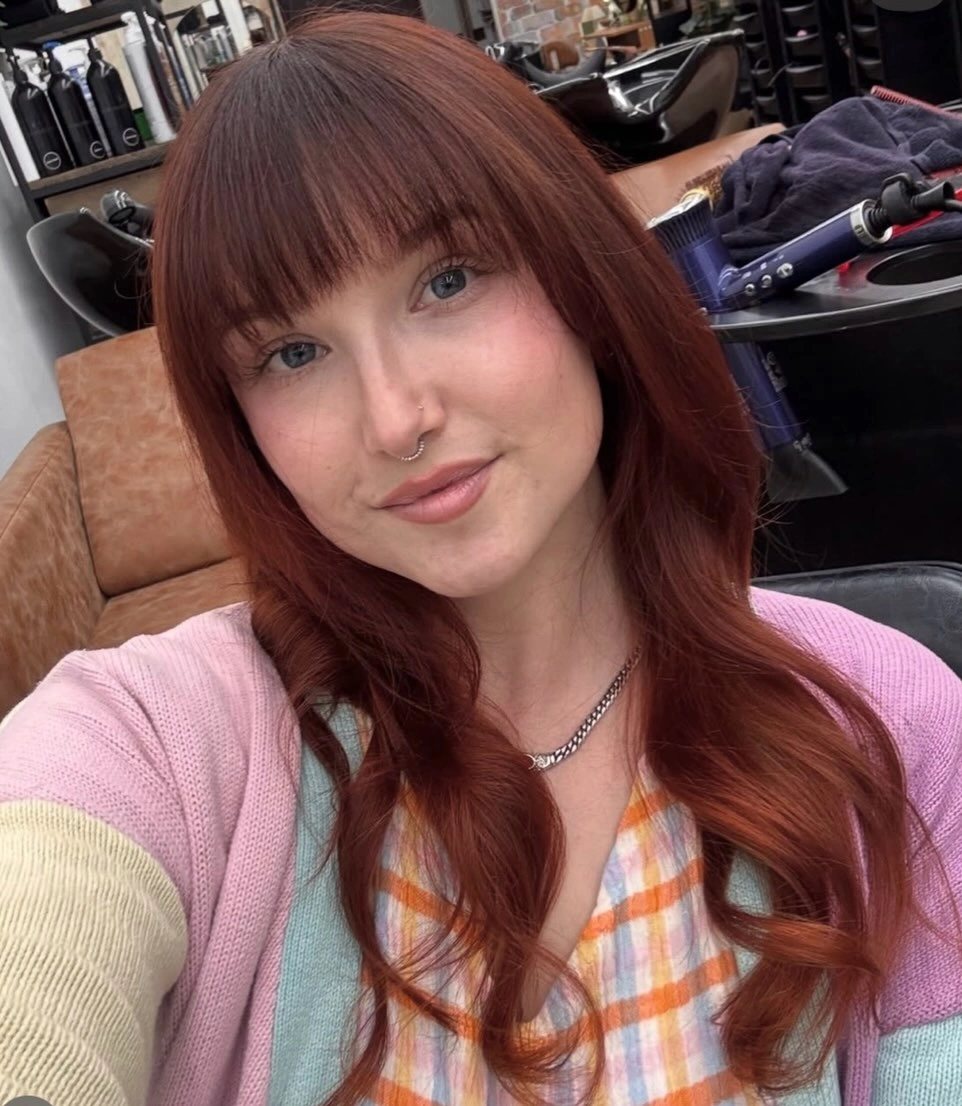
October hair colors do not have to rely on blonding to look dimensional. A single warm shade can gain movement from a fringe, layered ends, and a gentle curl pattern, as it does here. If you want a more muted take, choose a brown-based copper rather than a bright orange-red. The visual depth will come from the way light catches the curves of the hair, not from an obvious change in color placement.
A full fringe brings the color close to the eyes and forehead, so it becomes part of the entire shade decision rather than a separate haircut detail. Wispy bangs would make the same copper look airier, while a thicker fringe gives it more of a deliberate frame. The maintenance question is simple: the fringe needs to sit cleanly for the color to read as one continuous field. When it separates too much, the polished effect becomes less visible.
Muted Blonde With a Soft Shadowed Root
Long waves in ash-beige blonde are built from closely related tones, with a deeper root area fading gradually into pale lengths. The light pieces are thin and blended, so there is no single stripe demanding attention. That restraint allows the waves to reveal the variation slowly, especially through the lower lengths where the bends create small shifts between beige, ash, and soft cream.
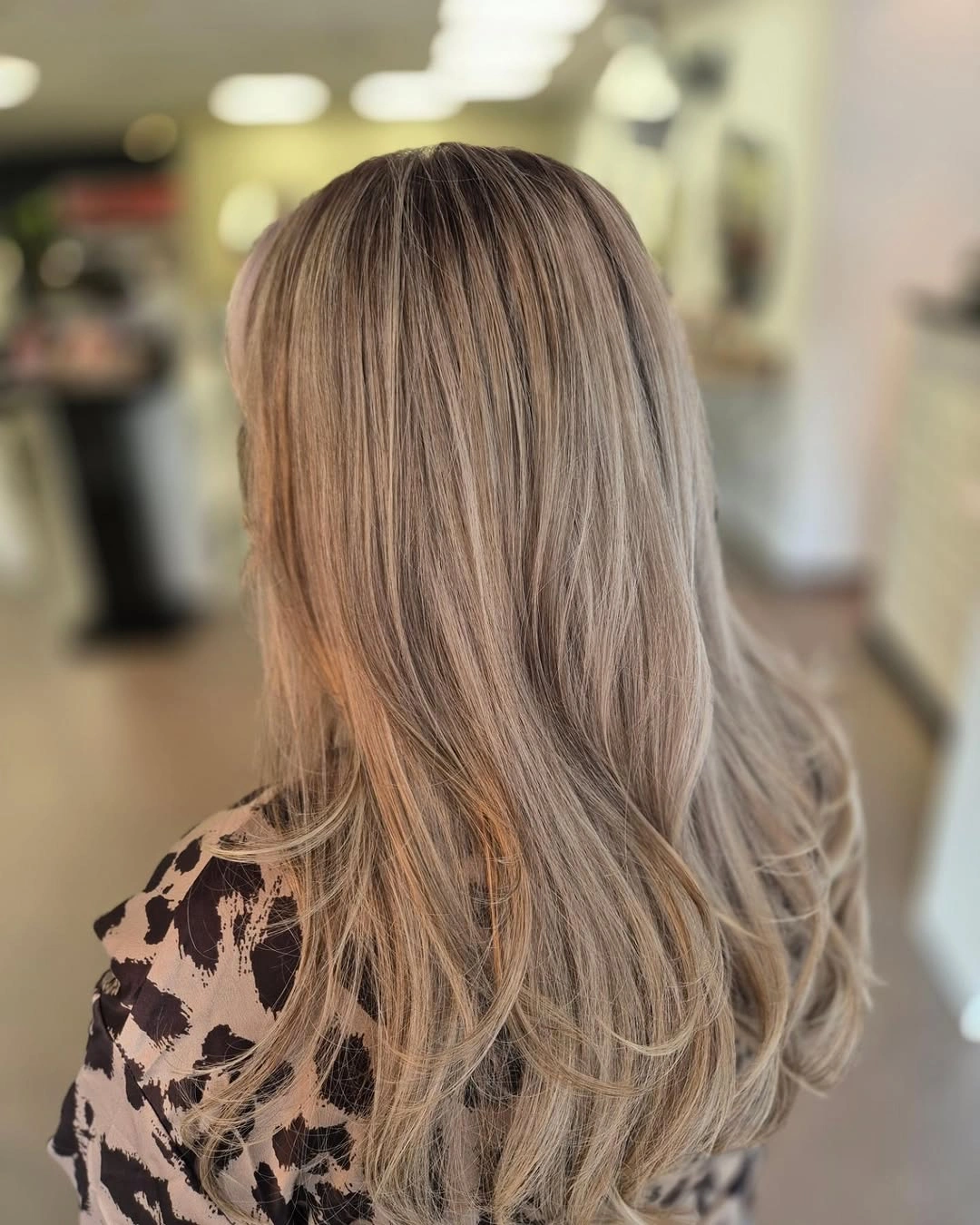
For October hair color ideas blonde readers who prefer a low-contrast finish, this is a useful reminder that softness can still look detailed. Keeping the root a little deeper creates a visual anchor, while the close-toned lengths prevent the color from looking flat. A cooler or warmer beige direction would change the mood, but either works best when the placement stays finely blended instead of producing wide, evenly spaced bands.
Because the color change is subtle, styling has a larger impact on how much dimension appears. Large loose waves make the lowlights and lights fold into each other, while very straight hair would show the individual ribbons more clearly. A deep side part can add extra sweep and make the front look fuller, but it will also hide some of the balance across the crown. Keep the blend soft if you want the overall impression to remain calm.
Warm Brown Braids in a High Ponytail
Small, uniform braids in a warm medium-brown tone are gathered into a high ponytail, creating a repeated texture from the hairline through the long tail. The color looks particularly consistent because each braid catches light in the same narrow way. A high ponytail concentrates the length at the back and gives the warm brown shade a clear outline rather than letting it blend into a loose mass of hair.
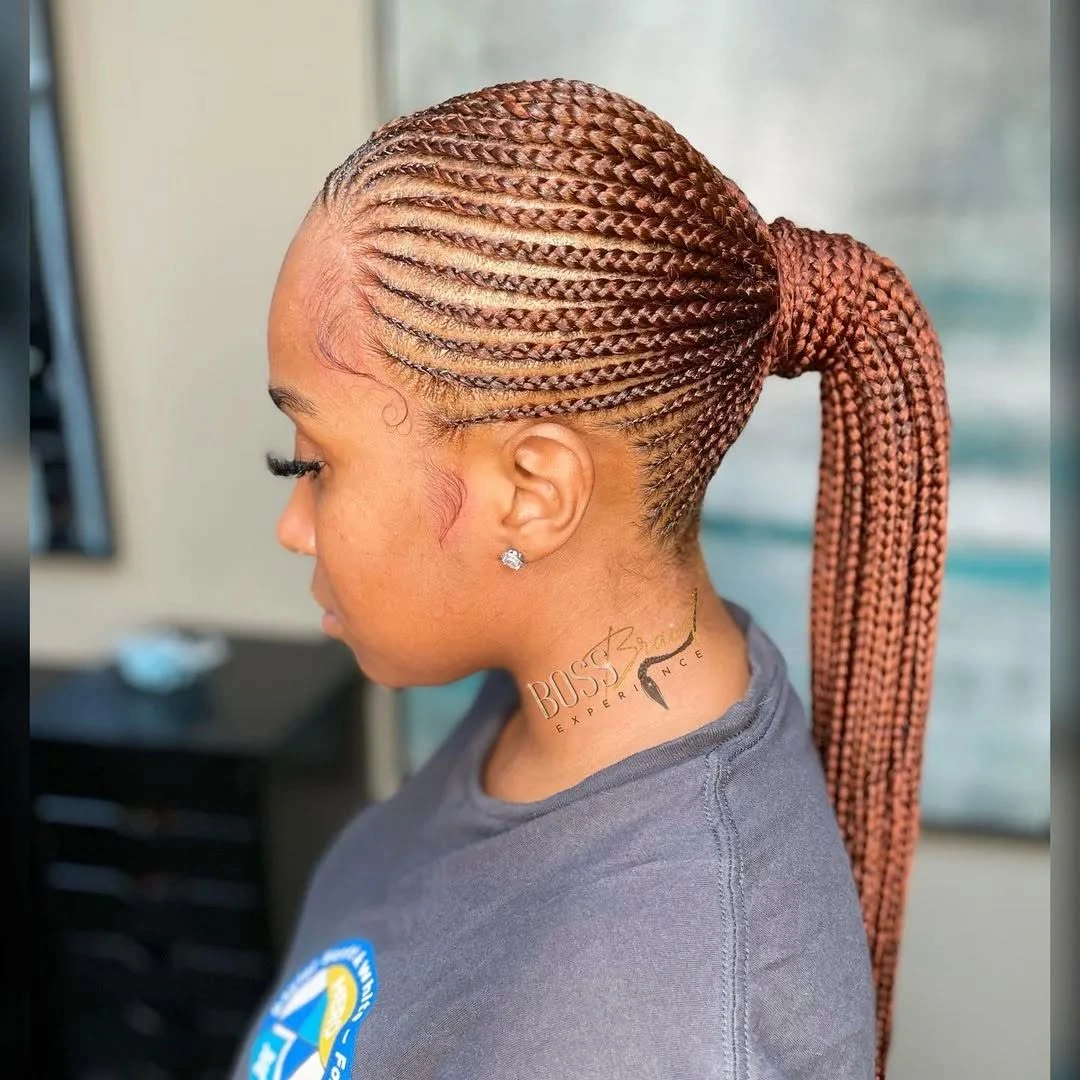
Here, the color is supporting a very precise pattern rather than trying to become the sole focal point. A rich medium brown gives the braid rows enough separation to remain visible without introducing a second accent shade. If you prefer a softer effect, a slightly darker brown would create more shadow between the braids. A lighter caramel tone would make the repeated sections stand out more strongly, especially along the sides and crown, as with these fall hair color ideas.
The ponytail placement changes the silhouette as much as the color does. Higher placement keeps the braid direction lifted and neat, while a lower ponytail would make the length feel more relaxed. Since the warm brown appears throughout the style, a small color shift at the ends could be tempting, but it would interrupt the satisfying continuity of the braid pattern. This is a case where a single coherent shade has real visual value.
Soft Black Layers With Feathered Movement
The shoulder-length hair looks nearly black, yet the long feathered layers keep the silhouette from becoming a dense, flat outline. Soft pieces turn outward around the cheeks and ends, allowing small reflections to appear across the dark surface. That movement matters because deep shades rely on shape and light to stay legible. The airy edges give the color relief without needing obvious highlights.
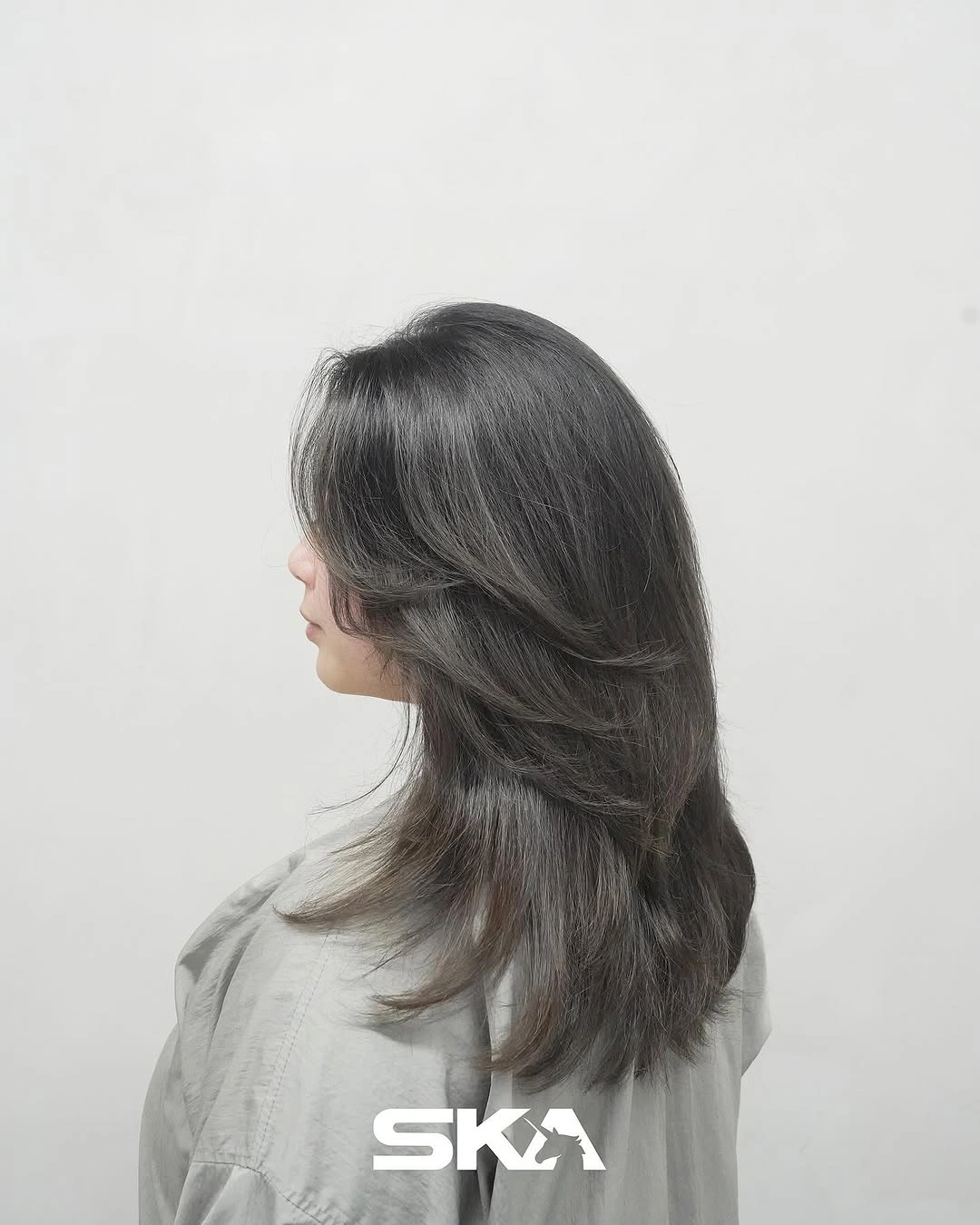
Dark hair can look especially modern when the cut does not force it into one heavy block. These long layers create a gradual outline, so the black shade feels lighter at the perimeter and denser toward the interior. If you want to preserve that effect, avoid overly blunt ends that remove the soft separation. A subtle side part would add another sweep, while a center part would make the face-framing layers appear more symmetrical and graphic.
There are no bright ribbons needed here, which is what makes this useful among October hair colour ideas. The visual interest comes from the way the ends flick away and the middle lengths curve through the shape. A glossier finish would make the dark color appear more reflective, while a more matte finish would emphasize the layers. Both are valid, but the haircut needs visible movement or the shade may look more uniform than intended.
Split Blonde Front Panel With Dark Waves
One side of the fringe and front length is pale blonde while the other side remains deep brown, creating a visibly divided frame around the face. The contrast continues in selected lighter ribbons through the lower waves, but the darker side still carries most of the volume. Soft long waves keep the split placement from looking too rigid, allowing the two shades to meet with movement rather than a perfectly straight division.
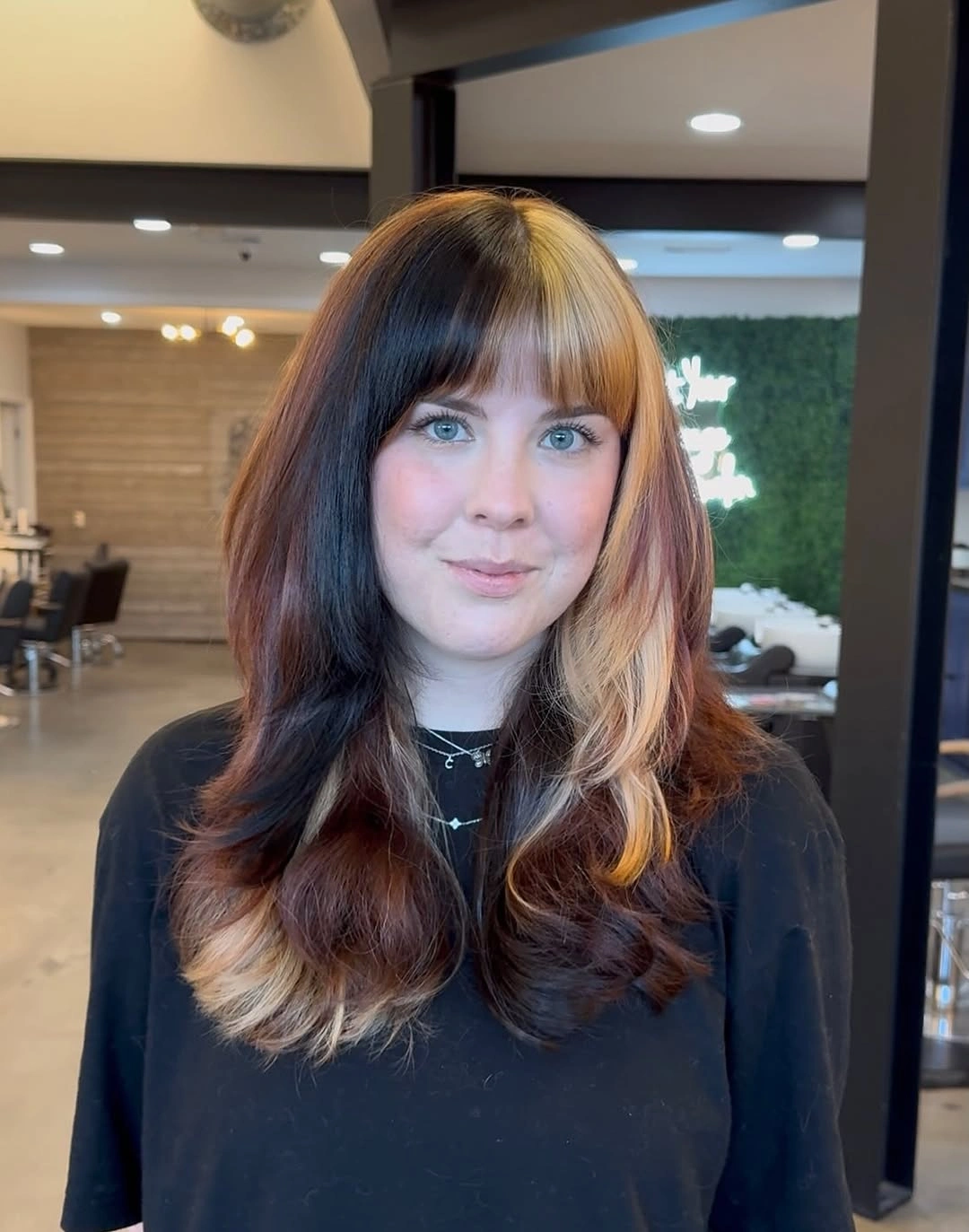
A high-contrast front panel is a direct choice, so it helps to keep the rest of the color plan simple. Here, the dark brown base gives the blonde a clear backdrop and the long waves repeat only a few lighter points through the ends. If you want a quieter version, make the pale panel narrower or soften it into a warmer beige. The front will still be the feature, but the contrast will be less immediate from across the room.
Fringe changes the way this placement reads because it puts the split color directly at the hairline. A curtain fringe could blur the line, while a full blunt fringe would make it feel more graphic. Think about your usual part before choosing this arrangement, since a deep side part can cover one panel almost entirely. The strongest version needs the part to remain visible so both dark and light areas have equal room to register.
Warm Brown Curls With Curtain Fringe
The medium-brown color stays warm and even, while a long curtain fringe opens at the center and leads into large brushed-out curls. Those curls create broad reflective surfaces through the lower lengths, giving the shade more dimension than a flat straight finish would. The overall color story is soft, but the fringe and rounded volume make it feel intentional rather than plain.
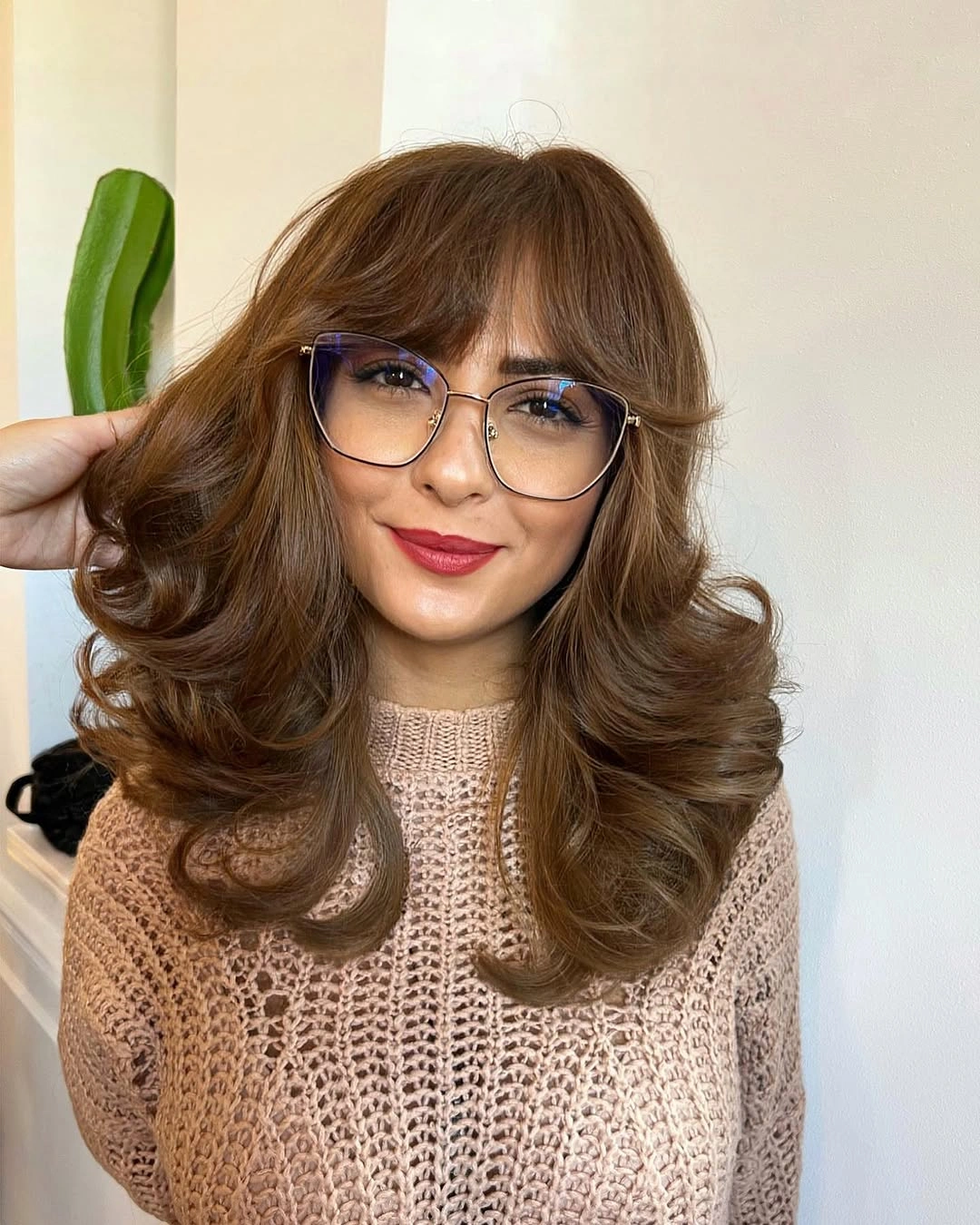
For hair colors for October that feel understated, a single brown tone can be enough when the styling creates visible turns and layers. The curtain fringe breaks up the front, then the curls keep the eye moving toward the ends. A few fine caramel pieces could make this more luminous, but they are not necessary for the shape to work. The color remains the background for a well-defined, softly voluminous silhouette.
Large curls like these look their most balanced when the fringe is allowed to curve and blend rather than sit flat across the forehead. If you prefer less styling time, use a softer bend through the bottom half and keep the front sections smooth. That will reduce the volume but maintain the warm brown richness. The tradeoff is that straighter hair shows less reflection, so the shade may look deeper and more solid in everyday wear.
Deep Auburn Half-Up Style With a Black Bow
The short-to-medium deep auburn-brown hair is smooth through the crown, then pinned half-up with a large black satin bow. The bow gives the rich red-brown shade a sharp dark counterpoint, while the loose lower lengths keep the arrangement from looking too formal. Because the hair itself is relatively straight, the warm tone appears dense and even from crown to ends.
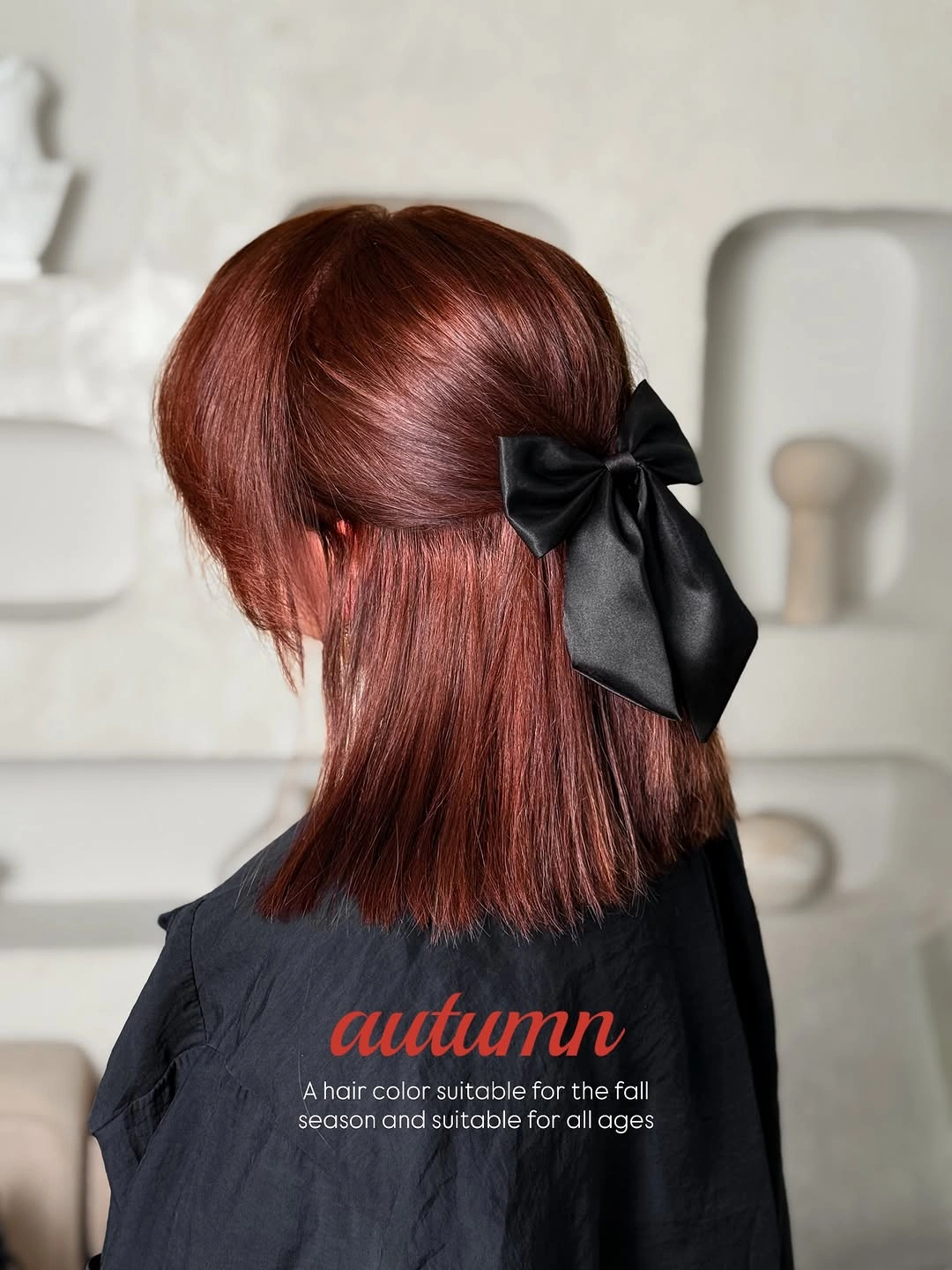
A single accessory can make a uniform color feel more intentional without changing the shade at all. Black is effective here because it creates a clean edge against auburn, especially when the bow is placed where the half-up section begins. A smaller clip would make the look quieter, while a ribbon in a similar red-brown tone would create a softer, more tonal version. The color remains most visible when the crown stays smooth and the bow does not cover too much hair.
The half-up placement also reveals the depth of the auburn through the back lengths, which can be useful for hair that looks darker when worn fully down. If you pull too much hair upward, the style may become top-heavy and hide the lower movement. Leaving a few soft pieces around the face would make it more relaxed, while keeping every strand polished emphasizes the crisp contrast between the dark bow and the warm hair underneath.
Pale Front Streaks Over a Muted Brown Base
Broad pale platinum-white pieces frame the face and run through the front layers, while the rest of the long wavy hair stays a muted medium brown. The contrast is deliberately high, yet the soft fringe and loose waves prevent the pale sections from looking like hard vertical stripes. Each wave breaks the light color into curves, making the face frame feel dramatic but still connected to the rest of the length.
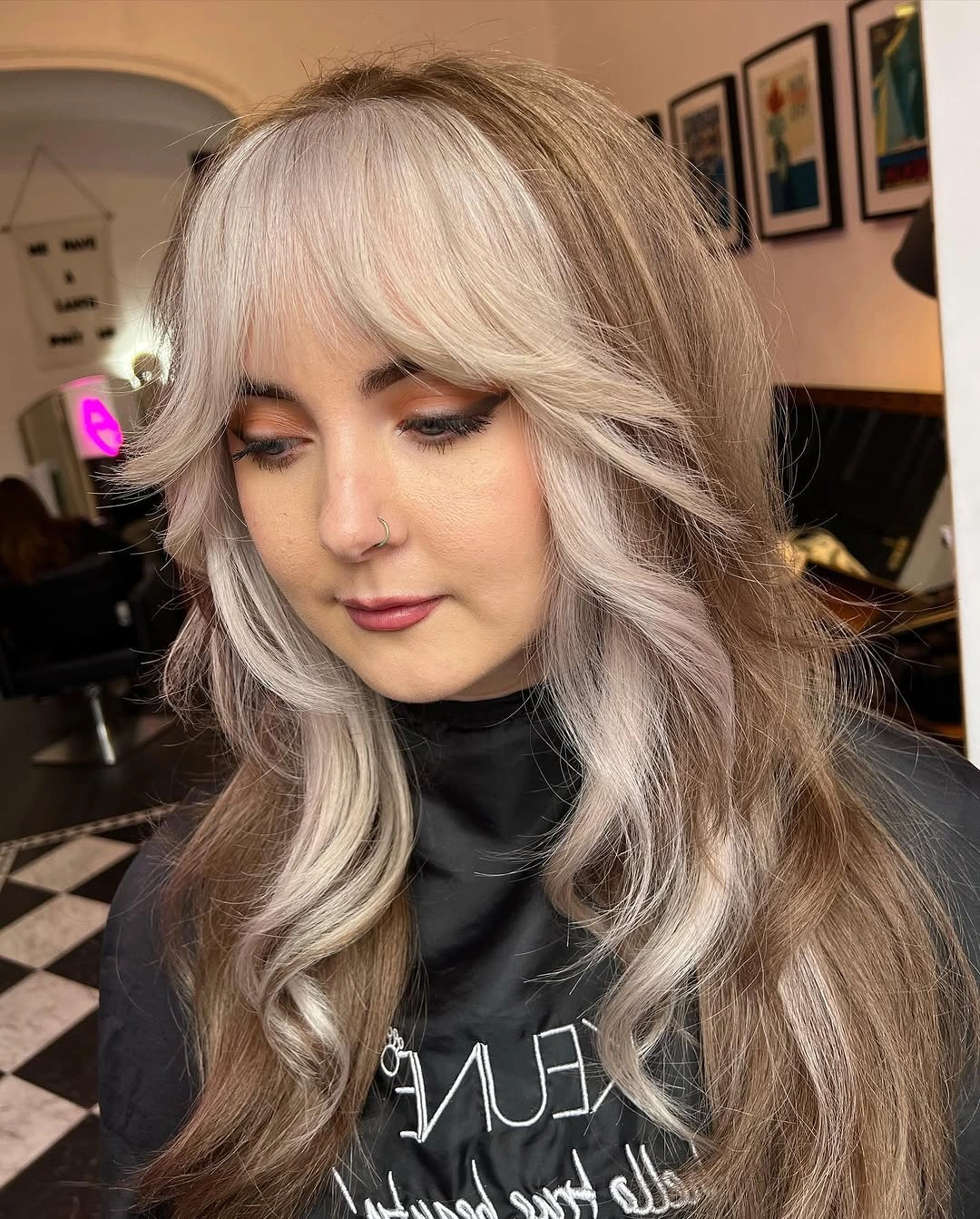
Wide front streaks are one of the clearest ways to change a brunette base without lightening every section. Their scale matters: these pieces are wide enough to be noticed from the front, but the brown still surrounds them and keeps the color story anchored. For a gentler result, use a creamy beige instead of bright white. For a sharper one, bring the light sections closer to the part and reduce the amount of blending at their edges.
The darker root and soft fringe help make the contrast feel intentional rather than disconnected. A blunt fringe would push the look toward a stronger graphic line, while a more open curtain shape would diffuse the pale pieces into the sides. Consider the upkeep that comes with a bright front area, because it will remain the most visible part even when the rest of the hair is styled simply. The contrast is the feature, so it should be chosen with confidence.
Fine Gold Ribbons on a Rounded Dark Bob
The rounded dark brown bob has a smooth, compact silhouette, and narrow warm beige-gold ribbons run vertically through the surface without breaking that shape. The light pieces are fine enough to read like reflections rather than separate blocks of color. Because the bob curves inward around the jaw, the ribbons follow the cut and make the dark base look more polished and dimensional.
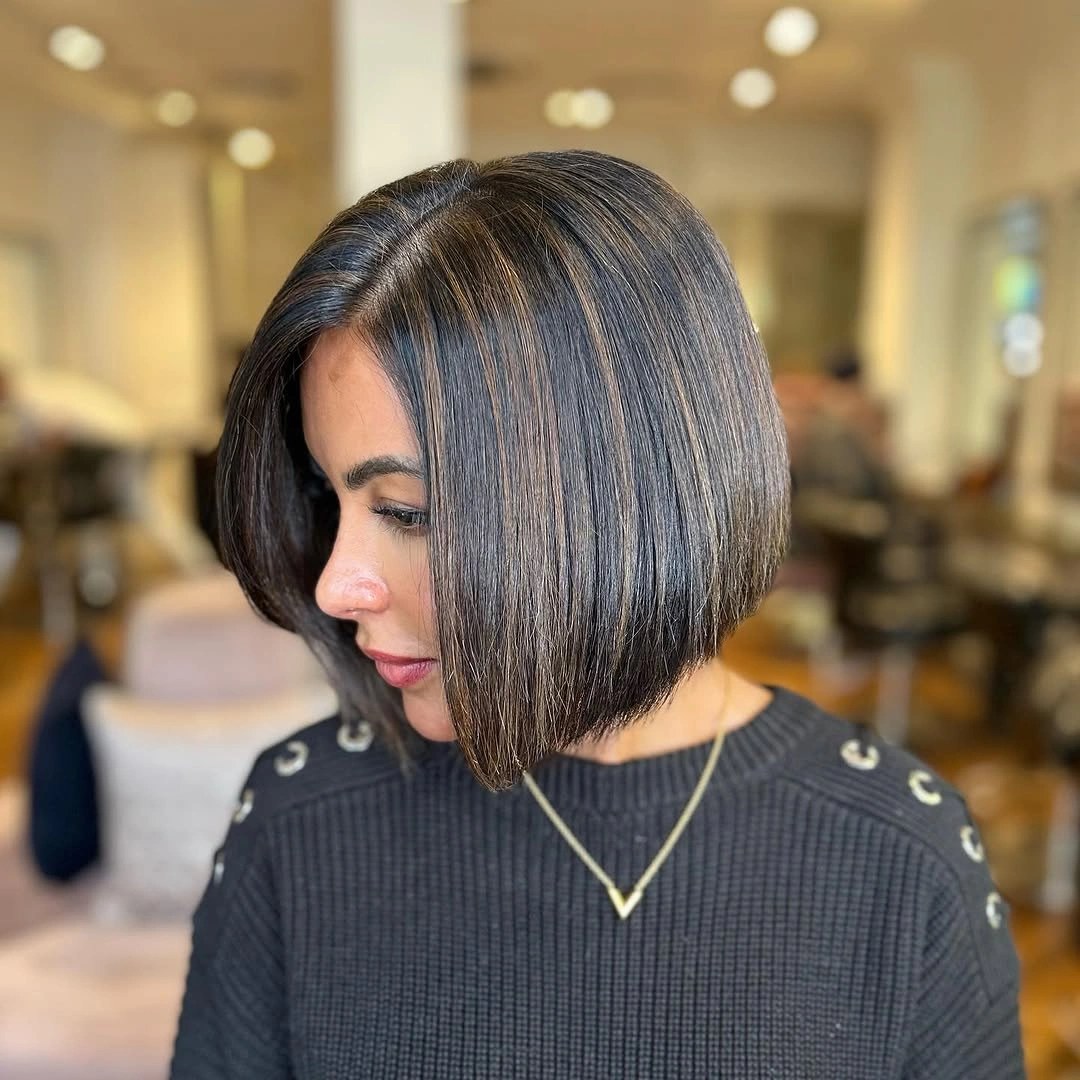
Short bobs often show color placement more clearly than long hair, so subtle ribbons can have a large effect. Keeping them narrow preserves the dark brown field and avoids a striped appearance around the face. A warmer caramel direction would make the contrast more noticeable, while a cooler beige would create a softer metallic-looking result. Either way, the bob shape needs to stay smooth enough for the lines of color to remain visible, as in these fall bob haircut ideas.
One advantage of this approach is that it gives a dark bob brightness without requiring a fully lightened front section. The tone appears in several small places instead of arriving as one strong panel, which makes the growth pattern less visually obvious. A heavily textured or tousled bob would blur the ribbons and change the effect completely. Choose that finish only if you want the color to read as a general glow rather than a precise set of fine lines.
Deep Purple Waves With Magenta Reflection
The shoulder-length waves sit in a saturated deep purple range, with brighter magenta reflection visible across the middle and lower lengths. The shade looks darker near the roots and more luminous where the waves turn, so the color has depth even though it stays within one family. A smooth, glossy surface lets the purple shifts appear clearly instead of being lost in dry or heavily separated texture.
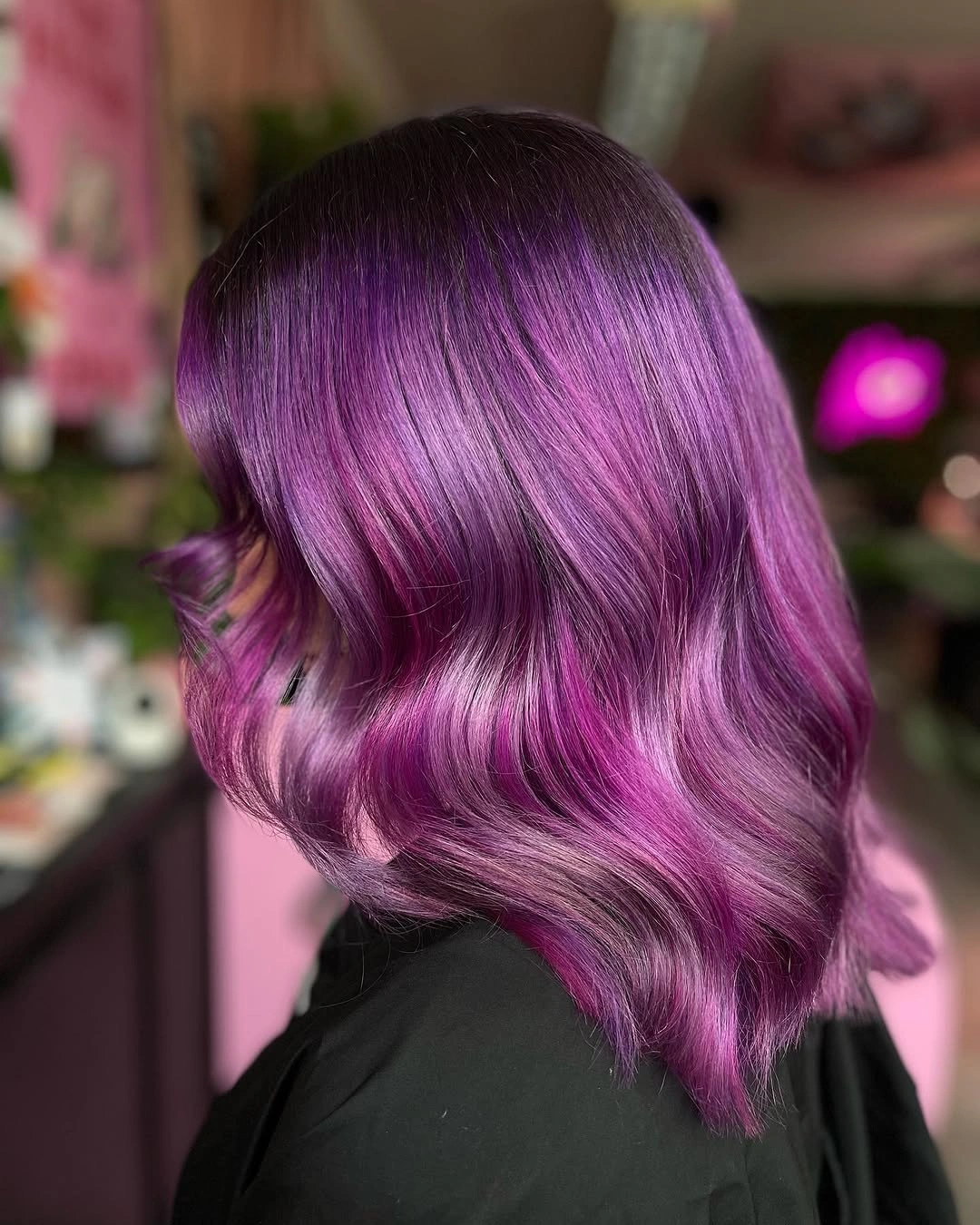
A vivid single-color look becomes more wearable when it has variation between shadow and reflection. Here, the deeper violet areas keep the magenta sheen from feeling flat, and the waves make the changes appear gradually. If you prefer a quieter version, choose a plum direction that looks brownish in low light. If you want more after-dark energy, keep the magenta stronger through the outer layers but let the root remain darker for contrast.
The wave pattern is important because it creates places for the light to move across the purple. A very straight finish would make the shade appear more uniform and sharper, while tighter curls would break the color into smaller flashes. Think about how much statement you want from the silhouette as well as the shade. A blunt cut would make the purple feel more graphic, whereas these softer ends keep it fluid and reflective.
Quiet Brunette Layers With Wispy Fringe
Soft medium-brown hair falls in long layers around the face, with a darker wispy fringe and only the faintest warm tonal shift through the lengths. The color is intentionally quiet, relying on movement and a low-contrast blend instead of a bright highlight. That restraint lets the fringe, face-framing layers, and loose ends shape the look while the brunette base stays continuous from crown to lower lengths.
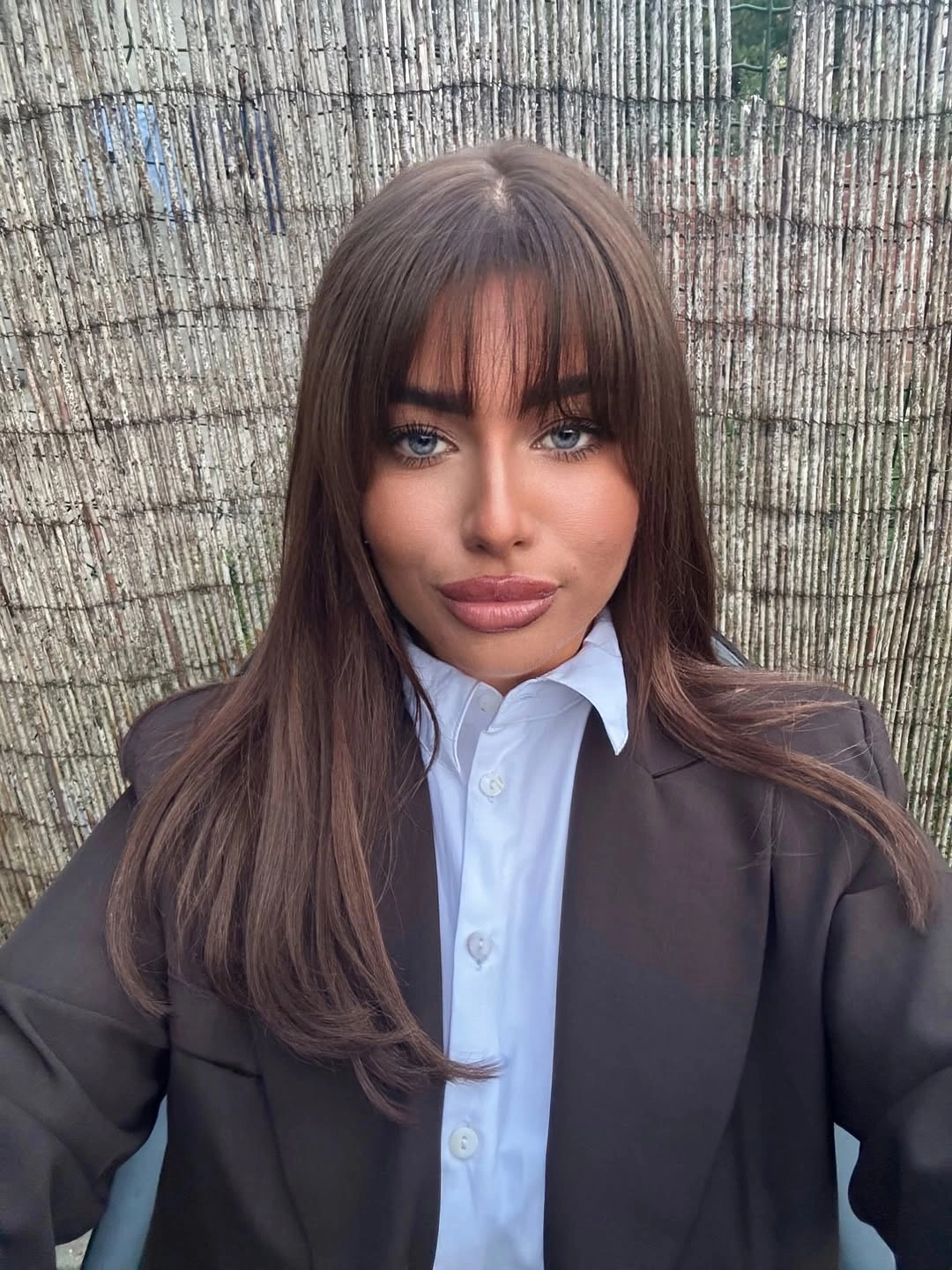
Not every October hair color idea needs a major change in shade. A refined brunette blend like this can feel new when the cut creates enough negative space around the face and enough movement at the ends. If you want to add dimension, use very fine warm pieces placed under the top layer rather than broad highlights. They will appear as soft depth when the hair moves, without changing the overall brunette impression.
The fringe is light enough that it does not form a solid color block across the forehead, which helps the whole look feel relaxed. A denser fringe would make the brown appear deeper at the front and create a more defined frame. Consider how much face-framing you want when the hair is pulled back, too. Long layers remain visible in a loose ponytail, while short layers may disappear and leave the color looking simpler than it does worn down.
Long Copper Waves With Dark Root Depth
Warm copper-orange waves extend through very long lengths, while a darker root area and deeper brown underlayer keep the color from looking flat. The brighter copper is most visible through the outer waves and front sections, creating a warm frame around the face. Because the lengths are long and layered, the darker and lighter areas overlap rather than forming one obvious horizontal line.
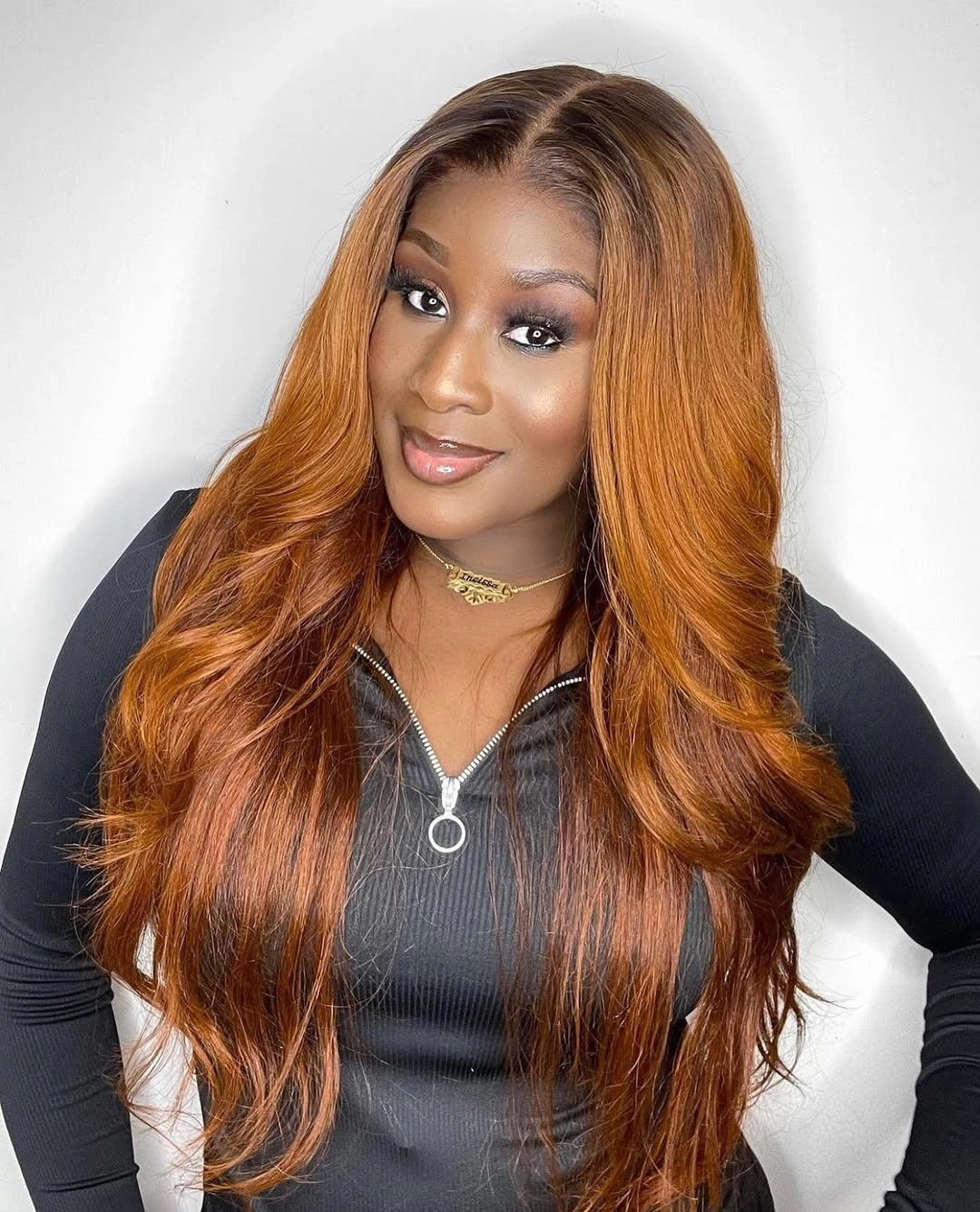
Root depth is especially helpful with a bright copper because it gives the color a shadowed beginning and makes the warmer lengths look more dimensional. You can keep the root subtle for a blended transition or more pronounced for a stronger contrast. The important part is that the darker area belongs to the overall palette rather than looking gray or unrelated. Here, the brown undertone lets the copper appear richer, not simply brighter.
Loose waves reveal the color variation from every angle, but a straighter finish would make the copper surface look more continuous. If you tend to wear your hair tied back, keep some warmth around the front and sides so the color still has a visible effect. An all-over saturated copper would be more direct, yet it would lose the layered depth created by the darker root and underlayer. The difference is subtle in concept but clear in the finished silhouette.
Chocolate Ringlets With Subtle Warm Threads
Defined dark chocolate ringlets create a dense, glossy surface, with small warmer brown threads appearing only where the curls turn toward the light. The color placement is deliberately restrained, so the deep base remains the main visual field. Each ringlet has a visible curve and separation, which allows the warmer details to appear as a quiet reflection rather than a high-contrast highlight.
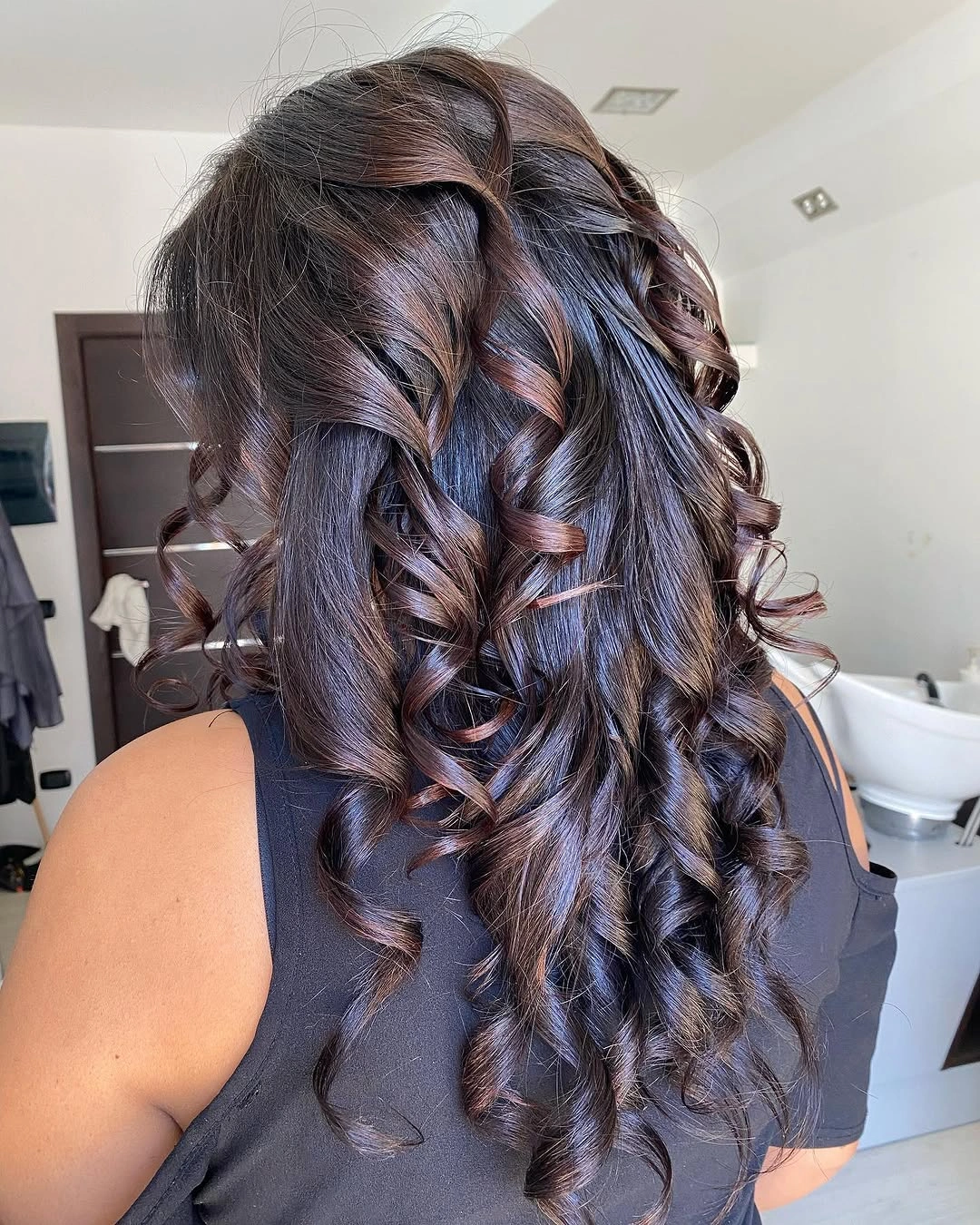
This is a good example of how texture can control color visibility. The warmer threads would be far less noticeable in straight hair, but the defined curls make them surface in small repeating moments. If you want a similar effect with a simpler style, keep the accent pieces narrow and close to the base shade. A much lighter caramel would make each curl read more individually and shift the look toward a higher-contrast pattern.
Gloss makes the dark brown look reflective, but too much uniform shine could hide the separation between the ringlets. The best visual balance comes from keeping the curl shape clear enough for the subtle color to show at the bends. If you prefer a softer, less structured texture, the warm threads will blend more and the hair may read as nearly solid brown from a distance. That can be beautiful too, but it becomes a different color story entirely.
Warm Beige Blonde With Curled Under Ends
Long warm beige-blonde hair moves from a slightly deeper root into lighter, smooth lengths, then curves gently inward at the ends. The tone is soft and creamy rather than icy, which gives the color a quiet, sunlit quality without requiring sharp ribbons. The turned-under finish adds a rounded edge that makes the long hair look fuller and gives the pale shade more visible shape.
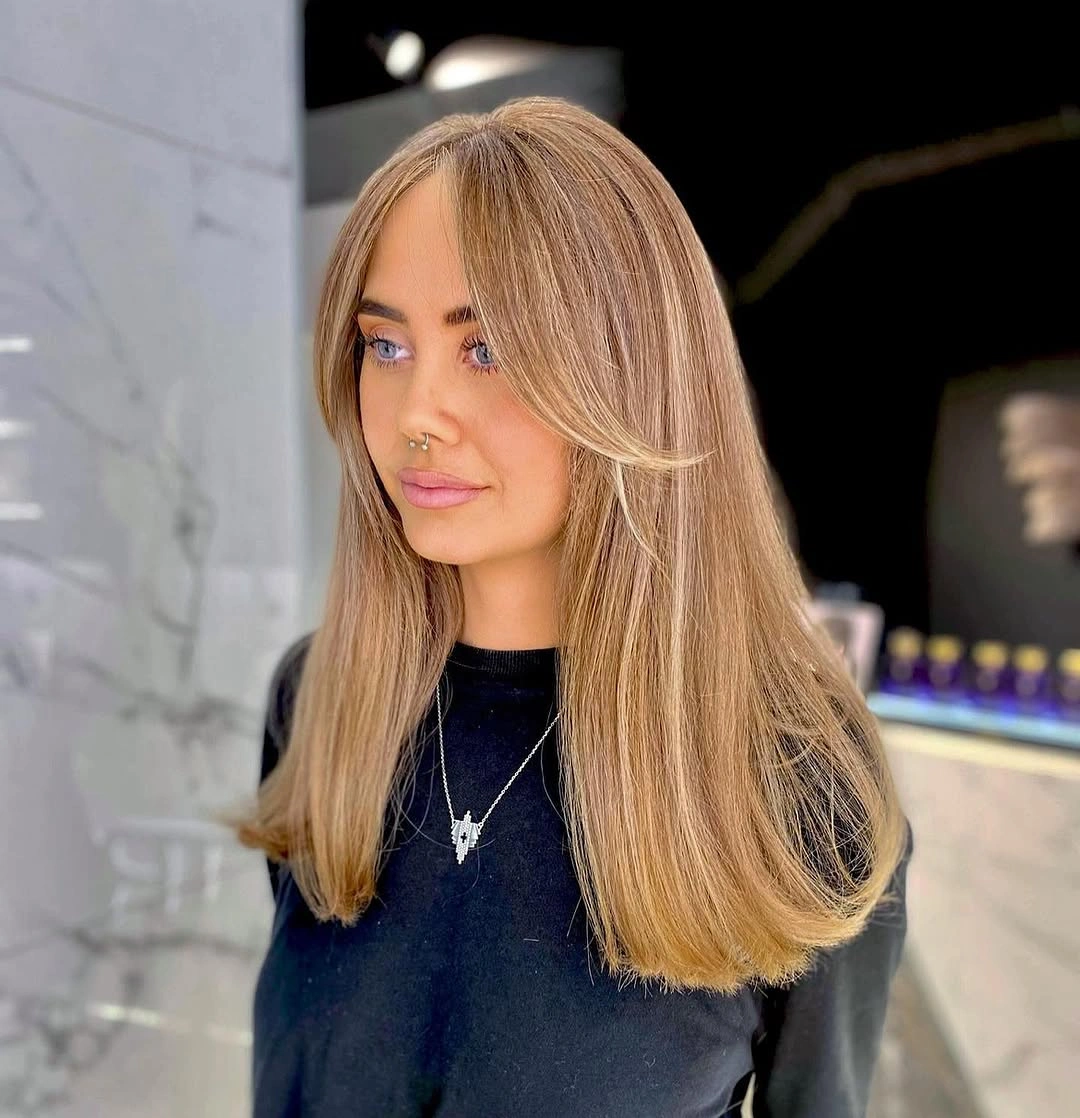
A warm beige direction can be especially useful if bright pale blonde feels too stark against your usual makeup or wardrobe colors. The deeper root keeps the transition grounded, while the smooth lengths show the shade clearly without needing a dramatic wave pattern. If you want more contrast, add a few finer lowlights around the interior. Keep them subtle, though, because bold dark lines would interrupt the calm, continuous effect that defines this look.
The curved ends do more than decorate the style: they stop a long light color from ending in a thin, flat edge. A blunt straight finish would feel more contemporary and graphic, while these rounded ends create softness. Consider how you normally dry or style the last few inches, since that choice affects the whole silhouette. The shade can stay the same, but a different end shape will make it feel more polished, relaxed, or intentionally sharp.
Relaxed Copper Waves With a Side Part
This shoulder-length copper shade has a warm, slightly muted quality that looks most visible through the loose uneven waves. A soft side part directs more volume to one side, allowing the color to gather in wider bends rather than falling in identical sections. The result feels less controlled than a highly polished curl set, which makes the copper appear lived-in and textured instead of overly uniform.
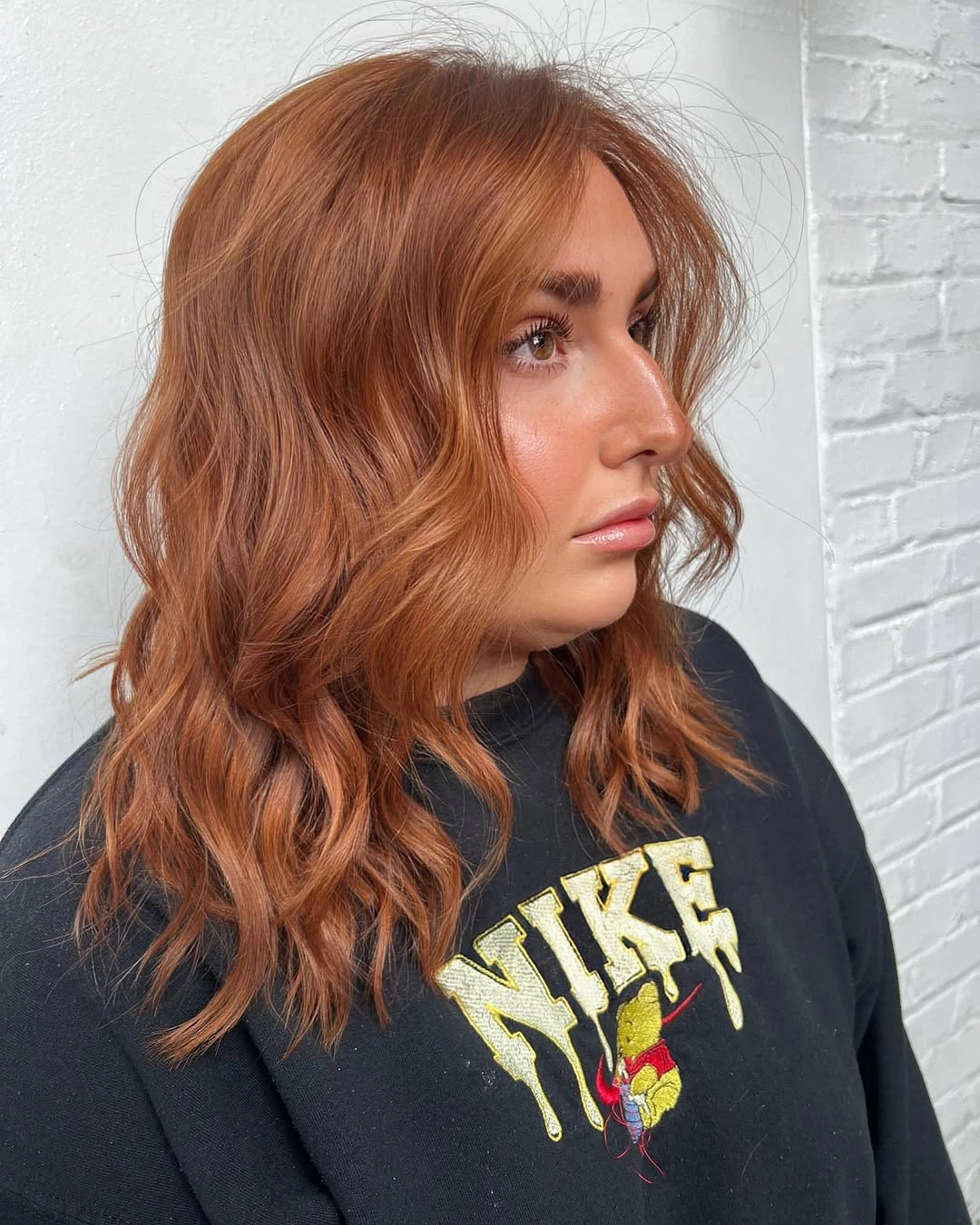
For hair colour for October, copper does not have to be ultra-bright to make an impression. A softened version like this gets its richness from the wave pattern and the way the side part creates depth near the root. To make it more subtle, choose smaller bends and a slightly brown-leaning copper. To make it more expressive, bring the warmest tone into the front pieces where the light will catch them first.
Irregular waves are an advantage here because they prevent the color from looking too styled or too symmetrical. If you use a more uniform curl, the copper will reflect in a more repetitive pattern and can appear brighter overall. The side part is also doing practical work by creating a stronger front section on one side. A center part would make the same shade look calmer and more balanced, but less casually directional.
Reddish-Brown Lengths With Copper Face Light
Long reddish-brown waves have a deeper root area and brighter warm copper light around the front and outer layers. The face-framing warmth is not pale blonde; it stays within the red-brown family, so the contrast feels rich rather than sharp. Loose waves mix the shades together through the middle lengths, while the deeper root keeps the warmest pieces from appearing detached.
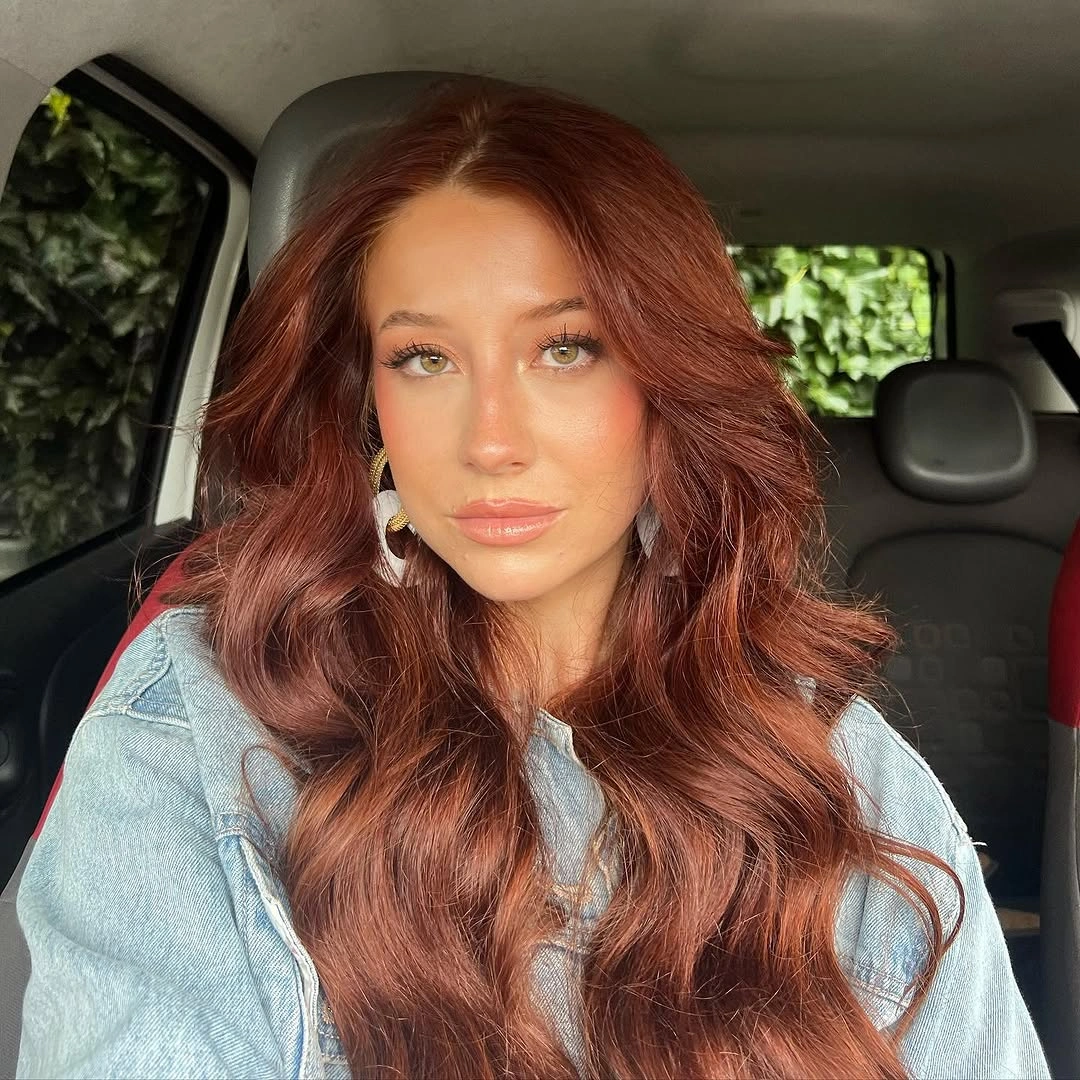
Keeping the highlight tone close to the base color is a useful choice when you want glow without a dramatic shift in identity. The reddish-brown depth still reads first, then the copper appears where the waves and front sections catch light. A brighter golden piece would make the face frame more obvious, but it could also pull the look away from its warm red-brown mood. The near-tonal approach is quieter and often easier to blend into everyday styling.
Because the warmest sections sit near the face, the overall look can change noticeably depending on how the hair is parted or tucked. Pulling both sides back would show more of the deeper root and make the color appear darker. Leaving the front waves loose keeps the copper in view and gives the length more dimension. That flexibility is one of the strengths of a closely related color blend: it does not depend on one exact styling position to work.
Long Beige Blonde With Fine Vertical Ribbons
Very long beige-blonde hair is viewed from behind, revealing fine lighter and deeper neutral ribbons that run through the lengths without breaking the overall pale field. The root area is slightly darker, then the color becomes more luminous through the middle and curled ends. Each ribbon is slim enough to feel blended, but the long smooth surface gives the subtle contrast plenty of space to remain visible.
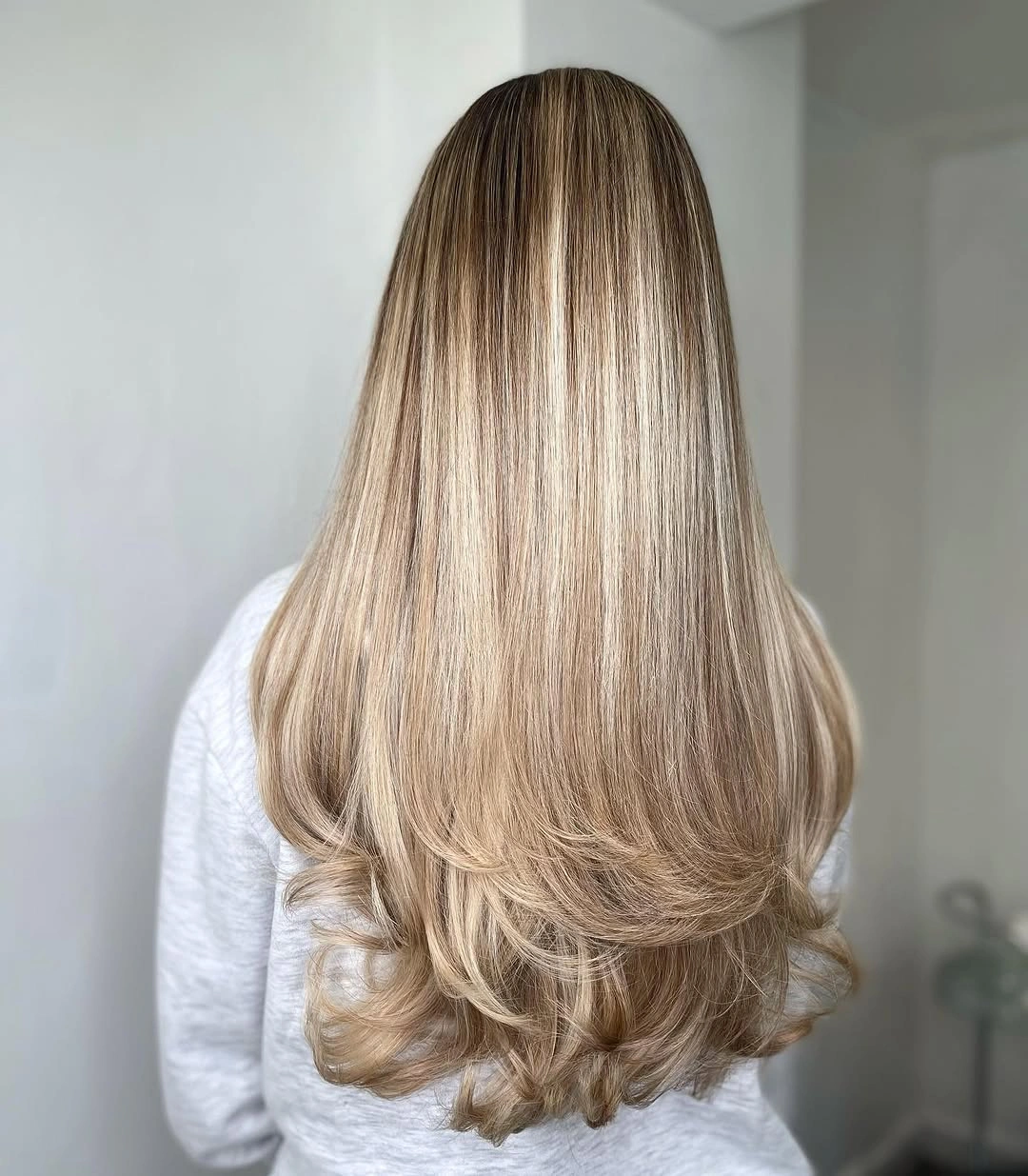
Long hair magnifies every line of color, which is why narrow ribbons are a thoughtful choice here. They create vertical movement without turning the back view into broad stripes. For a more muted finish, reduce the difference between the deepest and lightest beige tones. For a brighter one, increase the light pieces around the ends while leaving the root comparatively soft. The balance depends on preserving the long, continuous flow of the length.
The curled ends add a gentle finish and make the pale color reflect in small changes near the bottom. If the hair were cut blunt and worn perfectly straight, the fine ribbons would look more architectural and possibly more noticeable. Neither approach is better, but they create very different effects from the same palette. Keep the styling decision in mind when choosing subtle color placement, because the shape of the ends can decide whether the blend reads quiet or defined.