Middle parting hairstyles often look simple because the line itself is quiet. Yet that line decides how much space the face receives, where volume begins, and whether the ends feel disciplined or loose. A centered part can make a shape appear deliberate before any curl, color, or accessory enters the conversation. That is why small changes in length or direction can alter the whole impression.
Think of the part as a point of balance rather than a rule to obey. When the surrounding hair is sleek, it sharpens the outline; when the texture opens outward, it gives movement a place to begin. The most convincing version is the one that supports the silhouette already present, so the choice becomes less about copying a finish and more about deciding how much structure you want to keep visible.
Jaw Length Keeps The Center Line Graphic
A straight dark bob ending near the jaw makes the middle part the first point of order. The smooth surface travels down from the clean center line into an even perimeter, and the slightly tucked ends keep the silhouette compact instead of spreading outward. Because the sides carry little visible volume, the shape reads as a deliberate outline against the darker top rather than a soft cloud around the face.
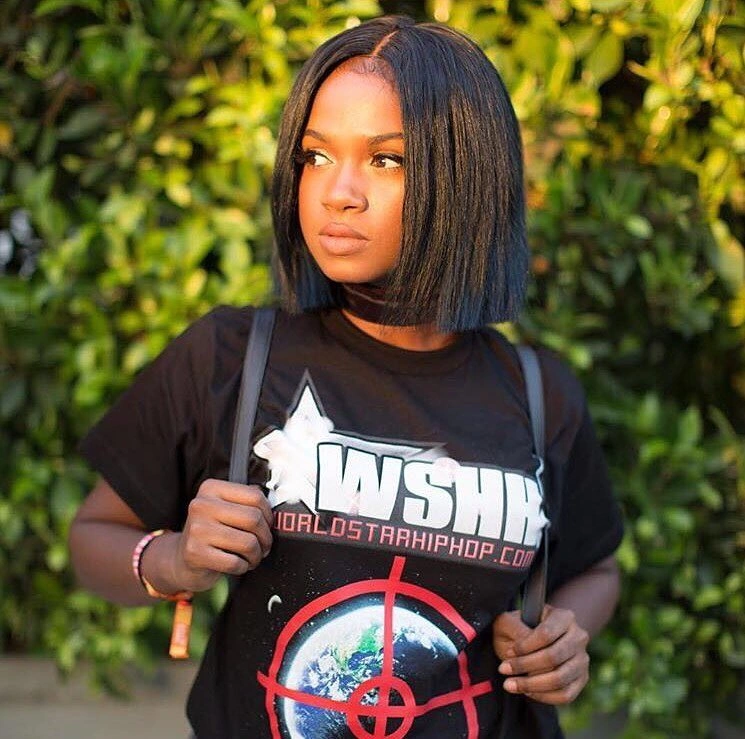
The proportion works through repetition: the part divides the top, the vertical sides follow that direction, and the jaw-level edge closes the shape with a firm horizontal counterpoint. That relationship gives a short style presence without needing curls, layers, or accessories. It is a useful reference when you want a middle part to look precise, especially beside the longer, more fluid silhouettes later in the collection.
Keep the perimeter even if the goal is this graphic effect, because small changes at the jaw will be easy to see. A slightly longer version can soften the outline while preserving the centered division, whereas adding broad waves would shift the look into a different proportion. The main tradeoff is straightforward: the compact bob is clear and efficient visually, but its clean edge leaves little room to hide uneven growth.
Large Waves Build A Balanced Long Frame
Long brown hair with a centered part and broad, smooth waves creates a more expansive reading than the bob. The crown stays controlled, then the wave begins around the cheek and widens toward the ends, so the length gains movement without losing the clear vertical division at the top. The glossy finish reinforces that measured shape and makes the style feel deliberately arranged rather than randomly curled.
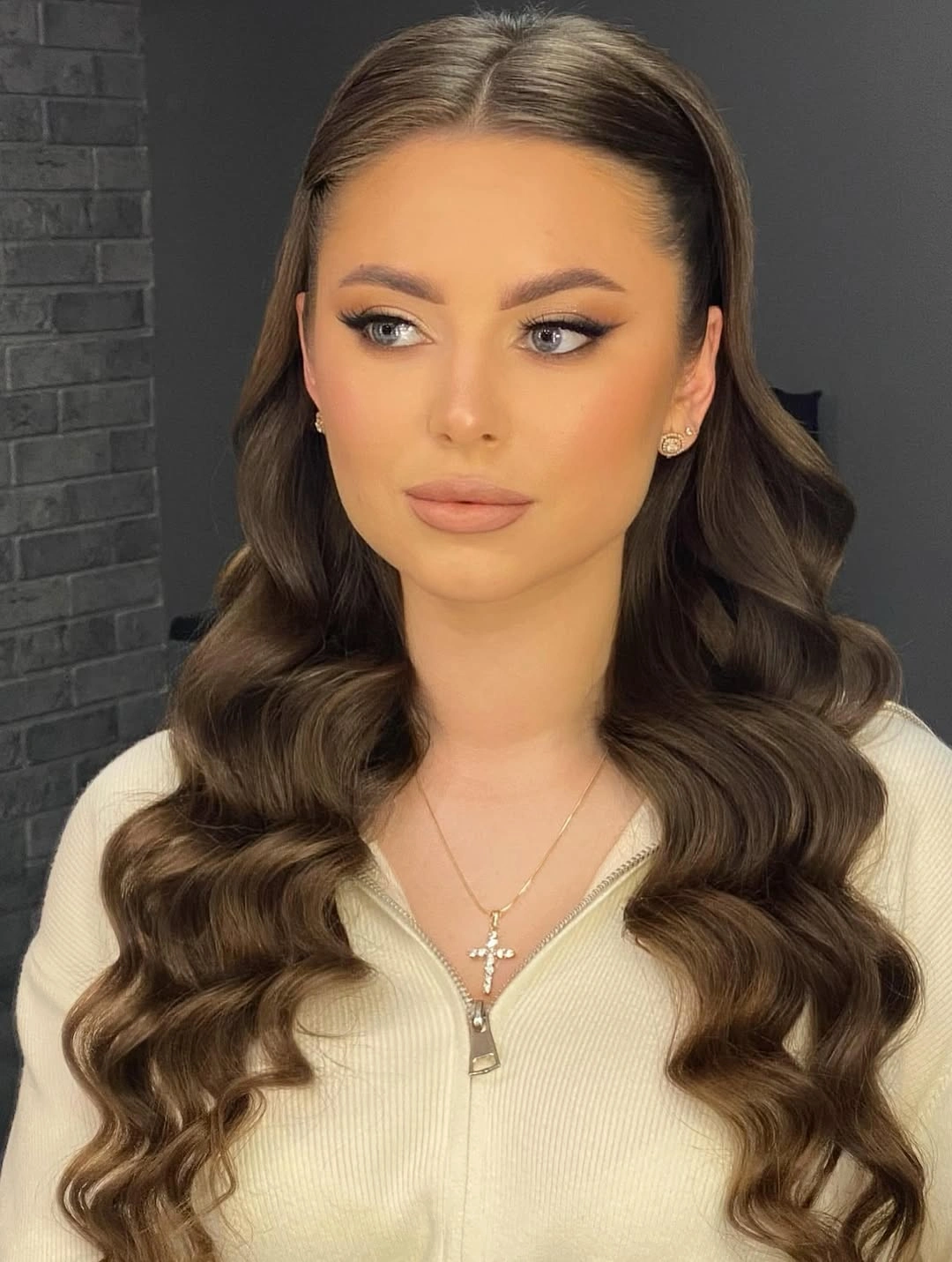
The structure succeeds because the fuller sections sit lower on the silhouette while the center remains relatively calm. That placement keeps the face area open and lets the wave provide width at the sides without turning the part into a competing detail. If you want the same balance for a less formal result, keep the smooth center and relax the curl size through the lower lengths rather than changing the part.
A dressed wave like this asks for more control than an undone bend, and brushing can quickly merge the separate sections into a heavier shape. The practical choice is to preserve the broad movement while allowing the ends to remain softer and less uniform. The result is most useful when you want a long middle part with visible polish, but not when low-maintenance irregularity is the priority.
Very Long Waves Need A Calm Vertical Anchor
Very long black hair changes the scale of the middle part immediately. The centered line begins on a smooth crown, while the lower lengths fall well below the chest in broad, relaxed waves that grow fuller toward the bottom. Against the graphic T-shirt, the dark hair becomes the dominant vertical element, yet the part prevents that length from reading as one unbroken mass around the face.
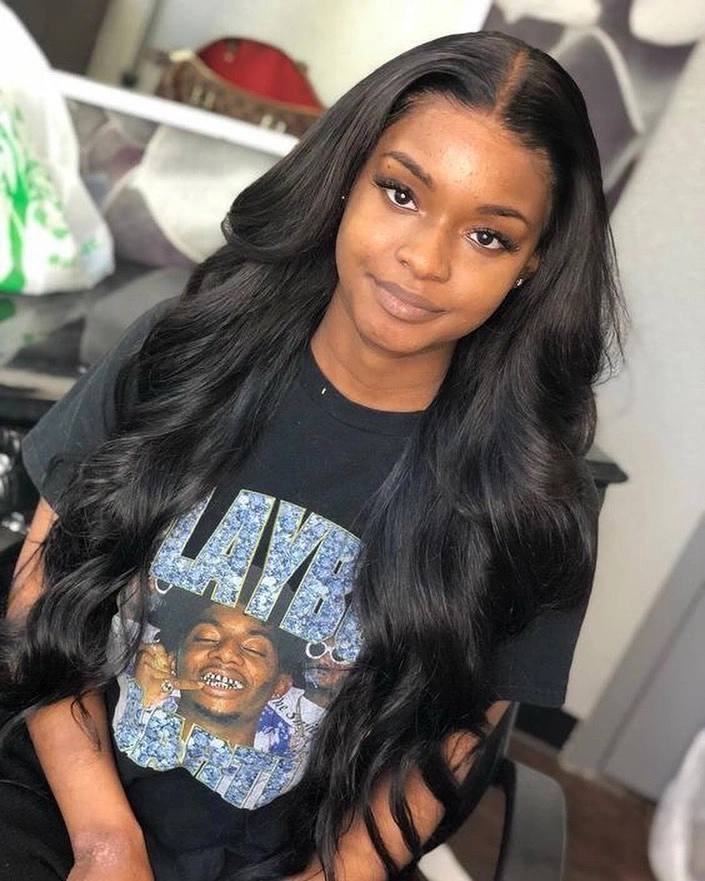
The useful proportion here is the contrast between a relatively quiet top and a generous lower half. That spacing gives the waves room to move while keeping the center visually legible, and it explains why the style feels relaxed rather than heavily set. Readers comparing long middle parting hairstyles can use this as a reminder that length alone is not the whole effect; the transition from smooth crown to soft ends controls the weight.
Very long movement needs space, patience, and careful detangling, even when the finish looks casual. If the lower shape feels too substantial, taking some width from the ends or choosing a shorter length will change the proportion without abandoning the centered part. The honest limitation is that this silhouette carries strong visual impact, but the same length can become cumbersome when the goal is quick everyday styling.
Rounded Ends Soften A Dark Middle Part
Medium dark brown hair uses a centered part as a stable top line, then bends into loose waves and rounded ends near the shoulders. The crown stays smoother than the lower half, so the style has a clear division between control and movement. The curved perimeter creates a softer frame than a blunt bob, while the dark high-neck top leaves the shoulder-level shape easy to read.
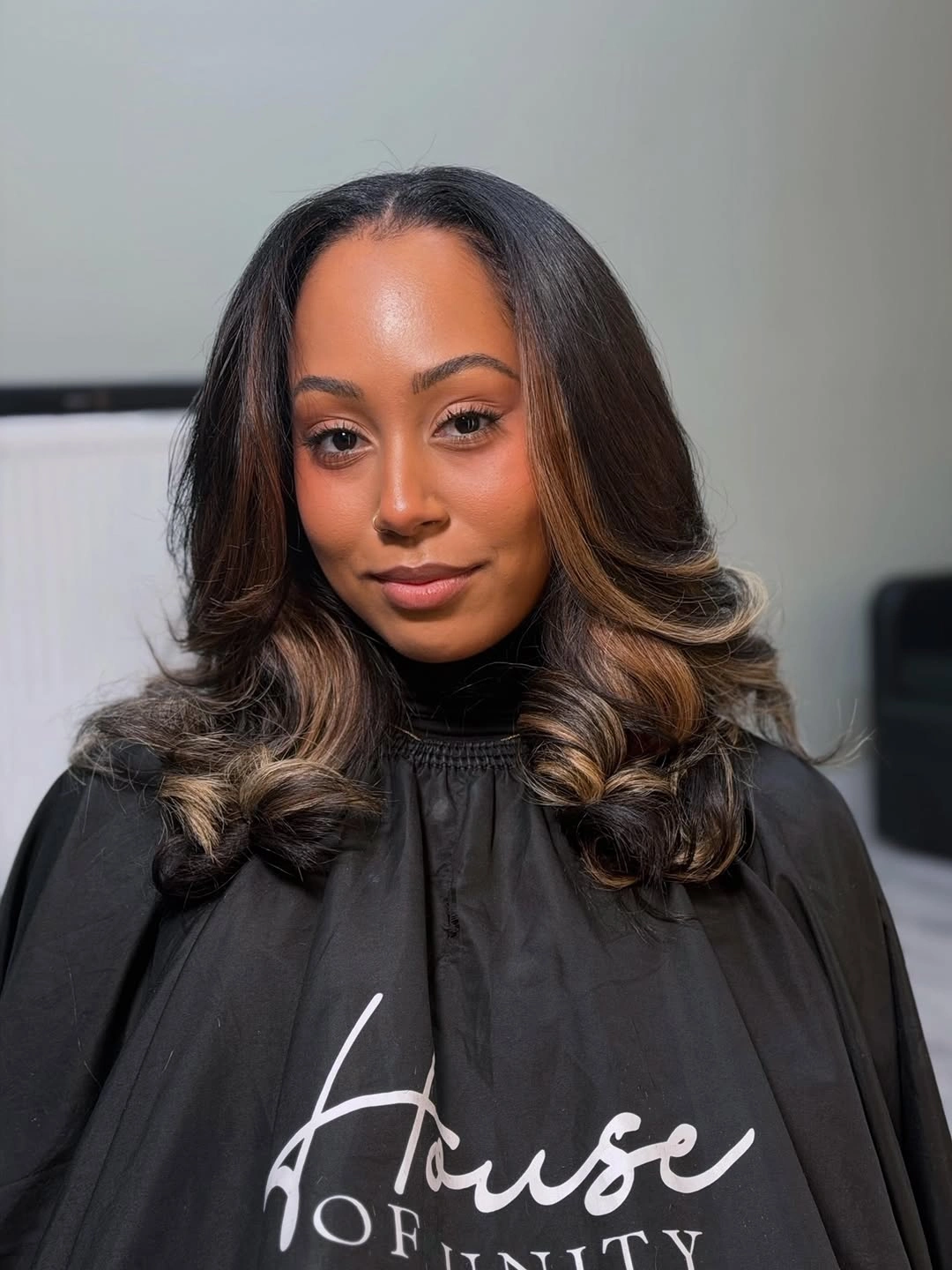
The rounded lower sections matter because they change the visual weight of the length. Instead of stopping in a straight line, the ends turn inward and outward in small arcs, giving the center part a gentler conclusion. That makes this a useful middle option between a compact bob and a full long wave, especially for someone who wants visible curl without a dramatic increase in scale.
To keep the proportion tidy, refresh the curved ends rather than adding more volume at the crown. Brushing the lower sections too aggressively may flatten the distinction between the smoother top and the shaped perimeter, while leaving them slightly irregular can make the look easier to wear. The tradeoff is a polished rounded frame that feels approachable, though its curled edge will show when the shape loses definition.
Bright Orange Hair Uses The Part As Structure
Bright orange hair turns the middle part into a simple organizing device. The long, smooth lengths fall below the chest with an almost straight outline, so the saturated color supplies most of the visual drama and the centered division keeps that color field from feeling unstructured. The even ends support the clean reading, while the car interior stays secondary to the vivid hair.
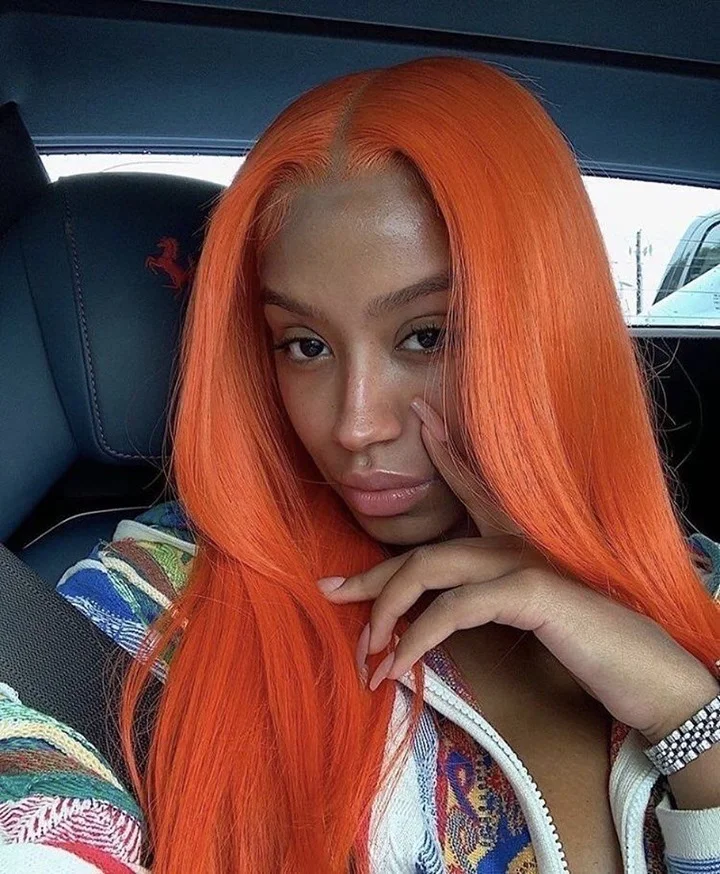
Because the surface is straight and the color is strong, there is no need for extra layering or curl to establish a focal point. The part creates two equal vertical panels, letting the eye register the length and the color placement in a controlled order. If you want a quieter adaptation, keeping the same warm family on a shorter bob or shoulder cut would reduce scale while preserving the central line.
A vivid shade also brings a practical consideration: changes at the roots or ends become more noticeable when the surrounding shape is smooth and uniform. That does not make the look fragile, but it means the clean outline depends on consistent visual contrast. The main decision is whether color or movement should lead; here the color leads, and adding large waves would change the article of proportion rather than simply decorate it.
Side Profile Reveals The Bob’s Tucked Curve
Seen from the side, the dark jaw-length bob shows why a middle part can feel architectural. The smooth hair follows the jaw and curves inward at the ends, producing a compact outline with very little extra width. The center division is still visible even from this angle, but the tucked lower edge becomes the more informative proportion because it determines how the bob closes around the neck.
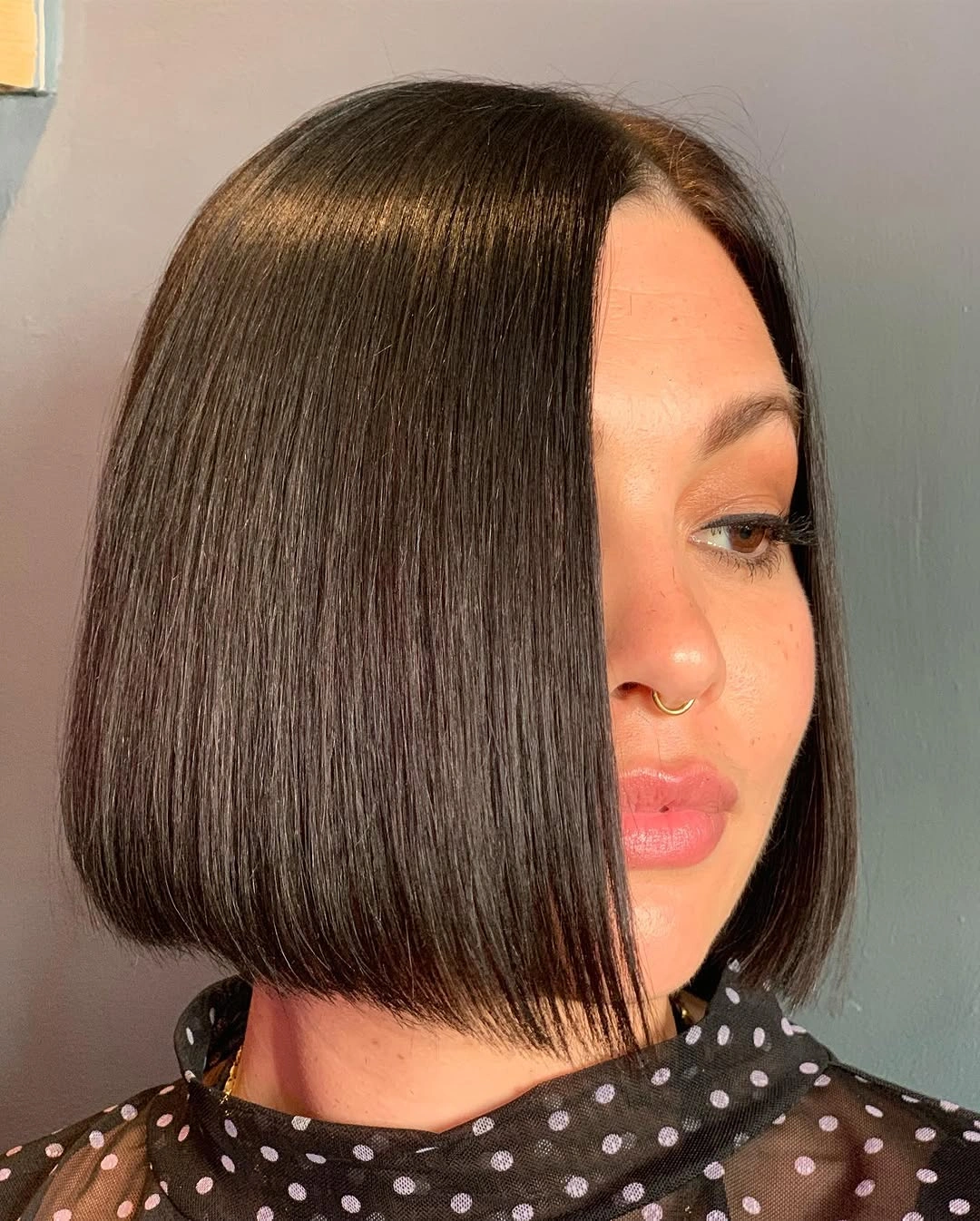
The profile makes the relationship between length and curve easier to judge than a straight-on view. A precise bottom line gives the part a firm endpoint, while the inward bend prevents the short shape from looking like a flat block. This is a strong reference for comparing middle parting hairstyles short enough to feel exact, rather than styles that depend on shoulder movement or long layers.
Keep the lower curve deliberate if you want the same compact effect, and remember that a small amount of extra length will soften the profile quickly. The style offers a clear silhouette with limited visual clutter, but that clarity also exposes uneven ends and growth. A reader who prefers less frequent shaping could keep the center part while letting the bob extend closer to the shoulders.
Face Framing Lightens Long Blonde Waves
Long blonde hair with a center part uses shorter front pieces to open the face before the rest of the length falls into airy waves. The lighter strands near the cheeks repeat through the lower sections, so the color and the framing work together without creating a hard contrast line. The overall silhouette stays long, but its front edge is more broken and directional than the smooth orange example.
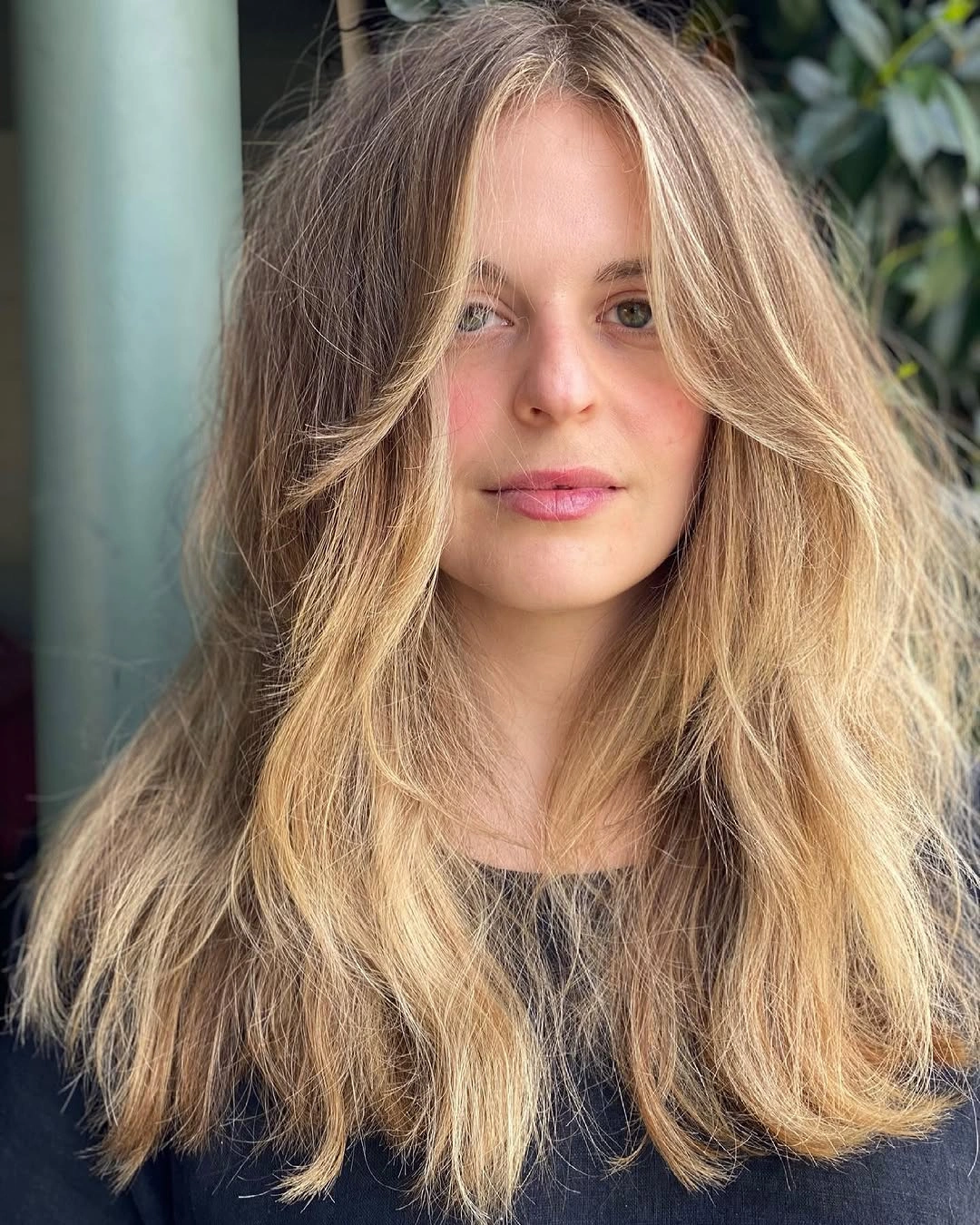
The proportion is controlled by the difference between the open front and the fuller lower length. Those shorter sections keep the central part from becoming a heavy curtain, while the loose waves preserve movement across the shoulders. To adapt the idea, retain the face-opening pieces and reduce the length behind them; the defining feature is the spacing around the cheeks, not the exact amount of hair at the back.
Long, light waves need gentle handling if their separate bends are to remain visible, and the lighter front pieces can draw attention to any change in placement. A softer, less layered version will feel calmer but may also lose the open framing that gives this style its shape. The practical tradeoff is between airy movement near the face and the extra care required to keep those sections distinct.
Rounded Curls Give The Center Part Volume
Dark curls form a rounded, lifted silhouette around a visible middle part. Instead of falling down in a narrow column, the springy texture expands around the temples and upper sides, giving the short-to-medium shape width and energy. Glasses and the striped shirt remain supporting details; the important relationship is between the clear part and the compact volume that gathers on both sides.
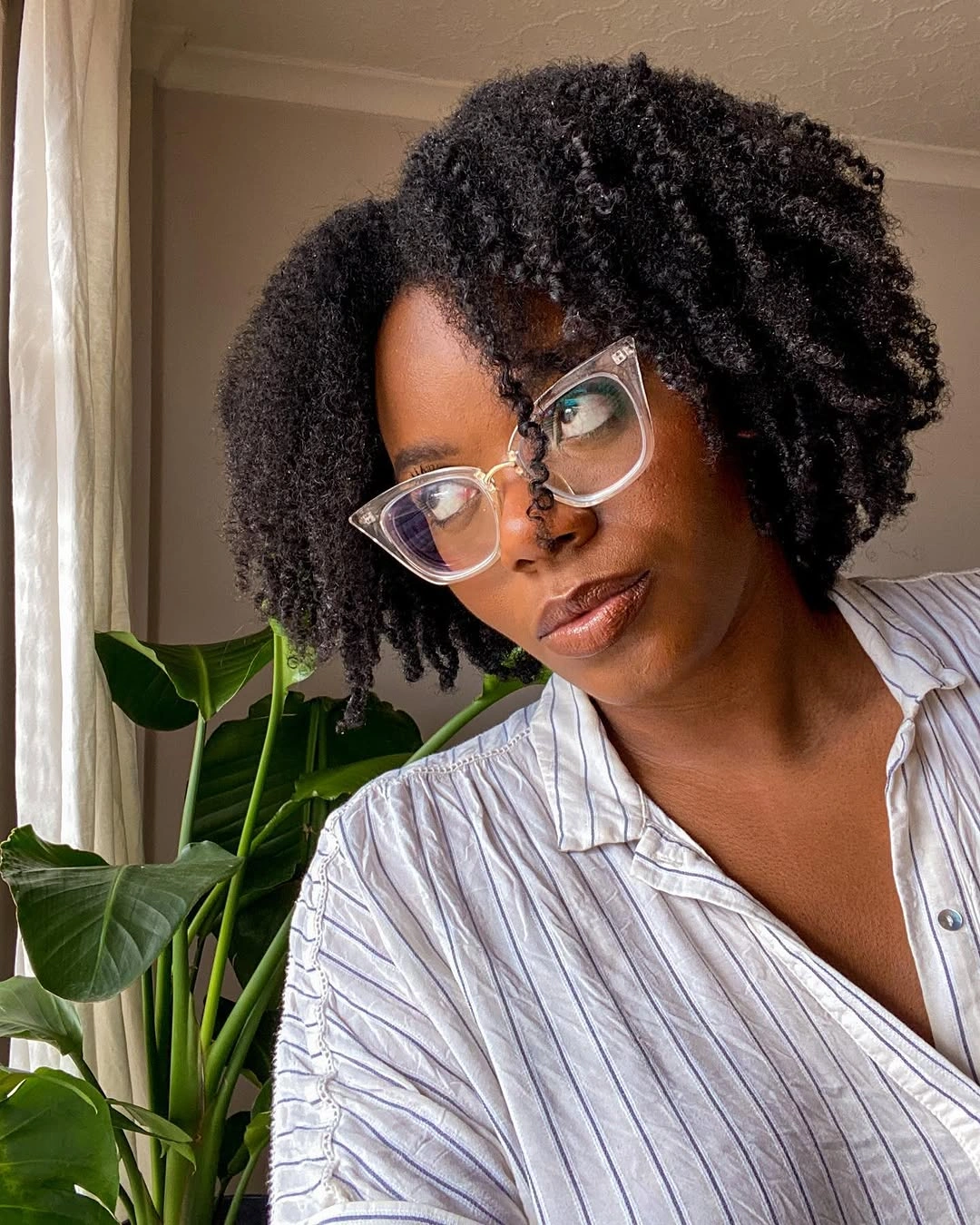
The centered line provides order without flattening the curls. It divides the upper shape, while the rounded sides maintain their own irregular texture and keep the style from looking pressed into symmetry. This makes the look useful for readers comparing middle parting hairstyles curly enough to carry volume on their own, especially when a long wave would feel too narrow or too extended.
Volume like this is best adjusted by changing the width or the amount of definition rather than forcing every curl into the same direction. Overhandling can merge the textured sections, while too much smoothing could erase the reason the part works here. The limitation is that the final silhouette depends strongly on how the curls sit on a particular day, but that variation is also part of its visible character.
Defined Ringlets Keep A Shoulder Shape Open
Shoulder-length light brown curls create a more open frame than the rounded dark shape before them. The middle part stays visible at the crown, then separated ringlets spring toward the cheeks and continue to the shoulders. Because the curls are defined individually, the silhouette has movement and air between sections instead of becoming one continuous halo around the head.
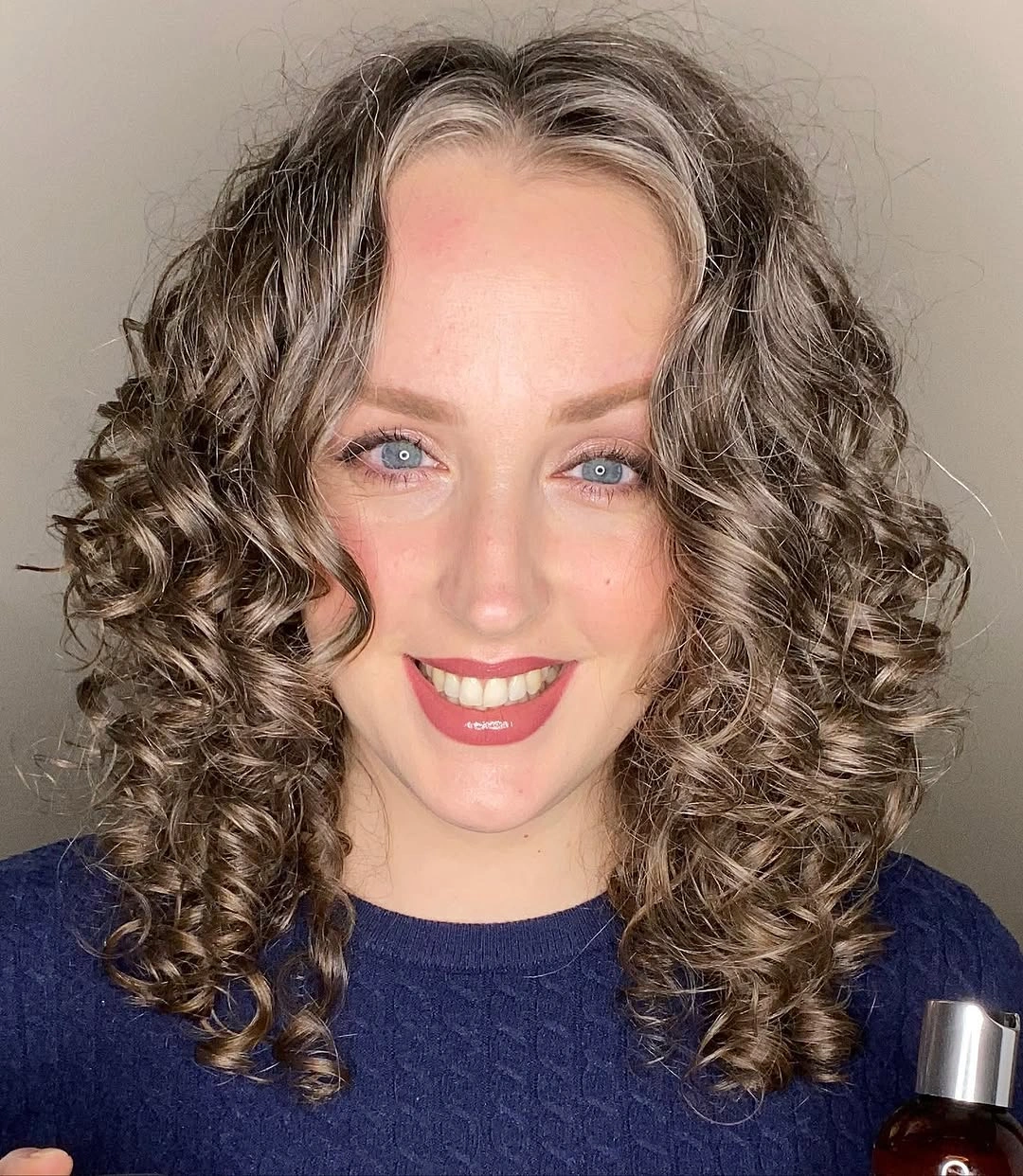
The shape works through controlled spacing. Each curl group contributes width near the face, but the neckline remains visible below, which prevents the medium length from feeling crowded. A reader wanting a softer version could allow the ringlets to merge slightly or choose a longer wave, while keeping the part clear as the structural starting point.
Defined curls ask for careful separation if the ringlets are to keep their rounded rhythm, and handling can change that rhythm more quickly than it would on a straight style. The practical advantage is visible volume without very long length. The tradeoff is that the airy spaces and individual curl shapes may need more attention than a deliberately tousled shoulder cut.
Layered Waves Let Length Move Away From Center
Long black hair uses a centered part as a quiet axis while broad layered waves move outward through the lower half. The crown is smooth enough to show the split, then the sides curve away in overlapping sections that taper toward the ends. The neutral sweater keeps the contrast simple, so the important feature is the distribution of volume from the top to the long perimeter.
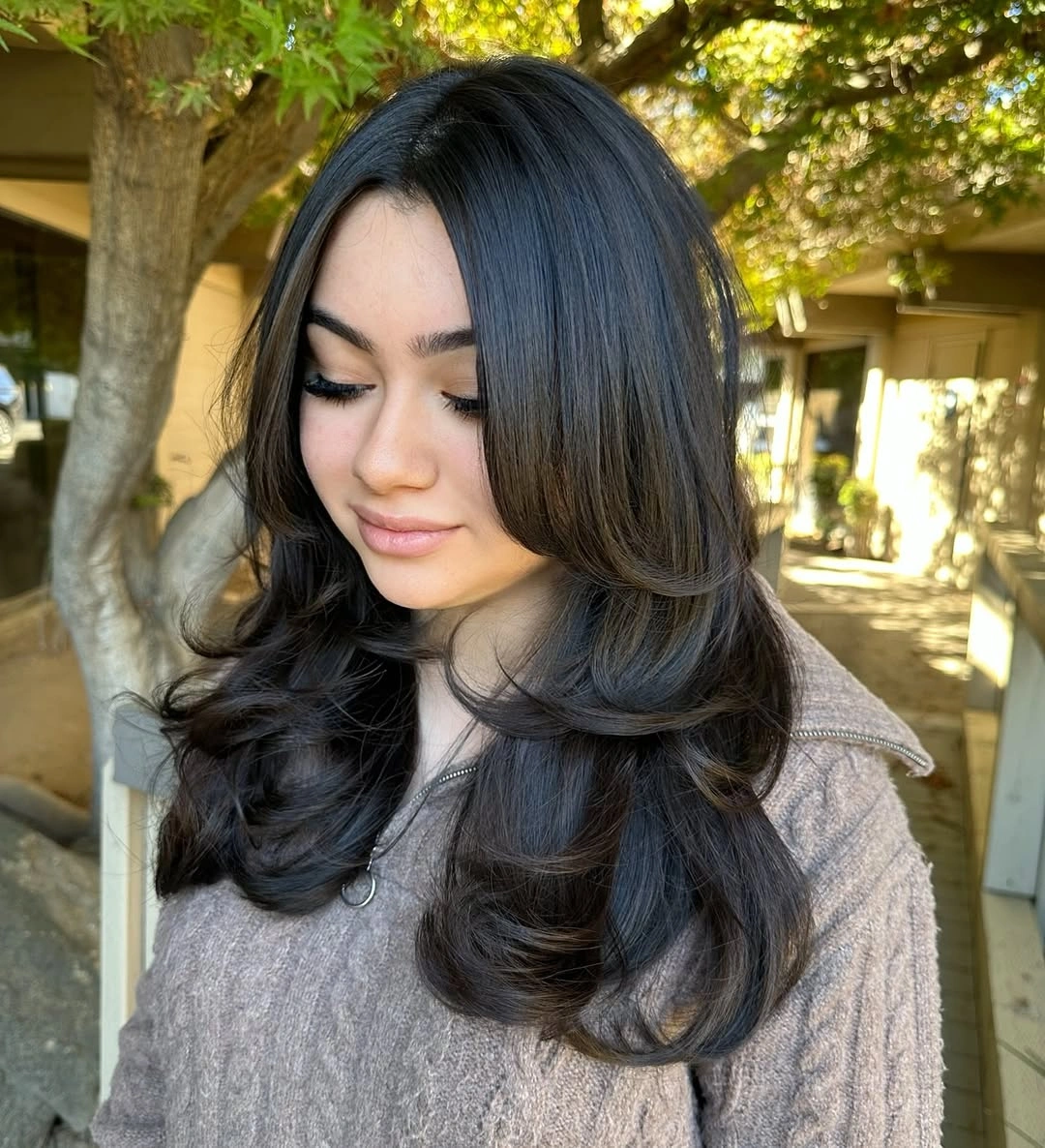
Layers prevent the length from reading as a single heavy sheet. Each section opens a little farther from the center, creating a gradual expansion before the ends return to a narrower line. That proportion is useful when the goal is movement that feels softer than polished curls but more structured than an unshaped long wave. It also shows how layering can change scale without changing the part.
Keep the lower sections separate enough to see their direction, and trim or reshape them if the movement collapses into one dense edge. A shorter cut can retain the same outward flow, although removing too much length will also reduce the graduated sweep. This is a practical choice for readers who want long middle parting hairstyles with volume distributed through the length rather than concentrated at the crown.
Uneven Bends Make The Shoulder Cut Relaxed
Shoulder-length dark hair with soft bends and separated front pieces shows a looser way to use a middle part. The center line stays recognizable, but the lengths do not follow one repeated curl pattern; some sections curve toward the cheeks while others fall in an almost straight direction. That irregularity keeps the silhouette open and makes the shape feel intentionally relaxed rather than formally arranged.
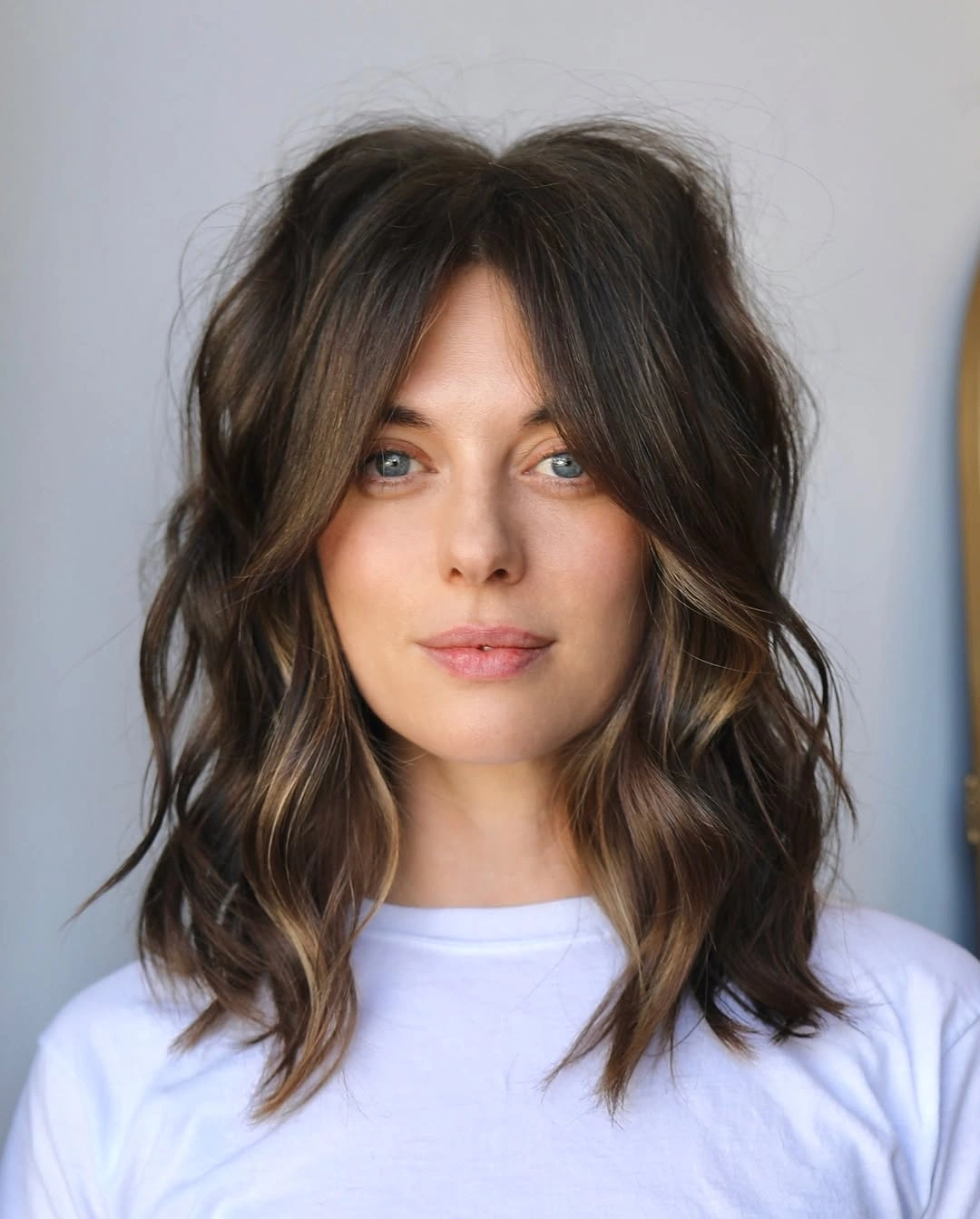
The visual balance comes from the contrast between a lifted crown and an imperfect lower edge. Shorter pieces near the face create a curtain-like opening, while the uneven ends prevent the style from becoming too symmetrical. This is a useful alternative to a smooth blowout because it keeps the middle part as an anchor without asking every strand to match its neighbor.
Let the front pieces find their own direction if you want to preserve the undone quality, but avoid brushing so much that the bends disappear. A slightly more uniform wave will look tidier and may be easier to control, yet it will also remove the irregular spacing that gives this cut its identity. The tradeoff favors ease of movement over exact perimeter control.
Short Platinum Layers Lift The Center
A pale cropped style makes the middle part visible through lift and direction rather than length. The top splits at the center, the front pieces turn softly toward the cheeks, and the sides stay short enough to leave the neckline open. The light color adds clarity to the compact silhouette, while the lifted crown keeps the crop from reading as a flat, close shape.
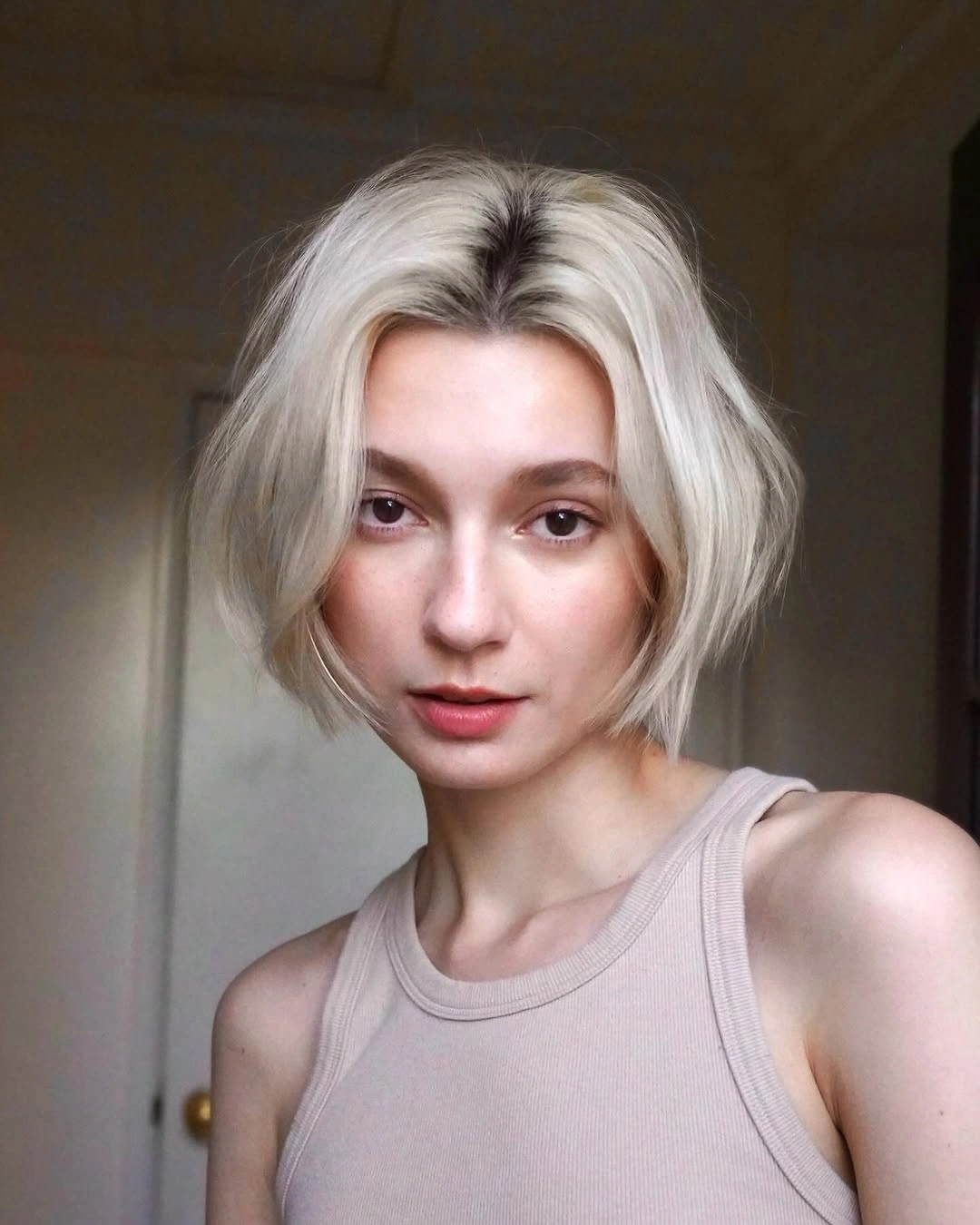
The proportion depends on contrast between the short sides and the slightly fuller top. That difference gives the center line room to register and creates a directional frame around the face without relying on long curtains. It is a useful example for readers searching middle parting hairstyles short enough to feel fresh, especially when a bob would still be more length than desired.
A cropped silhouette has less room to disguise changes, so the top direction and the side length need to stay intentional. Extending the cut into a jaw bob would soften the outline, while keeping the crown lifted preserves the visual focus. The limitation is reduced flexibility between trims, but the benefit is a clear, light shape that does not depend on heavy ends.
Soft Blonde Waves Keep A Bob Unforced
A shoulder-skimming blonde bob uses a center part without making the shape rigid. Loose waves create an uneven perimeter, and the warm color adds depth across the pale lengths rather than concentrating attention on a single sharp edge. The open neckline and simple top let the hair remain the primary silhouette, with the part guiding the eye down the middle before the waves widen.
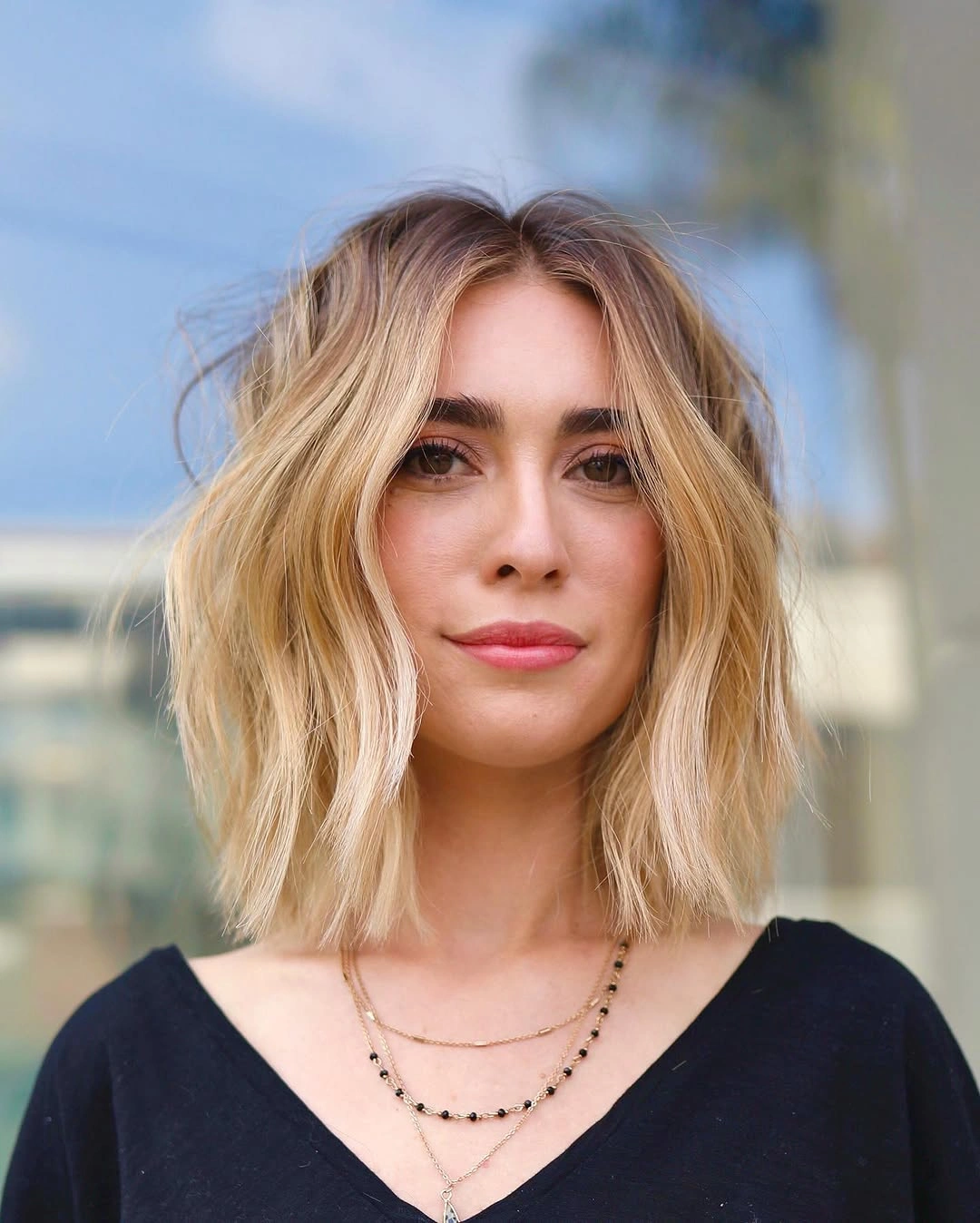
The bob feels lighter because its ends do not stop in a blunt horizontal line. Small bends interrupt the perimeter, allowing the middle part to remain clean while the lower shape stays gently irregular. If you want a more compact interpretation, bring the ends closer to the jaw but preserve the relaxed wave; the defining balance comes from softness against the central division.
Loose waves are forgiving when their direction varies, which makes this a more flexible shape than a precise rounded bob. They can also lose their separation if repeatedly brushed or compressed under clothing. The practical choice is to keep enough space between the front pieces and the ends to show movement, while accepting that a relaxed finish will never have the same exact outline as the short bobs.
Long Face Framing Creates A Graduated Curtain
Very long deep brown hair places the center part high and lets long face-framing sections descend from around the jaw. The front layers form a graduated curtain, while the lower length continues in broad, smooth waves well below the chest. This arrangement keeps the face area from being swallowed by the scale of the hair and gives the long silhouette a visible internal structure.
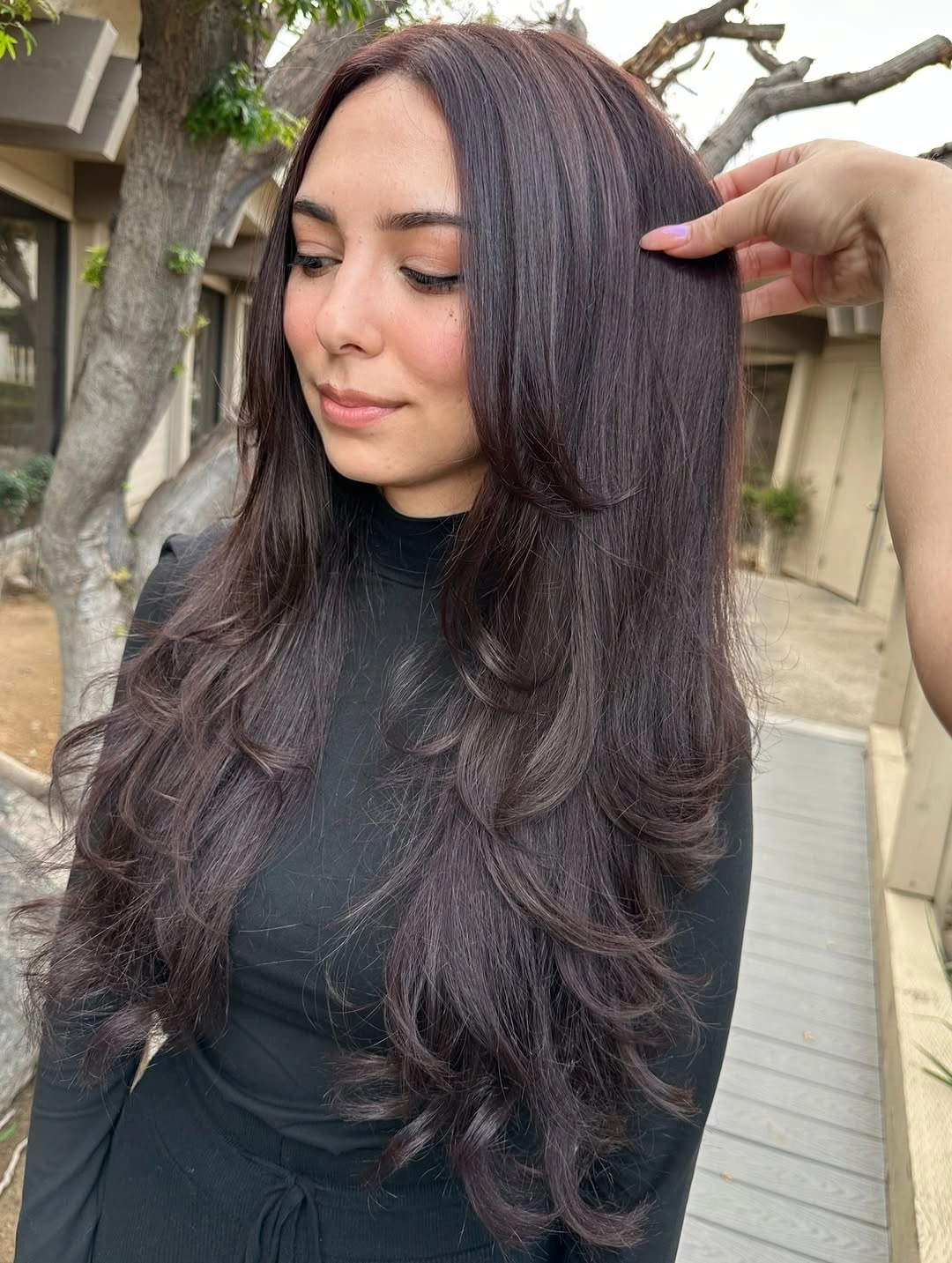
The key proportion is the distance between the shorter front edge and the lowest ends. Those face-framing pieces create a narrowing transition from the open center to the fuller back, so the hair feels layered rather than simply long. Readers can borrow that logic on a shorter cut by keeping the first framing section near the cheek and letting the back finish closer to the shoulder.
Long layers need enough separation to remain readable, particularly when the color is deep and the waves are broad. If the sections merge, the face-framing effect may disappear and the shape can feel heavier at the front. The benefit is dramatic length with a controlled opening; the limitation is that the visual balance depends on maintaining the distinction between the front curtain and the lower mass.
Highlighted Waves Add Depth To Shoulder Length
Medium brown hair keeps a middle part simple, then uses loose shoulder-length waves and lighter ribbons around the face to add depth. The shape is compact enough to remain easy to compare, but the highlights interrupt the single dark surface and bring attention to the front sections. The rounded bends support that color placement without turning the style into a formal curl set.
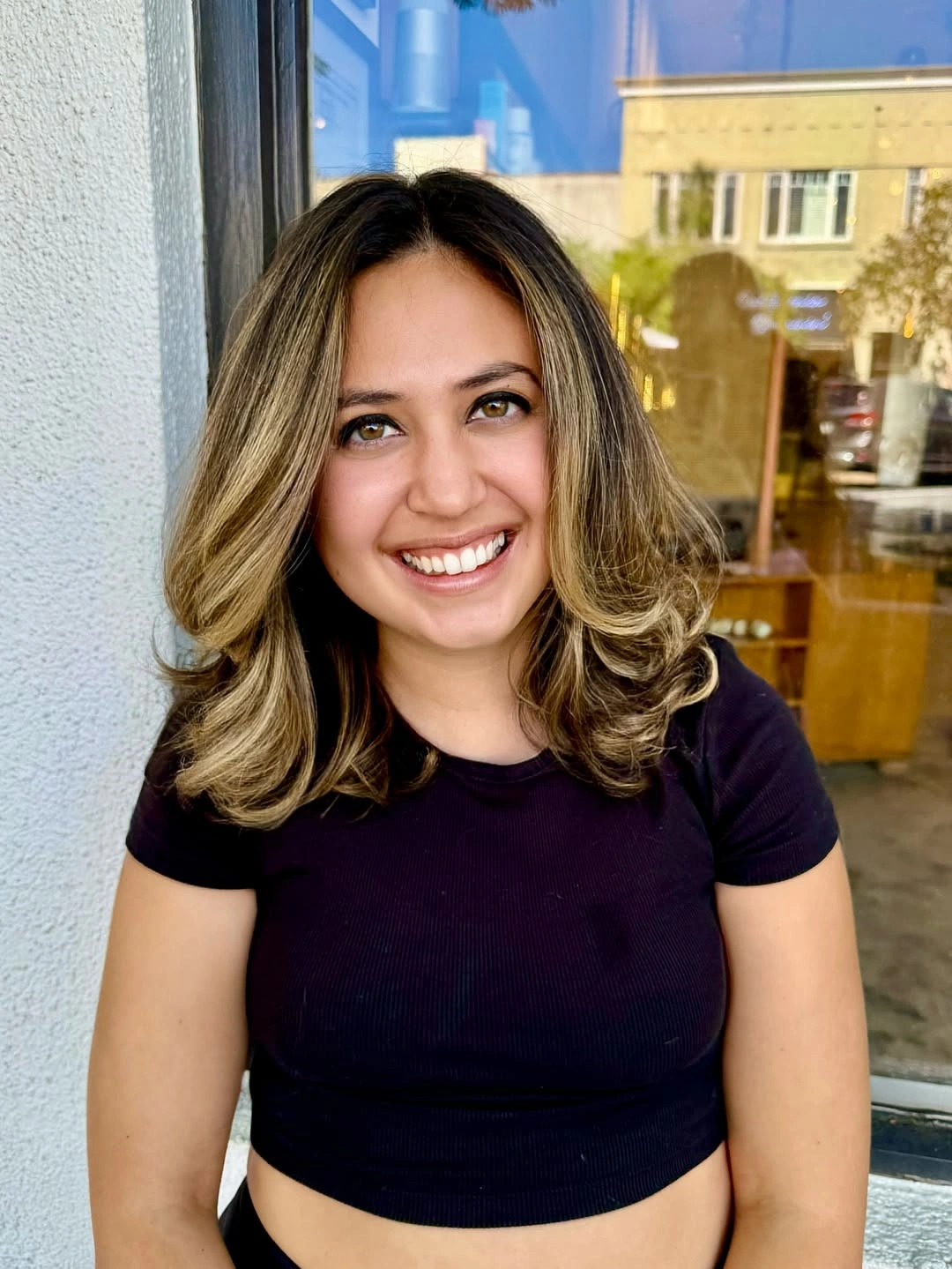
The proportion works because the lighter pieces sit where the silhouette opens, while the darker base continues through the back and anchors the ends. That placement creates dimension without requiring extra length or large volume. If you prefer a quieter result, use fewer lighter sections and keep the same center part; the structural idea is the relationship between the face framing and the overall shoulder line.
Color contrast can make small changes in the front more visible, so the style benefits from keeping the wave direction coherent around the cheeks. A more uniform solid shade would reduce maintenance attention but also flatten the layered reading. This option suits readers who want a medium middle part with visible depth, provided the color remains secondary to the shape rather than replacing it.
Extra Long Curtain Waves Carry More Weight
Extra-long brown hair turns the middle part into the top of a broad curtain. The two front sections sweep down from the center and join long waves that extend far below the chest, while lighter strands near the face keep the enormous length from looking visually solid. The silhouette is widest through the lower half, creating a strong sense of scale and movement.
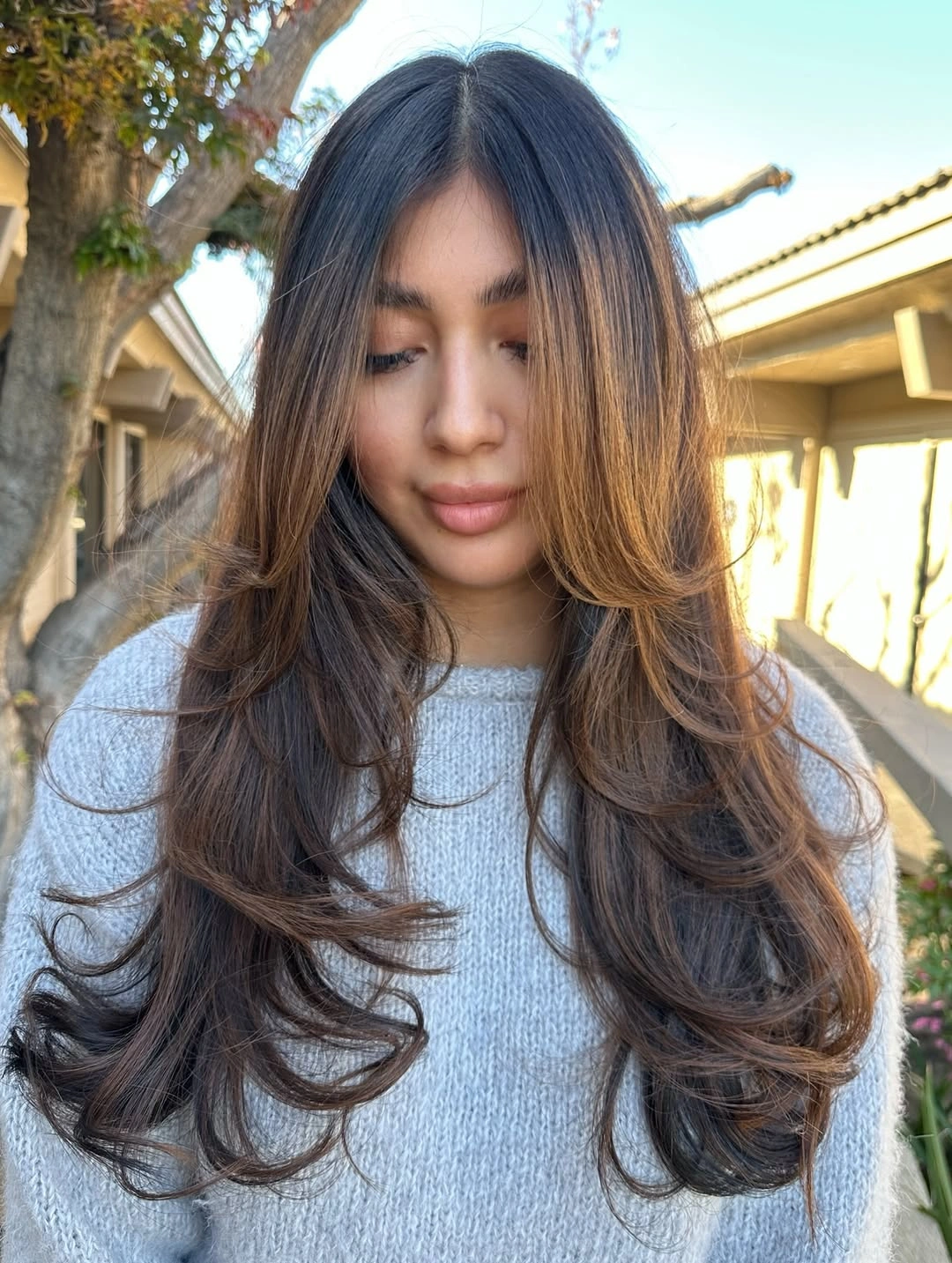
The composition depends on a gradual release of weight. The center stays neat, the upper sides open around the face, and the long lower sections carry the largest volume before narrowing toward the ends. That sequence makes the style feel flowing rather than blunt. A reader can shorten the back considerably while preserving the front curtain, though the dramatic scale will naturally become quieter.
Length at this scale brings a real practical cost: more surface to detangle, more weight through the lower sections, and more opportunity for the waves to merge. Keeping the front framing distinct is therefore as important as keeping the ends shaped. The look is strongest when dramatic length is the point, but it is not the most efficient option for someone prioritizing quick, low-effort styling.
Textured Waves Break A Symmetrical Shape
Nearly black shoulder-length hair keeps the middle part visible while the lengths move in uneven, airy waves. The front pieces bend toward the cheeks and the ends break into separated sections, so the silhouette is directional without becoming polished. The center line supplies just enough order to let the intentionally irregular texture read as a chosen shape rather than accidental imbalance.
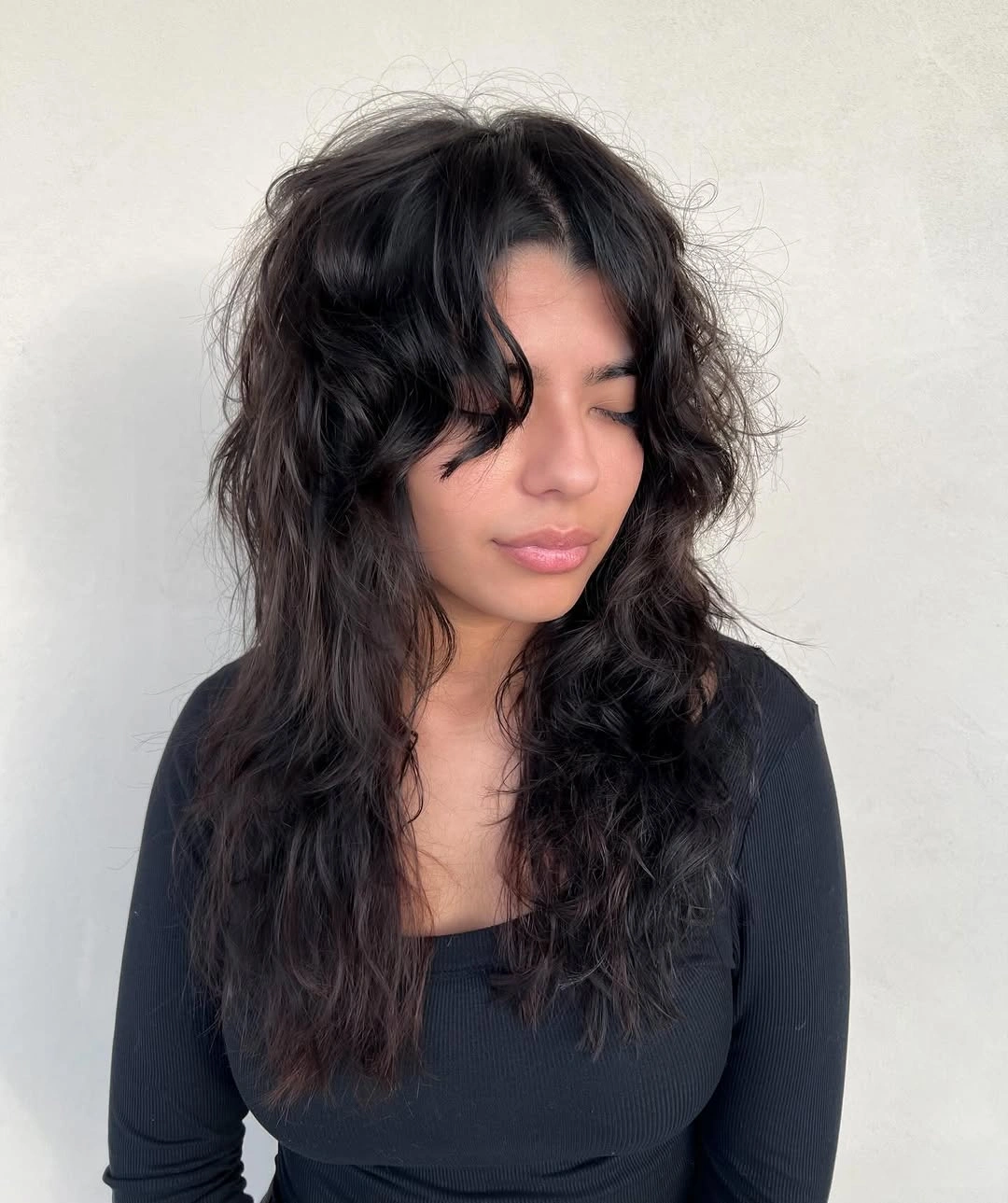
The style gains character from variation in width and spacing. Some sections sit close to the face, others lift away, and the lower edge changes direction instead of closing in one smooth curve. That makes it a useful counterpoint to the formal wave patterns, especially for readers who want a middle part to organize texture while leaving the finish visibly undone.
Keep the wave groups separated with a light touch, because overbrushing will erase the uneven edges that give the shape its identity. Smoothing the front can make the style more controlled but may also make the center line feel too dominant. The tradeoff is deliberate irregularity: it offers flexibility in movement, yet it asks the wearer to accept that the perimeter will not look identical from every angle.
Rounded Short Ends Soften A Compact Bob
Black hair cut around the jaw uses a middle part and a gentle inward curve to create a rounded short bob. The ends do not sit as sharply as the first compact examples, and the sides tuck beneath the chin before closing toward the neck. That small change in direction makes the shape feel softer while preserving the clean, symmetrical top line.
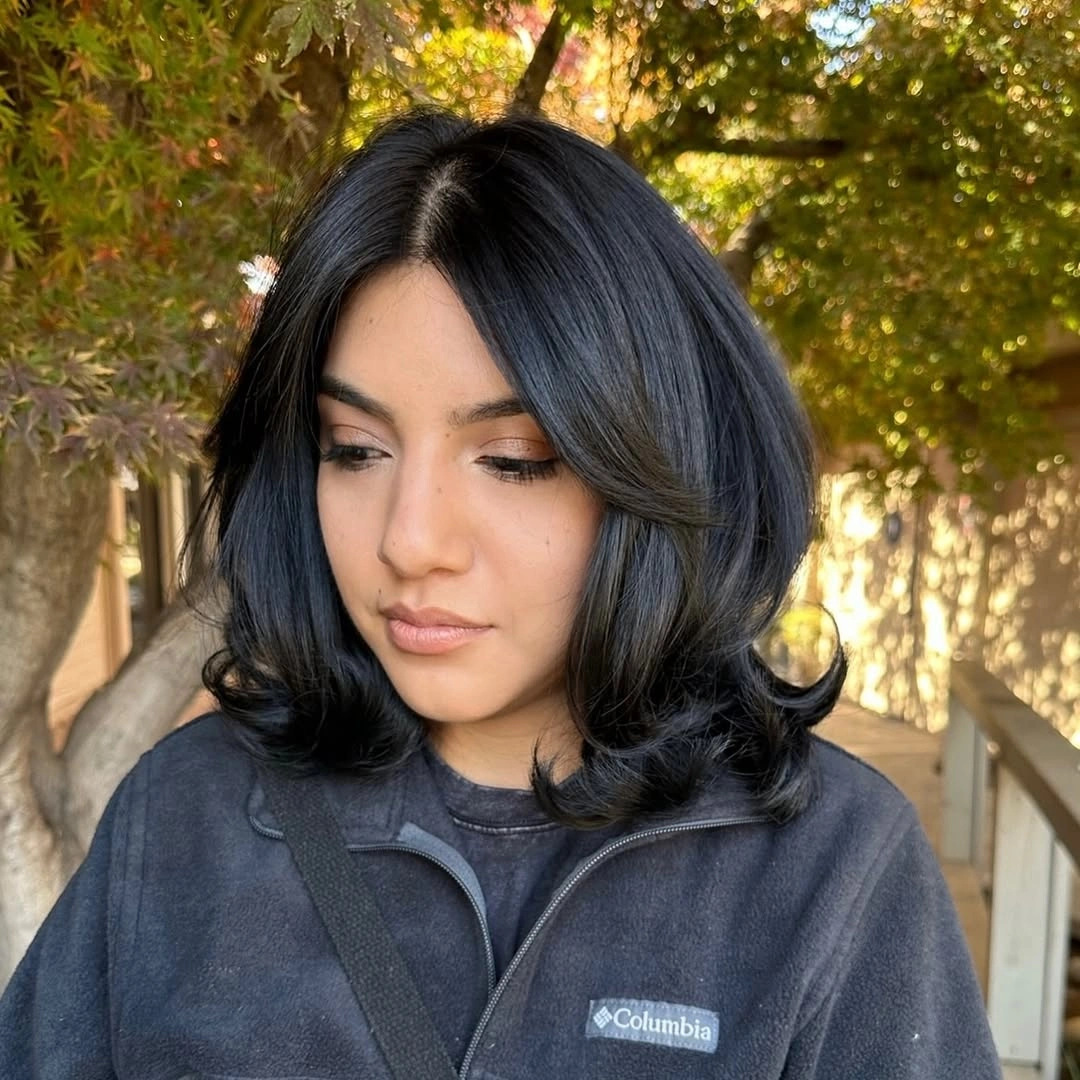
The bob works through the relationship between the central split and the curved perimeter. The part gives the crown a vertical reference, while the tucked ends reduce the width at the bottom and keep the silhouette compact. This is a useful choice for someone who wants a short middle part but prefers a rounded finish over a rigid, straight edge.
Refresh the lower curve when it begins to fall past the jaw, or let the length grow into a shoulder cut if you want less exact upkeep. Keeping the top smooth will preserve the centered structure even as the ends become looser. The limitation is that a rounded edge still needs intentional placement, but it offers more softness than a sharply blunt bob without adding much scale.
Large Curls Give Medium Length A Halo
Muted brown hair forms large curls around a central part, creating a rounded shoulder-length silhouette with a calm, polished rhythm. The crown remains smoother, then the curl groups open outward from the cheeks and continue to the ends. Compared with tighter ringlets, these larger sections create broader blocks of movement and make the medium length feel full without extending far down the body.
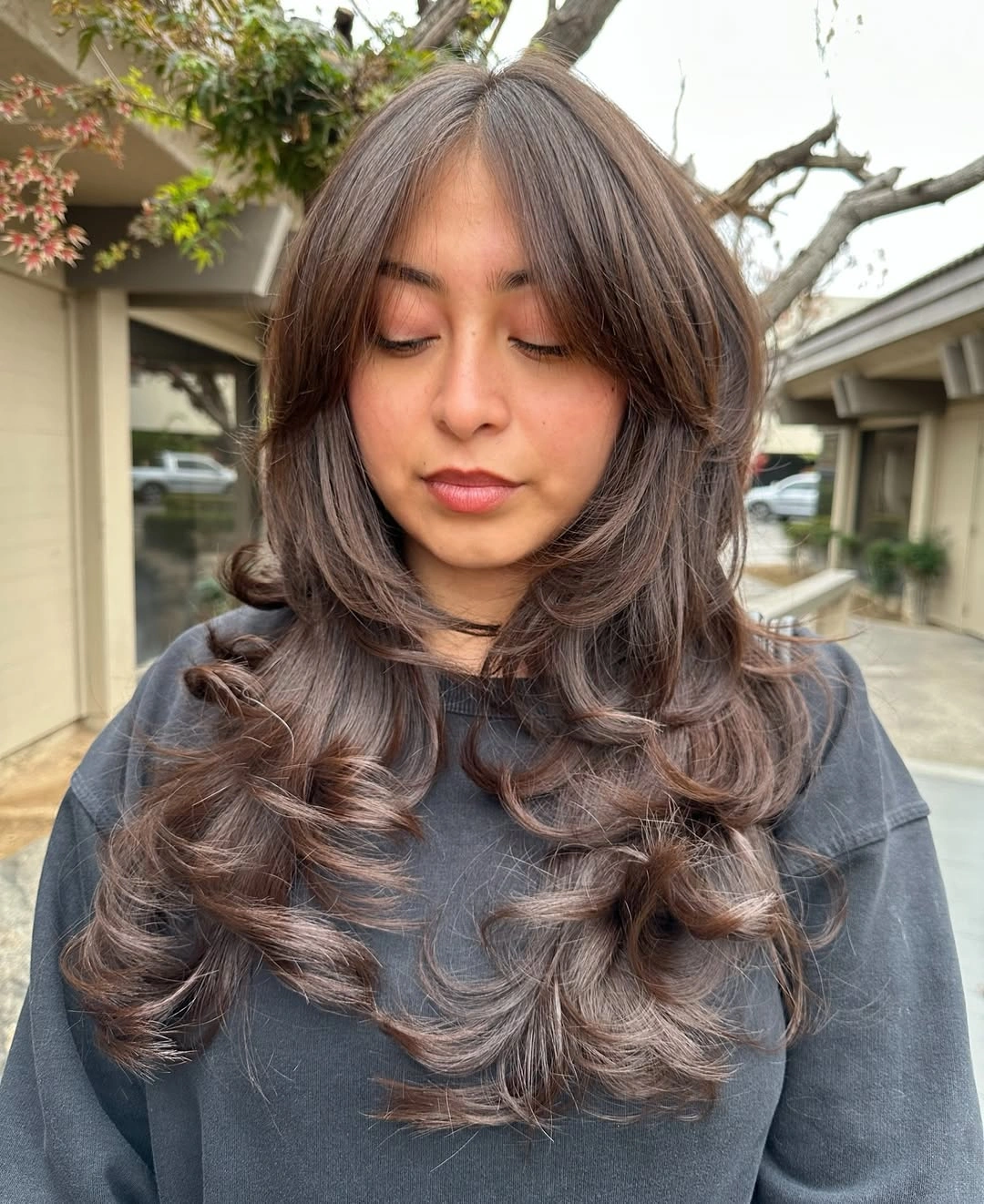
The visual balance comes from scale rather than quantity. A few generous curls frame the face and keep the center part legible, while the rounded lower sections prevent the shoulder line from looking thin. If you want a less formal adaptation, widen the curl pattern further or let the sections separate unevenly; the important feature is the medium-length halo, not a particular curl size.
Large curl groups benefit from being kept distinct, because once they merge the lower shape can become visually dense. A shorter version would increase the rounded effect, while more length would let the curls fall into a curtain. This option suits readers who want a composed, face-framing middle part with visible body, but it requires more shaping than a loose, irregular wave.
Short Curtain Layers Open A Shoulder Cut
Dark brown shoulder-length hair uses shorter curtain layers to open away from the center part. The front sections turn toward the cheeks and leave the eyes clear, while the rest of the length falls in soft bends rather than defined curls. The result is compact enough to feel manageable, yet the broken front edge keeps the style from reading as a plain one-length cut.
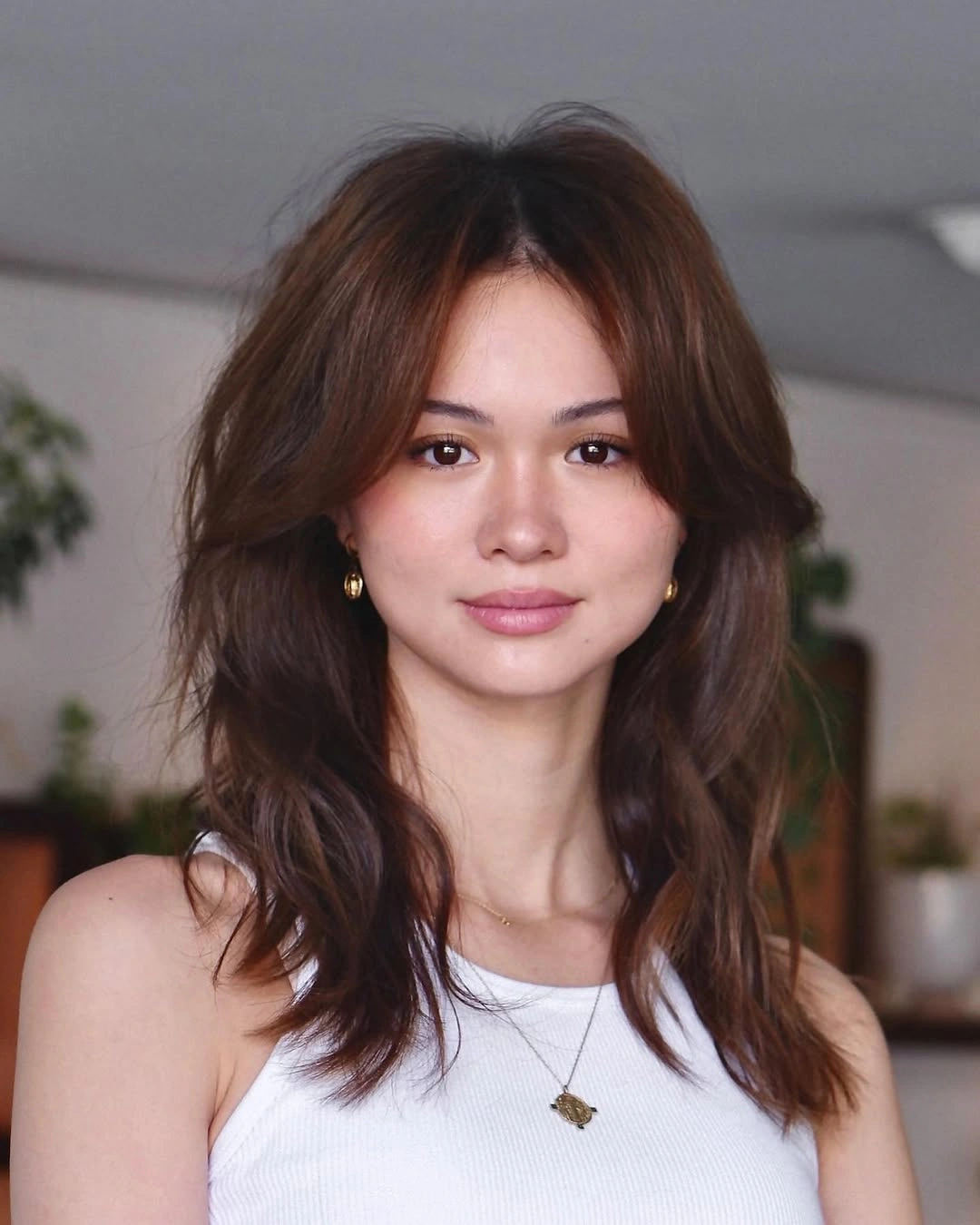
The proportion is controlled by the difference between the shorter face frame and the fuller back. That spacing gives the middle part a visible role without making the entire shape symmetrical from root to end. It is a useful reference for readers who want a casual center part with movement close to the face, especially if very long curtains feel too heavy.
Place the front sections intentionally when you want the opening to stay clear, but allow the ends to remain soft rather than forcing a matching curl. A shorter cut would emphasize the curtain effect, while a longer one would make the back more dominant. The practical strength is adaptable spacing; the limitation is that the open front can fall forward if it is not lightly directed.
Swept Blonde Ends Finish The Collection
Light blonde hair closes the collection with a polished shoulder-length shape built around a clean middle part. The front sections sweep away from the face in a symmetrical curtain, then rounded waves continue through the ends with visible lift near the crown. The glossy surface and even curl direction make the silhouette more controlled than the relaxed styles that came before it.
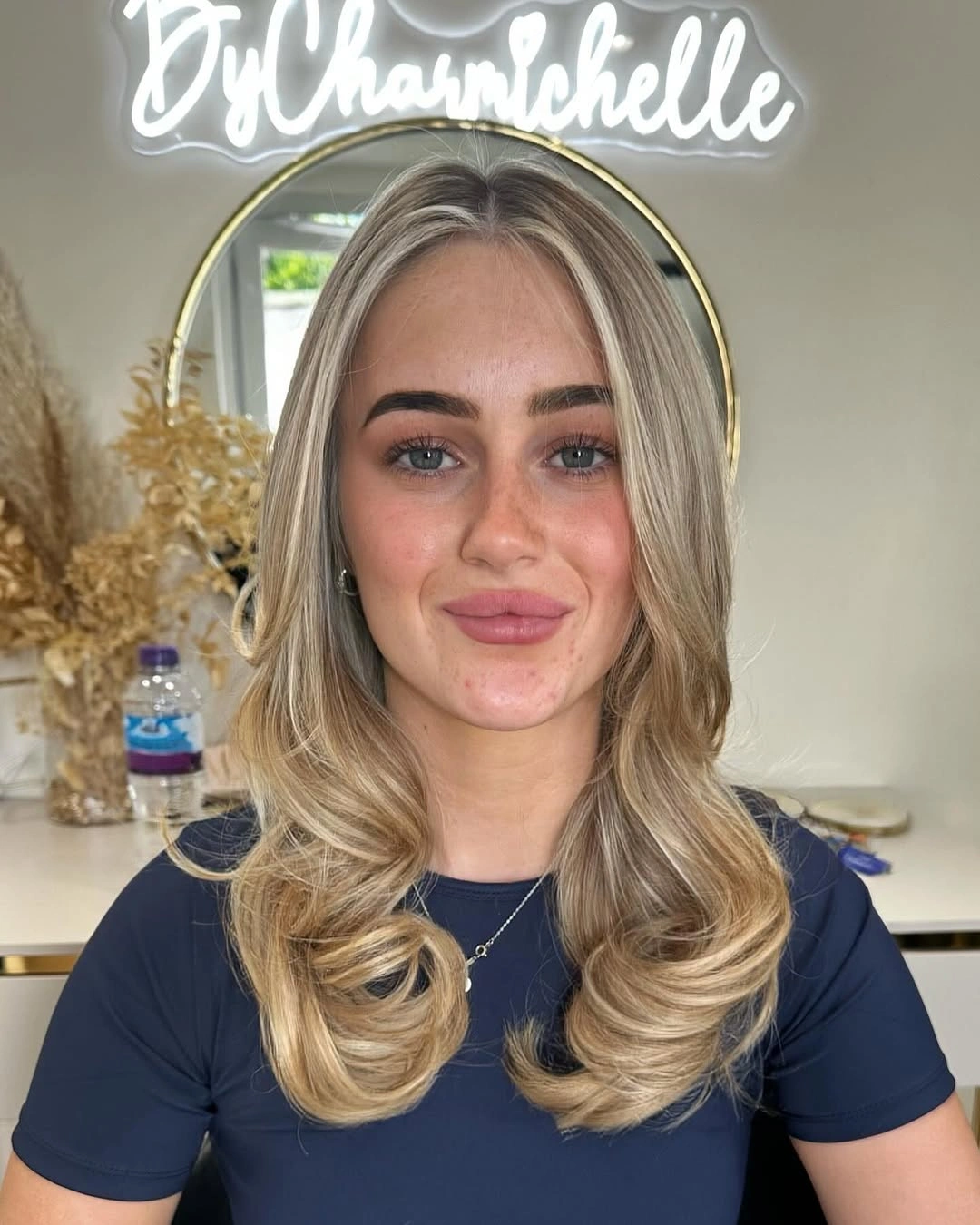
The defining proportion is the balance between the open center and the fuller ends. The front sweep creates space around the face, while the rounded lower sections supply enough width to keep the shoulder-length cut from feeling flat. Readers looking for middle parting hairstyles wedding can borrow the placement logic without copying the exact finish: clean center, open front, controlled lower movement.
This kind of wave rewards careful shaping because brushing can blur the separate curves and remove the polished perimeter. A softer, less uniform version would be easier to maintain and still preserve the central structure, though it would read more casual. The final choice is between precision and looseness, and here the precise proportions are what make the style feel complete.