Every time I open my saved nail folder in early fall, I end up wanting three different manicures at once. One feels soft enough for a first knit, another has the glossy color that makes a plain outfit look intentional, and a third is so detailed I would save it even if I never copied it exactly. That is the fun of fall nail inspiration in 2026: it does not ask you to choose between being practical and having a little personality.
What I am noticing in the most save-worthy looks is a little more personality and a little less pressure to make every nail match perfectly. One manicure keeps the color almost completely solid, another mixes plaid-like lines with flowers, and then a maximalist set turns the hands into the main accessory. If you have been collecting Pinterest ideas for your next appointment, there is plenty here to copy closely, simplify, or make completely your own.
Warm Burgundy Pattern Mix on Almonds
Long almond nails combine burgundy, red, nude, and orange through thin stripes, tiny floral marks, and one bright orange tip. The manicure is varied, but the warm palette keeps the different gestures connected. Small flowers soften the stronger lines, while the nude areas give the eye a pause before it reaches the deeper color at the edge.
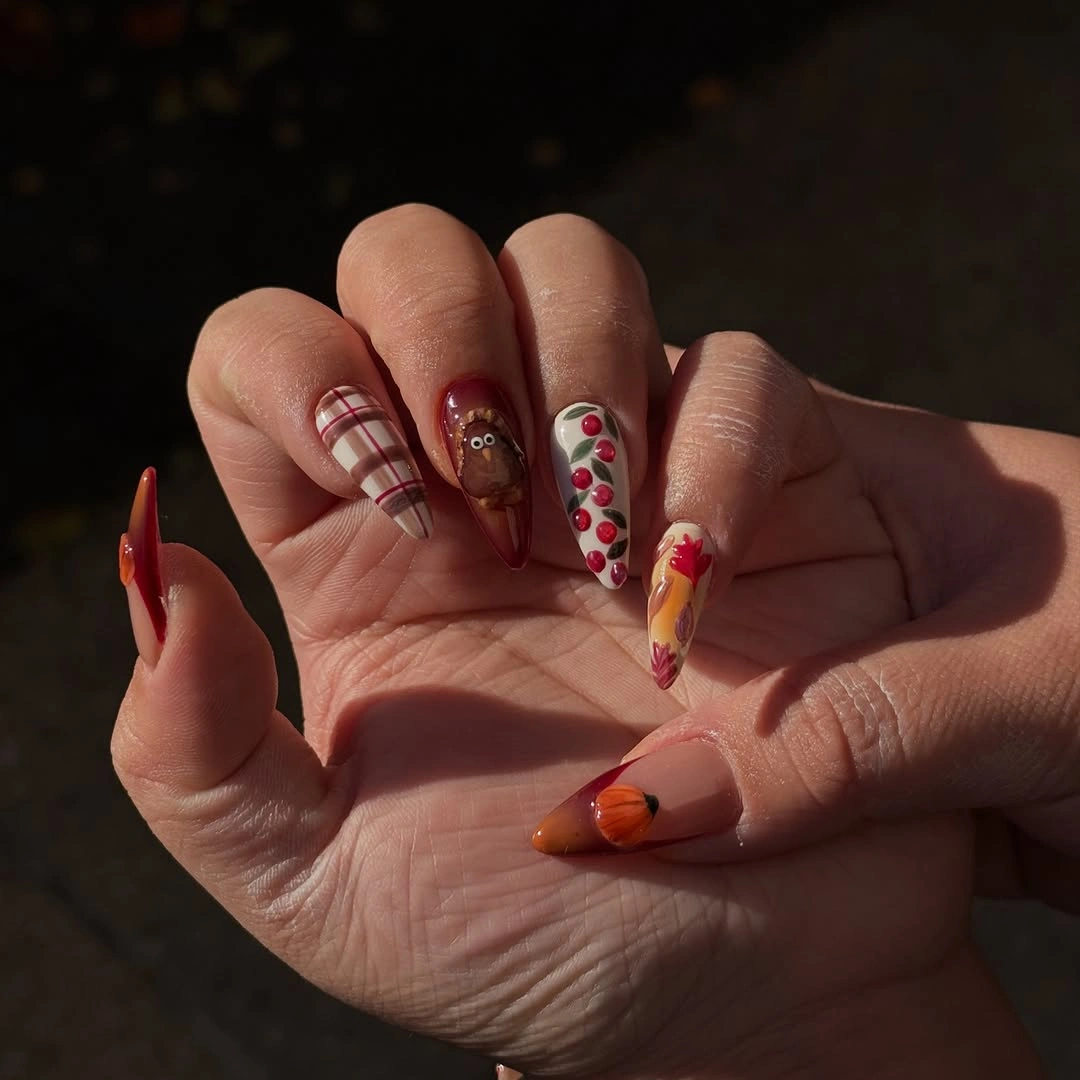
The useful lesson is that a mixed manicure needs a repeated color relationship, not identical art on every finger. Keep burgundy as the anchor, use orange only where you want the eye to land, and let nude support the transition. If the long almond feels too involved, place the tiny floral work on two nails and keep the remaining tips striped.
Fine patterns become harder to maintain as the manicure grows out, while the long shape adds extra visibility to every line. The open nude space prevents the set from feeling crowded, so adding more decoration would weaken the balance. This is a good board starter for someone who wants several fall cues but still wants the palette to feel edited.
Dots and Stripes With a Soft Pink Base
Pink, white, black, and brown share long almond nails through polka dots, stripes, and small floral marks. The patterns differ from finger to finger, yet the repeated neutral and pale base colors make the set look collected rather than random. Black gives the details a readable edge, while brown warms the contrast so it does not feel stark.
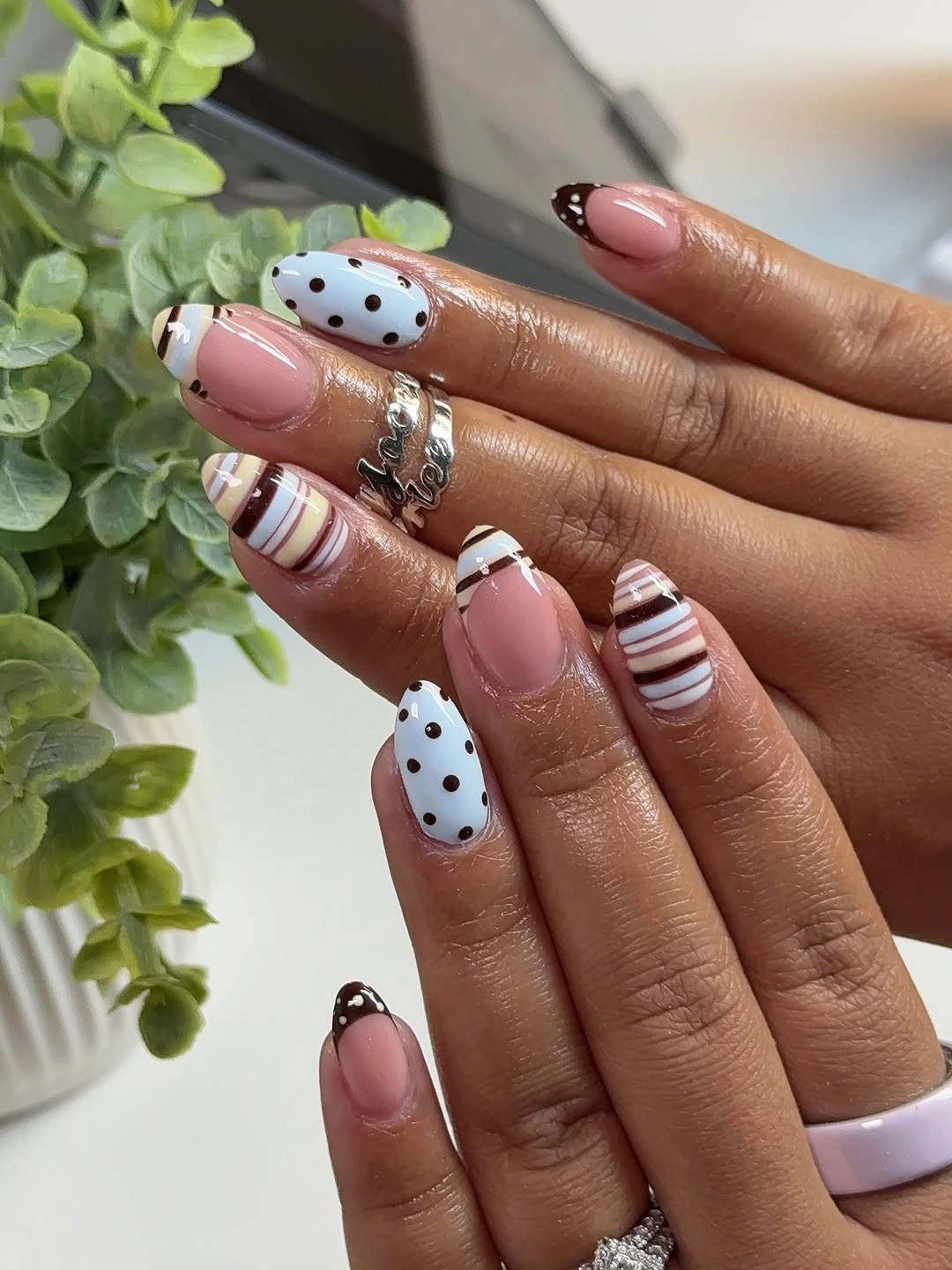
This approach is helpful when you want maximal detail but need a simple way to keep it coherent. Choose one pattern as the lead, repeat one line or dot color across the others, and leave at least two nails mostly pink. A medium almond can hold the same contrast with less daily interference, especially if the tiny marks are limited to the tips.
Pattern mixing asks for more visual attention than a single-color set, and small dots can blur when placed too densely. The pale background does important work by giving the motifs room, so do not fill every open area just because there is space. The payoff is a playful autumn board that feels personal without depending on one literal leaf or pumpkin symbol.
Sage Green for an Early Fall Transition
Short rounded-square nails use muted sage green as the main color with small neutral accents, creating the quietest palette in this group. The finish is glossy and the surface mostly solid, so the tone and compact shape carry the design. Sage feels connected to the season without using deep brown, which makes the manicure useful during the weeks when summer and fall overlap.
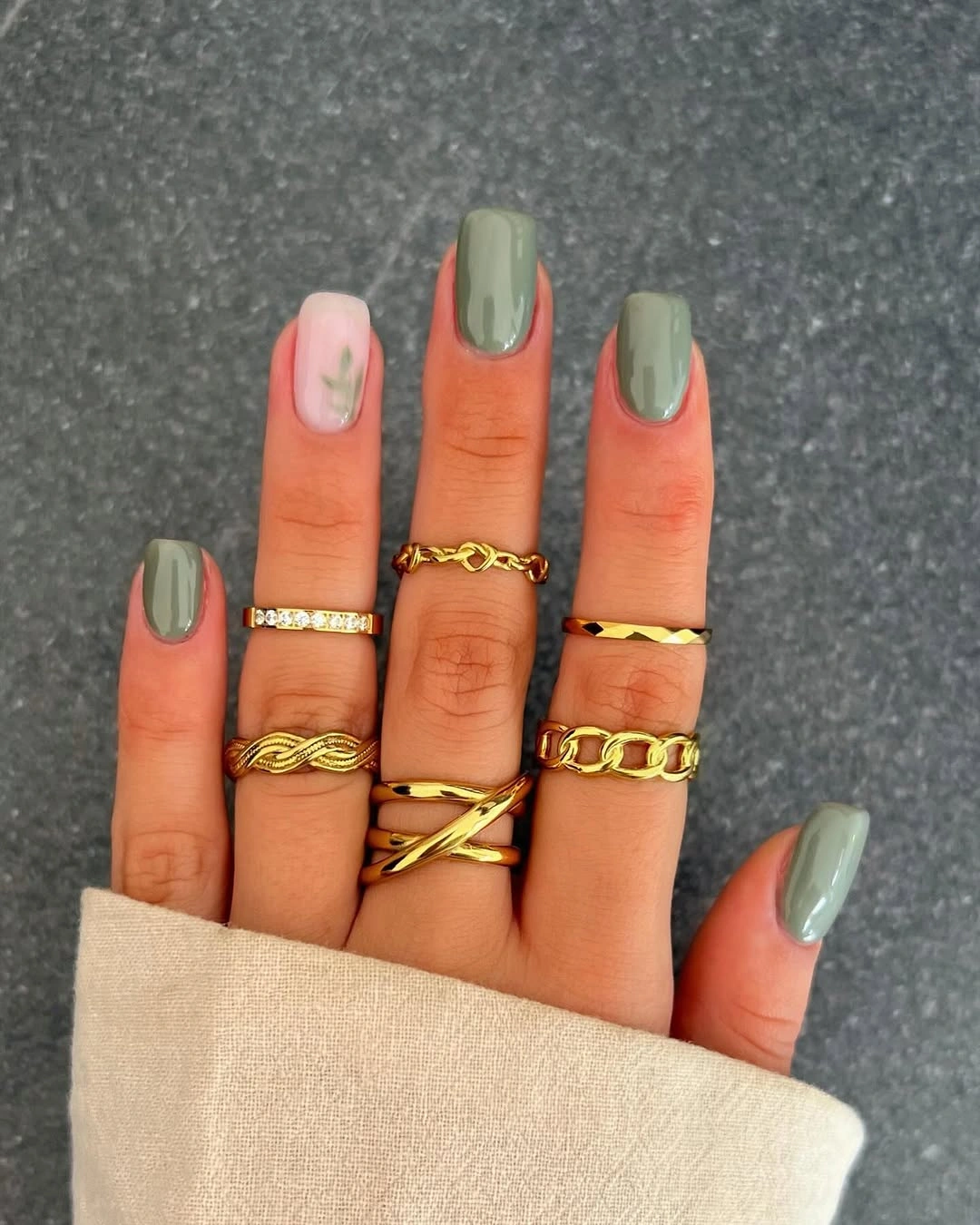
Use the shade as a bridge when you are not ready for burgundy or orange. Keep every nail sage for a cleaner result, or add cream on one finger to lighten the hand without changing the mood. The short square outline keeps the color practical for work and makes this a comfortable reference for a first seasonal update.
Muted colors can look flatter in low light, so the glossy surface and tidy edges matter more than extra decoration. Sage also changes beside warm gold and cool silver, giving you a simple way to test which accessories you prefer. The main tradeoff is subtlety: this manicure will not command the same attention as the patterned examples, but it is easy to live with.
Curved Orange and Pink French Sections
Orange, pink, red, and white form long almond tips through curved French sections and one darker orange accent. The color changes are bright, but the arcs follow the silhouette so the set remains organized. Pink and white keep the center open, while the warmer edges make the manicure feel ready for fall without turning every nail into a solid orange block.
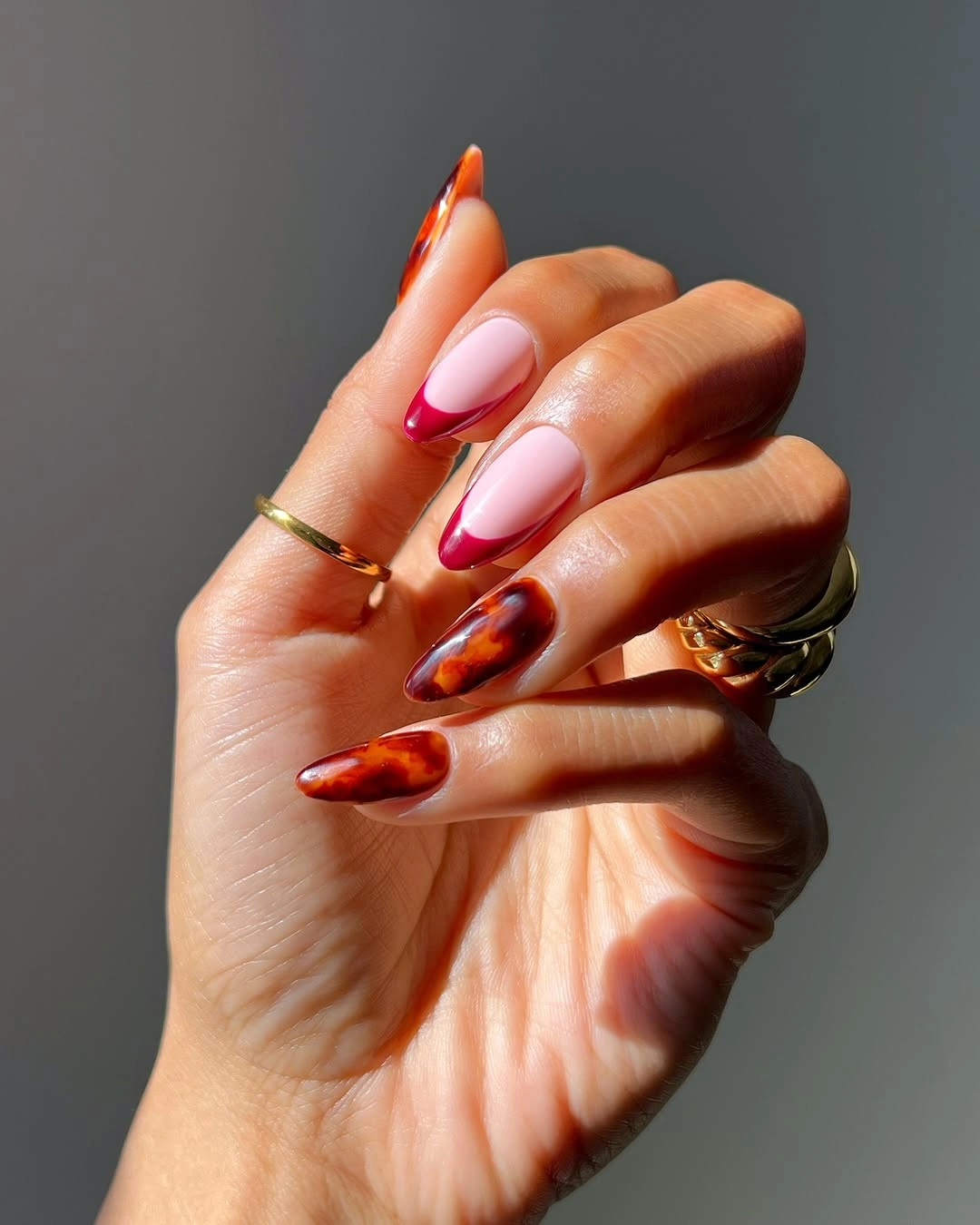
This is a strong choice when you want color movement but prefer a clear shape to a scattered print. Let orange lead on the tips, use pink as the soft bridge, and keep red limited to the places where you want extra depth. A shorter almond will make the arcs feel more compact, while a longer version makes the curve the main visual rhythm.
Multiple warm shades need consistent spacing or the design can become visually noisy, especially on a small nail. The open center provides balance and should be preserved rather than filled with more art. Because the motif is concentrated at the edge, this reference can be simplified for everyday wear without losing its recognizable fall character.
Rust Brown Coffin Nails With a Dark Accent
Long coffin nails carry solid rust and brown tones with a darker accent that gives the otherwise monochromatic set a sharper finish. The design is simple, but the deep seasonal color and squared length create a strong silhouette. Rust supplies warmth, while the darker nail prevents the palette from reading as one uninterrupted field.
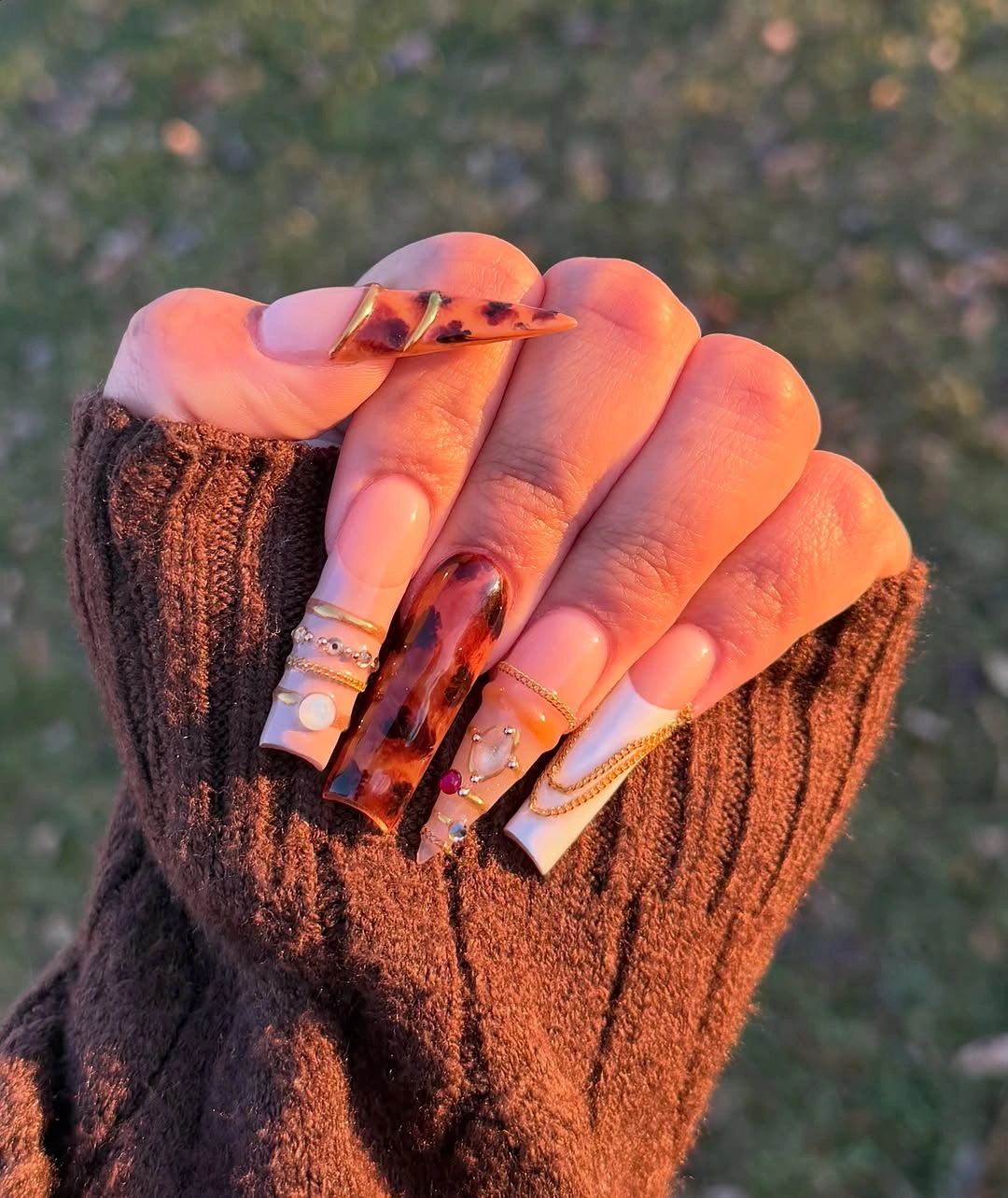
Use this look when you want a richer alternative to classic red and do not need illustration to make the manicure feel considered. Keep the dark accent on one finger for a quieter result, or let it repeat on both hands to frame the rust. A medium coffin will retain the geometry with a little less commitment during daily tasks.
Solid dark colors show chips clearly, and long square tips can catch on clothing or make small movements feel less natural. The advantage is a straightforward palette that pairs well with cream, camel, denim, and black. Choose it when the color itself is enough of a statement and you prefer maintenance to focus on a clean edge instead of tiny art.
Compact Line Art With Dark Tips
Short square nails mix black, pink, white, and gray through tiny line drawings, pale sections, and a few solid dark nails. The art is concentrated on selected fingers, allowing the shorter shape to remain readable instead of crowded. Black gives the small sketches definition, while pink and white keep the overall effect lighter than a full dark manicure.
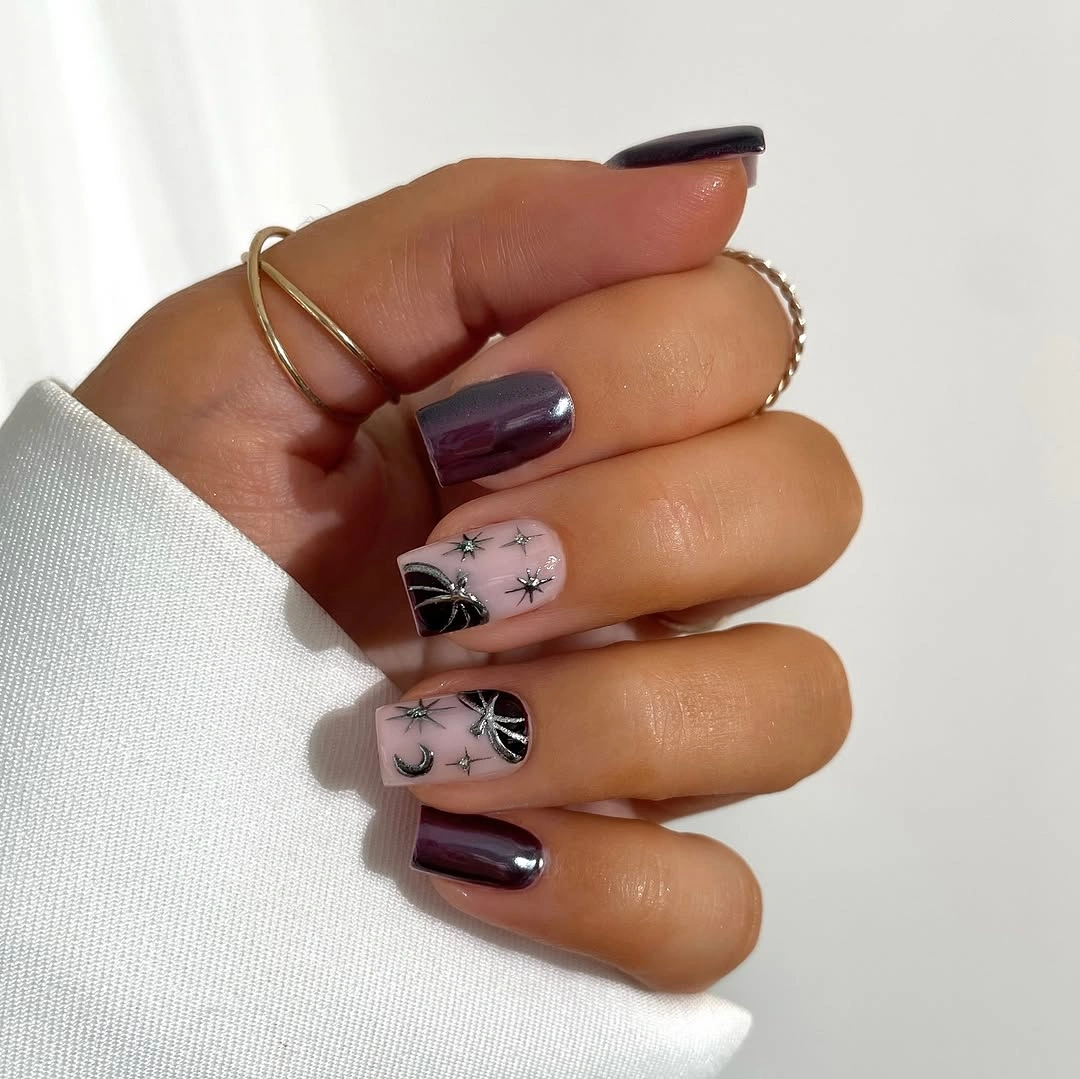
The design offers an easy formula for adapting detailed inspiration: choose one simple drawing, repeat the base color, and let the remaining nails stay solid. A soft gray can replace black when you want less contrast, or black can remain only at the tip. Short length makes the set realistic for typing and daily movement while still giving the hands a clear point of interest.
Tiny line art needs enough scale to remain recognizable, so adding more symbols would not necessarily make the manicure stronger. The dark tips are useful anchors because they connect the illustrated nails to the solids. This is a practical choice for someone who wants a little personality but does not want every finger covered in seasonal imagery.
Pink and Cream With Fine Sketch Details
Pink, cream, and gray form a medium rounded-square manicure with fine line sketches and pale sections placed on selected nails. The design feels illustrative without becoming loud because most of the background remains soft and open. Gray adds definition while keeping the palette gentler than black, and the compact shape gives the fine detail a grounded frame.
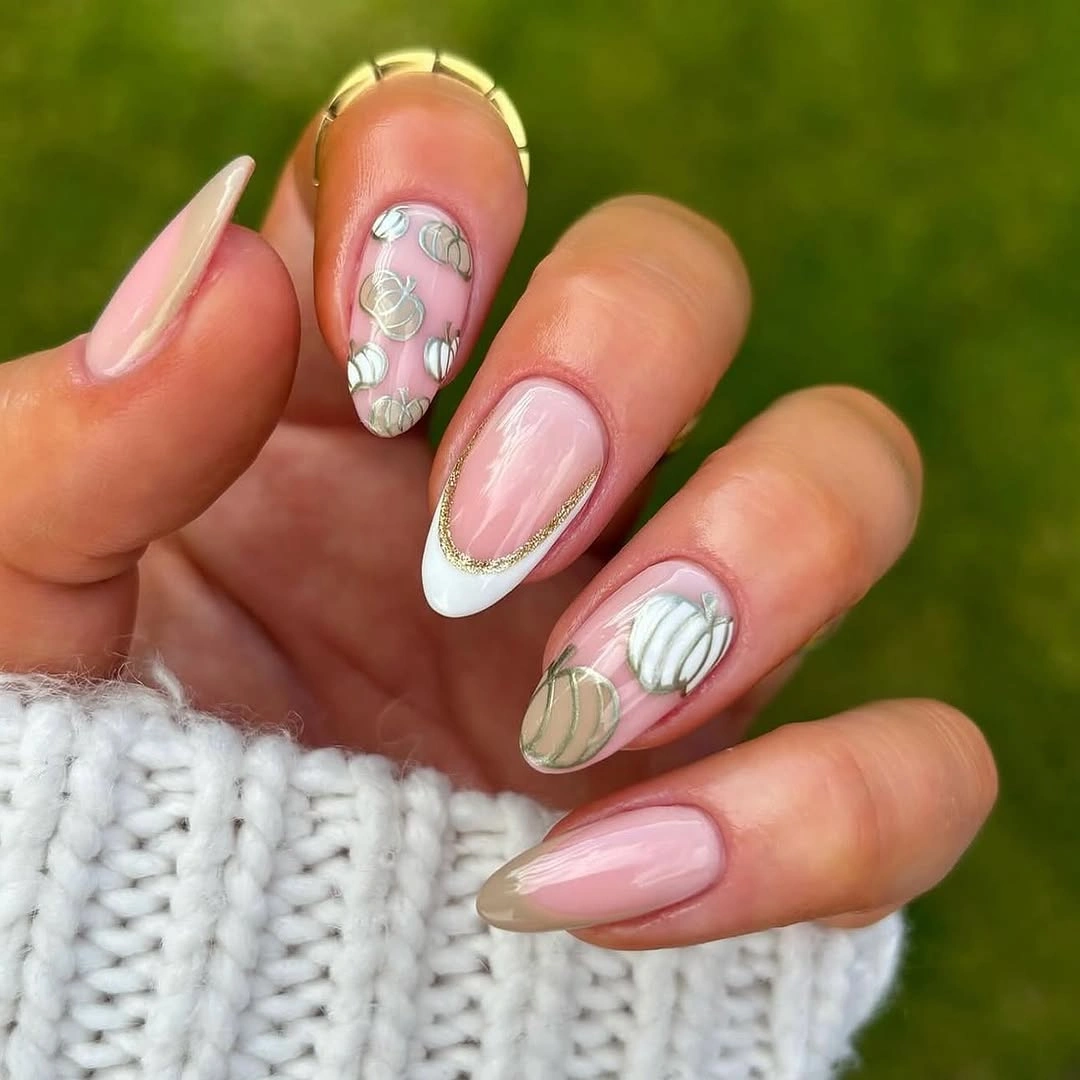
This set works when you want art that feels personal but not overtly themed. Keep the sketches on two nails and let the other fingers use pink or cream, or choose a warmer taupe if you are wearing camel and brown. The medium length gives the lines room to breathe, while a short version can still work if the drawings are simplified.
Light backgrounds can make subtle gray marks disappear in dim lighting, so contrast should be adjusted before adding more detail. The open surface is part of the charm and also makes the manicure easier to coordinate with jewelry. Its tradeoff is precision: the design asks for a steady line, but it rewards restraint more than a crowded set would.
Alternating Warm French Tips
Cream, pink, orange, and brown rotate across medium almond nails through simple French tips in alternating warm colors. The shape stays consistent while the tip color changes, creating a clear progression from soft to deep and back again. There is no need for a large motif because the palette itself creates movement across the hands.
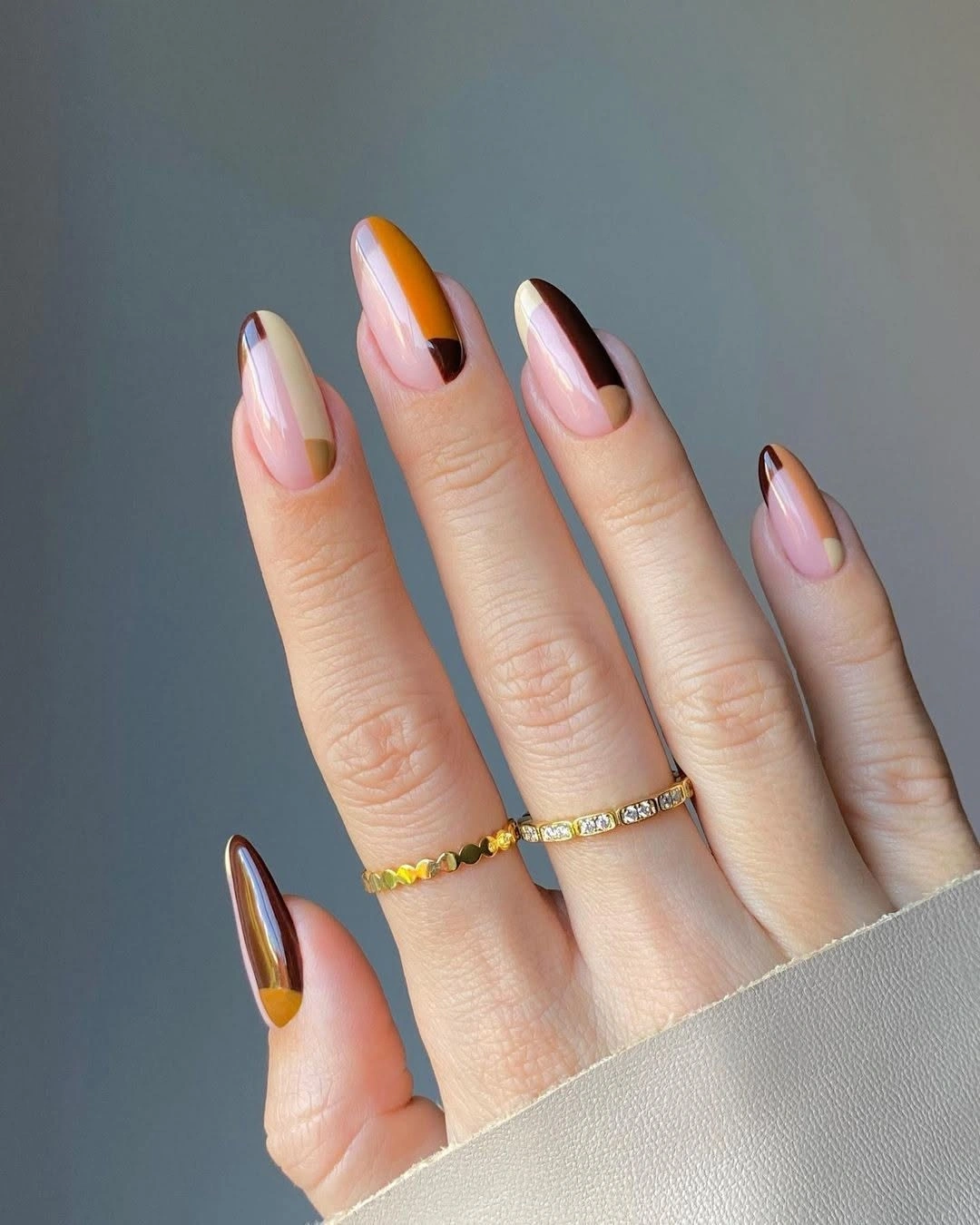
This is one of the easiest designs to personalize because the structure remains stable while the color choices can shift. Use cream and brown for a quieter set, add orange on two nails for a stronger seasonal note, or replace pink with mauve if you want the palette to feel deeper. The almond outline keeps the different tips looking related.
Alternating colors require a little planning so the two hands do not feel accidentally mismatched. The medium length is practical, and the tips can be refreshed later without recreating an entire illustration. Choose this idea when you want the look of variety but prefer a repeatable shape and a limited number of clean decisions.
Chocolate Waves Over Nude and White
Brown, nude, and white fill long coffin nails with wavy white lines over chocolate and pale bases. The curves create rhythm from finger to finger, while the repeated brown keeps the varied placement cohesive. The long square outline gives the waves enough horizontal space to spread, turning a simple palette into a distinctly graphic fall manicure.
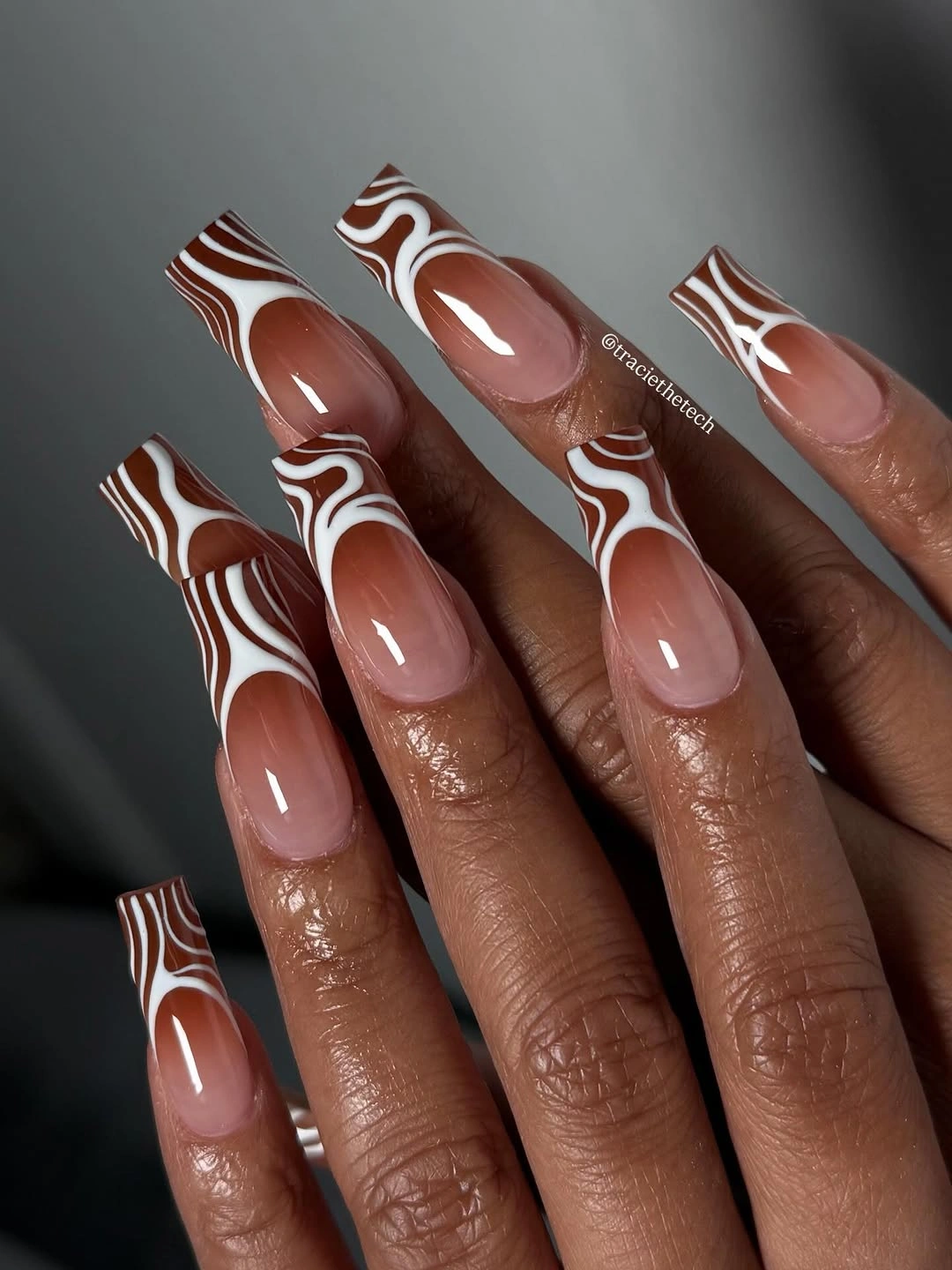
The strongest contrast comes from keeping the linework light and the background deep on selected nails. For a wearable adaptation, use brown French tips and reserve the full waves for two accents, or shift the coffin to a medium square. The nude sections create a useful pause, especially if you plan to wear gold rings or a patterned knit.
Wavy lines are more forgiving than perfectly straight geometry, but their spacing still determines whether the manicure feels calm or crowded. Long coffin length increases the graphic impact and the practical demands at the same time. This design suits a reader who wants movement and contrast without relying on a literal seasonal icon.
Playful Spots Plaid and Raised-Looking Dots
Mauve, lime, white, brown, and pale pink combine on long almond nails through spotted print, plaid-like lines, and small raised-looking dots. The set is intentionally maximalist, yet repeated pale bases and warm brown marks give the many details a visual home. Lime adds a surprising flash that makes the palette feel current rather than purely traditional.
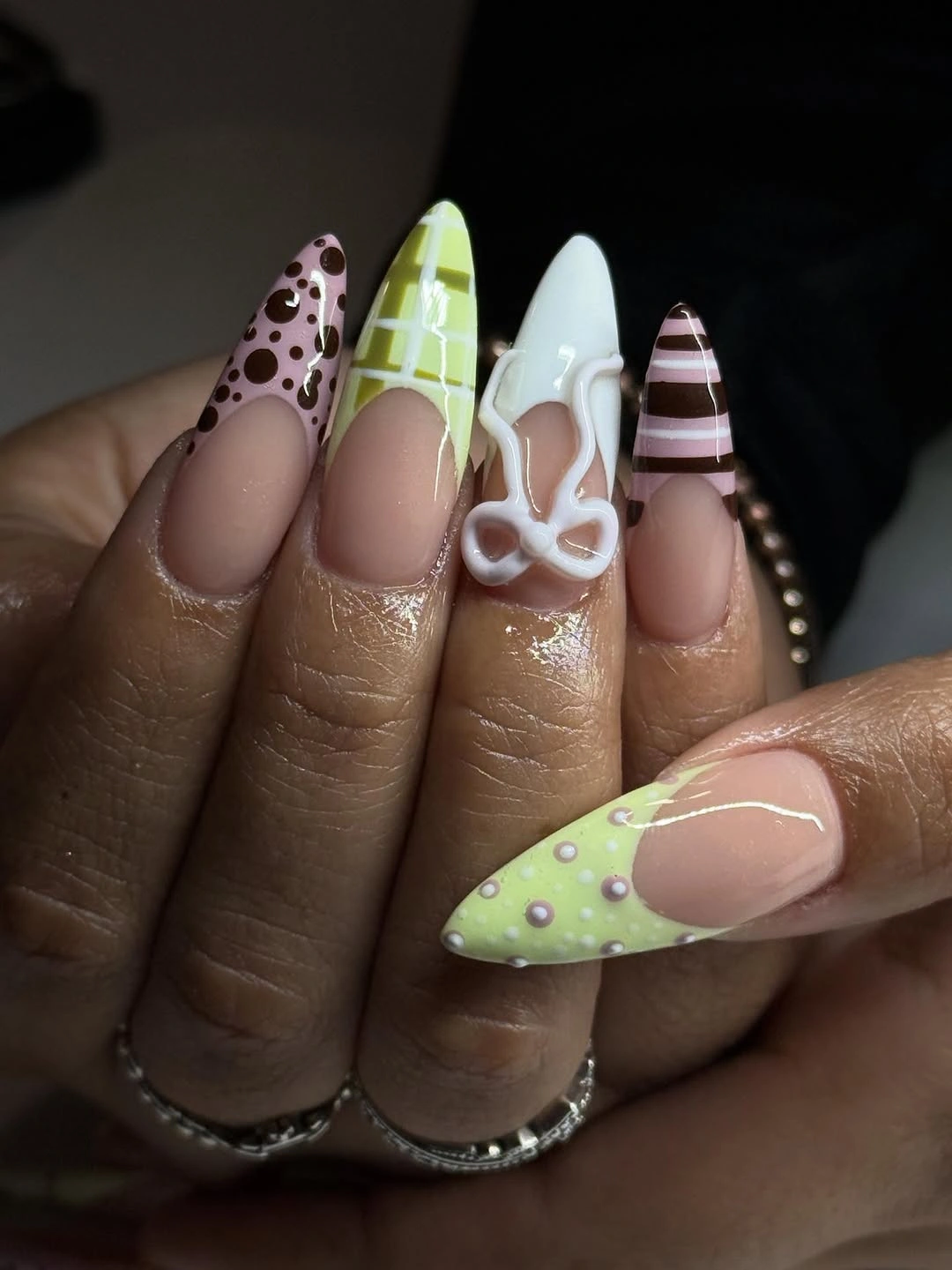
This is a useful reference for building a statement manicure from several small ideas, but it also shows why one base color should repeat. Keep the lime on one or two nails, use the brown as the connecting tone, and allow mauve or pink to carry the quieter fingers. A medium almond can hold the contrast without requiring the full length shown here.
Detail density is the honest limitation: spots, lines, and dimensional-looking dots all need space to remain separate, and grow-out will make the set feel busier over time. The pale areas prevent visual overload, so do not fill them automatically. Choose this direction when playful complexity is the goal and you are comfortable treating upkeep as part of the look.
Pink and Tortoise as Easy Accent Pairings
Blush pink and tortoise brown share medium almond nails, with the patterned print limited to two accent nails beside soft pink solids. The contrast is warm and recognizable, but the set remains calm because most of the surface stays plain. Tortoise adds depth without requiring a black outline, while pink prevents the brown from feeling too heavy.
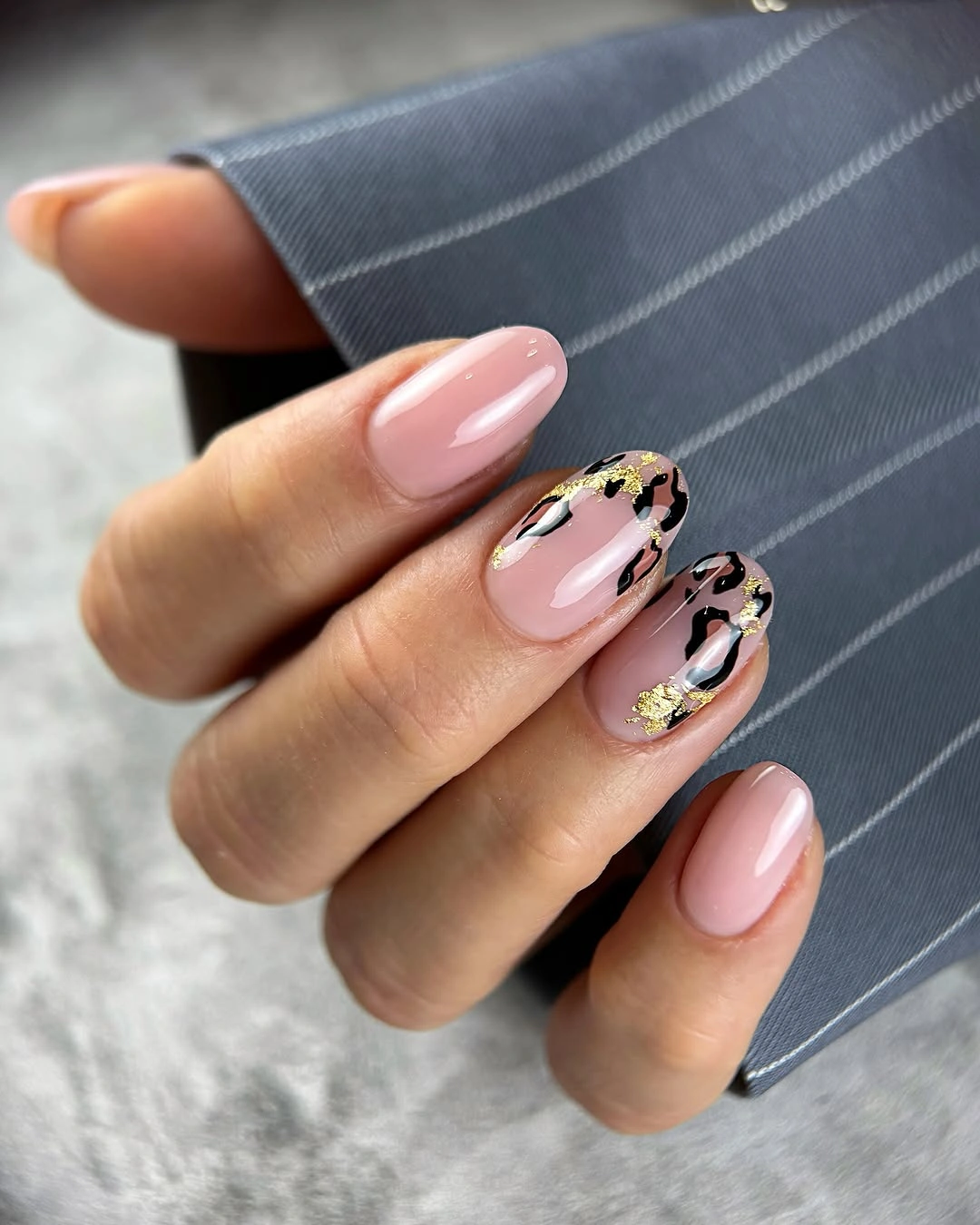
This is an approachable way to test print when a full patterned manicure feels like too much. Use tortoise on one nail per hand, carry a small brown edge onto the pink fingers, or replace the blush with a muted mauve for a deeper autumn mood. The medium almond shape keeps the accent visible without making it the only thing the hands communicate.
Patterned accents are easier to coordinate when their colors already appear elsewhere in the set, and this manicure follows that rule through pink and brown repetition. The print can look different from finger to finger, which is part of its appeal, but it still needs enough open space. This option is practical for readers who want texture and contrast with a moderate amount of upkeep.
Deep Burgundy With Reflective Depth
Long almond nails return to a single deep burgundy shade with a subtle reflective sheen. The color is the entire focal point, but the finish keeps the dark surface from feeling flat as the hand turns. The pointed shape stretches the wine tone into a more dramatic silhouette, making this a quiet design with a strong presence.
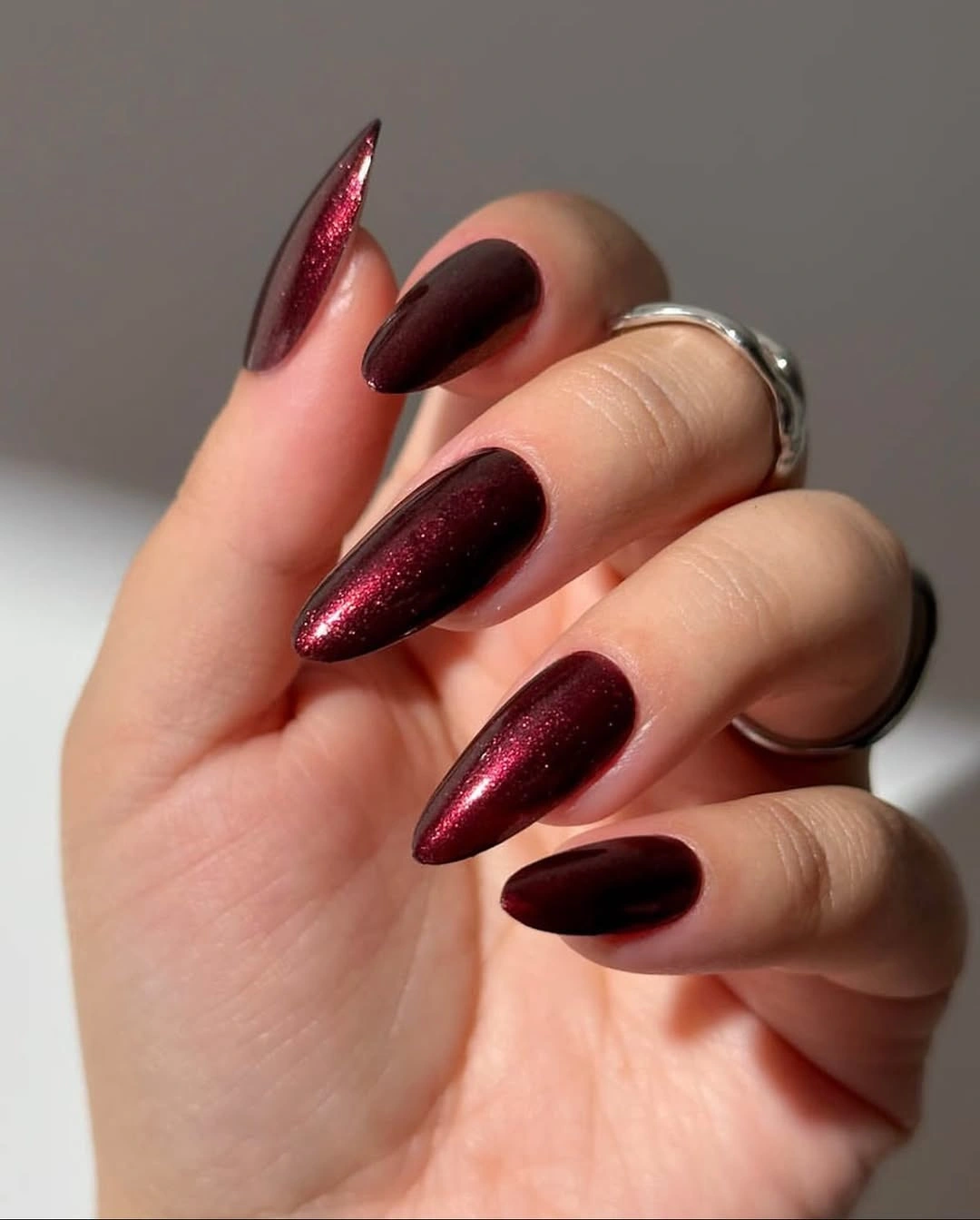
Choose this when you want the visual impact of fall color without pattern, florals, or metallic lines. A medium almond will make the shade easier to wear during the day, while a darker plum can cool the mood and a warmer berry can brighten it. Because the surface is uninterrupted, it coordinates smoothly with prints and layered accessories.
Deep glossy colors benefit from a clean perimeter because any chip breaks the otherwise simple field. The long almond shape also makes the manicure more noticeable during hand movement, but it remains less demanding than a detailed design. Its quiet confidence is the point: one well-chosen tone can carry the entire seasonal update.
Striped Burgundy Tips on Long Squares
Burgundy, nude, orange, and brown form long square nails with striped tips and warm graphic blocks. The straight sides make the manicure feel structured, while the color changes keep it lively enough for a fall inspiration board. Repeated stripes provide order across the hand, and the nude base prevents the deeper colors from closing in around the cuticle.
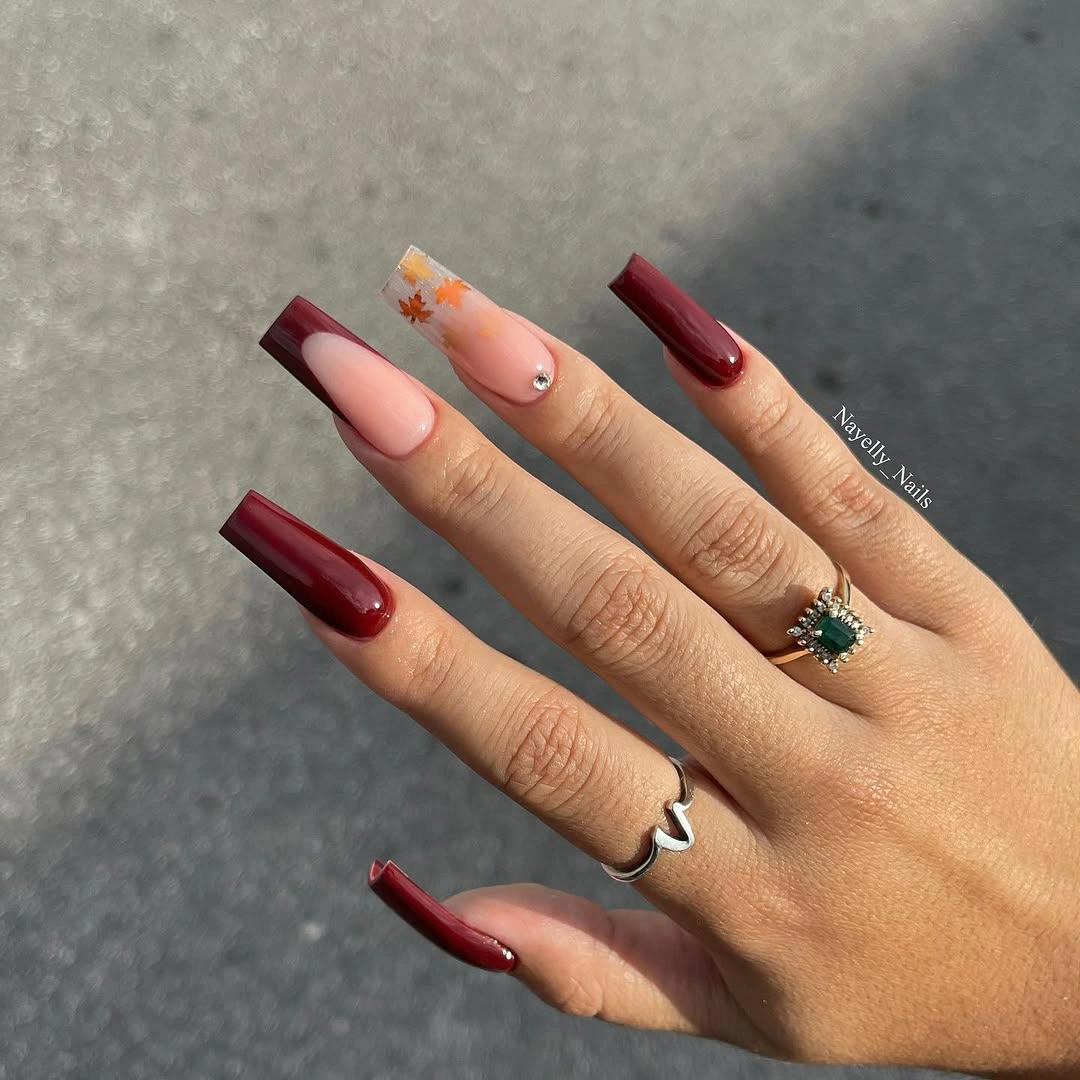
The design is easy to narrow down: keep burgundy as the main tip, use orange on one or two stripes, and let brown connect the palette. If long square length is not practical, move the same bands onto a medium square and reduce the number of lines. A mostly nude base will also make the set feel more wearable with bright clothing.
Graphic stripes need consistent spacing to maintain their clean direction, and the square outline makes any uneven side more visible. The pattern is still easier to simplify than a full illustration because its components are repeated and linear. This is a strong choice for someone who likes structure, color contrast, and a manicure that looks intentional from across the room.
Floral Lines and Plaid in Deep Autumn Tones
Brown, pink, white, and gold create a medium rounded-square manicure where floral linework, plaid accents, and metallic starbursts alternate across the hand. The different motifs share a warm palette, so the set feels layered rather than disconnected. Pink and white keep the deeper tones from becoming dense, while gold links the fine lines to the glossy base.
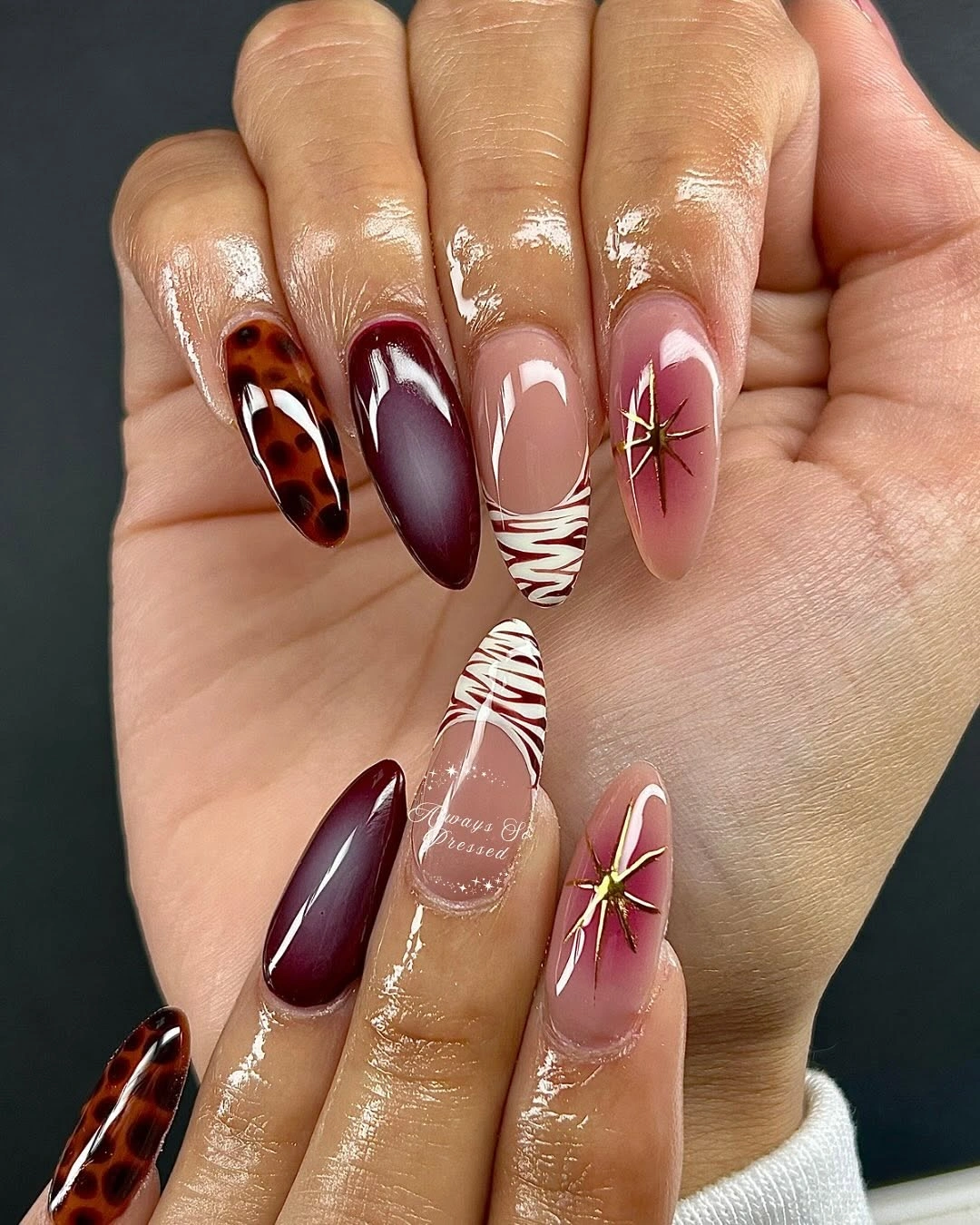
This kind of mixed design benefits from assigning each motif a job: let plaid provide structure, flowers soften the mood, and gold mark the focal nails. Use only two motifs if you want a shorter or quieter version, and keep the base colors repeating so the manicure still feels like one collection. Medium rounded-square length gives the details enough room without extreme proportion.
Several small patterns can compete when placed too closely, so open pink or white nails are valuable pauses rather than unfinished spaces. Metallic accents also look stronger when they are sparse. Choose this reference for an occasion or outfit that can support detail, and simplify the motif count if your daily routine makes frequent touch-ups inconvenient.
Tortoise With Black Tips and Fine Gold
Nude pink, black, and tortoise share long almond nails, with a spotted accent, a dark tip, and a thin gold line creating small changes from finger to finger. The set feels collected because the warm brown print, black border, and pale base repeat in different proportions. Almond length gives each contrast room to remain distinct.
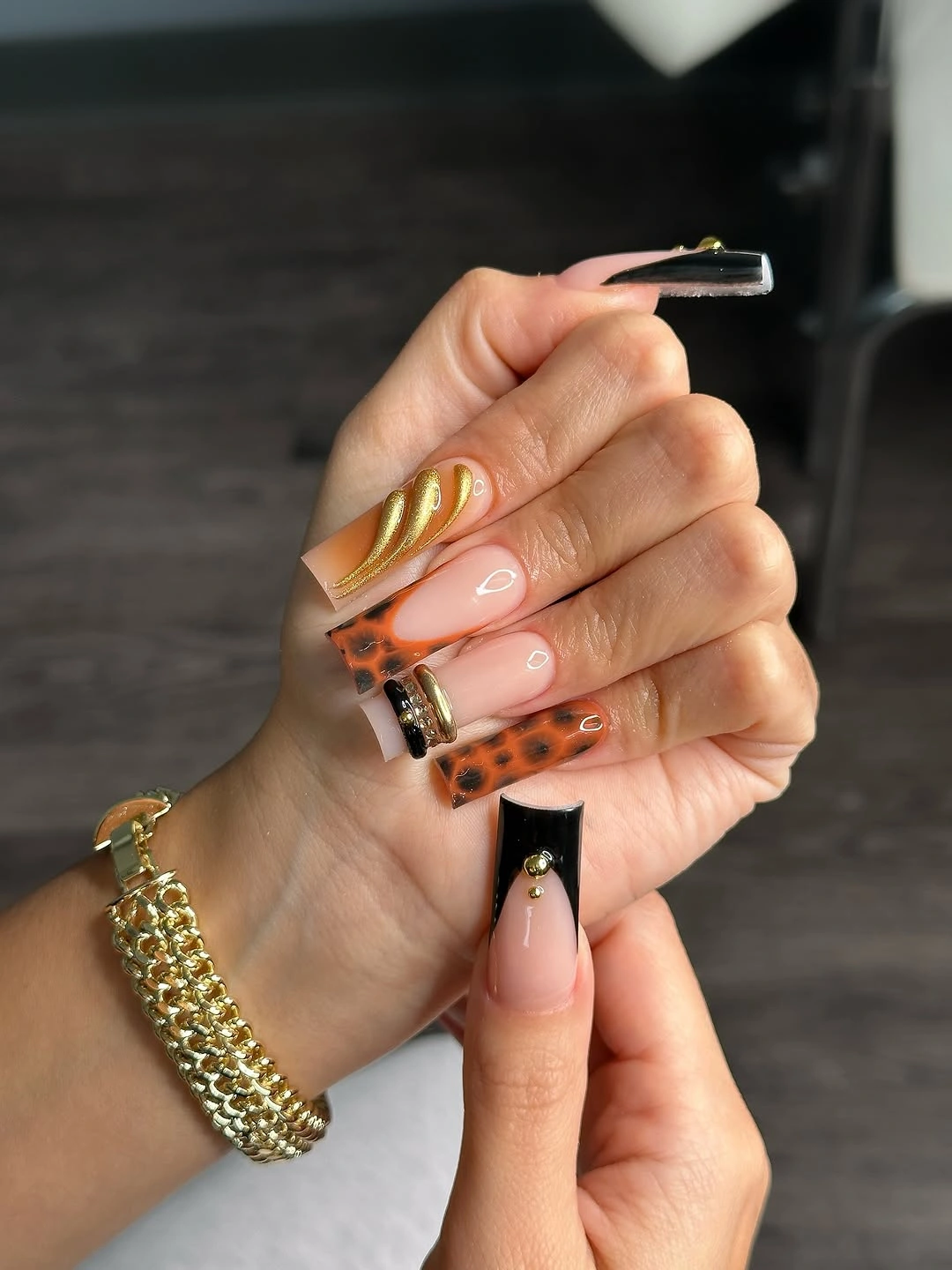
This is a useful palette for someone who wants depth but does not want every nail painted a dark solid. Keep tortoise on two accent nails, use black only at the tip, and let gold appear as a single narrow line. A shorter almond will make the pattern more compact, while the same colors can feel softer if the black becomes deep brown.
The gold line is small but important because it separates the warmer print from the darker tip. Too much additional detail would blur that hierarchy, especially on shorter nails. Long almond shape raises the visual impact and the maintenance demands, so choose this set when you enjoy a composed mix of print, contrast, and a little shine.
Silver and Gray Details on Pink Squares
Pink, white, silver, and gray fill long square nails with glittering side details and outlined white-red tips. The palette is cooler than the burgundy examples, but the metallic surface and small red note keep it from feeling plain. Straight sides make the design architectural, while the shimmer adds movement when the hand turns.
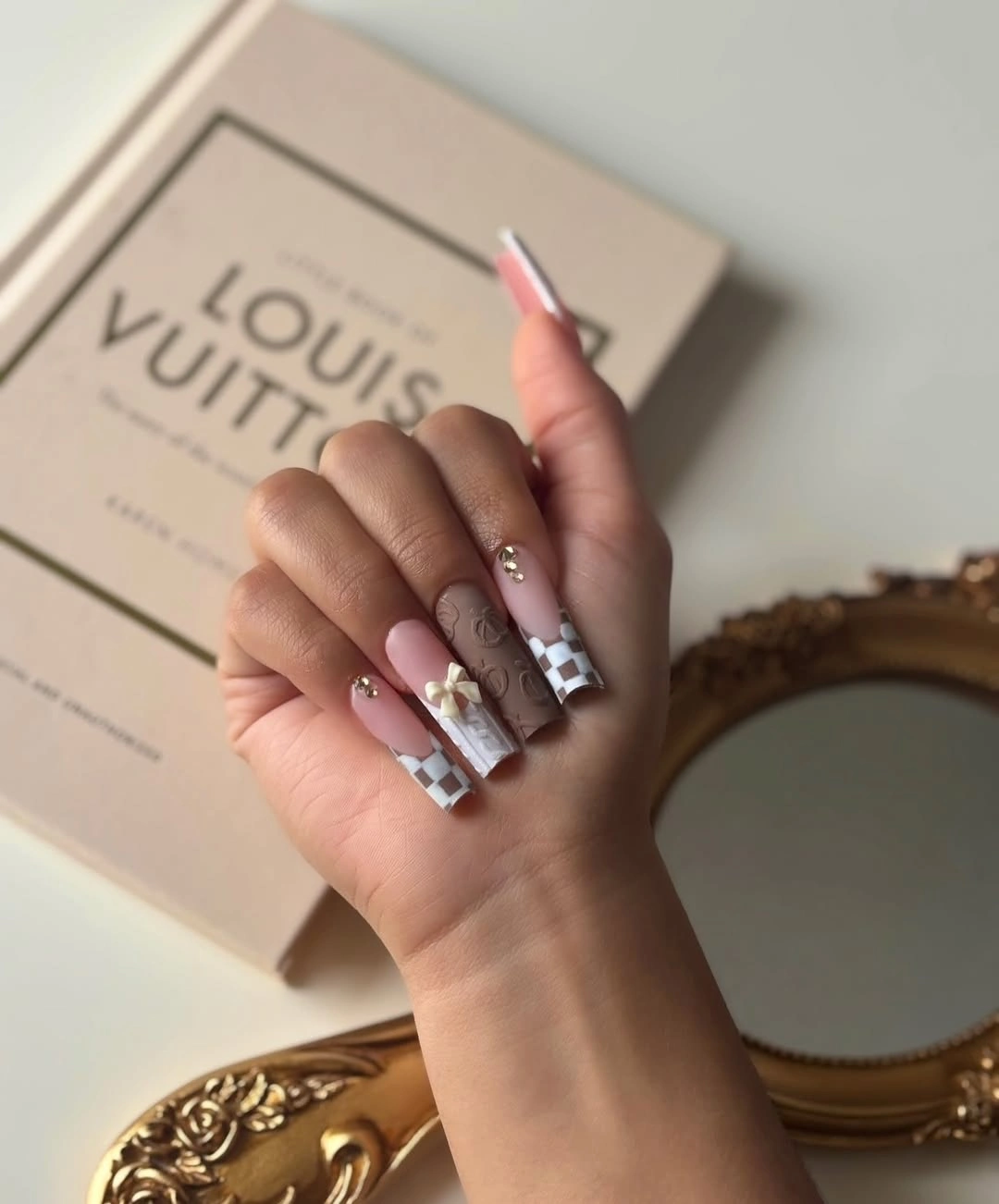
Use this direction when you want fall inspiration that works with gray knits, black tailoring, or silver jewelry. Keep the red accent minimal if you prefer a cleaner result, or let it repeat on two tips for a stronger contrast. A medium square will preserve the straight geometry and reduce the effort required by the long silhouette.
Glitter can hide small irregularities in one light and reveal them in another, so check the surface from more than one angle. The long square shape makes the side details easy to see but also increases the chance of catching on fabric. Its practical advantage is that the metallic accents supply most of the decoration without requiring many separate motifs.
Clear Gray Tips With Tiny Sparkle
Clear nude, gray, and silver create long coffin nails with transparent-looking gray tips, fine lines, and tiny sparkling accents. Negative space stays visible through the center, so the set feels lighter than a full gray manicure even though the silhouette is dramatic. The cool palette gives the look a transitional quality that can move from late summer into fall.
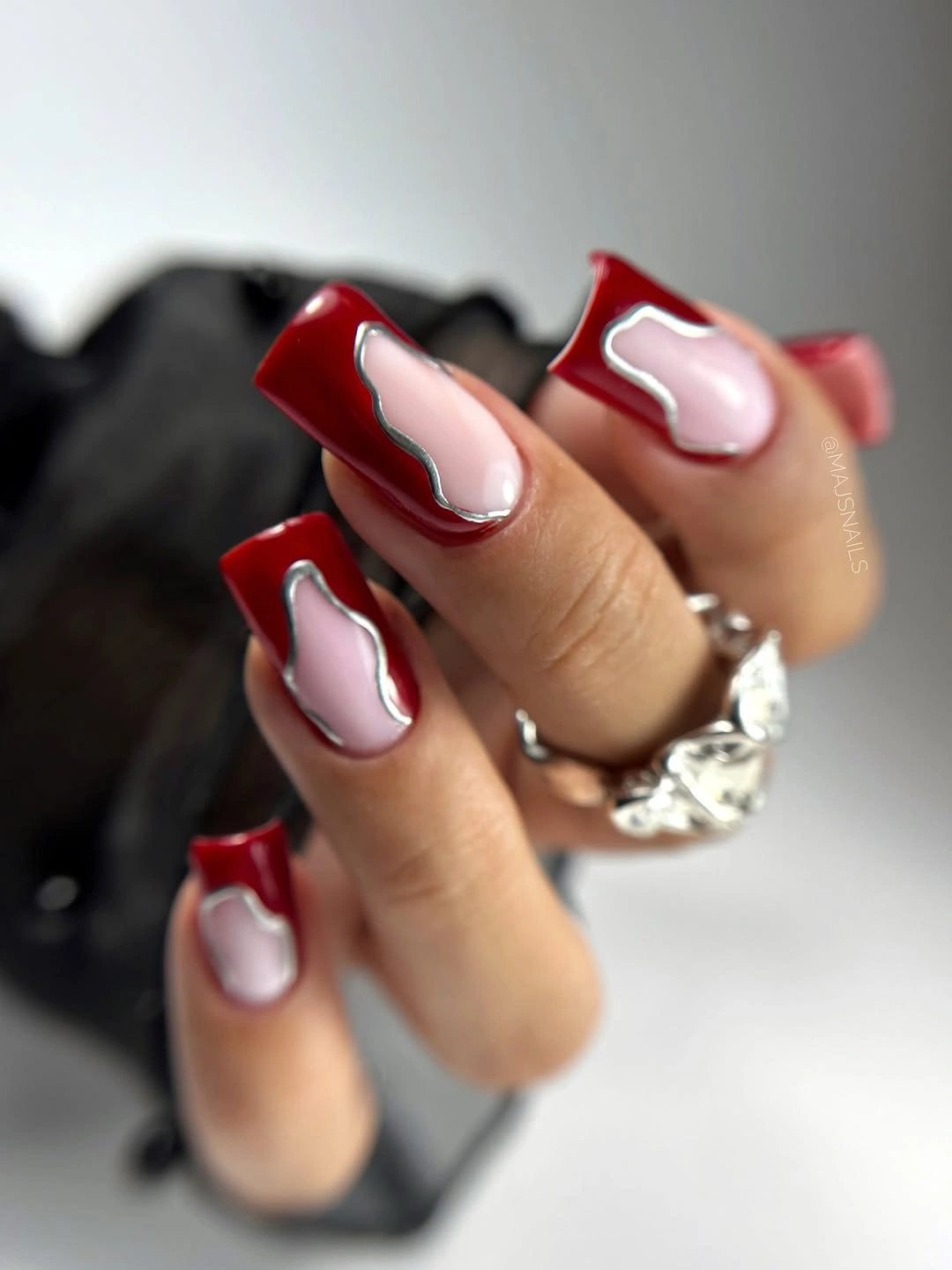
This design works when you want a cooler alternative to brown but still want the manicure to feel dimensional. Keep the gray tips on two nails for a softer version, or change the clear center to a milky nude if you prefer more coverage. A medium coffin will retain the squared direction while making the open sections easier to wear.
Transparent-looking tips need clean edges because any uneven transition becomes part of the visible design. The sparkle is small enough to stay refined, but the length still affects everyday movement and grow-out. Choose this set for its balance of negative space and shine, and let the open areas remain visible instead of filling them with more art.
Quiet Pink and Taupe With Minimal Art
Soft pink, cream, and taupe form medium almond nails with minimal outlined art and a single neutral accent. The palette is muted and the decoration is deliberately sparse, so the manicure feels composed rather than empty. Almond shape gives the quiet colors a gentle direction, while taupe adds enough depth to keep the set connected to fall.
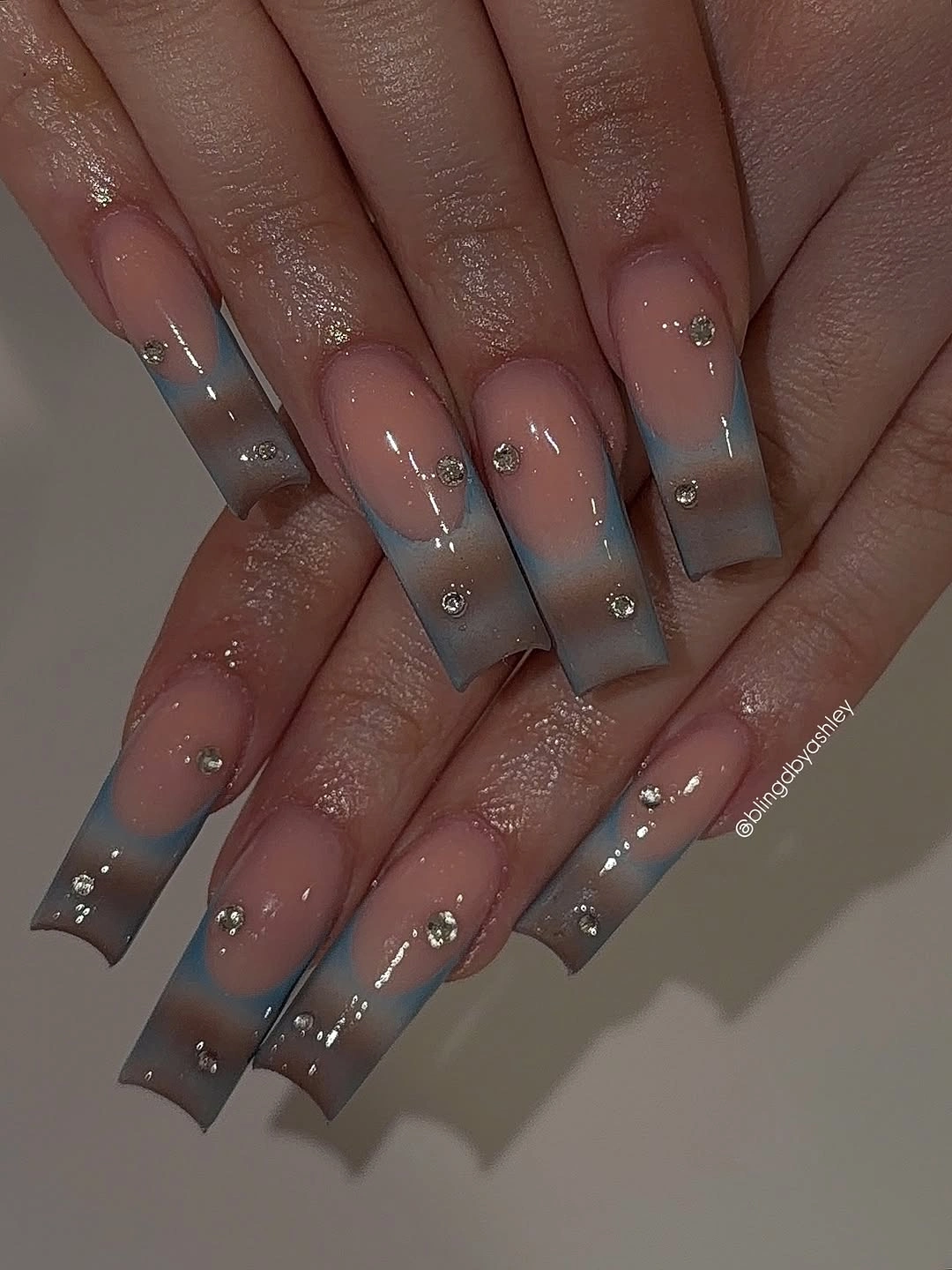
This is a helpful reference for editing down a saved inspiration board. Keep the pink as the main shade, use taupe on one or two nails, and choose one small outlined mark instead of repeating several motifs. The look can become warmer with caramel taupe or cooler with gray beige, while the medium length remains practical.
Minimal art leaves little room for distraction, so the shape and surface need to be tidy. Its benefit is flexibility: the manicure can sit beside a patterned jacket, gold jewelry, or a bright lip without adding another loud element. Pick it when you want a seasonal feeling that comes from proportion and tone rather than obvious decoration.
Brown Edges on Short Rounded Squares
Pink, brown, and white create short rounded-square nails through brown French edges and a few warm dots. The compact shape keeps the design easy to wear, while the darker tip gives the pale base a clear autumn connection. Because the motif is concentrated at the edge, the center remains open and the manicure does not feel crowded.
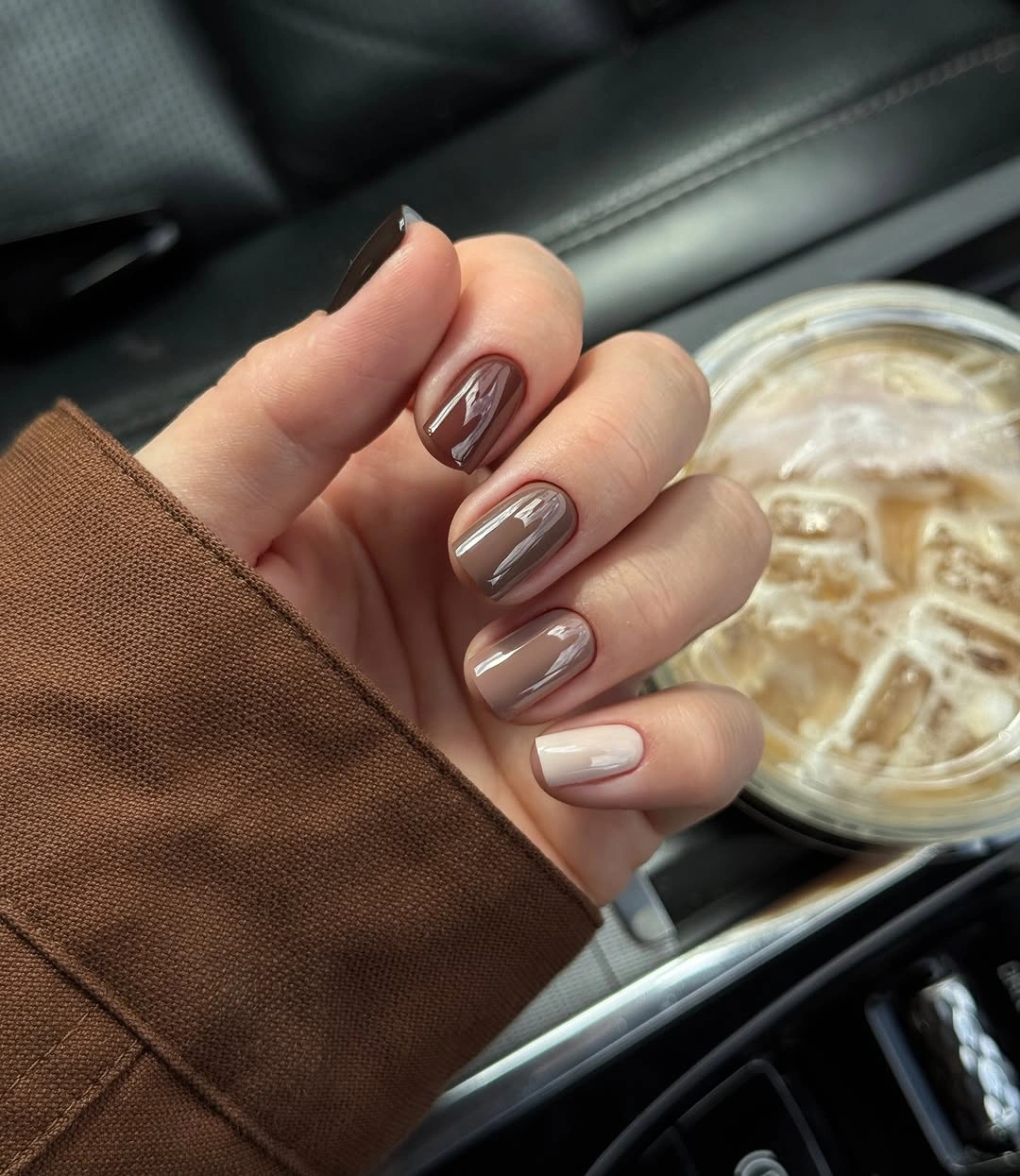
This is a simple way to adapt a richer fall palette to a shorter nail. Keep the brown line narrow for a quiet result, use a deeper chocolate if you want more contrast, or let the dots echo a warm accessory. The rounded-square outline supports the French edge without making it look overly formal or sharp.
Short nails offer less space for a broad pattern, so the narrow edge and open center are practical choices rather than limitations to hide. Brown can show uneven spacing, but the small dots allow a little variation and keep the design lively. Choose this reference when you want an everyday manicure with a clear seasonal cue and low visual density.
Orange Stripes With Gold Sparkle
Orange, nude, white, and gold fill long square nails through raised-looking orange lines, striped tips, and a glittering gold accent. The palette is bright and unmistakably seasonal, but nude space keeps the design from becoming a solid orange wall. The square shape gives the stripes a structured stage, while gold adds a small flash at the edge.
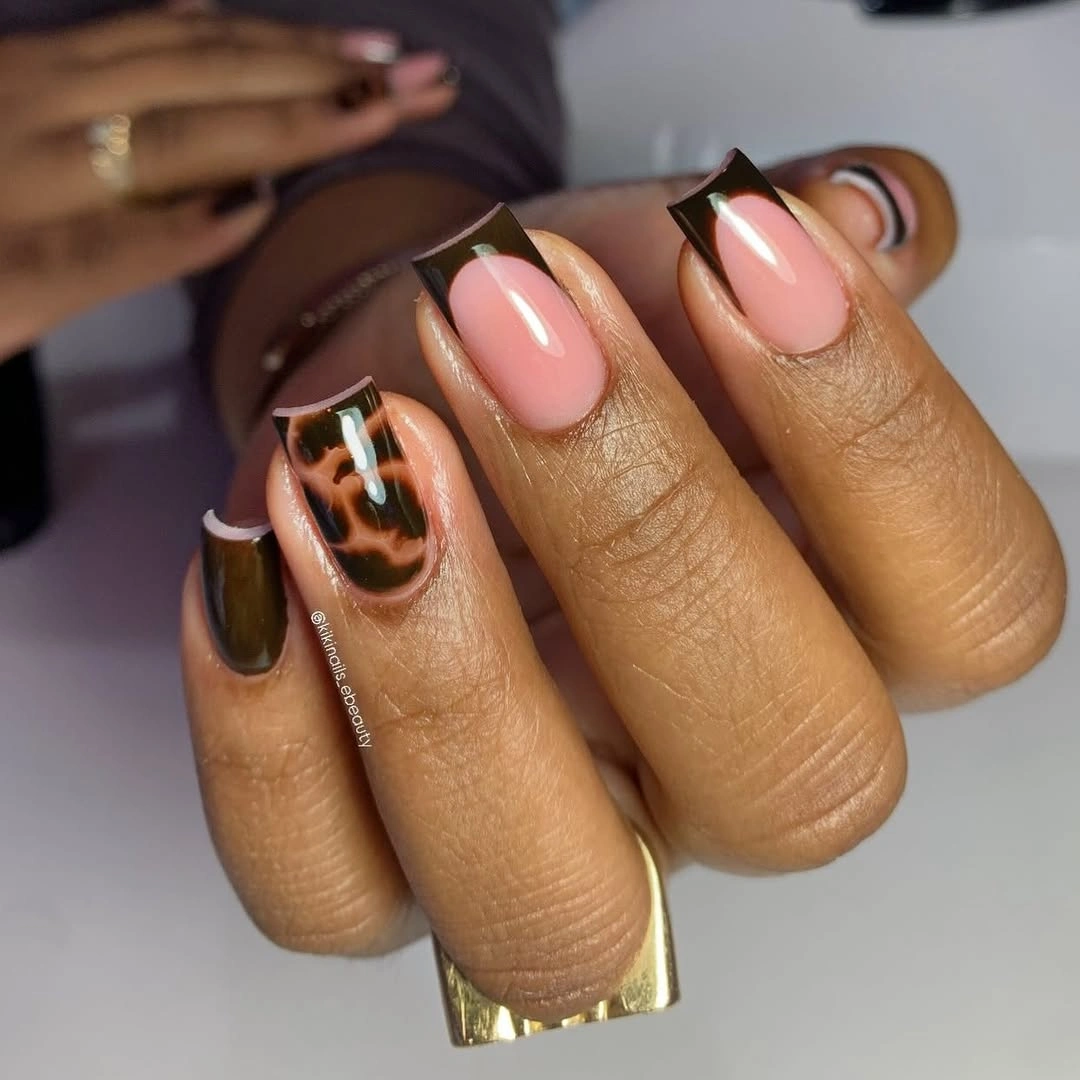
Use orange as the lead color when the rest of the outfit is neutral, or reduce it to one accent nail if the manicure needs to sit beside a printed sweater. White bands make the warm color easier to separate, while gold can be kept small so it does not compete with the stripes. A medium square will make the composition more practical.
Long square length makes the graphic layout visible but can also make daily handling more demanding. Raised-looking details may catch attention through texture, so a flatter metallic line is a sensible alternative when you want the same contrast with less relief. The design rewards a clean border and enough open nude space to keep the orange focused.
Orange and Nude Geometry With Vertical Lines
A second orange-led set uses long square nails, nude centers, white striping, and vertical blocks of warm color with a gold accent nail. The straight lines make the manicure feel more architectural than playful, while the orange remains the visual anchor. Repeated vertical direction helps the long shape look intentional and keeps the separate details connected.
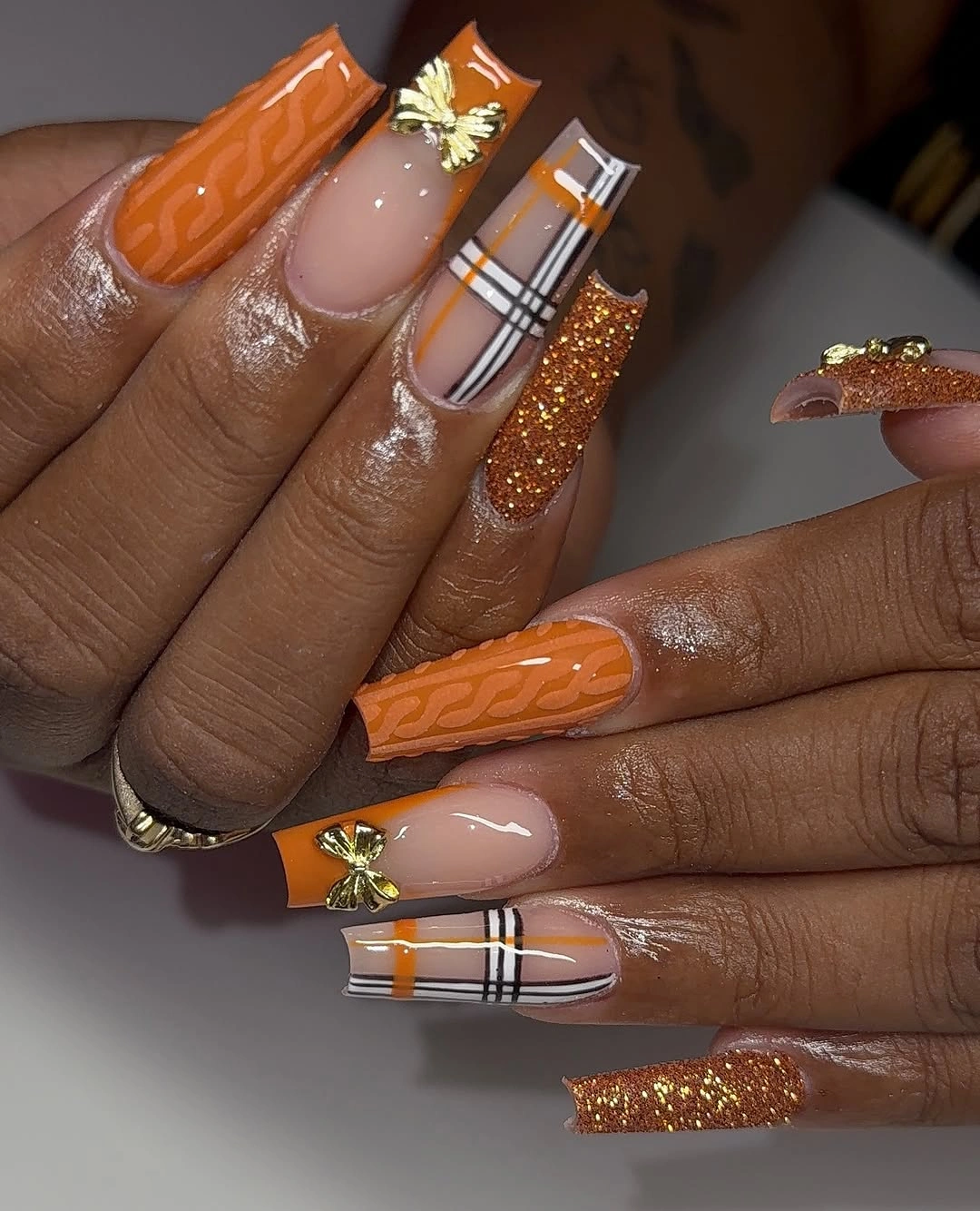
This version is useful when you want the energy of orange but prefer a cleaner graphic language. Keep the vertical block on two nails and use a single orange French tip elsewhere, or replace the gold with a muted brown if the outfit already contains shine. The long square can be shortened without losing the basic direction of the lines.
Vertical details emphasize length, so they work best when the proportion feels comfortable rather than forced. Straight striping also shows spacing differences quickly, making a simple layout more dependent on clean placement. Choose this look for a modern fall statement, and let the geometry do the work instead of adding extra symbols.
Teal Olive and Gold Maximalist Collage
Teal, olive, gold, cream, and brown combine on long square nails through layered stripes, metallic charms, and abstract blocks. The palette moves away from the usual red family but still feels autumnal because the greens, brown, and warm metal share a grounded quality. Each nail has a different arrangement, while repeated lines and accents keep the set from becoming disconnected.
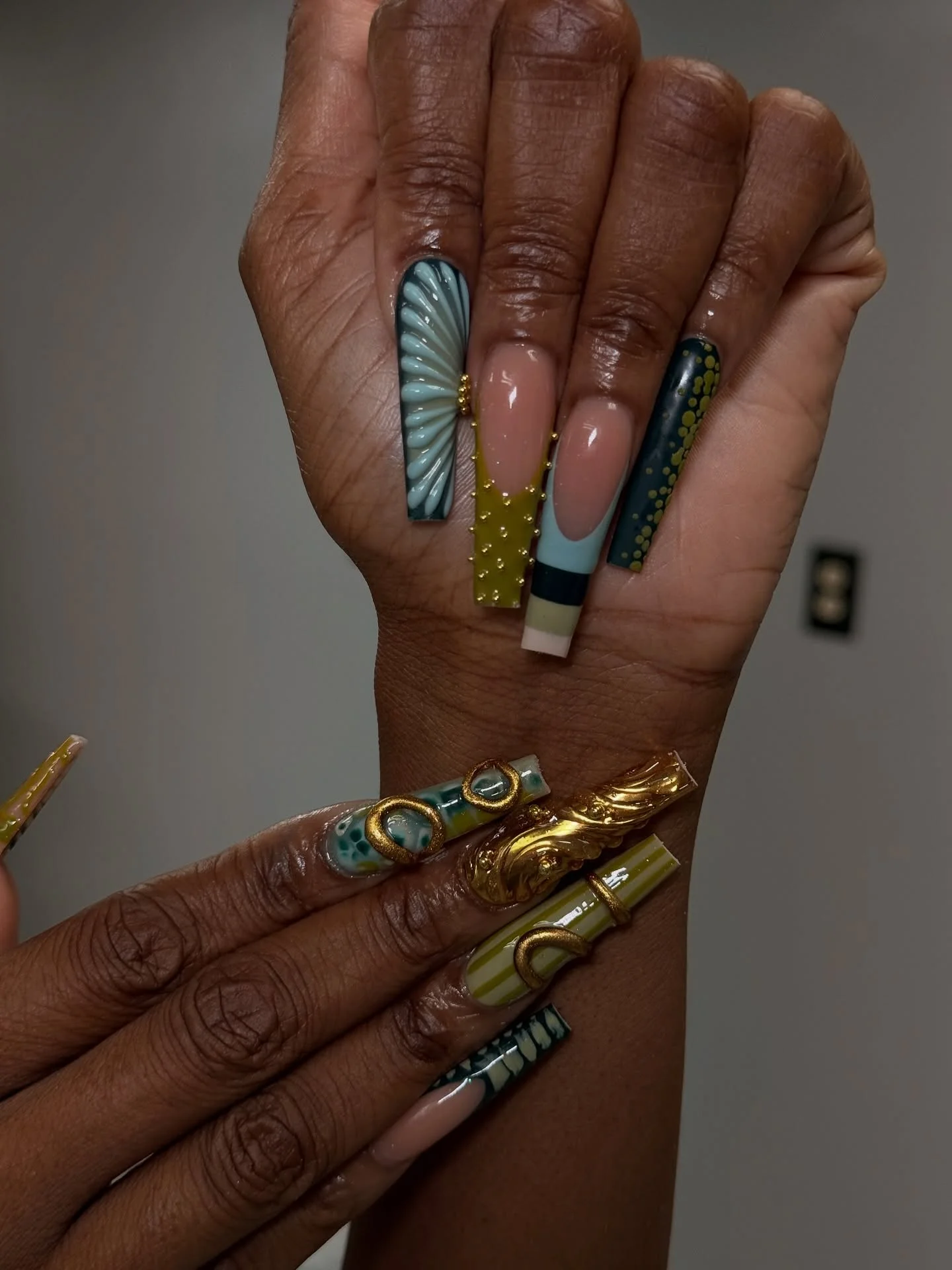
This is a collage to edit rather than copy literally. Choose teal and olive as the main pair, keep gold on two accents, and let cream or brown provide the quiet nails that make the brighter blocks readable. If long square length is not practical, move the strongest stripe onto a medium shape and remove the smallest charm-like details.
Maximalist sets ask for attention during both planning and upkeep because several colors, lines, and raised-looking accents can compete as the manicure changes. The open blocks and repeated stripe direction provide structure, so preserve those relationships when simplifying. This final reference is for someone who wants the nails to be the season’s main accessory and enjoys a more experimental palette.