Fall nail designs square shape ideas are easiest to judge when the shape and the decoration support each other. A short square nail can carry a pastel patch, a dark solid, or one small accent without needing a long canvas, while a longer square or coffin shape gives outlined arcs, stripes, and mixed patterns more room. The collection below moves between simple choices and higher-detail statements so the upkeep is visible too.
Color, finish, and placement change the mood even when the corners stay similar. Some designs rely on one glossy shade, others leave negative space around a border, and a few use the flat tip as a clear stage for pattern. Keep the strongest idea from each section, then reduce the number of accents or shorten the length when you want a square manicure that remains realistic for ordinary routines.
Pastel Patches on Short Square Nails
Short square nails start the collection with a pale pink base and small pastel yellow, blue, and green patches. The colors sit as rounded abstract areas rather than full solid nails, so the compact shape remains visible and the set feels light. Because the accents are small and the background is pale, this is an approachable way to explore fall nail designs square shape without committing to dramatic length.
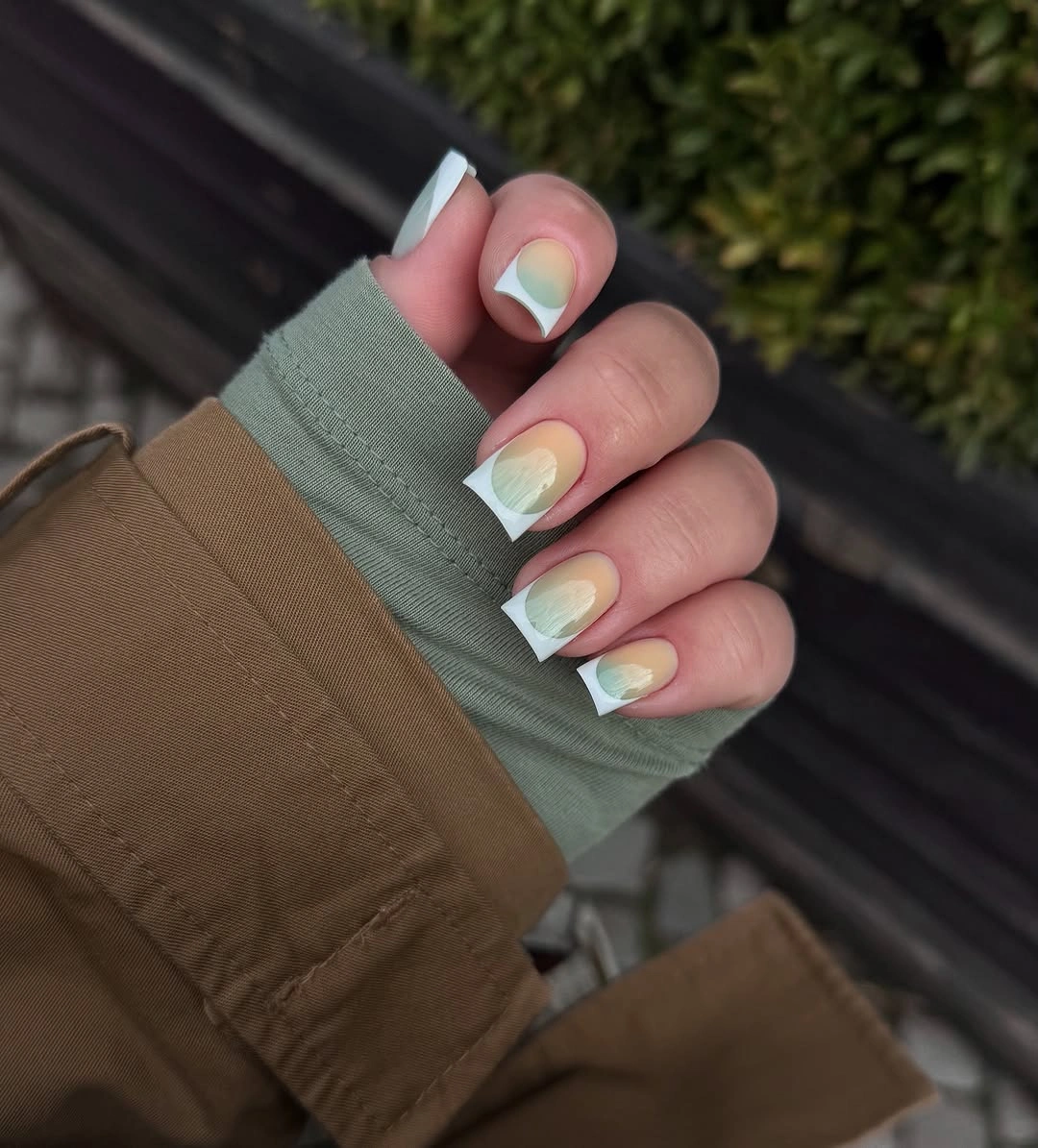
The placement keeps the mix manageable. A light base separates the soft colors, and the square tip gives each patch a simple boundary instead of making the colors compete across a long surface. The design has enough variety to feel playful, but it does not rely on a dense pattern that would become difficult to read when the nails are short or slightly uneven.
Choose two pastels and repeat one rounded patch on an accent nail if you want the lowest-complexity version. The short square shape can stay exactly as it is, while larger color areas will be easier to keep neat than several tiny transitions. The main limitation is edge precision: a pale base can show small mistakes, so fewer colors may give a cleaner result than copying every visible patch.
Lavender Outlines with Open Centers
Medium square nails use a sheer pale center surrounded by a saturated lavender-purple outline. The color follows the square contour and leaves most of the nail open, which makes the border the clear focal point. This design looks more elaborate than a solid color but uses one main hue, so the visual payoff is high compared with the amount of detail a reader would need to reproduce.
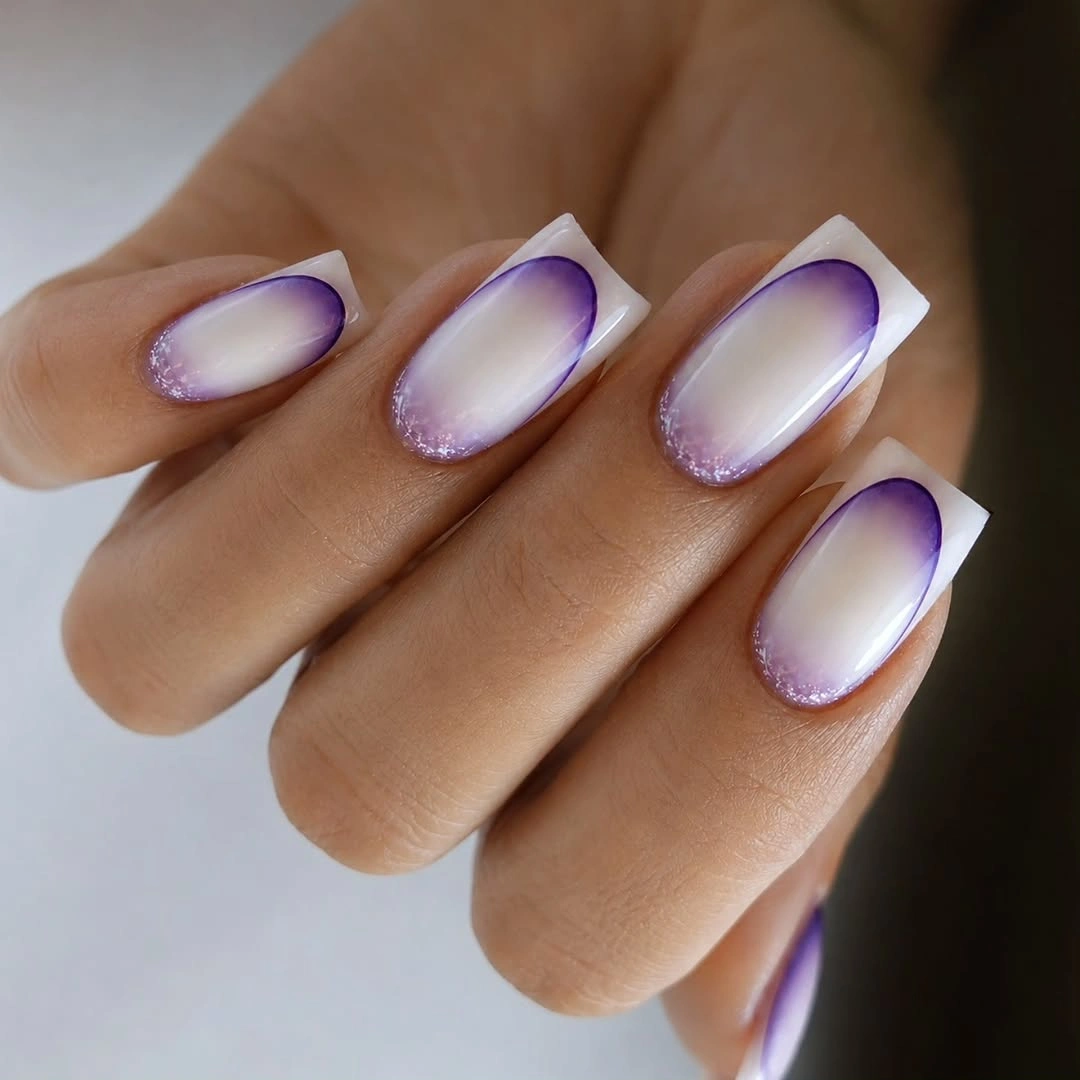
The open center is practical as well as decorative. It keeps the design from becoming a heavy purple block and allows the square shape to remain visible, while the outline gives the flat tip a clean graphic edge. Uneven growth will change the space between the base and the border, so the effect is simple to understand but still depends on consistent placement.
Use a softer violet or put the outline on two accent nails if you want less maintenance. A short square shape can carry the same idea, although the border may need to be wider so it does not disappear. Avoid adding a second motif unless the outline feels too plain, because the negative space is the feature that makes this design distinct from a basic full-color manicure.
Creamy Yellow in a Clean Solid Finish
Medium square nails are fully covered in a soft creamy yellow with a glossy, even surface. There is no visible art, so the design depends on consistent coverage, clean corners, and the warmth of the color. That makes it one of the simplest fall nail designs square shape in the edit, but the pale shade still has enough presence to keep the short-to-medium silhouette from looking unfinished.
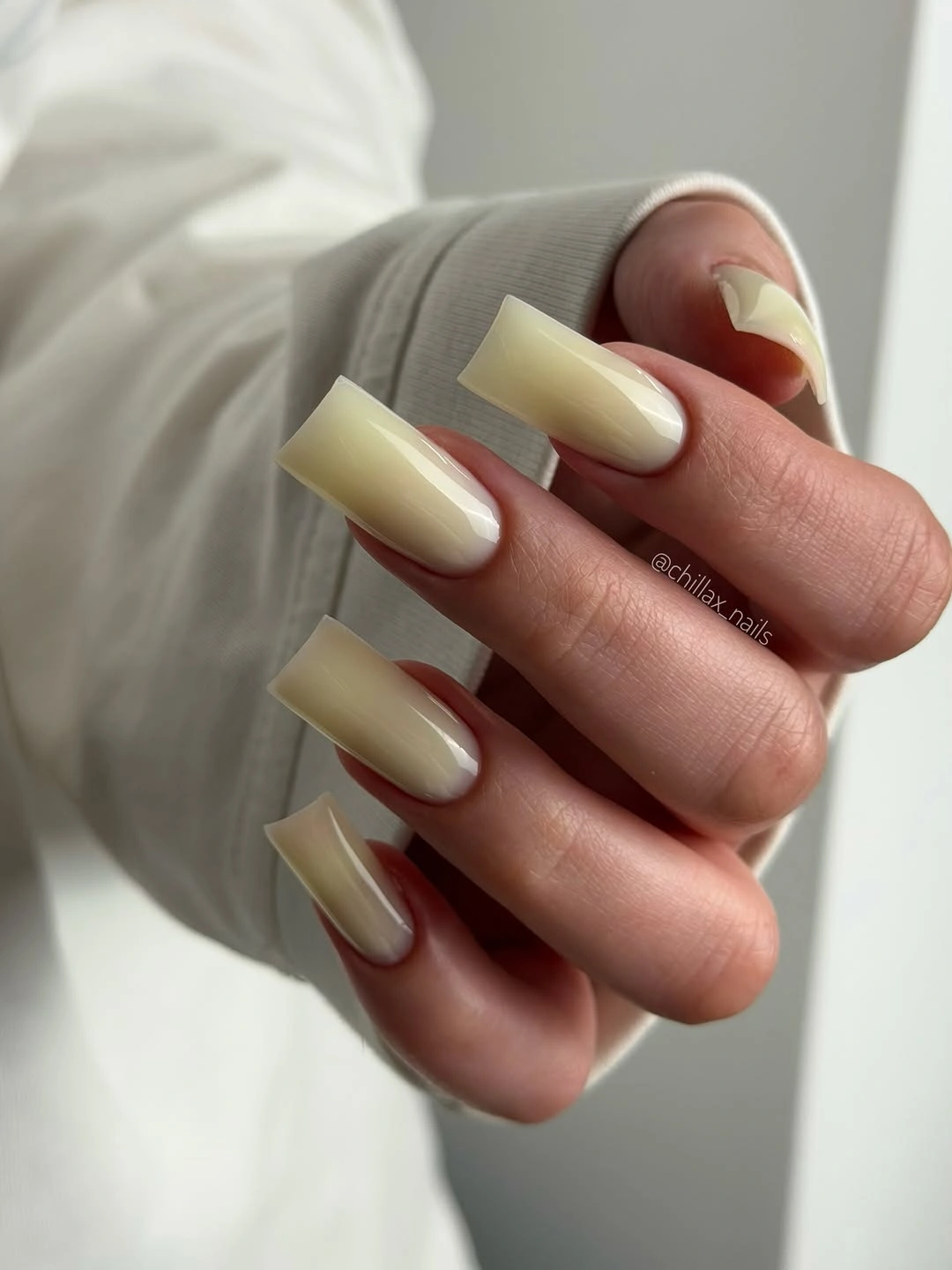
A single color can be useful when the shape is the part you want to test. The flat square edge reads clearly, and the warm yellow brings light to the hand without needing lines or accents that could crowd the smaller surface. The glossy reflection also gives the solid finish a little movement, so the manicure does not depend on a complicated visual story.
Shorten the nails or add one neutral accent if a full pale yellow set feels too bright. A sheer beige layer under the color can soften the contrast, while keeping the surface solid will preserve the cleanest version of the idea. Pale shades may reveal stains, uneven edges, or small chips more quickly, so careful shaping matters more here than adding extra decoration.
Long Square Nails in Reflective Dusty Rose
Long square nails use a muted dusty rose color with a soft reflective sheen. The finish adds dimension without visible glitter or a separate motif, so the length and the flat corners remain easy to read. This is a higher-impact choice than the creamy yellow solid because the silhouette is longer, yet the color stays quiet enough to prevent the hand from feeling overloaded.
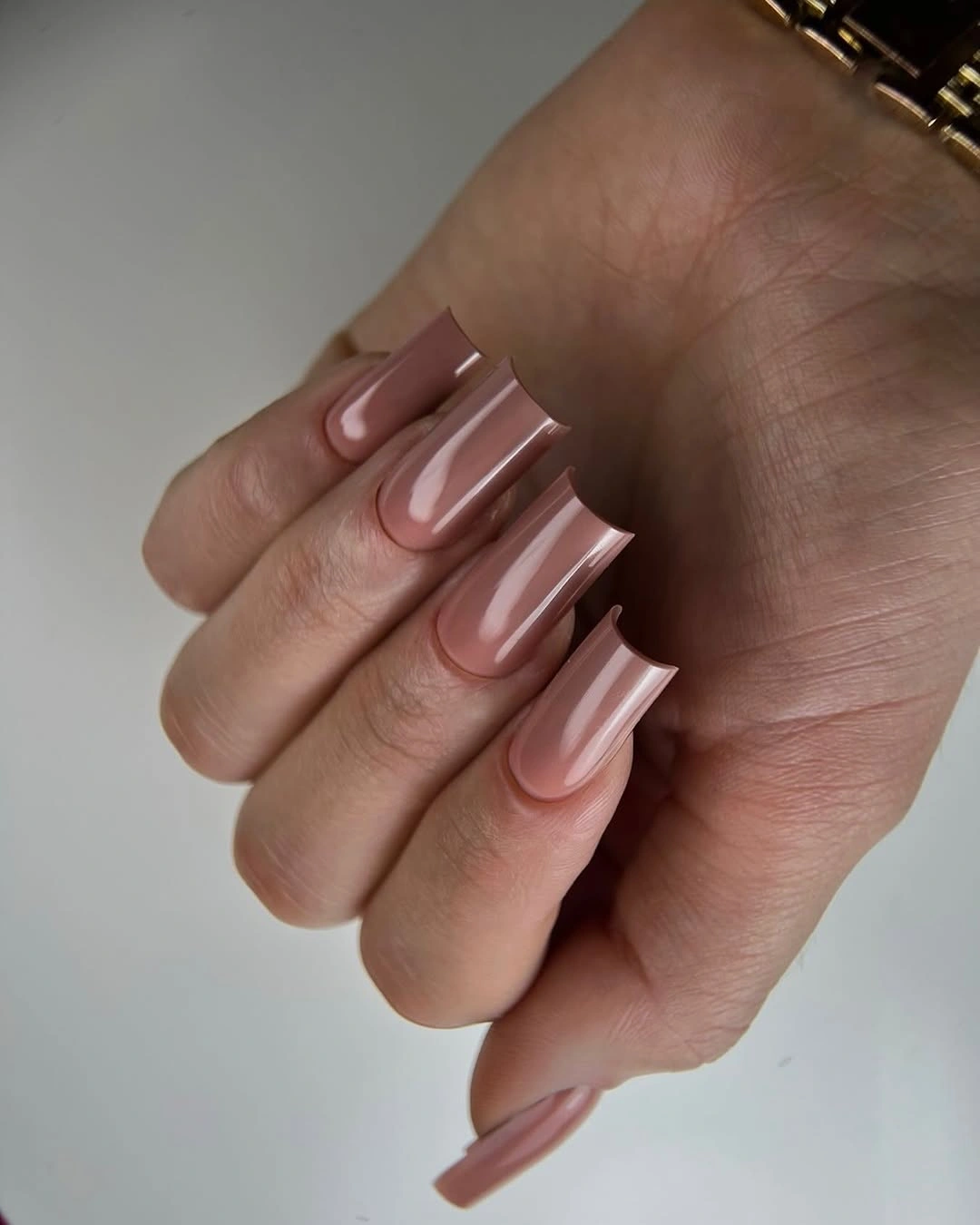
The finish is doing the decorative work. Light moves across the rose-beige surface and makes the square shape look more polished, while the absence of pattern keeps the visual field calm. That combination can be useful for someone who wants a statement through length or surface rather than through detailed nail art, especially when accessories or clothing already provide contrast.
Keep the color and move to a medium square if the long length is inconvenient. A shorter nail will reduce the practical cost while preserving the reflective quality, and one accent nail is unnecessary unless you want a visible break. The honest limitation is that a glossy reflective surface can show scratches and edge wear clearly, so the low-detail design is not completely maintenance-free.
Pale Pink Squares with Yellow Edges
Short square nails use a pale pink base and a narrow yellow line at the free edge. The bright color is concentrated in one small boundary, so the base remains the dominant impression and the compact shape stays practical. This design brings more personality than a plain nude without asking for the length or detailed placement required by a larger multi-color pattern.
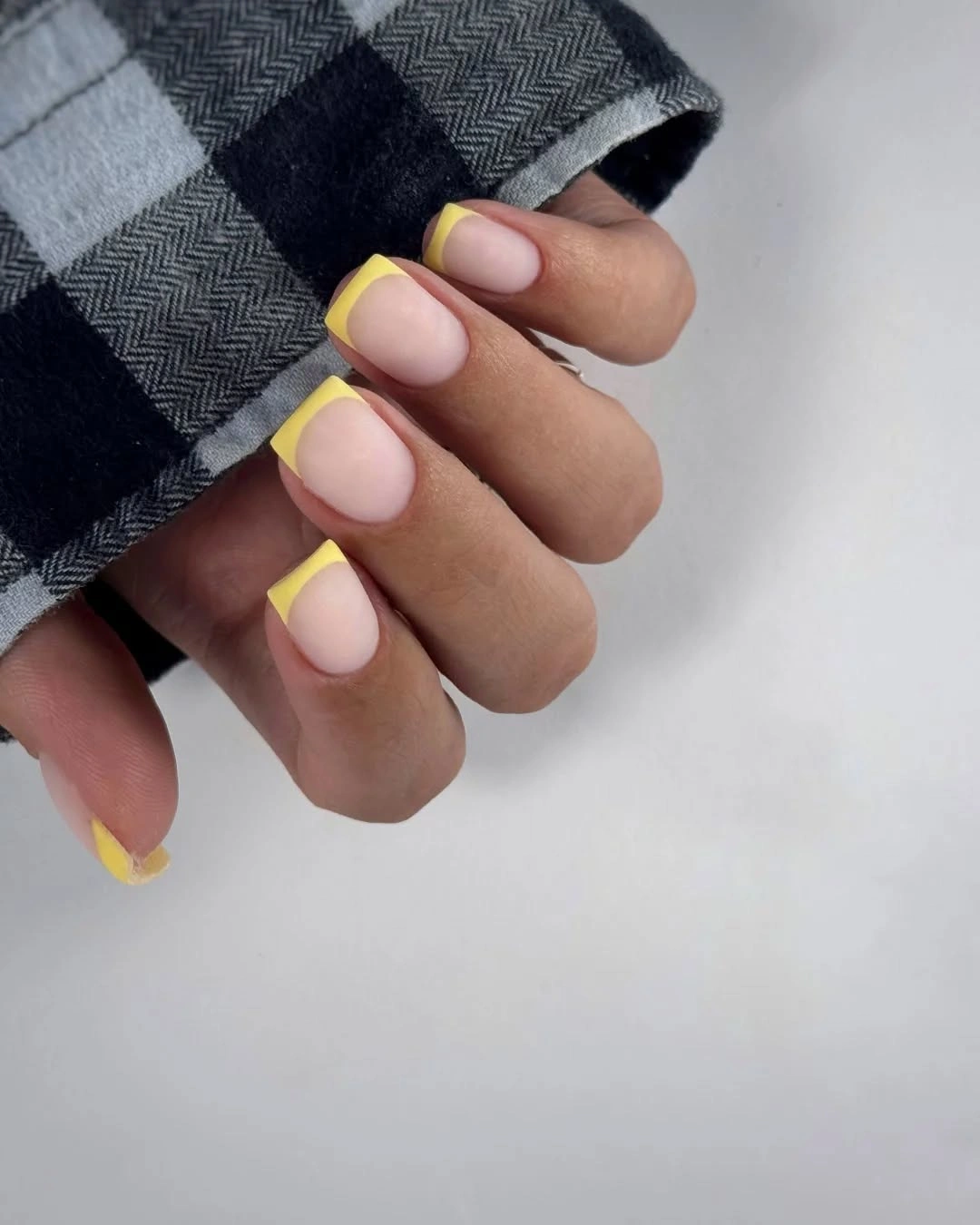
The yellow edge works because it follows the flat square tip and creates a clean, easy-to-understand contrast. The pink center keeps the hand soft, while the warm line adds a small seasonal lift that can be changed without rebuilding the whole palette. Since the accent is limited to the edge, the design remains readable even when the nails are short.
Switch the yellow to ochre or keep it on two accent nails if you want a quieter route. A slightly wider line may be more reliable on very short nails, but too much color would turn the idea into a full block and reduce the open center. Growth will move the boundary away from the edge, so the main upkeep need is keeping the tip proportion looking intentional.
Silver Metallic on Medium Squares
Medium square nails are covered in a bright silver-gray reflective finish with no contrasting art. The surface catches the light evenly, making the flat corners and straight edges the clearest structural details. Compared with the soft pastel designs before it, this choice is cooler and more noticeable, but the lack of pattern keeps the reproduction relatively simple.
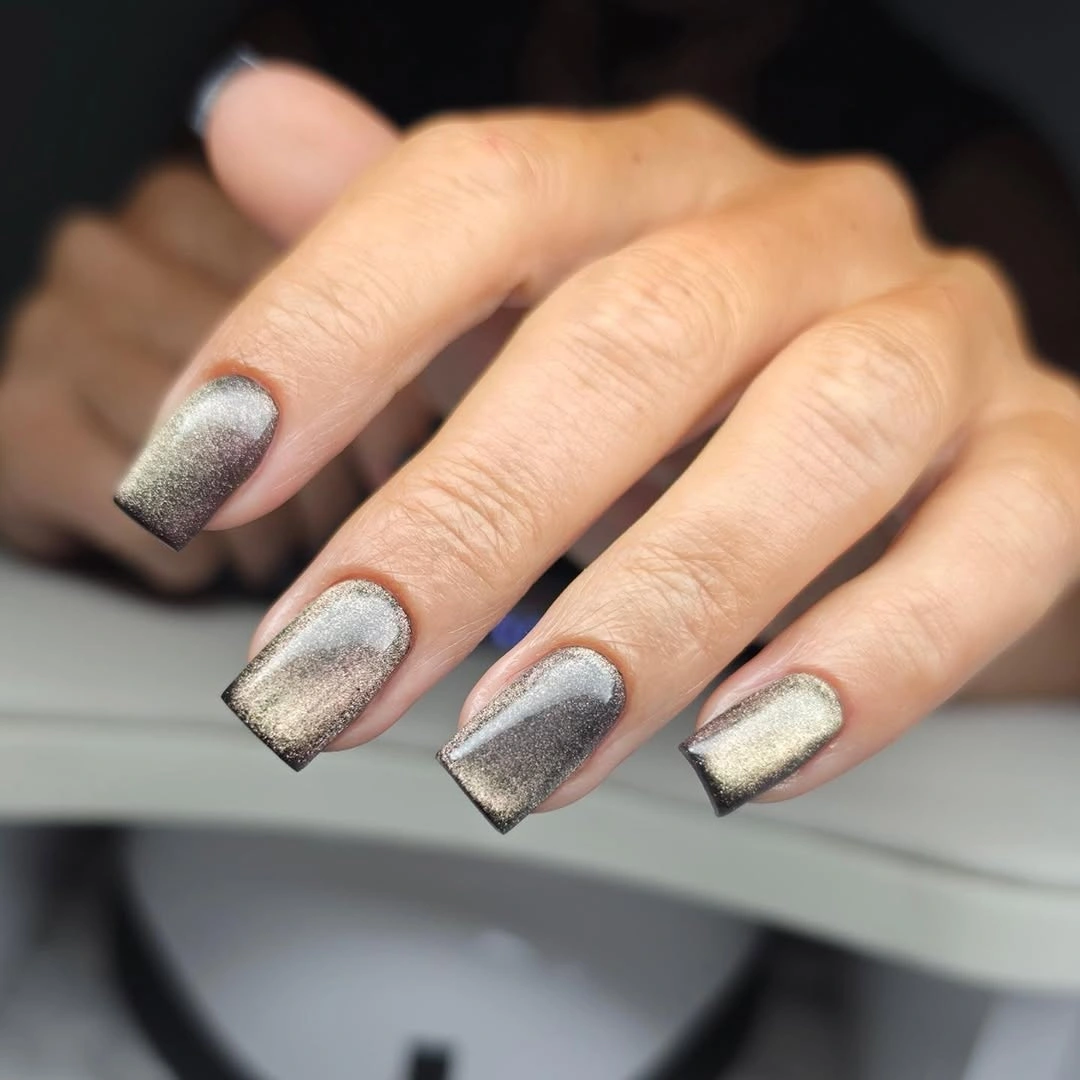
The metallic surface changes how a simple shape is perceived. Every square edge reflects a little light, so the manicure appears more dimensional without adding lines or colors. That makes it a practical reference for anyone who wants a strong finish but does not want to manage multiple accents, although the reflective field also makes scratches and chips more visible.
Use silver on one accent nail beside neutral solids if a full metallic set feels too intense. The medium square length can stay, or it can be shortened without changing the main idea. Avoid adding small patterns over the surface unless the silver needs more contrast, because its even reflection is already the focal point and extra detail may make the clean finish harder to maintain.
Near-Monochrome Silver with One Brighter Nail
This second silver set stays close to one cool metallic tone, but one nail catches a slightly brighter reflection or lighter accent. The difference is subtle rather than decorative, so the medium square shape remains the main frame. It is a useful lower-contrast alternative to a fully varied manicure because the reader can create interest through a small tonal change instead of a new pattern.
The design relies on noticing a surface shift rather than a painted motif. Most nails create a consistent field, then one brighter area gives the eye a place to land before returning to the repeated silver. That restraint is why the idea feels calm even though the finish is reflective, and it also means the manicure can coordinate with stronger rings or clothing.
Repeat the brighter accent on one finger or replace it with a nude nail if you want more obvious separation. A shorter square shape will keep the idea straightforward, while a full pattern would change the low-maintenance character. Reflective finishes still show edge damage, so the easiest route is to keep the set close to one tone and let the subtle variation do the work.
Glossy Violet on a Clear Square Shape
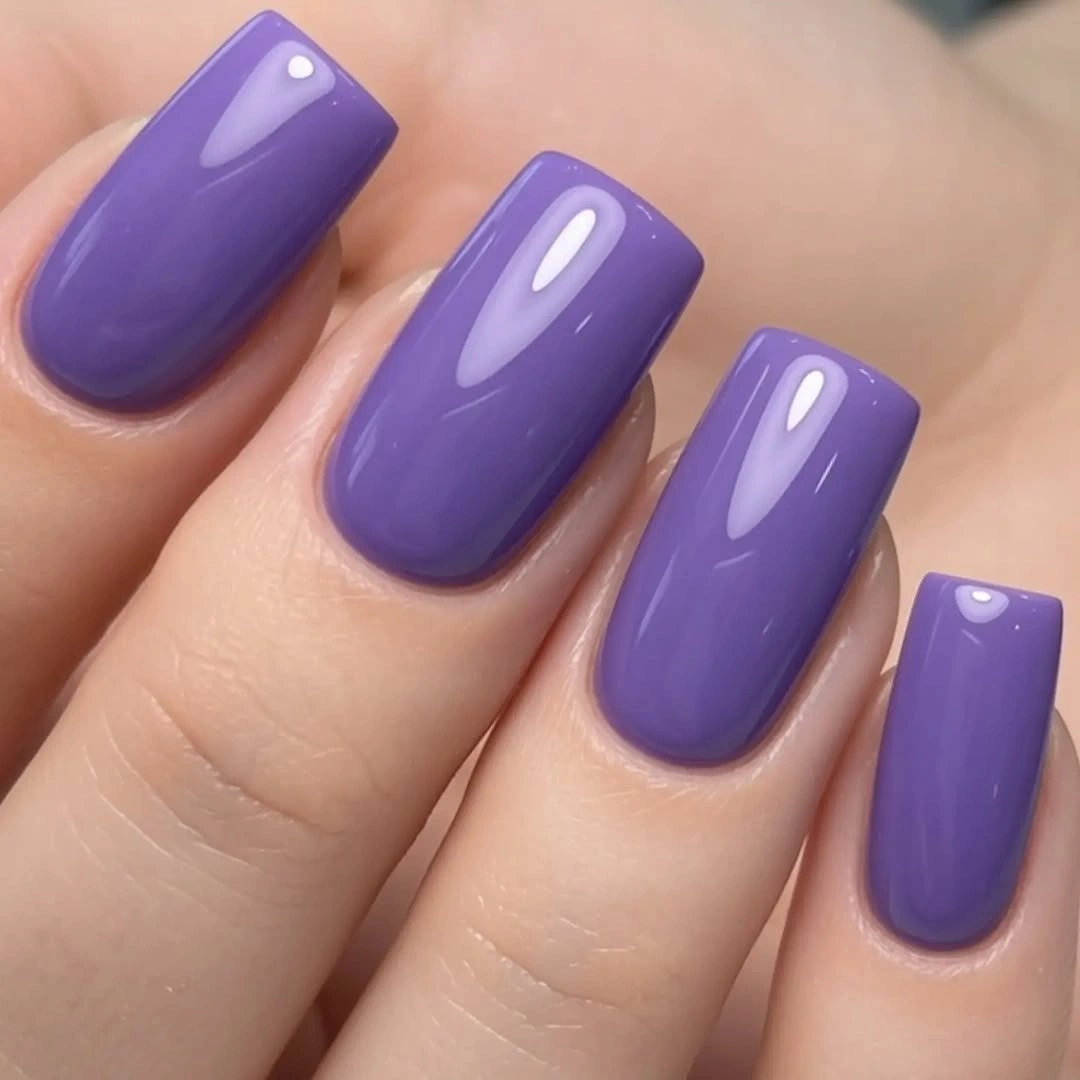
Medium square nails are fully coated in saturated glossy violet purple, creating a direct color statement with no visible art. The shade is brighter and more assertive than the muted rose or pale yellow, while the square corners keep it from feeling overly soft. Because the design uses one solid surface, it offers strong visual impact without requiring a complex plan for placement.
The clean field makes the shape easy to evaluate. The flat tip and straight sidewalls appear clearly under the glossy reflection, while the saturated purple supplies enough contrast to make the manicure noticeable from a distance. This is a good reminder that a square silhouette can look expressive through color alone, especially when the color is uninterrupted across every nail.
Shorten the shape or put violet on two nails beside a pale base if a full bright set feels too strong. A single accent line would be possible, but it is not necessary to make the manicure look finished. The main limitation is the same as with other saturated solids: chips stand out against the deep color, so a simple design still benefits from neat, regular edge care.
Deep Navy for Short Square Nails
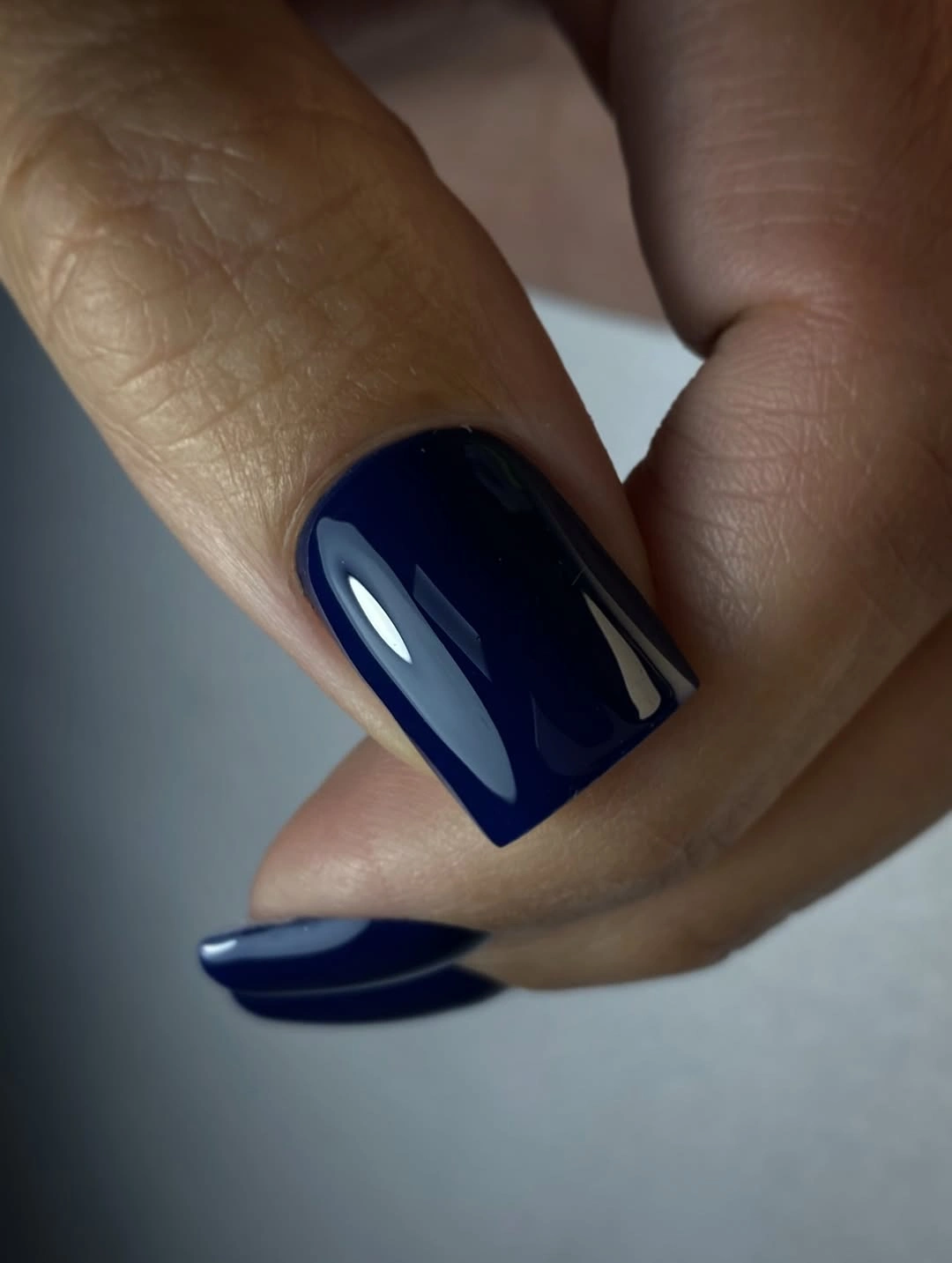
Short-to-medium square nails use glossy deep navy blue, which looks almost black in shadow and more clearly blue when light reaches the surface. The compact shape keeps the dark shade approachable, while the even finish gives the set a crisp outline. It is a low-detail choice that feels more seasonal through depth and contrast than through a literal fall motif.
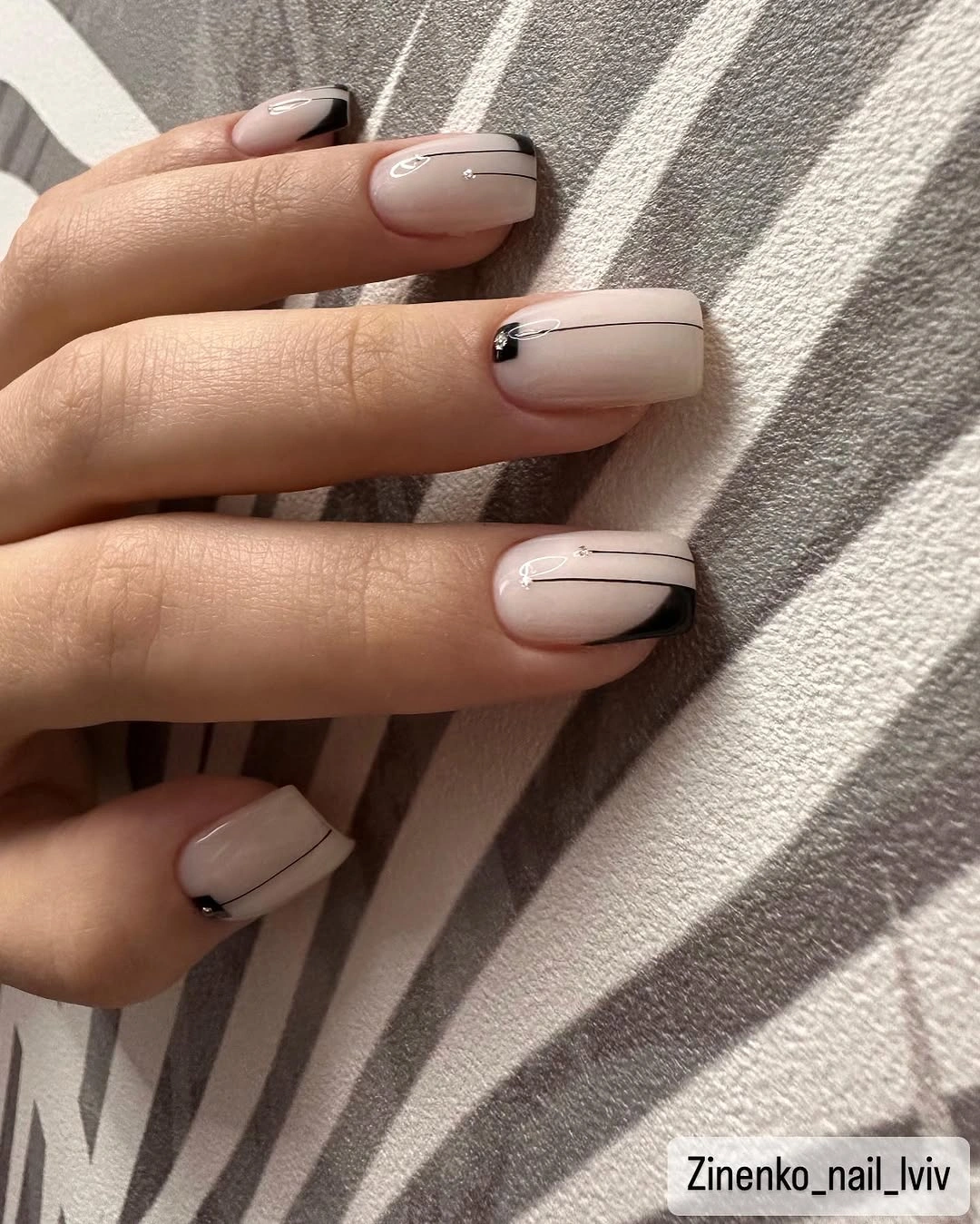
Navy changes the mood of the square shape without needing extra decoration. The color emphasizes the flat tip, the short length prevents the hand from feeling overly dramatic, and the glossy surface creates a small shift between shadow and light. That combination makes the design easy to pair with neutral clothing, but still more distinct than a basic beige or pink solid.
Use navy on medium squares or add one pale accent if an all-dark set feels severe. A short length is the easiest route because it keeps the color concentrated and reduces the visual weight of the dark surface. Edge chips will contrast strongly, so the low-effort advantage comes from the simple repair path rather than from being completely maintenance-free.
White Squares with One Spotted Accent
Short square nails are mostly clean white, with one pale nail carrying small black spots. The base color keeps the hand light, while the single patterned accent prevents the set from becoming too uniform. Because the motif is contained on one finger, the design offers a clear focal point without requiring long nails or a full pattern repeated across a smaller canvas.
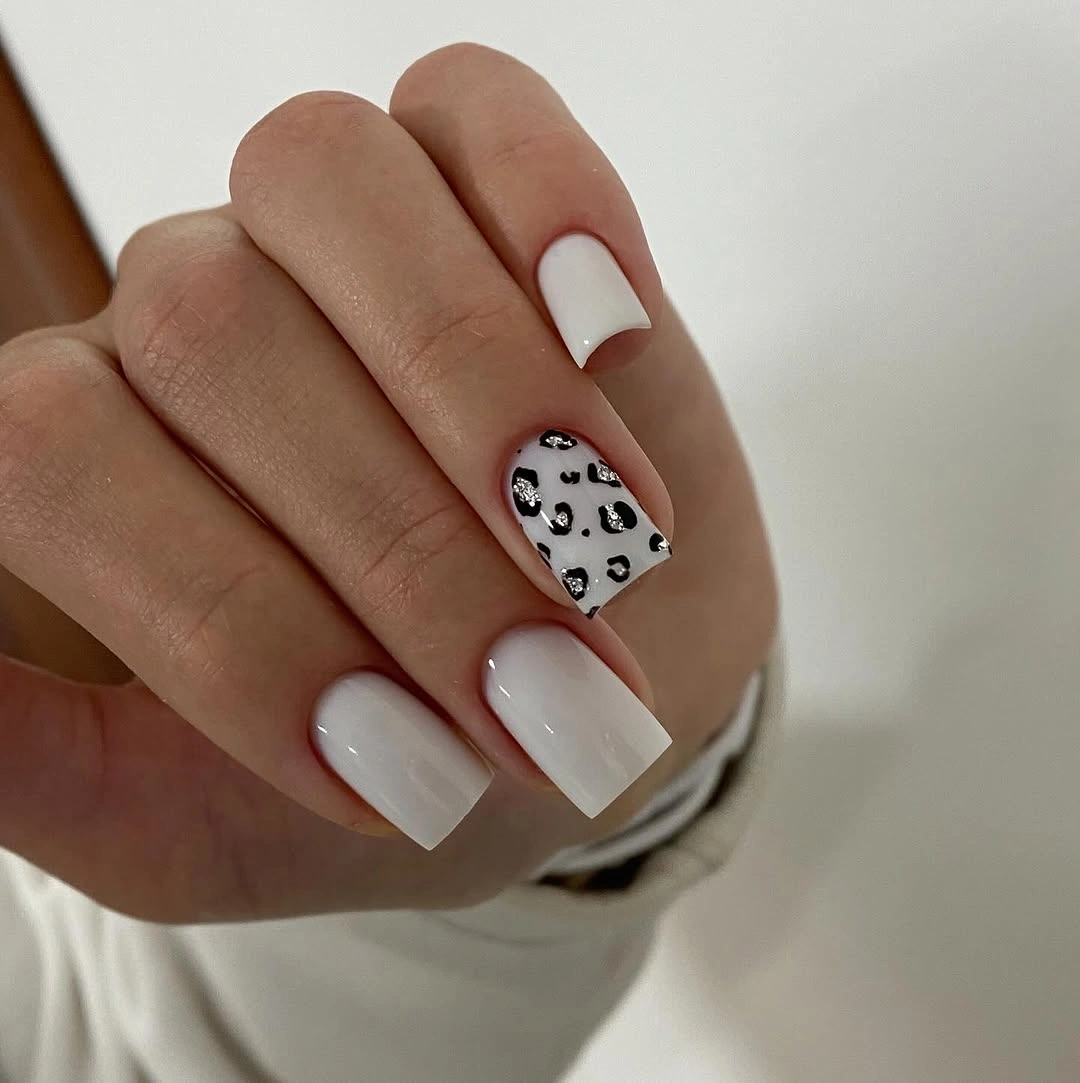
The accent works as a controlled interruption. White solids create a simple background, then the dark spots bring contrast and give the eye one place to pause. The short square shape makes the idea easy to wear, but the pale surface also shows why placement matters: small marks remain readable only when they are spaced and kept away from the edge clutter.
Move the pattern to two nails or replace it with one larger dark dot if you want an even simpler version. A short square shape can stay, while a medium square will provide more room for spaced marks. White may reveal stains and edge wear quickly, so fewer spots and generous open space are practical choices when the goal is a clean, repeatable manicure rather than a dense design.
Black Outlines with Neutral Solid Accents
Short square nails alternate pale neutral fields, black outlines, and a few dark solid accents. The palette is limited, so the graphic contrast comes from where black appears rather than from many different colors. The compact shape keeps the design grounded and makes it a useful option for someone who wants a stronger outline effect without committing to long nails or multiple detailed motifs.
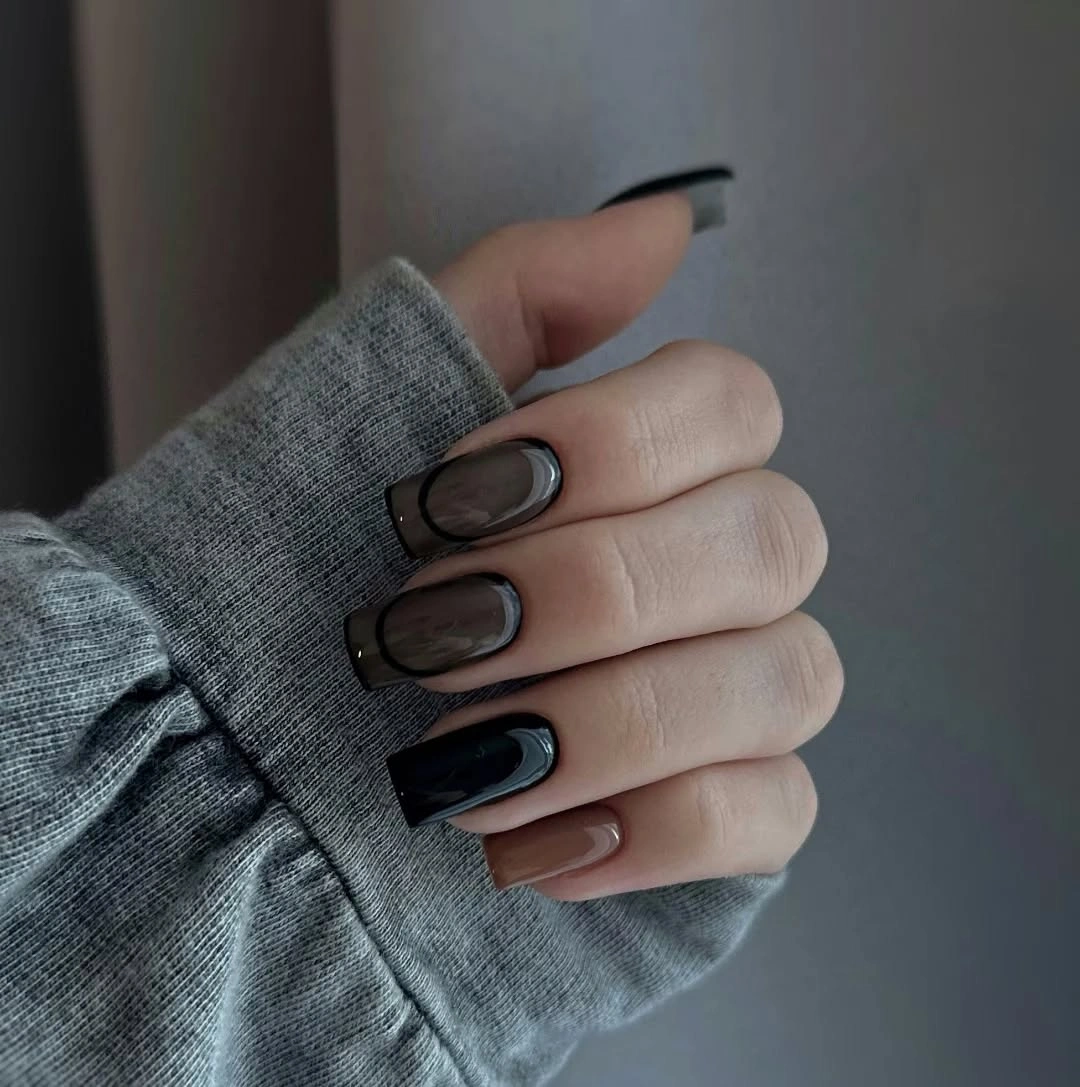
The outline and the solid dark nail serve different purposes. A black edge sharpens the pale square shape, while a full dark nail provides a quiet block for the eye to rest on. Alternating those roles creates rhythm without needing a repeated pattern, and the neutral base keeps the set from feeling as intense as a hand covered entirely in black.
Keep black on one outline or swap the solid accents for navy if you want less contrast. Short squares can carry the graphic idea well, but uneven shaping will be more obvious where the outline follows the corners. The practical route is to simplify the number of outlined nails, because a clean single border will look more intentional than several lines that do not share the same spacing.
Pale Pink with Warm Curved Borders
Medium square nails use pale pink centers and dark brown curved borders that frame the tips or sides. The line is softer and warmer than a black outline, so the design feels less severe while still giving the square shape clear definition. It introduces more detail than a solid color, but the repeated border keeps the visual system easy to understand.
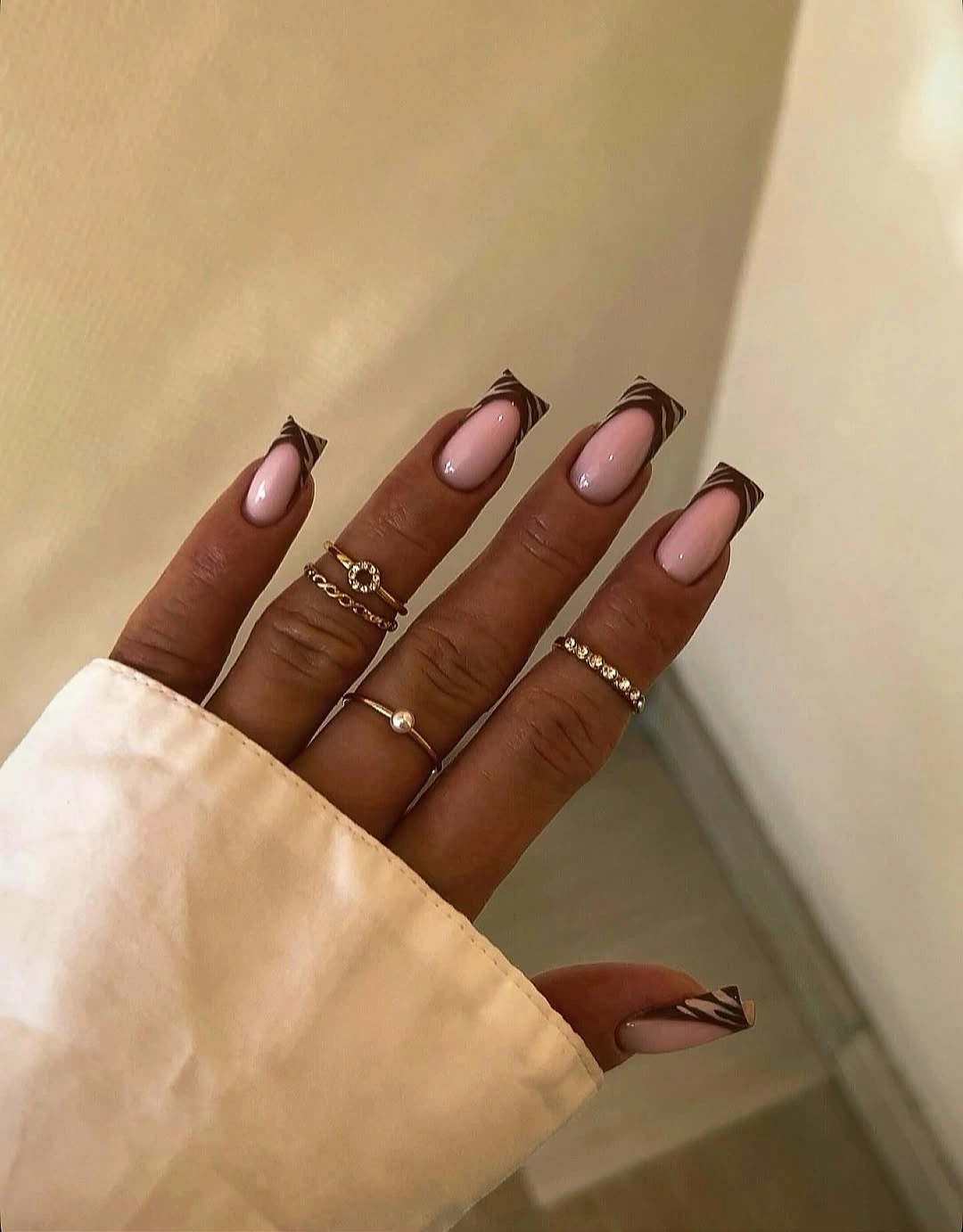
The curve changes the character of the flat tip. Instead of creating a straight block, it follows the nail with a rounded gesture that softens the corners and lets the pale center remain dominant. Brown also sits closer to the pink base in warmth than black would, so the contrast is visible without making the manicure feel overly sharp or high-maintenance.
Use a thinner border or move the design to short square nails when you want a simpler version. The line should stay open enough that it does not crowd the corners, and one accent nail can carry the curve if repeated placement feels too exact. Growth will change the distance between the border and the base, so the design still needs a plan for refreshing the line.
Nude Squares with Blue and Coral Edges
Short square nails keep a pale nude center while blue and muted coral accents sit along the edges. The two colors create a compact rhythm without covering the full nail, and the open base keeps the set visually light. This is a useful middle ground between a plain neutral and a fully patterned manicure because the color story is clear but the surface remains mostly quiet.
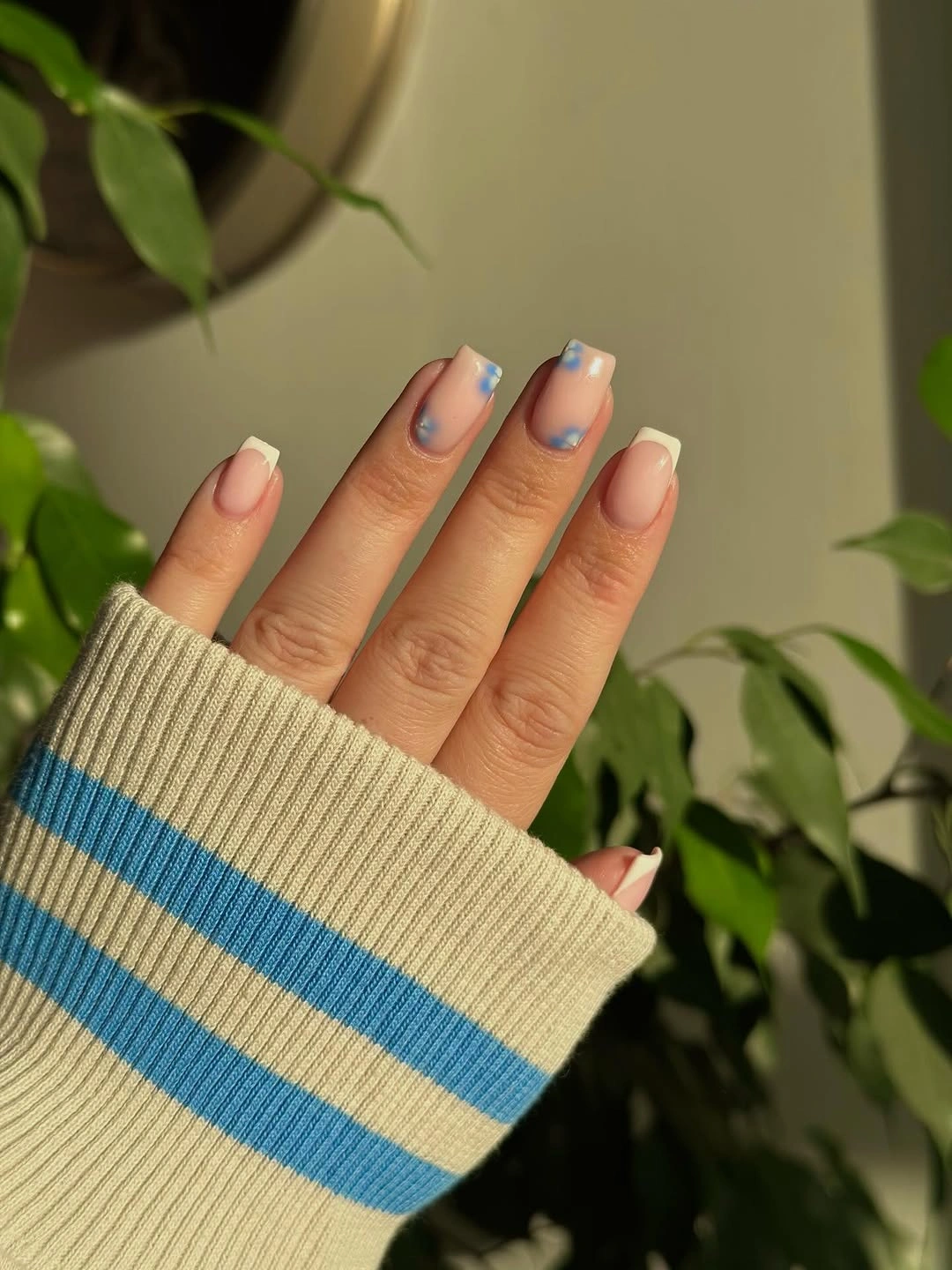
Edge placement makes the design practical to understand. Blue adds a cool note, coral brings warmth, and the nude center separates them so they do not merge into one busy block. The short square silhouette provides a firm frame for the accents, but the lines must remain slim enough that the corners and pale negative space are still visible.
Choose one accent color for a lower-complexity version or repeat blue and coral on only two nails. If the nail is very short, slightly wider edge blocks may be easier to keep neat than thin lines, but they should not spread into full coverage. The design is adaptable because the base remains neutral, while the main upkeep concern is keeping each colored edge at a consistent width.
Bright Curved Arcs over Dark Squares
Medium coffin-square nails use bright blue, red, and white arcs over darker fields, creating a high-contrast outlined effect. The curves follow the rectangular shape and give the surface a dimensional, almost glowing appearance without needing a separate floral or spotted motif. This is a higher-effort choice than the solid colors, but the visual logic remains simple: one dark base, a few bright curves, and clear spacing.
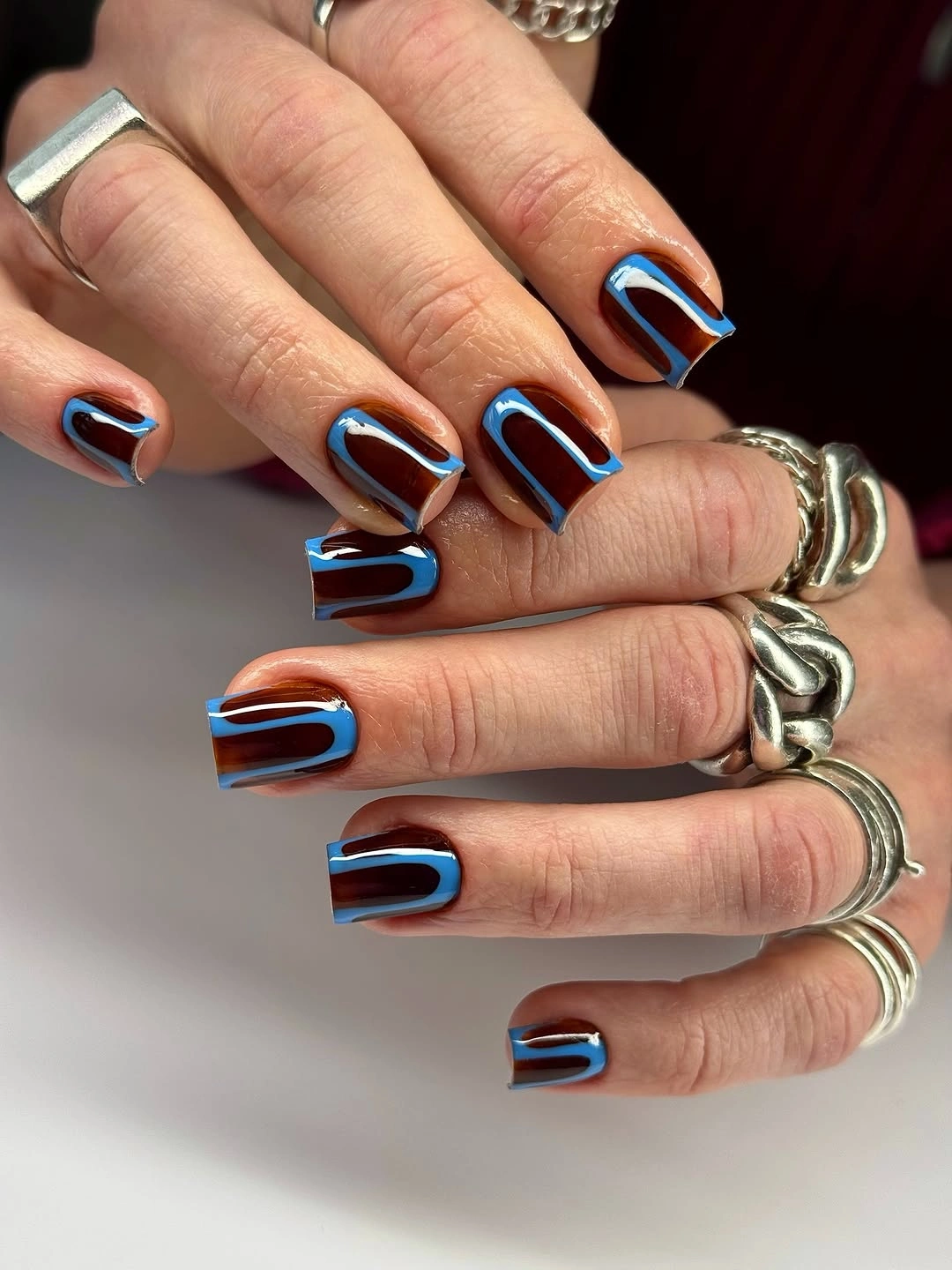
The arcs work because they are broad enough to remain separate. The dark ground creates contrast, the blue and red add energy, and the white lines keep the colors from blending into one another. The longer square surface is helpful here, since it gives the curves room to travel without colliding at the corners or turning into a dense patch of small detail.
Use two colors and one broad curve on a shorter square nail when adapting the idea. Removing a line will improve clarity more than shrinking every arc, especially if the shape is compact. The original design has strong statement value, but it asks for more precision and edge upkeep than a solid manicure, so the simpler route is better for an ordinary schedule.
Lavender Squares with Striped Tips
Long square nails mix pale lavender and white bases with narrow black stripes concentrated near selected tips. The centers stay quiet, so the stripes add movement without covering the entire surface or making the light palette feel heavy. The square length gives the patterned edges room to read, while the pale colors keep the set softer than a dark graphic design.
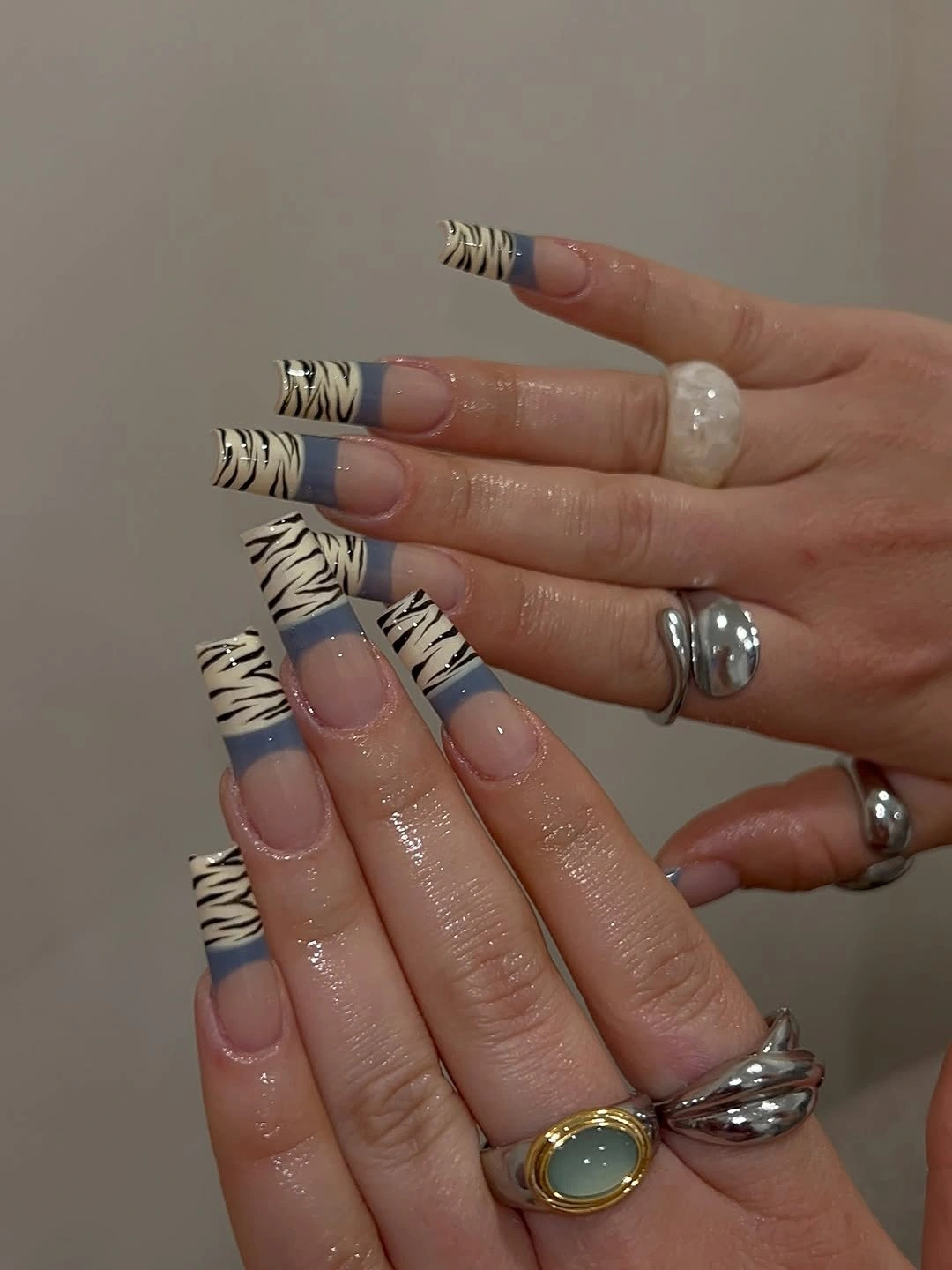
The tip placement is the efficient part of the design. A few black lines can change the mood of an otherwise pale manicure, and the open centers preserve the clean silhouette. Because the stripes follow the edge, they also emphasize the flat square tip, making the shape easier to notice than it would be beneath an all-over pattern.
Keep the stripes on one or two accent nails and use plain lavender elsewhere if you want less detail. A medium square shape will still support the idea, but fewer, wider lines will remain clearer as the edge grows. The pale base is easy to coordinate, while the fine black marks are the part most likely to need refreshing, especially if the nails are handled often.
Muted Slate Blue in a Short Solid Set
Short square nails return to a single color with a muted slate blue-gray finish. The shade is cooler and quieter than the violet and navy before it, so the design feels calm even though the surface is glossy. Straight edges and compact length carry the visual structure, making this one of the easiest square ideas to reproduce when color choice matters more than nail art.
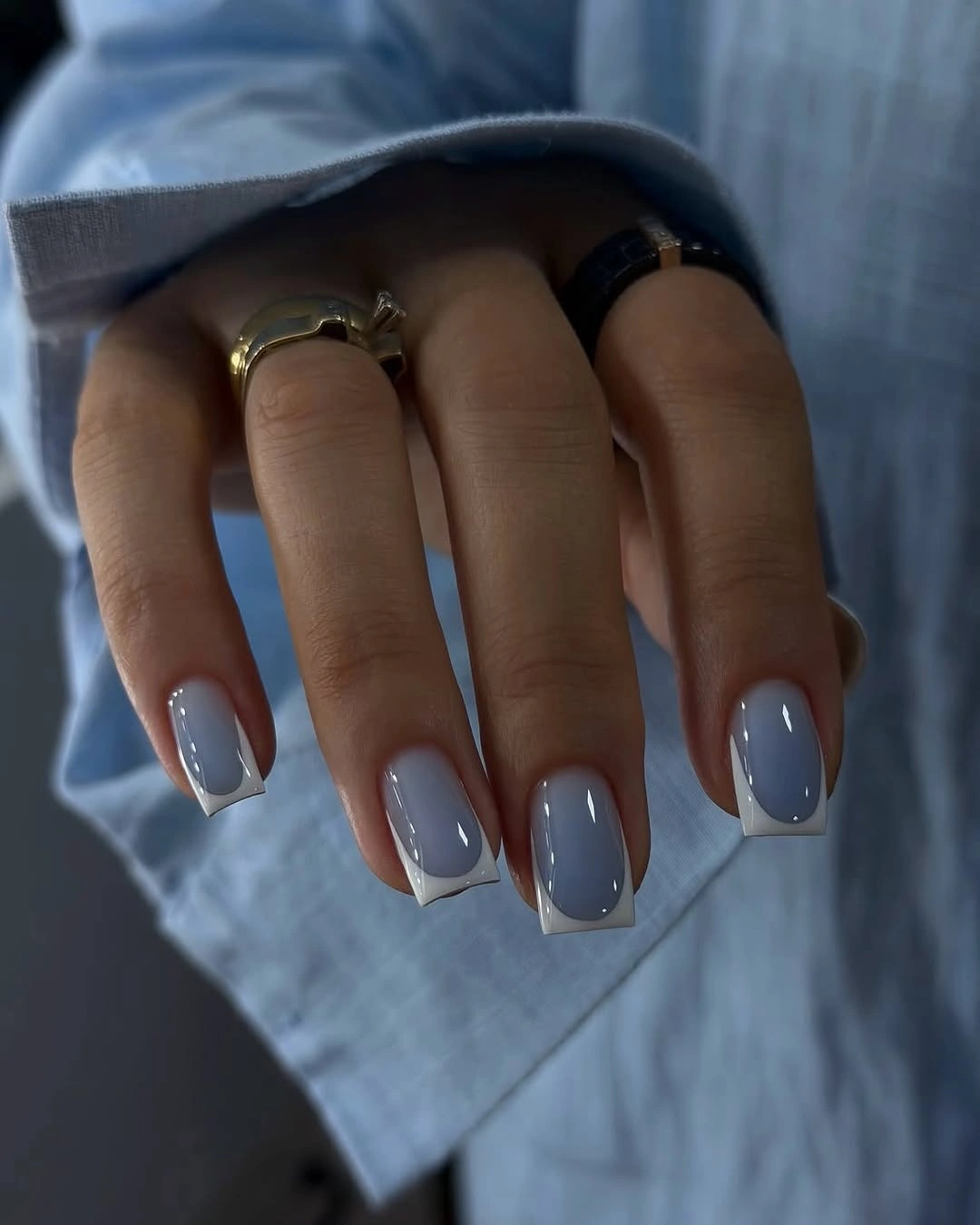
The muted value keeps the manicure from looking too stark. It has enough depth to define the square corners, but not so much contrast that every small edge change becomes the first thing noticed. That makes the color useful for readers who want a fall shade that feels distinctive while still working with soft gray, denim, cream, or other neutral clothing.
Keep the set fully monochrome or add one pale accent nail if you need a small change. Short squares are already a practical proportion, and the solid surface makes touch-ups simpler than a multi-step pattern. Dark muted colors can still reveal chips along the edge, so the honest low-maintenance route is to preserve the simple color and avoid adding fine detail that would complicate repairs.
Dusty Pink with One White Curve
Medium square nails use a glossy dusty pink base with a small white curved accent on selected fingers. The pale line adds a quiet design gesture without changing the overall monochrome mood, so the manicure stays softer than the black and bright outlined sets. Its medium length gives the curve room to remain visible, while the square shape keeps the edges clean and direct.
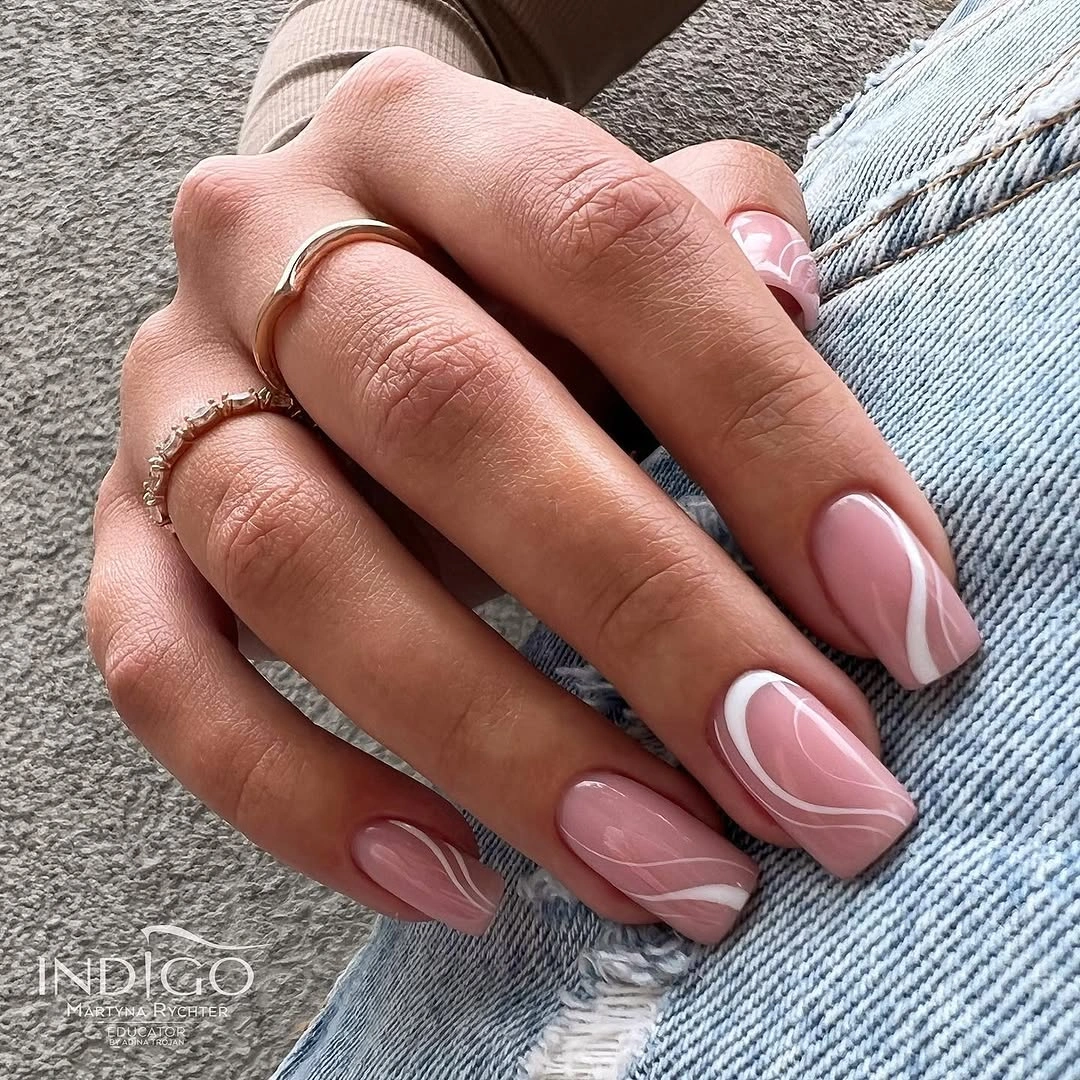
The white curve works because it is not asked to compete with the base. It creates a small break in the pink surface, then lets the rest of the nail remain plain, which makes the idea easy to understand and easy to reduce. The design has enough visual interest for a polished result, but not so much density that the square silhouette disappears.
Repeat the curve on one accent nail or move the whole set to short squares if you want the easiest version. A pale line needs crisp edges against pink, so fewer placements are safer than trying to decorate every finger. The color is forgiving and easy to pair, while the small accent is the only part likely to need detailed upkeep as the manicure grows.
Brown Patterns on Pale Long Squares
Long square nails use a pale nude or pink base with brown patches, spotted areas, and tiny star- or flower-like accents. The set has more visual information than the solid designs, but the motifs are distributed so that no single nail has to carry every detail. The light base keeps the palette open, while brown gives the pattern enough contrast to feel connected to fall.
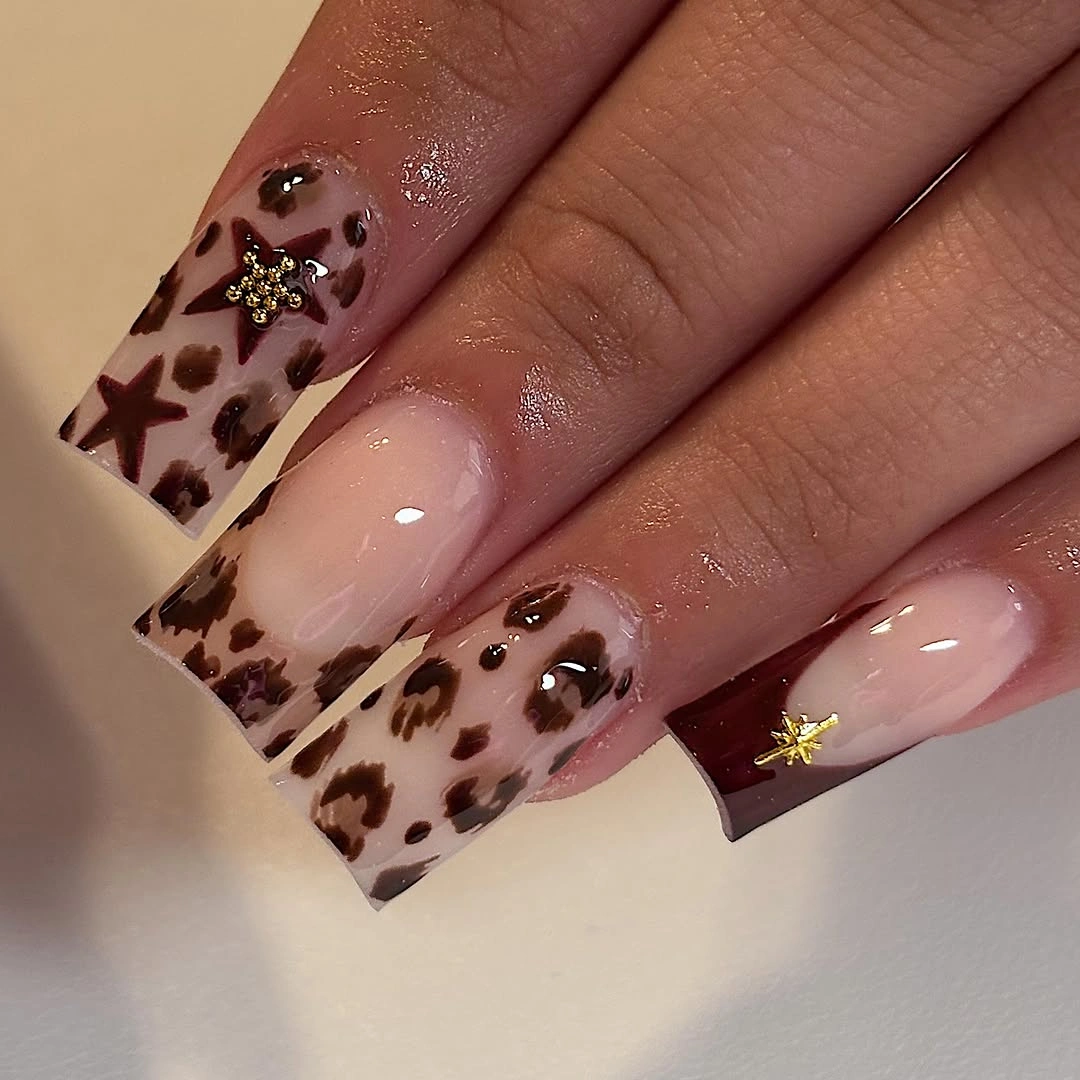
The distribution is the practical lesson. A patterned nail is followed by a quieter one, then the eye returns to another brown detail, so the composition has pauses instead of a continuous wall of art. The square surface supports spots and small shapes well, but the long length also makes the manicure look more elaborate and raises the cost of maintaining fine accents.
Keep one spotted accent and one brown solid when adapting the set to a medium square. Remove the tiny star or flower details first if the shorter canvas feels crowded, because the larger brown and pale contrast will still carry the idea. The original is useful as an inspiration board, but a simpler edit is more likely to remain readable and neat during ordinary wear.
Black and Pale Negative Space
Long square nails combine deep black, pale or translucent areas, and tiny gold-looking accents. Some nails are fully dark, while others leave light space around the edge or inside a contrasting section, so the set feels dramatic without becoming one solid black block. The long square silhouette gives the contrast room, but the open areas keep the design from looking too dense.
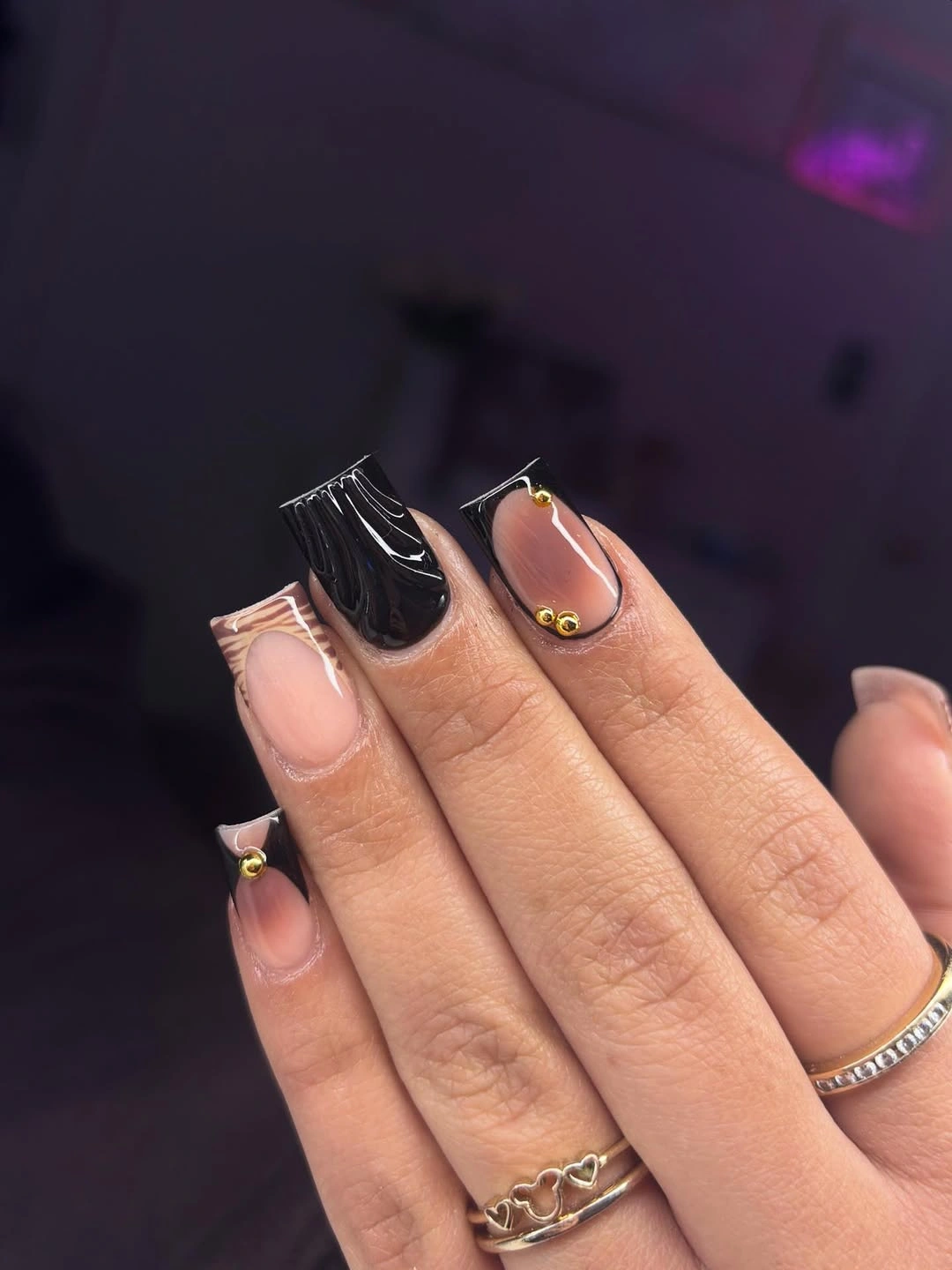
The dark-to-light division is what makes the design work. Black provides a strong focal point, pale areas create breathing room, and the small warm accent keeps the contrast from becoming entirely cool. Because the lighter sections remain visible, the square shape still reads through the decoration, which is important when a long nail already has a naturally assertive outline.
Use black on two nails and one small accent over a shorter neutral set for a more realistic route. Keep the open spaces broad enough that they do not look accidental, and remove extra details before shortening every shape. Clear-looking areas may show growth or uneven edges, while the dark solids can show chips, so the easiest version is one with fewer transitions to maintain.
Warm Swirls with Fine Gold Details
Medium square-leaning nails finish the collection with a pale nude and pink base, brown swirls, small dark shapes, and narrow gold accents. The lines follow the length of the nail and leave portions of the light base open, so the design has movement without becoming a dense collage. It is warmer and more fluid than the black negative-space set before it.
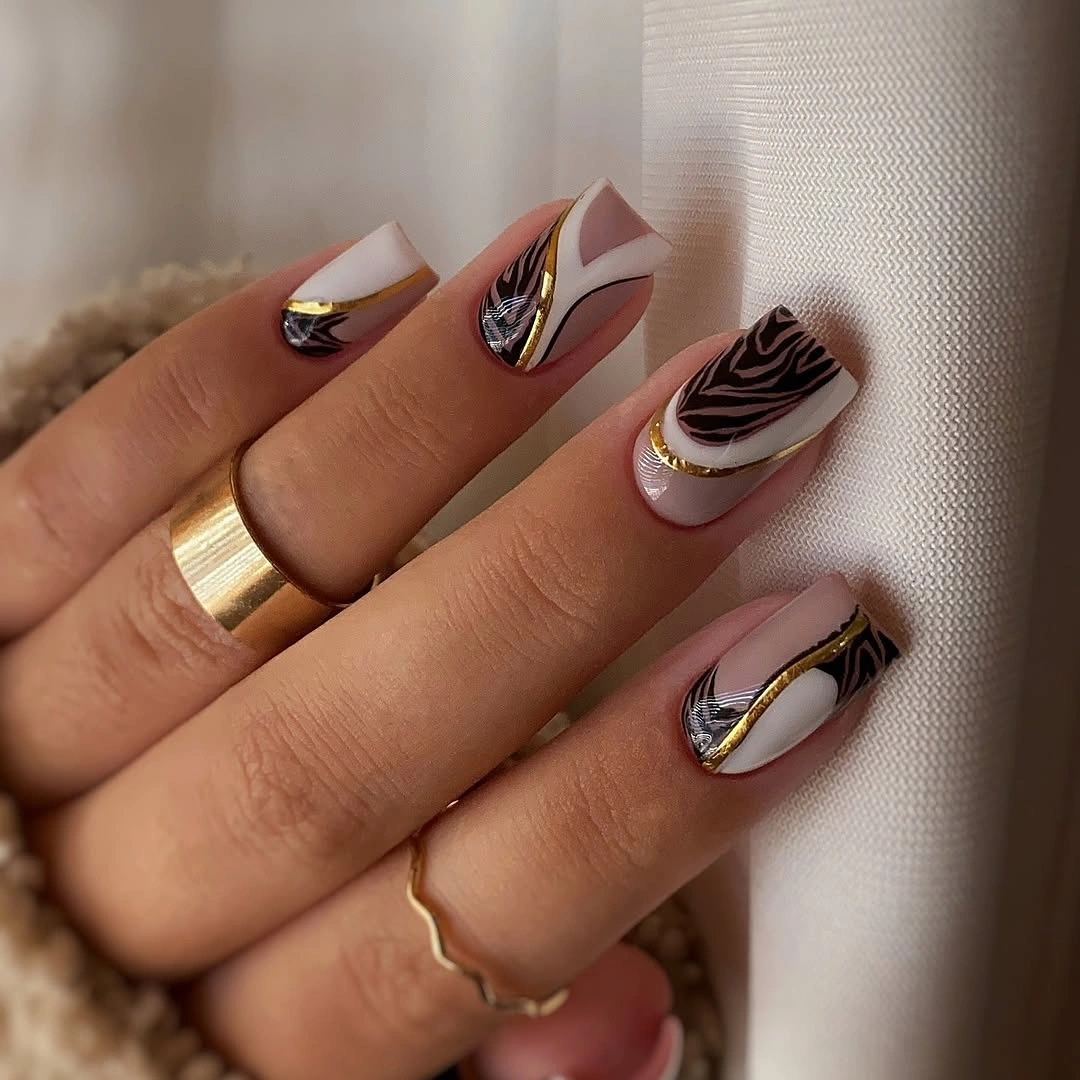
The curved lines create a softer focal point than a checker or straight border. Brown gives the pale base direction, gold adds a small glint, and the open areas keep the design from looking overworked on a medium length. This combination shows how a square or square-leaning shape can carry flowing detail without losing the clarity of its edges.
Choose one swirl motif and keep the gold on a single accent nail if you want a lower-effort version. A shorter square shape can support a broad curve more reliably than several thin lines, and leaving extra space will help the pattern remain readable as it grows. The original mix is decorative, but reducing the number of accents preserves the warm movement while making upkeep more honest.