Autumn nail art does not need to shout with orange on every finger. A small leaf, an open curve, a muted green, or a warm glint can change the balance of a manicure while leaving enough space for the base color to breathe. The most wearable seasonal detail is often the one that gives the eye a direction without covering every surface.
Let the shape set the limit before the decoration does. Long tips can hold a drawing or layered color, while short nails usually look clearer with one broader mark and more untouched base. Fall gel nails ideas 2026 work best when the seasonal reference has room around it, so the manicure still feels like a personal choice rather than a costume for one month.
A Pale Pink Base with Orange Seasonal Motifs
The first illustrated idea uses long square nails as a pale pink canvas for orange pumpkins, small leaves, black dots, and curved orange edges. The motifs appear across several fingers, but they are not all the same size, so the set has movement instead of one repeated sticker-like mark. The soft base keeps the orange light and playful.
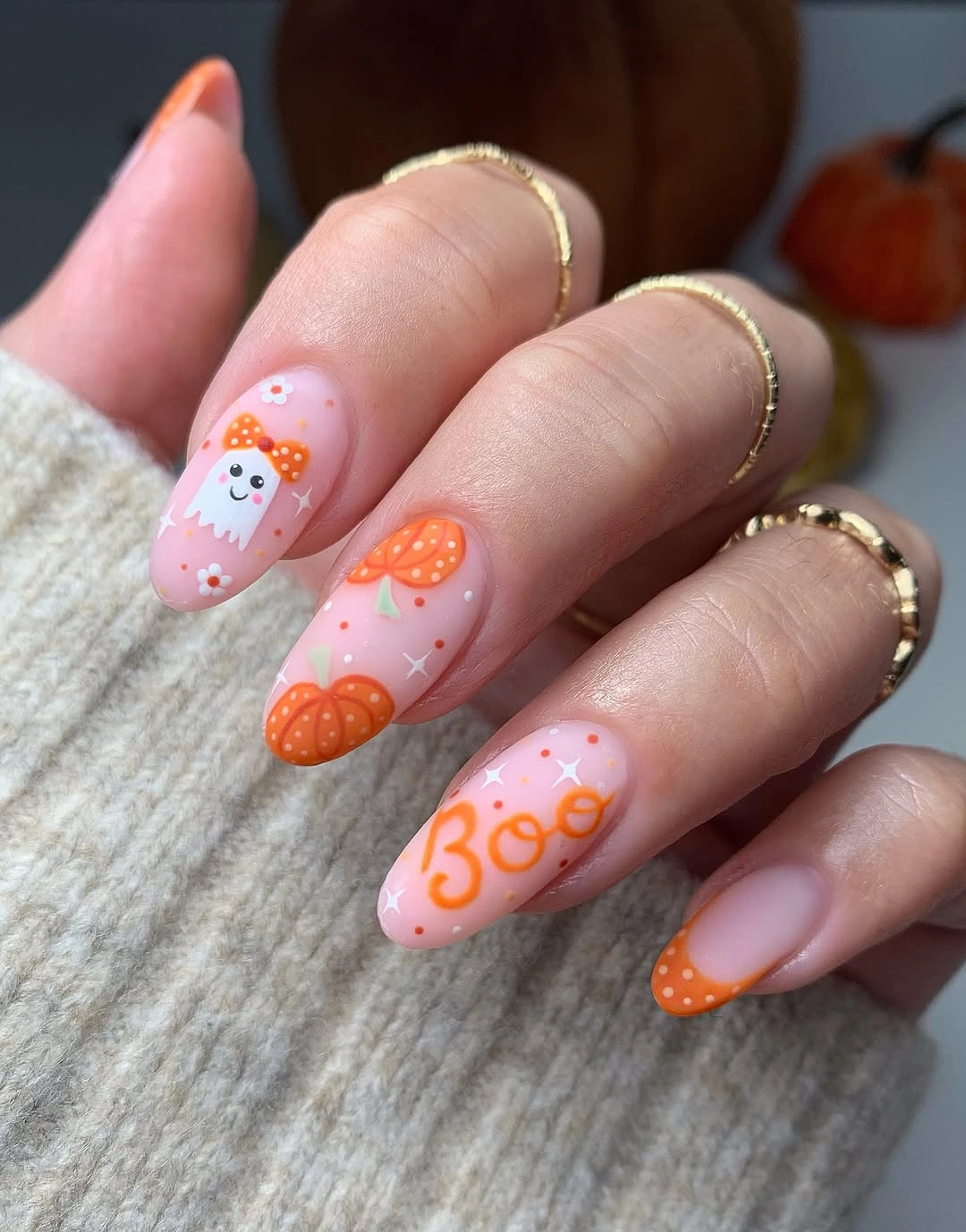
Seasonal art can look crowded when every nail receives the same amount of detail. Here, the open pink areas and changing motif scale create enough space for the eye to rest, while the orange repeats keep the set connected. The long square shape is useful because the small drawings have room, but it is not mandatory for the color story.
On short nails, select one pumpkin-like circle or leaf per accent and turn the remaining fingers into simple orange tips. That keeps the recognizable warm palette without forcing tiny illustrations onto a limited surface. If you prefer a quieter version, replace the orange with rust and keep the pale base so the spacing still does the visual work.
Tonal Green on Long Almond Tips
Long almond nails move through lime, olive, and darker green shades, with some nails showing a lighter stripe or reflective shift. The set has no large painted motif, so the color transitions and elongated silhouette establish the design. Bright green brings energy, while the deeper tones keep the hand connected to a fall palette.
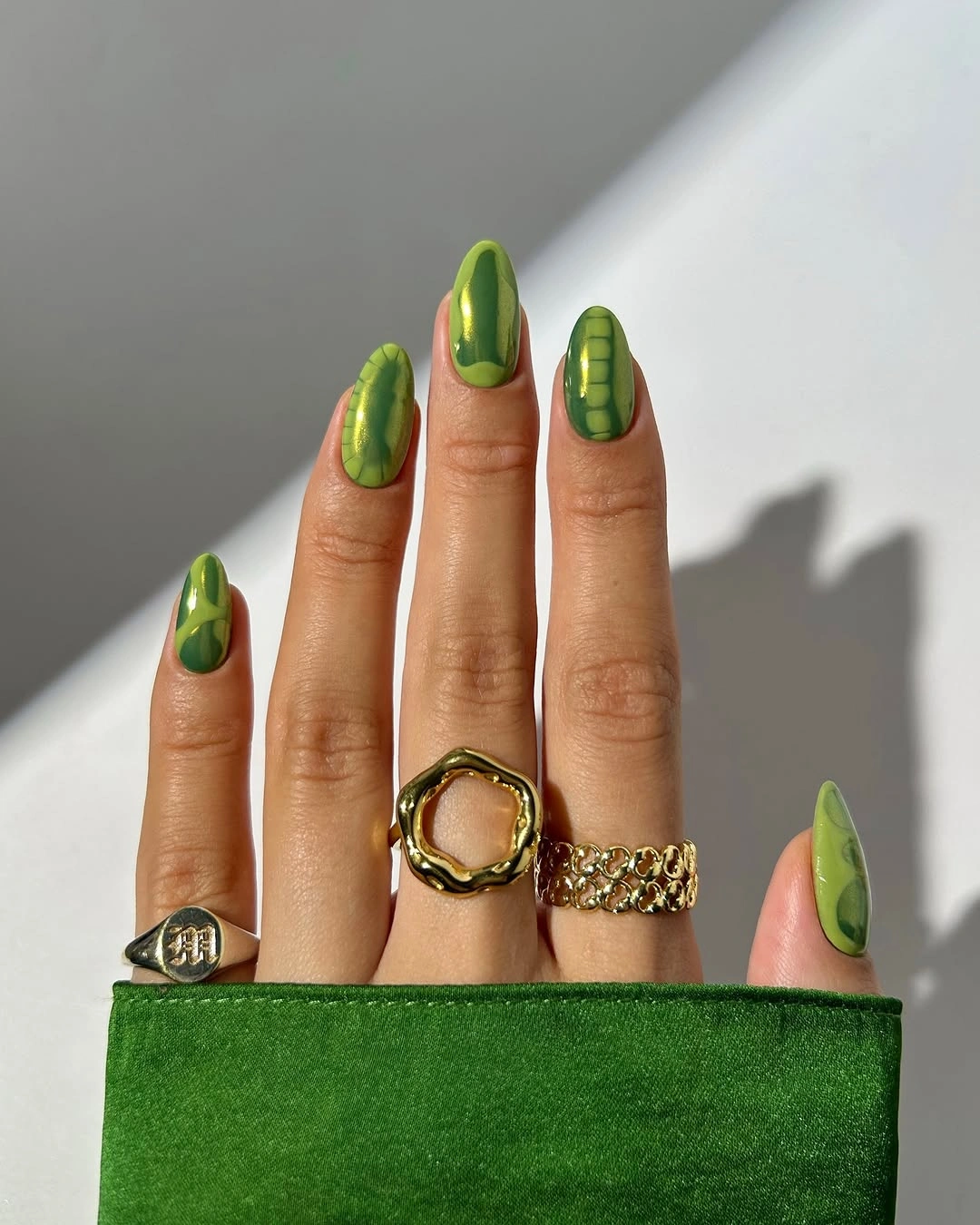
The idea is useful when you want seasonal color without relying on brown. Several greens create the same sense of depth that a mixed neutral palette would provide, but the result feels fresher and more botanical. The rings are styling context only; the manicure remains readable because the shades are edited into one family.
For a shorter almond, keep the deeper green as the base and use lime on one or two accent nails. That change lowers the visual intensity while preserving the tonal rhythm. Very bright green will remain the focal point, so pair it with simple clothing colors if you want the manicure to lead without creating too many competing accents.
Blush Nails with Brown Abstract French and Gold Flecks
Medium square nails start with a sheer blush base, then use brown and tan curves near the tips with small gold flecks on selected fingers. The lines are open and slightly uneven, which lets the base remain visible. Rather than a strict French, the design feels like warm brushwork placed around the edge.
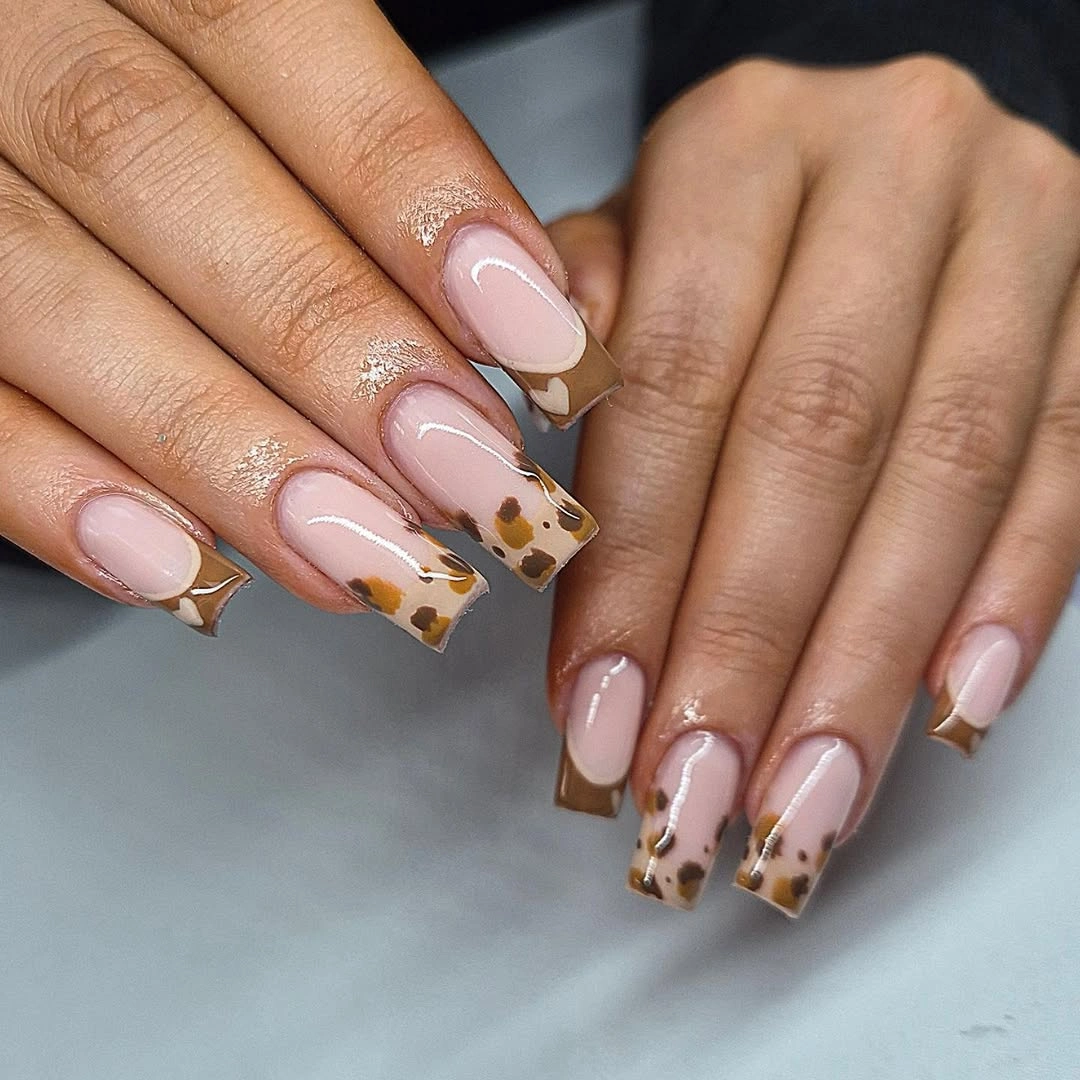
Brown and gold make the pale pink surface read as transitional rather than purely delicate. The darker line gives the tip structure, while the metallic flecks add a small light-catching point without turning every nail into glitter. Medium square length provides a clear edge for the curves and keeps the result practical.
If you prefer less detail, use the brown curve on two nails and repeat the blush base across the rest. A shorter square can handle the same idea if the curves are wider and the gold is limited to one fleck or a single accent. The irregular placement is an advantage because it removes pressure to make every tip identical.
Short Pink Nails with Scattered Autumn Leaves
Short oval nails use pale pink as an open base for small red, orange, and brown leaf-like motifs. The marks are spaced across several fingers rather than packed into a full pattern, so the seasonal detail remains visible without taking over. The rounded silhouette softens the contrast between the light base and the warm accents.
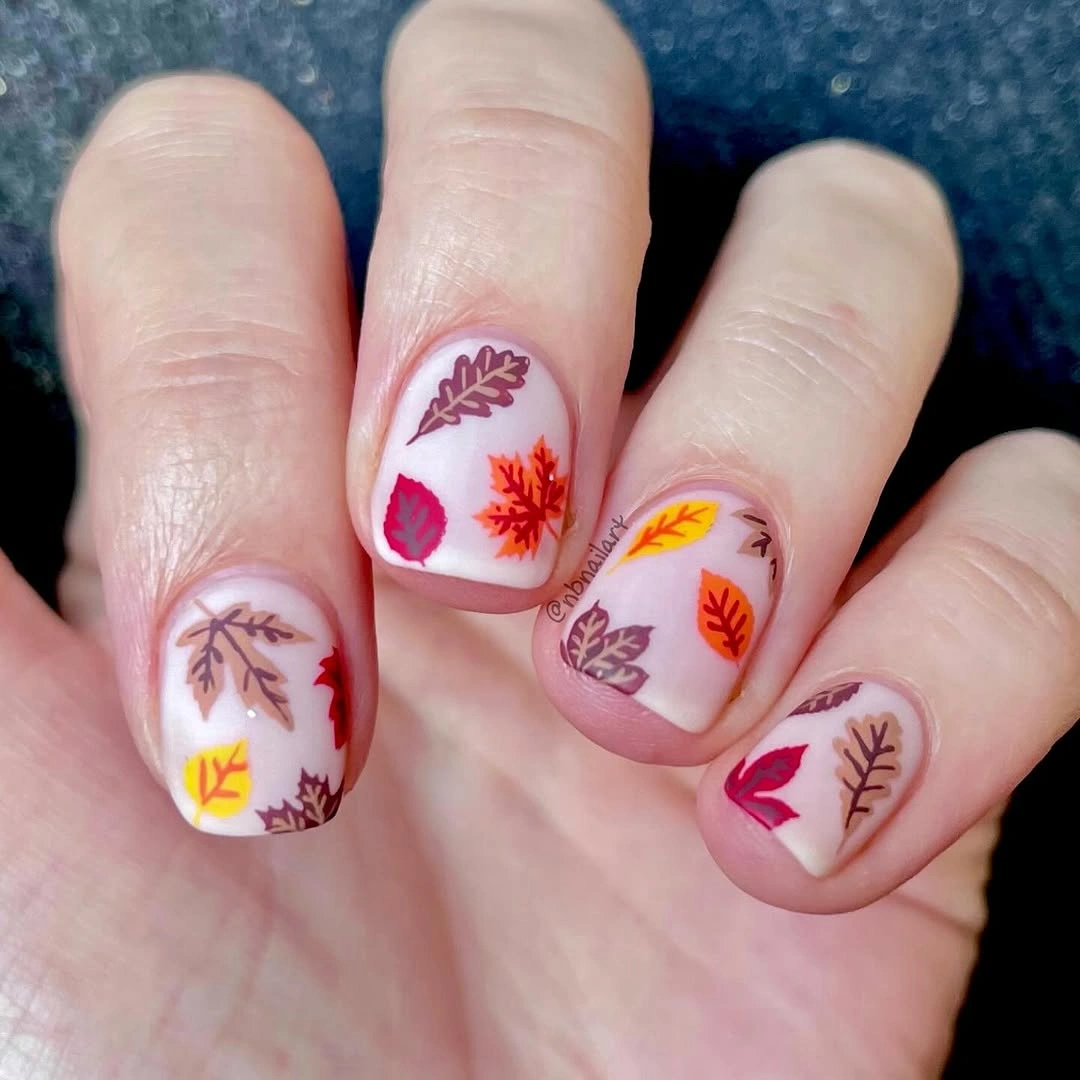
The muted pink creates a lighter route into autumn styling. Red and orange provide recognition, while brown gives the small motifs a grounded edge. Because the design leaves base visible, it can work with a shorter length where dense illustration would quickly lose clarity. The small scale keeps the pattern from overpowering the rounded tip.
A very short nail may need one larger leaf instead of several tiny marks. That simplification keeps the motif legible and can make the appointment more repeatable. If you want a stronger fall mood, warm the base toward beige; if you want a softer result, keep the pale pink and use the brown marks sparingly.
Pastel Patchwork on Long Square Tips
Long square nails divide pale pink, white, blue, yellow, and peach into small panels, then add tiny dots, flowers, and leaf-like marks inside some of the blocks. The layout changes from finger to finger, so the manicure reads as a coordinated collage rather than a perfect grid. Its fall connection is light and playful rather than dark.
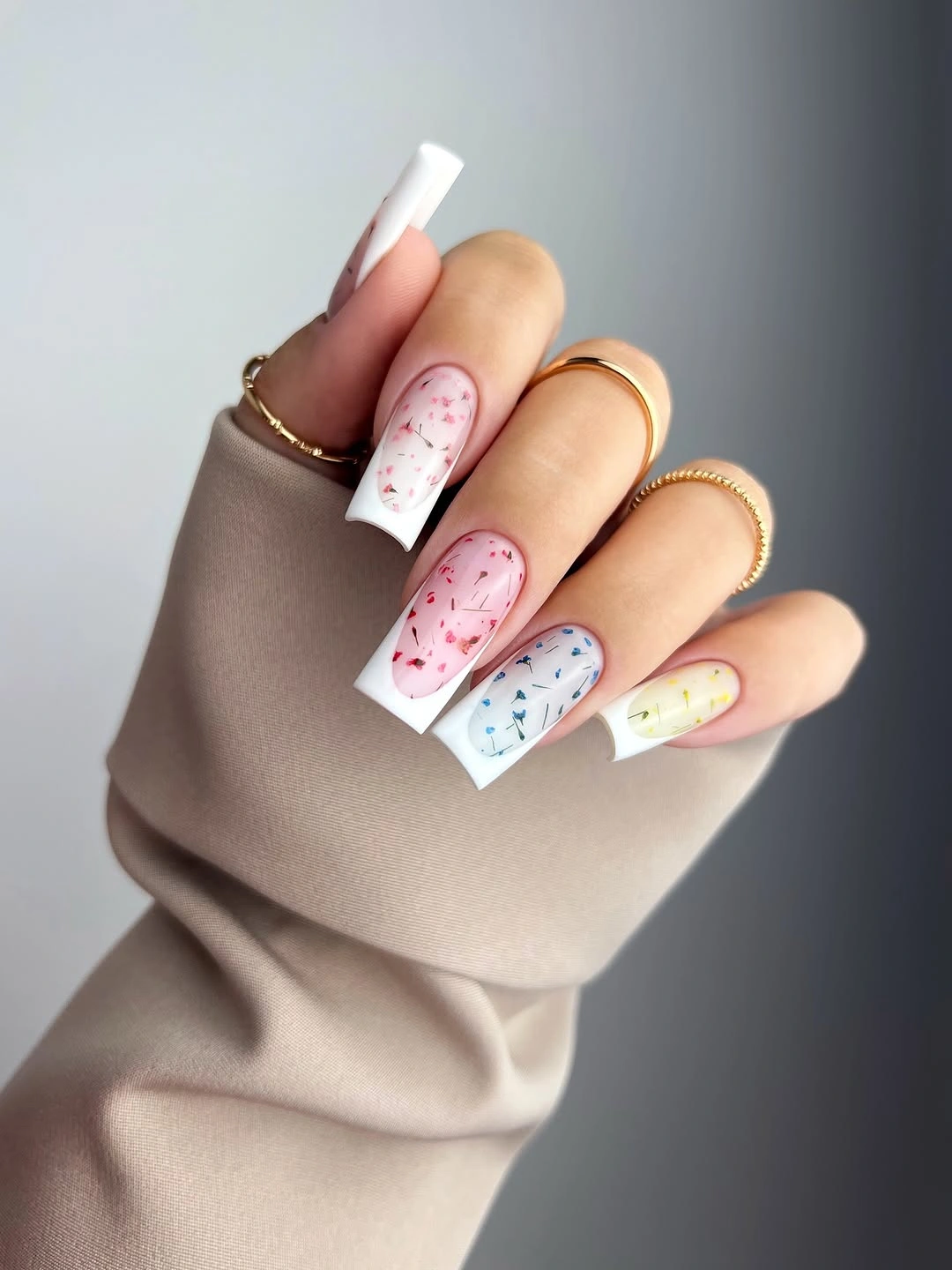
The varied pastel palette works because each nail keeps a limited number of colors in view. White and pink supply breathing room, while blue, yellow, and peach create small points of contrast. Long square tips give the patchwork enough surface, but the idea can be edited down without losing its main appeal: color blocks with one small mark each.
On shorter nails, choose two base shades and reserve the patchwork for one accent finger. Larger panels will look cleaner than many narrow sections, and fewer tiny flowers will reduce the maintenance burden. This is also a good design to personalize through color choice, as long as one pale shade remains to separate the brighter pieces.
Deep Blue with White Negative-Space Marks
Short rounded nails use glossy deep blue across most fingers, then introduce pale or open accent nails with small navy brush marks and curved details. The light accents interrupt the dark color without adding a full illustration, making the set feel clean and graphic. The rounded tips keep the design compact and easy to wear.
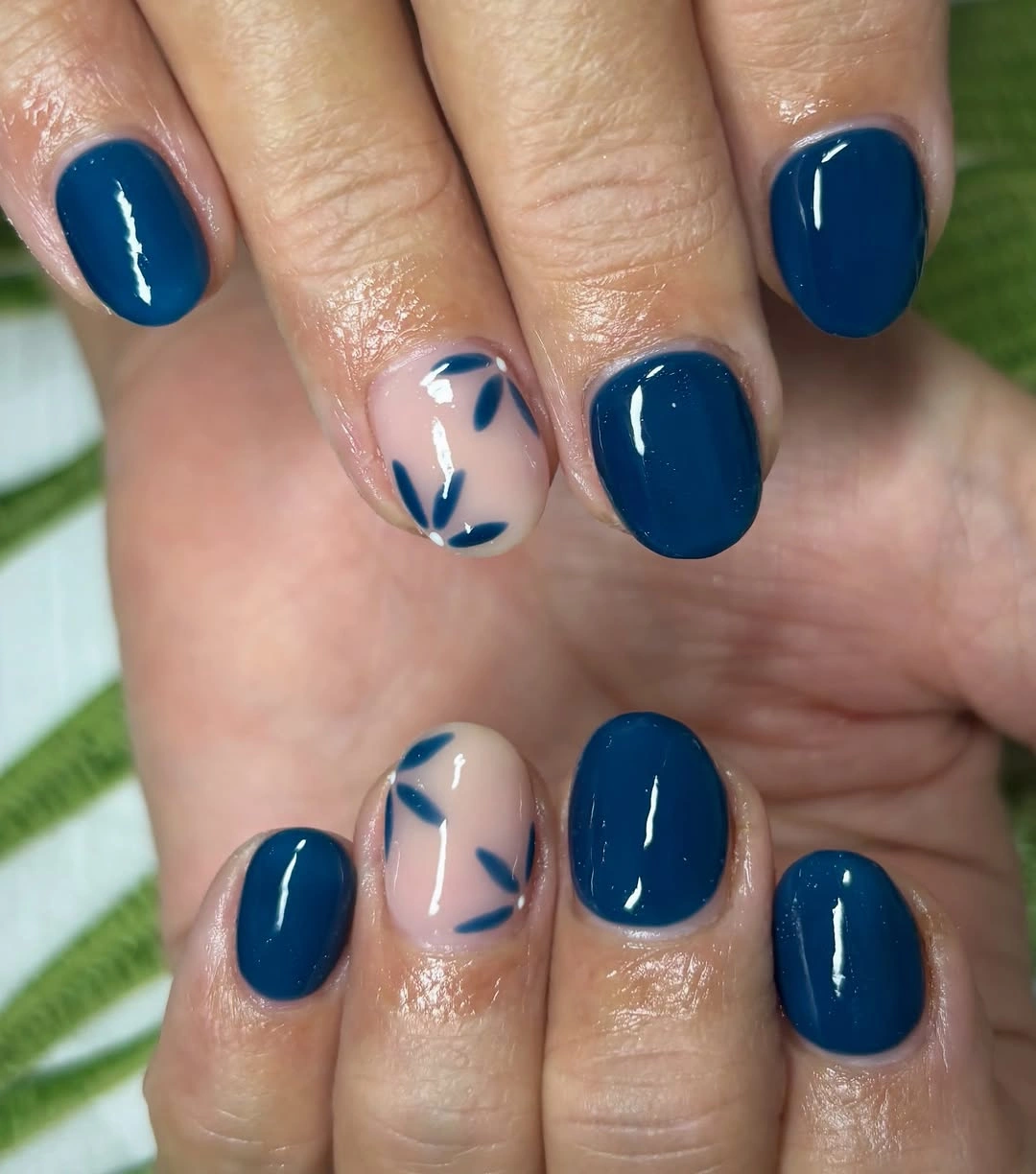
The contrast is strongest because the white or clear space appears only where needed. Deep blue becomes the anchor, while the lighter nails supply a visual pause that prevents the hand from reading as one solid block. This is a cool-toned seasonal option for readers who prefer navy or teal to rust and orange.
For a smaller nail surface, replace several little marks with one white curve or a single navy sweep. That change protects the open space and keeps the accents legible. You can also use the same layout with a muted teal, but the base should remain much darker than the light accents so the structure stays clear.
Berry Almond Nails with One Gold Glitter Accent
Long almond nails combine burgundy, mauve, and one dense gold-glitter accent. The berry shades keep the hand soft and rich, while the glitter finger supplies a bright focal point instead of scattering sparkle everywhere. Glossy surfaces on the solid nails help the colors connect even though the finishes are not identical.
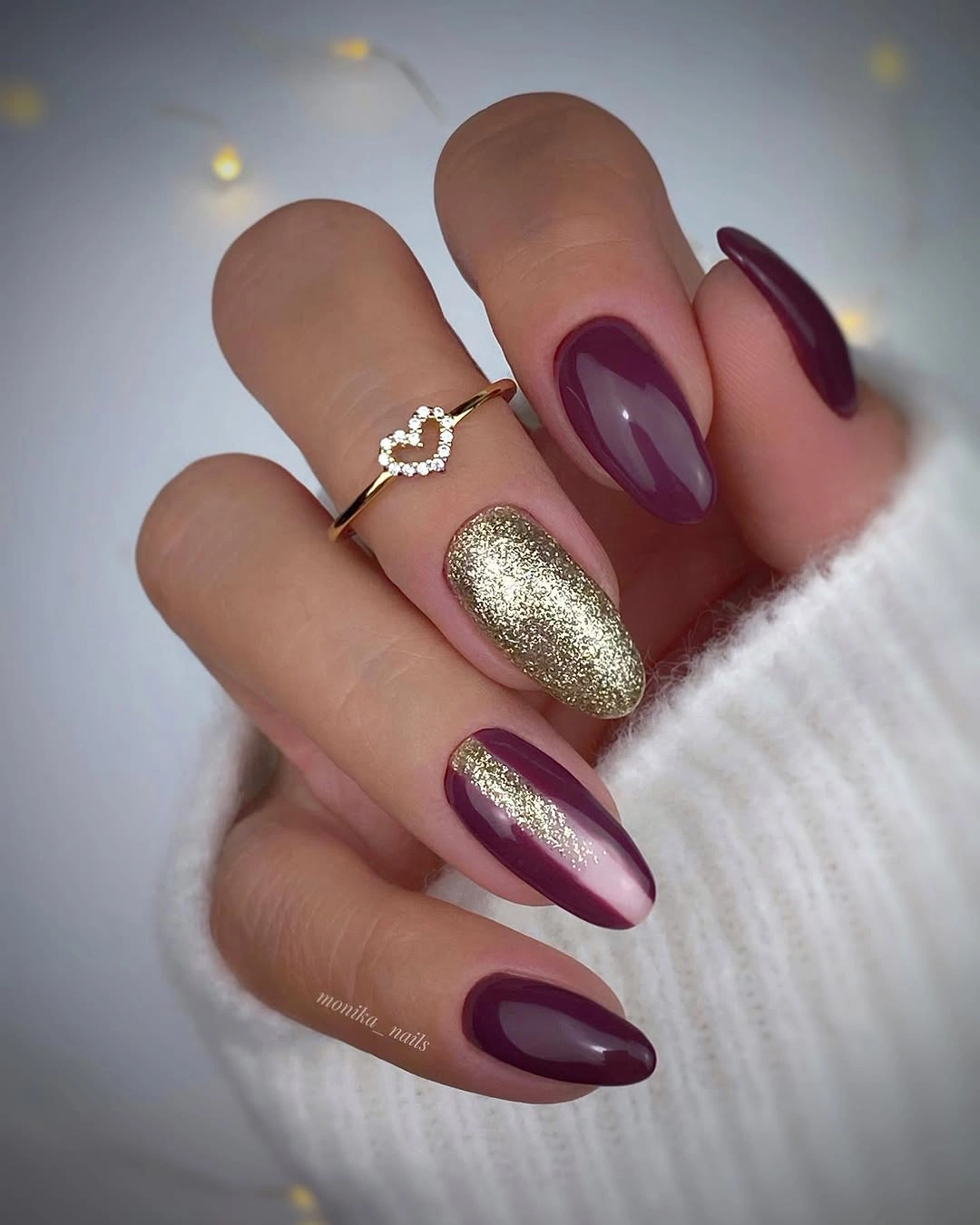
Gold works here as a punctuation mark, not as a second dominant palette. The mauve lightens the space between burgundy and glitter, so the hand moves gradually from depth to shine. Long almond tips give the glitter enough surface to show, although the length contributes to the more dressed-up feeling.
A medium almond can keep the same balance with one glitter accent and two berry shades. If dense glitter is not practical, use a fine shimmer that follows the existing color rather than a bright silver. The main maintenance choice is how much glitter to keep visible; limiting it to one nail makes the design easier to live with.
Amber Tortoiseshell with Fine Gold Lines
Long almond nails show translucent amber, brown, and caramel patches, with thin gold lines tracing selected areas. The layered warm shapes create a tortoiseshell-like effect, but each patch remains irregular rather than a perfectly repeated print. The gold lines sharpen the design without filling the transparent-looking spaces.
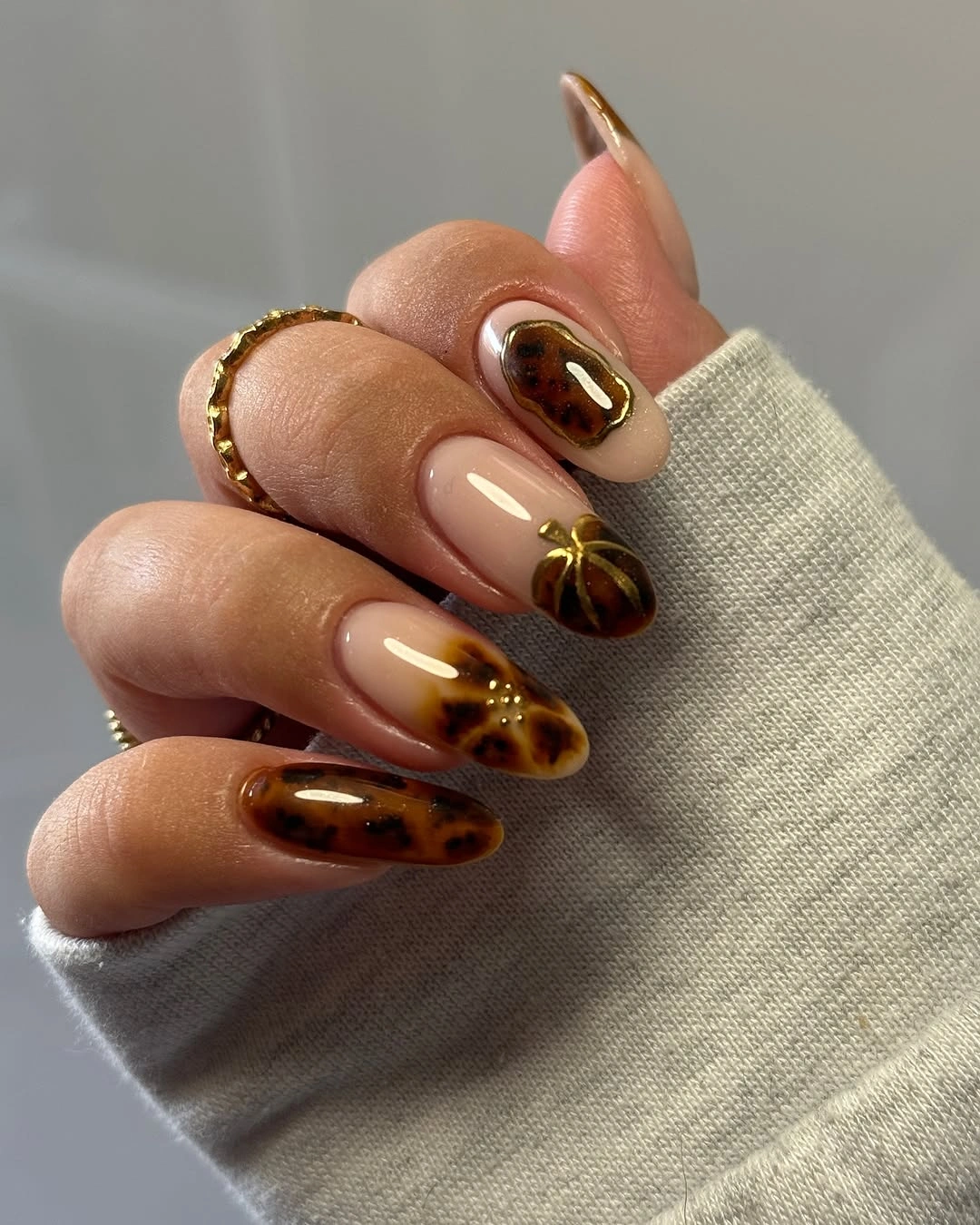
The color depth comes from seeing several warm tones within one nail rather than from adding a separate dark accent. Amber keeps the set light at the center, while brown gives the edges enough contrast to read as seasonal. Long almond length supports the layered surface, though a few accent nails can carry the idea on a shorter shape.
If you want a calmer version, use the tortoiseshell effect on two nails and choose caramel or nude solids elsewhere. Irregular edges are part of the appeal, so there is no need to force identical patches. The visual tradeoff is that uneven translucent areas can be more noticeable, which makes deliberate variation preferable to overly precise symmetry.
Matte Coral Orange with One Copper Glitter Nail
Long almond nails use a warm coral-orange color with a matte or satin appearance, while one nail shifts into dense copper or orange glitter. The main shade stays soft because it does not reflect like a high-gloss finish, and the glitter accent gives the hand one brighter point. The repeated color family keeps the contrast controlled.
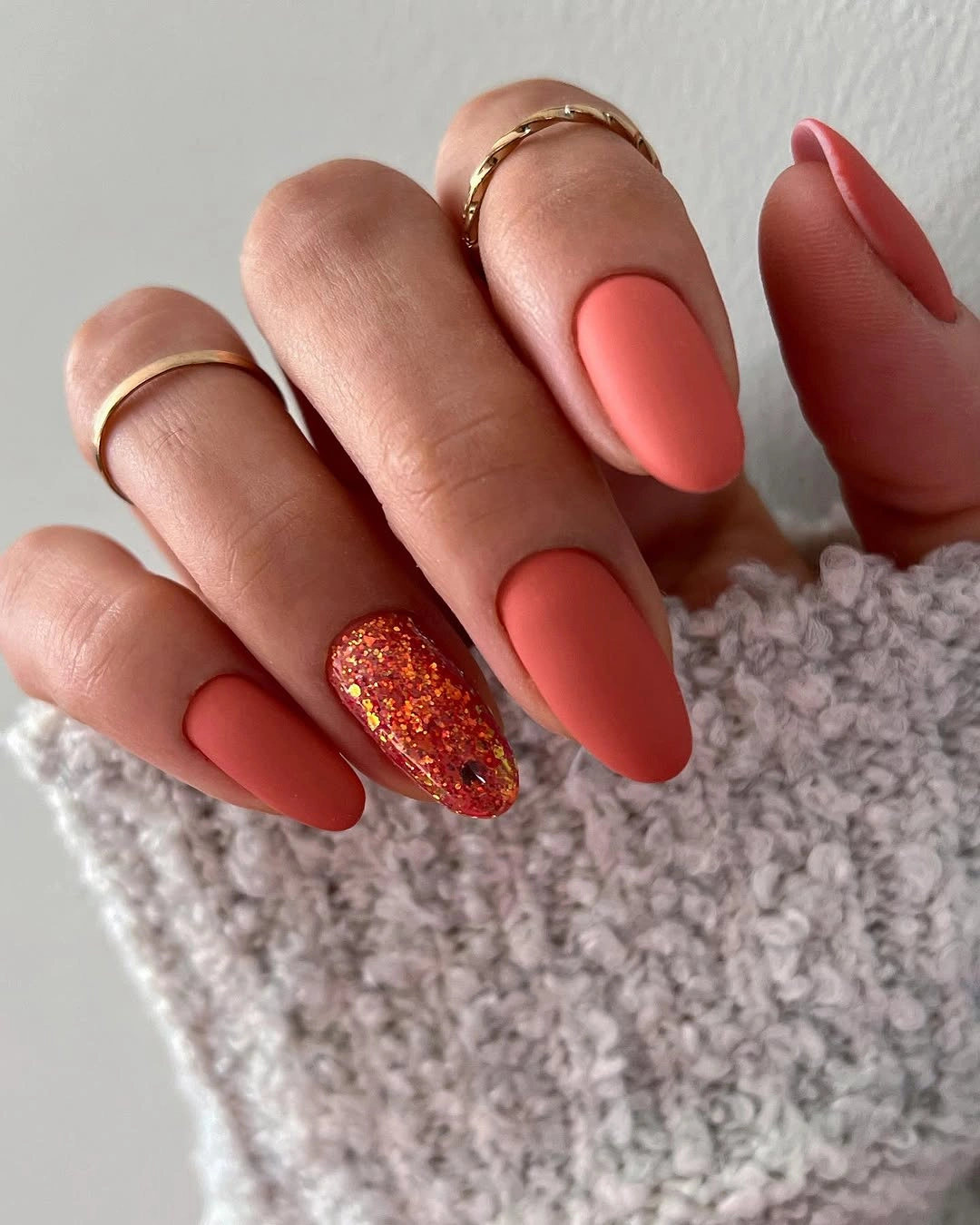
The matte surface changes how the orange reads. Instead of looking sharp and shiny, it appears quieter and more fabric-like, while the glitter adds just enough light to keep the set from becoming flat. Long almond length makes the color expressive, so the finish contrast is useful for editing the overall intensity.
A medium oval or almond will make the coral easier to wear without changing the idea. You can also use fine copper shimmer on the accent if dense glitter feels too prominent. The matte surface may reveal dry-looking texture or small scuffs, so a smooth, even finish is especially important when the design has few other details.
Minimal Nude Nails with Black-and-White Tip Marks
Medium almond nails use a pale nude base and a few black-and-white marks near the tips. The design leaves plenty of open space, and the accents differ slightly from finger to finger rather than forming one heavy band. There is no literal leaf or orange motif, so the fall connection comes from the clean neutral base and graphic contrast.
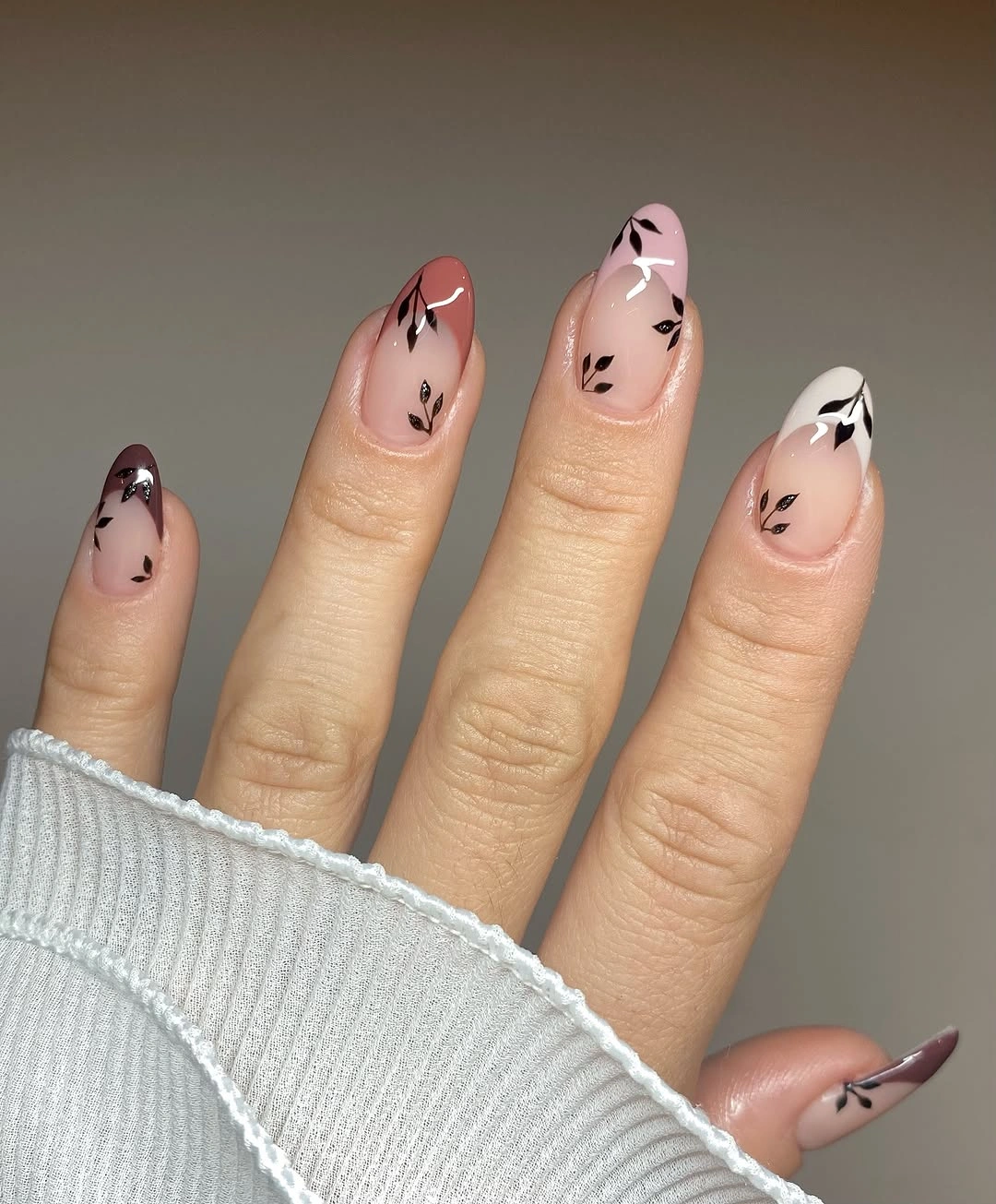
This idea is useful when you want seasonal styling that can continue beyond one month. Black gives the nude structure, white keeps the accents light, and the almond shape provides enough length for the curves without demanding a long statement. The restraint is the point: clarity comes from what is left unpainted.
Shorten the tips and reduce the design to one black curve per nail if the surface is small. A warmer nude will make the set feel cozier, while a cooler pink will make it look lighter. Either way, keep the accents isolated so the open base remains a visible part of the manicure. The open space also makes the accents easier to grow out without an abrupt visual break.
Short Square Nails with Pearls and Metallic Lines
Short square nails carry a pale pink or nude base, then add tiny pearl-like dots, metallic stripes, and small colored details on selected fingers. The accents are fine and spaced, so the base remains dominant even though the finish changes from painted color to small raised or reflective points. The compact shape keeps the set neat.
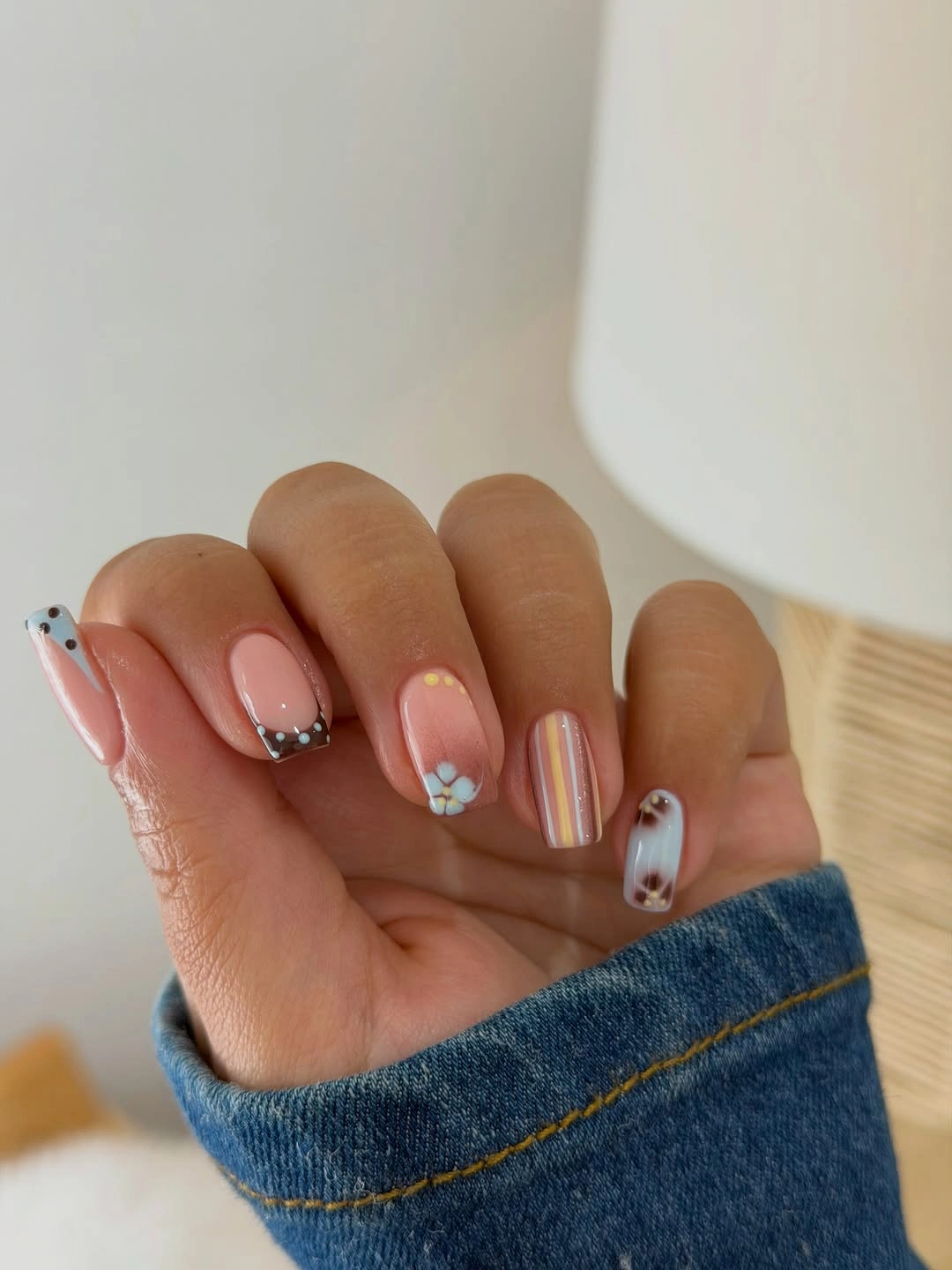
The appeal comes from scale. Instead of one large illustration, the design uses small details that reward a closer look and leave plenty of breathing room. Pearls bring texture, metallic lines add direction, and the soft base stops both from feeling too sharp or heavy. Spacing the details keeps the short square tips from looking crowded.
On a very short nail, choose either the dots or the stripes rather than trying to keep both. Raised details can catch on knit fabrics, so one or two accent nails are a practical limit. Readers who like the visual but want less texture can replace the pearl-like points with small painted dots and keep the same spacing.
Nude Almonds with Brown Botanical Line Art
Long almond nails use a sheer nude or blush base for thin brown botanical drawings and small gold ornamental points. The lines resemble branches or leaves, but they remain open rather than filled, so the base still contributes much of the visual effect. Gold sits close to the drawing and adds a warm highlight without becoming a separate pattern.
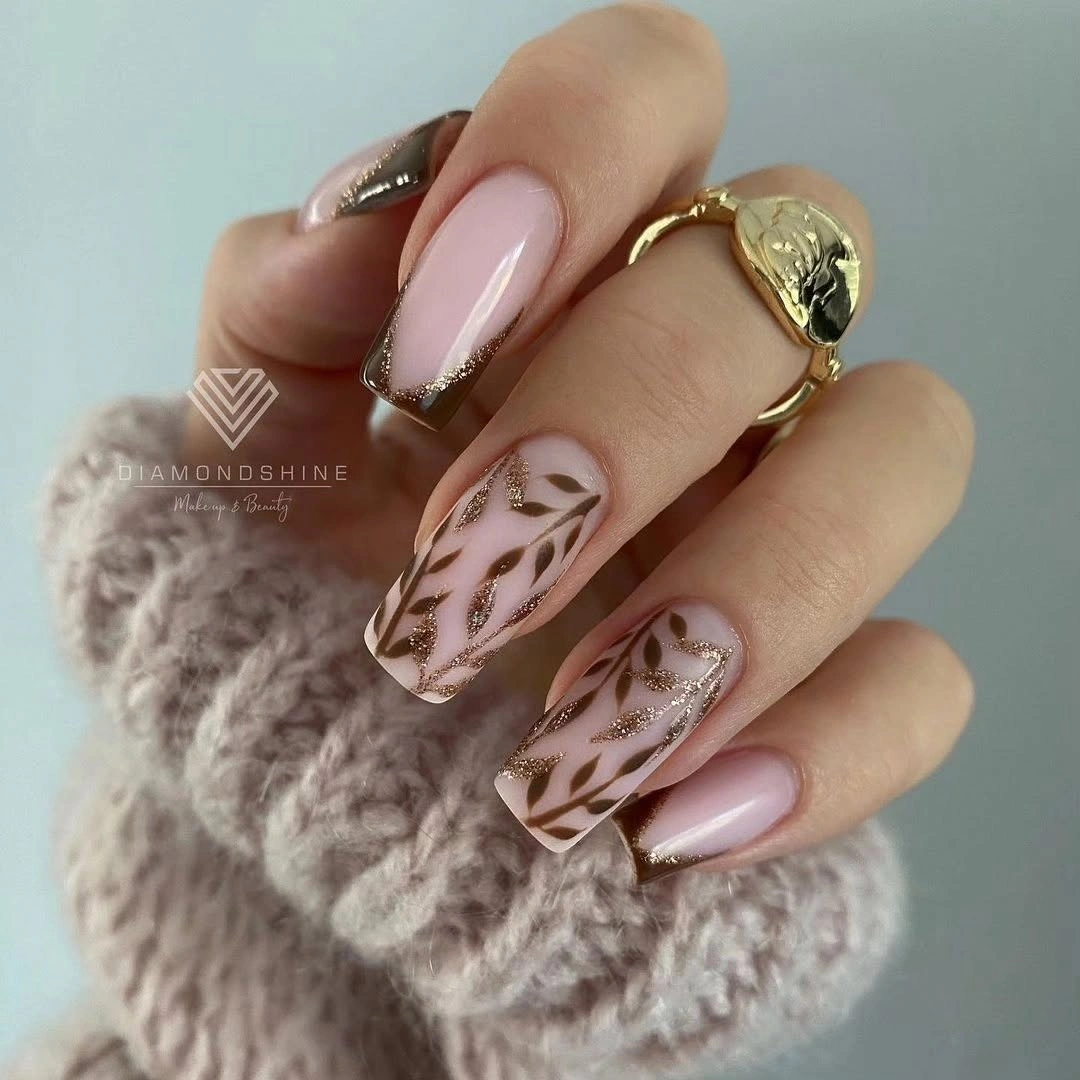
The design looks seasonal through line color and placement rather than a heavy motif. Brown makes the pale base feel grounded, while the almond shape gives the lines a natural direction toward the tip. The result has detail, but the open spaces prevent it from competing with every accessory or clothing texture.
For a shorter length, keep one full botanical drawing on the ring finger and use a simple brown edge elsewhere. Fine line art can be more sensitive to wear, so reducing the number of detailed nails is a realistic upkeep choice. A cream base will make the drawing softer; a pink base will keep the contrast warmer.
Black, Pink, and Gray on Sharp Stiletto Tips
Long stiletto nails alternate black or charcoal tips with pale pink and gray accents, including patterned or dotted details on some of the lighter nails. The contrast is built into the color order, so the hand moves between dark and light instead of keeping decoration in one place. The sharp silhouette makes every change look graphic.
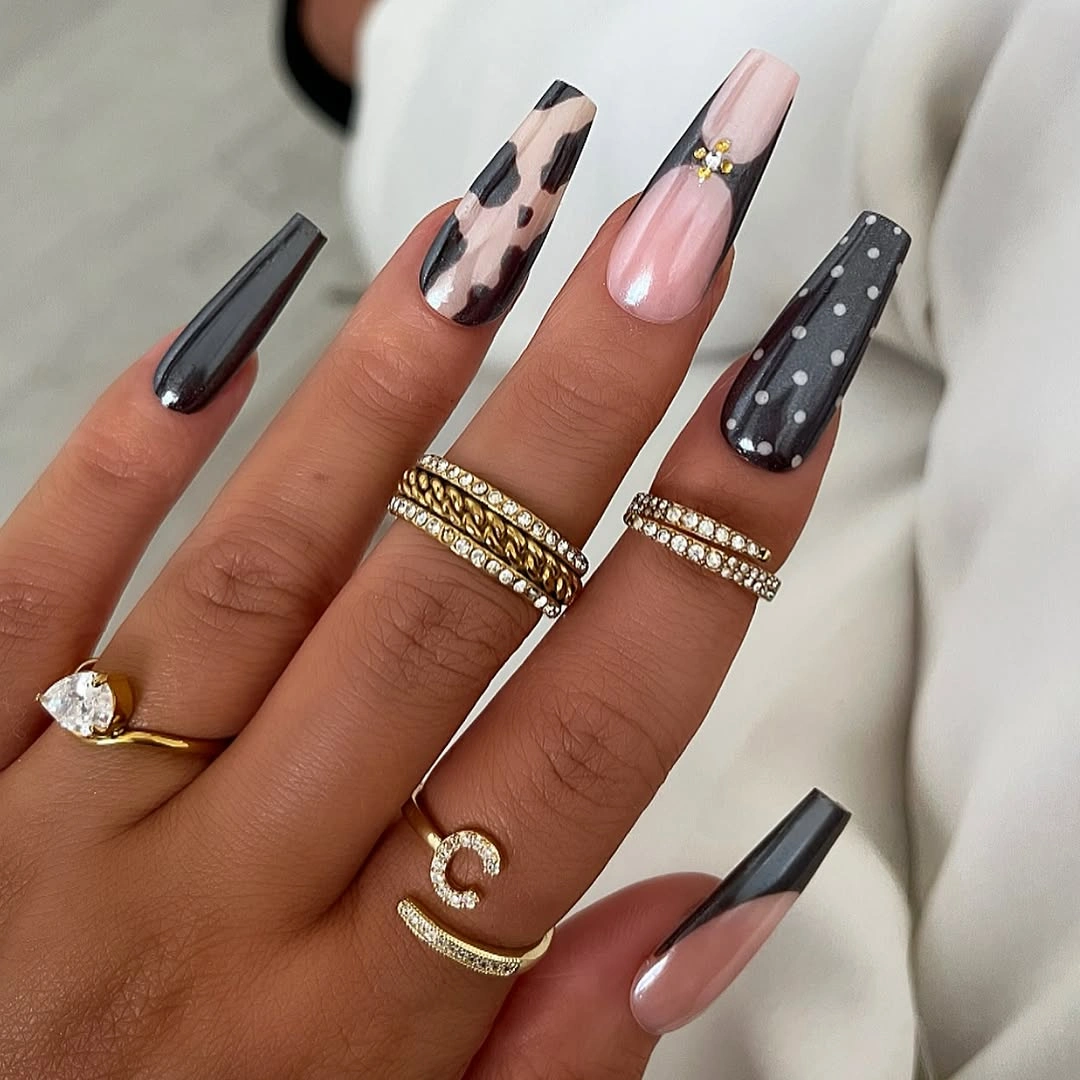
The design balances the strong shape with lighter accents. Black and charcoal establish a dark edge, while pink and gray prevent the set from becoming visually sealed. The patterns add interest, but their impact depends on the length; the same colors would feel calmer on a medium almond or square shape.
If stiletto is not practical, keep the black, pink, and gray sequence on a softer shape. Reduce the patterned detail to one light accent so the shorter tips do not look crowded. Because the palette already carries contrast, removing an accent will not make the manicure plain – it will simply shift attention back to the color blocks.
Taupe Almonds with Orange French and Glitter
Medium almond nails use taupe, brown, and warm nude as the base, then add narrow orange French curves and one glitter accent. The orange line is intentionally slim, so the neutral colors remain in charge. The glitter repeats the warm family and provides a small change in finish without making the whole hand metallic.
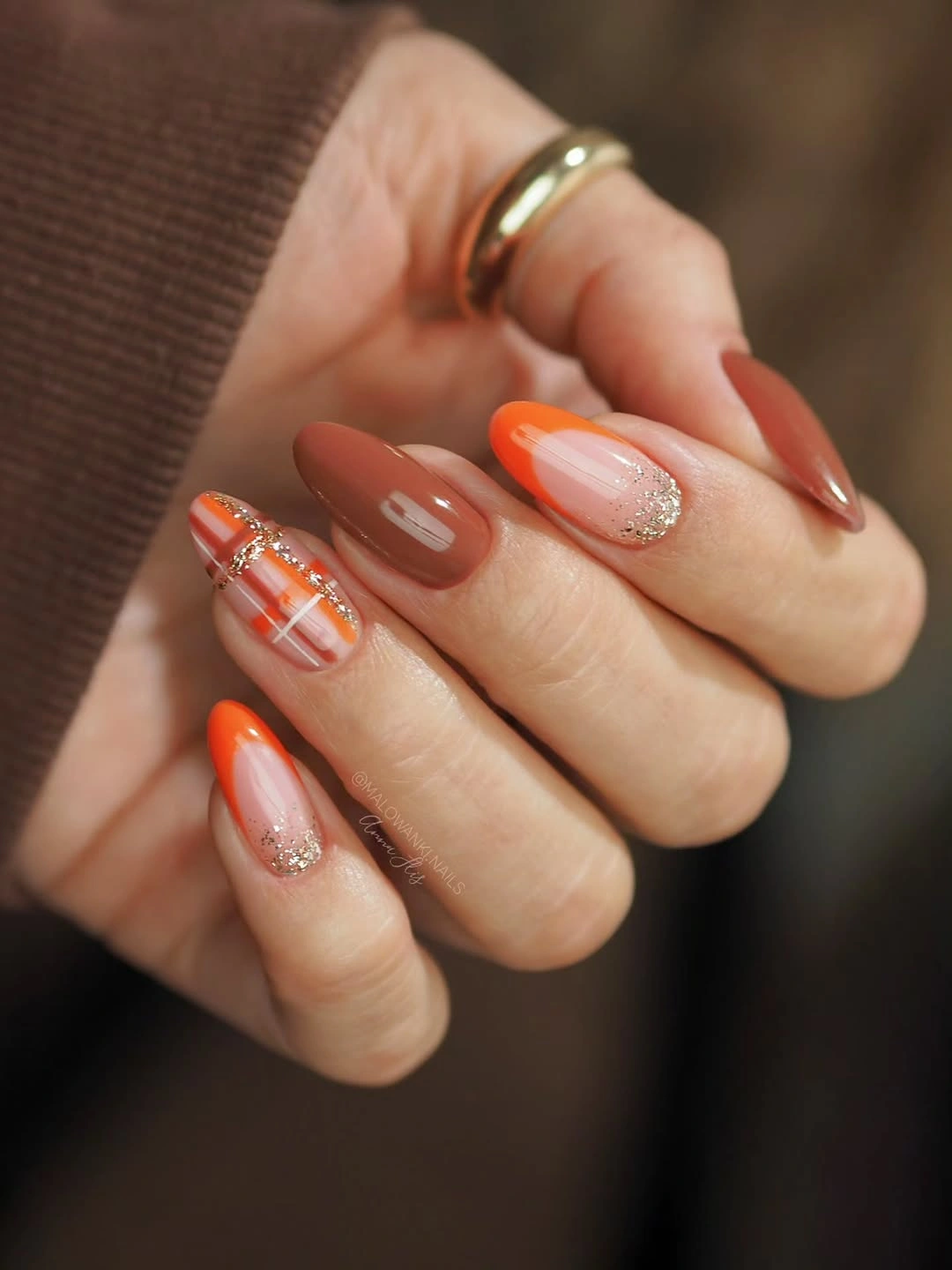
This layout creates a seasonal cue through placement rather than saturation. Taupe keeps the manicure calm, the orange edge supplies a clean point of color, and the glitter nail adds light at one controlled location. Medium almond length gives the French detail room while staying more wearable than a long pointed shape.
If the line is too fine for a shorter nail, make the orange tip wider and keep the glitter on one finger. Readers can also replace the glitter with a warm shimmer to lower the contrast. The design works best when the neutral base remains visible, so avoid adding extra motifs on top of the French structure.
Pink Nails with Black and Orange Edge Motifs
Short rounded nails start with pale pink, then use black outlines, orange shapes, and tiny floral or leaf marks around the tips and sides. The accents are concentrated rather than full coverage, leaving the pink base visible on every finger. That open ground keeps the seasonal detail light and prevents the short shape from looking overloaded.
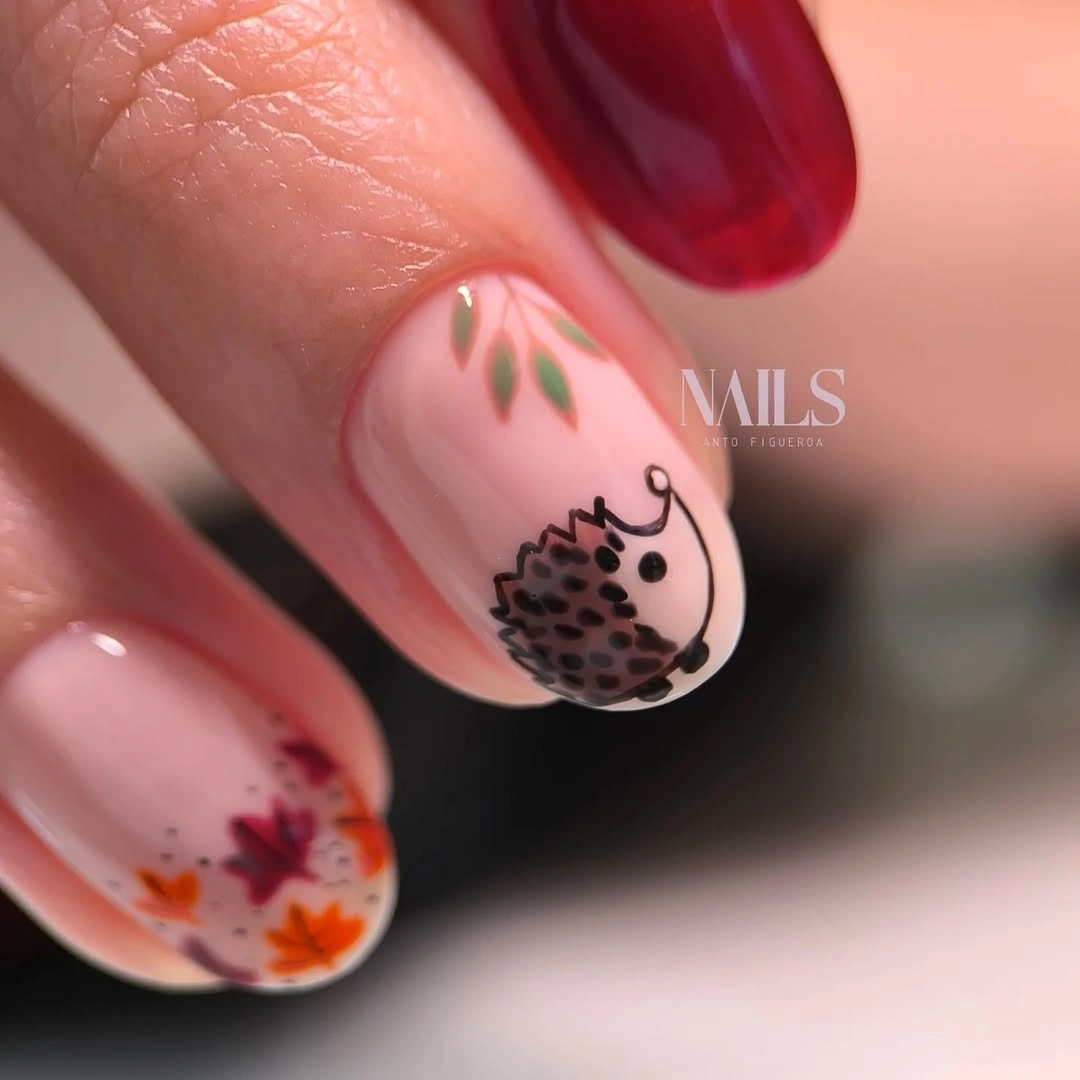
The design feels autumnal through a small relationship between colors. Orange gives warmth, black supplies definition, and pink softens the overall contrast. Because the marks sit near the edge, they add direction without competing with the rounded silhouette. The pale pink base acts as a deliberate gap between the orange and black marks.
A larger orange shape will stay clearer than several tiny details if the nail is very short. You can also keep only the black outline and one orange accent nail for a simpler routine. The edge placement is useful for adaptation because it leaves room to change the motif without redesigning the whole surface.
Nude Square Nails with Brown Tips and Orange Dots
Medium square nails use a warm nude base with brown French edges, tiny orange dots, and small black botanical marks. The brown tip repeats across the set and creates a frame, while the orange details vary from finger to finger. Because the base remains open, the fall colors stay easy to identify instead of blending into a dense print.
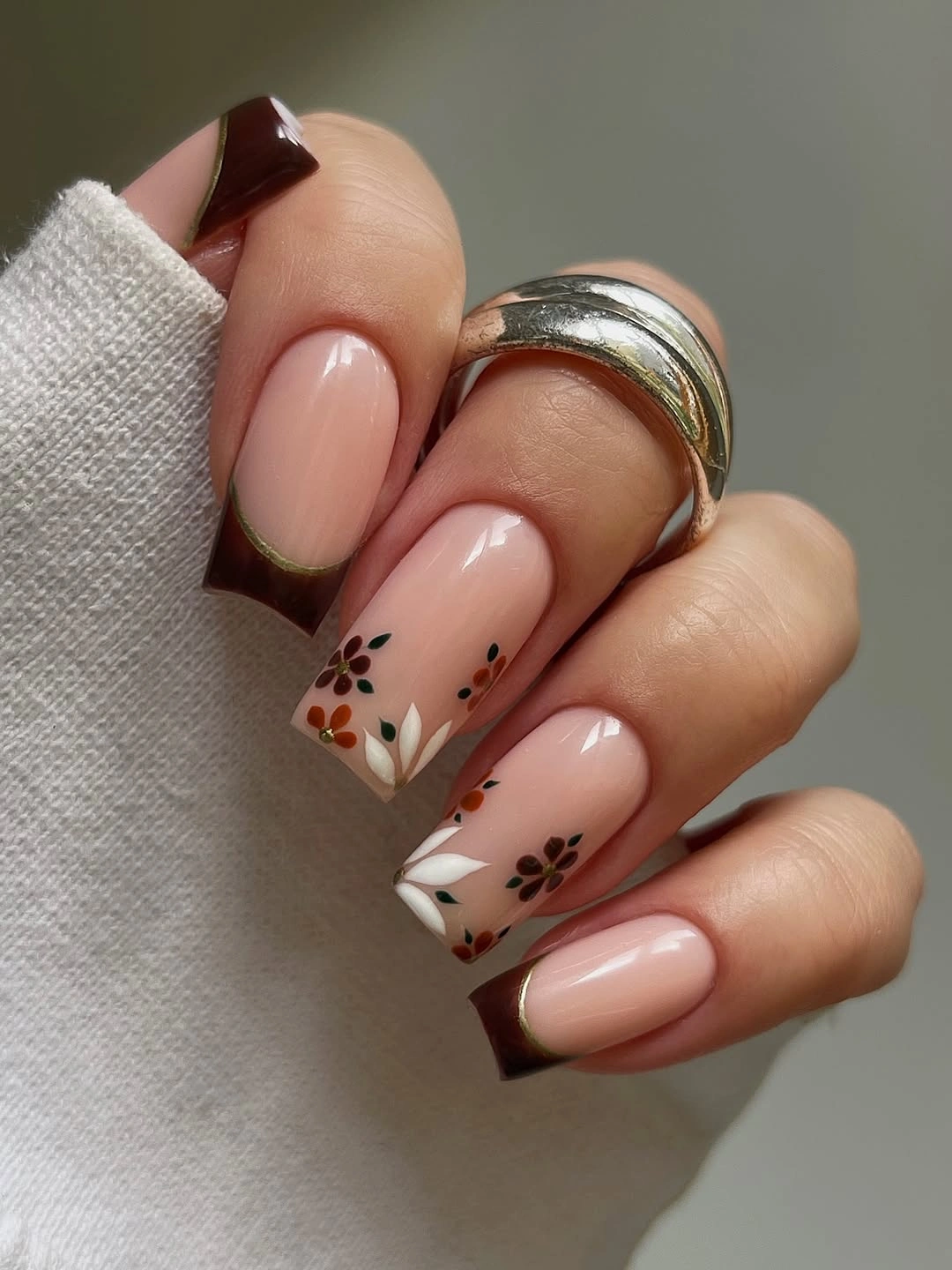
The design shows how one repeated structure can hold several small accents. Brown supplies the main seasonal cue, orange adds a brighter note, and black keeps the botanical marks defined. Medium square tips make the frame straightforward to copy, but the idea can be reduced to one brown line and one dot on a shorter nail.
If you need less detail, keep the brown edge on every nail and move the orange dot to two accents. A short square will benefit from wider tips, since narrow lines can disappear at the edge. The result stays coherent even when the botanical marks are removed because the framed nude base is already doing the organizing work.
Sage Green with White Floral Accents
Long almond nails mix solid sage or muted green with light accent nails carrying black-and-white floral or leaf drawings and small yellow touches. The green solids create a quiet base, while the white nails give the hand a brighter interruption. The floral details are concentrated on two fingers so the set remains balanced rather than fully illustrated.
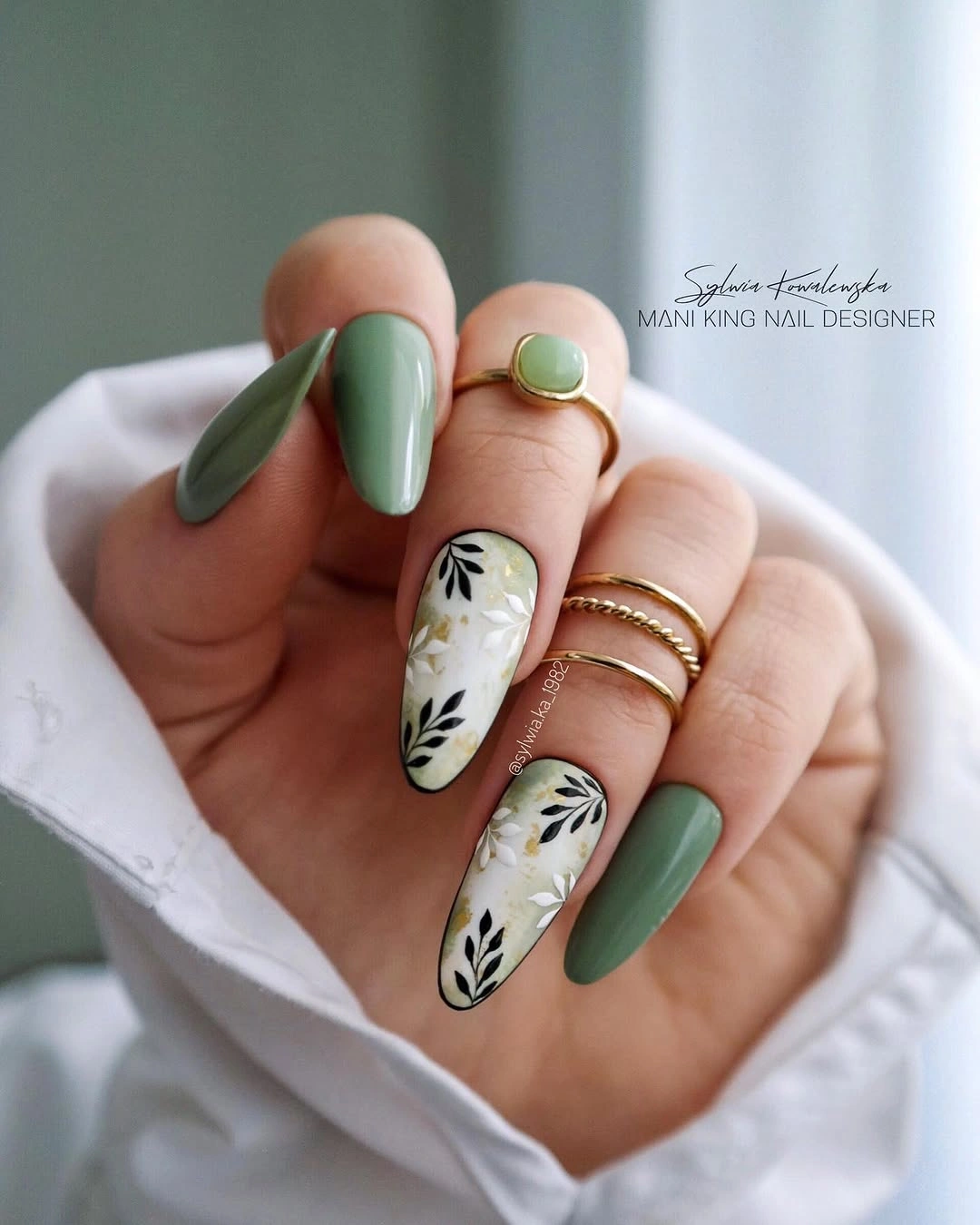
Sage works for fall because it is muted and grounded, but the white accents keep it from looking too heavy. The small yellow marks warm the floral drawing, linking it back to the season without adding orange across the entire hand. Long almond length supports the illustration, though the same contrast can be used on a medium shape.
For an easier adaptation, keep sage on four nails and use one white floral accent. A shorter almond can carry one larger flower more clearly than several small ones. The light accents may show smudges or wear sooner, so the solid green fingers provide a practical visual anchor as the manicure changes.
Bright Pink with White and Burgundy Curves
Long square nails use bright pink as the main color, then add white swoops, burgundy side accents, and small reflective details on selected fingers. The curved lines follow the straight tip and create a graphic rhythm across the hand. Pink keeps the set vivid, while burgundy adds the darker note that makes it feel more suited to fall.
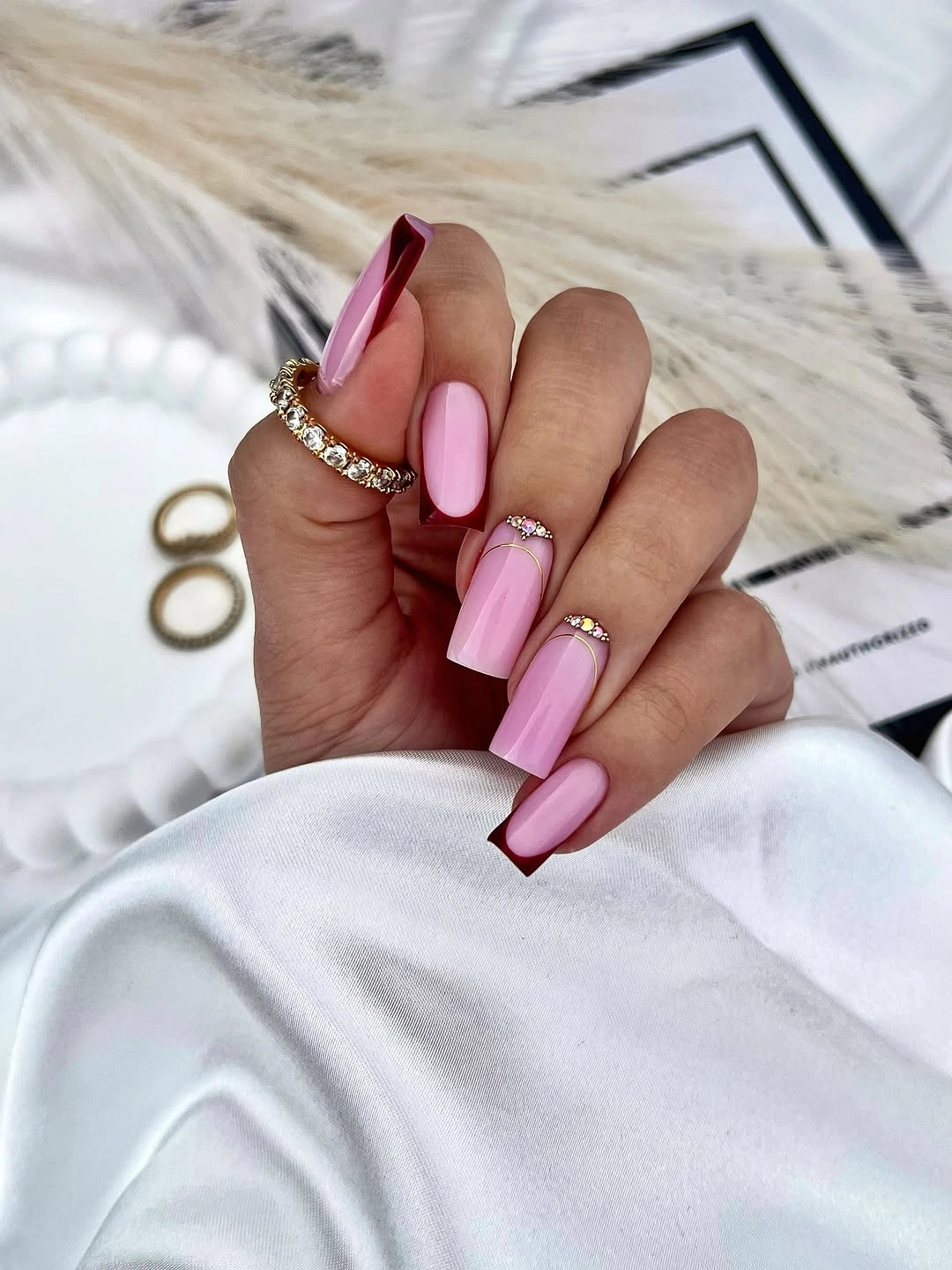
The color relationship is what makes the design work. White creates space around the curves, burgundy gives the bright base depth, and the square silhouette makes the lines look deliberate. There are no large motifs, so the manicure stays contemporary even though the palette is expressive. The white lines give the brighter pink a little breathing room against the deeper burgundy.
A medium square will make the same idea easier to wear and can use wider curves for better readability. If bright pink feels too strong, shift it toward rose or mauve and keep the burgundy accent. The key is to preserve the light-dark curve relationship rather than the exact shade. On a shorter square, broad curves will age more calmly than several fine ones.
Glossy Black with One Pastel Curved Accent
Most nails in this set are medium square and glossy black, while one light accent uses pink and pale blue curved lines. The colored nail is small in number but high in contrast, so the dark base stays dominant and the pastel marks act as one clean interruption. The square shape keeps the contrast graphic rather than soft.
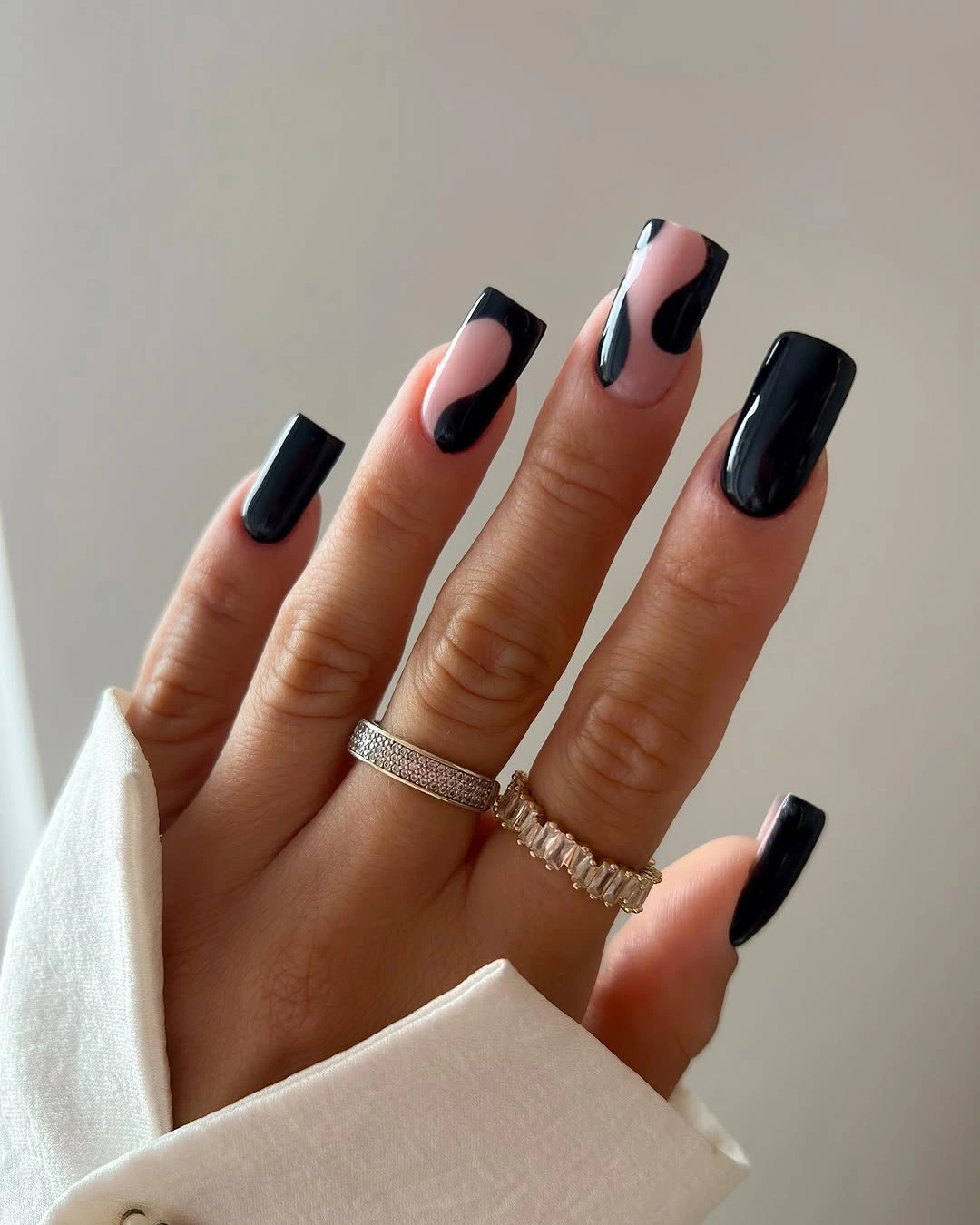
A single colored accent prevents black from becoming flat without weakening its clarity. Pink and blue bring a fresh note, but they are contained on one nail so the hand does not turn into a multicolor set. This makes the layout easy to adjust around a favorite accessory or sweater. That light nail is enough to change the pace without weakening the black base.
If you prefer an even simpler design, leave the accent nail pale and use only one curve. A shorter square can keep the black solids with no change, because the main palette does not depend on length. The one practical rule is to keep the accent isolated; adding several pastel nails would change the balance and make the look less controlled.
Black and Navy Glitter with Bright Color Flashes
Long almond nails combine black, deep navy, and glitter finishes, then add small bright pink or orange reflective marks on selected fingers. The dark base remains the strongest element, while the bright accents appear as flashes rather than full color blocks. The autumn background echoes the mood, but the manicure itself depends on the contrast between depth and light.
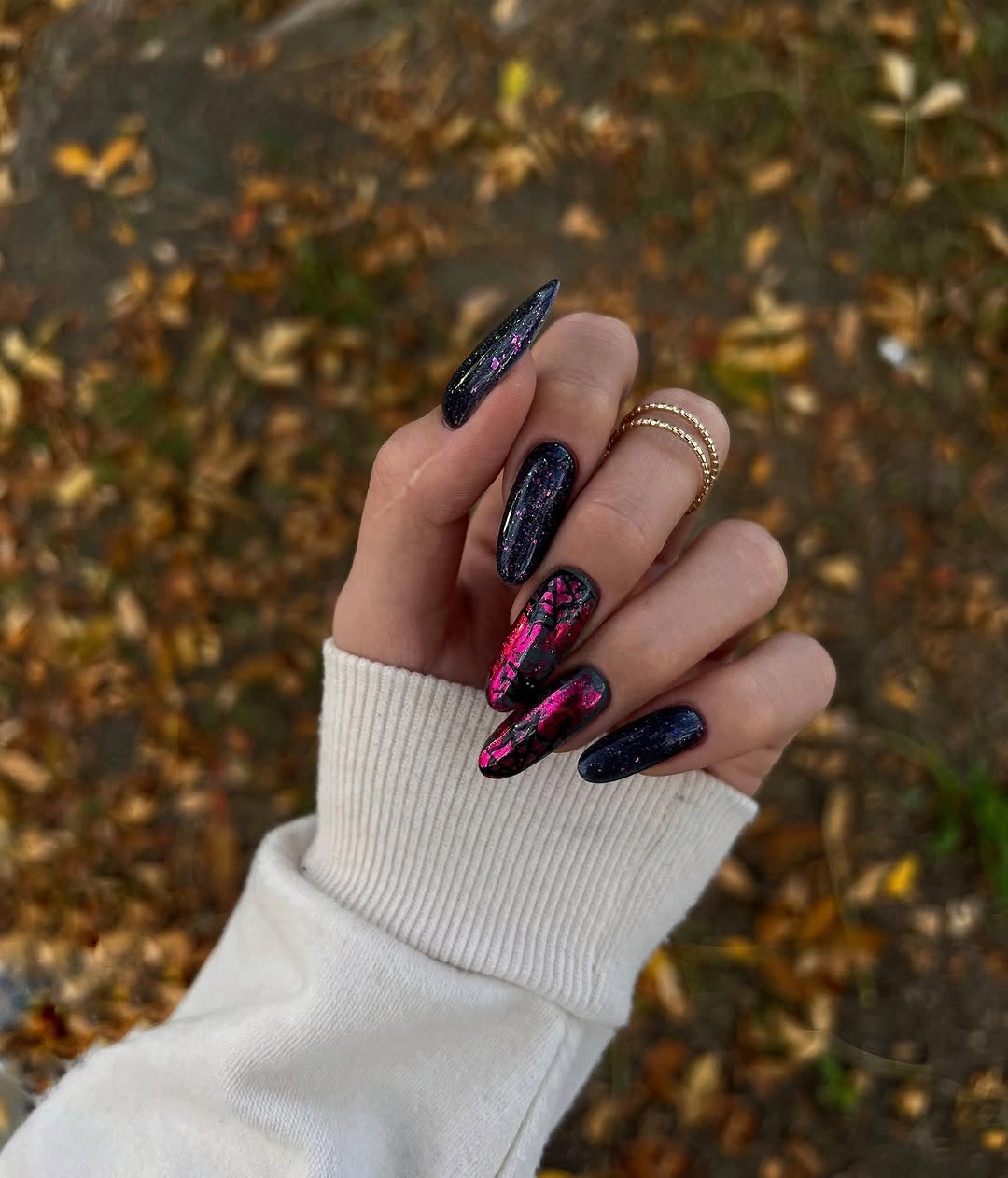
This set feels more atmospheric because the glitter creates movement inside the dark palette. Pink and orange keep the reflective surfaces from looking flat, yet their limited placement protects the overall darkness. Long almond tips make the flashes easy to see, which also makes the design more committed to shape and upkeep.
A shorter almond can keep the dark glitter foundation and place the bright accents on only two nails. If you want less intensity, choose one accent color rather than both pink and orange. The design does not need additional art; the finish changes and controlled flashes already give it enough structure.
Navy Solids with Airy Botanical Accents
Medium almond nails alternate deep navy solids with pale accent nails carrying thin black lines and blue or gray leaf-like details. The light nails provide strong negative space, while the botanical marks remain airy and spread out rather than dense. The repeated navy base gives the hand depth without turning the accents into isolated decorations.
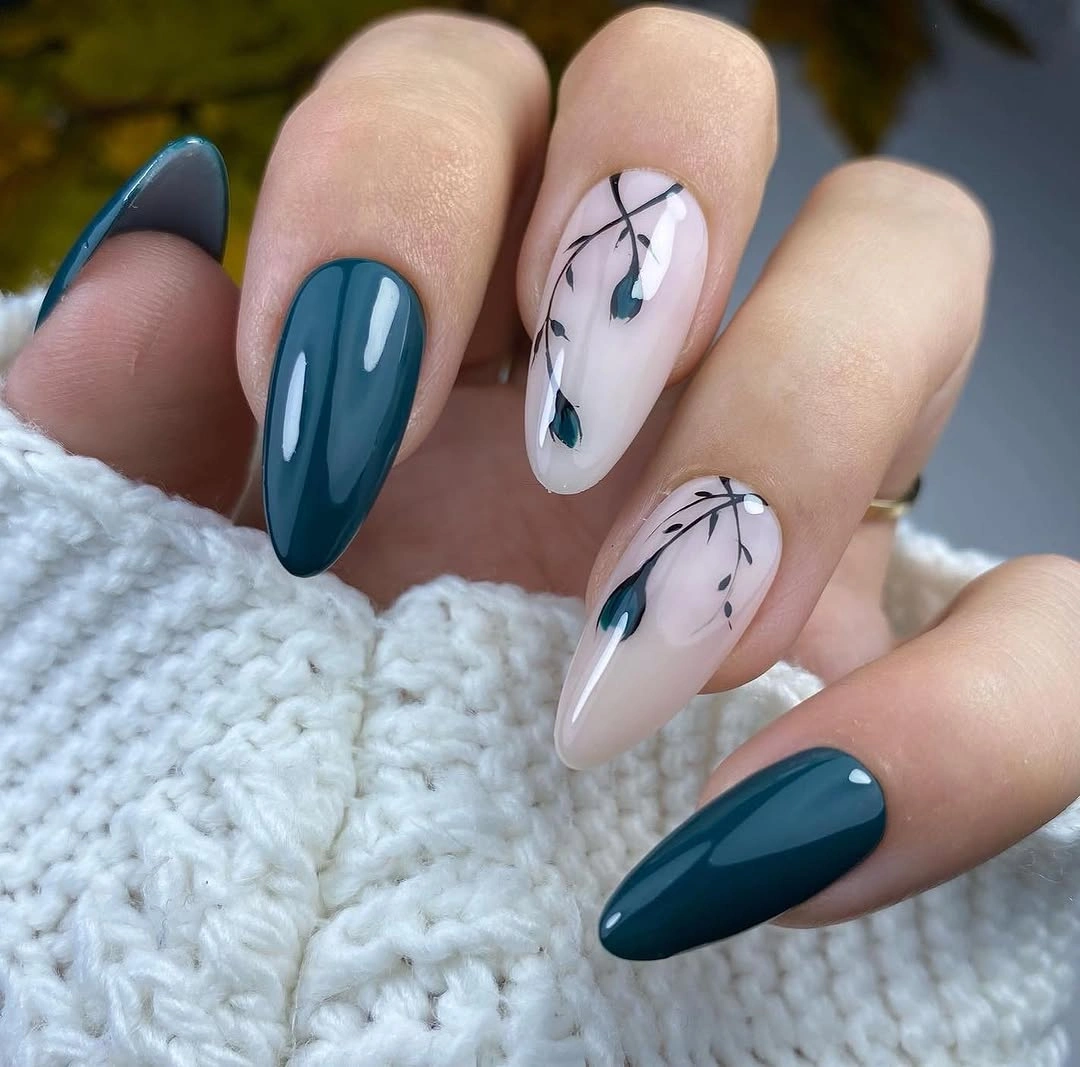
The design is seasonal through its balance of cool color and open space. Navy brings a dark layer, white gives relief, and the leaf-like lines add a natural reference without relying on warm orange. Medium almond length supports the thin marks, but a short oval can use one larger accent and retain the same contrast.
For a practical adaptation, keep navy on four nails and move the botanical drawing to the ring finger. A soft gray base will make the look quieter, while a warm cream will give it more fall contrast. The main limitation is line delicacy, so larger, simpler shapes are the safer choice when the nail surface is small.
Plum, Pink, and Fine Gold Glitter
Medium rounded nails combine dark plum, soft pink, and a mauve glitter accent with small gold particles or dots. The plum gives the set depth, pink creates a lighter pause, and the fine glitter bridges the two instead of standing apart. The rounded silhouette keeps the palette approachable and lets the color changes remain the main feature.
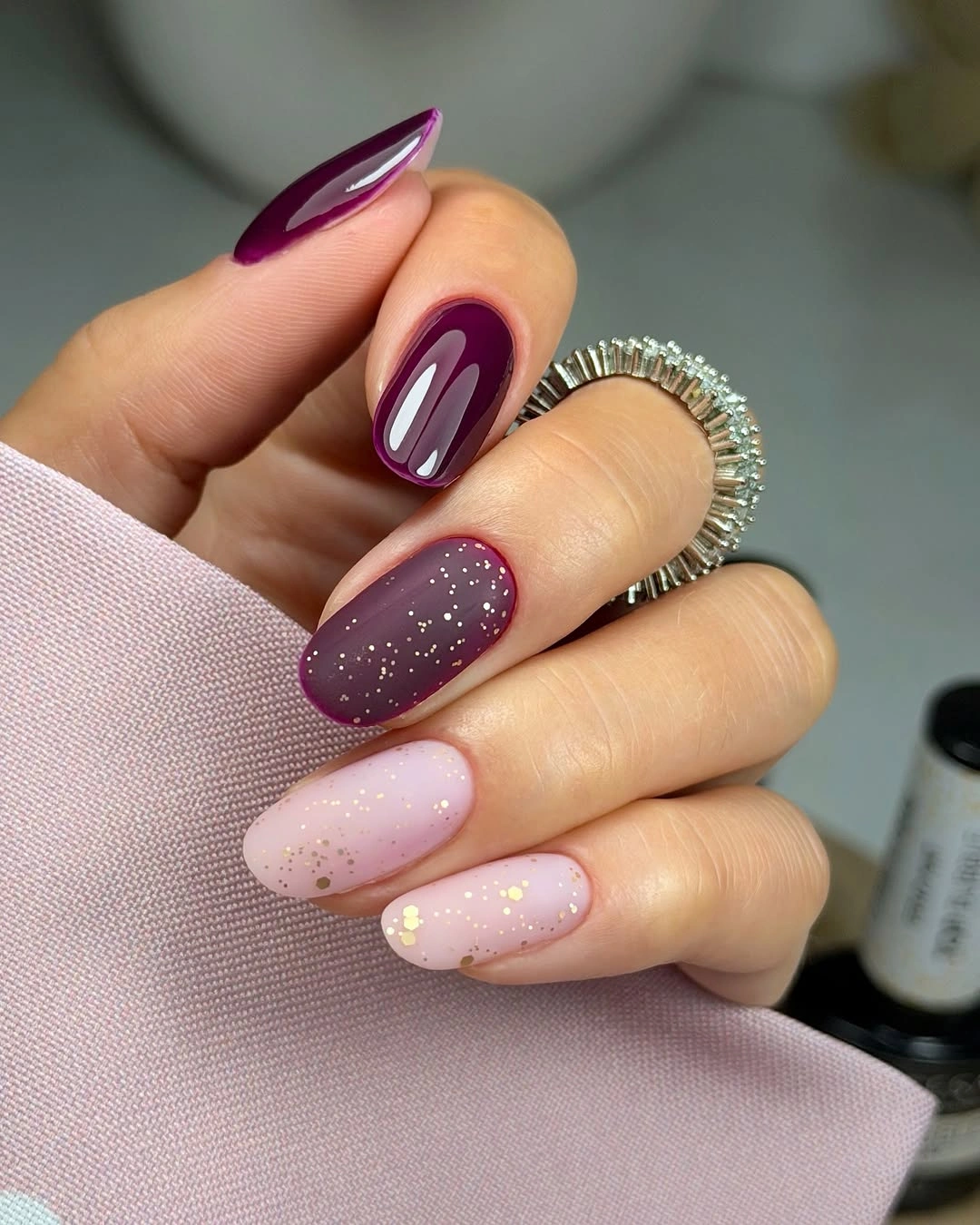
The design works through a dark-to-light progression rather than a printed motif. A soft pink finger keeps the plum from closing in visually, while the gold sparkle gives the lighter surface a small point of warmth. Because the glitter is fine, it adds texture without taking over the hand. The muted palette keeps the sparkle from turning the rounded set into a formal look.
Readers can simplify the set to plum, pink, and one glitter accent if the original mix feels too active. A short rounded shape will carry the same palette easily, and the gold can be replaced with a warm shimmer. The finish is most useful when it remains selective, since too much sparkle would erase the calm pause created by the pink nails.