When the light turns softer and a sweater becomes the first thing I reach for, a manicure can change the whole getting-ready mood without asking for a dramatic makeover. I keep coming back to the tension between a sheer base with one dark curved edge and a playful tip that flashes color only at the fingertip. That small decision can make the same almond or square shape feel calm, graphic, or ready for a night out.
If you are saving fall French nails 2026 ideas before an appointment, compare the tip first, then decide how much length and pattern your routine can honestly support. A narrow line, a warmer brown, or one accent nail can preserve the idea even when the longest, busiest version is not practical. Think of these looks as choices to edit around your hands, clothes, and comfort, not rules to copy exactly.
Curved red French lines on a sheer almond
The first manicure keeps a long almond silhouette pale and open, then lets deep red curves travel along the tips instead of filling them with a solid block. A second fine warm line appears on selected nails, giving the edge a drawn quality that is more graphic than a traditional French. The contrast works because the nude center leaves space around the red and the hand does not become visually crowded.
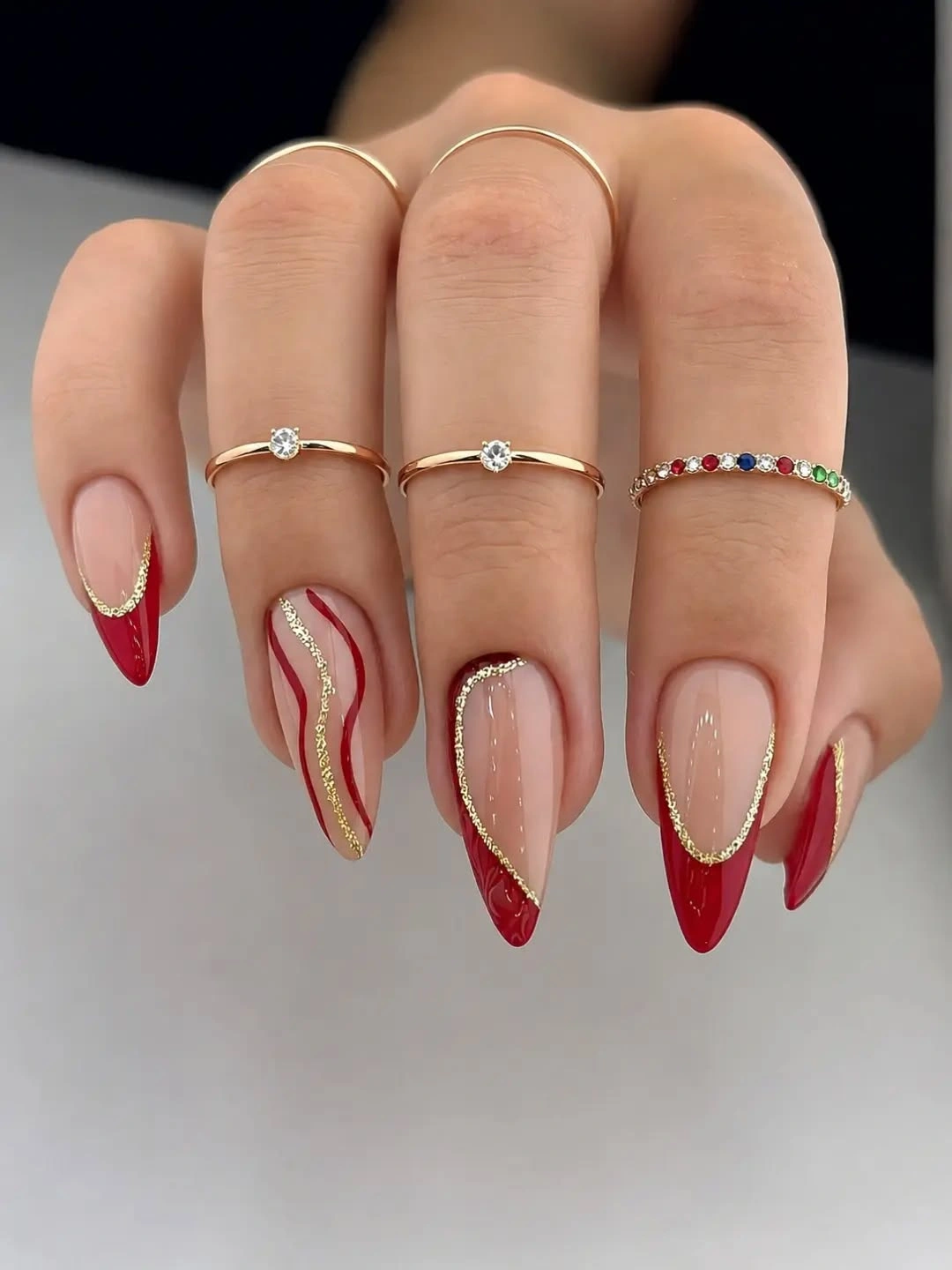
For an appointment, I would describe the look as a slim red French with an uneven curved sweep, then choose whether the warm contour belongs on every nail or only two. A medium almond can carry the same idea if the line stays close to the free edge. If you prefer a rounder shape, soften the curve rather than forcing a sharp point that fights the natural outline.
The tradeoff is precision. The narrow red border and second contour are easy to appreciate because they are clean, but they will also make growth-out or uneven spacing more noticeable than a wider solid tip would. Keep the surrounding jewelry simple if you want the linework to lead, and treat the design as a quiet statement that depends on proportion more than extra decoration.
Acid green tips against a pale pink base
Here the long square-to-coffin shape is softened by a pale pink base, while chartreuse and olive-green tips bring an unexpected jolt to the fingertips. The green is bright enough to feel seasonal without using an obvious leaf or pumpkin motif, and the neutral center keeps the color from swallowing the hand. One yellow-green shift also gives the set a little movement instead of a flat repeated band.
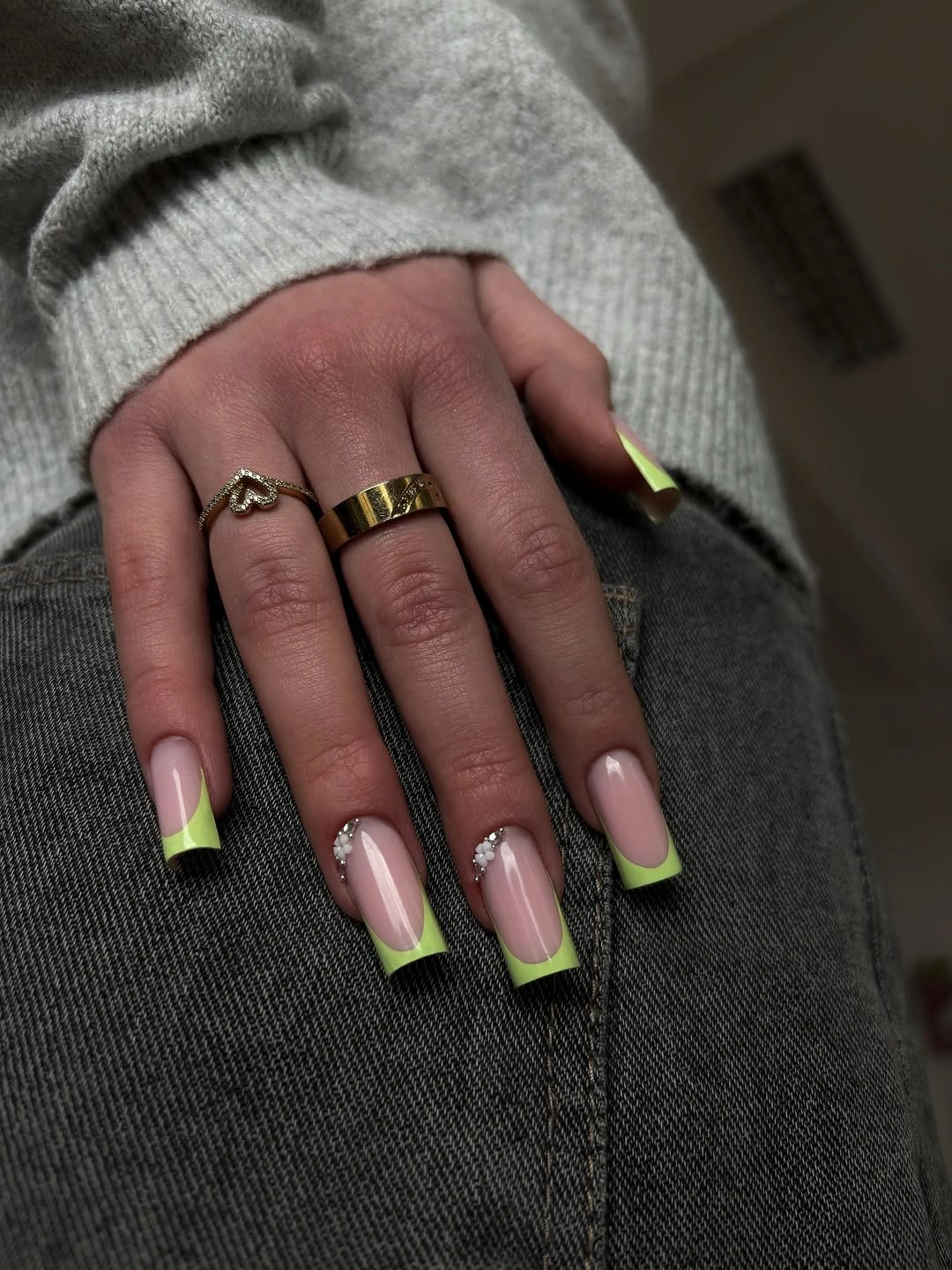
To adapt it, keep one green family across all nails if you want the manicure to sit more quietly beside knitwear or a patterned coat. Another option is to reserve the yellow-green shade for the thumb or ring finger and use the deeper olive elsewhere. On a shorter square, a slightly wider tip will help the color remain visible without needing more length.
Bright green becomes the main accessory here, so the rest of the outfit can do less work. That is useful when a neutral wardrobe needs one lively detail, but it may feel too loud beside equally saturated clothing or statement rings. The glossy surface also puts attention on the curve, which means a clean, even edge matters more than adding another motif.
Playful multicolor tips on a rounded short shape
This compact manicure uses a sheer pink foundation and lets every fingertip choose its own bright note: hot pink, yellow, turquoise, or white. The rounded edges keep the colors friendly rather than sharply geometric, and the small amount of pale space between the nail bed and the tip makes the mix feel intentionally light. It is a cheerful way to bring fall color in without committing to dark polish.
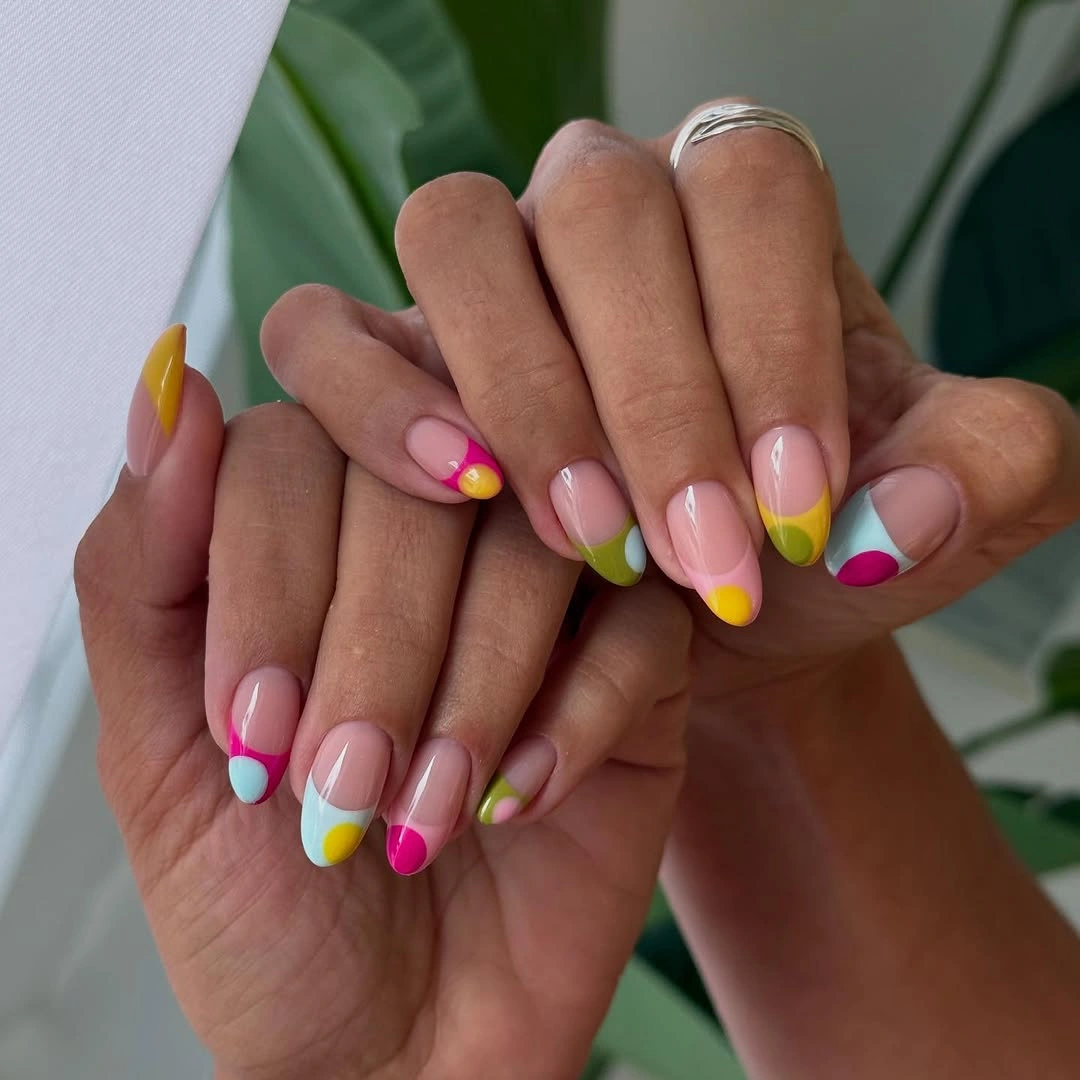
Three shades can create a more coordinated version if four colors feel too playful for daily wear. I would choose one warm, one cool, and one pale accent, then repeat them in a loose rhythm rather than matching neighboring nails exactly. The same placement can work on a short oval or soft square as long as the tip stays narrow enough to protect the airy base.
The advantage is flexibility in color, while the limitation is that every fingertip becomes part of the conversation. This set will not disappear into the background the way a single nude French can, especially beside busy prints. Keep the shape neat and the palette edited if you want the manicure to feel collected rather than like several unrelated ideas placed together.
Mixed dots and stripes over a clear nude base
Pattern mixing takes the lead here, with butter-yellow dots, chocolate blocks, turquoise details, and black-and-white stripes appearing on different French edges. The shared nude base is doing important work: it gives the mismatched designs a common pause between the nail bed and the decoration. Because the patterns stop near the tips, the manicure feels layered but still leaves the hand visible.
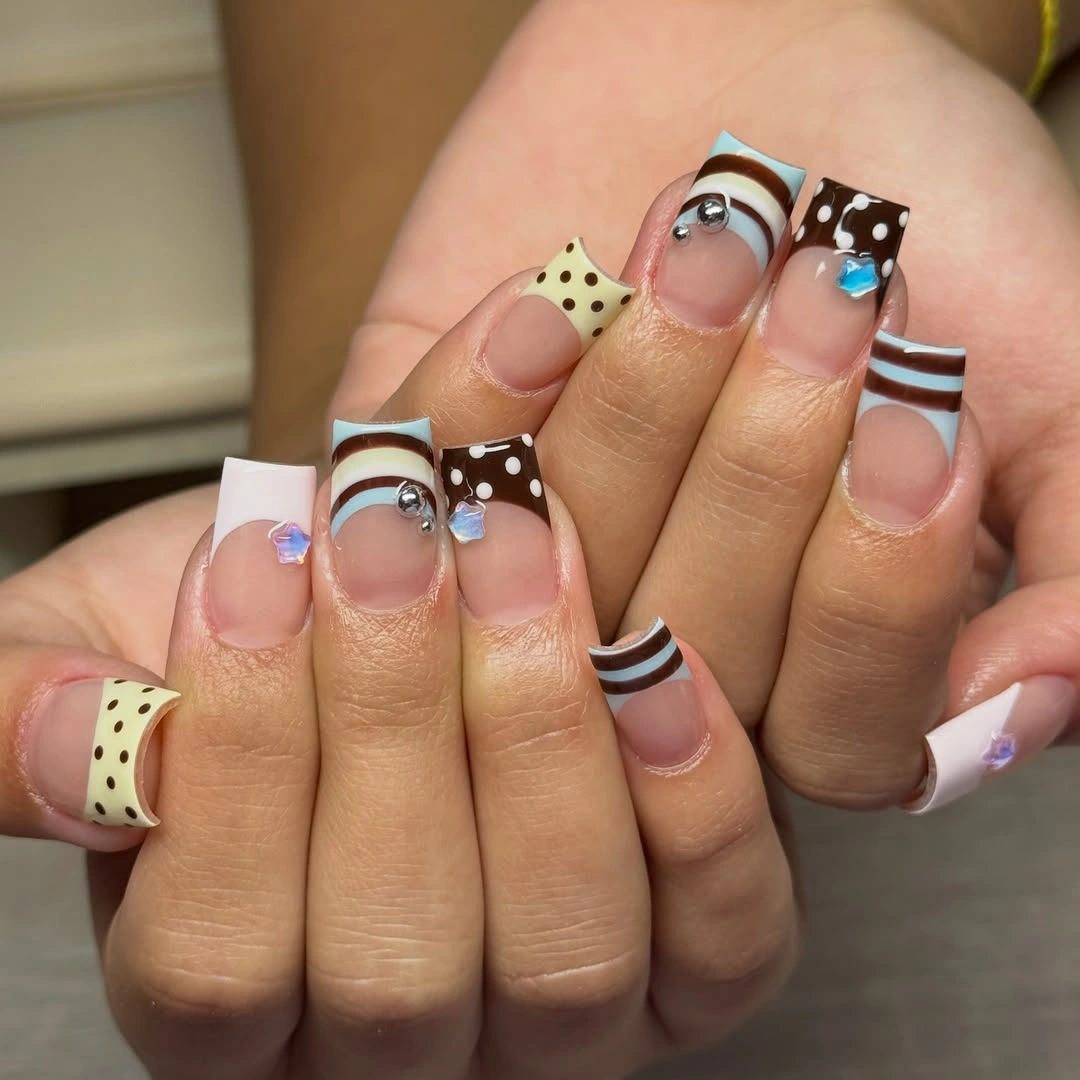
If you want to borrow the idea without wearing every pattern, select two accents and repeat their colors on the remaining nails. A dotted yellow tip can sit beside a plain brown edge, or the turquoise can return as a tiny line rather than a full panel. Keeping the base sheer will preserve the original balance even when the motifs are simplified.
The honest limitation is visual editing. Mismatched nails can look considered when a color repeats, but they can also become scattered if each accent introduces a new shade with no supporting role. This is a good choice for someone who enjoys noticing details up close; it is less suited to a wardrobe already full of competing patterns or accessories.
Soft lavender French tips for an easy update
A milky pink base and rounded lavender tips make this one of the quieter choices in the group. The color change is clear without becoming high contrast, and the medium squoval length keeps the look practical while still showing the curve. Nothing competes with the clean transition, which is exactly why the manicure can shift from early fall errands to a more dressed-up evening without a new design element.
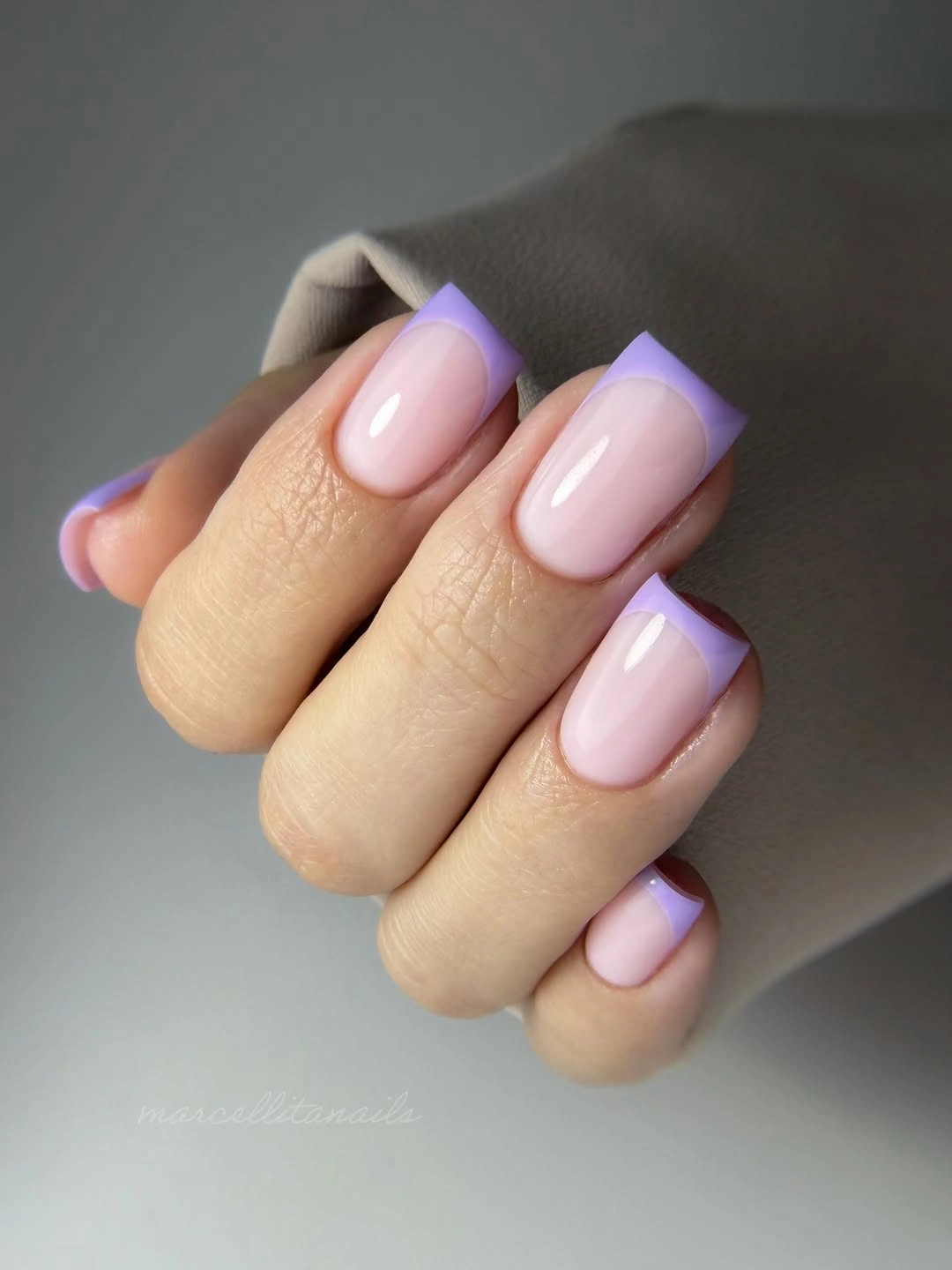
For a shorter nail, ask for a thinner lavender edge and keep the arc close to the natural tip. If your clothes need more depth, a slightly dustier or darker purple can create that change without adding art. The shape is also easy to personalize: a soft oval will make the color feel gentler, while a crisp square will emphasize the simple geometry.
This design depends on a clean curve and a visible difference between the pink base and lavender edge. If the tip grows too wide, the manicure can lose its light, balanced quality; if the shades are too close, the French line may disappear in low light. That small limitation is useful to remember when choosing colors from a salon display rather than a carefully lit reference.
Autumn color shifts across long almond tips
Instead of choosing one fall shade, this long almond set treats each French tip like a small swatch: purple, brown, olive, orange, and a reflective metallic note all appear against the same pale base. The length gives every color enough room to read, while the open nail bed prevents the collection from becoming a wall of pigment. The effect is expressive, but the palette still feels connected to autumn.
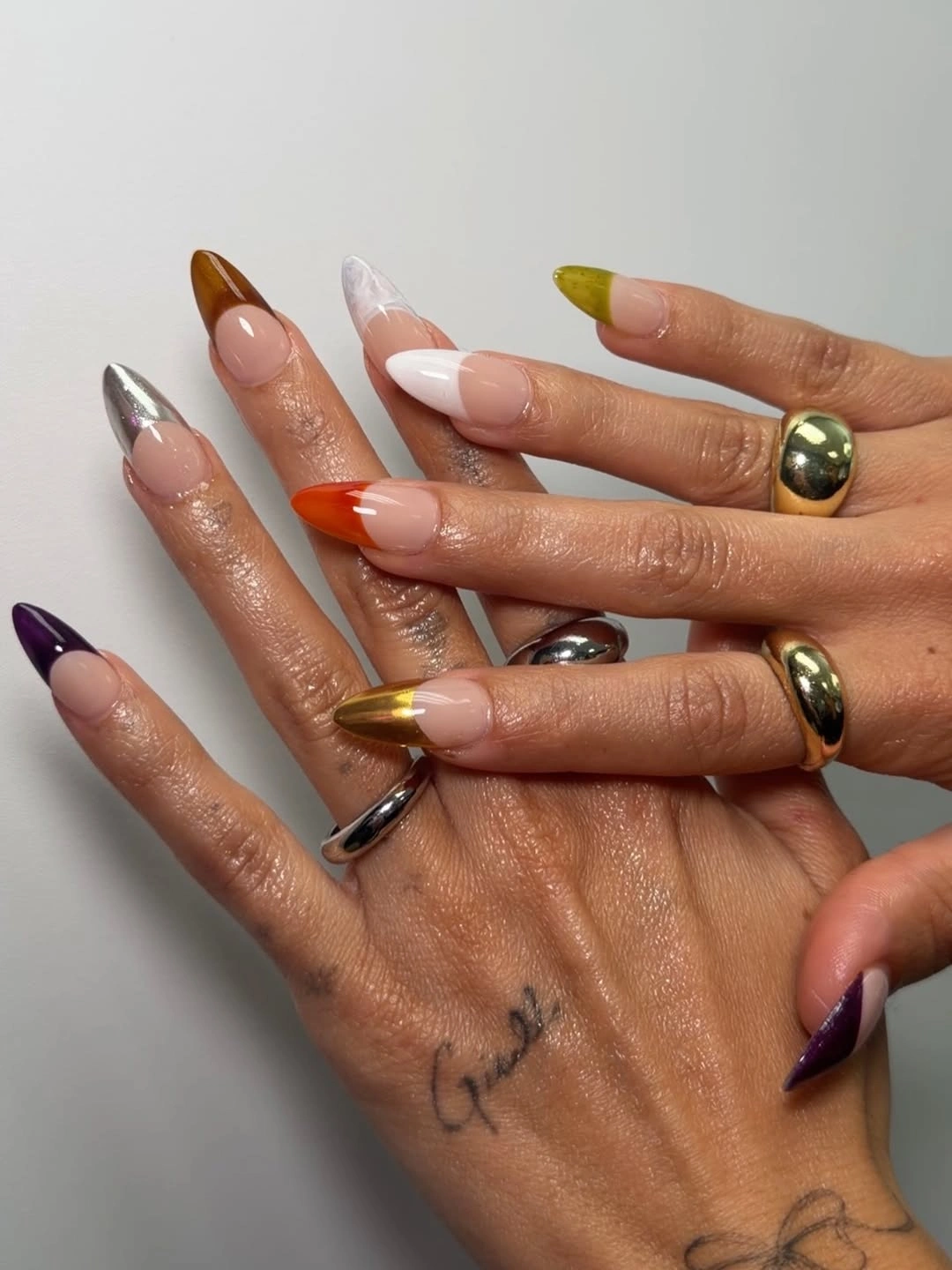
To make the idea easier to wear, narrow the palette to three shades that already live in your wardrobe. Brown, olive, and orange will feel warm and grounded; purple, metallic, and brown will create more contrast. On a medium almond, keep the strongest color on the thumb or ring finger and let the other tips share one quieter family so the reduced length does not erase the color story.
Long almond length is part of the visual impact, not a neutral backdrop. A shorter version may need broader tips to keep the colors legible, but broader tips also reduce the open space that makes the original feel airy. The manicure works best when the colors are allowed to be the decoration, so adding heavy jewelry or extra nail art could make the hand feel overworked.
Fine burgundy lines on a blush almond
The soft pink nude base here is interrupted only by narrow burgundy and brown curves near the free edge. That restrained contrast makes the almond shape visible first and the color second, while the thin lines give the manicure a little fall depth without turning it into full nail art. It is a useful example of how a darker shade can feel delicate when its placement is carefully limited.
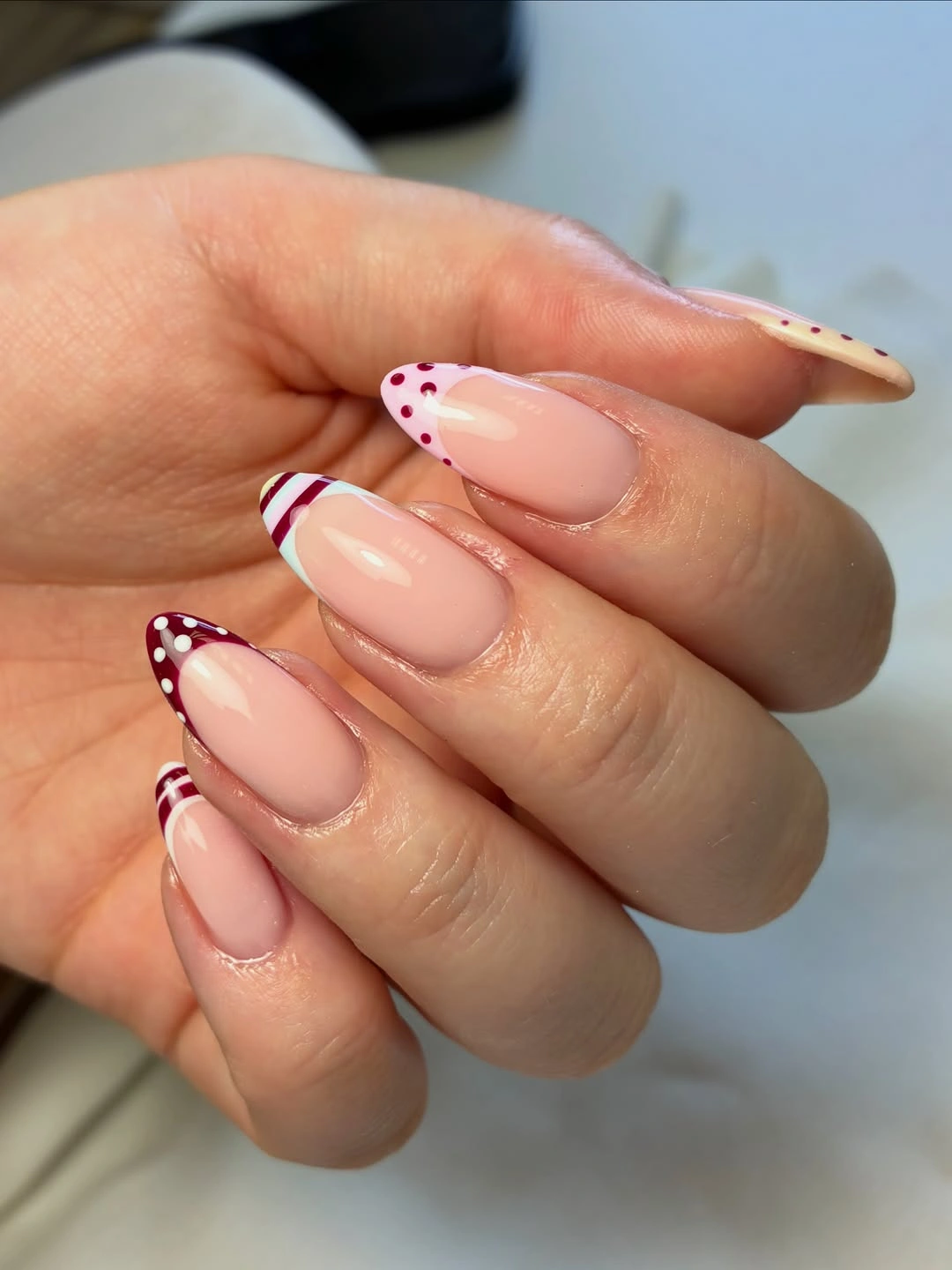
When explaining the look at an appointment, ask for a micro-French in burgundy, then decide whether the brown belongs on every nail or just one. A shorter oval can carry the same line if it follows the natural curve rather than trying to imitate the longer almond exactly. If you want more contrast, deepen the base slightly instead of adding another decorative motif.
Fine lines are elegant but less forgiving than a solid edge. Uneven thickness will show, and the darker border may look more severe if the base is too pale or too cool. That is why this works well for a reader who likes quiet detail and is willing to keep the shape tidy, but it may frustrate anyone who wants a design that can grow out invisibly.
Zebra edges framed by open pink space
Black-and-white zebra stripes are concentrated at the tips of a sheer blush manicure, so the pattern arrives as a sharp border rather than a full animal print. The square shape gives the stripes a stable frame, and the untouched pink center keeps the high contrast from taking over. This is a strong example of using a familiar motif in a smaller dose to change its mood.
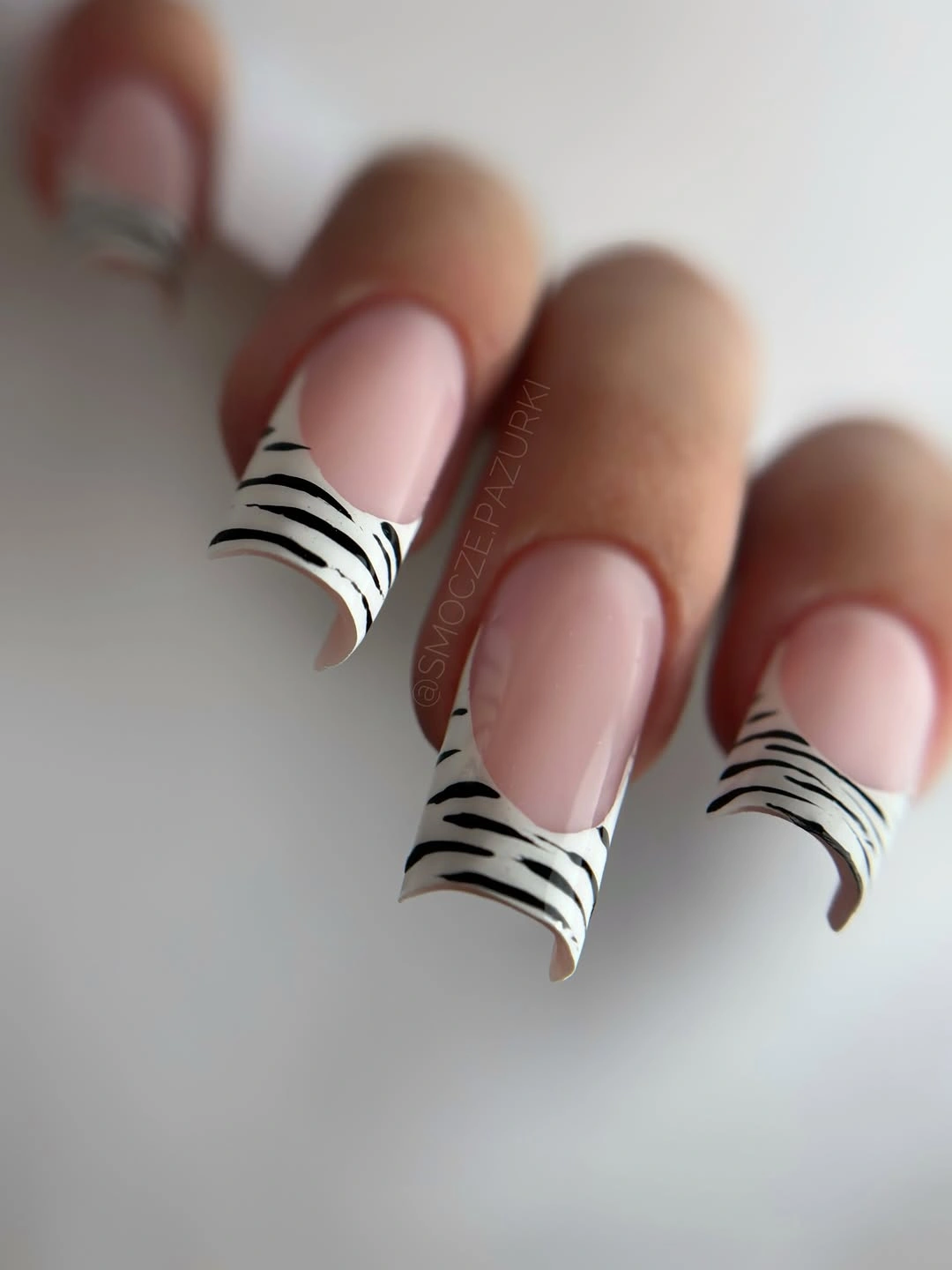
For a workplace or everyday version, keep the zebra on one or two accent nails and use plain black tips elsewhere. A rounded square will soften the graphic edge, while a medium almond will make the stripes feel more elongated. The key is to keep the patterned band narrow enough that the negative space remains part of the design rather than an accidental gap.
The pattern is distinctive, which means it will not blend into every outfit the way a neutral French does. Its charm comes from small differences in the stripes, so chasing perfect symmetry may make the result feel stiff. If the look feels too bold, change the scale of the pattern before changing the base; smaller marks will preserve the idea with less visual volume.
Coral sparkle with mint and peach accents
This decorative square set layers coral edges, pale mint details, peachy transparency, and concentrated silver sparkle. Some nails carry much more texture than others, which creates a focal shift instead of making every fingertip equally loud. The warm base ties the colors together, while the glitter catches light in a way that turns a simple French outline into something closer to an occasion manicure.
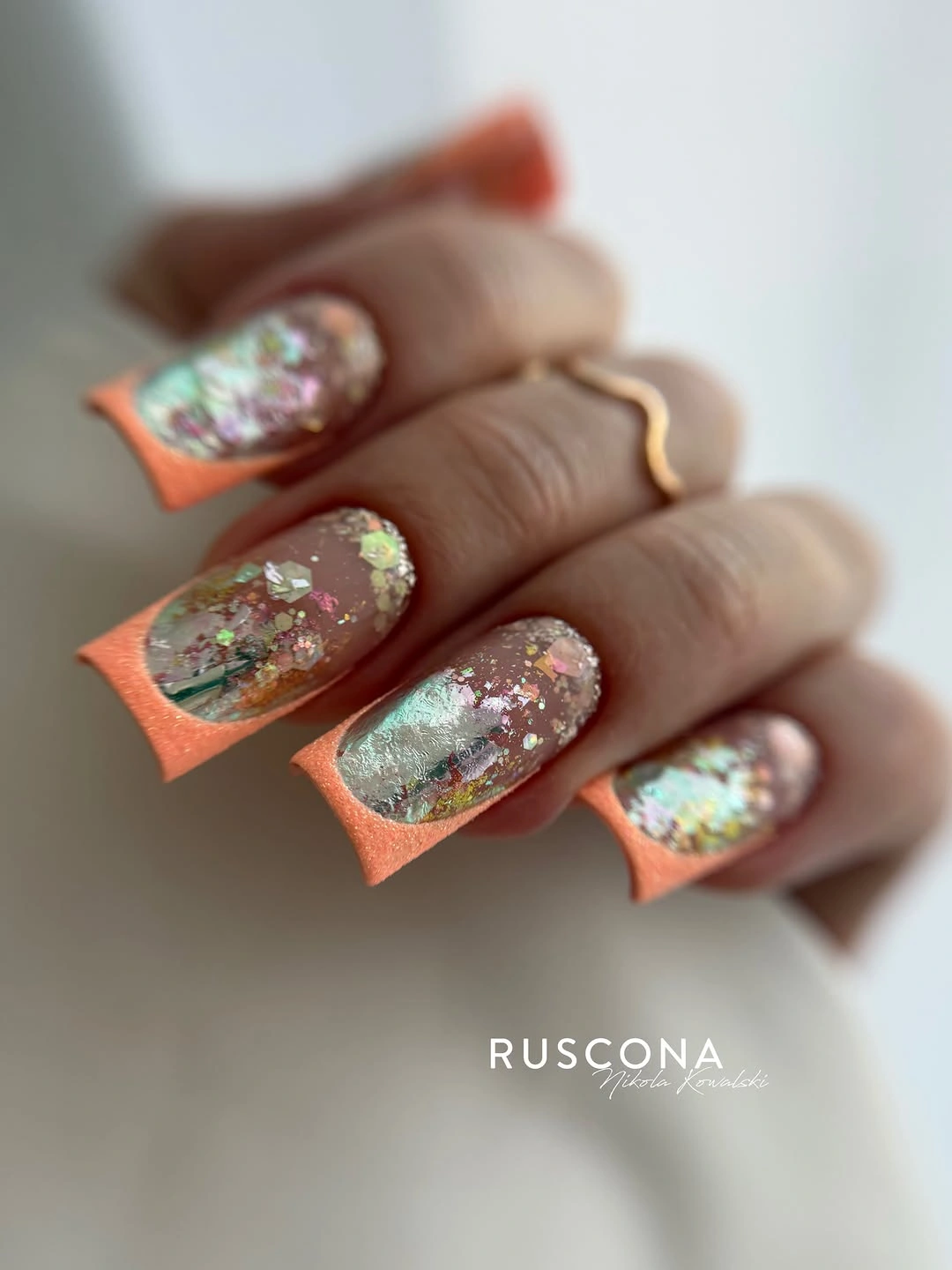
To edit it for regular wear, place the dense sparkle on two nails and repeat a cleaner coral edge across the rest. Mint can remain a tiny supporting color rather than a full accent, especially if your clothes already include cool green. A shorter square will still work, but the decorative details should be spaced farther apart so they do not merge into one busy band.
The limitation is not subtle: concentrated shine asks to be noticed and may feel more evening-led than the pale French looks earlier in the set. That can be exactly right for a celebration or a weekend outfit, while a conservative routine may prefer only one glitter accent. Keep the base visible and let the sparkle have a clear home instead of scattering it across every surface.
Transparent amber blocks on an extended square
Warm amber and cream blocks sit at the ends of long square nails, with small white rectangles sharpening the tips. The translucent nude center makes the geometry feel lighter than a fully painted set, while the extended silhouette gives the shapes enough room to read as deliberate architecture. The manicure is seasonal through color, but its structure stays modern and clean.
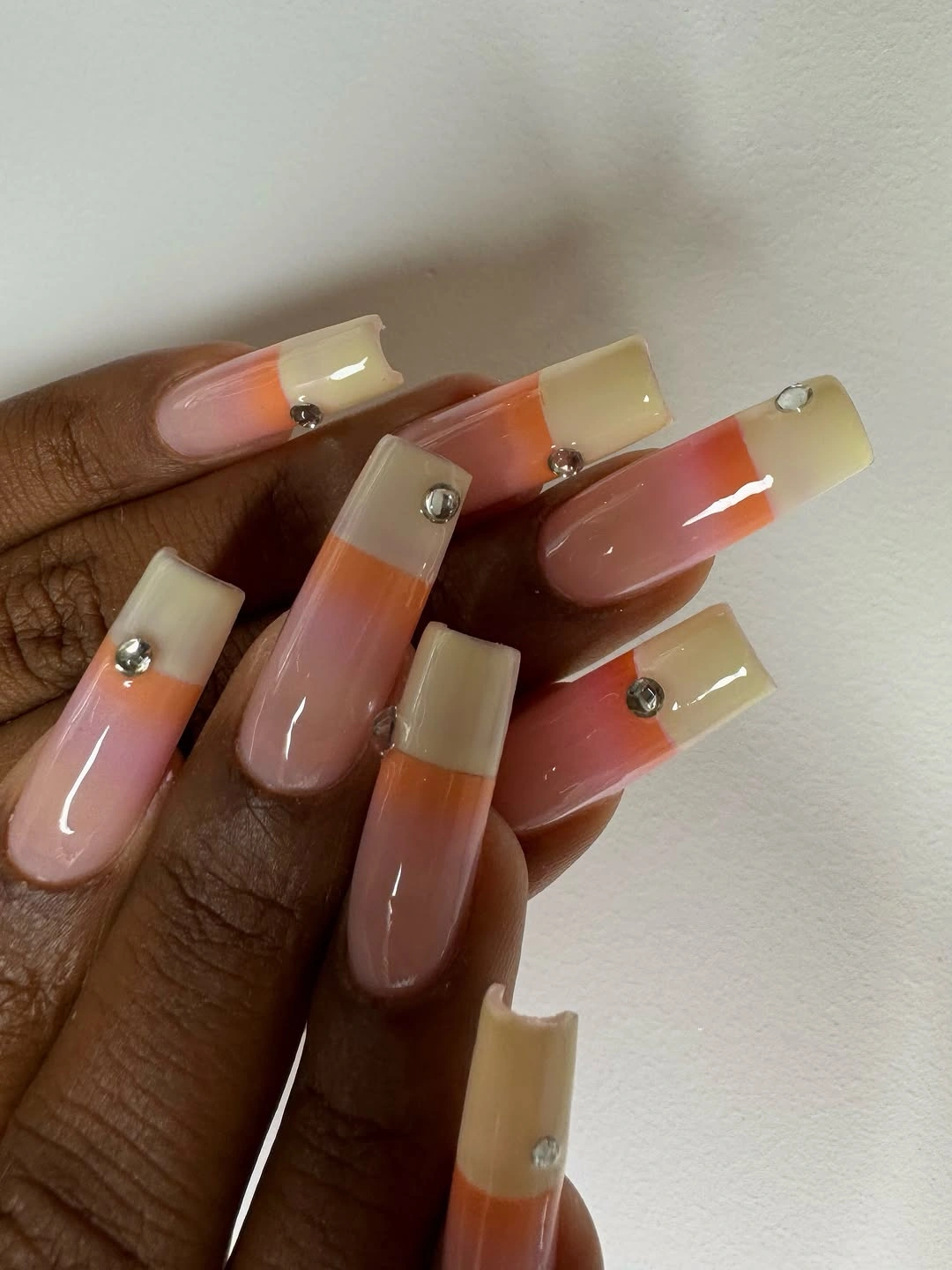
For a practical version, shorten the square and keep the amber block plus one white detail on each hand. You can also shift the warm tone toward caramel or leave it closer to clear if the outfit needs less contrast. A soft squoval will make the geometric edge feel friendlier, whereas a crisp square will emphasize the straight lines that define the look.
Long square length is doing more than showing off color; it gives the transparent blocks a strong frame. That can be limiting for hands-on routines or for anyone who prefers a compact nail. If comfort matters more than the full silhouette, reduce the number of rectangles rather than piling them closer together, because the open space is what keeps the design from feeling dense.
Lavender stilettos with layered color tips
Lavender covers the long pointed canvas here, then yellow, blue, black, white, and leopard-like accents gather at the tips. The manicure is intentionally maximal: the stiletto length, mixed colors, and layered motifs all work together rather than trying to look quiet. Even so, the lavender base gives the set a recognizable center, which prevents the details from becoming completely unrelated.
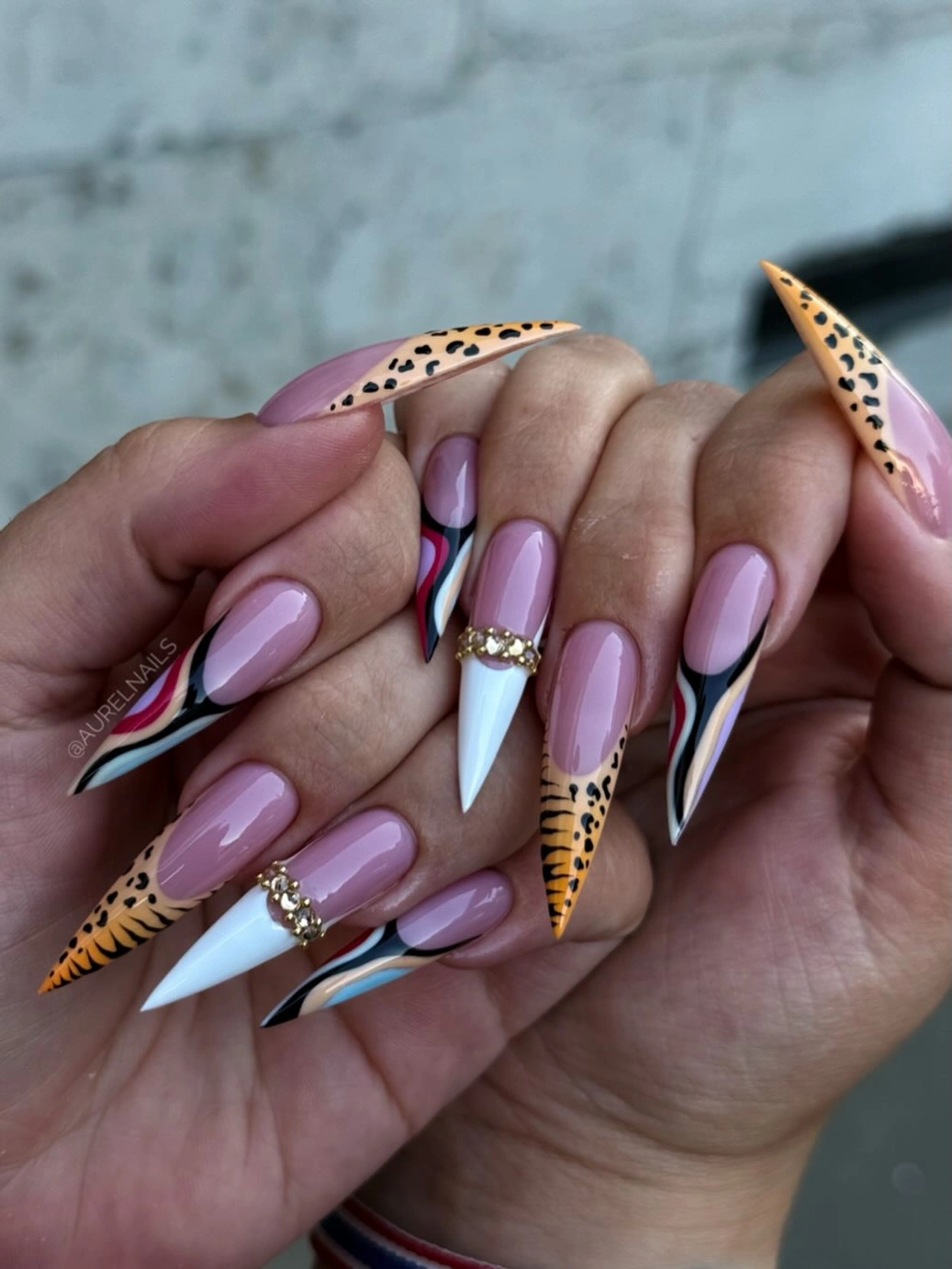
If you like the palette but not the commitment, move the idea to a medium almond and keep one patterned accent, one blue tip, and one yellow detail. The remaining nails can stay lavender or sheer pink. That preserves the playful contrast while removing some of the visual weight that comes from using several motifs on every long point.
This is a design to choose with clear eyes about upkeep and comfort. The pointed length is part of its drama, and the layered tip details may feel impractical if you type, cook, or prefer a low-profile hand. Its strength is self-expression, not quiet versatility, so simplifying the shape is a better adaptation than pretending the full stiletto set will disappear into the background.
Navy stripes and dots on a pale squoval
Soft nude nails meet navy tips, vertical stripes, dots, and a small checked detail in a pattern mix that stays organized by color. The squoval length gives the motifs a readable surface without turning the hand into a full graphic collage. Denim in the surrounding setting reinforces the blue, but the manicure itself succeeds because navy returns often enough to connect the separate accents.
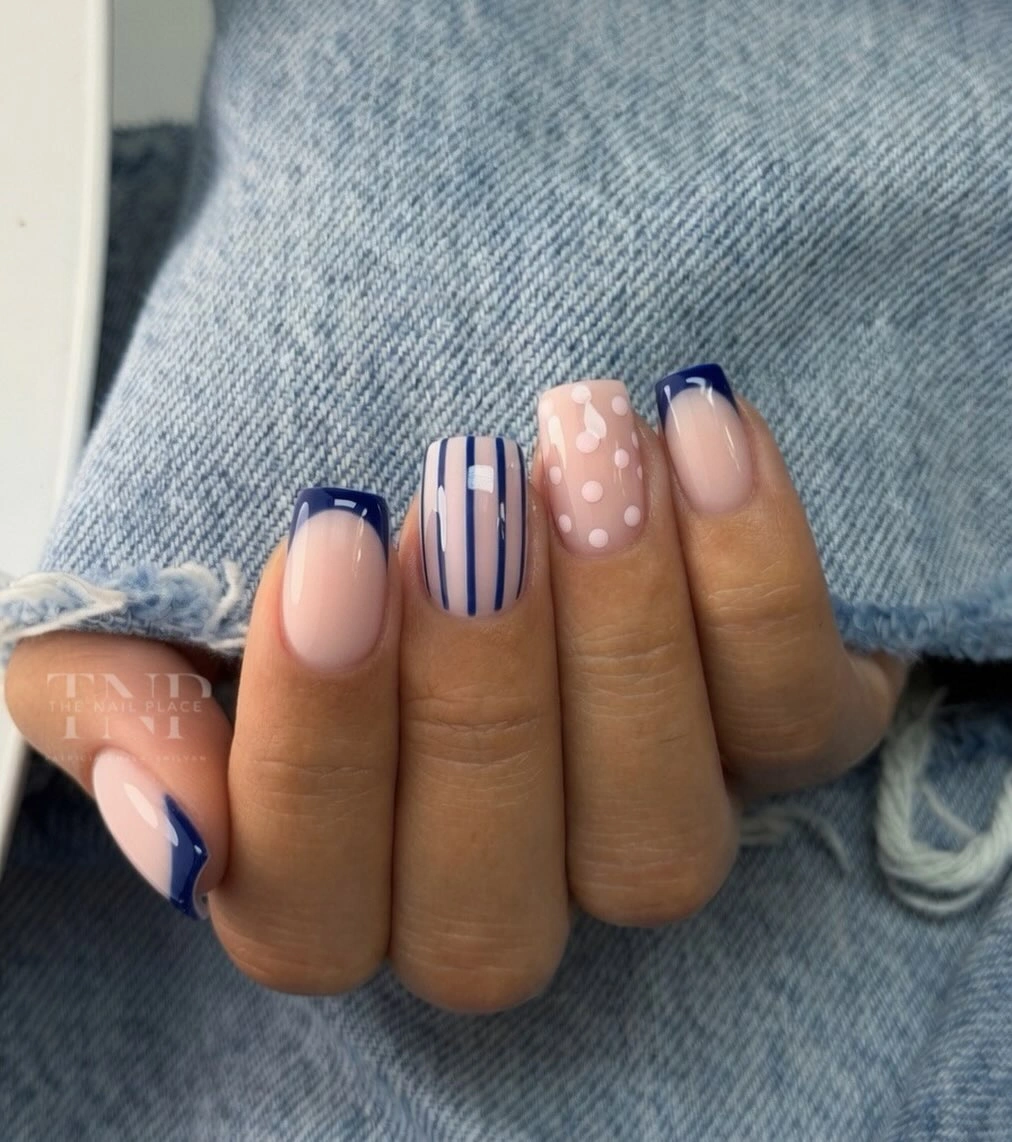
For an appointment, keep the navy French on all nails and choose either the striped accent or the dotted accent, not both. A shorter squoval will handle the plain edge easily, while the tiny checks may need to become two simple lines. The design can also be warmed with brown or softened with a dusty blue if navy feels too crisp beside your fall wardrobe.
Small motifs need enough room to stay distinct, so this is a set where editing improves clarity. When stripes, dots, and checks are all repeated heavily, the base can disappear and the manicure loses its airy rhythm. Keep one accent pattern visually dominant, then let the other detail appear as a quiet echo rather than giving every nail an equal assignment.
Polka dots and outlined white tips
A pale pink base supports white French tips, dark outlines, and small dots that vary from nail to nail. The pattern is graphic but not loud because the colors stay close to black, white, and blush, and the medium square silhouette keeps the details orderly. This is a good bridge between a traditional French and a more illustrated set when you want a little personality without a full palette change.
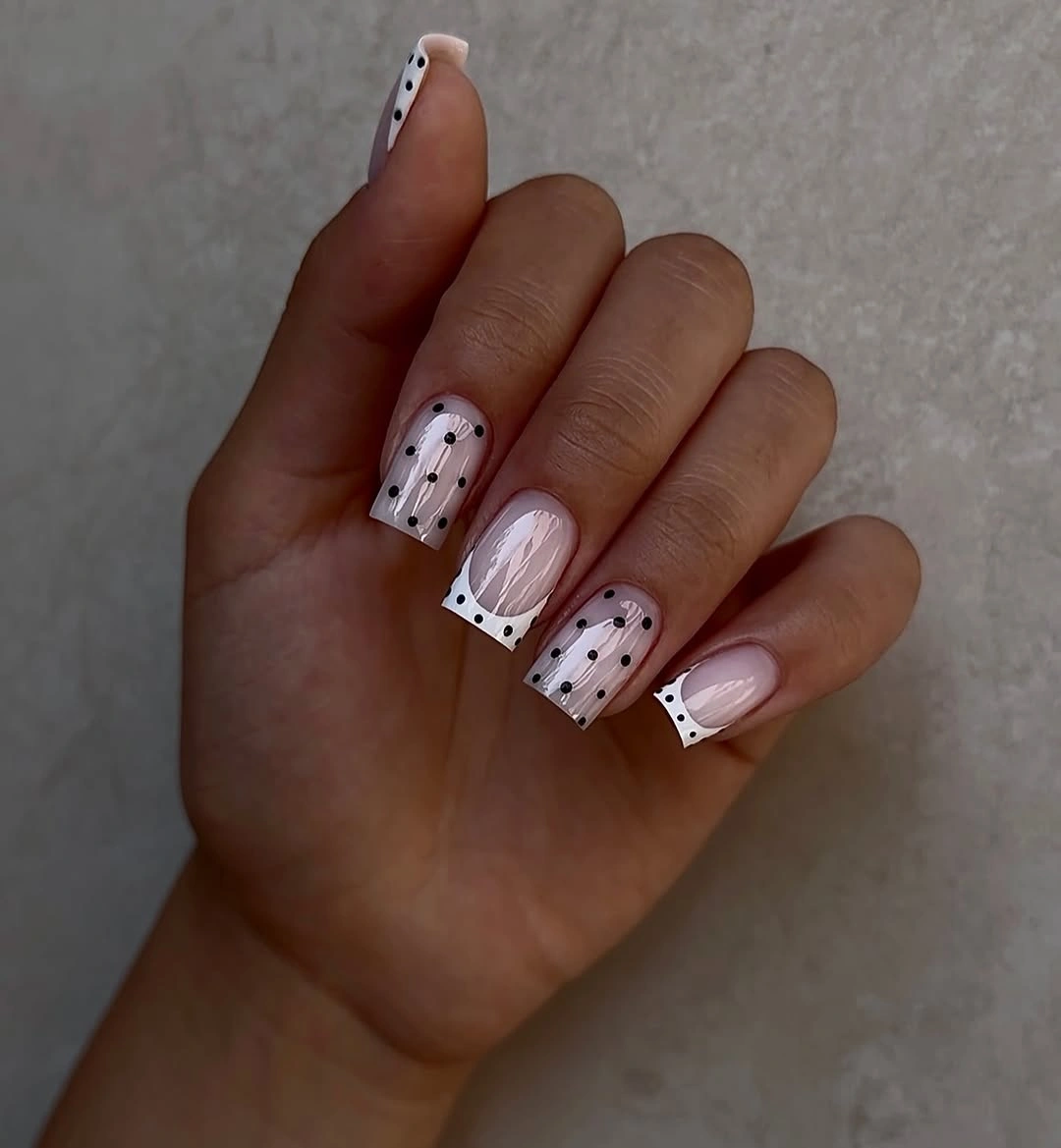
Use the dotted detail on two fingers and let plain white tips carry the rest if the full pattern feels too busy. A soft pink base can be made slightly deeper for fall, while the black outline can become brown for a gentler contrast. Keep the dots small and spaced so the nail still reads as a French manicure from a normal conversational distance.
The practical issue is surface area. Small dots and thin outlines can lose definition if the nail is cut much shorter or the base becomes too opaque, so simplifying the motif is wiser than squeezing it into a smaller space. The set is strongest when the pale center remains visible and the black marks act as punctuation, not a second solid color.
Layered dark tips on a long almond
These long almond nails use a pale pink base as breathing room for white tips, dark brown-black edges, and small reflective accents. The lines stack near the free edge, creating a layered border that feels more decorative than a single French while still leaving the center open. The almond silhouette makes the layers look elongated, so the detail reads as elegant rather than blocky.
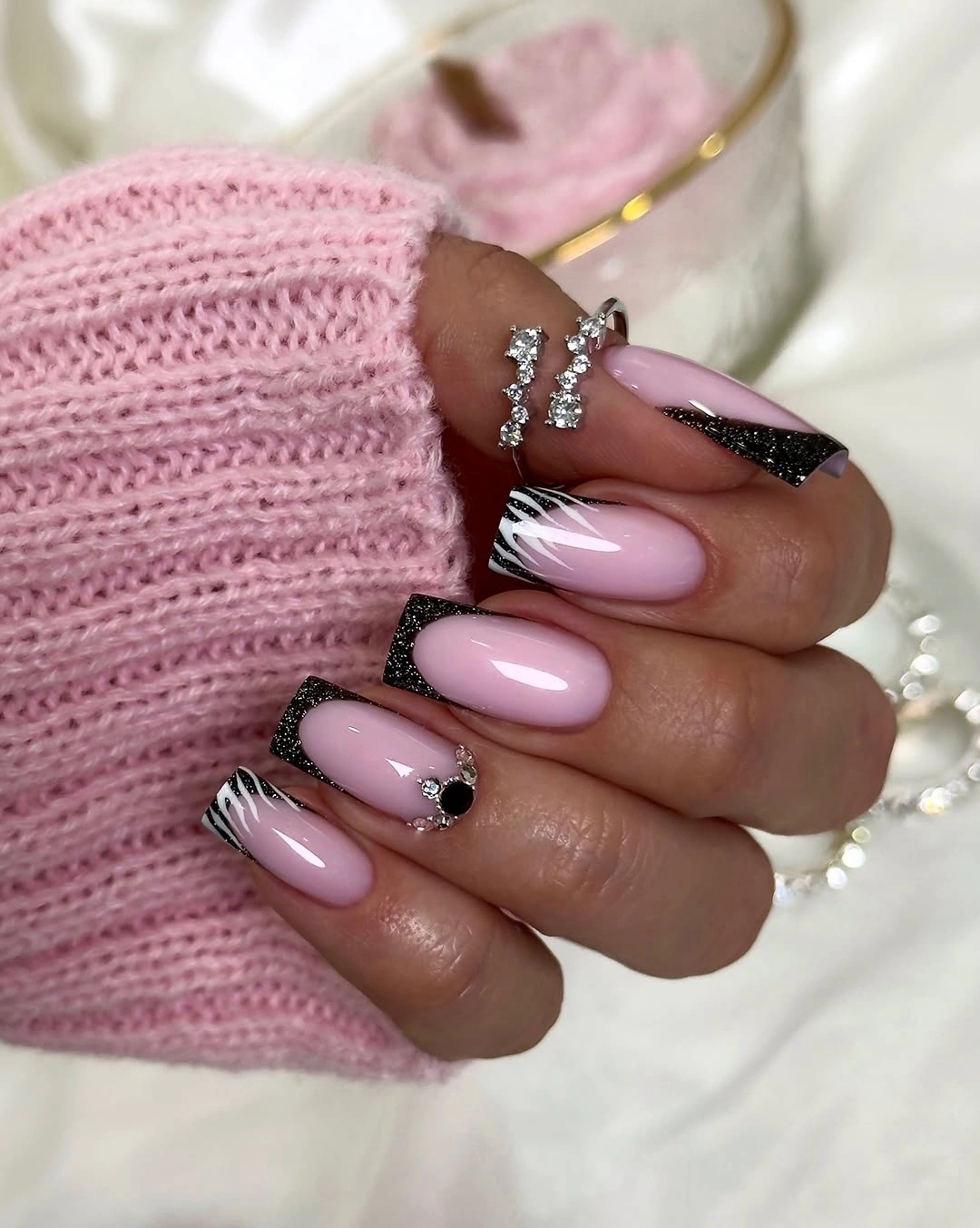
On a shorter almond, keep the white base edge and move the dark line to only two accent nails. You can also place the darkest detail on the outer corner of the tip so the eye still follows the length. If your style leans softer, replace the near-black tone with brown while keeping the thin line that separates the layers.
Layered edges require restraint because equal-width lines can quickly crowd one another. The long shape gives the design its graceful spacing, but it also means grow-out will be visible as the border moves away from the fingertip. This suits someone who enjoys precise detail and regular maintenance; a plain French will be more forgiving if appointments are irregular.
Black French tips with a warm contour
The sheer nude base here is almost as important as the black French tip, because the open center keeps the strong edge from feeling heavy. A narrow warm metallic-looking contour follows parts of the border and adds a small glow without competing with the black. The long almond shape stretches the contrast into a clean line, making the manicure feel sharp while still leaving plenty of skin-toned space.
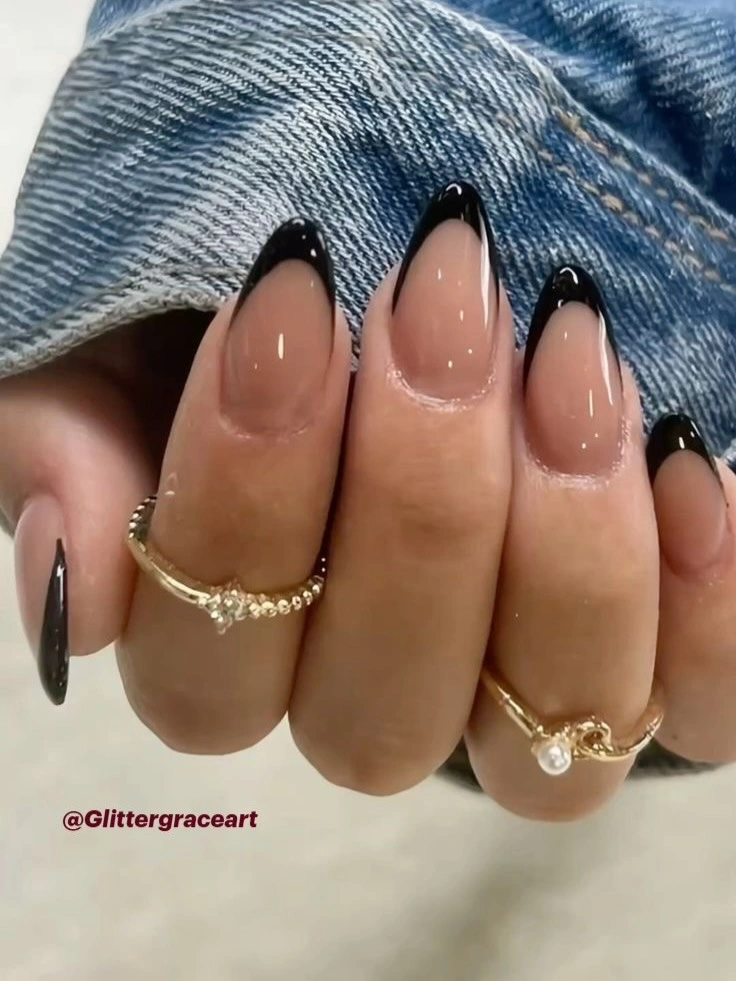
For a softer fall adaptation, use espresso brown instead of black and keep the warm line on the middle or ring finger. A shorter almond will look balanced with a thinner tip, while a squoval will make the same color pairing feel more architectural. The design does not need glitter or extra art; its impact comes from the dark border and the empty center working together.
High contrast makes the manicure easy to read and easy to notice when the edge grows out. That is the main limitation, especially if you prefer low-maintenance color. The warm contour can also become too much beside bold rings, so choosing either the line or the jewelry as the main shine will keep the hand from looking overloaded.
Floral details on a short white French
Short square nails make the white French tip feel practical, while tiny floral or illustrated accents give selected fingers a more personal note. The sheer pink base stays visible around the marks, and the small warm lines add interest without turning the set into a full pattern. The proportion is especially useful for someone who likes nail art but wants the shape to remain compact and easy to live with.
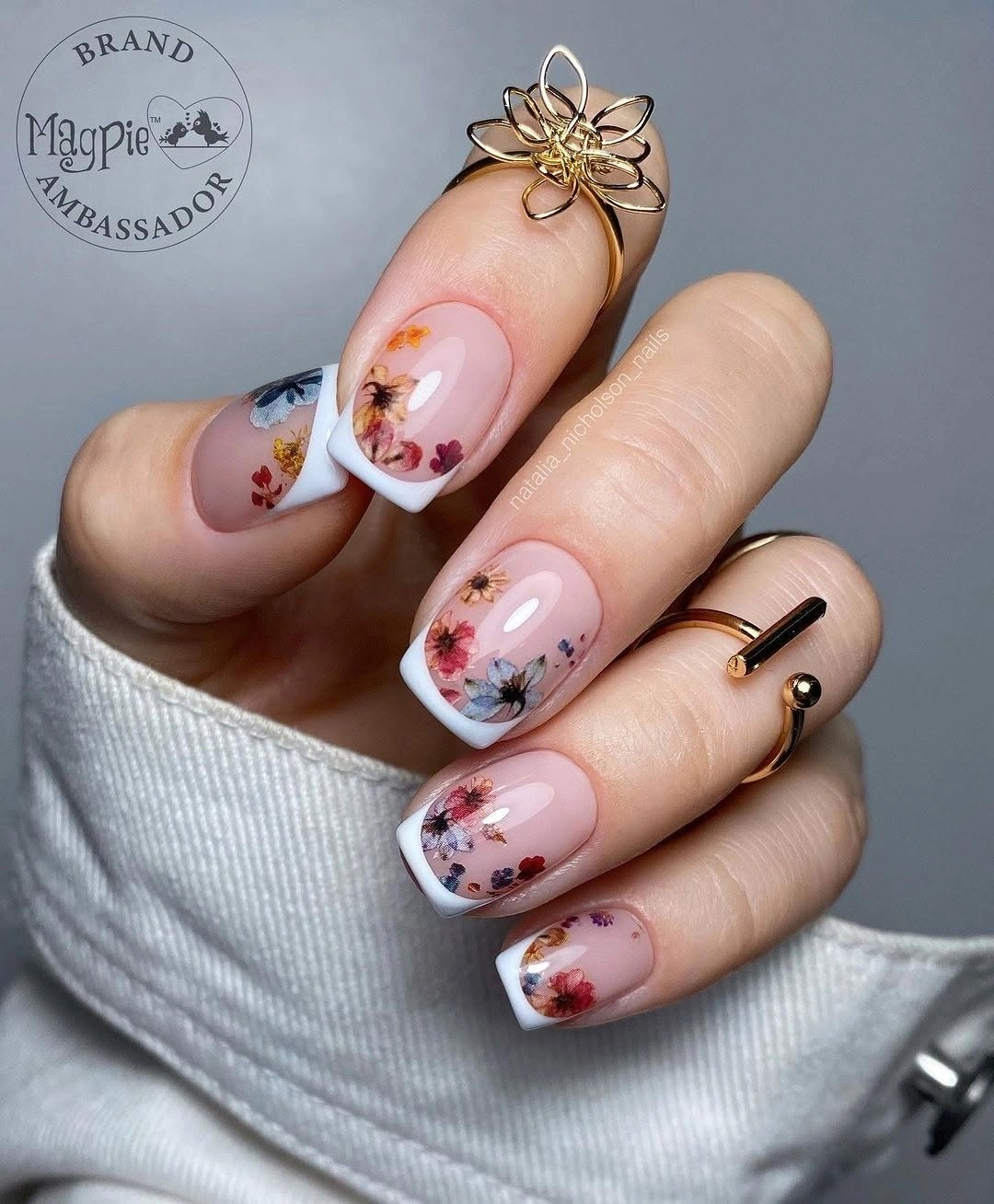
Keep the flowers on the ring fingers and use plain white tips elsewhere when you want the cleanest version. You can also swap the tiny warm details for one muted fall shade, but keep the accent small so the short length remains the center of the decision. A short squoval will soften the corners if the square feels too crisp for your hands.
Small illustrations need breathing room and a steady surface, so adding a different motif to every nail may reduce clarity. The design works because the eye finds the flowers as accents, then returns to the simple French edge. It is a practical choice for a reader who wants seasonal interest without relying on long length or a dense finish.
Blue French edges with concentrated sparkle
Long square-to-coffin nails use a nude base and bright cobalt or turquoise tips, then reserve clustered sparkle for two accent nails. That distribution gives the manicure a clear order: blue establishes the repeated edge, while the decorative fingers provide a change in scale. The open nude center keeps the cool color from becoming too intense even though the shape is extended.
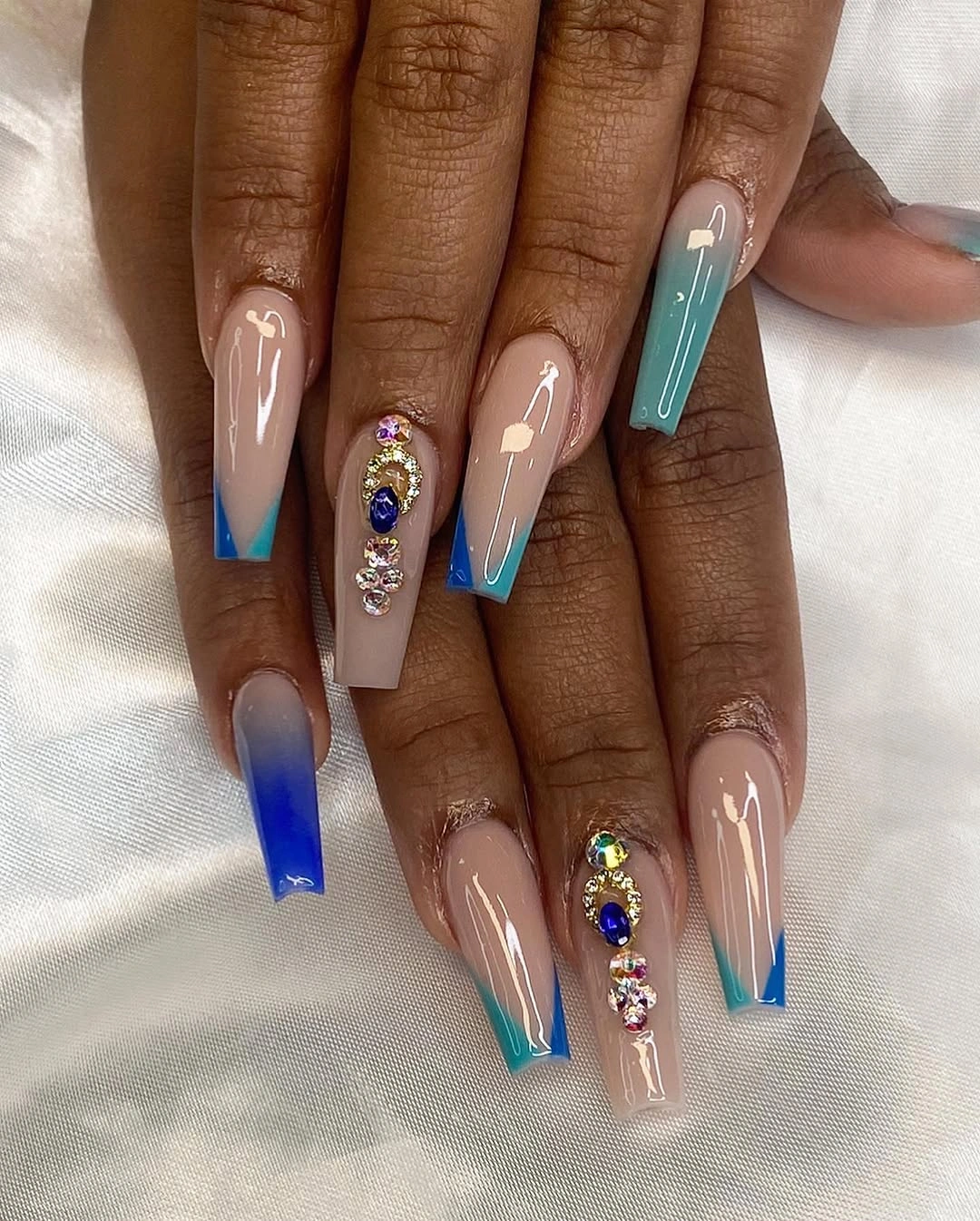
To adapt it for everyday wear, repeat the blue tip across the hand and keep one decorative cluster near the ring finger. A medium square will make the color more practical, but the accent details should be spaced farther apart so they do not compete with the shorter shape. If turquoise feels too bright, use a deep navy and keep the same placement.
The plain blue tips are easier to wear than the extra adornment, which makes this a useful set to edit rather than copy wholesale. Sparkle can pull the look toward an event, while the nude base keeps it from becoming fully formal. Watch the balance of rings and other shine; the manicure already has one deliberate focal point and does not need many more.
Muted autumn tips in five different tones
Each medium almond nail carries one muted tip, moving through mustard, burgundy, plum, gray, and brown over a pale base. There are no extra motifs, so the set feels calm even though every finger makes a separate color choice. The softly satin or matte-looking surface also lowers the intensity, letting the fall palette read as a collection of quiet blocks rather than a glossy rainbow.
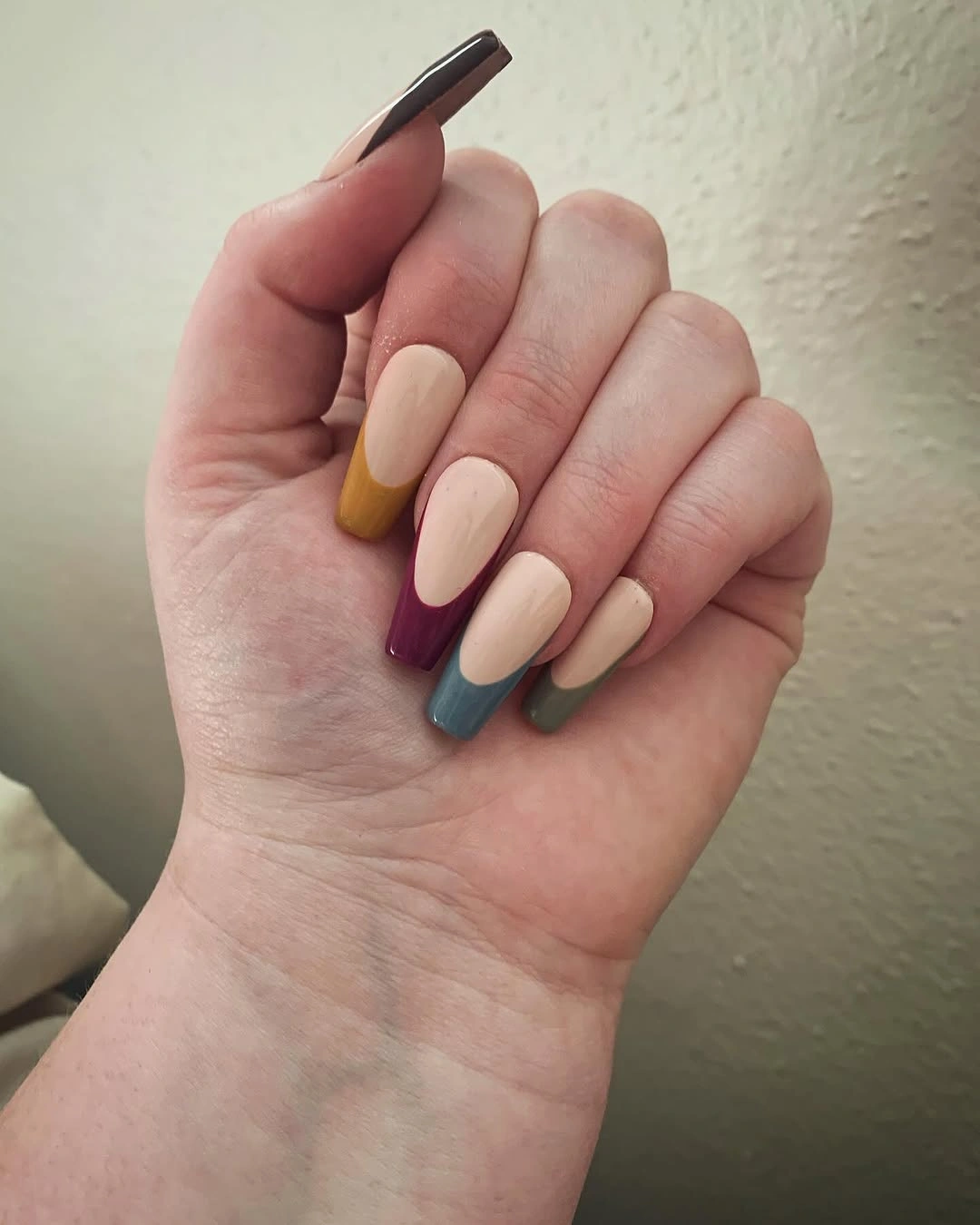
Choose two or three neighboring tones if you want a more edited appointment brief. Mustard and brown will feel warm and grounded, while burgundy and plum create a deeper pairing; gray can act as the neutral pause. A shorter almond can keep the idea intact when the tips remain solid and the base stays light enough for contrast.
The finish is part of the mood, so changing it to high shine will make the same colors appear bolder and less quiet. That is not a problem, but it changes the balance between color and shape. The simple tip placement is forgiving compared with detailed art, while the dark shades still make chips visible, especially on the thumb and index finger.
Black micro-French on a compact square
This short square manicure relies on one narrow black edge against a pale pink base, with a soft pink transition that keeps the contrast from looking harsh. The compact shape makes the black line feel modern and practical, while the lack of extra motifs gives the eye a clean path around each nail. It is a strong choice when the goal is polish with very little visual noise.
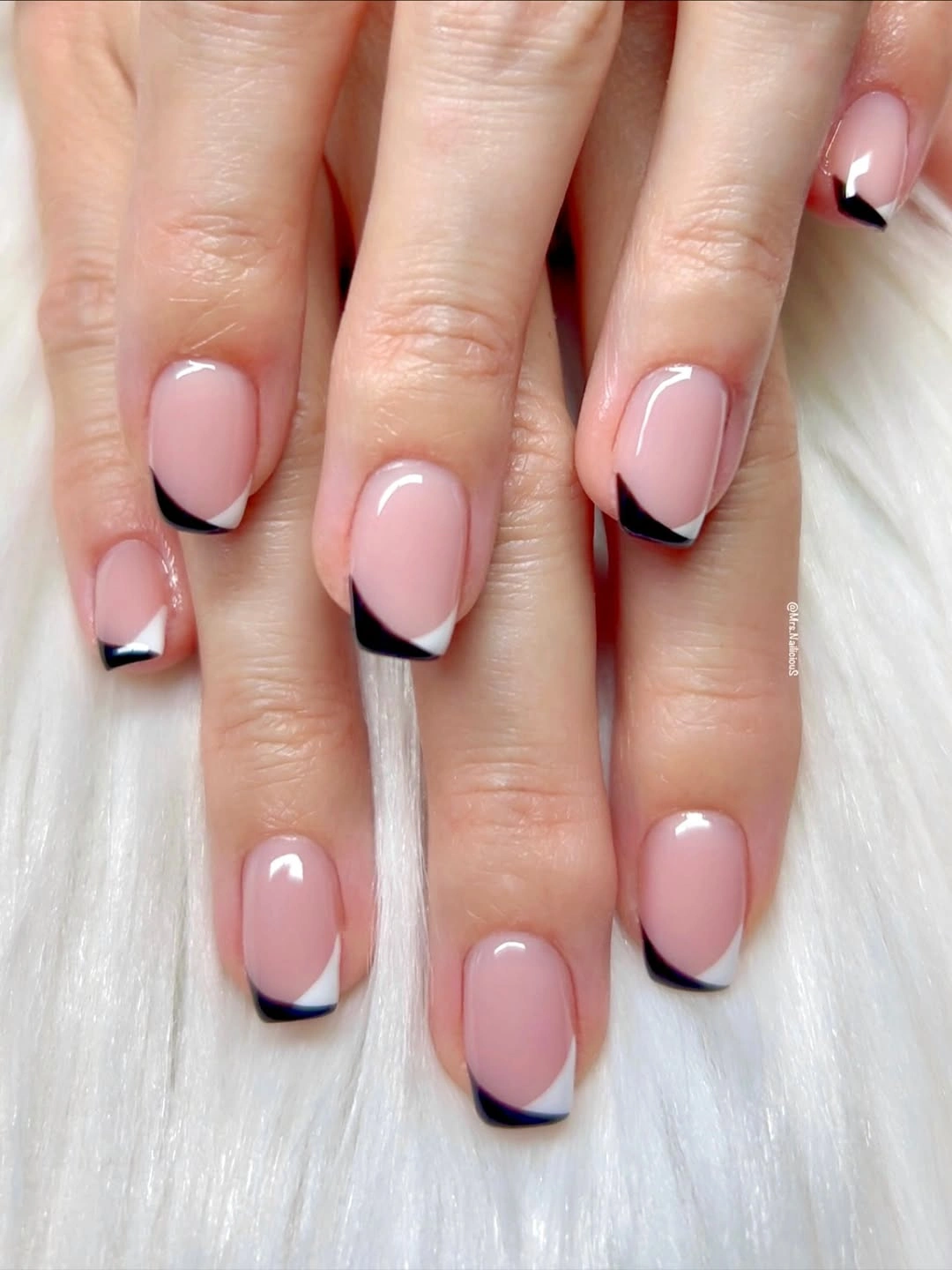
Ask for a micro-French that follows the square corners rather than widening into a full tip. Espresso brown will soften the look for fall, and a single black accent nail can lower the overall contrast if an all-dark edge feels too graphic. The same idea also works on a short oval, where the line will read more delicate and less architectural.
The narrow border rewards consistent shaping, because even a small difference in width can show across a compact hand. It is also easier to maintain than a heavily patterned set, although the black edge will still call attention to wear. Keep the base translucent enough to preserve the open feeling, and the manicure will stay crisp without needing extra decoration.
Tortoiseshell tips on a pointed almond
Warm brown tortoiseshell patches sit at the tips of long almond or stiletto nails, with darker spots and amber highlights contained inside the French area. The sheer nude base leaves the center open, so the pattern feels like a refined border rather than full animal print. The pointed silhouette stretches the irregular marks and gives the warm color a polished fall direction.
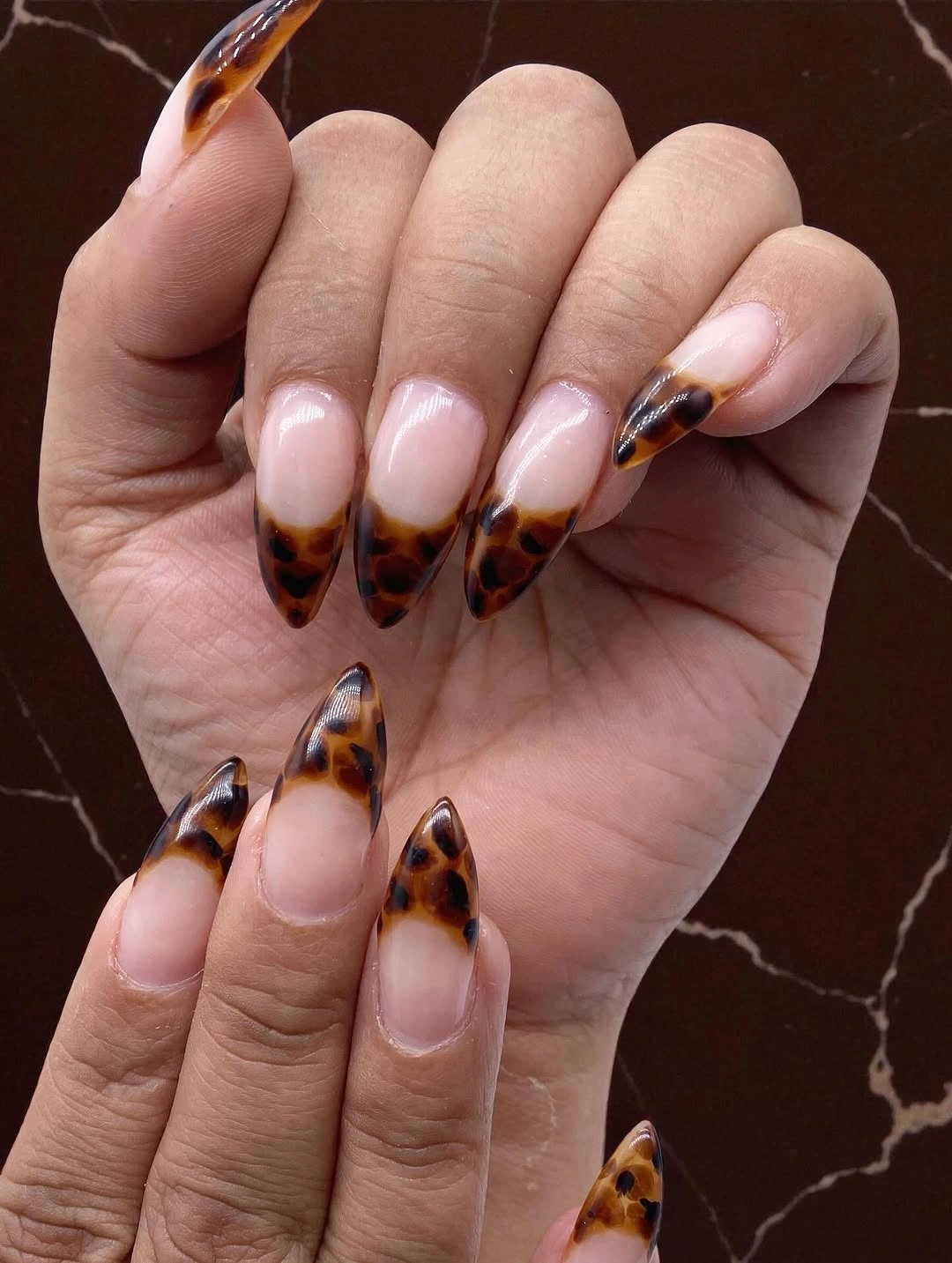
For a more wearable adaptation, keep tortoiseshell on two accent nails and use a solid espresso or caramel tip elsewhere. A shorter almond will need larger, simpler patches so the pattern does not turn into visual speckling. If you prefer a rounded shape, keep the pattern close to the center of the tip and let the pale base remain generous around it.
The design is distinctive but not automatically loud because the warm colors stay close together. Its limitation comes from the pointed length, which makes the border more dramatic and may be less comfortable for hands-on routines. Treat the tortoiseshell as the main accessory and avoid adding several competing prints if you want the manicure to stay composed.
Double-lined neutral tips with gold warmth
The final set returns to a sheer nude center but builds a more detailed French border from white, dark brown, and a fine warm metallic-looking line. Long stiletto almond points make the layered edge feel deliberate, while the open middle keeps the design from becoming fully covered. It is a refined ending because the manicure shows how much impact can come from line placement alone.
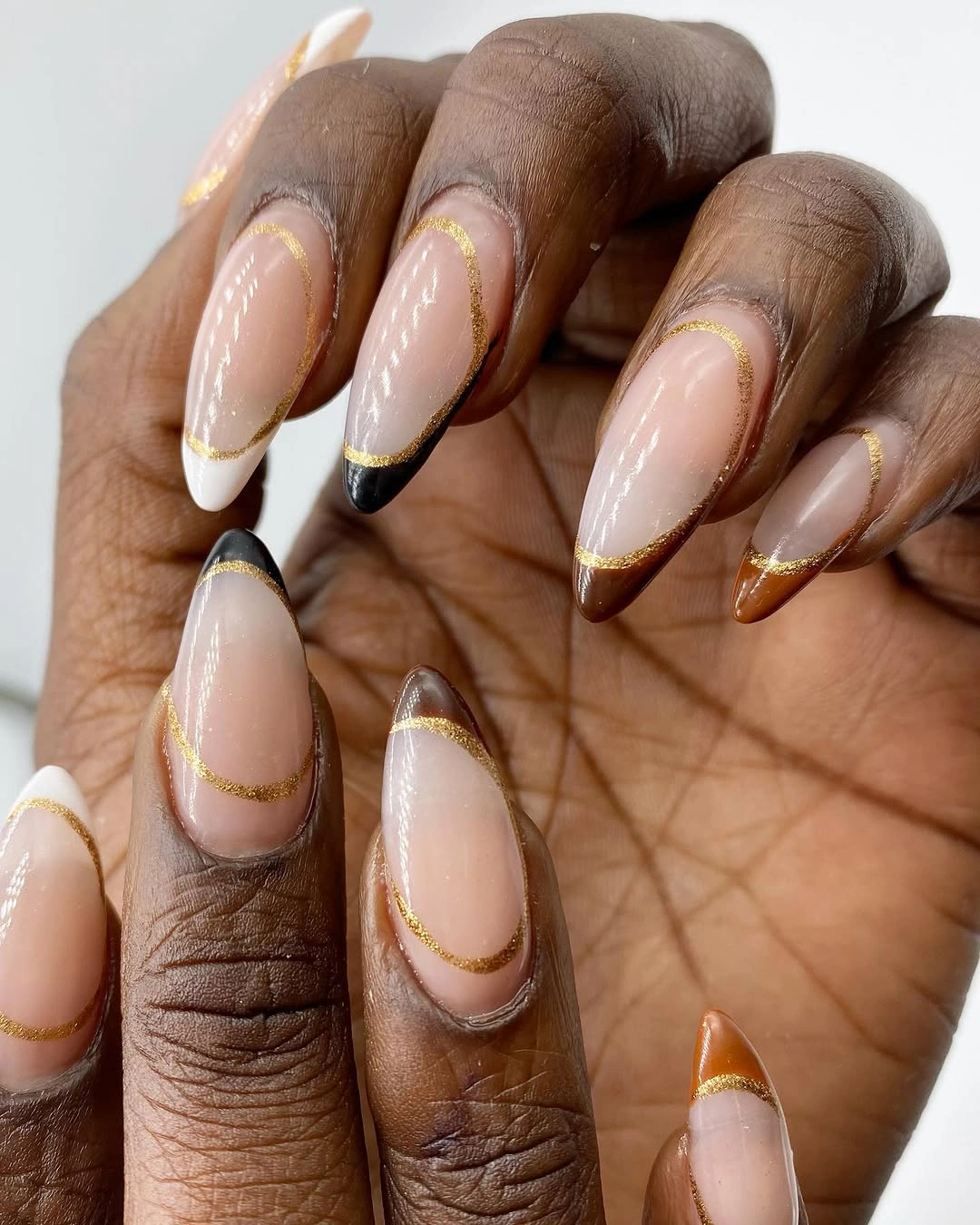
On a medium almond, use one dark line and keep the white edge, then place the warm accent on only two nails. A rounded shape will make the border friendlier, while a sharper almond will preserve more of the original tension. If you are choosing colors in person, compare the dark line against your skin tone so it defines the edge without becoming the whole manicure.
Double outlines are precise and will show spacing changes as the nails grow. That makes this a look for someone who enjoys a crisp appointment result and does not mind refreshing it when the border moves. The payoff is a neutral design with more depth than a basic French, but its restraint depends on stopping before more decoration becomes necessary.