Early winter outfits become easier to compare when you look at how each layer changes the overall shape. Across these 22 looks, long coats, cropped jackets, scarves, hats, wide trousers, jeans, skirts, sneakers, and boots create very different proportions, even when the color palettes stay simple and restrained.
The strongest ideas here come from visible relationships rather than complicated formulas: a scarf can extend the line of a coat, a short jacket can shift attention toward the trousers, and one saturated color can organize an entire outfit. Use these examples to compare scale, contrast, repetition, and balance at a glance.
Long Charcoal Layers With Wide Black Trousers
A charcoal-gray long coat sets the outer line, while a black V-neck layer and very wide black trousers build a darker column underneath. The pale beige scarf breaks that depth near the neckline, and its lighter tone creates a clear pause between the coat, top, and loose trousers without competing with the rest of the outfit.
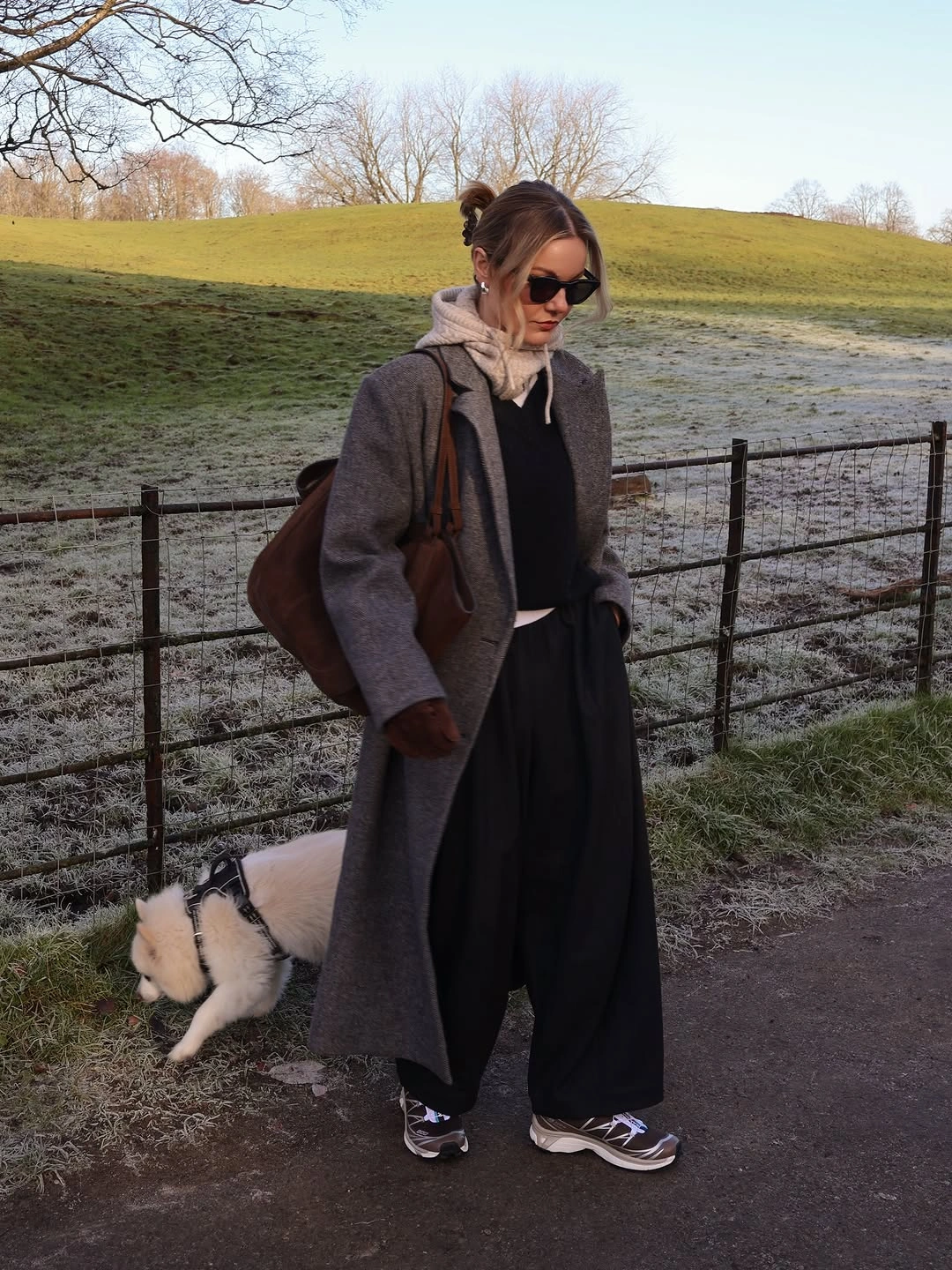
Photo via Instagram: Instagram
The accessories keep the look grounded in a softer, mixed-neutral palette. A brown shoulder bag adds another warm dark tone beside the gray coat, while gray-white sneakers lighten the lower edge and separate the footwear from the black trousers. The result depends more on contrast in value than on a large number of colors.
The most useful detail is the proportion shift between the long coat and the exceptionally wide trousers. The scarf and sneakers add lighter points at opposite ends, so the outfit reads as balanced rather than uniformly dark.
Burgundy Coat Framed by Deep Blue Trousers
This look is organized around a long burgundy coat that repeats its color through several smaller elements. A dark red top keeps the upper half close in tone, while deep blue wide-leg trousers create a strong cool contrast below. Burgundy pointed shoes bring the coat color back at the hem, tying the vertical palette together.
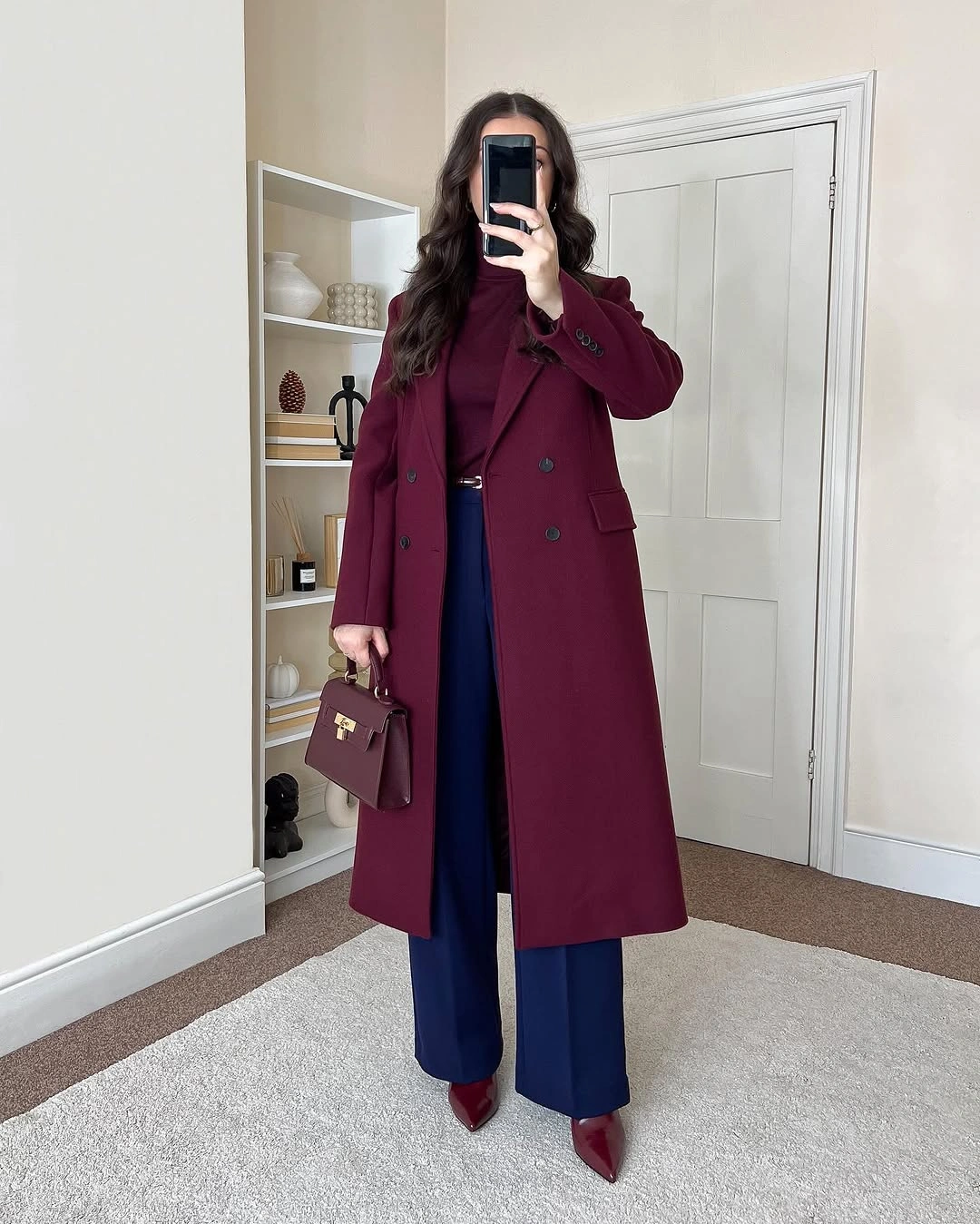
Photo via Instagram: Instagram
The burgundy top-handle bag reinforces the same color family without making the outfit monochrome. Because the trousers are deep blue and visibly wider through the leg, they interrupt the red sequence with a broad contrasting block. The pointed shoes then sharpen the lower line and echo the coat more precisely than a neutral shoe would.
This section shows how repeated color can connect pieces that sit far apart in the silhouette. The coat, bag, top, and shoes form a burgundy framework, while the blue trousers provide the main visual break.
Cream Coat With Bright Denim and Striped Scarf
A long cream textured coat creates a soft outer frame around bright blue jeans, while a multicolor striped scarf introduces several stronger hues close to the center. The jeans remain the clearest single block of color, and chunky sneakers add visual weight at the bottom without repeating the coat's lighter texture or length.
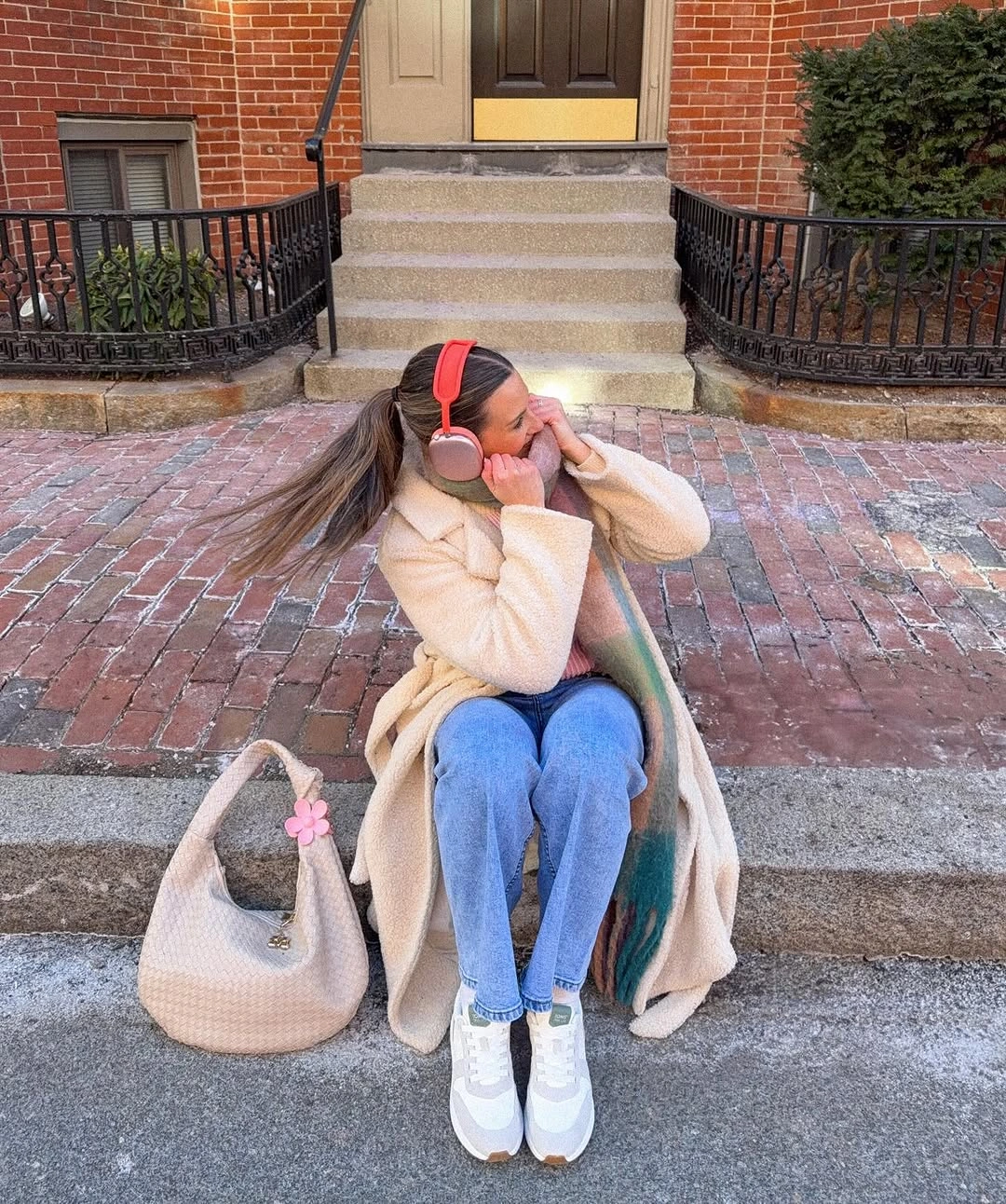
Photo via Instagram: Instagram
Small accessories make this outfit more playful without changing its basic structure. A pale bag stays close to the coat in value, while the earmuffs with a red headband add a compact accent above the scarf. Because the scarf already carries multiple colors, the red detail feels connected to the upper half rather than isolated.
The key comparison is between the long neutral coat and the concentrated color around the scarf, jeans, and headwear. The pale bag and chunky sneakers keep the brighter details from taking over every part of the look.
Tailored Tan Jacket With Oversized Cream Scarf
A tan tailored jacket ends much higher than the relaxed dark blue jeans, creating a compact upper layer over a looser lower half. The oversized cream scarf adds volume around the neckline and extends slightly beyond the jacket's sharper edges. Tan shoes repeat the jacket tone at the bottom, giving the outfit a clear color link from top to toe.
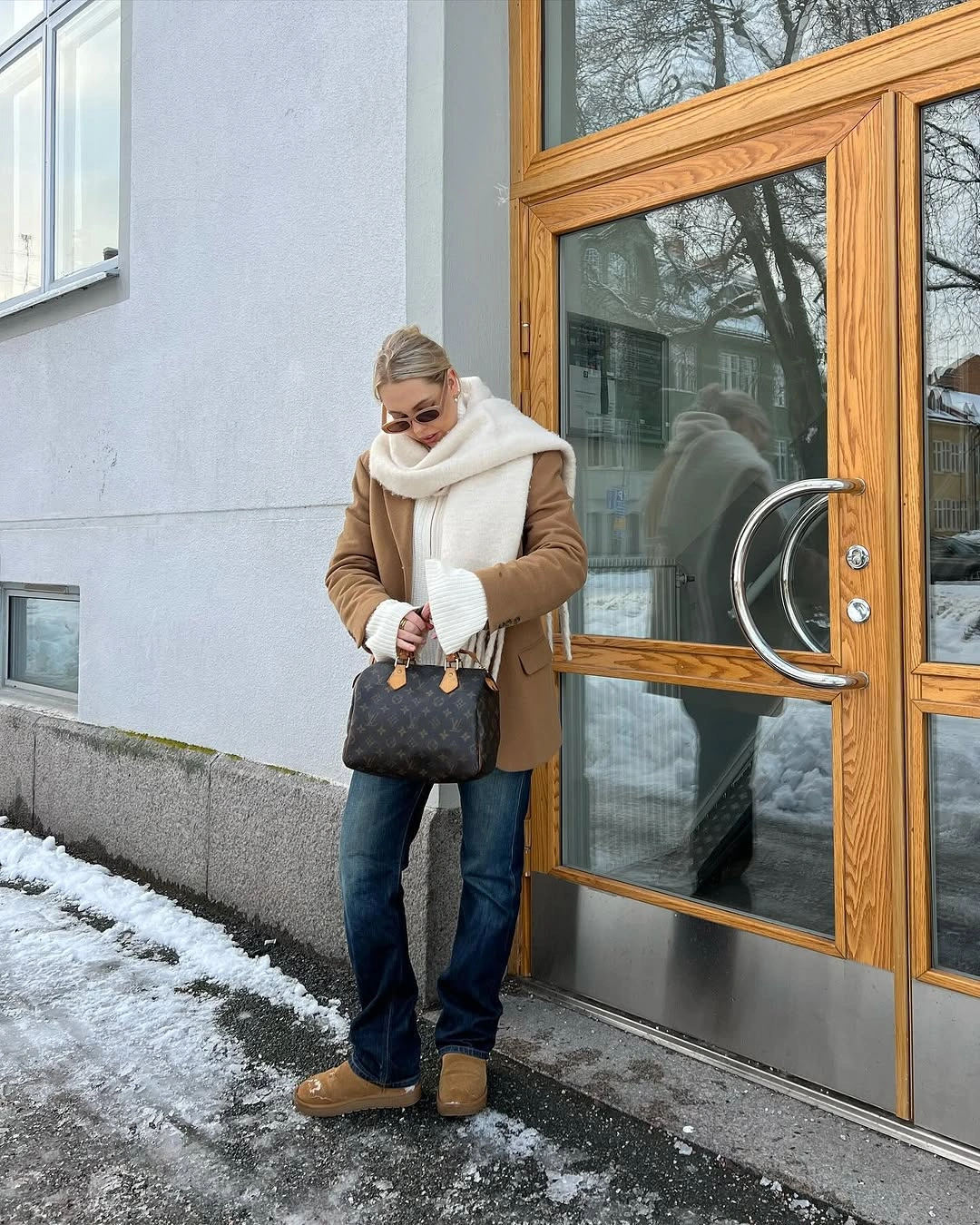
Photo via Instagram: Instagram
The patterned handbag introduces a smaller, denser area of detail beside the otherwise broad blocks of tan, cream, and dark blue. Its scale contrasts with the oversized scarf, so the accessories do different jobs instead of repeating one another. The jeans remain visually relaxed and keep the center of the outfit from feeling too structured.
This outfit is a useful example of balancing tailoring with softer scale. The jacket provides clean structure, while the scarf and relaxed jeans loosen the outline and make the color repetition feel less formal.
Cropped Cream Puffer With Soft Pink Layers
The cropped cream puffer changes the proportions immediately by placing the outer layer high above the pale pink trousers. A long pink scarf extends far below the jacket and repeats the trouser color, creating a continuous soft line through the center. Cream earmuffs return the jacket's light tone near the top of the outfit.
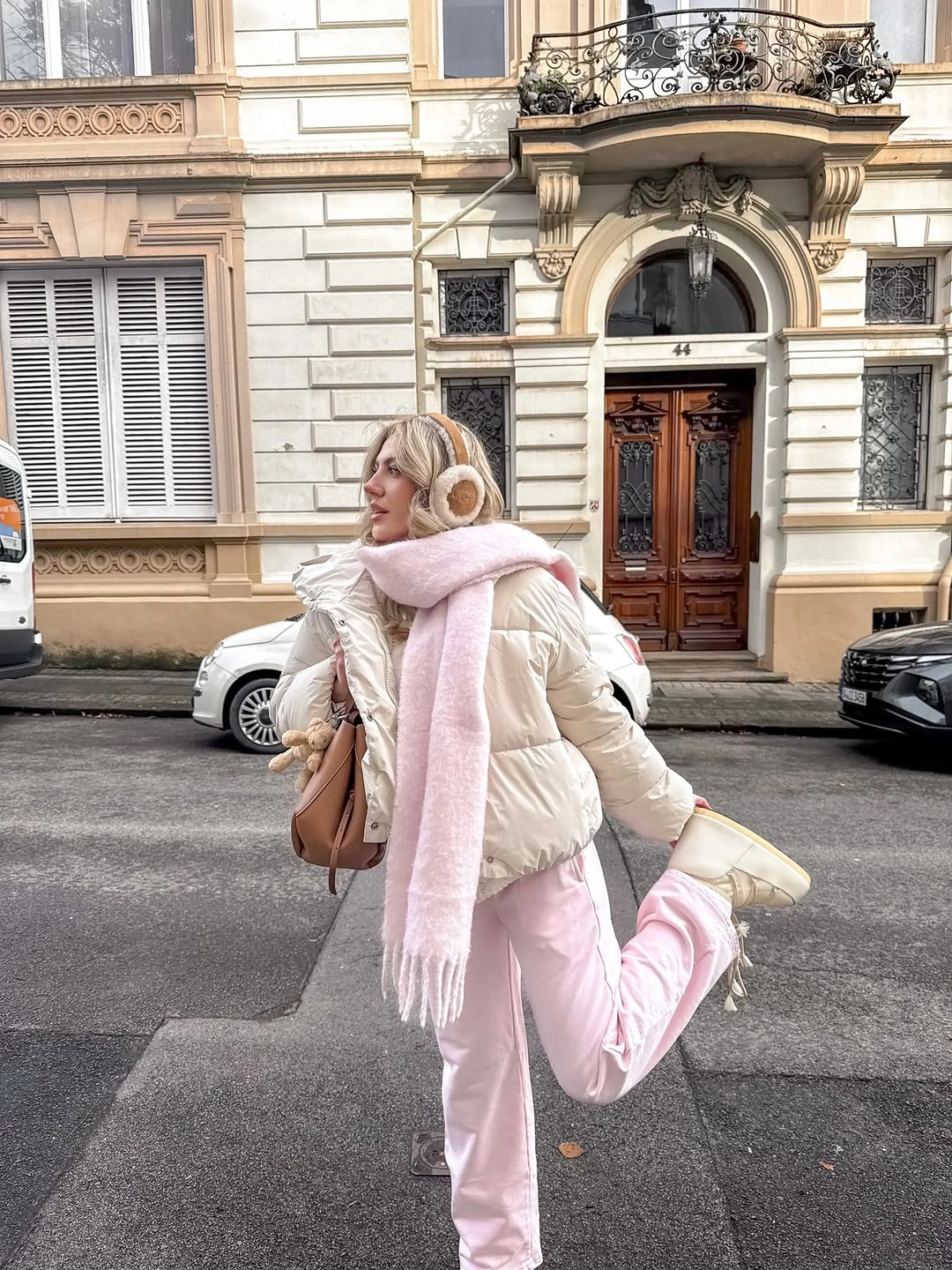
Photo via Instagram: Instagram
Light boots keep the lower edge close to the cream and pink palette, while a taupe shoulder bag adds a muted neutral contrast at the side. The scarf is the strongest linking element because it crosses the cropped jacket and continues toward the trousers. That long vertical strip helps connect pieces with very different lengths and volumes.
The main idea here is not just pastel color, but the contrast between a short jacket and a much longer scarf. Repeating cream near the head and feet also gives the pink center a defined frame without adding another strong hue.
Charcoal Coat With a Vivid Red Scarf
A charcoal coat creates the main dark field of this outfit, with black trousers continuing that depth below. The vivid red scarf interrupts the restrained palette at the neckline and becomes the strongest focal point. Because the surrounding pieces stay dark, the scarf reads clearly without needing another bright element elsewhere.
Photo via Instagram: Instagram
Sleek ankle boots keep the lower portion compact and visually connected to the black trousers. That dark continuity gives the red scarf even more separation from the rest of the look. The combination shows how one saturated accessory can change a mostly charcoal-and-black outfit without altering its simple structure.
The scarf does most of the color work, so the coat, trousers, and boots can remain visually restrained. This is a clear example of using one bright accent to define an otherwise dark outfit.
Toggle-Front Duffle Coat With Straight Jeans
The toggle-front duffle coat gives this look its clearest visual structure, while a thick sweater adds another substantial layer beneath it. Straight jeans keep the lower half comparatively simple, so the coat closures and layered upper section remain easy to read. The result depends on clear separation between outerwear, sweater, and denim.
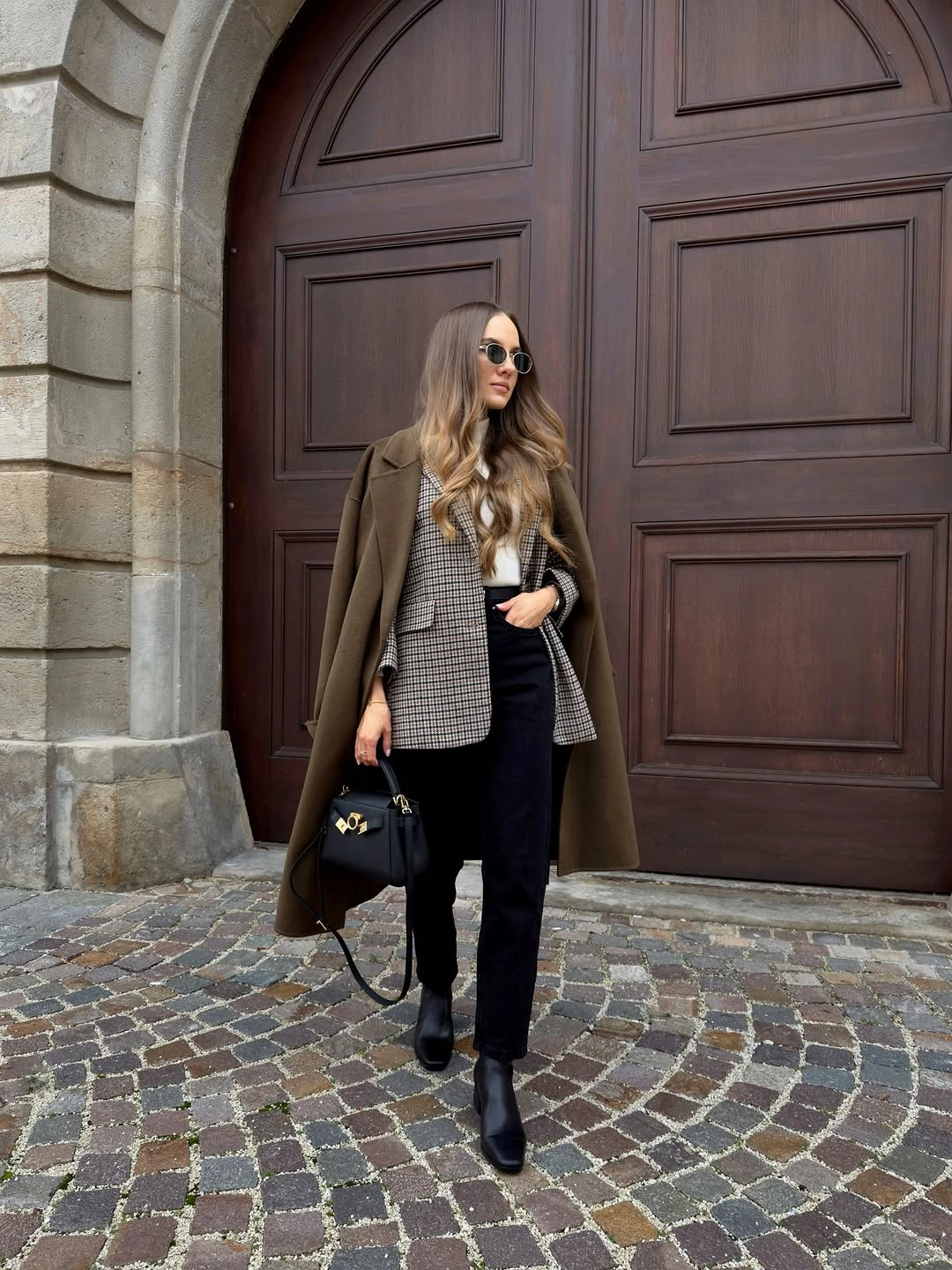
Photo via Instagram: Instagram
Practical boots finish the outfit with a grounded shape that sits naturally beneath the straight jeans. Their straightforward line supports the heavier upper layers rather than competing with them. This makes the outfit useful for comparing how a detailed coat can carry most of the visual interest while the lower half stays restrained.
The toggle closures give the outer layer a recognizable rhythm that distinguishes it from plainer coats. Straight jeans and practical boots provide a simpler base, allowing that coat detail to remain central.
Long Sleeveless Vest With Tailored Trousers and Loafers
A sleeveless long vest forms the strongest vertical line here, leaving the wool sweater fully visible through the arms and neckline. Tailored trousers continue the clean shape below without adding another bulky layer. The contrast between the long open-sided outer piece and the sweater gives the outfit a distinct layered structure.
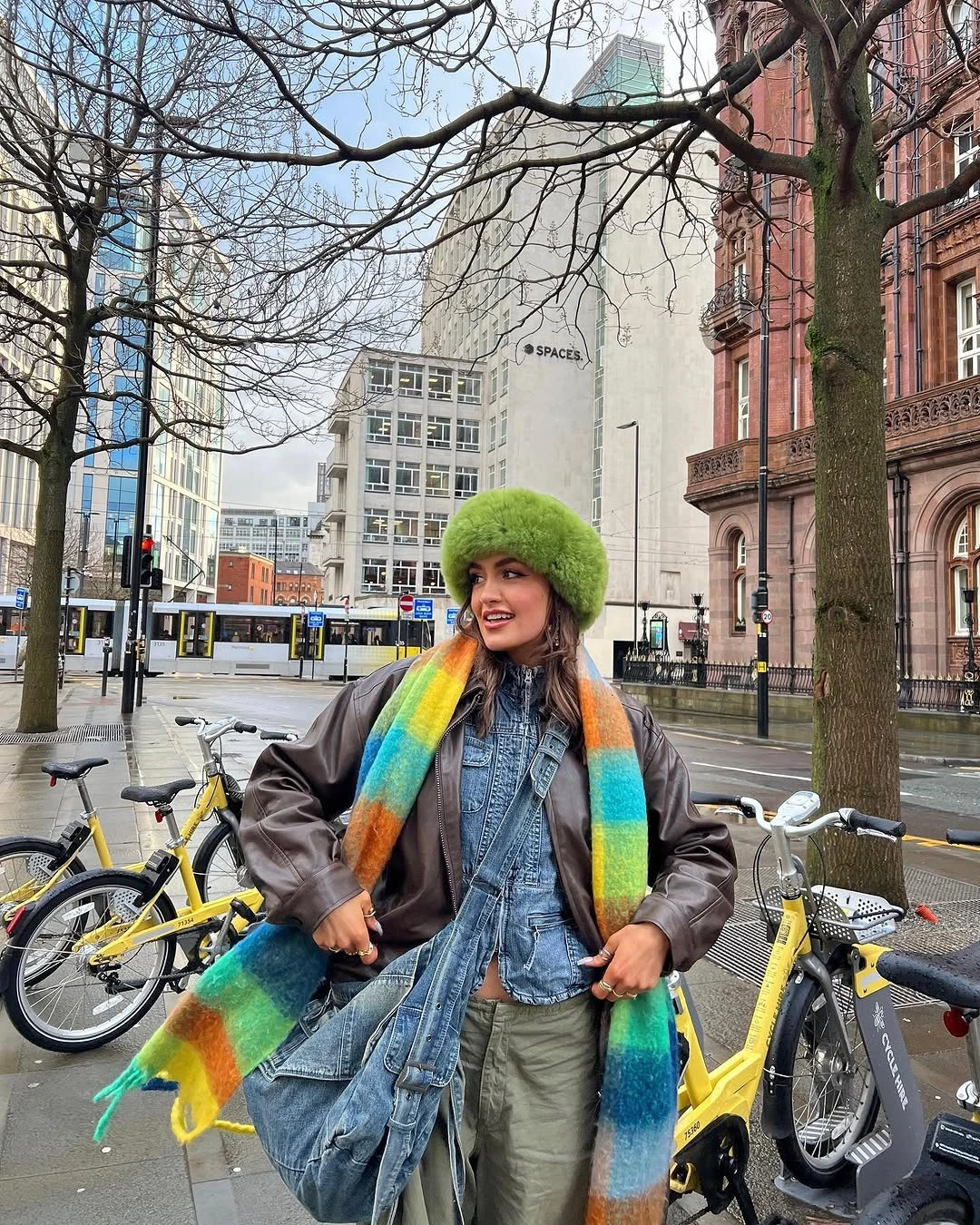
Photo via Instagram: Instagram
Loafers introduce a low, streamlined finish beneath the tailored trousers, which keeps the lower edge visually neat. Because the vest is sleeveless, the sweater becomes part of the outer silhouette instead of disappearing beneath a coat. That relationship makes the layering especially clear and easy to compare at a glance.
The sleeveless construction changes how the layers overlap, since the sweater remains visible across more of the outfit. The tailored trousers and loafers then reinforce the cleaner lines established by the long vest.
Checked Coat With Neutral Sweater and Blue Denim
The checked coat supplies the dominant pattern, while a neutral sweater keeps the layer beneath visually quiet. Blue denim adds a familiar block of color below the patterned outerwear, giving the outfit a clear division between print and solid pieces. The coat remains the focal point because the surrounding elements avoid competing patterns.
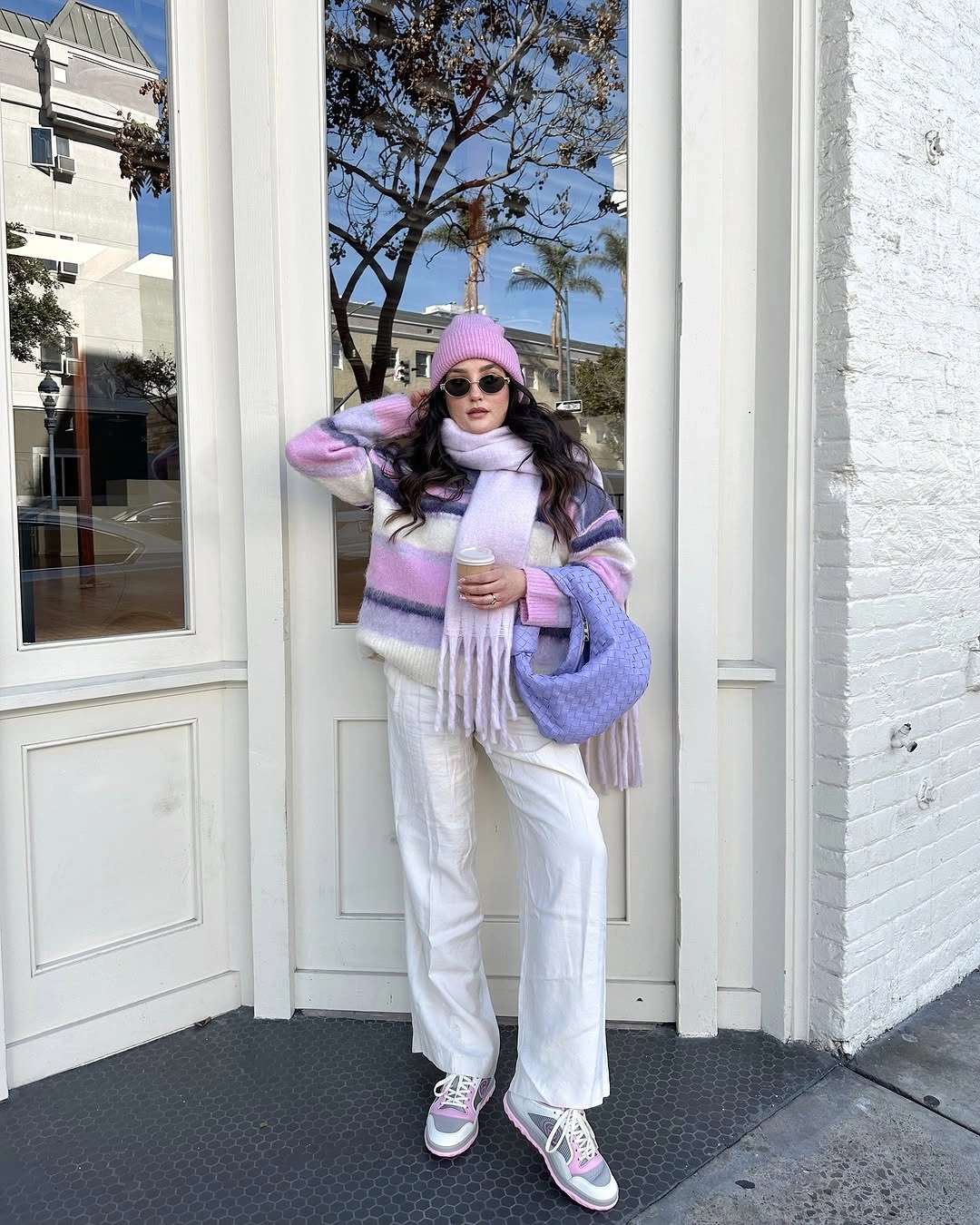
Photo via Instagram: Instagram
Leather boots bring a darker, more defined finish to the blue denim and help anchor the lower half. Their solid appearance contrasts with the checked coat without adding another graphic element. This arrangement shows how patterned outerwear can stand out most clearly when the sweater, denim, and footwear stay comparatively straightforward.
Pattern is concentrated almost entirely in the coat, which gives the outfit a clear visual hierarchy. The neutral sweater, blue denim, and boots support that focal point rather than creating several competing areas of detail.
Light Sweater With Midi Skirt and Dark Tights
A light sweater brightens the upper half, while the midi leather skirt creates a darker, more continuous shape below. Opaque tights extend that dark section past the skirt hem, so the change from sweater to skirt becomes the main contrast. The outfit relies on a simple split between a pale top and a deeper lower half.
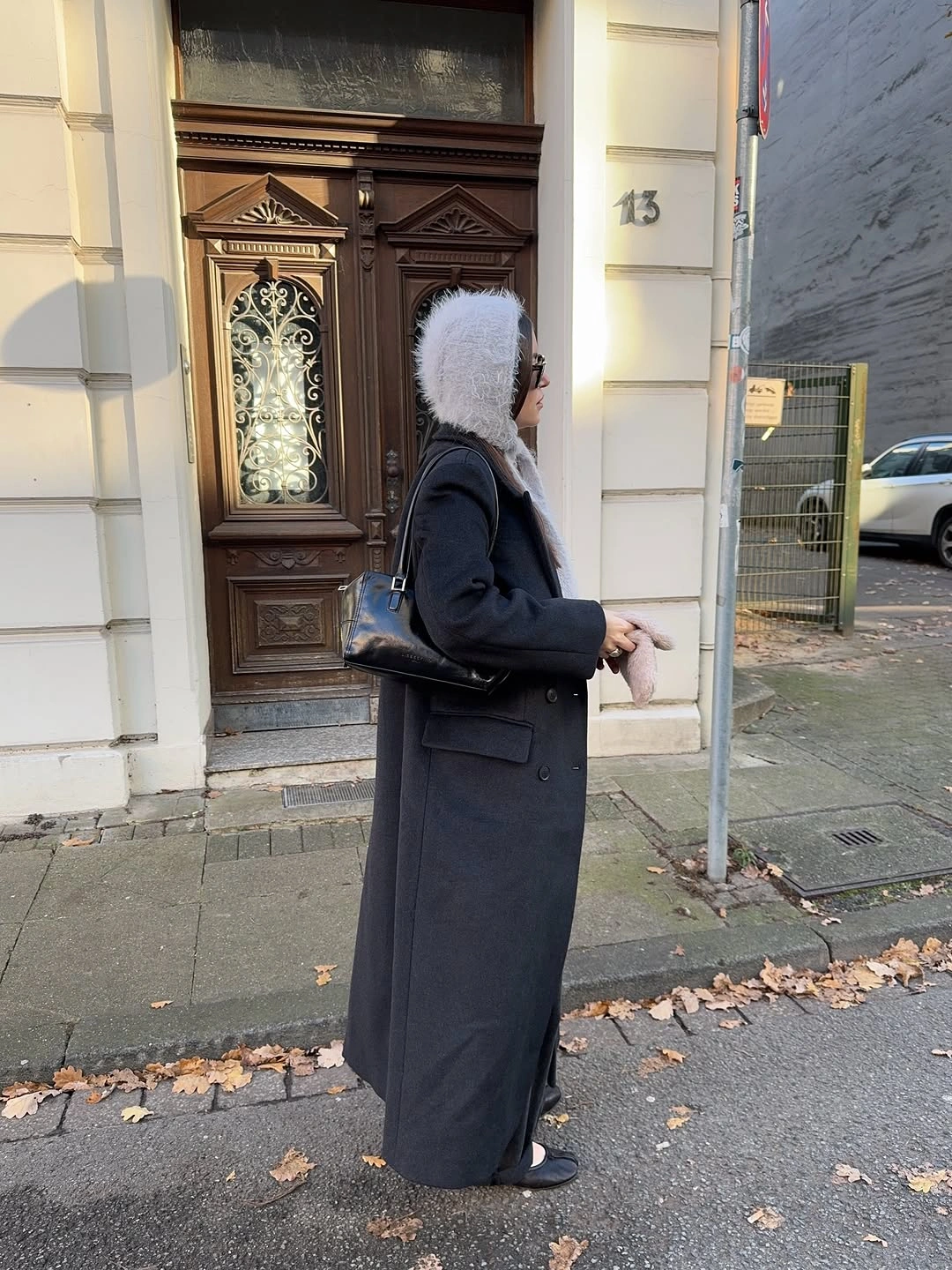
Photo via Instagram: Instagram
Boots continue the darker line established by the midi skirt and opaque tights, giving the lower portion a connected appearance. With the light sweater kept visually separate above, attention stays on the contrast between the pale upper layer and the deeper skirt, tights, and footwear. The result is direct and tightly organized.
The midi hem creates an important break before the tights and boots continue the darker palette toward the floor. Keeping the sweater lighter makes that layered lower section especially easy to distinguish.
Structured Blazer Beneath a Long Wool Coat
A structured blazer establishes the first sharp layer, while a long wool coat extends the silhouette well past it. Tailored trousers continue the controlled lines below, creating a clear progression from shorter inner structure to longer outerwear. The layered lengths make the upper half feel deliberately built rather than visually flat.
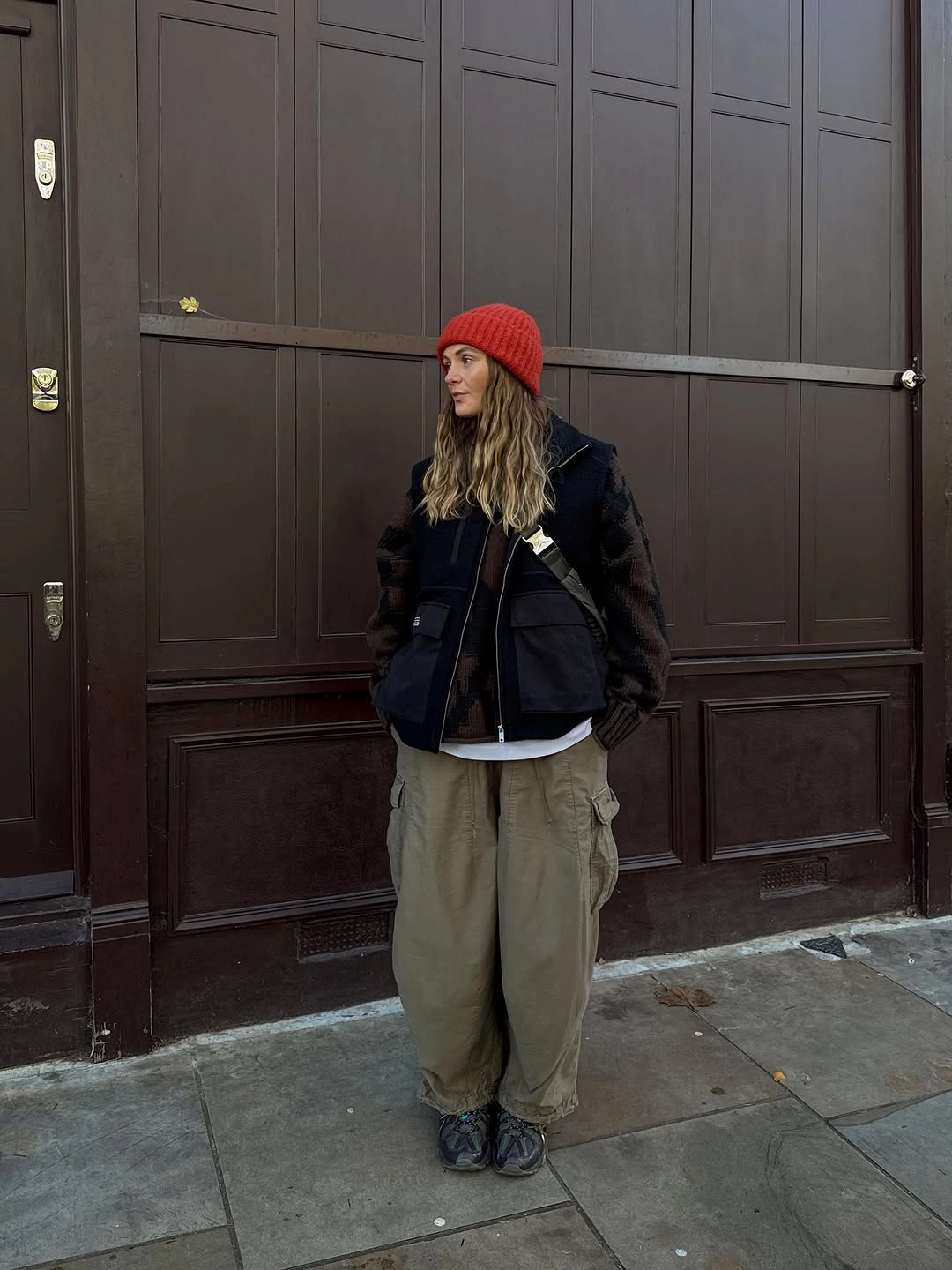
Photo via Instagram: Instagram
Loafers keep the finish low and streamlined beneath the tailored trousers, which lets the coat and blazer remain the dominant shapes. Their compact profile also prevents the lower half from becoming too heavy. The outfit works through repetition of clean edges, with each piece contributing to one continuous, polished outline.
The key idea is the length contrast between the blazer and the coat. Tailored trousers and loafers carry the same precise geometry downward, connecting the layered upper half to the cleaner lower silhouette.
Denim Jacket Layered Under a Puffer
A blue denim jacket sits visibly beneath the puffer, creating a strong contrast between a shorter inner layer and a fuller outer shell. Dark jeans extend the deeper tones through the lower half, while the blue denim at the center adds a distinct break in texture and color. The layering reads clearly because each piece keeps its own edge.
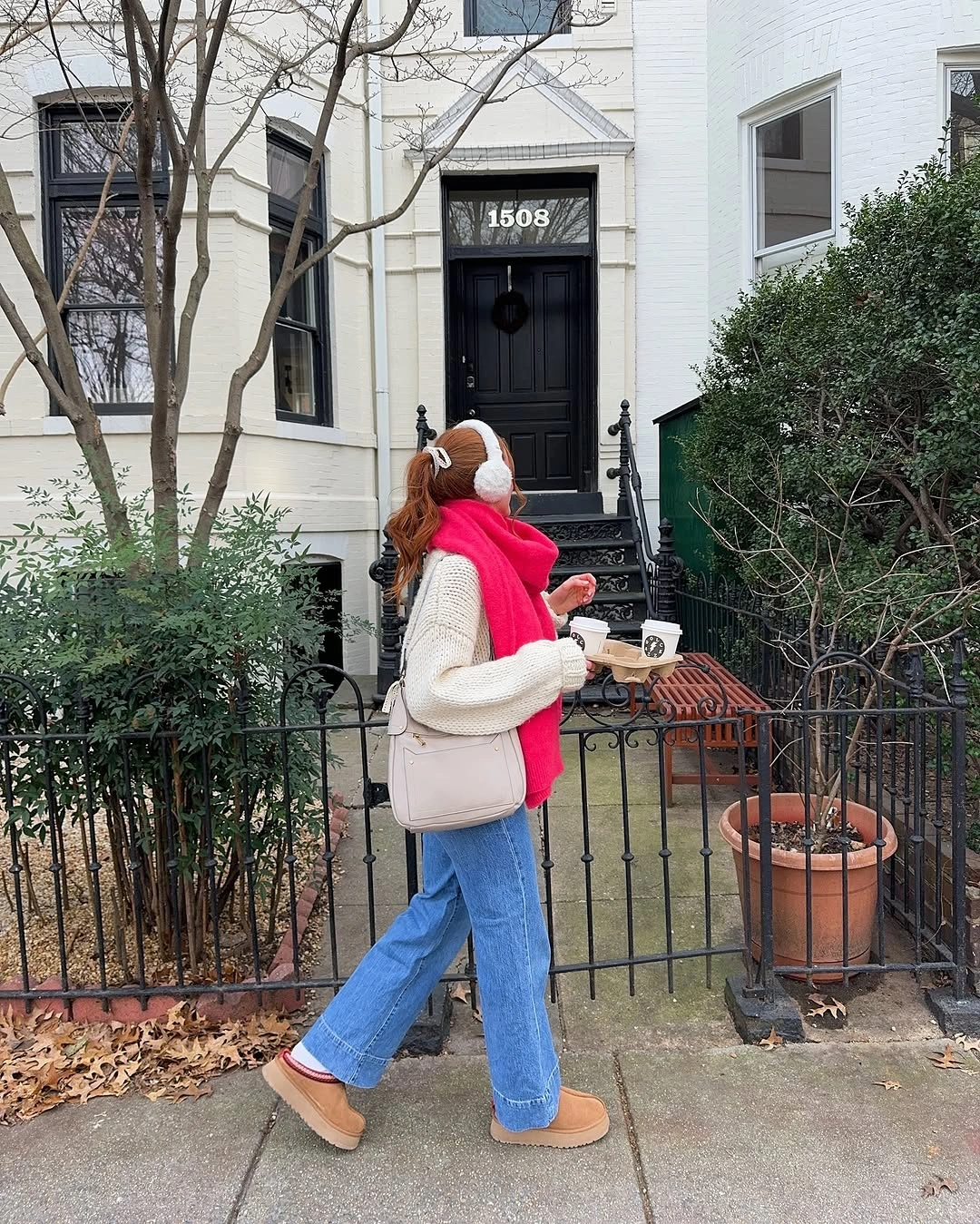
Photo via Instagram: Instagram
Sneakers give the outfit a lighter, more casual finish and keep the lower line from feeling too dense beside the puffer and dark jeans. Their simpler shape leaves the jacket-over-jacket combination as the main visual idea. The strongest detail is the exposed denim layer, which makes the outerwear feel intentionally stacked rather than singular.
This is one of the clearest double-outerwear combinations in the group. The exposed denim creates an intermediate band between the puffer and dark jeans, while the sneakers establish a lighter endpoint below.
Waist-Defined Coat With Coordinated Boots and Tonal Layers
A waist-defined coat gives this outfit its strongest shape, narrowing the middle before the line opens again toward the hem. Coordinated boots repeat the coat's tonal direction lower down, while the minimal bag stays visually quiet. The result is a restrained palette in which proportion and repetition matter more than contrast.
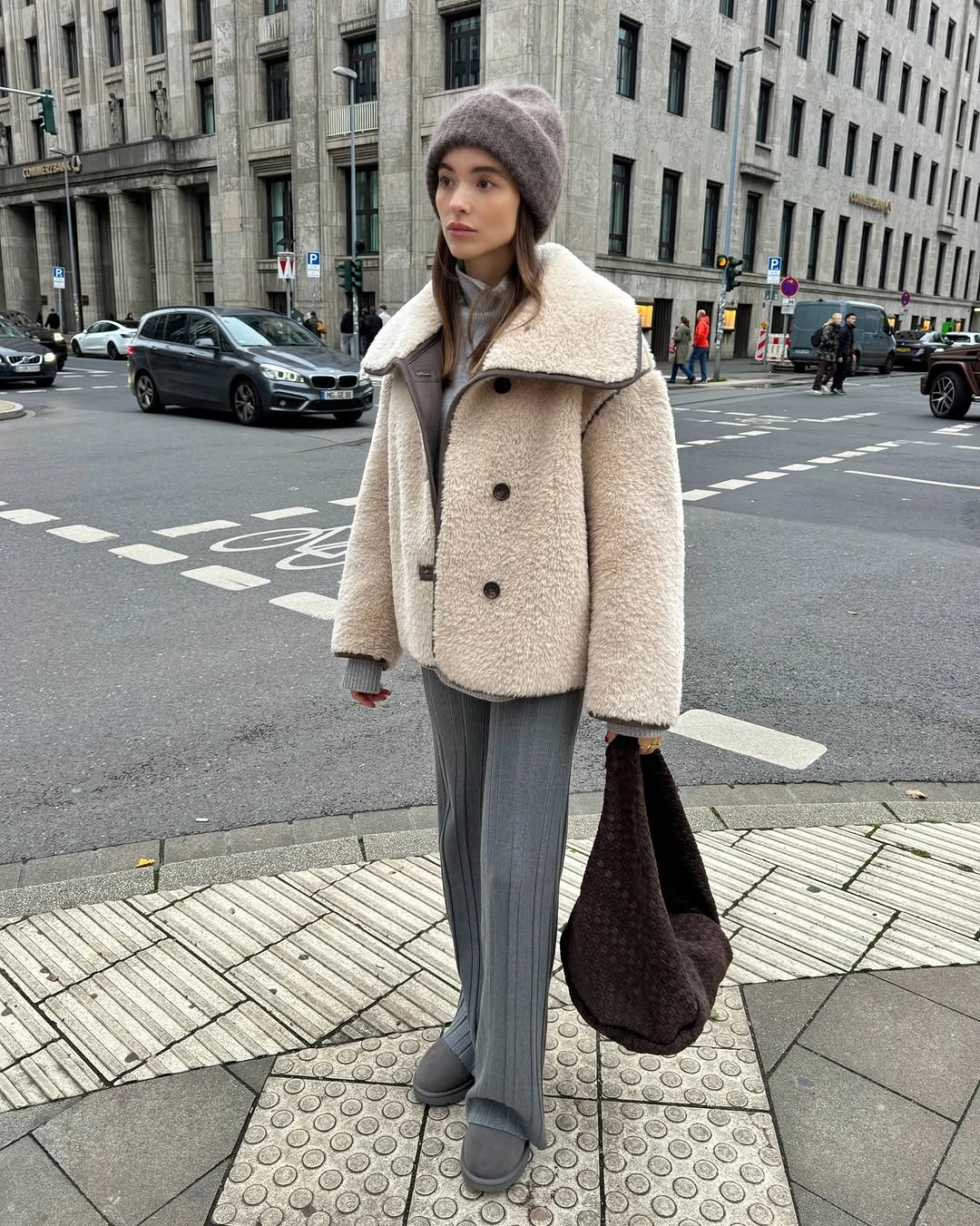
Photo via Instagram: Instagram
The tonal layers keep neighboring pieces close in color, so the eye follows the silhouette instead of jumping between separate accents. The boots reinforce that continuity at the bottom, and the minimal bag contributes a smaller accessory shape at the side. This makes the waist definition stand out as the outfit's clearest structural feature.
Here, the coat's waist definition does the work that a contrasting color might do in another look. Coordinated boots and tonal layers repeat the main direction instead of interrupting it, while the bag remains secondary.
Rust Knit With Brown Trousers and Chocolate Boots
A rust knit introduces the warmest color in the outfit and sits closely beside brown trousers, creating a compact range of related tones. Chocolate boots deepen the palette at the bottom, while a brown handbag repeats the same family at the side. The look depends on tonal variation rather than sharp light-dark contrast.
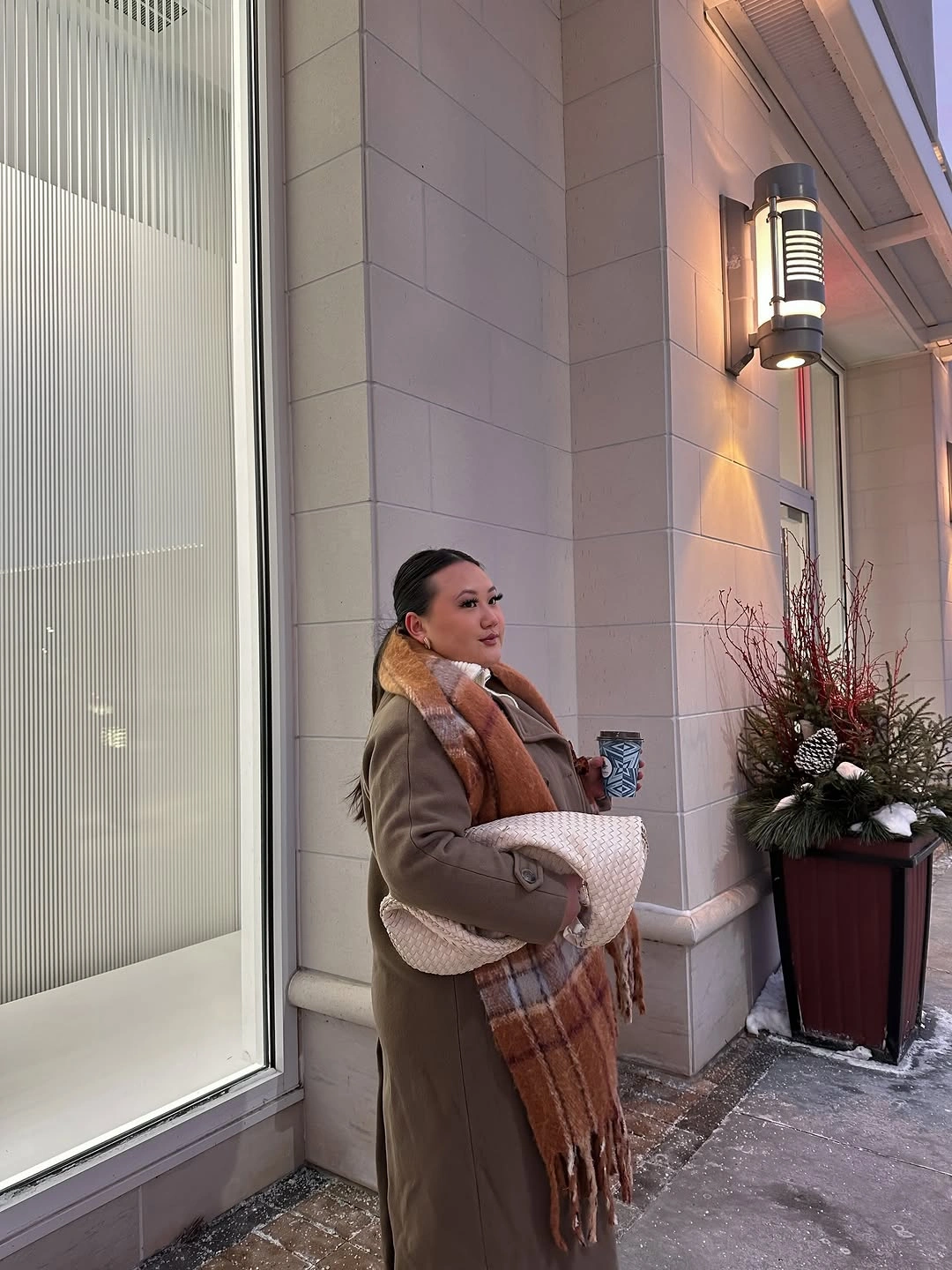
Photo via Instagram: Instagram
Because the knit, trousers, boots, and handbag all stay within neighboring brown and rust shades, each piece is distinguished mainly by placement and depth of color. The darker boots give the lower edge more weight, while the handbag creates a smaller repeated accent. The result feels coordinated without becoming visually uniform.
The palette moves gradually from rust through brown to the deeper chocolate tone of the boots. Repeating brown again in the handbag reinforces that progression without introducing a separate competing color.
Grey Knit Layers With Structured Outerwear
Coordinated grey knit layers create a close tonal foundation, allowing the structured outerwear to define the silhouette around them. The repeated grey keeps the center visually consistent, while the outer layer adds a firmer edge and clearer shape. This is a useful example of layering pieces that differ more in structure than in color.
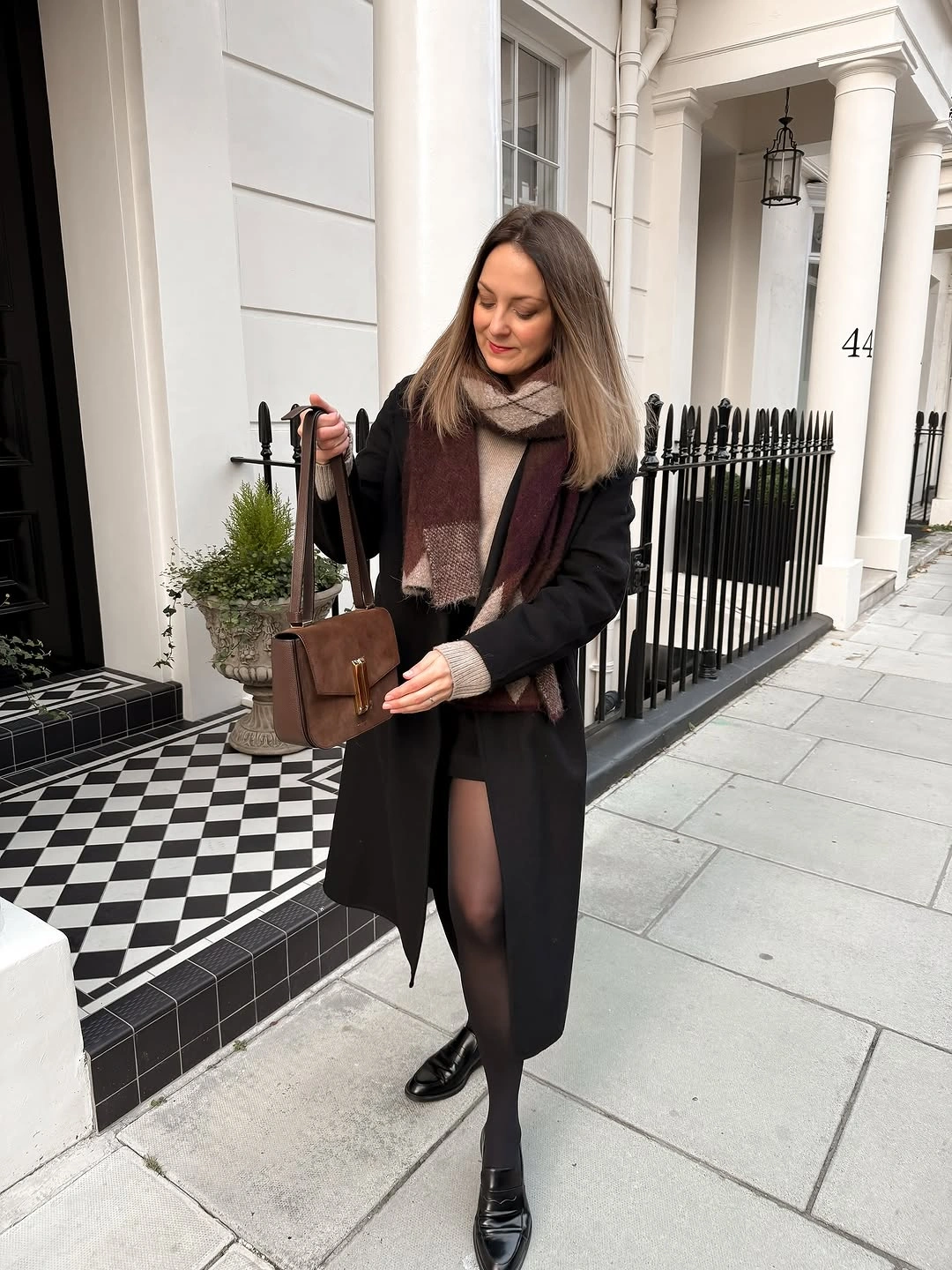
Photo via Instagram: Instagram
White sneakers introduce the clearest contrast in the outfit and brighten the lower edge without changing the grey-focused palette above. Their simple shape keeps attention on the relationship between the knit layers and the structured outerwear. The outfit shows how a pale shoe can separate the base from an otherwise tonal set of layers.
The contrast here comes primarily from construction and placement rather than several competing colors. Grey knit layers stay closely related, structured outerwear frames them, and white sneakers provide the clearest visual break at the bottom.
Tucked Sweater With Skirt and Tall Boots
A tucked sweater creates a compact upper line, while the knee-length skirt establishes a clear break before the opaque tights begin. That transition makes the lower half feel deliberately segmented rather than continuous. Tall boots then extend upward from the floor, meeting the tights with another strong vertical element.
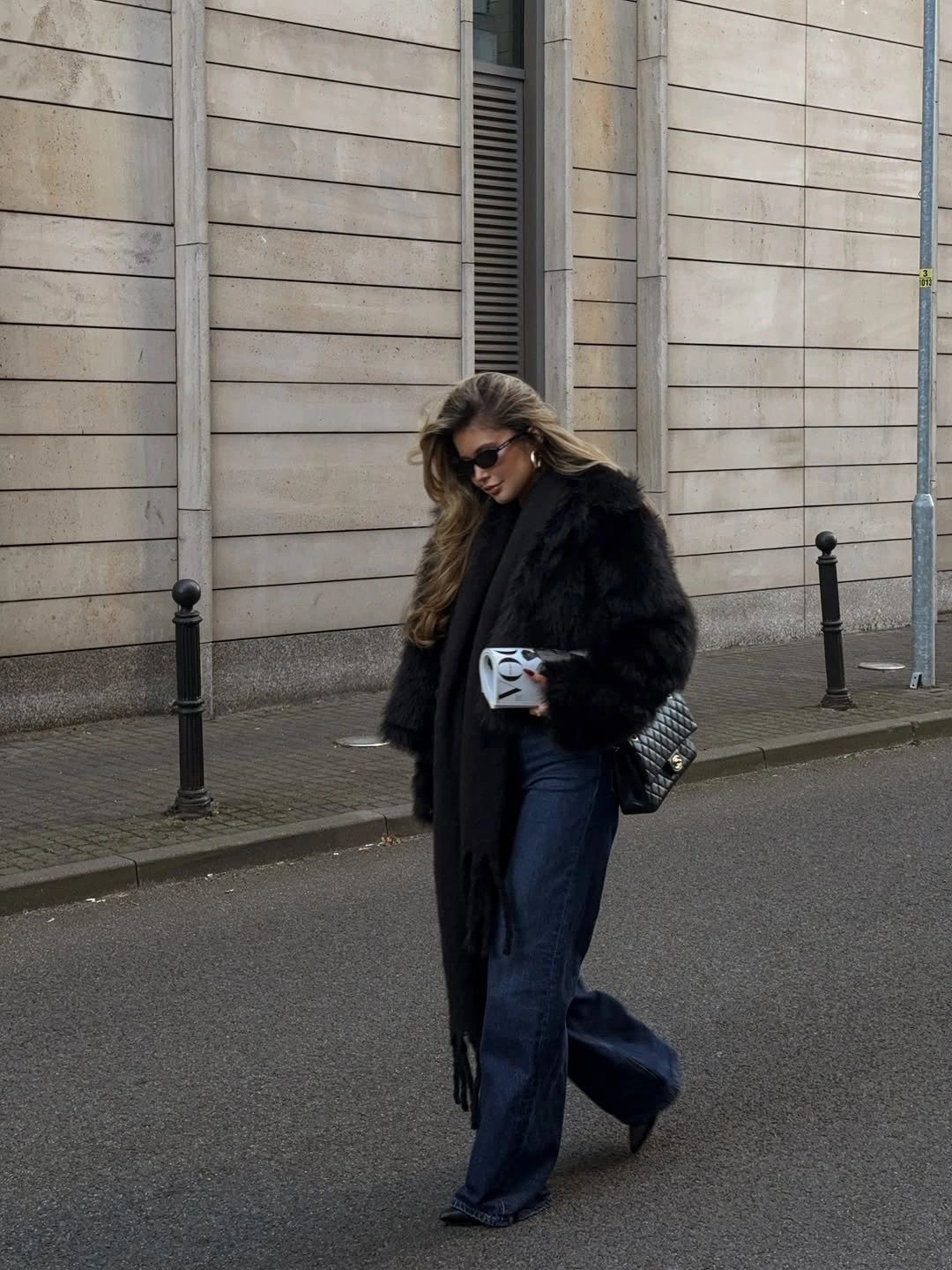
Photo via Instagram: Instagram
The skirt, tights, and tall boots form three distinct layers below the sweater, each changing the proportion without adding unnecessary detail. Because the sweater is tucked, the waistline stays visible and the skirt can define the middle of the outfit. The boots add height and give the lower section a firm endpoint.
The tucked sweater makes the skirt's length especially important to the overall proportions. Opaque tights connect the skirt to the tall boots, so the lower layers read as separate pieces within one continuous dark section.
Layered Brown Shades From Coat to Boots
Several brown shades move through the coat, sweater, trousers, and boots, creating a tonal outfit without relying on one exact color match. The coat establishes the broadest outer layer, while the sweater and trousers build slightly different values underneath. The boots deepen the palette again at the bottom.
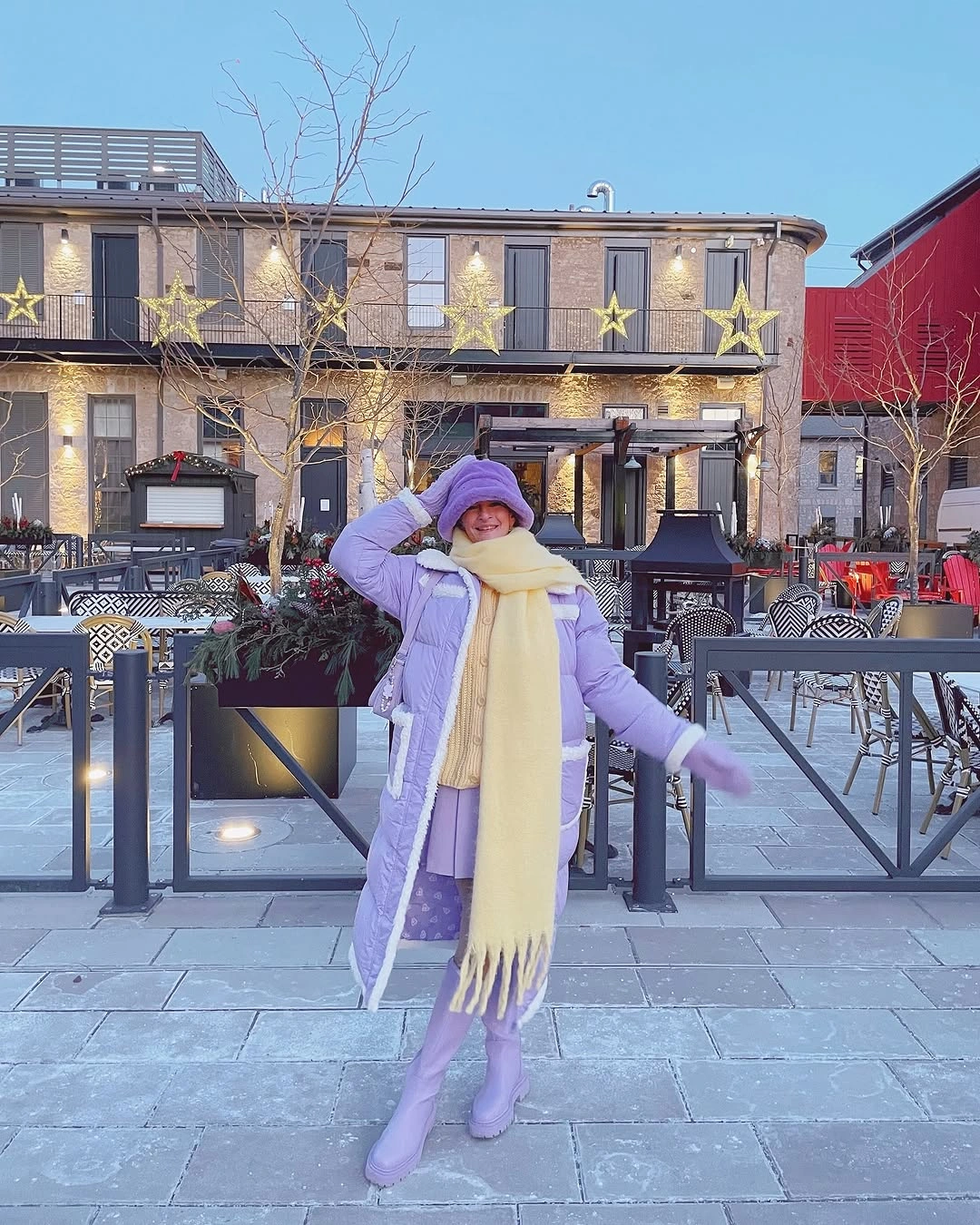
Photo via Instagram: Instagram
The strength of this look comes from gradual color shifts rather than contrast. Each brown piece sits close to the next, but differences in depth keep the layers readable from coat to sweater, trousers, and boots. That repetition gives the outfit cohesion while allowing every garment to keep a distinct place in the silhouette.
Using several versions of brown keeps the palette connected without making every layer visually identical. The coat, trousers, and boots also distribute those related tones across the full length of the outfit.
Shearling-Lined Jacket With Straight Jeans and Boots
A shearling-lined jacket creates the clearest outer texture, while a simple knit beneath it keeps the center of the outfit visually restrained. Straight jeans provide a clean, uninterrupted line through the legs, so the jacket remains the dominant layer. Boots add a more substantial finish at the bottom.
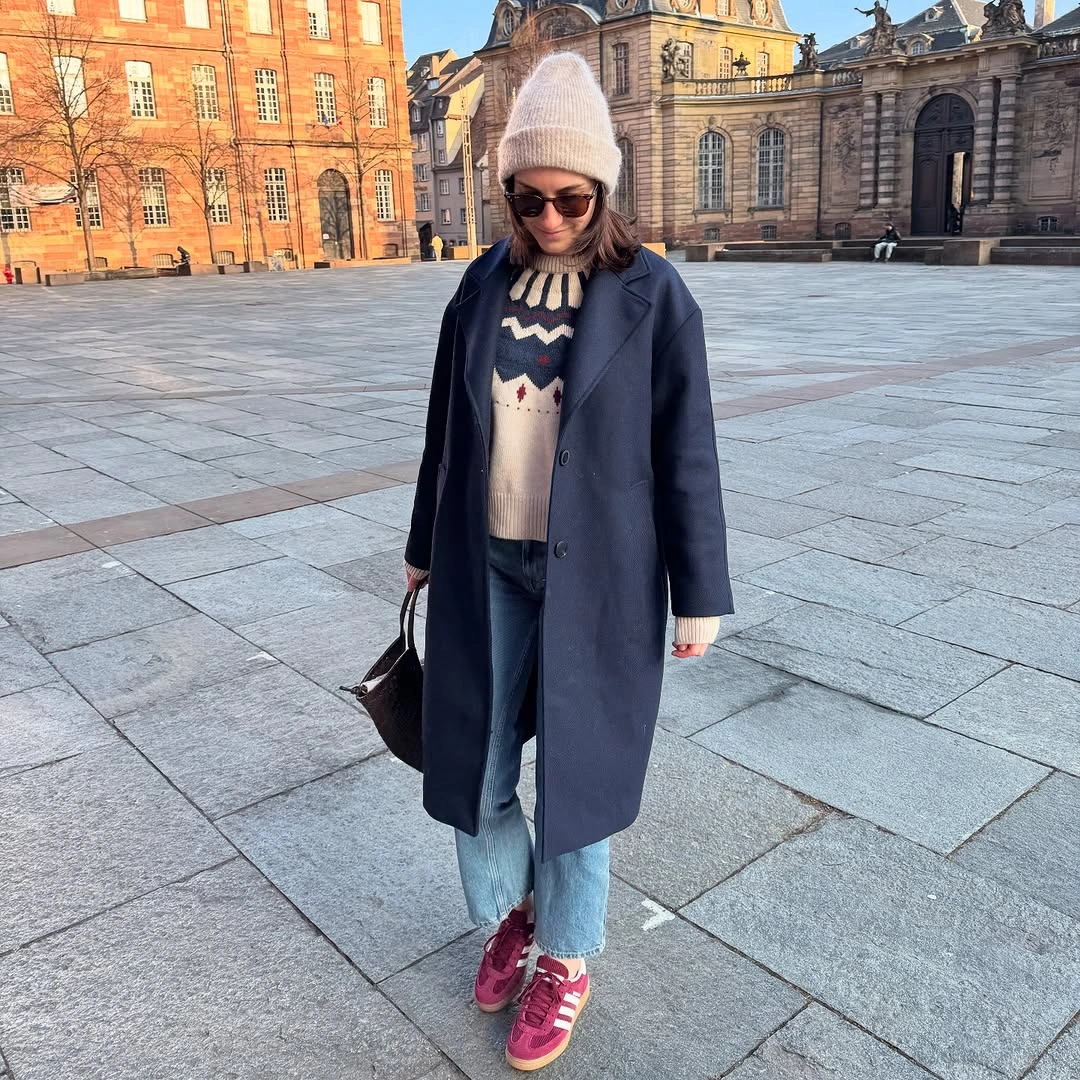
Photo via Instagram: Instagram
The visible lining around the jacket introduces contrast at the edges, making the outer layer stand apart from the simple knit and straight denim below. Because the jeans remain visually simple, the boots can carry more weight without making the lower half feel busy. The outfit is built around clear, separated layers.
The jacket's contrasting lining gives the upper half its strongest detail without requiring a patterned base layer. Straight jeans and boots keep the rest of the silhouette direct, allowing the outer texture to remain the focal point.
Belted Trench Over Sweater and Tailored Trousers
A belted trench defines the outer silhouette by drawing the coat inward at the middle, while a sweater adds another visible layer beneath it. Tailored trousers continue the cleaner lines below, creating a clear transition from wrapped outerwear to a more structured lower half. Closed footwear completes that controlled shape.
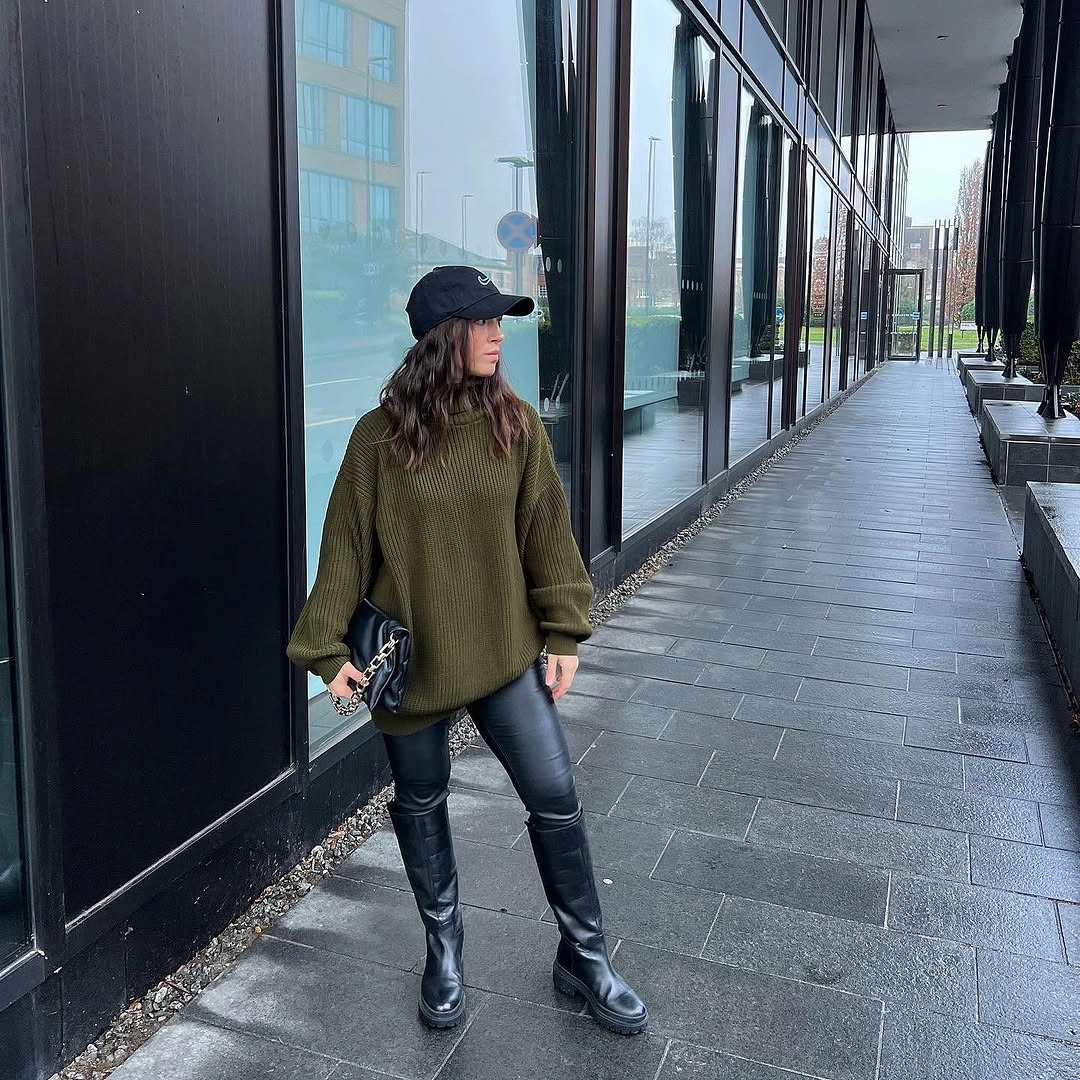
Photo via Instagram: Instagram
The belt is the key structural detail because it changes the trench from a loose outer layer into a more defined shape. The sweater adds depth at the center without interrupting that line, while the tailored trousers keep the lower half precise. Closed shoes or boots preserve the outfit's continuous, finished appearance.
This combination relies on shape more than strong color contrast. The belted trench defines the outer layer, while the tailored trousers and closed footwear extend the cleaner geometry below it.
Neutral Coat With a Colorful Scarf Accent
A neutral coat creates a quiet outer frame, while a colorful scarf becomes the clearest source of contrast near the neckline. Dark base layers keep the center visually grounded and allow the scarf to stand out without needing another bright piece. Ankle boots continue that darker foundation at the bottom.
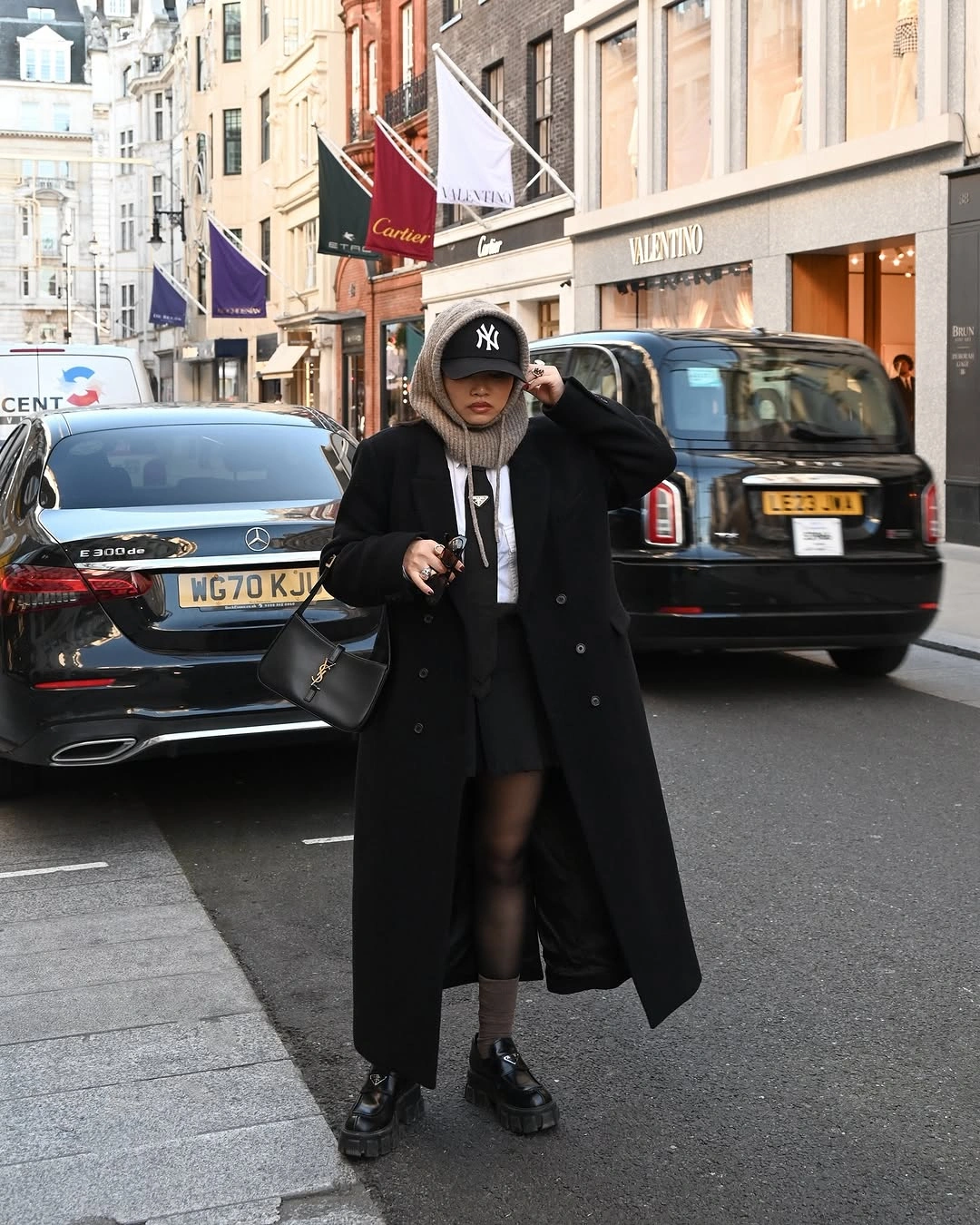
Photo via Instagram: Instagram
The scarf works as the connecting accent because it sits directly between the neutral coat and the dark layers underneath. Its color breaks the restrained palette in one concentrated area, while the ankle boots keep the lower edge simple. This balance lets the coat remain understated without making the outfit visually flat.
Concentrating the brighter color in the scarf gives the outfit one obvious focal point. The neutral coat and dark base layers surround that accent with quieter tones, while the ankle boots reinforce the darker lower section.
Quilted Vest With Relaxed Jeans and Sweater
A quilted vest creates the main outer layer while leaving the sweater visible through the sleeves and neckline. Relaxed jeans keep the lower half loose and straightforward, so the vest remains the clearest structural piece. The outfit depends on the contrast between a compact sleeveless layer and a longer, softer base beneath it.
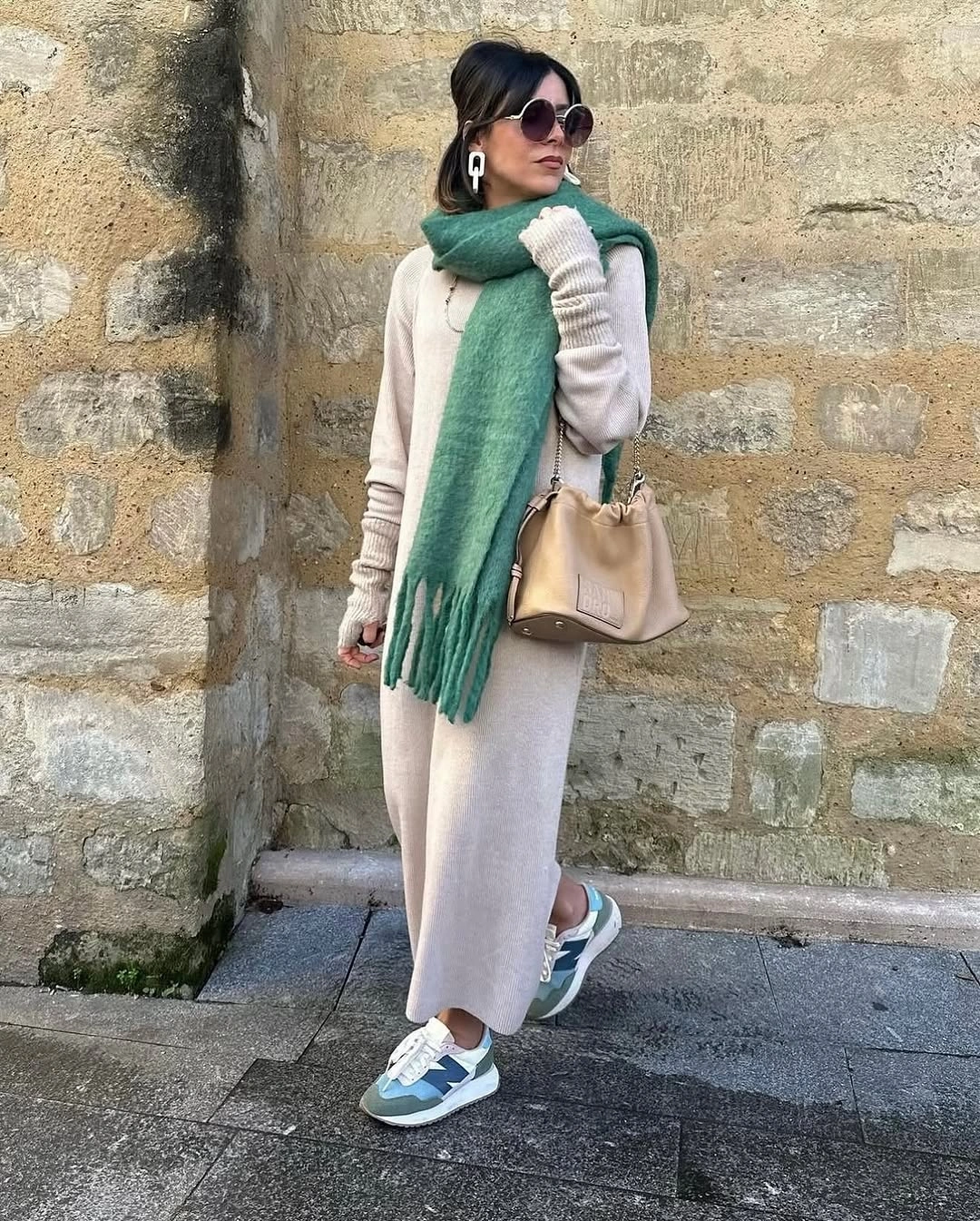
Photo via Instagram: Instagram
Low footwear keeps the finish visually simple beneath the relaxed jeans and avoids adding another bulky element at the bottom. Because the sweater extends beyond the vest through the arms, the layering stays easy to read from top to bottom. The combination shows how a sleeveless outer piece can define shape without covering the full base layer.
The sleeveless construction makes the sweater an active part of the visible silhouette instead of a hidden base. Relaxed jeans and low footwear keep the lower half uncomplicated, allowing the layered upper section to remain the main idea.
Black Coat With Light Blue Jeans
A black coat forms a strong dark frame around a neutral knit and light blue jeans, creating clear contrast between the outer layer and the denim. The coat carries the most visual weight, while the knit keeps the center restrained. Light blue jeans interrupt the dark palette and make the lower half feel distinctly separate from the coat.
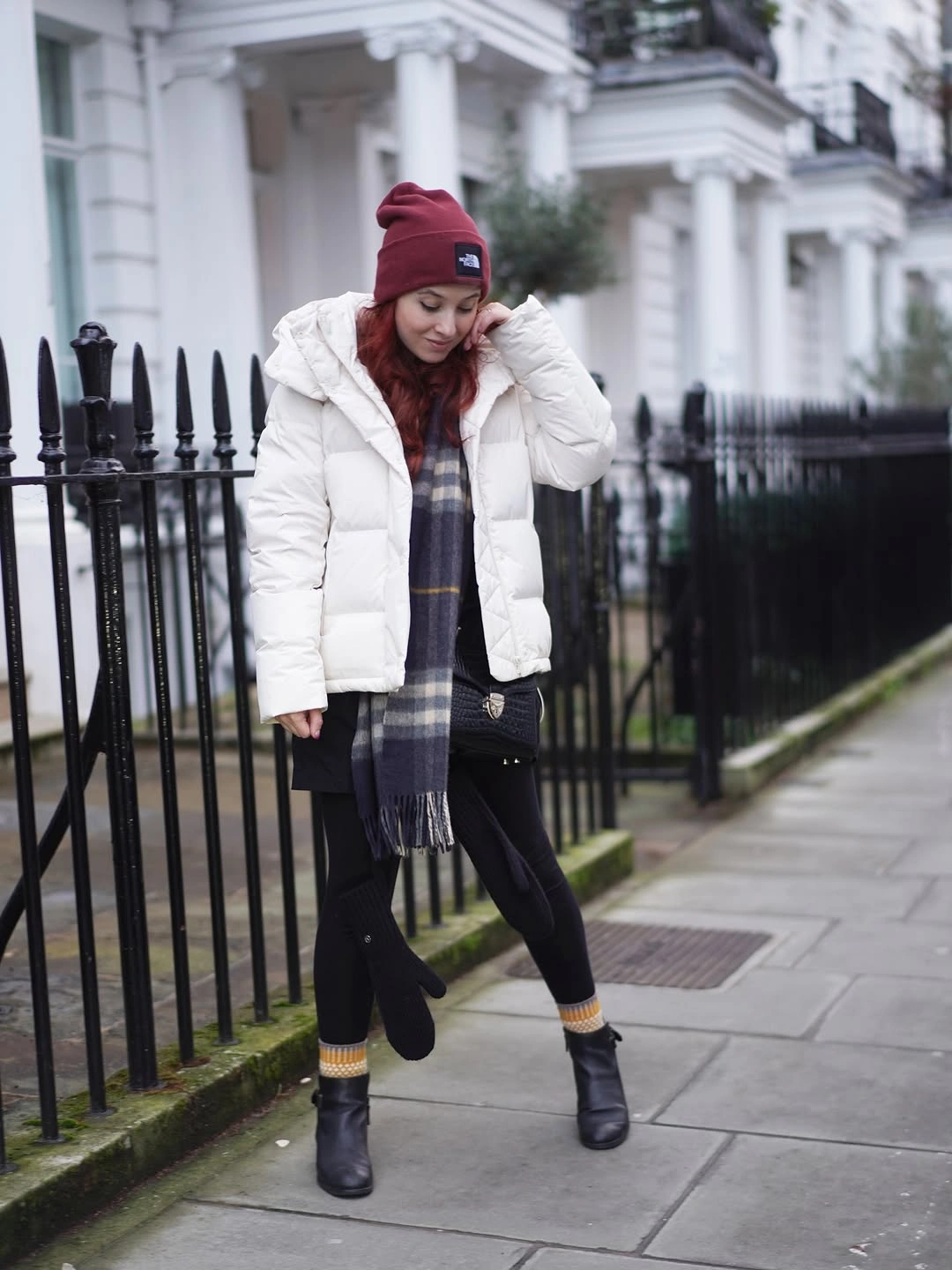
Photo via Instagram: Instagram
Black boots repeat the coat color at the bottom, creating two dark anchors around the lighter jeans. That repetition gives the outfit a balanced top-and-bottom structure while the neutral knit stays between them. The effect comes from simple color placement: dark outerwear and footwear surrounding a lighter denim section.
Repeating black at the coat and boots creates a clear frame for the lighter denim in between. The neutral knit softens that contrast through the center without introducing another strong color.