Winter work dressing is rarely about finding something dramatic; it is about feeling ready before the day starts asking for attention. Cold commutes, indoor heating, meetings, and the need to carry real things all put pressure on the same outfit. The most useful clothes create a calm outer impression while leaving enough room to move, layer, and adapt without looking as though comfort was an afterthought.
The best winter outfits for work begin with a dependable base and make one purposeful adjustment for warmth, shape, or color. A useful test is whether you could reduce the look to its essential idea and still recognize why it works. That mindset makes personal style more repeatable: choose a balance you enjoy, then use practical substitutions instead of rebuilding your wardrobe every morning.
Brown Blazer With a Soft Cream Scarf
The soft brown tailored jacket, cream scarf, and black trousers create a warm but work-ready combination, while the structured brown tote repeats the jacket without matching it too exactly. The scarf lightens the area around the face and keeps the dark lower half from looking severe. This is an easy route into winter office dressing when a black blazer feels too sharp.
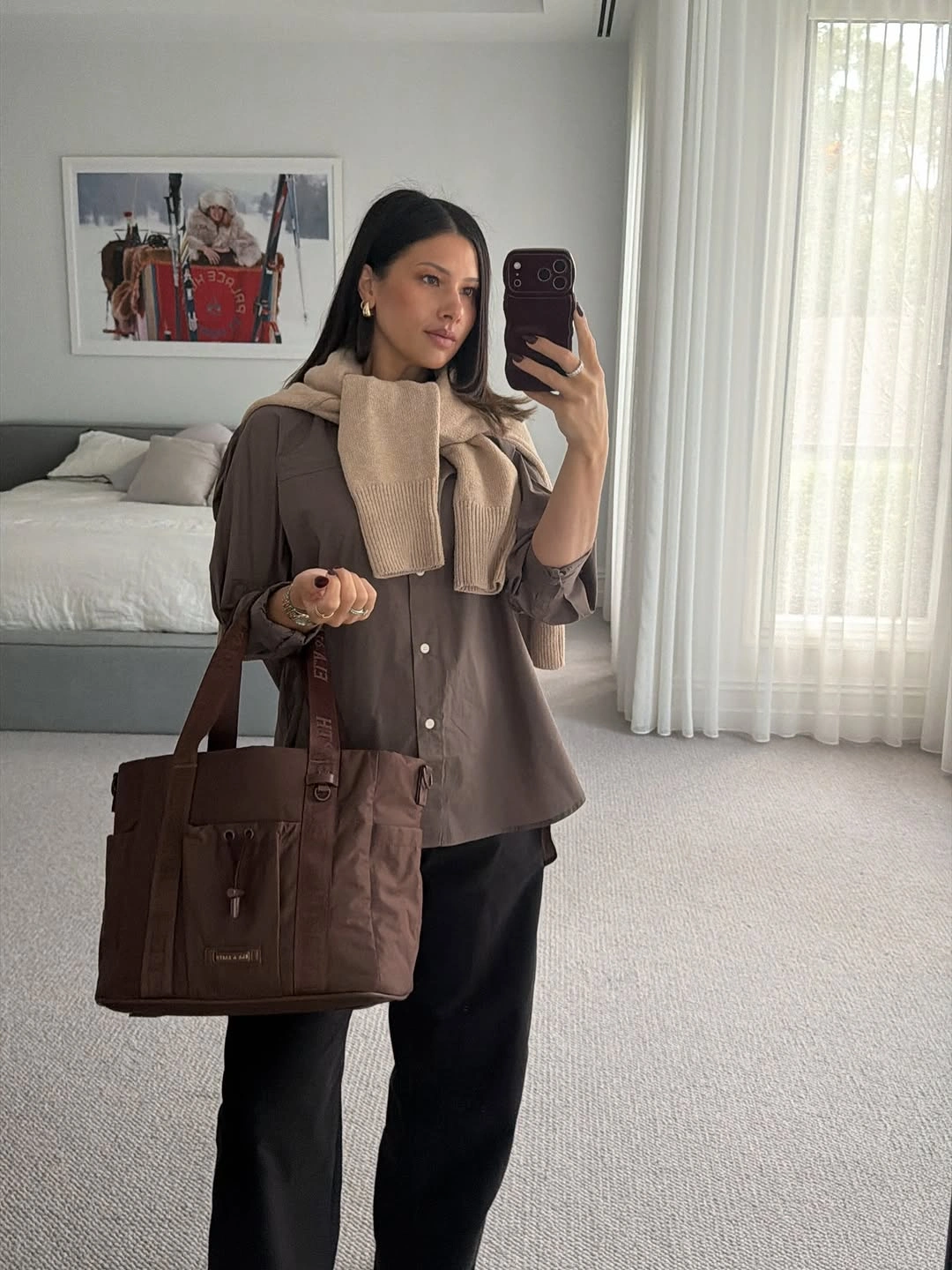
Keeping the trousers dark is useful because it gives the scarf and jacket a stable foundation. A fine cream knit under the blazer would preserve the same palette, while a pale blue shirt would make the result cooler without changing the silhouette. The bag has enough structure to support a tailored look without requiring extra jewelry or a bright shoe.
The scarf adds visible volume at the neckline, so the blazer should retain a clean lapel and the top underneath should not be bulky. If you need a warmer version, add thermal layers below the trousers rather than piling another loose layer above the waist. The contrast to preserve is soft cream near the face, richer brown through the body, and a quiet dark base.
All-Black Puffer With a Lean Foundation
A long black puffer, black trousers, gloves, and a dark bag make a practical outerwear uniform, but the close line underneath keeps the padded coat from looking shapeless. Texture is doing the separating here: the puffer appears soft and full, while the gloves, bag, and trousers look smoother. It is an uncomplicated choice for a commute that needs coverage without a complicated color plan.
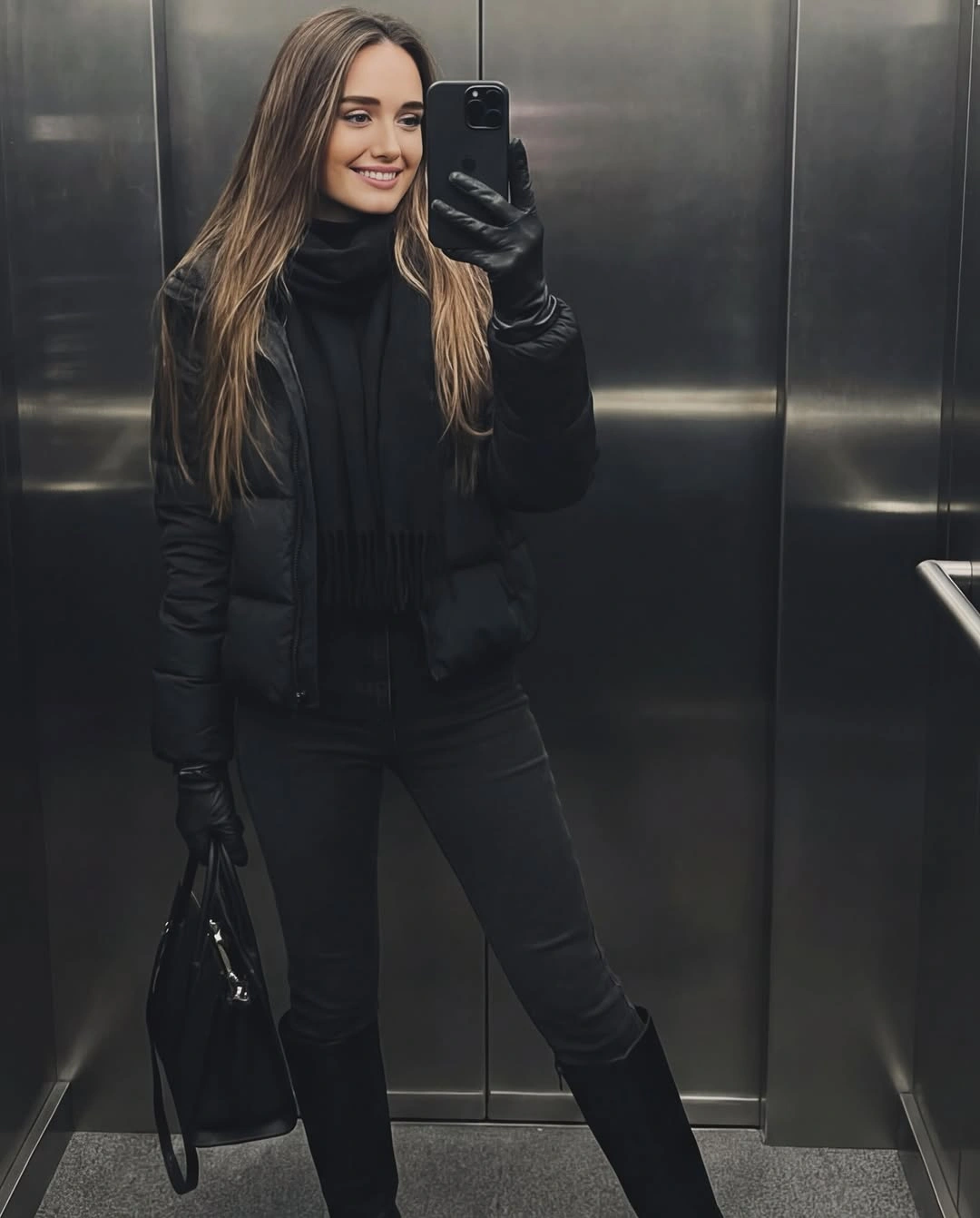
All-black dressing benefits from a clear difference in proportion, which is why straighter trousers work better than another oversized layer beneath the coat. If the coat is removed indoors, a fitted black knit or a charcoal top will keep the outfit coherent. A small metallic earring or a pale scarf could be added, but neither is necessary for the darker pieces to feel intentional.
The limitation is visual flatness when every fabric has the same finish, so use quilting, leather-looking gloves, or a textured knit to create depth. Avoid a bulky backpack that would compete with the coat’s volume at the shoulders. The outfit stays most convincing when the outerwear remains the broadest shape and the rest of the silhouette stays narrow and calm.
Gray Blazer Over a Dark Winter Base
The gray tailored layer breaks up black inner pieces and a dark lower half without disturbing the long professional line. A dark scarf, bag, and shoes keep the outfit grounded, while the lighter jacket adds enough contrast that the black base does not feel like a single heavy block. It is a useful answer for a workplace that wants polish but not a full suit.
Gray works especially well in winter because it connects easily to black, navy, brown, or denim without demanding exact color matches. Keep the jacket’s shoulder fit clear and let the darker layers sit close beneath it. For a slightly warmer variation, replace the black scarf with deep burgundy, then leave the remaining accessories dark so one accent can do the work.
The coat-like jacket and long dark base already create several vertical lines, so a large printed blouse would distract from their clean relationship. Choose a smooth shoe with enough structure for office wear rather than a brightly colored sneaker. The easy adjustment to remember is simple: preserve gray as the lightest tailored layer and let the rest stay deeper.
Long Black Coat With a Light Bag
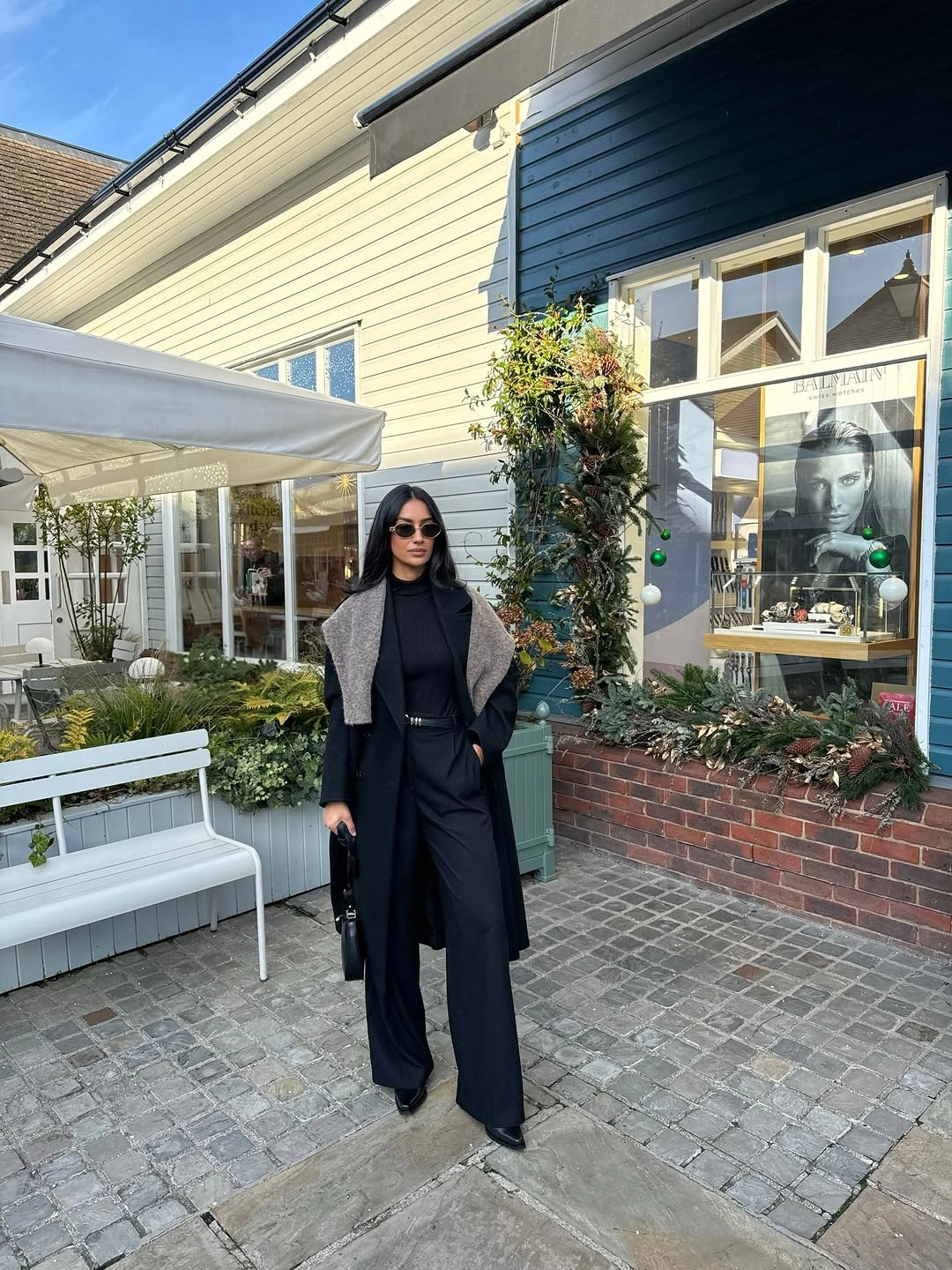
The full-length black coat, dark turtleneck, dark trousers, and close black boots make one strong winter column, while the pale shoulder bag adds a small light interruption near the hip. That single contrast keeps the outfit from becoming opaque without breaking its professional mood. The coat has enough length to make the inner layers look considered even when they are simple.
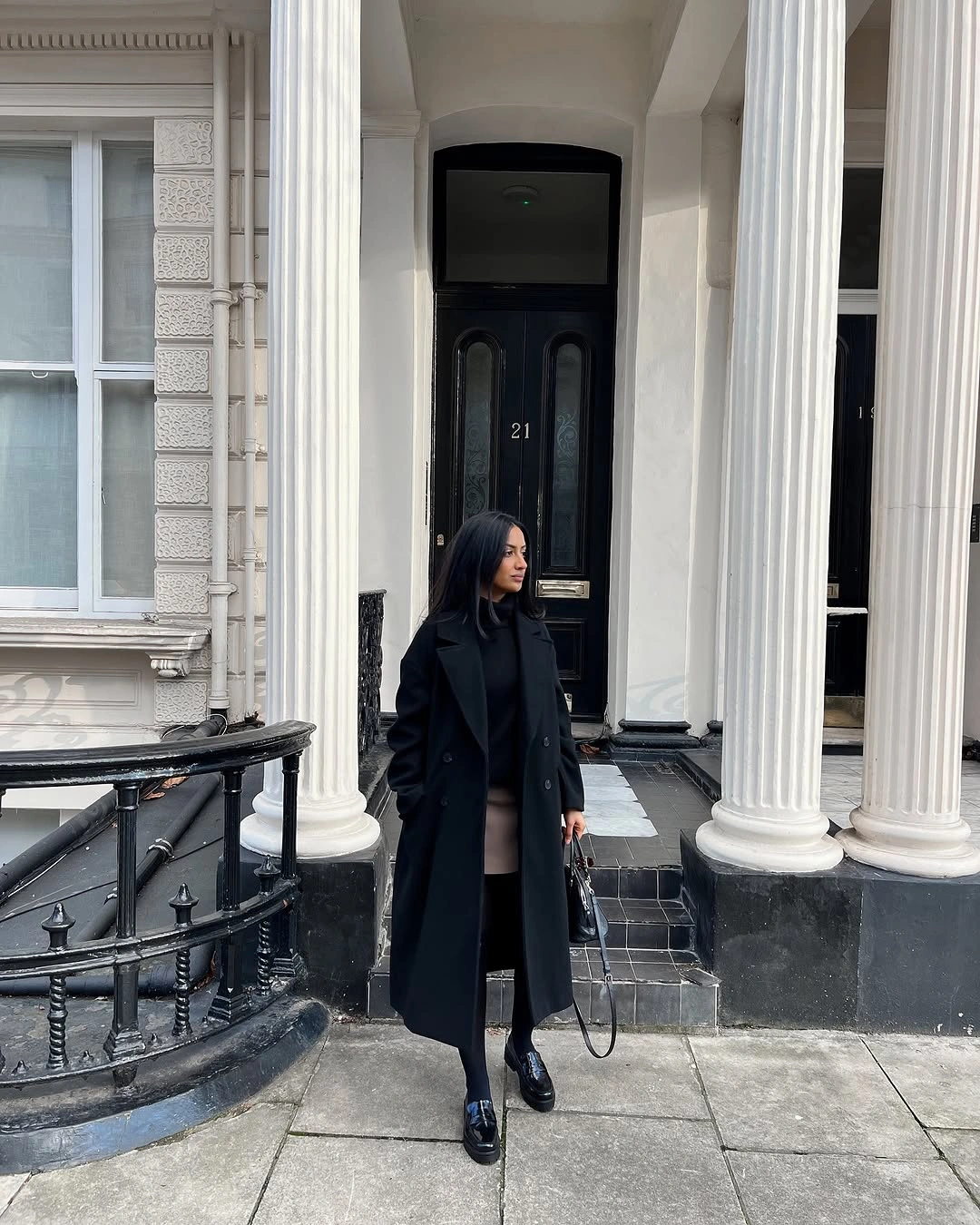
Long coats work best when the boots remain close to the ankle and the trousers do not create a thick stack at the hem. A light bag is more effective here than a light scarf because it keeps the upper body calm and lets the coat frame the face. If pale accessories feel too stark, choose charcoal leather or a muted taupe bag for the same soft separation.
The coat is the largest dark field, so extra oversized layers can make the silhouette feel dense and difficult to move in. Keep the knit underneath fine enough to sit smoothly, and reserve a bulky scarf for colder outdoor time. The most repeatable part of this look is the rule of one pale accessory against an otherwise dark vertical base.
Camel Coat and Cream Cardigan Balance
A camel long coat, cream buttoned top, and brown trousers build a warm tonal outfit that feels softer than standard black office dressing. The darker trouser and tan shoe prevent the pale middle from floating, while the coat’s length adds enough structure for a work setting. It proves that neutrals can be interesting when their depths are clearly separated.
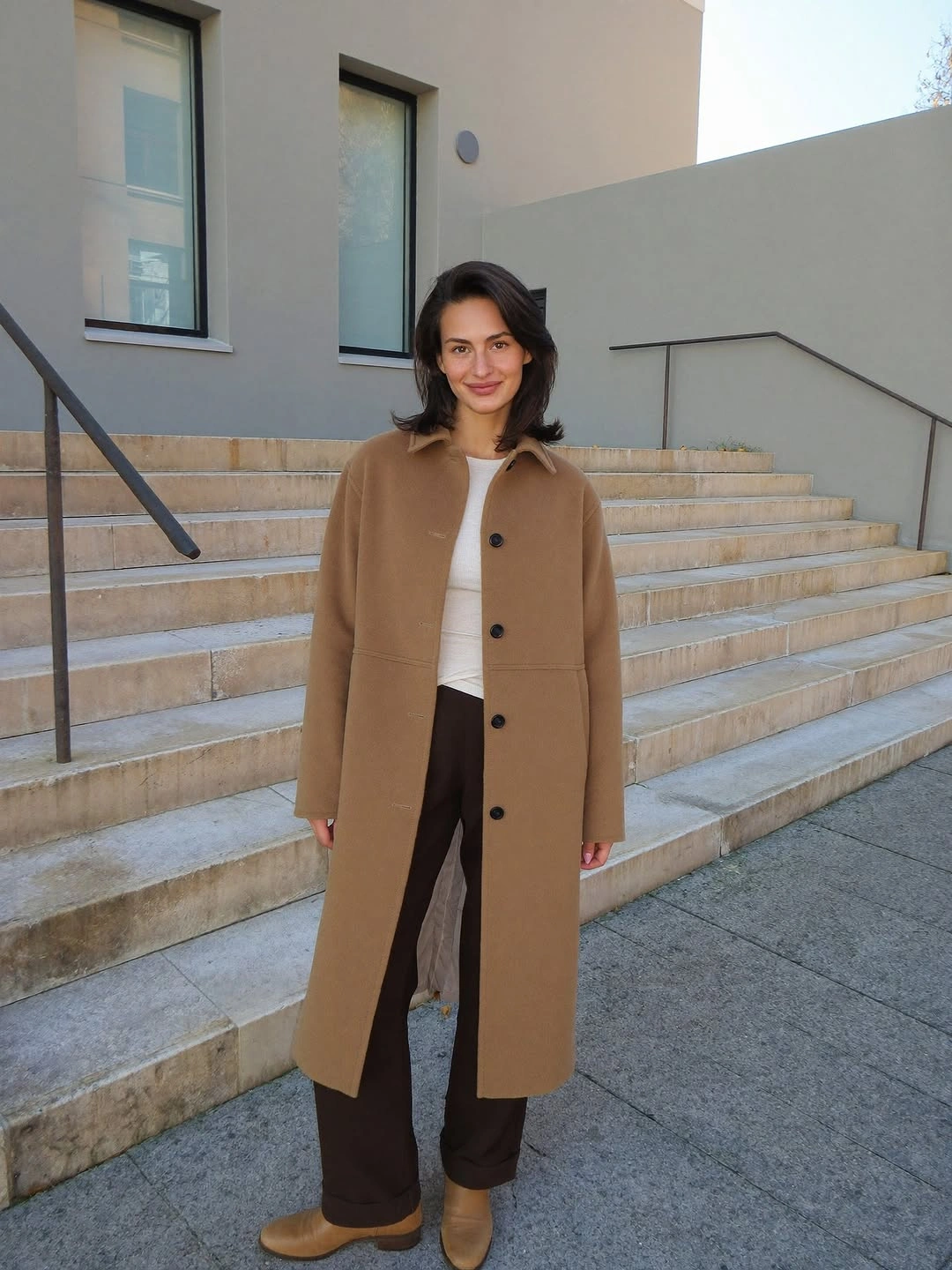
The cream layer creates a useful pause between the camel coat and deeper brown trouser, so the warm colors do not merge into one field. A fine striped shirt in cream and brown could add subtle texture, but a bright patterned scarf would pull the palette in too many directions. Keep the shoe in the same warm family to maintain the continuous lower line.
Low-contrast neutrals need clean hems and visible differences in fabric, otherwise the outfit can look unfinished rather than intentional. If you add a bag, choose dark chocolate or black for definition instead of a third pale beige. The easiest adjustment is to keep one element lightest, one richest, and the trouser deep enough to anchor both.
Textured Brown Jacket With Fluid Trousers
The textured dark brown short jacket makes the flowing brown trousers feel more formal through a contrast of surface and shape. Black gloves, sunglasses, and a crisp collar sharpen the softer outer layer, while the trousers retain enough movement to avoid a rigid suit effect. It is a strong option when you want a warmer color story without losing office presence.
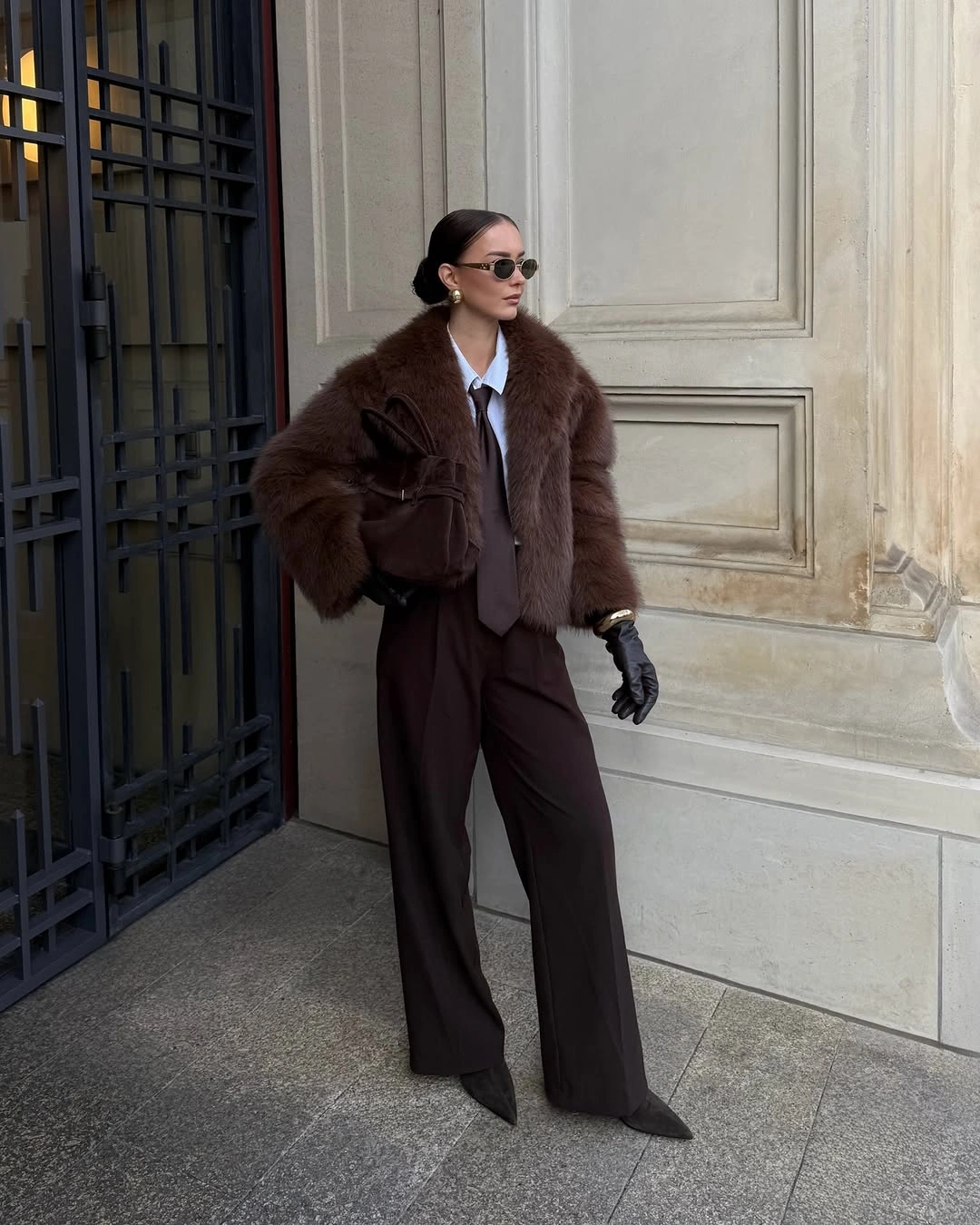
Because the jacket adds visible width at the shoulder, the trousers work best when they fall cleanly instead of bunching at the ankle. A smooth fine knit underneath would keep the texture focused where it belongs. If the full brown palette is more than you want, switch the trousers to charcoal and retain only the jacket as the warm focal point.
Soft textured outerwear can feel too casual if every surrounding piece is equally relaxed, which is why the gloves and neat bag matter. Avoid another fuzzy scarf or oversized hat that would add too much volume near the face. The practical styling point is to balance a tactile jacket with sleek accessories and a trouser that moves rather than swells.
Black Coat With Blue Denim Relief
The long black coat and black knit hat form a dark outer frame, while narrow blue jeans provide a casual but useful break through the center of the outfit. Black boots and a dark tote keep the denim connected to the winter layers instead of making it look accidental. This combination works well for a workplace where jeans are acceptable but a polished outer layer still matters.
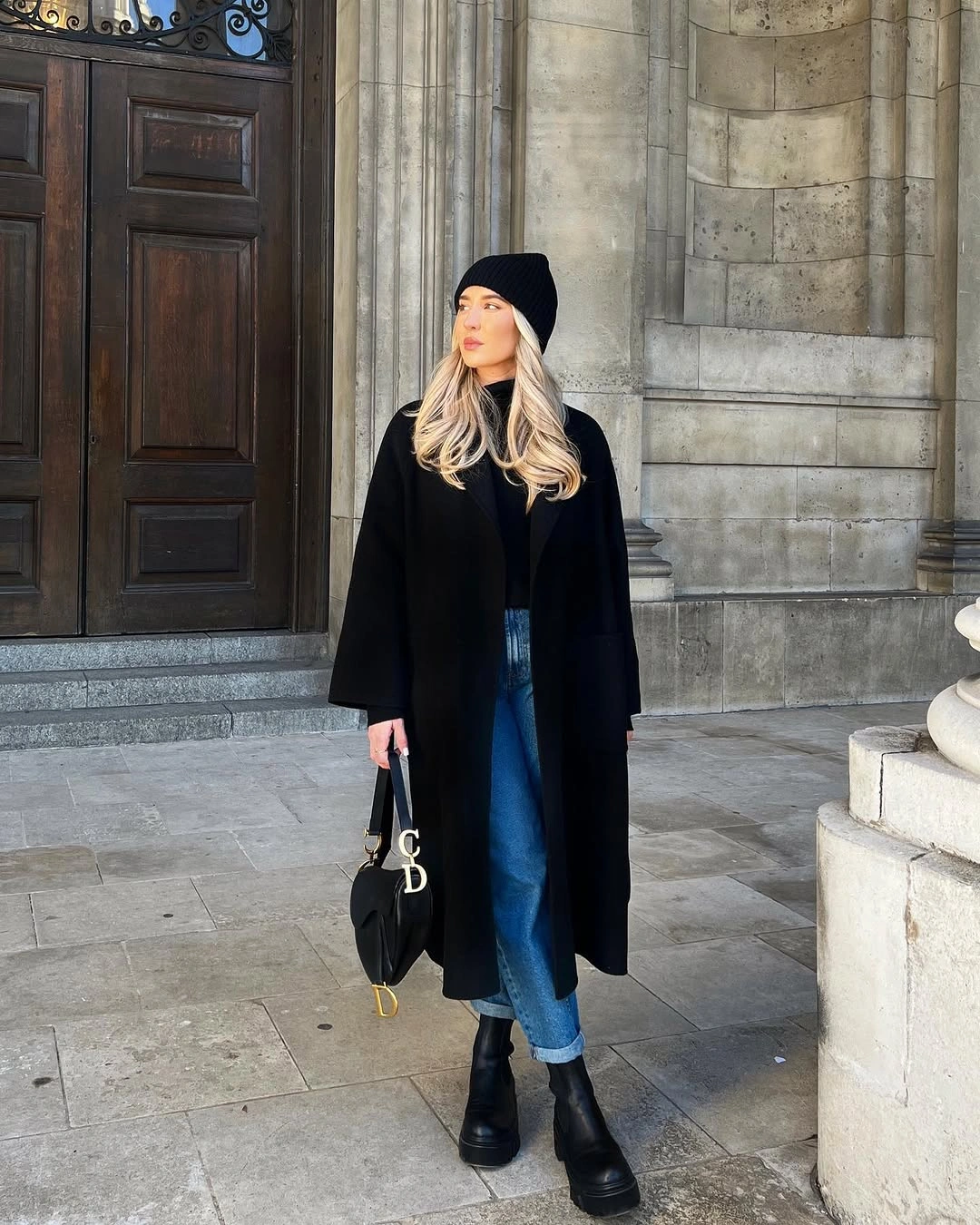
Blue denim is effective here because it changes the value of the outfit without introducing a bright color. A straight or slim leg keeps the coat’s long line readable, while a very wide jean could compete with the outerwear’s volume. For a more formal version, replace the jeans with charcoal trousers and retain the same black coat, boots, and hat.
The casual limitation is clear: denim lowers the dress level, especially with a knit cap. Keep the bag structured and the boots clean if you need the outfit to remain office appropriate. The useful repeatable idea is a dark outer shell around one medium-blue item, giving a black winter wardrobe a little breathing room without adding extra colors.
White Coat Above Deep Brown Trousers
The bright white long coat gives dark brown wide trousers immediate definition, while the black inner layer and burgundy bag connect the deepest tones through the middle. The contrast is sharp but not cold because brown and burgundy keep the palette warm. This is a more expressive winter work formula that still relies on simple, tailored-looking shapes.
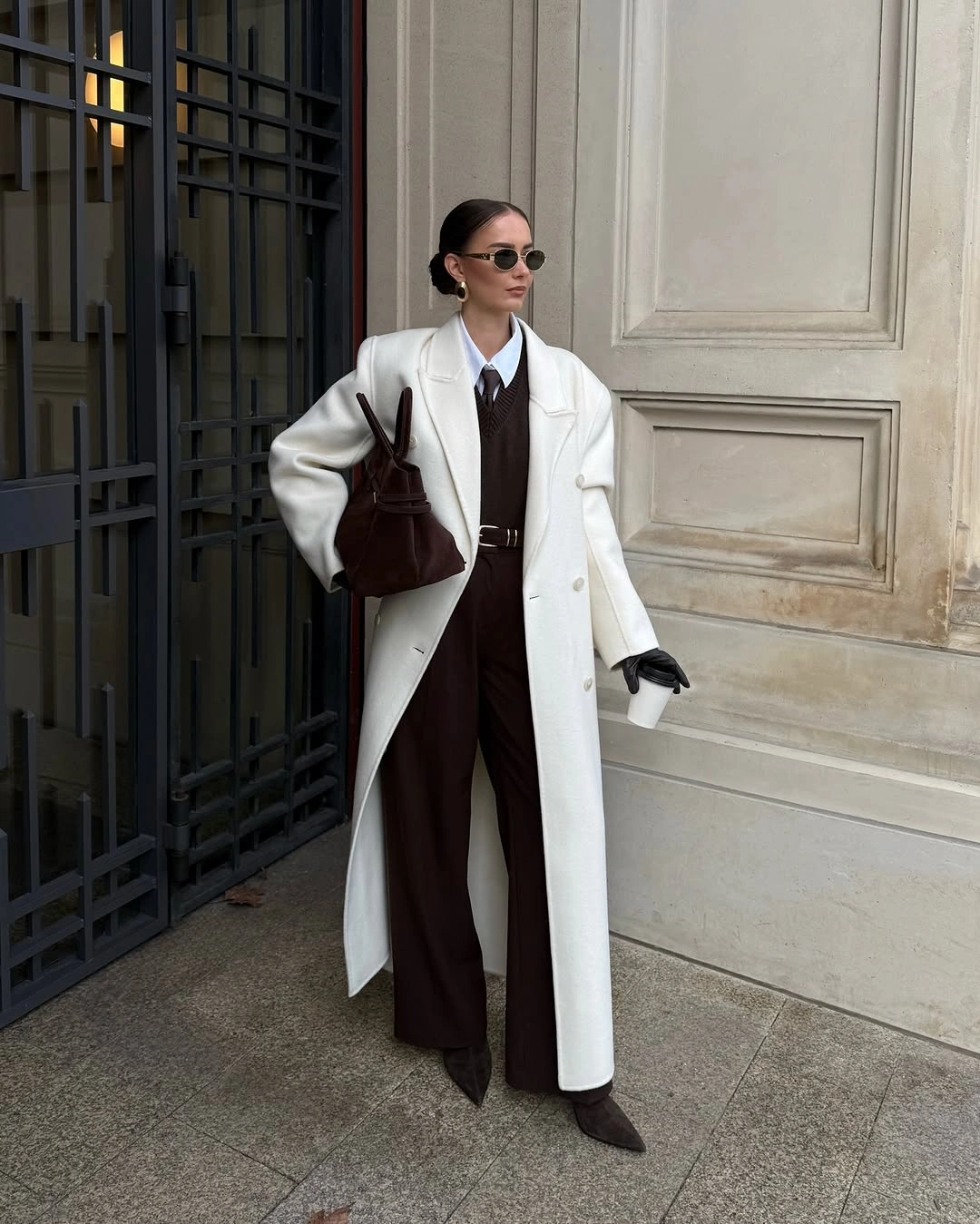
A light coat can make wide trousers look more deliberate because it frames their movement instead of competing with their depth. Keep the inner top close and dark so the white outer layer remains the clearest vertical element. If the white feels too high-maintenance, pale stone or soft gray would preserve the light-dark relationship with a gentler practical feel.
The main tradeoff is that the coat becomes the focal point, so patterned pants or bright shoes would pull the outfit in several directions. A compact burgundy bag is enough color for this version. When adapting the idea, retain a light outer layer, a deep trouser, and one small warm accessory rather than trying to match every piece exactly.
Checked Coat With Tall Black Boots
The pale checked belted coat defines the waist over a black turtleneck and tall black boots, making the coat pattern feel contained rather than loose. The boots visually continue the dark underlayer below the hem, which gives the outfit a crisp winter line. This is useful when you want a coat to do more than keep warm and still need a practical office silhouette.
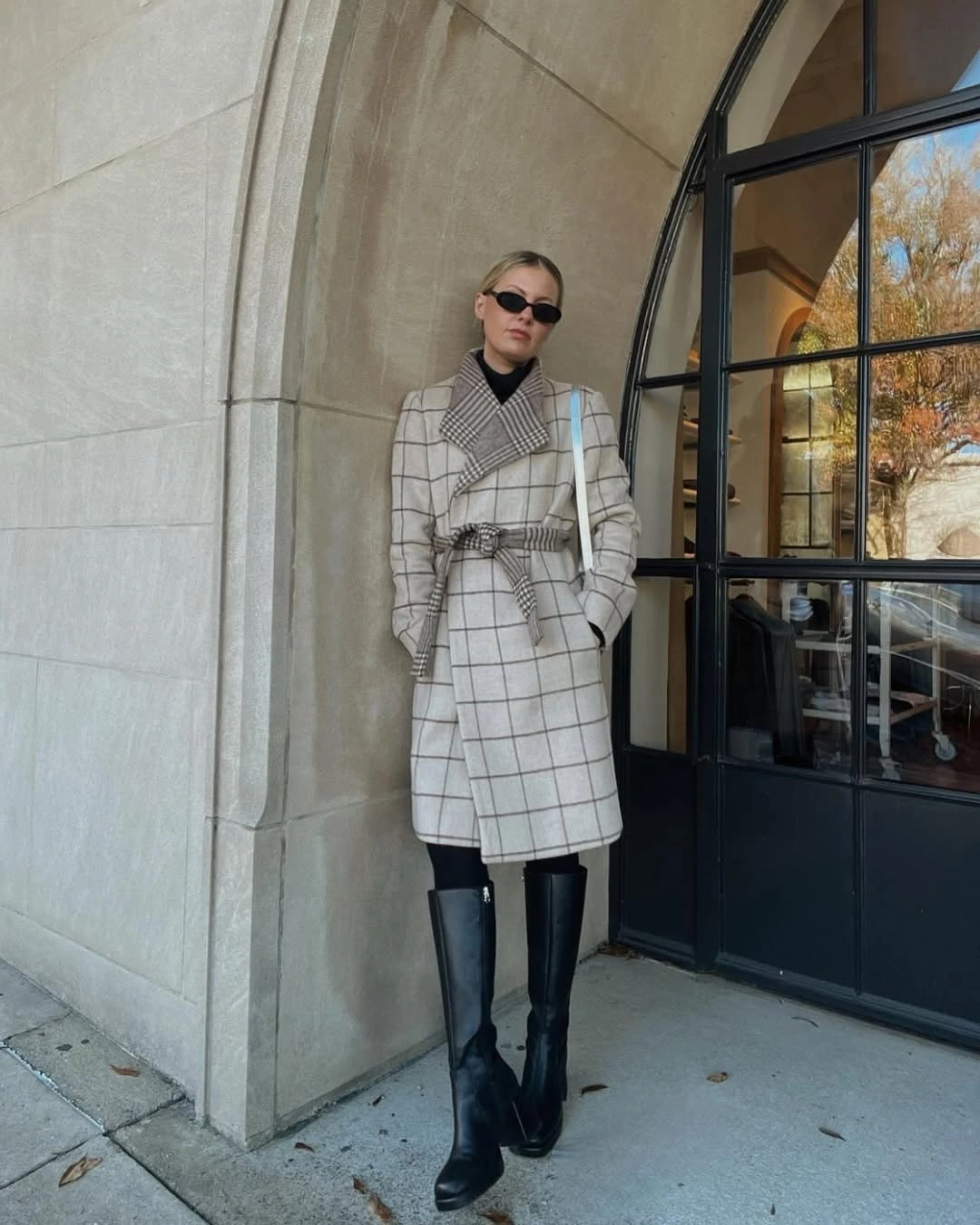
The belt is important because it gives a patterned coat a clear body shape without needing a contrasting belt color. Keep the bag simple and dark so the check remains the only surface pattern. If you prefer an easier version, use a solid gray belted coat with the same black boots and turtleneck, preserving the waist definition without the plaid.
Tall boots create a strong lower outline, so trousers tucked into them or a shorter hem change the mood considerably. The cleanest approach is to let the black base remain uninterrupted under the coat. Avoid a large colorful scarf, because the checked fabric already provides enough activity around the upper body and shoulders.
Gray Texture, Black Trousers, Blue Bag
The textured gray jacket and black wide trousers create a quiet professional base, while the deep blue shoulder bag supplies a focused color note at the side. The bag is small enough that it does not challenge the jacket’s surface, but its cooler blue gives the gray and black a more individual feel. It is an easy example of using one accessory instead of several accents.
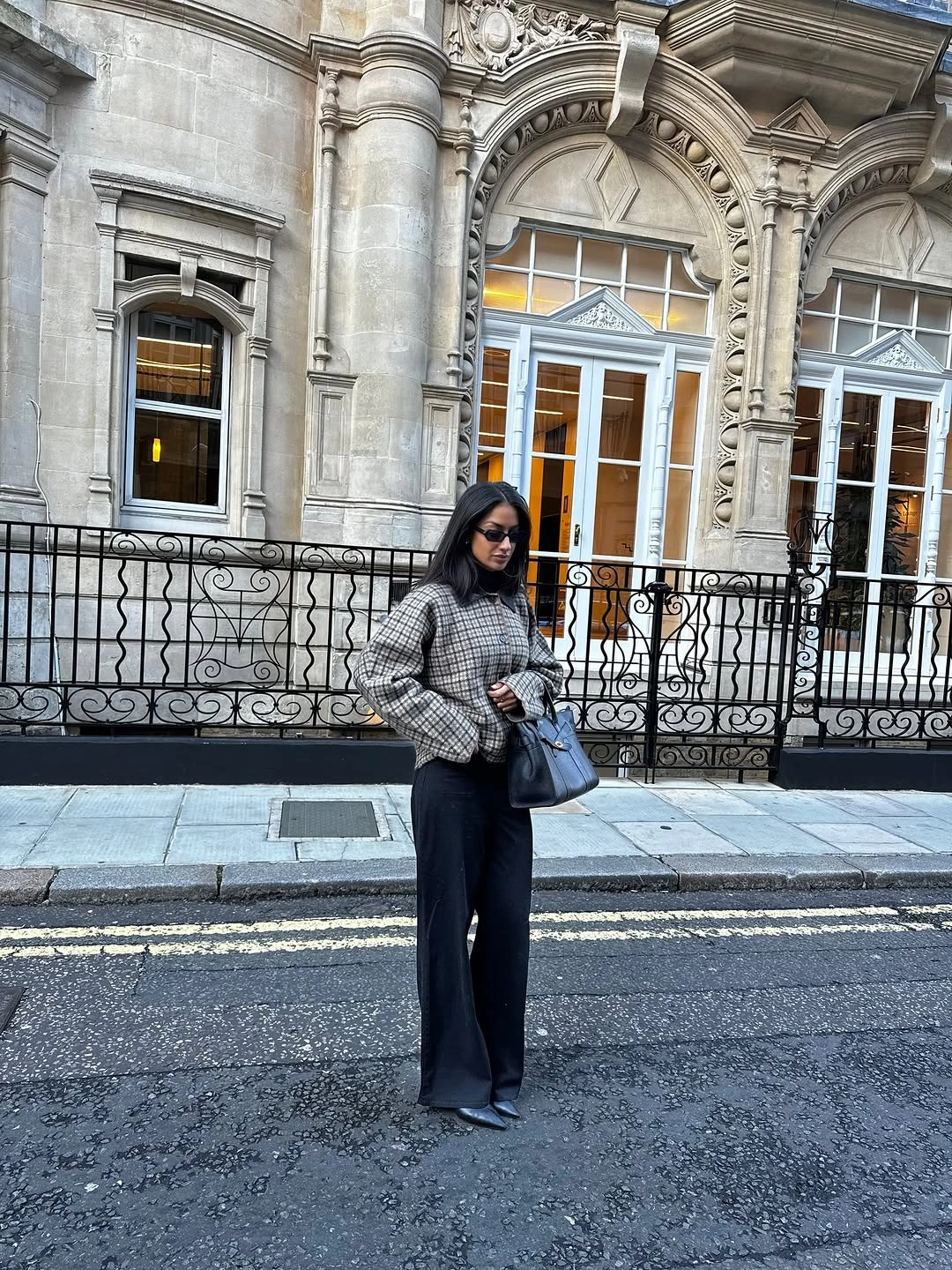
Wide trousers need a shoe that preserves length, so a close dark boot or pointed flat would keep the hem looking clean. Keep the top dark if you want the jacket and bag to remain the visible contrast pair. A burgundy bag would make the outfit warmer, while a black bag would reduce it to a more minimal work uniform.
The blue accessory works because the rest of the palette is deliberately reduced. Adding blue shoes, a blue scarf, and blue jewelry would turn a focused repeat into a theme. The simple adjustment to carry forward is to put one cooler accent against gray and black, then let the trouser line and jacket texture provide the remaining interest.
Brown Puffer With Cream Trousers
The brown puffer, pale gray scarf, and cream trousers create a lighter commute look than an all-dark coat, while the cap and neutral footwear keep it practical. The scarf bridges the warm coat and pale lower half without forcing an exact match. This is a useful option when winter layering is necessary but you still want the outfit to feel open and approachable.
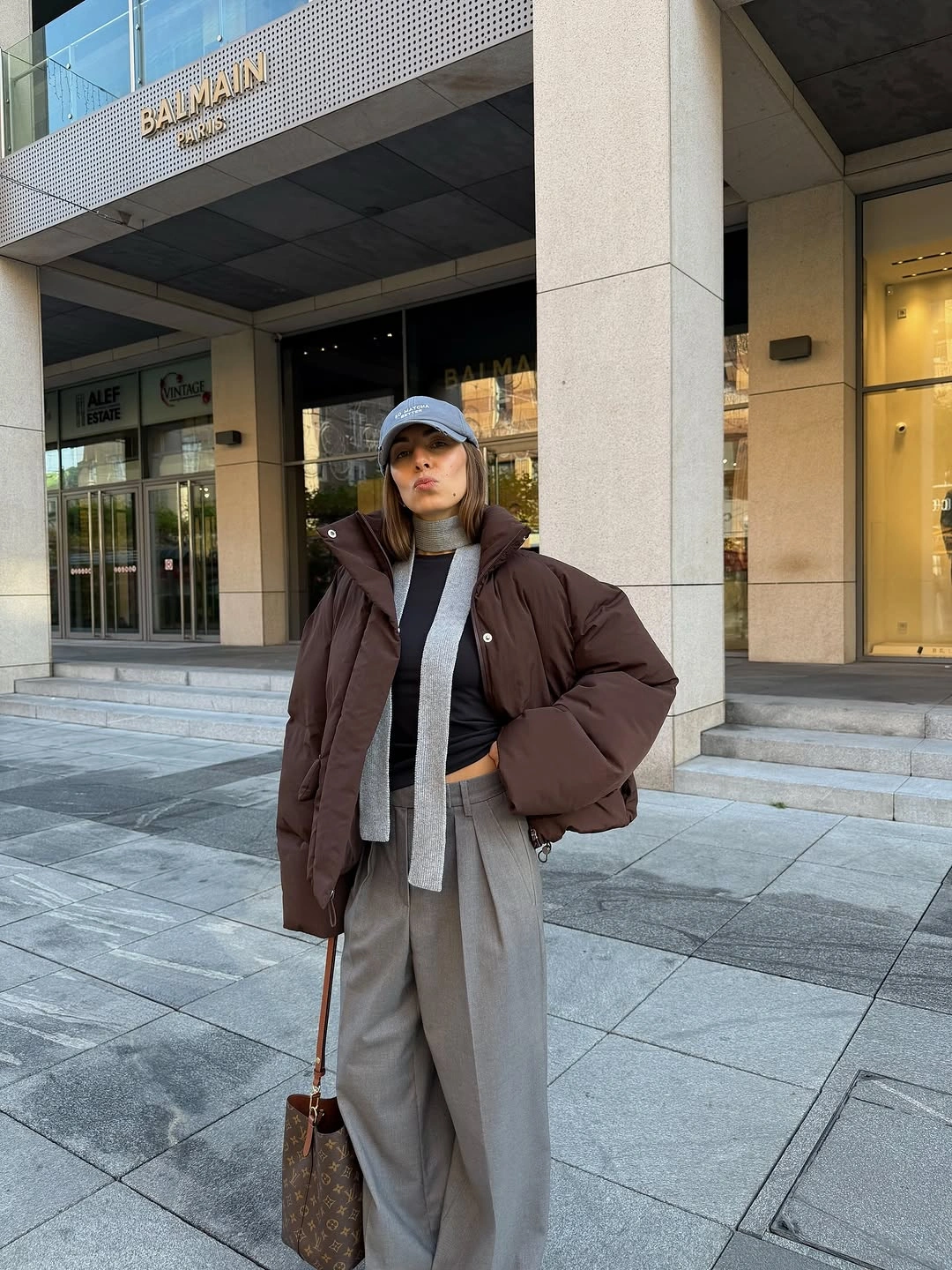
The puffer is naturally broad, so straighter cream trousers help control the overall volume. A fitted dark top can sit underneath for more contrast, but a pale knit would keep the tonal effect softer. If you need a bag, choose brown or charcoal instead of another bright color, allowing the coat and trousers to remain the main warm-light relationship.
Padded outerwear can become heavy when paired with very wide pants, so keep at least one half of the outfit streamlined. The pale trousers may need more care on wet commutes, which is the practical limitation of the look. What makes it repeatable is the three-step palette: rich brown, bridging gray, and light cream at the base.
Navy Knit With Gray Pleated Trousers
The thick navy sweater sits over gray pleated trousers in a way that looks relaxed but still capable of working in an office. The deep top brings weight near the shoulders, while the lighter trousers restore shape through their visible creases and wider fall. It is a strong alternative to a blazer when the indoor environment is casual enough for knitwear.
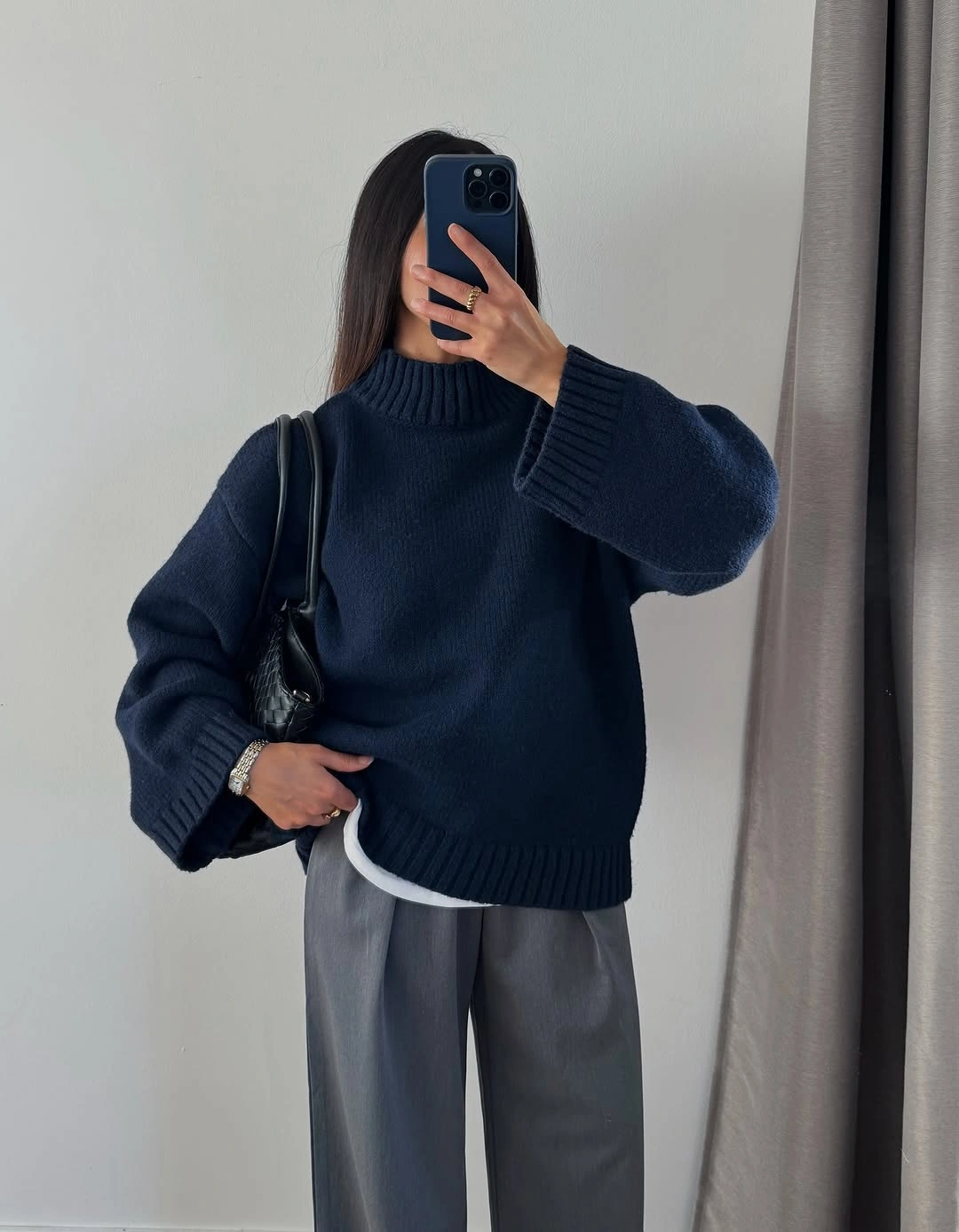
A small front tuck or a sweater hem that ends near the trouser rise helps the pleats remain visible. If the knit is very heavy, choose trousers with a sharp crease rather than soft jogger-like fabric. A dark bag will echo the sweater, while a tan one will make the gray trousers feel warmer without changing their calm role.
The sweater’s thickness is the main consideration, since it can add width at the torso and make a long coat feel crowded. Keep the layer underneath smooth and avoid an oversized scarf indoors. The lasting idea is to pair a rich dark knit with trousers that have enough tailoring detail to hold their own beneath it.
Gray Coat and a Single Red Scarf
The long gray coat, black trousers, and black accessories form a neutral winter base, then the bright red scarf gives the outfit one immediate warm focal point. Because red appears only near the face, it energizes the look without making the workwear feel playful in every direction. The result is clear, practical, and easy to recreate with a scarf you already own.
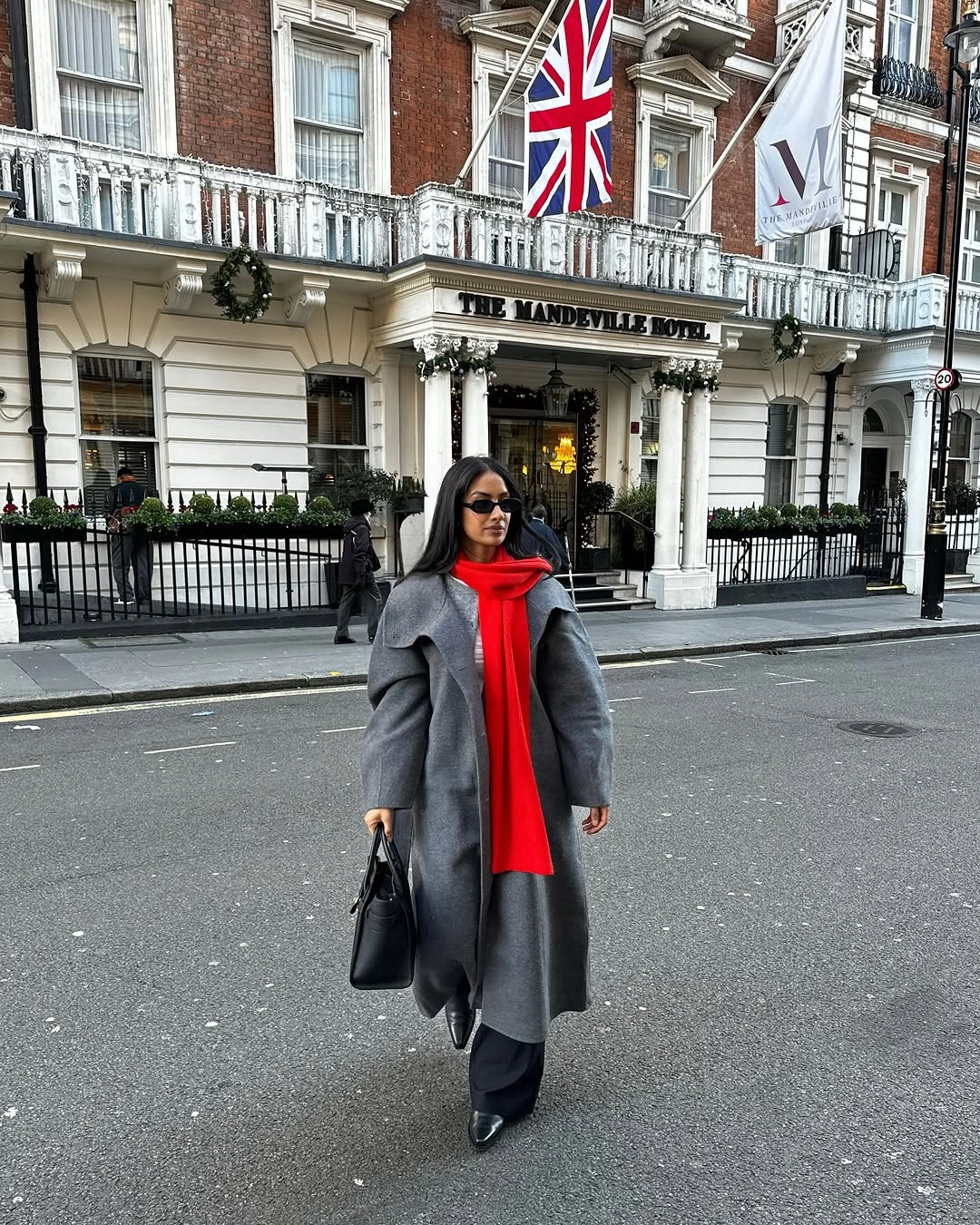
Keep the remaining accessories black or charcoal if you want the scarf to stay concentrated. A burgundy scarf would soften the contrast, while a pink or orange one would change the temperature more dramatically. The gray coat is a useful neutral here because it allows the red to feel vivid without the severity that black outerwear would create.
A bright scarf becomes memorable quickly, so do not add a matching shoe or bright handbag unless you want a more styled statement. The coat and trousers should remain simple enough to support repeat wear. The adjustment to preserve is one warm color at the neckline and a reliable dark base below it, which keeps the outfit balanced through a long workday.
Pale Coat With Black Accessories
The pale yellow-cream long coat stands out over black wide trousers, black gloves, and a structured black bag, creating a clean light-dark winter contrast. The coat remains the major field of color, while the accessories frame it at the hands and lower body. This is a modern way to use a light outer layer without making the overall outfit feel fragile or overly sweet.
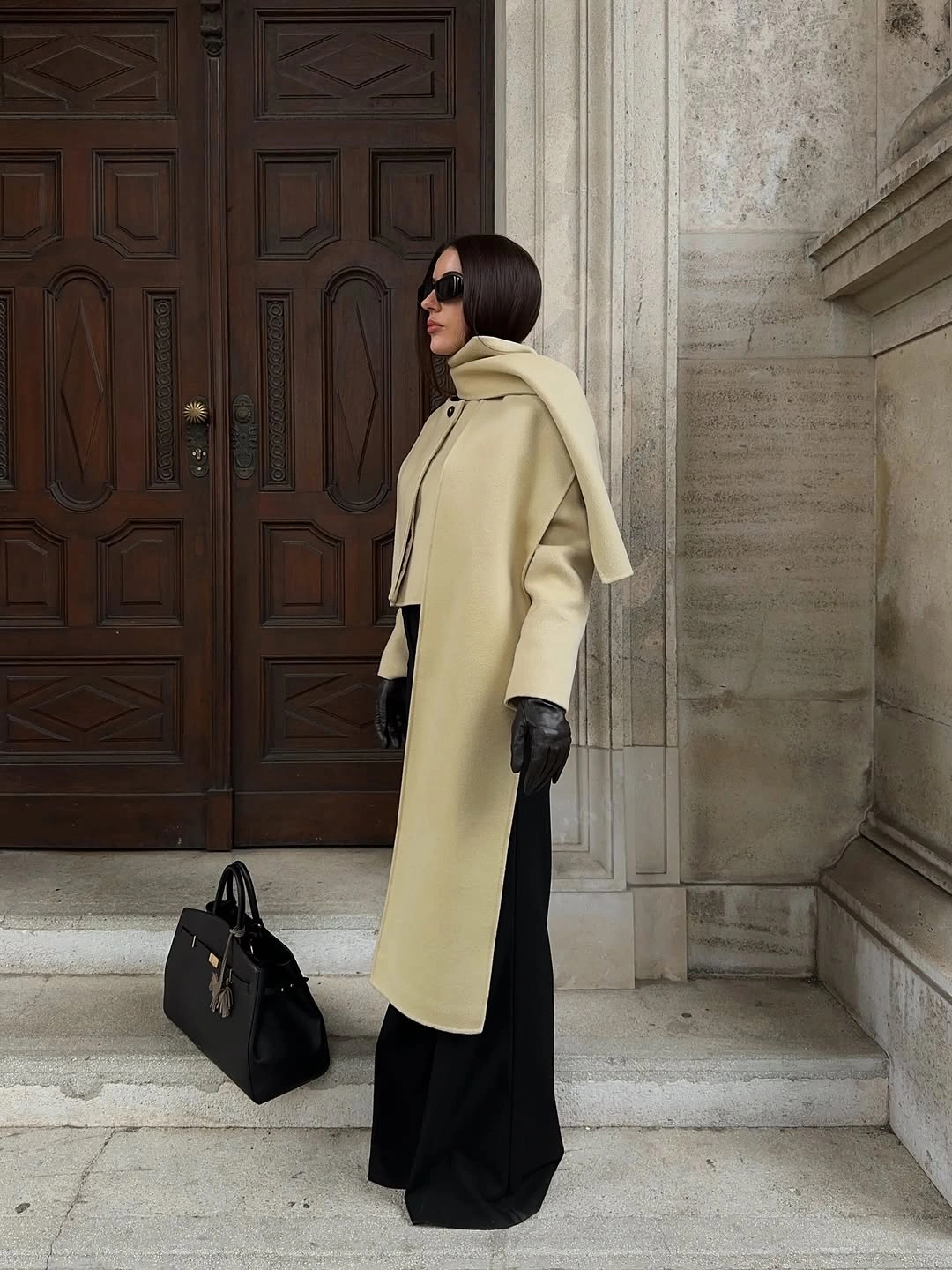
Repeating black in the glove, bag, and trouser is more effective than adding several light accessories, because it gives the coat a defined edge. A black turtleneck would continue the same line under the lapel. For a softer variation, dark brown trousers and bag could replace black, but they would make the contrast warmer and less graphic.
The light coat draws attention to every other choice, so leave out large prints and vivid shoes that could split the look. Its practical downside is the care needed to keep a pale outer layer clean during winter travel. The simple color rule is enough: one light long coat, a dark continuous base, and accessories that repeat the base rather than compete with it.
White Suit Framed by Dark Gloves
The white tailored jacket and flowing white trousers create a striking work set, while black gloves, a dark beret, and a compact black bag define the edges. Those dark accessories prevent the pale suit from looking unfinished and make it more believable as a winter outfit. The trousers remain fluid, but the jacket’s tailoring keeps the result within a professional register.
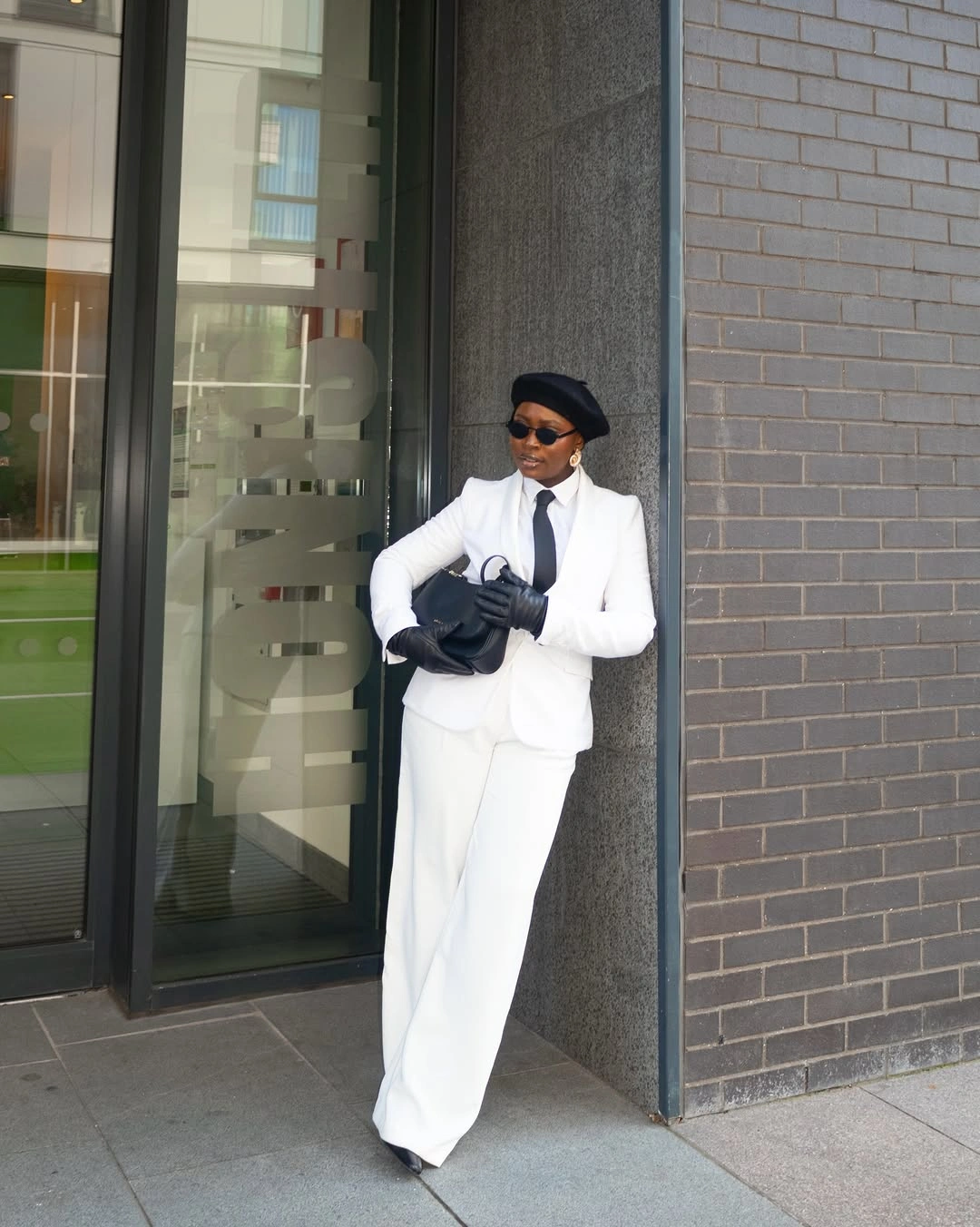
When a suit is this light, keep the accessories few and precise rather than adding several competing textures. A black turtleneck underneath would make the contrast even clearer, while a cream one would preserve a softer all-light center. The small black bag is particularly useful because it repeats the gloves without adding bulk at the torso.
White trousers are less forgiving in wet weather, so this is better reserved for a clean commute or indoor-heavy day. The silhouette also needs a neat hem and a shoe that does not interrupt the length. The repeatable lesson is not an all-white suit specifically, but a light tailored base sharpened by two or three dark winter accessories.
Brown Coat, Short Hem, Tall Boots
The long brown coat connects naturally to tall brown boots below a short dark dress or skirt, while sheer tights bridge the exposed section of leg. That repeated boot-and-coat color makes the shorter hem feel deliberate rather than disconnected from the winter outer layer. It can work for an office day when the dress code permits a more feminine, structured silhouette.
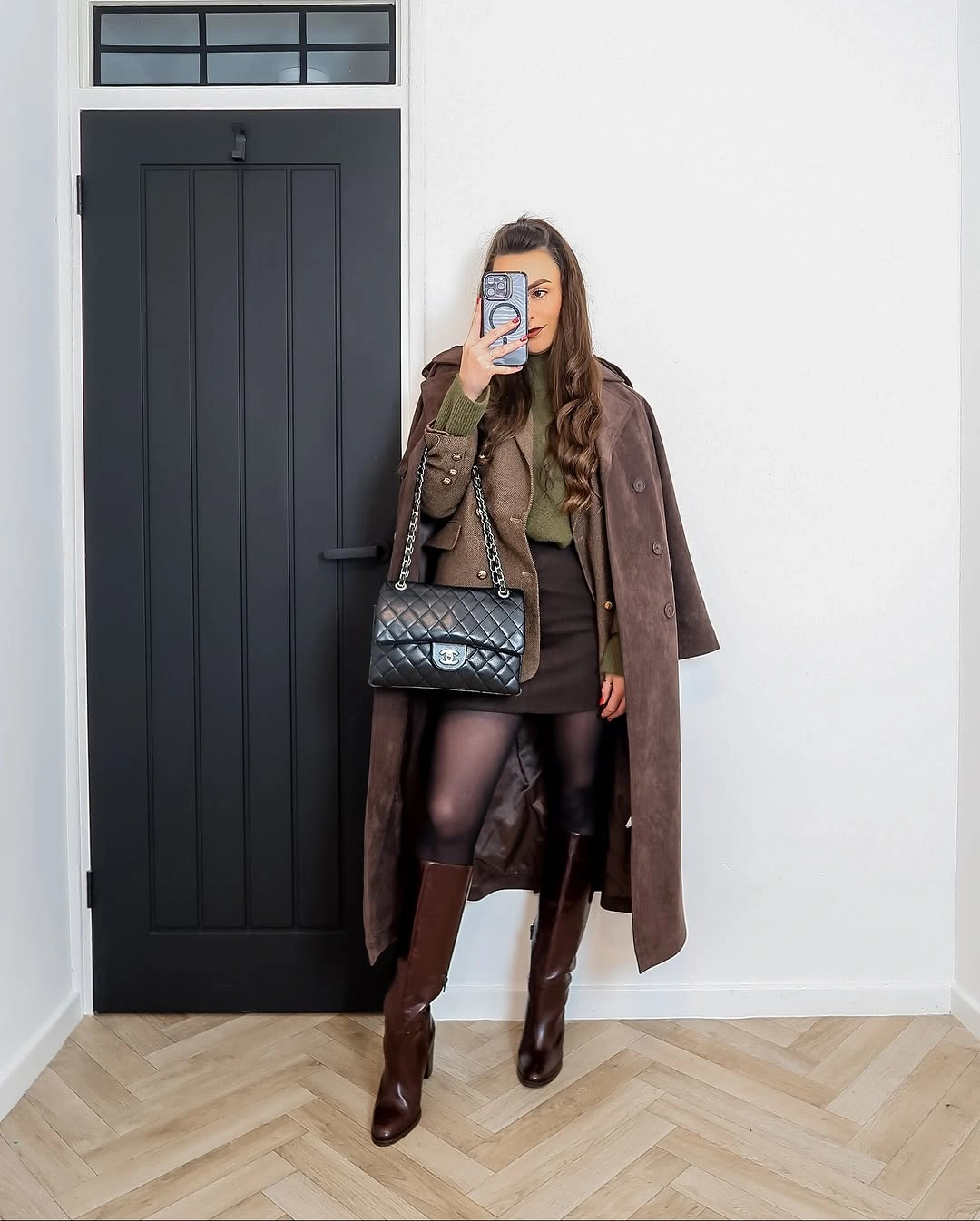
Matching the boot to the coat is more useful than matching every small accessory, because it creates one continuous warm outline from shoulder to ankle. A dark bag and fine knit top will keep the middle portion calm. If you prefer trousers, choose slim dark pants and retain the brown coat-and-boot relationship for the same visual continuity.
The shorter hem changes warmth and coverage, so it may need additional layers for a long outdoor commute. Avoid an oversized scarf that hides the coat collar and adds too much texture near the face. The strong styling decision is simple: repeat the outer layer color at the boot, then let the dark base provide contrast and practicality.
Cream Coat Above a Black Work Base
The long cream coat makes a black turtleneck, dark wide trousers, and dark bag look more finished before any additional styling is needed. Its pale vertical line gives the deeper inner clothes a clean frame, while the simple accessories keep the outfit professional and easy to move in. This is one of the most flexible winter formulas because each dark item can be repeated separately.
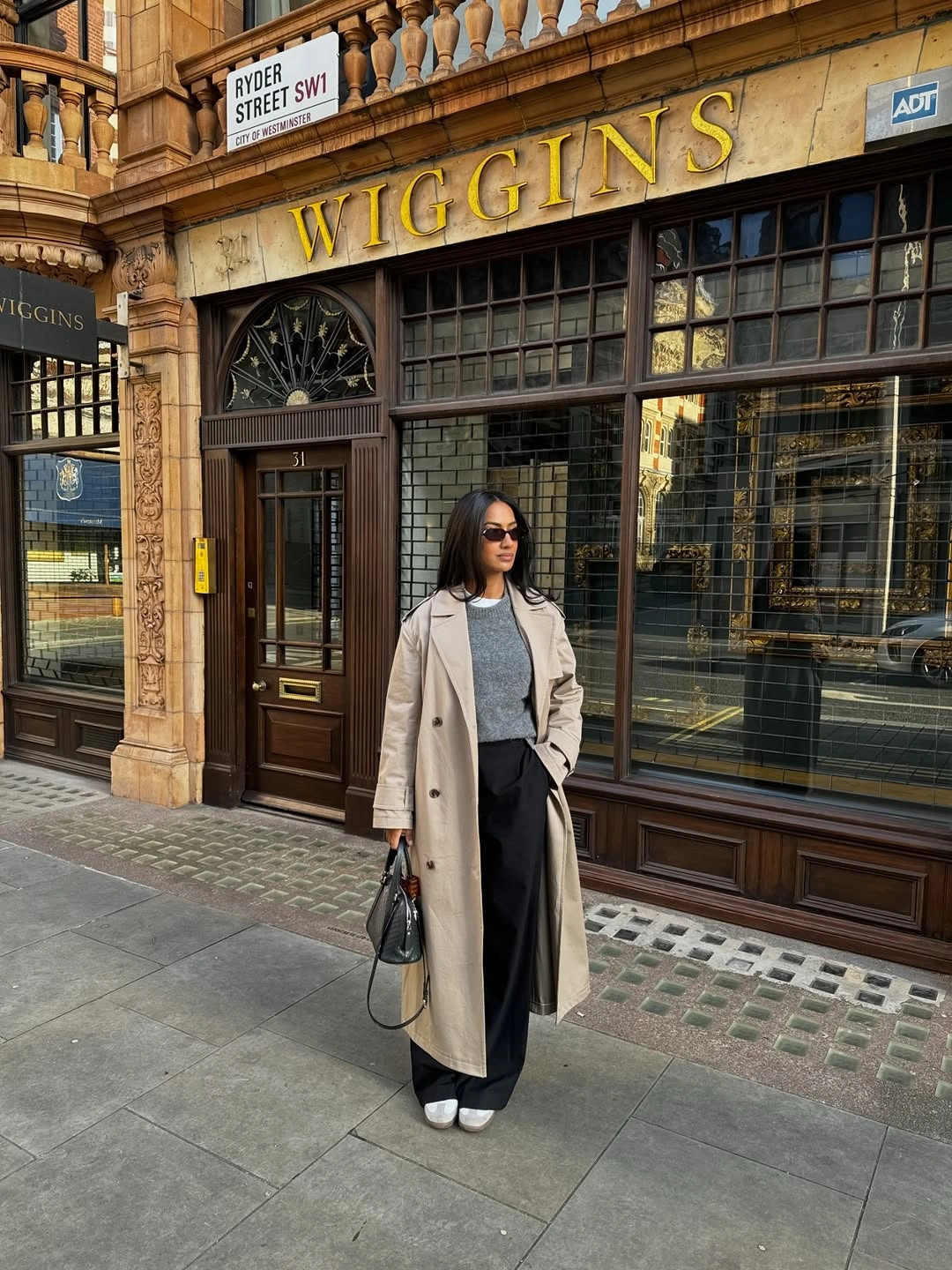
A cream outer layer works well with black because the contrast is immediate yet not as severe as white against true black. Keep the trouser hem clean and choose a close dark shoe so the lower half remains one grounded line. For a warmer interpretation, exchange the black trousers for chocolate brown and keep the turtleneck dark.
Several long layers can tangle visually at the ankle, so pay attention to coat length, trouser length, and boot height together. A smaller dark bag will preserve the vertical effect better than a large patterned tote. The adaptable point is a pale coat surrounding a simple dark office base, not a particular accessory or exact shade.
Camel Coat, Burgundy Knit, and Sneakers
The camel coat and burgundy knit are connected by the burgundy sneakers, while dark trousers give the warm colors a useful foundation. Repeating the red tone at the shoe makes the outfit feel personal and less formal than a standard coat-and-trouser combination. It is a good choice for a casual office, especially when walking or commuting comfort matters.
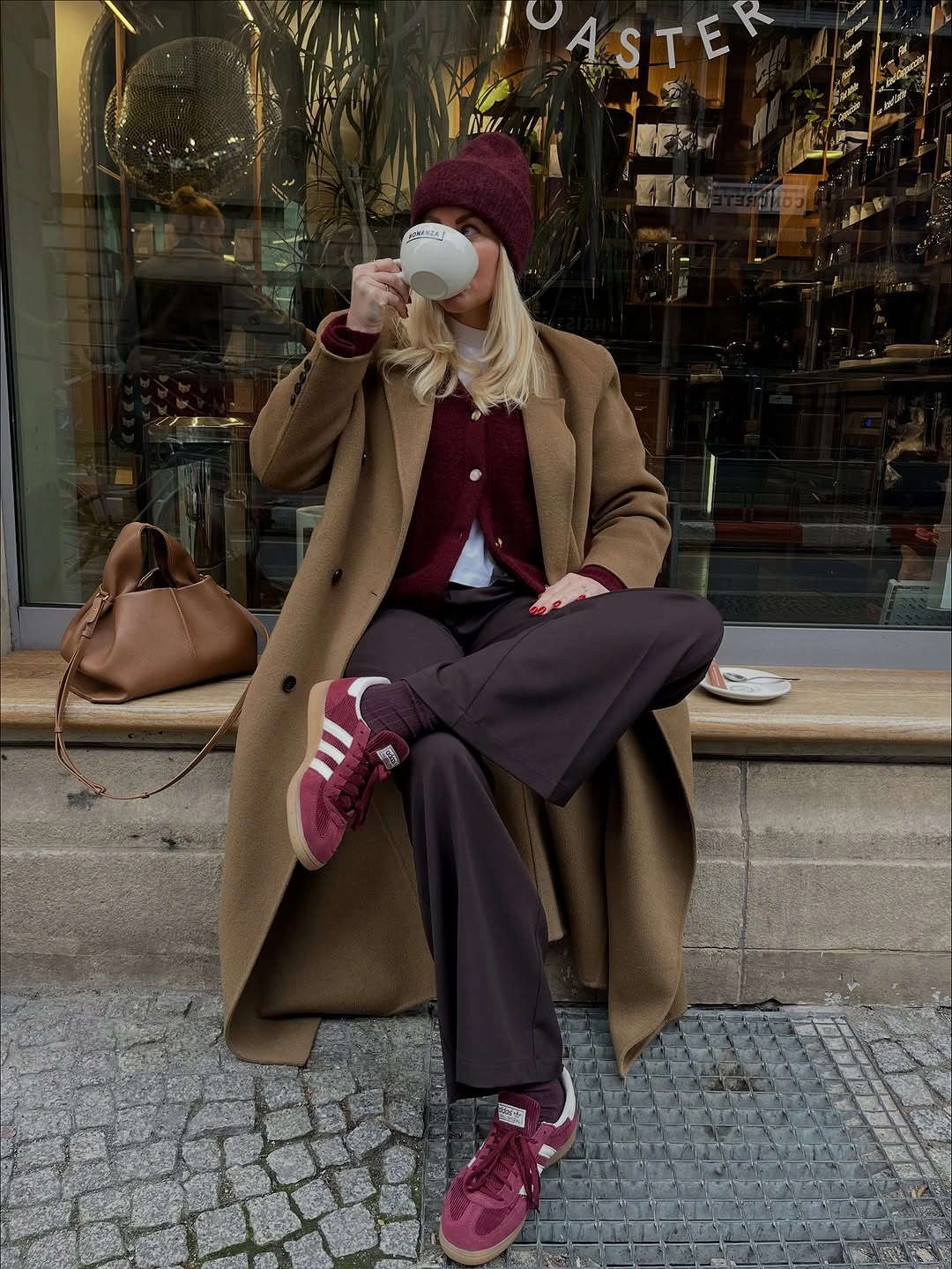
Keep the trouser color deep so the coat, knit, and sneaker have enough contrast to read as separate choices. If matching sneaker color feels too coordinated, use white sneakers and let the burgundy stay only at the torso. A dark beanie or bag would connect more naturally to the trousers than another warm accessory would.
Sneakers lower the dress level, which is the main limitation of this otherwise polished palette. Choose a clean, low-profile pair if the workplace is more conservative, or swap them for dark ankle boots to increase formality. The color relationship worth preserving is camel around the body and one burgundy note that feels repeated but not overused.
Brown Puffer With Bootcut Denim
The short brown puffer, light knit hat, blue bootcut jeans, and large brown bag make a practical commute outfit feel proportioned rather than bulky. The shorter coat leaves the trouser shape visible, and the bag repeats the outerwear’s warmth without forcing a matched set. This is a casual winter work option with enough structure to look prepared.
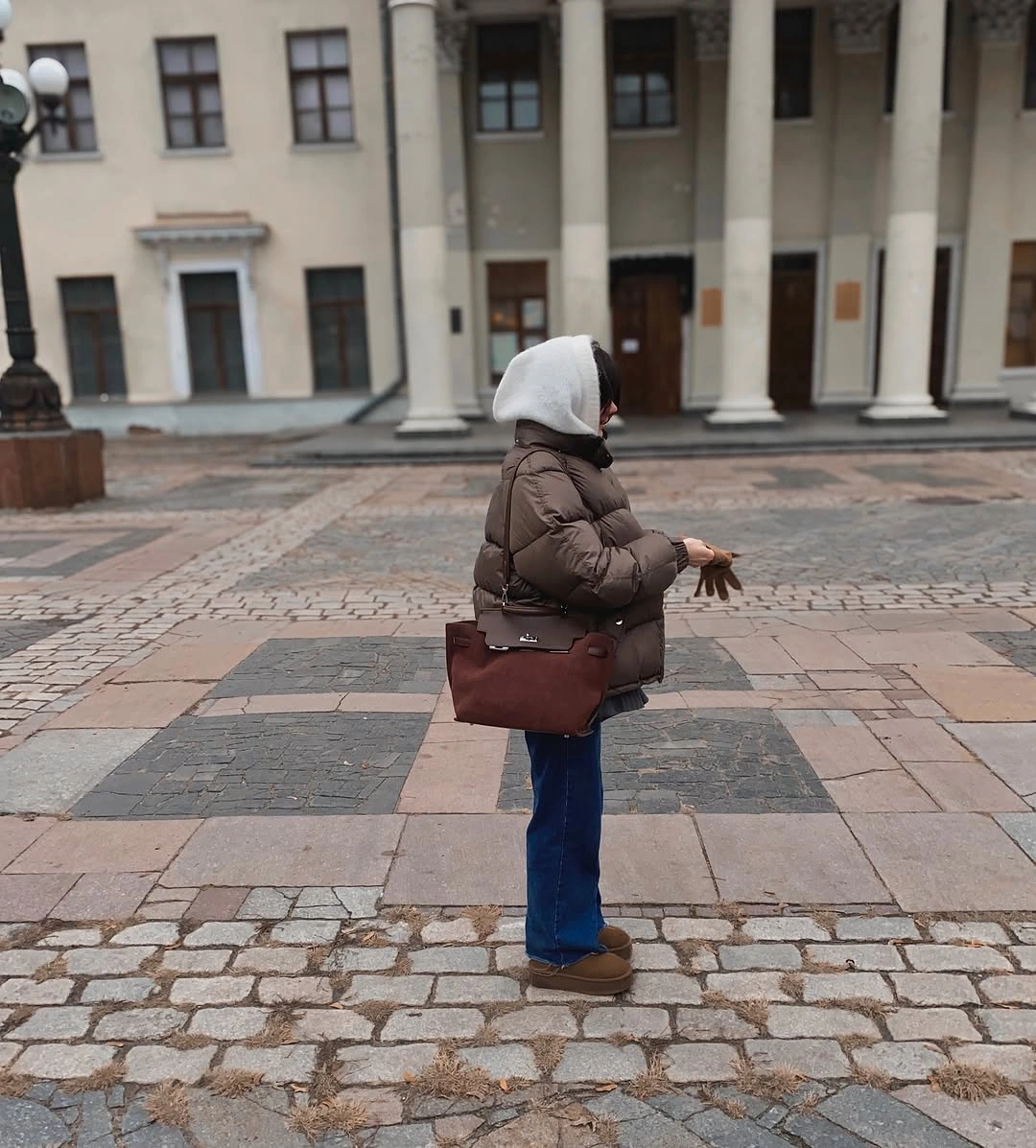
Bootcut denim helps balance a padded coat because the leg widens gradually instead of ending in a narrow contrast below the bulkier upper half. Keep the top underneath simple and close-fitting if you want the coat to remain the only broad piece. A dark shoe will ground the jeans, while a cream sneaker would make the outfit lighter and more relaxed.
Denim and a puffer naturally lean casual, so the bag and shoe need to be neat if the destination is an office rather than a weekend errand. The large bag is useful for function but should remain tonal to avoid adding a new color story. The easiest adjustment is a short warm puffer over a shaped jean, with one structured accessory for polish.
Bright Blue Knit With Camel Trousers
The vivid light-blue sweater immediately updates high-waist camel trousers, proving that a familiar neutral bottom can support a much more expressive top. The trousers remain warm and plain, while the knit gives the outfit its clear point of view. This combination can brighten a winter work wardrobe without relying on an elaborate print or a new tailored set.
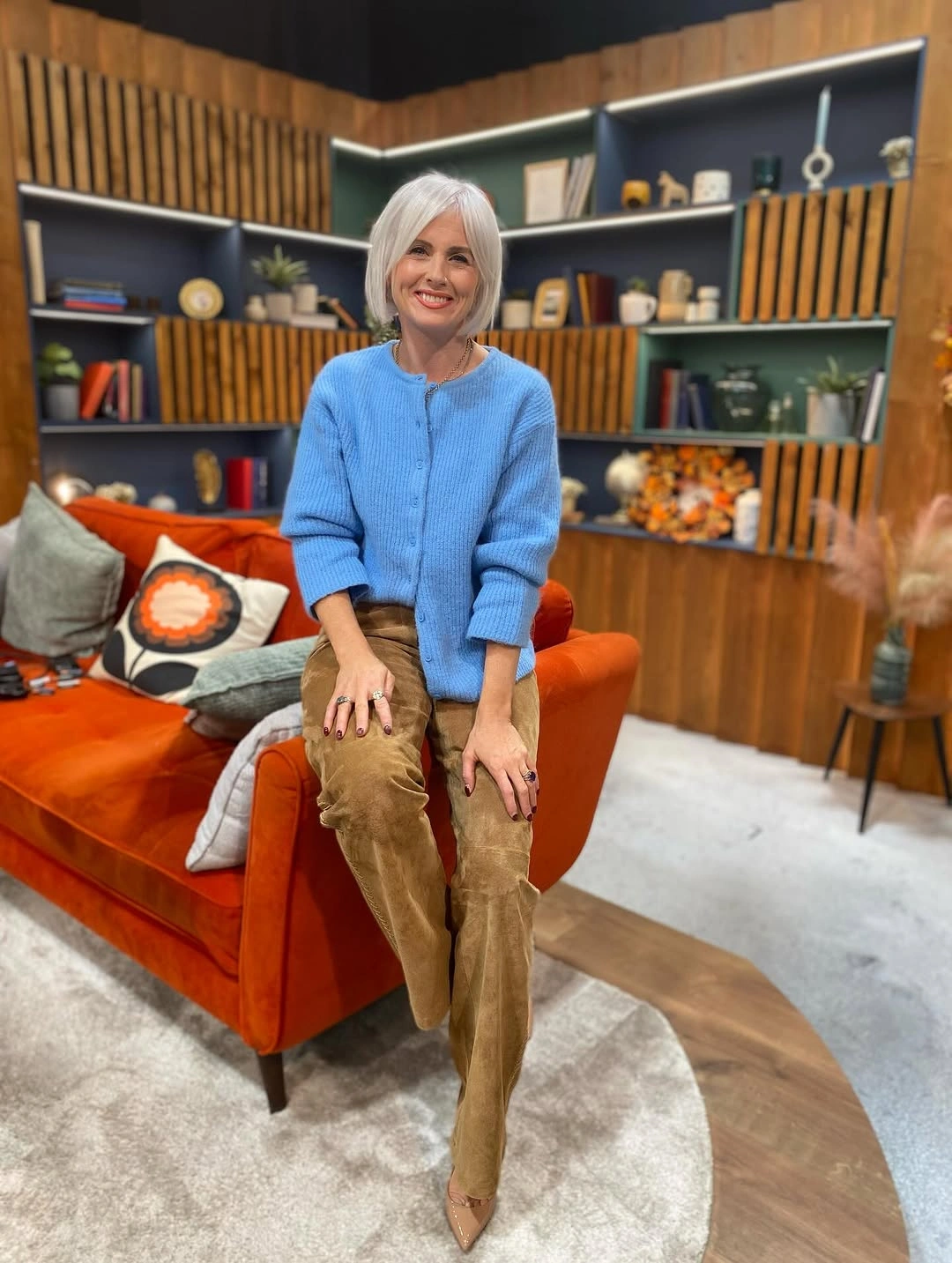
Let the trouser color stay solid and the accessories neutral so the blue knit has room to stand out. A tan bag would connect to the pants, while a black bag would make the contrast more graphic. If the blue feels too saturated for your workplace, choose dusty blue or deep teal and retain the same warm camel foundation.
A bright sweater is naturally more expressive than black, gray, or cream knitwear, so it may not fit every formal dress code. Its advantage is that it can change the mood of trousers you already own with very little effort. Keep the silhouette simple and let the blue-over-camel contrast be the final, repeatable decision that makes the outfit work.